
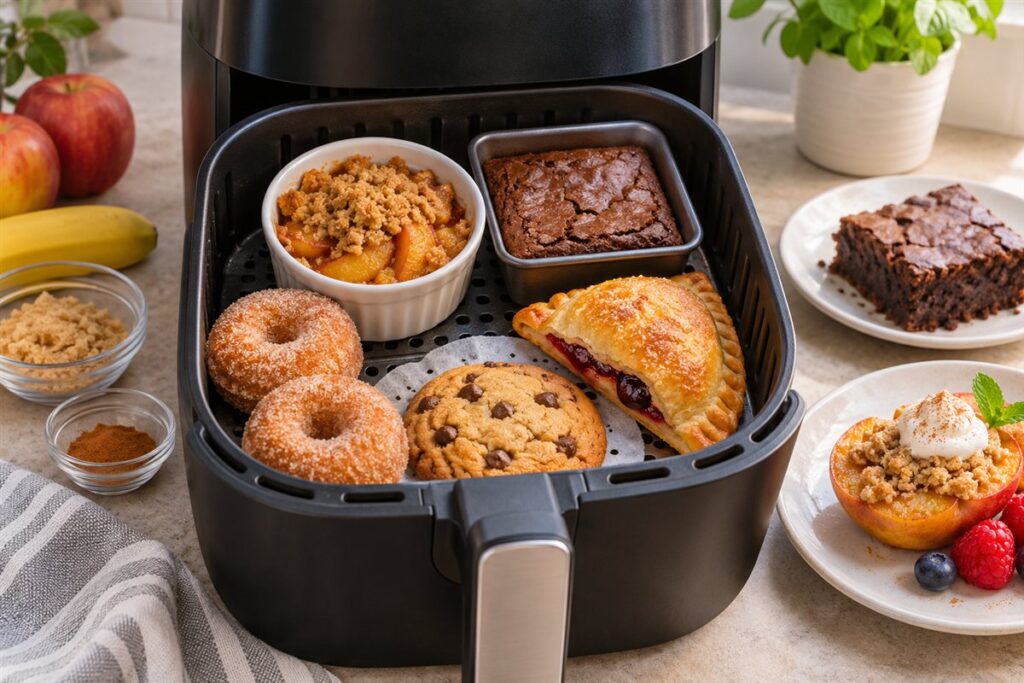
Small sweet treats suit an air fryer well, because the compact space heats quickly and a single serving or two bakes in minutes. Fruit bakes, hand pies, brownies and donut-style treats are all common choices. This guide covers the main categories, pan advice, and loose timing ranges, without fixed recipes.
Dessert Categories That Work
- Fruit desserts: baked apples, peach halves, or a crumble in a small dish
- Hand pies and turnovers made with ready-rolled pastry
- Brownies or blondies in a small pan or silicone mold
- Donut-style treats made from chilled biscuit dough
- Cookies baked in small batches on a liner made for air fryers
- Bananas or pineapple slices, lightly sweetened and warmed
Batters and doughs that need long, gentle baking, such as tall cakes, usually do better in the oven.
Choosing Pans and Molds
Pan fit matters more than people expect. Measure the basket opening and leave a gap around the pan so air can move. Metal, silicone and oven-safe ceramic can all work, but check your manual for what it allows. Dark metal pans brown faster than light ones, and silicone is flexible but slower to brown.
Method Tips for Even Baking
- Reduce the heat a little compared with an oven recipe, since the fan speeds up browning.
- Cover the top loosely with foil if it darkens before the center sets, if your manual allows foil.
- Keep light items such as paper cups weighted or held in a pan so they do not fly into the heating element.
- Rotate the pan partway through if one side browns faster.
- Rest the finished dessert for a few minutes before removing it from the pan.
Loose Timing Guide
| Dessert type | Rough time | Cue |
|---|---|---|
| Baked fruit halves | 10 to 18 minutes | Soft and lightly browned |
| Hand pies | 8 to 14 minutes | Golden pastry |
| Small brownies | 15 to 25 minutes | Set edges, slightly soft center |
| Donut-style rounds | 5 to 9 minutes | Golden on both sides |
These ranges are rough, and models differ a lot. Check early and use a skewer to test the center of baked items.
Finishing Touches
Many desserts improve with something added after cooking. Dust with powdered sugar once the item has cooled, add a spoonful of yogurt or whipped cream, or serve with fresh berries. Warm spices such as cinnamon and nutmeg pair easily with fruit. Add glazes after cooking so they do not scorch.
Ingredients and Batters That Behave in Moving Air
Desserts react differently in an air fryer than in a conventional oven because the fan moves air across the surface. Thin batters can splash or spread, and light toppings may blow around. Thicker batters, firm doughs and ready-made pastry tend to cope better. If you are adapting a recipe, begin with items that hold their shape, and keep loose crumbs and powdered toppings for after cooking.
Moisture matters. Wet fruit can release juice that drips into the drawer, so toss fruit with a little starch, or cook it in a small dish to catch the liquid. Sugar browns quickly, so recipes with high sugar content may need a lower temperature or a shorter time. Butter-rich doughs can spread, so chill them before baking.
- Use room-temperature eggs and butter for batters, which mix more evenly.
- Fill molds only part way, since batters rise and can overflow.
- Leave powdered sugar, glazes and fresh cream for the end.
- Test with a small batch first when adapting an oven recipe.
Keep a note of changes you make, since small adjustments can make a big difference.
Adjusting Time and Temperature for Doneness
Converting an oven recipe is a matter of trial and observation. A common approach is to lower the temperature somewhat and shorten the time, then check early. Because models differ, your first attempt is a test rather than a guaranteed result. Check the manual for any conversion guidance.
Judge doneness by more than the clock. For cakes and brownies, a skewer inserted in the center should come out with moist crumbs or clean, depending on the recipe. Pastry should look golden and feel set. Fruit should be tender when pierced. If the top is browning too quickly while the inside is raw, reduce the heat and extend the time, and consider covering loosely if your manual allows.
Rest time matters. Many desserts continue to set as they cool, and cutting too soon can make them seem underdone. Let baked items rest in their pans for a few minutes before turning them out. If a dessert sinks in the middle, the temperature may have been too high or the item may have been removed too early. Use these observations to tune the next batch.
Troubleshooting Dessert Problems
Several common problems have simple fixes. A dry result often means too much time or heat, so reduce one or both. A gummy center suggests undercooking or too thick a layer, so use a shallower pan or extend the time at lower heat. Sticking can be solved with a light coat of oil or a liner designed for the purpose, as long as your manual allows it.
If the dessert smokes, drips from the pan are probably landing on the hot surface below. Use a deeper pan, place a tray underneath if permitted, or reduce sugar and fat on the surface. Uneven browning can come from crowding or from an unlevel pan, so check that the pan sits flat and rotate it partway through.
Items that fly around the basket are usually too light. Use a pan with sides, weigh down liners with food, and avoid loose toppings. When fillings leak from pastries, seal the edges well and avoid overfilling. If a flavor tastes off, check that the basket is clean, since leftover savory residue can affect sweet foods. Keep notes on each attempt and change only one thing at a time.
Dietary Needs and Lighter Swaps
Dessert in an air fryer can be adapted for many diets. For a lighter option, baked fruit with a little spice needs little added sugar. Yogurt-based toppings can replace heavy cream. For gluten-free baking, use a blend designed for it and check labels on packaged items, since formulations vary. Egg-free and dairy-free recipes often rely on mashed banana, applesauce or plant-based alternatives, though textures will differ.
If you are managing a health condition such as diabetes, speak with a qualified professional about how desserts fit into your plan. Do not rely on general advice for medical needs. When cooking for someone with an allergy, wash the basket and tools thoroughly beforehand to avoid cross contact, and read every label.
Portion size is another factor. Small ramekins or silicone cups give built-in portion control. Cooking a single serving means you are less likely to have leftovers. If you want to share, make a small batch and offer fruit on the side. Taste and texture matter too, so try swaps gradually rather than changing everything at once.
Serving, Storing and Reheating
Most air fryer desserts are best eaten soon after baking, when pastry is crisp and fruit is warm. Let them cool slightly so fillings settle. Serve with ice cream, yogurt, whipped cream or a dusting of sugar, adding cold toppings at the last moment so they do not melt too fast.
For storage, cool completely before covering to prevent condensation making the top soggy. Store baked goods in airtight containers at room temperature or in the refrigerator if they contain dairy, custard or fresh fruit. Check current food safety guidance for how long items stay safe. Freeze portions if you want to keep them longer, wrapping them well.
To reheat, use a short burst in the air fryer at a moderate temperature, checking often. Pastries regain crispness, while cakes and brownies warm through without drying if the time is short. Do not reheat the same item more than once. Discard anything that smells off, looks moldy, or has been left out for too long. Label containers with dates so you can use them in good time.
FAQ
Why did the outside brown before the inside cooked?
Usually the heat was too high for the size of the dessert. Lower the heat, cover loosely, and allow a little more time.
Can I use parchment paper?
Some makers allow it when it sits fully under the food and does not block airflow. Check your manual before using it.
Can I bake a cake in an air fryer?
Small cakes in a pan that fits the basket can work. Use a lower temperature, check doneness early and avoid very tall batters.
How do I stop the top from burning?
Lower the temperature, extend the time and consider covering loosely if the manual allows. Make sure the pan is not too close to the heating area.
Can I use frozen fruit?
Yes, though it releases more liquid. Toss it with a little starch and cook it in a dish to catch juices. Expect a slightly longer cooking time.
What pan size should I use?
Choose a pan that fits the basket with room for air around it. Measure the basket opening and the depth before you buy.
Can I make desserts for someone with allergies?
Yes, but clean the basket and tools thoroughly, read all labels and avoid shared utensils. If a serious allergy is involved, be cautious about cross contact.
How do I know when brownies are done?
A skewer in the center should come out with a few moist crumbs for fudgy brownies. Rest them before cutting so they set properly.
Is it safe to leave dessert in the unit to cool?
Remove it from the hot unit after a short rest, using mitts, and let it cool on a heat-safe surface. This stops it overcooking from residual heat.
The Short Version
Choose small desserts and a pan that leaves room for air. Lower the heat, check early, and add toppings after cooking. Treat all timing as a loose range for your own model.









