
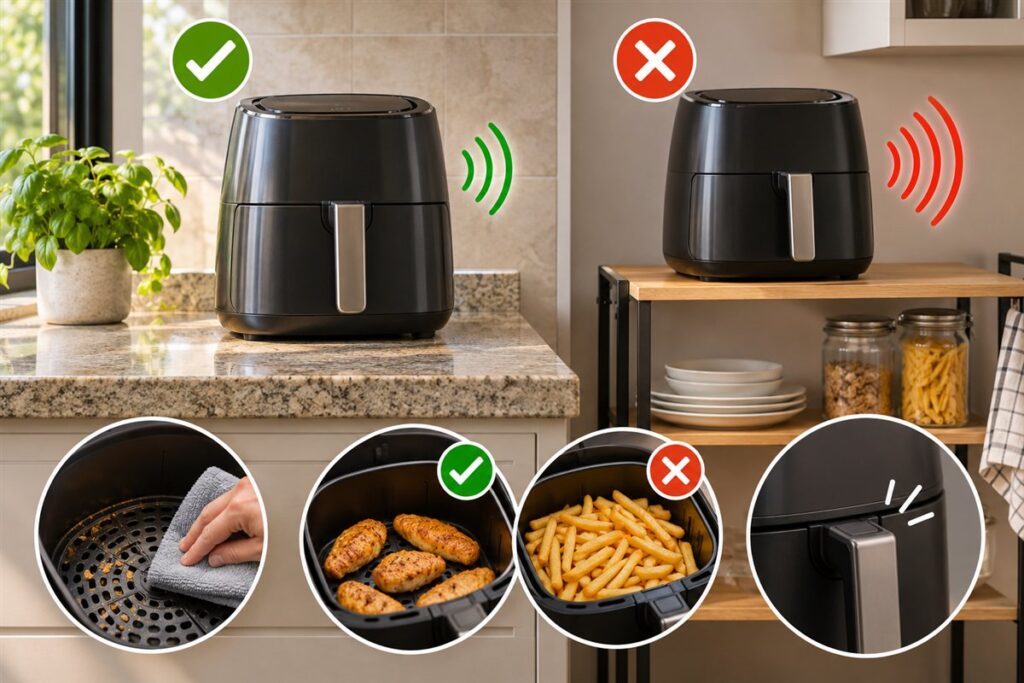
Every air fryer makes some noise because a fan pushes air through the cooking space, but you can often reduce what you hear by placing the unit on a stable surface, keeping it clean and loading the basket properly. Odd rattles or grinding are a reason to stop and check the manual.
Why Air Fryers Make Noise
The main sound is the fan and the rush of air. Heating elements may click as they warm and cool. Food moving in the basket can rattle against metal, and a loose basket or tray can buzz against the housing.
Noise levels differ by model, so some units are naturally quieter than others.
Steps to Reduce Noise
- Place the unit on a flat, stable counter so it does not vibrate or rock.
- Move it away from hollow surfaces such as thin shelves that amplify sound.
- Make sure the basket or tray is seated fully and clicks into place, as the manual shows.
- Do not overload the basket. Heavy, crowded food can rattle and strain airflow.
- Keep vents clear and the area around the fan clean by following the maker’s cleaning instructions.
- Check that nothing loose, such as a liner or accessory, can flutter in the airflow. Only use liners and parts that the maker approves.
General Checks When Noise Changes
| What you hear | General check |
|---|---|
| Steady rush of air | Normal for most units |
| Rattling | Check basket seating, loose food or accessories |
| Buzzing | Check that the unit sits flat and does not touch objects |
| Louder than before | Look for grease or crumbs and clean as directed |
| Grinding, scraping or burning smell | Stop using it and contact the maker |
Do not open the housing to look at the fan or motor. Repairs to electrical parts belong with the maker or a qualified service provider.
Living With Some Sound
- Cook when others are not on calls or sleeping nearby, if sound bothers them.
- Choose the kitchen area farthest from quiet rooms.
- If you are shopping, check what the maker says about noise and think about your living space.
Choosing Quieter Cooking Habits
Smaller batches often run more smoothly than a packed basket, and cut pieces that sit flat rattle less than loose, small bits. If you cook at night, plan simple foods that need short times. These small habits help keep the sound down without any special equipment.
Where the Sound Comes From
Understanding the sources of noise helps you decide which ones you can change. An air fryer produces sound in several layers. The first is the motor and fan, which create a steady hum and the whoosh of moving air. The second is airflow turbulence, which rises when air is forced through narrow gaps, over food, and out of the vents. The third is vibration, where the motor’s movement is passed to the housing and then to whatever the unit sits on. The fourth is incidental sound from food, loose parts, and expanding metal.
Some of these are built into the design. A more powerful fan generally moves more air and can be louder, and a compact body with small vents tends to produce a sharper airflow sound. Others depend on how you use the unit, such as where it sits and what is in the basket. This split is useful: you cannot change the fan, but you can often change the surface beneath it and the way you load it.
- Hum and whoosh: part of normal operation and set by the design.
- Buzzing and drumming: often vibration passing into the surface below.
- Clicking: usually metal parts expanding or contracting as the unit heats and cools.
- Rattling: loose food, accessories, or a part not seated properly.
Spend a minute listening to your unit and note which kind of sound is bothering you. The fix differs for each.
Choosing a Quieter Model Before You Buy
If noise matters to you, it is easier to address it at the buying stage than afterward. Start by reading the product listing and manual for any statements about sound level. Where a decibel number is given, remember that makers may measure at different distances and under different conditions, so figures from different brands are not always directly comparable. Treat the number as a rough guide and read written descriptions from owners with care, since people judge loudness differently.
Design features can hint at how a unit behaves. Larger units with a wider fan can sometimes move air at a lower speed and make a deeper, less sharp sound, though this is not guaranteed. Check how the controls work, because models with several fan or power settings give you the option to use a lower speed for delicate cooking. Rubber feet and a stable base matter too, since they reduce the vibration that turns into drumming on a hard counter.
- Read the manual before purchase if the maker offers it online.
- Look for non-slip feet and a solid, balanced body.
- Consider how close the unit will sit to where you eat or sleep.
- Ask the seller about the return policy in case the sound is not acceptable.
- If possible, listen to the unit running in a shop.
Be wary of claims that a unit is silent. Every fan-driven appliance makes some noise.
Surface and Placement Choices
The surface under your air fryer can make the same unit sound very different. Hard, thin, or hollow surfaces act like a speaker for vibration, while a thick, solid worktop absorbs much more. A stone or heavy wooden counter usually stays quieter than a lightweight table or a cart with a thin top. If your counter rattles, you may hear a buzz that is actually the surface, not the appliance.
Distance from walls and cupboards matters for two reasons. Hot air and steam must be able to leave through the vents, so the manual will give a minimum clearance, which you should follow. At the same time, sound reflects off nearby walls and under-cupboard panels, which makes it seem louder. Moving the unit a little farther out, as long as it is safe and stable, can lessen that effect.
- Use a thick, solid surface when you can, and avoid wobbly carts or flimsy shelving.
- Check that all feet touch the surface and that nothing, such as a cord or tea towel, is pinched beneath.
- Consider a heat-safe, non-slip mat only if the manual allows it, and make sure it never blocks vents.
- Keep the unit clear of other appliances that can vibrate against it.
Do not put the air fryer on a soft surface like a towel, because it can block air intake and create a fire hazard.
Loading Habits That Reduce Rattle and Whistle
What goes into the basket changes the sound as much as the unit itself. Light foods such as leafy herbs, small bits of kale, or lightweight snacks can be blown about by the fan and tap against the basket or the heating element. Loose foil and paper can flutter. Heavy, dense foods may shift and clink when the basket is shaken or when fat bubbles up.
A moderate load usually sounds calmer than an almost empty basket or a packed one. Too little food leaves room for items to bounce, while too much restricts airflow and can make the fan work harder, which raises the pitch. Use a quantity that sits comfortably in the basket and fills it without touching the top.
- Weigh down light items by placing them under heavier ones, or cook them in a small oven-safe dish if the manual allows.
- Keep liners flat, sized for the unit, and covered by food so they cannot lift.
- Do not overfill, and keep food clear of the fan and element.
- Avoid shaking the basket more than necessary, since the bangs add up.
- Skip accessories that were not designed for your model.
Some foods spit and crackle as fat renders, especially bacon and sausages. That sound is the food, not a fault.
When a Change in Sound Calls for Action
A new or worsening noise is more telling than a constant one. Compare the sound with how it was when the unit was new, using the same load. A gradual rise in volume might simply mean the vents or fan area need attention, and the manual explains what you may safely clean. A sudden harsh noise is different.
Signs that call for you to stop immediately include grinding, scraping, a rhythmic knocking that gets faster, a burning or hot electrical smell, smoke, or the fan slowing or stalling. Switch off at the control, unplug the unit once it is safe to do so, and let it cool. Do not open the housing, poke at the fan, or try to repair the motor. Contact the maker with your model number and a clear description of the sound.
- Intermittent rattle after a drop or knock: check that parts sit correctly and contact the maker if the noise remains.
- Humming that stays after the cycle ends: some units run the fan to cool down, which is normal. Check the manual for how long.
- Noise only with certain accessories: remove them and test again.
Keep your proof of purchase and warranty information close, because a persistent fault may be covered.
FAQ
Is a loud air fryer broken?
Not necessarily. Many have a noticeable fan. A sudden change in sound is more useful to watch for than the sound itself.
Will a mat under the unit help?
A heat-tolerant, non-slip surface may reduce vibration, but only use materials the manual allows under a hot appliance.
Why does my air fryer keep running its fan after I stop cooking?
Many models run the fan for a short time to cool the internal parts. Check your manual for how long this should last and contact the maker if it seems unusually long.
Do bigger air fryers make less noise?
Not reliably. Size is only one factor, and fan design, power, and build all matter. Check the product information instead of assuming.
Is it normal for the unit to click while it heats?
Usually yes. Metal parts expand and contract with temperature changes. A sharp bang, repeated knocking, or a burning smell is different and needs attention.
Can I put a towel under it to dampen the sound?
No. Soft materials can block air intake or become a fire risk. Use only a heat-safe, non-slip surface that the manual allows.
Why is it louder in the evening than during the day?
The unit is probably the same, but the rest of the house is quieter, so you notice it more. Background sound hides much of the noise during the day.
Does cooking a small amount make more noise?
Sometimes, because light items can blow around and tap the basket. Weigh them down or choose a modest load that sits securely.
Should I be worried about a rattling basket?
First check that it is seated fully and that no food or accessory is loose. If it still rattles, look at the basket for damage and contact the maker if needed.
The Short Version
Keep the air fryer level, clean and properly loaded to limit extra noise. Expect some fan sound, and contact the maker if you hear grinding, scraping or anything that worries you.









