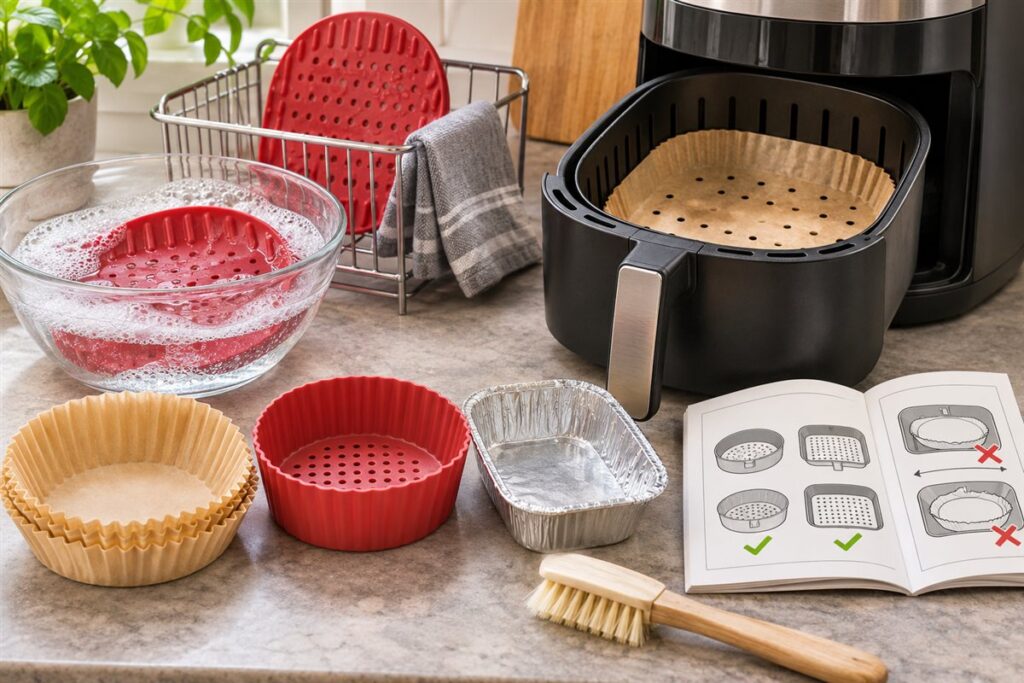
Reusable liners, such as silicone mats and baskets, can be washed after each use in warm soapy water. Paper liners are meant for single use and should simply be thrown away. Either way, check what your maker allows before putting any liner in the machine.
Know Your Liner Type
- Silicone liners and mats: reusable, and usually washable by hand or in the dishwasher if the package says so.
- Paper or parchment liners: single use, and often made with cut-outs or sized for air fryers.
- Foil: some makers allow it in limited ways, and others do not, so read the manual first.
Cleaning a Reusable Liner
- Let the liner cool fully after cooking before you handle it.
- Shake off crumbs and wipe away loose grease with a paper towel.
- Wash with warm water and mild dish soap, using a soft sponge.
- For stuck-on residue, soak briefly in warm soapy water and wipe again.
- Rinse well, since soap left on the surface can smoke or smell when heated.
- Dry fully, then store flat or loosely rolled.
Using Liners Safely
A liner must never block the airflow or sit where the fan can lift it into the heating area. Weigh paper liners down with food, and do not run the unit empty with a loose liner inside. Keep liners from touching the heating element, and follow the maker’s instructions on size and fit.
When to Replace a Liner
| Sign | What to do |
|---|---|
| Cracks, tears, or thin spots | Replace it |
| Sticky film that will not wash off | Replace it |
| Lasting odor after washing | Replace it |
| Warping or melting | Stop using it and check the manual |
Storage matters for liners as well. Keep silicone ones flat or loosely rolled, away from sharp tools, and keep paper ones in a dry drawer so they do not absorb moisture. Check each liner before use for crumbs or leftover grease, since these can smoke when heated. If a liner shifts during the cook, pause and reposition it carefully, using mitts. A liner should lie flat in the basket, with its edges below the rim, and never fold up toward the heat. When in doubt, ask the maker which liner types suit your model.
Reusable liners can also hold smells from strongly spiced food. If an odor lingers, soak the liner in warm water with a little mild soap for a short while, rinse it well, and let it dry fully in the open air before storing it. Replace it if the smell stays.
Choosing a Liner That Fits Your Model
A liner only helps if it fits the basket properly. Start with the shape of your basket or drawer: round, square or rectangular. Then measure the floor of the cooking area, not the top rim, since baskets often taper and the base is smaller than the opening. Check whether your maker lists liner sizes or recommends specific types in the manual or on the product page.
A liner should lie flat on the base, with edges that stop below the rim. Too large and it will curl or fold up toward the heating element, which is both unsafe and poor for cooking. Too small and it leaves gaps where grease can reach the basket. If you buy a generic liner, check the listed dimensions against your measurements and note the depth of the walls as well.
- Choose a shape that matches your basket, not one that has to be trimmed.
- Look for liners with holes or perforations if you want airflow beneath the food.
- For oven-style units, check whether the liner is intended for trays, racks or baskets.
- Dual-drawer models need two liners, one for each drawer.
Cutting a liner to fit is a last resort and only when the maker or liner packaging allows it. Poorly cut liners shed fibers or fray, and rough edges can lift in the airflow. If your appliance is unusual in shape, ask the maker what they recommend.
Paper, Silicone and Other Materials Compared
Liners come in a few main materials, each with strengths. Paper or parchment liners are convenient for foods that stick or leak, and they are discarded after use, so there is nothing to wash. They need to be rated for hot air cooking and sized to avoid curling. Perforated paper liners allow airflow while catching drips, while solid sheets can block air and should be used with care.
Silicone mats and baskets are reusable and flexible, and they handle repeated heating. They can feel bulky in a small basket and may reduce airflow if they are solid. Look for models with raised ridges or holes to promote circulation. Their surface can hold smells or oil if the quality is poor, so check reviews for patterns, but remember to rely on the product details for specifics.
Other materials exist, such as foil-based or disposable trays. Foil can reflect heat and may block airflow, and some makers prohibit it, so read the manual. Whatever the material, look for statements that it is food safe and rated for the temperature range of your appliance. Check the packaging for a stated maximum temperature, and compare it to the highest setting you use. If the information is missing, treat the product with caution.
Which Foods Benefit From a Liner
Liners are useful, but not for every cook. They shine with foods that are sticky, saucy or likely to leak, such as marinated meat, glazed items, cheese-topped snacks, fish and small pieces that might fall through the basket holes. Baked items such as muffins and bread rolls also benefit from a base that stops them sticking.
They are less helpful, and sometimes counterproductive, for foods that rely on direct airflow for browning and crisping. Fries, wings, breaded items and roast vegetables crisp best when hot air reaches the underside. A solid liner can trap steam and leave a soft bottom. If you do use a liner for these, choose a perforated one and use it in a way that keeps holes open.
- Use a liner for sticky glazes, to avoid scraping baked-on sugar from the basket.
- Skip the liner for foods you want crisp on every side.
- Use a liner for small items that could slip through the holes.
- Remember that a liner does not replace the need to check food for doneness.
Think of liners as a tool for specific situations, not a default. The best practice is to use the minimum needed and to keep the basket as open as possible, so that the fan can do its work.
Airflow and Heat Limits to Respect
The key rule with liners is that they must not interfere with the way the appliance works. Hot air has to move around and through the food. A liner that covers the entire base, particularly one without holes, forces air to flow around instead of through, which can lengthen cooking time and reduce crispness. Check your manual for any statement about liners, and follow it over any packaging claims.
Preheating needs thought. A loose paper liner placed in an empty, preheating unit can be lifted by the fan and touch the heating element. Weigh it down with food or place it only after preheating, as the manual directs. If your unit has a preheat beep, place the food and liner together if the guide advises. Keep the liner away from the element at all times.
Temperature limits matter. Liners have a stated maximum temperature, and exceeding it can cause scorching, smoke or deformation. Compare the stated limit with the heat you are going to use. For higher-heat recipes, you might leave out the liner or choose one rated for it.
Watch for signs of trouble, such as smoke, a burning smell or the liner moving. If any appear, switch off, let the unit cool and reposition or remove the liner before continuing.
Cost, Waste and Alternatives
Liners are an ongoing choice, and it helps to think about cost and waste in simple terms. Paper liners are an ongoing purchase, because you use them up. They are convenient but add to household waste, and some are not recyclable once greasy. Silicone liners cost more to start with but can be used many times, which suits people who use liners regularly and are willing to wash them. If you rarely use a liner, a small pack of paper ones may be enough.
It is worth considering alternatives. A lightly oiled basket often works well for foods that do not stick much. A small oven-safe dish that fits the basket can hold saucy foods, if the maker allows dishes and it leaves room for airflow. A rack insert, if provided for your model, can lift food away from grease. Some people use a small piece of baking paper under a single item, secured by the food itself, if their manual permits.
When deciding, consider how often you cook messy foods and how much washing you are willing to do. Try one type first and see whether it improves your results before stocking up. Check that any liner supplier offers clear information about material and temperature rating. Keep the manual guidance first, and use liners as a helpful extra, not an essential part of every cook.
FAQ
Can I cut a liner to fit?
Only if the maker or the liner’s packaging allows it. A poor fit can block air or touch heated parts.
Do liners replace washing the basket?
No. Crumbs and grease still reach the basket, so keep washing it as the manual advises.
Do I need a liner at all?
No. Many foods cook well directly in the basket. Liners are most useful for sticky, saucy or very small foods.
Are perforated liners better than solid ones?
For most cooking they are better, because holes allow air to circulate. Solid sheets can trap steam and reduce crispness.
Can I use baking paper from the kitchen drawer?
Only if your manual allows it and the paper is rated for the temperature. It must be weighed down by food and kept away from the heating element.
Will a liner change the cooking time?
It can, especially a solid one that limits airflow. Check food early the first time you use one.
Are silicone liners safe for high heat?
Check the product details for the stated maximum temperature and food-safe rating, and compare it to your settings.
Can I use a liner in an oven-style air fryer?
Often yes, on trays or baskets, but check the manual. Make sure the liner does not cover vents or touch the element.
Should I put a liner in during preheating?
Usually not, unless the manual says so. A loose liner can lift in the airflow, so add it with the food.
The Short Version
Wash reusable liners gently, throw away paper ones, and never let a liner block airflow. Follow the manual, and replace worn liners.