
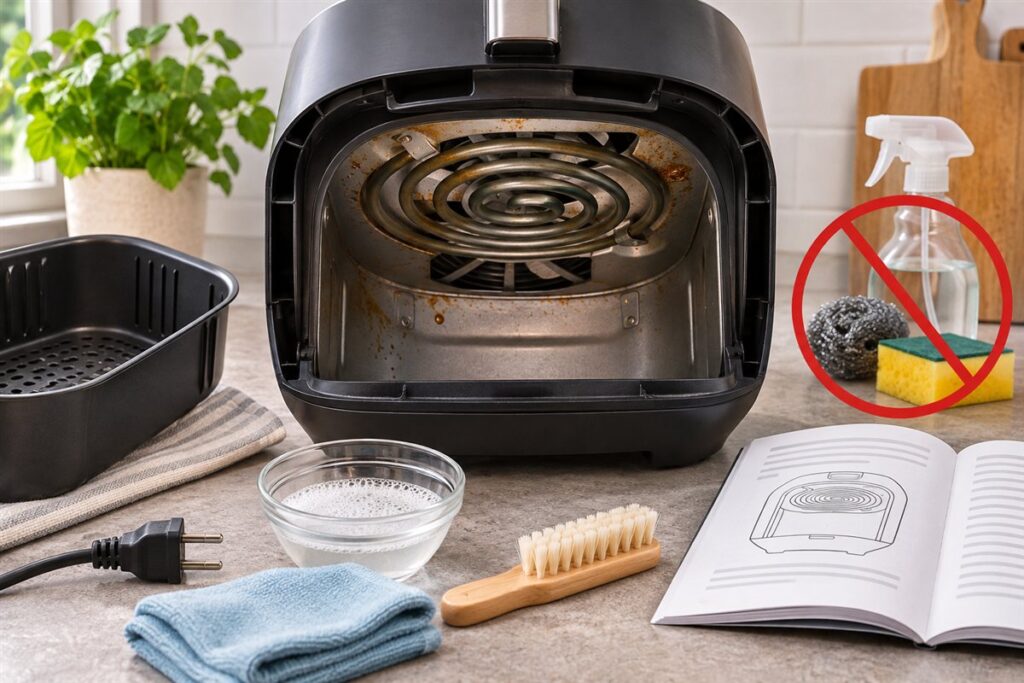
Clean the heating element only when the unit is off, unplugged, and fully cool, and only in the way your manual allows. A soft cloth or soft brush and a little care are usually all that is involved. If your manual does not describe cleaning this area, do not guess, and ask the maker.
Why Grease Gathers There
Hot fat splatters upward during cooking and lands on the top of the cooking chamber and the element. Over time it bakes on, makes smoke, and can leave smells. Regular light cleaning keeps it from building up into a thick layer.
Careful Cleaning Steps
- Switch the unit off and unplug it, then wait until every part is cool to the touch.
- Turn the unit upside down or tilt it only as far as the manual suggests, so you can see the element.
- Wipe the element and nearby surfaces with a damp, well-wrung soft cloth and a tiny amount of mild dish soap.
- Use a soft brush to loosen crumbs from crevices.
- Go over the area again with a cloth dampened with plain water only.
- Let everything dry fully before you plug the unit in and use it again.
Things Not to Do
- Do not pour water or cleaner into the cooking chamber or onto the element.
- Do not submerge the main body in water.
- Do not use sharp tools, steel wool, or harsh scouring pads.
- Do not use spray cleaners near the element or the controls.
- Do not bend, pull, or poke at the element.
How Often to Do It
A quick wipe when you notice splatter, and a more thorough pass every few weeks for regular users, is a sensible rhythm. Cleaning the basket and tray after each cook reduces what reaches the element in the first place. Adjust to how often you cook fatty foods.
When to Stop and Ask the Maker
If the element looks damaged, discolored in a strange way, or is hard to reach without taking something apart, stop and contact the maker. Never open the housing or work on electrical parts yourself.
Safety comes first with this task. Never switch the unit on to dry the element, and never use it again until you are sure no moisture or cleaning residue remains. Keep children and pets away while you work, and place the unit where you can see well, with good light. If anything about the process feels uncertain, skip it and ask the maker how to care for that part of your model.
Safety Preparation Before You Touch Anything
The heating element is part of an electrical appliance, so treat it with care. Before any cleaning, switch the unit off, unplug it from the wall and let it cool completely. Residual heat can linger well after cooking, and a warm element can burn skin. Move the unit to a stable, well-lit spot where you can see inside, and keep water, sprays and damp cloths away from the plug and cord.
Read the cleaning section of your manual first. Makers differ on what they allow, with some saying to wipe the element gently and others advising against touching it at all. Follow the manual over any general advice. If you no longer have it, look for a copy on the maker’s website or through the seller.
Prepare your tools. A soft cloth, a soft-bristled brush and a small amount of mild dish soap are usually enough. Avoid metal brushes, steel wool and sharp objects, which can damage the element’s coating or its wiring. Wear gloves if you prefer. Have a flashlight to see into the unit. If the unit has visible damage, such as bent or broken parts, loose wires or a burn mark, do not clean it yourself, and contact the maker instead.
Tools and Cleaners That Are Safe or Risky
Choosing the right cleaning products matters. A slightly damp cloth with a drop of mild dish soap, wrung out well, is a common gentle choice. A dry soft brush can lift loose crumbs. A cotton swab can help in tight corners. Do not pour water into the unit, and do not spray cleaner directly on the element.
Harsh cleaners can cause harm. Oven cleaners, strong degreasers and abrasive powders may leave residue that smokes the next time you heat the unit, or may damage coatings. Bleach and ammonia-based products are unsuitable for food appliances. Follow the maker’s advice on any specific cleaner.
- Usually acceptable: damp cloth, soft brush, cotton swab, mild soapy water used sparingly.
- Usually avoided: steel wool, scouring pads, sharp tools, strong chemicals.
- Never: submerging the main body or putting the element in water.
After cleaning, make sure there is no soapy film left. Wipe again with a cloth dampened with plain water, then dry with a clean towel. Let the unit air dry with the basket removed for a while so that moisture can escape before you plug it in.
Spotting Grease Buildup Early
Regular checks make cleaning easier. With the unit cool and unplugged, look inside with a flashlight. Brown or black spots on the element, a sticky film on nearby surfaces or crumbs lodged near the fan are early signs. A burnt smell on heating, even without food, can point to buildup.
Smoke is another warning. Some smoke from fatty foods is normal, but if it appears during every cook or starts at the beginning of the cycle, residue is a likely cause. White wisps often come from fat, while dark or acrid smoke may mean burnt residue or something wrong with the unit.
Think about the foods you cook. Bacon, burgers, sausage and anything with a marinade or sauce produce more splatter. Cooking such foods frequently means you should inspect more often. Keep the basket and drawer clean too, because grease on them can bake onto the element indirectly. A quick wipe of the interior after every few uses, when the unit is cool, prevents heavy buildup. This takes little time and extends the life of the appliance.
What to Do With Stubborn Residue
For hardened spots, avoid scraping. Gently soften the residue with a cloth that is slightly damp with warm soapy water, held against the spot for a short time with the unit unplugged. Then wipe with a soft brush or cloth. Repeat patiently rather than pressing hard. Pressing can bend the element or damage its coating.
Some makers recommend running the unit empty at a set temperature for a few minutes to burn off light residue after cleaning. Others advise against it. Check your manual, and never run the unit with cleaning product inside. Make sure the room is ventilated if you try this.
If residue remains in places you cannot reach, do not use sharp tools. Take note of what the manual says about disassembly. Do not remove panels unless the maker allows it, because doing so can void a warranty and expose live parts. If the buildup is heavy or you cannot clean it safely, contact the maker or an authorized service provider. Sometimes a replacement unit is the safer option, especially if the element is damaged or the unit continues to smoke after cleaning.
After Cleaning: Testing and Aftercare
Once everything is dry, put the parts back as shown in the manual. Plug in the unit and run a short empty cycle if the maker allows, in a ventilated area, to check for smoke or odor. A faint smell the first time after cleaning can come from leftover moisture or cleaner and should fade quickly. If a strong burning smell or smoke continues, switch off, unplug and let it cool.
Develop a routine to keep the element clean. After each use, let the unit cool and wipe the basket and drawer. Every few weeks, depending on your cooking, inspect the interior. Keep a record in a note on your phone so you remember when you last cleaned.
Know when to stop using the unit. Signs include a damaged or frayed cord, a bent or broken element, sparks, a persistent burning smell with no food, a tripped breaker, or controls that do not respond. In those cases, stop and seek help from the maker. Do not try to repair the heating element yourself. A well-kept air fryer usually performs better, uses energy more efficiently, and is safer to operate, so a few minutes of care pay off.
FAQ
Can I use vinegar on the element?
Check the manual. Many makers prefer mild dish soap and water, so avoid improvising with strong cleaners.
What if it smokes after cleaning?
Residue may remain, or the unit may still be damp. Let it dry fully, and contact the maker if smoke returns.
How often should I clean the heating element?
It depends on use. Check it regularly and wipe it when you see buildup, especially after cooking greasy foods.
Can I wash the element with water?
Do not soak or submerge it. If the manual allows wiping, use a barely damp cloth with the unit unplugged and cool.
Is it normal for the unit to smoke after cleaning?
A little smell can come from residue or moisture, but heavy smoke is a sign to stop and let it cool. Re-check for leftover buildup or cleaner.
Can I use a toothbrush?
A soft brush can lift loose crumbs, but avoid stiff bristles that could damage the coating. Follow the manual if it gives guidance.
Should I use baking soda?
Some people do, but it can leave powder residue. Check the manual first and make sure no residue remains.
What if the element looks damaged?
Stop using the unit and contact the maker. Do not try to repair it yourself.
Does cleaning the element improve cooking?
Clean parts help airflow and reduce smoke and odors. They can also help the unit work as intended.
The Short Version
Unplug, cool, wipe gently, and dry fully. Follow the manual, and leave anything beyond surface cleaning to the maker.









