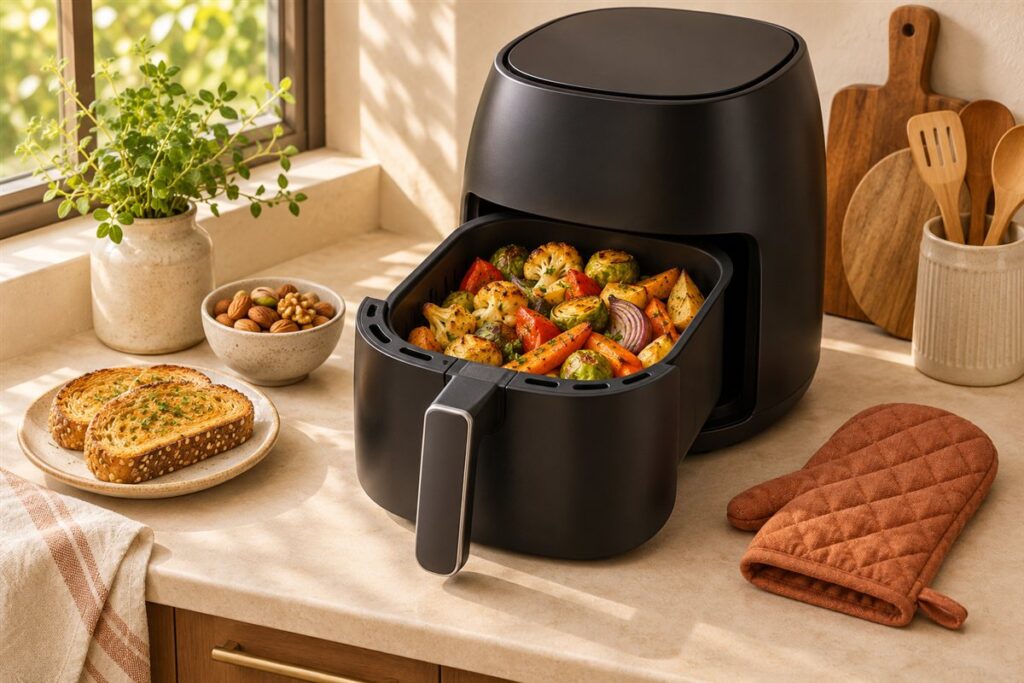
French fries turn out crisp in an air fryer when they are dry, lightly coated, and not crowded. Many cooks use roughly 375-400 F for about 12-20 minutes, shaking the basket partway through, then tweak the numbers for their own machine.
Two Routes, Two Sets of Steps
Fresh-Cut Fries
- Cut potatoes into sticks of similar thickness so they finish together.
- Soak the sticks in cold water for about 30 minutes, then drain.
- Dry them thoroughly with a towel. Wet fries steam instead of crisping.
- Toss with a small spoonful of oil and a pinch of salt.
- Cook in a single layer, shaking every 5 minutes or so.
Frozen Fries
- Check the bag for the maker’s directions, since coatings differ.
- Skip extra oil unless the package says otherwise.
- Spread them out and cook, shaking once or twice.
General Timing Guide
| Type | General range | Notes |
|---|---|---|
| Thin fresh | 12-16 minutes | Watch for fast browning |
| Thick fresh | 16-22 minutes | May need a lower heat near the end |
| Frozen straight cut | 10-16 minutes | Follow the bag first |
| Frozen wedges | 14-20 minutes | Turn them for even color |
These ranges are only a rough guide. Basket size, batch size, and the model all change the result.
Common Problems and Quick Fixes
- Soft fries: The basket was too full, or the potatoes were damp. Cook smaller batches and dry them better.
- Unevenly browned: Shake more often, or move fries from the edges to the middle.
- Dry or hard: Too much time. Shorten the cook and check sooner.
- Stuck to the basket: A light brush of oil on the basket can help.
Seasoning Ideas
Salt works best when added right after cooking, while the fries are still hot. Garlic powder, paprika, or dried herbs also work. Season fresh fries lightly before cooking only if the spices will not burn at high heat.
Doneness and Safety
Packaged fries come with the maker’s cooking directions, which should take priority. For fresh potatoes, cook until tender inside and golden outside. Check your air fryer manual for the maximum fill level and heat limits, and let the unit cool before cleaning.
Reheating Leftover Fries
Leftover fries can be refreshed in the basket at a moderate setting for 2-4 minutes. Spread them out, shake once, and check often, since they brown quickly the second time around.
Choosing Potatoes for Crisp Fries
The potato you choose changes the fry. Starchy, floury potatoes generally give a fluffy inside and a crisp outside, while waxy potatoes hold their shape and tend to stay denser and slightly creamier. Many cooks pick a starchy variety for classic fries, but a waxy potato still works if you like a firmer bite. Ask at the shop what a variety is best for, or check the bag description.
Look for firm potatoes without green patches, sprouts or soft spots. Green skin signals a bitter compound, so cut away any green areas or discard badly affected potatoes. Store potatoes in a cool, dark, dry place rather than in the refrigerator, which can alter their sugars and lead to darker, bitter fries. Washing is best done just before cooking.
Size matters too. Medium to large potatoes are easier to cut into uniform sticks than very small ones. Decide whether to peel. Skin-on fries are more rustic and keep more texture, while peeled fries look neater. Scrub the skins well if you leave them on. Whichever you choose, aim for sticks that are all the same thickness, since mixed sizes finish at different times and some will burn before others are ready.
Sweet potatoes and other root vegetables can be cut like fries too, but they brown faster and need their own batch.
Cutting, Soaking and Drying Techniques
Cut thickness sets the cooking profile. Thin shoestring fries crisp fast and can burn quickly. Standard sticks balance crispness and a soft center, while thick steak-style fries need longer and may stay softer inside. A stable cutting board and a sharp knife make the job safer; a slicing guide or a fry cutter can help if you do it often, provided you follow the safety instructions.
Soaking in cold water removes surface starch and can lead to crisper results. Soak the cut potatoes for a time suggested by a trusted recipe, then drain. Drying afterward is not optional: wet potatoes steam and turn limp, so pat them dry with a clean towel until the surface feels dry. Some cooks spread them on a towel for a few minutes to air dry.
- Cut sticks of the same thickness so they cook together.
- Rinse starch off if you want a crisper finish.
- Dry completely before adding oil.
- Season with salt after cooking for best texture.
Some cooks parboil the potatoes briefly before air frying. This is optional and adds an extra step, but it can give a softer, fluffier center.
A clean bowl of cold water for soaking and a clean towel for drying make the process quick, and a kitchen timer keeps you from forgetting the soak.
Oil, Seasoning and Flavor Variations
You do not need much oil. A thin coating on the potatoes is usually enough for browning, and too much can make fries greasy or cause smoke. Toss the potatoes with a measured amount in a bowl so every piece is lightly coated, rather than pouring oil straight into the basket. Choose an oil with a suitable smoke point for high heat, and check your manual for any limits.
Seasoning offers plenty of room to experiment. Plain salt is classic, but paprika, garlic powder, onion powder, chili flakes, black pepper and dried herbs all work. Add dry seasonings that can burn, such as fine herbs and sugar-containing blends, after cooking or near the end. Grated hard cheese is best sprinkled on hot fries right after they come out of the basket.
Try different directions: a smoky version with paprika and cumin, a herb version with rosemary and thyme, or a spicy version with cayenne and lime. For a dipping side, serve with ketchup, mayonnaise-based sauces, aioli, yogurt dips or curry sauce. Keep sauces ready so the fries do not sit and soften. Check labels on spice blends if you are cooking for people with allergies.
Test any new seasoning on a small handful first, because some blends are salty and can overpower the potato once concentrated.
Batch Cooking and Keeping Fries Crisp
Air fryer baskets are small compared with a conventional fryer, so you may need more than one batch. Keep each batch in a single, loose layer. A mound of fries blocks airflow and results in soft, pale pieces. Shaking the basket partway through helps pieces move around and brown evenly, and some cooks shift fries from the edges to the center.
To serve everything hot, keep finished batches warm in a low oven if you have one, spread on a tray rather than piled up. Covering fries traps steam and softens them, so leave them uncovered. Returning them to the air fryer for a minute or two at the end can crisp a batch that has gone slightly soft. Salt right before serving.
If you are cooking a full meal, plan the order. Fries can be cooked first and reheated briefly at the end, while meats or fish are cooked and rested. This is easier with a dual-zone model, but it works in single-basket units with a little planning. Always follow food-safety guidance for any meats cooked alongside, and keep raw foods away from ready-to-eat items.
A little preheating and a quick shake early on also help prevent sticking, especially when the basket is new.
Cleaning Up and Fixing Problems
Fries can leave starch and oil in the basket, so wash it when cool using warm soapy water and a soft sponge. Starchy residue hardens if left, so do not leave it overnight. Check the bottom of the unit for stray bits that fell through the slots, since these can smoke the next time you use the machine, and clean according to the manual with the unit unplugged and cool.
If fries are greasy, you likely used too much oil or did not dry them well. If they are pale, the heat may be too low or the basket too full. Burnt tips suggest the sticks were too thin, the heat too high or the batch was uneven. Adjust one thing at a time so you can see what makes the difference, and make notes for your own machine.
If your fries taste bitter, check for green patches or old potatoes. A burnt taste can come from leftover crumbs. If smoke appears, lower the temperature, check for fat or grease in the unit and consult your manual. Over time, you will learn the timing that suits your own air fryer and your favorite cut, and those notes beat any general chart.
FAQ
Do I have to preheat?
Not always. Preheating for a few minutes can help with browning, but follow your manual and the package directions.
How much oil do I need?
For fresh fries, about a teaspoon or two per potato is a common range. Frozen fries often need none.
Do I have to soak the potatoes?
No, but soaking removes surface starch and often gives crisper fries. If you do soak, dry the potatoes completely before adding oil.
Why do my fries stick together?
Starch and moisture cause sticking, or the basket is too full. Rinse, dry, use a light coat of oil and shake the basket partway through.
Can I cook fries from a mixed bag of vegetables?
It is better to cook potatoes separately, since they need a different time and moisture level. Vegetables that cook in a similar time can share the basket.
When should I add salt?
Many cooks add salt right after cooking so it clings to the surface without drawing out moisture. A tiny pinch before cooking is fine too.
Can I reuse the oil from the basket?
Air fryers use only a small amount of oil, so there is nothing to reuse. Wipe the basket and drawer clean after each cook.
Are skin-on fries healthier or better?
Skin adds texture and fiber and saves peeling time. Taste is a matter of preference, so try both ways.
The Short Version
Dry the fries, keep them in a single layer, and shake the basket during cooking. Use general ranges as a guide, adjust per model, and follow package directions and your manual.