
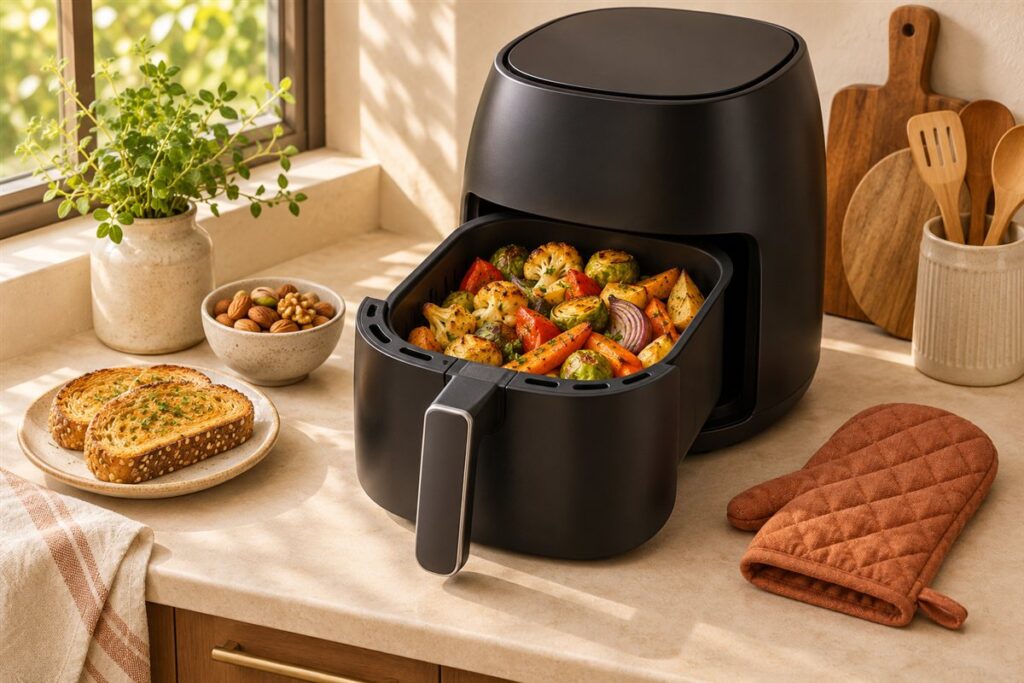
Pasta chips are a crunchy snack made by boiling small pasta, tossing it in oil and seasoning, then air frying until crisp. The whole process takes about 20 minutes, and most of it is the boiling.
What Works Best
Choose shapes that hold flavour and crisp easily: bow ties (farfalle), penne, small shells or rotini. Very long strands do not suit this method. Smaller pieces turn crunchy more quickly, while large tubes may stay chewy in the middle.
Step-by-Step
- Boil the pasta in salted water for about a minute less than the packet suggests, so it is firm but not hard.
- Drain well and spread on a towel. Pat dry. Moisture is the enemy of crunch.
- Toss in a bowl with a tablespoon of oil, and a spoonful of seasoning such as garlic powder, Italian herbs, paprika, or finely shredded hard cheese.
- Heat the air fryer to about 190 to 200 C (375 to 390 F).
- Spread the pasta in a thin layer. Do not pile it up.
- Cook for 3 minutes, shake, and cook for another 3 to 6 minutes, shaking again if needed.
- Remove when golden and fully crisp. They firm up further as they cool on a plate.
Seasoning Mixes
- Pizza style: oregano, garlic powder, a pinch of salt, and a little shredded parmesan.
- Smoky: smoked paprika and onion powder.
- Everything: sesame seeds, poppy seeds, dried onion and salt.
- Sweet: cinnamon and sugar, using very little oil.
Cheese and sugar burn faster than other seasonings, so keep an eye on the basket and use the lower end of the heat range if you add them before cooking.
Fixing Mixed Results
| What you see | Cause | Try |
|---|---|---|
| Chewy centres | Pasta too thick or too soft | Choose smaller shapes |
| Burnt tips | Heat too high | Lower by 10 to 20 degrees |
| Pieces flying around | Light pasta, strong fan | Cook a smaller batch |
| Bland taste | Seasoning did not stick | Season again while warm |
These chips keep best in an airtight tin or jar once fully cool, and they can be refreshed with a minute in the air fryer if they soften. Serve them with marinara, a yoghurt and herb dip, hummus or cheese sauce. They make a fun topping for soups and salads, too, much like croutons. Remember that the pieces are small and hard, so they are not suited to very young children, who may find them difficult to chew.
Pasta Shapes and How They Crisp
Not every pasta turns into a good chip. Shape and thickness decide how crunchy and how evenly the pieces cook. Small, flat or ridged shapes, such as bow ties, shells, or short tubes, tend to work well because they have enough surface to brown and a thickness that dries out quickly. Very large shapes can stay chewy in the middle, while very thin strands may burn or crumble.
Ridges help seasoning cling, and hollow shapes can trap oil, which makes them crunchy but sometimes greasy. Whole-wheat and legume-based pastas behave differently from standard wheat pasta, usually browning faster and producing a more rustic crunch. Fresh pasta contains more moisture and is generally less suitable than dried pasta that has been cooked and drained, so check your recipe.
The cook level of the pasta before frying matters too. Pasta boiled until just tender, with a bit of bite left, dries well. Overcooked pasta is soft and sticky, and it clumps in the basket. Draining thoroughly and letting the pasta dry on a towel or tray for several minutes before oiling gives the best base. Choose pieces of similar size so the batch cooks at the same rate, and keep in mind that very small shapes can fall through basket holes unless you use a liner or tray that is safe for your model.
Oil Amount and Coating Technique
Oil is what turns pasta into a chip, but too much makes it greasy and too little leaves it hard or dusty. Start with a small amount and add more only if the pieces look dry after tossing. A teaspoon or two per serving is often enough, but the right quantity depends on pasta shape and size.
- Toss in a bowl: Mix the oil and pasta in a bowl until every piece glistens evenly. This works better than drizzling in the basket.
- Use a spray: A pump sprayer gives a very light, even coat, and you can mist again halfway.
- Season while wet: Salt and dry spices cling best when the surface is slightly oily.
- Avoid clumps: Break apart pieces that stick together before they hit the basket.
Pat the pasta dry before oiling. Any water on the surface will steam rather than crisp. Use a neutral oil that handles high heat, or olive oil if you like its flavor, taking care it does not smoke. Shake or stir the basket during cooking so the pieces move and brown evenly. Lightweight pieces can blow around, so check that none are close to the element.
Flavor Families to Try
Pasta chips are a blank canvas, and seasoning in themed families keeps variety interesting. Dry seasonings work best because they cling to the oil and do not add moisture. Add fine powders before cooking, and delicate items like fresh herbs or grated cheese near the end or after.
Savory and cheesy: garlic powder, onion powder, grated hard cheese, or nutritional yeast. Add the cheese late in the process so it does not scorch. Italian style: dried oregano, basil, and a pinch of chili flakes. Smoky and spicy: smoked paprika, cayenne, cumin, or a pinch of chipotle powder. Tangy: powdered vinegar or a dusting of lemon zest after cooking. Sweet-savory: a little cinnamon with sugar for a dessert-style snack, applied after cooking so the sugar does not burn.
Start light with seasoning, because the flavors concentrate as the pasta dries. Taste a cooled chip and adjust, as hot pasta tastes different from cooled. If you use a store-bought seasoning blend, check the label for salt content and allergens. Pair the chips with a dip such as marinara, yogurt-herb sauce, hummus, or a cheese sauce. Serve in a bowl for sharing, but remember that dips can soften the chips, so offer them separately for people who prefer extra crunch.
Cooling, Storing, and Keeping Crunch
Pasta chips often feel slightly soft when they come out and firm up as they cool. Let them rest on a rack or flat tray for several minutes before judging crispness. Spread them out in a single layer so steam escapes. If they stay chewy once cool, return them to the air fryer for another short cycle.
Once fully cooled, store the chips in an airtight container at room temperature. Humidity is the enemy of crunch, so seal tightly and keep away from the stove or sink. A paper towel in the container can help absorb stray moisture. Consume within a few days for the best texture, and check for any off smell, particularly if the chips contain cheese or oil that can turn rancid.
To refresh softened chips, warm them in the air fryer for a minute or two at a moderate setting, watching so they do not burn. Don’t refrigerate them, as the fridge adds moisture. If you plan to make a large batch for a gathering, cook in rounds and combine them once cooled. Label seasoned batches if you make several flavors, and keep allergen-containing flavors, such as cheese, separate for guests. Crushed leftover chips make a good crunchy topping for soups, salads, and casseroles.
Using Leftover or Dried Pasta Wisely
Pasta chips are a good way to use leftovers, but not every leftover works. Plain pasta that was cooked and stored without sauce is the best candidate. Pasta with sauce, cheese, or oil clumps and tends to burn. If your leftovers have a light coating of oil already, reduce the added oil accordingly.
Leftover pasta from the refrigerator is often stiff and clumped, so separate the pieces and let them come to room temperature and dry on a towel before oiling. Pasta that has been stored for several days should be inspected for smell and sliminess; discard any that seems off. Following general food safety, cooked pasta should be refrigerated promptly and not kept for long.
If you are cooking pasta specifically for chips, boil it according to the package, but pull it a little earlier than you would for serving. Rinsing cools it and removes surface starch that causes sticking, while a good drain and dry-down prevents steaming. Whole-grain and gluten-free varieties have different textures; test a small batch first. Use shapes that are not too small, since tiny pieces can overbrown quickly. Keep notes on timing for each shape so you can repeat the results.
FAQ
Can I use leftover cooked pasta?
Yes, if it was stored in the refrigerator promptly and is a day or two old. Dry it well and cook as above.
Can I use dried uncooked pasta?
No. It stays hard and may not cook through. Boil it first.
Why are my pasta chips chewy instead of crisp?
They may have too much moisture, too little cooking time, or too much crowding. Dry the pasta well, cook in a single layer, and let the chips cool, since they crisp as they rest.
Why are some chips burnt and others pale?
Mixed sizes and uneven oiling cause this. Sort the pieces by size and toss them thoroughly.
Can I use gluten-free pasta?
Yes, though it browns and breaks differently. Cook it slightly less before air frying and watch closely.
What dips work best?
Marinara, ranch-style dressing, hummus, cheese sauce, or yogurt dips all suit. Serve dips separately to protect the crunch.
How long do the chips keep?
In an airtight container, they stay crisp for a few days if kept dry. Discard them if they smell stale or oily.
Can I add cheese before cooking?
Fine hard cheese works best added near the end, since it can burn if cooked the whole time.
Is it safe to leave pasta chips out for a party?
Plain chips are generally fine out in a bowl for a short time. Keep dairy-based dips chilled and replace them as needed.
The Short Version
Boil short pasta until firm, dry it, toss with oil and seasoning and air fry in a thin layer for about 6 to 10 minutes, shaking. Treat times as a baseline for your model and see your manual.









