
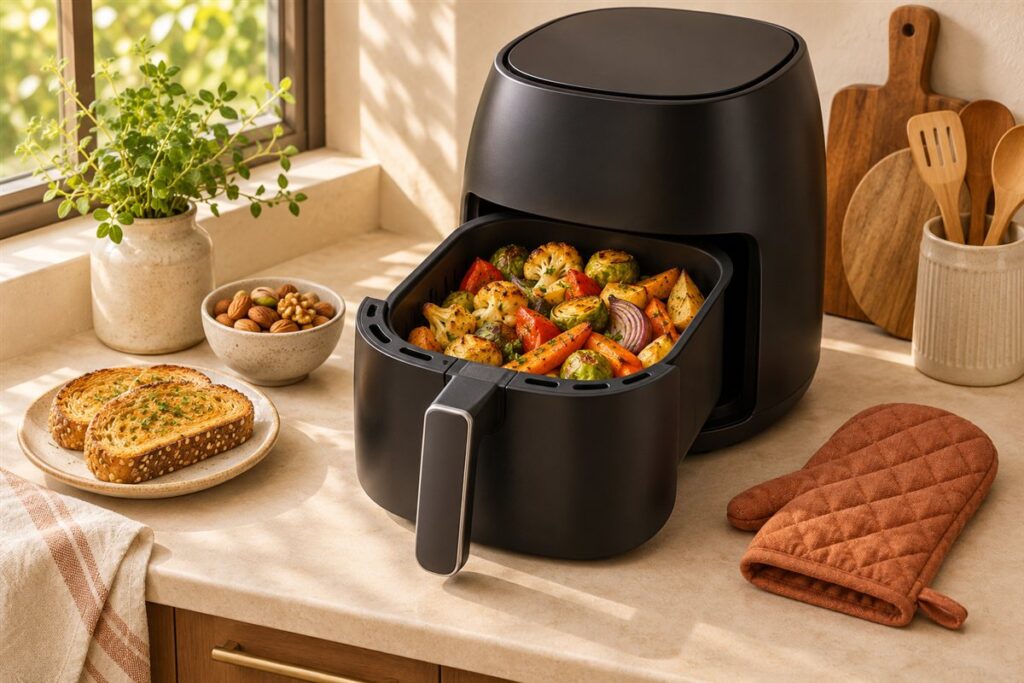
Cod is a mild white fish with large flakes, and it cooks in about 8 to 13 minutes in an air fryer. Keep the seasoning simple, avoid overcooking and let the fish rest for a minute before lifting it out with a wide spatula.
Why Cod Suits the Air Fryer
Cod fillets are fairly uniform in thickness, so they cook evenly in circulating hot air. Because the flesh is lean and delicate, it dries out if left too long. That makes short checks and a gentle approach important.
Cooking Walkthrough
- If frozen, thaw in the refrigerator overnight. Some packets allow cooking from frozen; if yours does, add a few extra minutes and follow its directions.
- Pat the fillets dry and brush with oil.
- Season with salt, pepper and your choice of garlic powder, paprika or dried herbs.
- Heat the air fryer to about 175 to 190 C (350 to 375 F).
- Place the fillets in a lightly oiled basket, leaving gaps between them.
- Cook for 8 to 12 minutes, depending on thickness. Check at the early end of the range.
- The fish is ready when it turns opaque and flakes easily. Also compare a thermometer reading with the food-safety guidance for fish.
Three Easy Toppings
- Lemon butter: melt butter with garlic and lemon juice, then spoon over after cooking.
- Herb crumb: mix breadcrumbs, parsley and a little oil, press on top, and cook as above.
- Spiced rub: cumin, coriander and smoked paprika, served with lime.
If you add a wet topping before cooking, expect slightly longer times and check the middle carefully.
Fresh Versus Frozen Cod
| Type | Prep | Rough time |
|---|---|---|
| Fresh fillet | Pat dry, oil, season | 8 to 11 minutes |
| Thawed fillet | Drain well, pat very dry | 8 to 12 minutes |
| Frozen, if packet allows | Brush with oil | 11 to 15 minutes |
Frozen fish releases extra water, so dry the surface when you can. These ranges are only a baseline; your own model may run quicker or slower.
Serving Ideas
Serve with roasted potatoes, a green salad, rice or flatbread. Cod also makes good tacos with slaw and a lime dressing. Store any leftovers in the refrigerator promptly and eat them within a day or so, reheating until hot.
Picking Cod Fillets and Judging Freshness
Good fish makes the cooking easy. When buying fresh cod, look for flesh that is moist, firm and translucent, with a clean, mild sea smell rather than a strong fishy odor. Fillets that look dry at the edges, gape apart or sit in cloudy liquid are best avoided. If you buy from a counter, ask when the fish came in and how it was stored, and keep it cold on the way home.
Frozen cod is a practical alternative and is often frozen soon after catching. Check the packaging for a sealed bag without heavy ice crystals, which can suggest thawing and refreezing. Individually wrapped portions are easier to cook evenly. Thick center-cut pieces cook more evenly than thin tail pieces, which can overcook before the thicker parts are done, so try to cook pieces of similar thickness together.
Plan your timing. Fresh fish should be cooked within a day or two, and thawed fish should be cooked soon after it is thawed. Thaw frozen fillets in the refrigerator, in their packaging on a plate to catch liquid. Remove any pin bones you can feel with clean tweezers, run a finger along the flesh to check, and pat the surface dry before seasoning. Wash hands and tools after handling raw fish.
Keeping Fish From Sticking or Falling Apart
Cod is delicate, so sticking and breaking are the usual frustrations. A light coating of oil on both the fish and the basket helps a lot. Make sure the basket is clean, as old residue grabs onto flesh. A perforated parchment sheet made for air fryers can create a barrier, but only use it if your manual allows and make sure the fish is heavy enough to hold it down.
Handle the fillets as little as possible. Place them gently, leave space between pieces, and avoid moving them until the surface has set. When it is time to remove them, slide a thin spatula or fish turner under the fillet rather than pulling with tongs. If you want to flip, wait until the fish releases easily; a stubborn fillet is not ready yet.
- Pat dry thoroughly, since surface moisture promotes sticking.
- Coat lightly with oil rather than heavily.
- Use a wide spatula to support the whole fillet.
- Skin-side down can help hold the fillet together.
Folded-over thin tails cook unevenly, so tuck them under only if you want a thicker piece, and adjust the time.
It is helpful to keep a small bowl of oil and a brush near the stove, so you can oil the basket and fish quickly without spilling.
Coatings, Breading and Batter-Style Options
Breaded cod can be satisfying in an air fryer, though the approach differs from deep frying. Wet batters do not work well because they drip off before they set. A dry coating, such as seasoned flour, egg and breadcrumbs, holds better. Pat the fillet dry, dredge it in flour, dip in egg, then press crumbs on firmly. Let it rest for a few minutes so the coating sets before cooking.
Oil is needed for browning. Brush or spray a thin layer over the crumbs before cooking, using a method suitable for your basket. Panko gives a crisp finish, while crushed crackers or cornflakes add their own flavors. Seasoning the crumbs with paprika, garlic powder, lemon zest or herbs prevents a bland crust. Fish sticks and prepared breaded fillets from the freezer usually come with their own directions, which should take priority.
Check for doneness with care. Coating can look done before the inside is, so cut into the thickest part with a fork to see if the flesh is opaque and flakes, and compare against food-safety guidance for fish. If the coating is browning too quickly, lower the temperature slightly. Serve straight away, as the crust softens when it sits.
Sauces, Sides and Serving Ideas
Cod has a mild flavor, so sauces and sides do much of the work. Tartar sauce, a squeeze of lemon, garlic yogurt, salsa and a mango or pineapple relish all pair well. Make sauces ahead so they are ready when the fish comes out. Herb butter melted over the hot fillet adds richness without extra cooking.
For sides, think about what cooks in a similar time. Potato wedges or sweet potato fries can go in first, then be kept warm under foil while the fish cooks. Green beans, asparagus and broccoli usually cook quickly and can share the basket if they are kept to one layer. Fresh options such as a slaw, a green salad or cucumber salad add contrast to the soft fish.
Cod also works in tacos, sandwiches, rice bowls and fish pies. Flake cooked fillets into a bowl with herbs for fish cakes or pasta. If you serve fish with rice or noodles, prepare them while the fish cooks to avoid long waits. Keep raw and cooked fish separated and use clean plates and utensils for serving.
Sauces made ahead and chilled keep well, and you can warm them gently while the fish rests for a minute or two.
Storing Leftovers and Reheating Fish Gently
Cooked fish should be cooled promptly and refrigerated in a covered container. Food-safety guidance generally recommends eating cooked fish within a short time, so check trusted local advice for how long it keeps. Do not leave it sitting out, and avoid storing it uncovered, as it can pick up other odors in the refrigerator and dry out.
Reheat gently, because fish toughens and dries easily. A short time in the air fryer at a moderate temperature works for sturdy fillets, ideally covered loosely with foil to protect the surface. Check it often, and stop as soon as it is hot all the way through. Microwaving can work for flaked fish with a splash of sauce, and a lower power setting reduces rubberiness.
Leftover cod can be turned into other meals rather than just reheated. Flake it into salads, mix with mashed potato and herbs for fish cakes, or stir into a creamy pasta sauce at the end of cooking. If you plan to freeze it, wrap it tightly and label the date, although texture may soften after thawing. Discard any fish with an off smell or slimy texture.
If you plan to use leftovers cold in a salad, cook the fish a touch less so it does not turn dry after chilling.
FAQ
Can I cook cod with the skin on?
Yes. Place the skin side down and dry it first so it crisps. Many people leave it on for easier lifting.
Why is my cod watery?
Probably the fish was not dried or was frozen. Pat it well and cook in an uncrowded basket.
How do I know when cod is cooked through?
The flesh turns opaque and flakes easily with a fork at the thickest part. You can also compare a thermometer reading with local food-safety guidance for fish.
Should I remove the skin before cooking?
It is optional. Skin helps hold the fillet together and can crisp when dried well. Skinless fillets cook a little faster and are easier to coat.
Can I cook cod with a sauce on top?
Yes, though wet toppings may lengthen the cooking time and soften the surface. Add thick toppings like butter or a crumb mixture, and check the middle carefully.
Why is my cod rubbery?
It was likely overcooked. Check earlier, use fillets of even thickness and stop as soon as the flesh flakes.
Is the smell of fish in my air fryer normal?
A mild smell is common. Wash the basket promptly with warm soapy water, air it out and follow your manual for cleaning the unit.
Can I cook cod together with other fish?
You can if the pieces are similar in thickness and cooking time. Delicate or thin fish cooks faster, so add it later or cook in a separate batch.
The Short Version
Dry, oil, season and cook cod at a moderate setting for about 8 to 12 minutes. Check for opaque, flaky flesh and food-safety guidance, then refer to your manual for model details.









