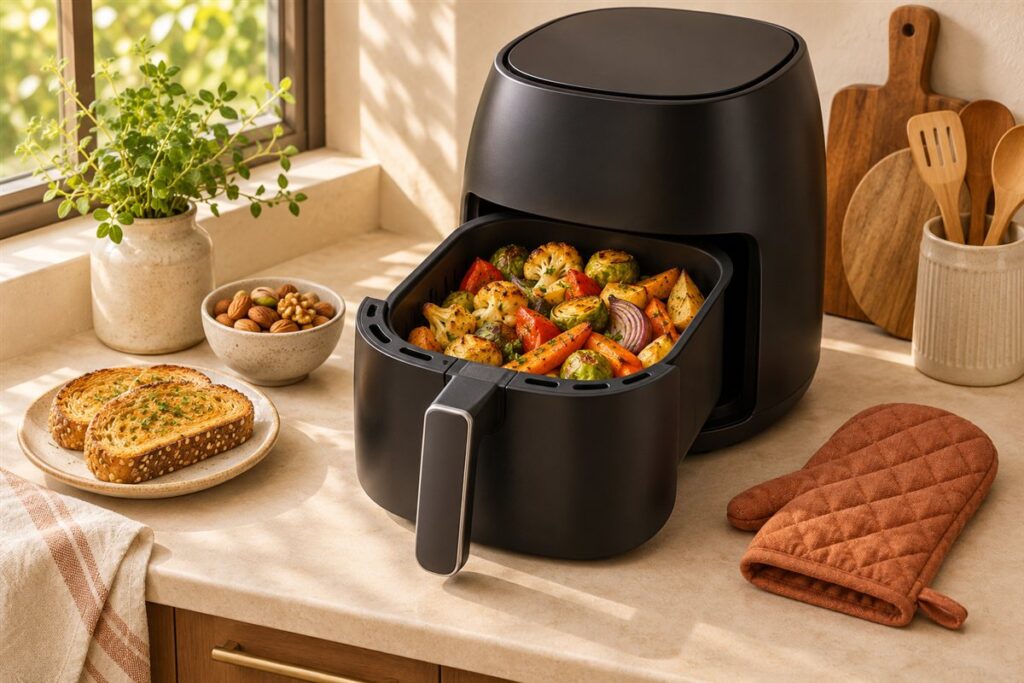
Cauliflower florets brown well in an air fryer in roughly 10 to 18 minutes. Cut them evenly, toss with a little oil and shake the basket partway through, and you will get golden edges with a tender middle.
Cutting and Seasoning
Remove the leaves and core, then break the head into florets of similar size, about the width of a golf ball or a bit smaller. Dry them well after rinsing; wet florets steam instead of browning.
- One tablespoon of oil is plenty for a medium head.
- Add salt, pepper, garlic powder, smoked paprika, curry powder or lemon zest.
- Toss in a bowl so every piece is lightly coated.
Plain Roasted Version
- Spread the florets in the basket without piling them high.
- Set the temperature to around 180 to 200 C (355 to 390 F). Adjust to suit your model.
- Cook 6 minutes, shake or stir, then cook another 4 to 10 minutes.
- Stop when the edges are browned and a fork slides in with little resistance.
Small florets finish sooner than big ones, so remove any that are ready and keep cooking the rest.
Crunchy Coated Bites
For a snack-style version, dip florets in a thin batter or a beaten egg, then roll them in breadcrumbs or crushed cereal. Spray or brush lightly with oil so the coating browns.
- Arrange the coated pieces in one layer, not touching.
- Cook at about 190 to 200 C (375 to 390 F) for 10 to 14 minutes, turning once.
- Serve straight away with a dip, since the crunch softens as they sit.
If you use egg in the coating, make sure the pieces are cooked through and hot in the middle, as food-safety guidance recommends for egg dishes.
Troubleshooting
- Soggy results: the florets were wet or the basket too full.
- Burnt tips with hard centres: the pieces were uneven or the heat too high.
- Bland flavour: season again with salt after cooking, plus a squeeze of lemon.
For a more filling dish, roast the florets plain and then finish them in a bowl with a spoonful of tahini, yoghurt or a herb dressing. Leftover roasted cauliflower keeps in the refrigerator for a short time and can be warmed in the air fryer for a few minutes, which brings back some of the browning. Chop it into salads, fold it into omelettes or blend it into a simple soup. Always cool and store leftovers promptly, following normal food-safety guidance.
Picking a Good Head of Cauliflower
Good results start with the vegetable. Look for a head that feels heavy for its size, with tight, compact florets and no brown spots or soft patches. The leaves, if still attached, should look fresh and green and not wilted or yellowing. A strong, sulfurous smell suggests age. Color varies by type: white is the most common, while purple, orange and green varieties are also sold, and they can add visual interest to a plate. Cooking times and flavor differ slightly, so check any labeling or advice at the point of sale.
You can also buy cauliflower pre-cut as florets, which saves time but can cost more and may be less fresh. Check the date and the look of the pieces. Frozen florets are convenient and often prepared at peak freshness, but they hold extra moisture and brown less easily. Choose according to how often you cook it and how much prep time you have.
- Pick a head with firm, tight florets.
- Check pre-cut packs for dryness and signs of browning.
- Smaller heads often suit a single basket load.
- Keep any leaves, as the tender ones can be roasted too.
Rinse the cauliflower only when you are ready to cook, and dry it well. If you notice small insects or soil in the florets, soak briefly in cold water, then drain and dry thoroughly before seasoning.
Flavor Profiles to Try
Cauliflower is mild, which makes it a good canvas for seasoning. Think in styles and build from there. For a warm, earthy style, use cumin, coriander, turmeric and a pinch of chili. For a smoky style, try smoked paprika and garlic powder. For a fresh style, use lemon zest, dried herbs and black pepper. A curry-inspired blend with ginger and mild spices turns plain florets into a main dish.
Cheese, in moderation, adds richness. A light dusting of finely grated hard cheese in the final minutes can brown nicely, though it can burn, so watch closely. For a sweet and savory finish, a drizzle of honey or maple syrup with chili flakes after cooking balances heat, but add it after the cook to avoid burning.
- Season after oiling so spices stick.
- Add fresh herbs, citrus juice or a splash of vinegar after cooking.
- Toss with a thick sauce at the end, not before.
- Taste before serving, then adjust the salt.
If you are cooking for people with different tastes, split the florets into two bowls with different seasonings, and cook them in separate zones or batches. Keep any allergens in mind, particularly in spice blends, sauces and coatings, and read labels carefully.
Steaks, Wedges and Other Cuts
Florets are not the only option. Thick slices of cauliflower, often called steaks, cut through the center of the head, make an impressive main course. Cut them about as thick as a good steak so they hold together, brush lightly with oil, season and cook until the edges are browned and the thickest part is tender. Steaks need to fit flat in the basket, so choose a head that matches your basket width, and be gentle when turning them.
Wedges are another approach. Cut a small head into wedges through the core so that the core holds each piece together. These cook well with oil and seasoning and look appealing. They take longer than loose florets, so check the thickest part with a fork or knife.
Cauliflower can also be grated or pulsed into small, rice-like pieces. Cook these in a shallow layer, with only a little oil, and stir often. They dry quickly and can brown at the edges. Squeeze out excess moisture from raw rice-style pieces before cooking, if they were washed or frozen.
The leaves and tender stems are edible. Chop the stem into small pieces and cook them with the florets, as they take slightly longer, or slice and roast them separately. Using the whole vegetable cuts waste and adds texture.
Making It a Meal
Cauliflower fits into many meals when you plan around it. Roasted florets can go on a grain bowl with rice, quinoa or couscous, beans or chickpeas, and a sauce such as a yogurt-herb dressing or tahini. Stuffed into a warm flatbread or wrap with salad and sauce, they make a satisfying lunch. Tossed through pasta with garlic, olive oil, lemon and herbs, they add substance.
For a plant-based main, serve steaks over a bed of lentils or mashed beans with a bright sauce. For a family meal, serve florets alongside a protein, such as chicken or fish cooked separately, and a simple starch. Crunchy coated bites make a good snack or party food with dips.
Balance texture and flavor. Cauliflower is soft inside and crisp outside, so pair it with something fresh and crunchy, like raw cabbage slaw, cucumber or pickled onions. Add acid and herbs to lift the dish.
If you plan to cook other items in the same appliance, think about timing. Cook the vegetables first, keep them in a warm place uncovered so they stay crisp, then cook the next item. Prepare sauces and sides ahead so everything comes together.
Dietary and Ingredient Notes
Cauliflower is naturally free of gluten, dairy and meat, but the way you prepare it may add them. Coatings with flour, breadcrumbs or batter contain gluten unless made from gluten-free alternatives. Egg, cheese and yogurt-based sauces contain animal products. Check the labels of every ingredient if you are cooking for someone with an allergy or dietary requirement.
For a coating that suits more people, consider gluten-free crumbs or crushed cereal that is labeled gluten-free. For a vegan version, replace egg with a plant-based alternative or use a thin paste of flour and plant milk. Test small batches first to see how the coating behaves.
Some people find cauliflower causes bloating or discomfort, because it contains compounds that some digestive systems handle slowly. If that applies to you, try small portions and see how you feel. For specific medical questions, ask a health professional.
Cauliflower can be a way to add vegetables to meals for children who are not keen. Let them help to season and choose a dip. Keep pieces appropriately sized and check they are not too hot for small mouths. Always serve food at a safe temperature.
FAQ
Can I cook frozen cauliflower?
Yes, though it holds extra moisture. Cook it straight from frozen at a fairly high temperature and allow a few more minutes, shaking often.
Can I cook a whole head?
A small head can fit in some baskets, but it takes longer and browns unevenly. Florets are far easier. Check your manual for basket capacity.
How do I choose between white and colored cauliflower?
All can be cooked the same way. Colored types add visual interest, and flavor differences are mild. Check any advice on the label.
Should I blanch cauliflower before air frying?
It is not required. Pre-steaming can soften large pieces but can add moisture, so dry well afterward.
Can I cook the leaves?
Tender leaves can be roasted with a little oil until crisp at the edges. Watch them closely, as they brown quickly.
How do I stop the florets from drying out?
Use a light coat of oil, avoid overcooking and cut pieces to a similar size. A sauce or dressing at the end adds moisture.
Can I make cauliflower rice in an air fryer?
Yes, in a shallow layer with a little oil and frequent stirring. Squeeze out excess moisture if the pieces are wet.
What sauces go well with cauliflower?
Yogurt-herb dressings, tahini sauce, spicy chili sauce and lemon-garlic mixes are common choices. Add them after cooking to protect the crisp edges.
Is cauliflower suitable for people avoiding gluten?
Plain cauliflower is gluten-free, but coatings, sauces and seasoning blends may not be. Check every label.
The Short Version
Cut evenly, dry well, toss with a little oil and cook hot with a shake in the middle. Coat the florets if you want crunch, and adjust timing for your own model.