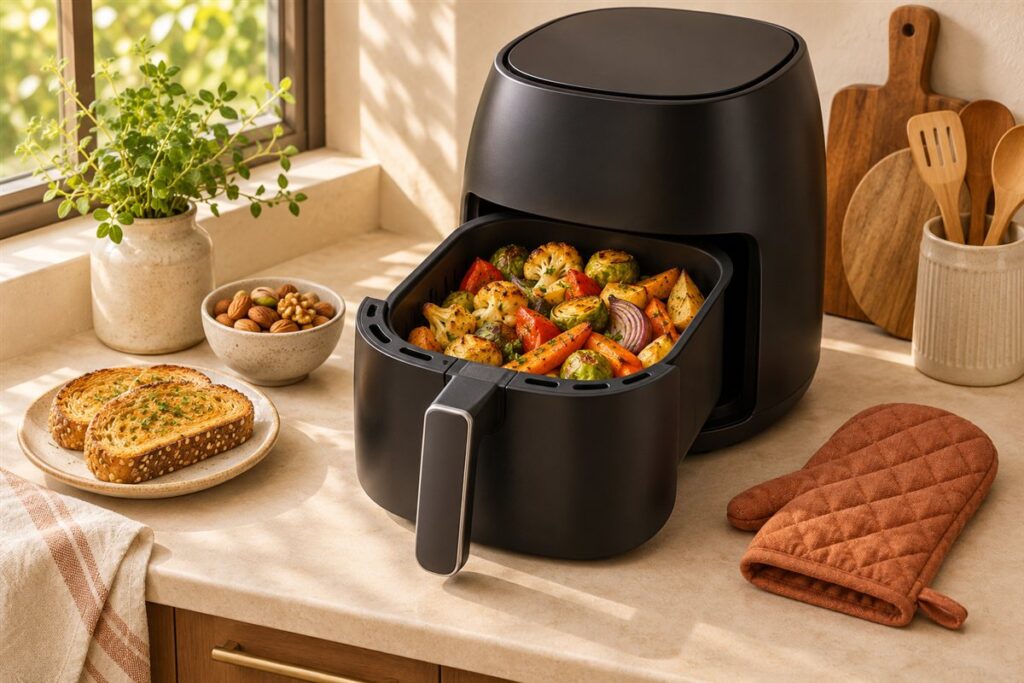
Most frozen foods can go straight into the air fryer without thawing, which is part of why the appliance is so handy. Follow the package directions as your base, use a single layer, and check that food is hot all the way through.
A Simple Routine
- Read the package. Many list air fryer directions, and if not, use the oven directions as a loose guide with a lower temperature and shorter time.
- Preheat the unit if your manual suggests it.
- Shake off loose ice crystals so they do not turn into extra steam or water in the drawer.
- Spread food in a single layer with small gaps between pieces.
- Shake or turn the food partway through the time.
- Check the center of the thickest piece. It should be steaming hot, and meat, poultry, and fish must reach the safe internal temperature shown on the package.
Foods That Suit This Method
- Fries, wedges, and hash browns.
- Breaded chicken pieces and fish portions.
- Spring rolls, dumplings, and small pastries.
- Vegetables such as green beans or broccoli florets.
Foods with thick sauces, wet batter, or a lot of cheese can melt and drip, so these are often better handled in the oven or according to specific package advice.
Keeping Frozen Food Crisp
Frozen items release moisture as they heat. A crowded basket traps that moisture, which leads to soft spots. Cook in batches if needed, and keep the pieces from touching. Most coated foods already contain oil, so extra oil is rarely required. Pat vegetables dry and use only a light spray if the package suggests it.
Frozen Food Quick Guide
| Type of food | Handling tip | Done when |
|---|---|---|
| Fries and potato items | Shake midway | Golden and crisp at the edges |
| Breaded meat or fish | Flip once | Hot throughout, with a thermometer reading as directed |
| Frozen vegetables | Keep a single layer | Tender with browned tips |
| Filled pastries | Space apart | Crisp outside and hot in the middle |
Common Slip-Ups
The biggest mistakes are piling in too much food, skipping the mid-cook shake, and trusting the first time estimate. Another is adding more oil than the product needs, which can cause smoke. If a package gives separate oven and air fryer directions, follow the air fryer ones. Let hot food rest briefly before eating, because fillings can stay very hot after the outside feels cool.
Reading Labels and Package Directions
Frozen food packaging contains the most useful guidance you have. Most packages list oven times and temperatures, and some now include air fryer directions. If yours only shows oven instructions, a common approach is to lower the temperature somewhat and shorten the time, then check early, but treat that as a starting point rather than a rule, since every machine differs.
Labels also tell you whether the food is raw, partly cooked, or fully cooked. This matters for safety. Raw or partly cooked products, especially meat, poultry, and seafood, must reach a safe internal temperature. Fully cooked products only need reheating until hot throughout. Look for phrases such as “cook thoroughly” or “keep frozen” and follow them.
Check the serving size and the number of pieces per batch, which helps you decide whether to cook in rounds. Look for allergen statements, particularly for coated items that may contain wheat, egg, milk, soy, fish, or shellfish. Some frozen foods are designed for microwave only, such as items in steam bags or trays with special sleeves, and should not go in an air fryer. If a package says not to cook in a particular way, respect it. Save the directions for products you buy regularly, so you can note the settings that work in your machine.
Loading the Basket for Airflow
How you load the basket affects texture more than most settings. Frozen food releases ice and water as it heats, and that moisture needs somewhere to go. If pieces are piled up, steam gets trapped and the result is soft, pale food. A single layer with small gaps is ideal.
Keep a few habits in mind.
- Shake or turn: Rearranging pieces midway lets every side meet the airflow. Small items such as fries benefit from shaking, while delicate pieces are better turned with tongs.
- Do not overfill: A basket filled to the top is likely to cook unevenly. Many manuals give a maximum fill line.
- Separate clumps: Break apart items that froze together before cooking.
- Mind the lightweight pieces: Some small items can lift in the fan. Weigh them down or use a rack if your manual permits.
Cook items of similar size together. Mixing large and small pieces means the small ones finish early. If you must cook different foods in one load, add the slower item first and the faster one later. A divider, where supplied, lets you cook two items side by side, but check that airflow is not blocked.
Preheating and Oil Choices
Many frozen foods benefit from a brief preheat because the hot basket starts browning the underside right away. Skipping it is not harmful for most items, but it can lengthen cooking. Follow your manual, and preheat if your model has the option.
Oil is another question. Most commercial frozen foods, such as breaded items and fries, are par-fried or coated with oil before freezing, so they typically need no added oil. A light spritz of oil can improve color on items that look dry, such as plain vegetables or lightly coated pieces. Use a pump sprayer or brush rather than aerosol products if your manual warns against propellant sprays, which can damage nonstick coatings over time.
Choose oils suited to high heat, and apply sparingly. Too much oil makes food greasy and can cause smoke, particularly when fat drips onto the hot parts of the drawer. For plain frozen vegetables, toss them in a small amount of oil and seasoning before cooking, since frozen produce often arrives without any. For sugary or sauced items, check whether the instructions call for lower heat to prevent burning.
Food Safety With Frozen Meats and Seafood
Cooking from frozen is convenient, but it needs extra care for raw products. Because the outside can brown before the inside is hot, always check the internal temperature with a thermometer. Commonly cited safe minimums are 165 F for poultry and 145 F for fish, and ground meats have their own guidance, so follow your local food safety agency and the package.
Thick, dense pieces such as large chicken breasts, whole roasts, or big cuts may be better thawed in the refrigerator first, since cooking them from frozen can lead to a burnt outside and cold center. Thin, small, or pre-cooked items handle direct cooking well. When in doubt, choose to thaw safely in the refrigerator rather than on the counter.
Avoid cross-contamination. Wash hands and any tongs or plates that touch raw frozen meat, and do not put cooked food back on a surface that held raw pieces. Do not partially cook and then store for finishing later. Refrigerate leftovers promptly, and reheat them until hot throughout. If a package has thawed completely in the freezer bag or smells off, do not take chances. Discard it rather than risk illness.
Cleaning Up and Maintaining the Machine
Frozen foods, especially coated ones, leave crumbs, grease, and sometimes sauces in the basket, and a dirty appliance smokes, smells, and cooks poorly. Make cleaning part of the routine. After the machine has cooled, remove the basket and drawer, discard loose crumbs, and wash them with warm, soapy water and a non-abrasive sponge. Check whether your parts are dishwasher-safe in the manual before putting them in.
Stuck-on residue responds to a short soak in warm, soapy water. Avoid steel wool and harsh scrubbers, which scratch nonstick surfaces. Wipe the interior and the area around the heating element with a damp cloth once the unit is unplugged and cool, since baked-on grease there is a common source of smoke. Let all parts dry thoroughly before reassembling.
Watch for signs of wear. Flaking or peeling nonstick coating, persistent smoke, or odd smells even after cleaning can mean it is time to look at the manufacturer’s guidance, or consider a replacement basket or unit. Place the machine on a stable, heat-resistant surface with space around the vents, and never leave it running unattended for long periods. Regular care protects your investment and keeps your food tasting as it should.
FAQ
Should I thaw food first?
Usually not for items made for oven or air fryer cooking. Large frozen cuts of raw meat are different, so follow the package and your manual.
Why is the outside brown but the middle cold?
The temperature may be too high or the pieces too thick. Lower the heat a little, add a few minutes, and check again.
Can all frozen foods go in an air fryer?
No. Items in microwave-only trays or steam bags, very wet or batter-heavy foods, and anything the package warns against should be cooked another way.
Should I lower the temperature from the oven directions?
Many people do, and shorten the time, but check early. Your own manual or the package may offer a better guide.
Why does my frozen food come out soggy?
Crowding, trapped steam, or ice crystals are common causes. Use a single layer, shake midway, and remove loose frost before cooking.
Is it safe to cook frozen meat directly?
Thin or small pieces often can be, if you confirm a safe internal temperature. Thick cuts are better thawed in the refrigerator first.
Can I reuse leftovers from a frozen meal?
Yes, if refrigerated promptly and reheated until hot. Do not refreeze food that was thawed on the counter.
Do I have to preheat?
Not always. Preheating can improve browning, so follow your manual and your preference.
Why do some items burn at the edges?
Thin edges and sugary coatings brown first. Lower the setting and check earlier.
Can I cook two different frozen foods at the same time?
Yes, if they fit in a single layer and finish at similar times. Otherwise stagger the start.
The Short Version
Cook frozen food straight from the freezer using package directions, a single layer, and a mid-cook shake. Confirm doneness in the thickest piece before you serve.