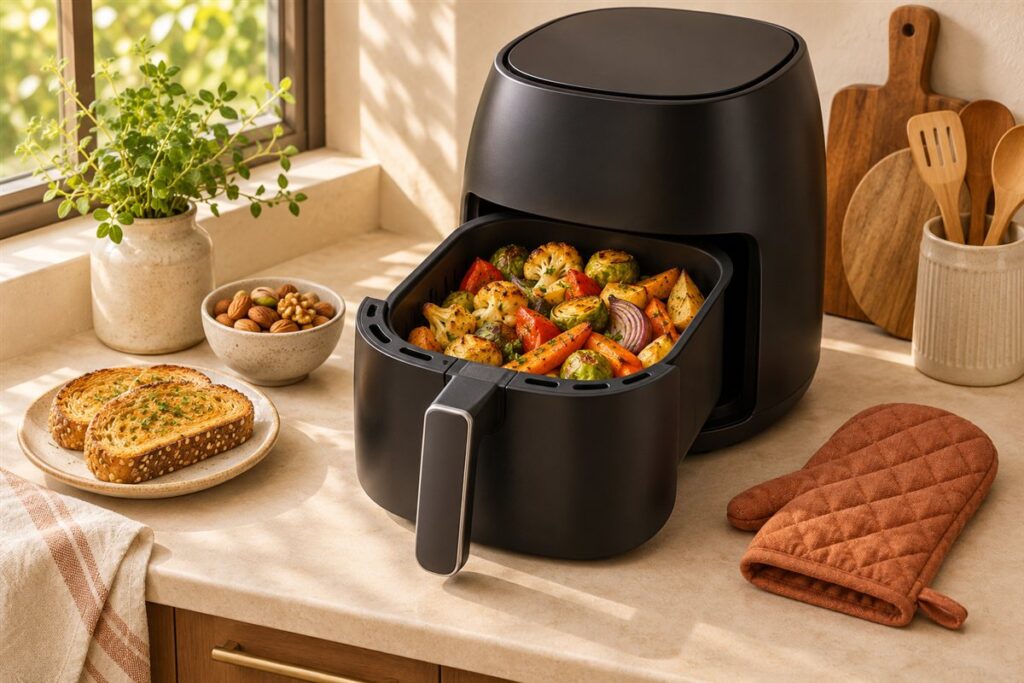
Frozen fish sticks are well suited to an air fryer. They usually take about 8-12 minutes at roughly 380-400 F, and the coating browns without a pan of oil. As always, the package directions come first, since maker recipes and thicknesses differ.
Simple Steps
- Check the package for the suggested temperature and time.
- Preheat the air fryer for a few minutes.
- Place the frozen sticks in a single layer, with small gaps between them.
- Cook for about 5 minutes, then turn each stick over with tongs.
- Cook for another 3-7 minutes, until the coating is golden and crisp.
- Break one open to confirm it is hot and fully cooked in the middle.
Why Turning Matters
The air moves mostly from above, so the underside can stay pale. Turning once brings an even color to both sides. If your basket has a flat solid base, lift the sticks slightly with tongs so air reaches below them. A light spray of oil is optional, but many coatings already contain enough fat to brown on their own.
A Comparison of Forms
| Product | General range | What to watch |
|---|---|---|
| Classic fish sticks | 8-12 minutes | Turn once |
| Thick fillets in crumbs | 12-16 minutes | Check the thickest part |
| Battered fillets | 10-15 minutes | Batter may brown fast |
| Fish bites | 6-10 minutes | Shake the basket |
Serving Ideas
- Tuck into soft rolls with lettuce and a sauce for a quick sandwich.
- Serve with lemon wedges and a creamy dip.
- Plate with potato wedges and vegetables cooked in the same machine, adding each at a time that lets everything finish together.
Food Safety and Cleaning
Seafood products should be heated according to the package and official food-safety guidance. A food thermometer gives a clear reading if you want to be sure. Fish can leave a smell in the drawer, so empty it once the unit has cooled and wash the basket as your maker’s manual recommends. A splash of lemon juice in warm wash water can help with odor.
Making a Quick Sandwich
Fish sticks fit neatly into a soft roll or toasted bun. Add lettuce, sliced gherkins, and a spoonful of tartar sauce or yogurt dressing. For a lighter plate, serve them with a crunchy salad and lemon wedges. Cook the buns briefly in the basket after the fish is out, watching the color.
What Is Inside the Coating
Fish sticks are made from fish fillets or blocks of minced fish that are shaped, coated, and frozen. The coating is usually a breadcrumb or batter layer designed to crisp when heated, and manufacturers may partially fry it before freezing. This is why most fish sticks need little or no added oil in an air fryer.
Labels reveal what you are buying. Look for the type of fish listed, such as pollock or cod, and whether the product uses whole fillet pieces or formed blocks. Check the ingredient list for allergens, which commonly include fish, wheat, and sometimes egg, milk, or soy. If sustainability matters to you, look for any labeling on the package that describes how the fish was sourced, and read what it actually says rather than assuming.
The package will also say whether the sticks are fully cooked or raw. Fully cooked products only need reheating until hot throughout, while raw or partially cooked ones need full cooking. When in doubt, cook until the center is hot and the coating is golden. Reading these details helps you set expectations for texture: thick coatings stay crunchier, while thin coatings brown faster and can darken at the edges. If you notice a strong off smell when opening the bag, do not eat the product.
Doneness Signs Beyond Color
The coating can brown before the inside is hot, so color alone is not enough. Use a few checks together. A good first step is to look at the thickness: thicker sticks take longer to heat through than thin ones, regardless of how brown they look.
- Cut test: Break one stick open. The interior should be steaming and the fish flaky and opaque, with no icy or cold spots.
- Thermometer: Insert a probe into the center. Check the package for the target temperature, since food safety guidance for fish is commonly 145 F.
- Sound and feel: The coating should feel firm and dry rather than soft or damp.
- Steam: Visible steam when you break a stick suggests the center is hot.
If the outside is dark but the inside is not ready, lower the temperature and add a few minutes, rather than raising the heat. If the coating is pale but the fish is hot, extend cooking briefly or add a very light spray of oil. Let the sticks sit for a minute before serving, since the interior holds heat that can be much hotter than the outside feels.
Sauces and Dips for Fish Sticks
Fish sticks are mild, so a good sauce makes a difference. Classic tartar sauce combines mayonnaise with chopped pickles, capers, onion, herbs, and lemon. You can make a quick version at home, adjusting acidity and chunkiness to taste. Cocktail sauce, with ketchup and horseradish, adds tang and heat.
Lighter options include yogurt mixed with dill, lemon zest, and a pinch of salt. A squeeze of fresh lemon over the hot sticks brightens the flavor, and malt vinegar is a traditional fit for fish and chips. Mustard-based sauces, hot sauce, aioli with garlic, and sweet chili sauces all work. For children, a mild dip such as ketchup or ranch-style dressing may be easier to accept.
Taste as you build a sauce and add acid gradually. If you buy a prepared sauce, check the label for allergens such as egg, milk, or fish. Serve sauces in small bowls rather than directly on the plate to keep the coating crisp. Homemade sauces containing raw egg or fresh dairy should be refrigerated, and any dip that has sat out for a long time should be discarded. Offer a variety so everyone can pick their favorite.
Turning Fish Sticks Into Meals
Beyond a quick snack, fish sticks can be the center of a balanced plate. Pair them with a fresh side that cuts through the richness of the coating. Slaw, a green salad, cucumber slices, or steamed peas all fit. For a classic combination, add potato wedges or fries cooked in the same machine, starting whichever takes longer first.
Several ideas can stretch a box into different dinners.
- Tacos: Break the sticks into pieces and tuck into tortillas with cabbage, lime, and a creamy sauce.
- Wraps and rolls: Layer with lettuce, tomato, and sauce.
- Rice bowls: Serve over rice with pickled vegetables and a drizzle of sauce.
- Salad topper: Slice and scatter over greens for added crunch.
Plan portions by appetite. Children may eat a handful, while adults often eat more. If you are cooking for several people, a second round keeps the food crisp. Add vegetables to the meal so the plate has variety, and check the nutrition panel if you track sodium or other values. Leave a few uncooked in the bag rather than cooking the whole box at once, so leftovers are never a problem.
Avoiding Sogginess and Freezer Burn
Quality starts in the freezer. Return opened bags to the freezer promptly and seal tightly, pressing out air. A box left partly open can develop freezer burn: dry, whitish patches that affect texture, though they are generally safe. Large ice crystals inside the bag may suggest the product thawed and refroze, which reduces quality.
Sogginess usually comes from steam. Keep the sticks in a single layer, do not stack, and avoid thawing before cooking, which releases water. If your machine tends to produce soft coatings, try a short preheat and make sure the basket is clean and dry. After cooking, place the sticks on a rack or clean plate instead of a covered dish, which traps steam.
Leftover cooked sticks keep in a covered container in the refrigerator for a short time, usually a day or two. They lose crunch, but reheating in the air fryer for a few minutes at a moderate setting brings back some of it. Do not refreeze sticks that were cooked from frozen and then cooled, unless the package says it is acceptable. Discard fish that smells strong or has a slimy surface.
FAQ
Should I thaw fish sticks first?
Not usually. Most are made to be cooked from frozen, but follow the label.
Why did the coating fall off?
Rough handling or sticking to the basket can strip it. Turn gently, and brush the basket with a thin film of oil if sticking is a problem.
Do I need to spray oil on fish sticks?
Usually not, since the coating already contains fat. A light mist can help if they come out pale.
Can I cook fish sticks and chicken nuggets together?
Yes, if they fit in a single layer and have similar cooking times. Check the center of each type for doneness separately.
How many fish sticks fit in one batch?
It depends on the basket size. Keep them in a single layer with small gaps, and cook in rounds if needed.
Are fish sticks fully cooked when frozen?
Some are, but many are only partly cooked. Check the package and cook until hot throughout.
Can I use parchment under the sticks?
Perforated air fryer parchment can help prevent sticking if your manual allows it. Do not let loose paper lift toward the element.
Why do my fish sticks taste dry?
Overcooking is the usual cause. Reduce the time slightly and check the center sooner.
Are fish sticks suitable for gluten-free diets?
Most contain wheat in the coating, but gluten-free versions exist. Read the label carefully.
The Short Version
Cook frozen fish sticks without thawing in a single layer for about 8-12 minutes, turning once. Follow the package, check they are hot throughout, and use your manual for settings.