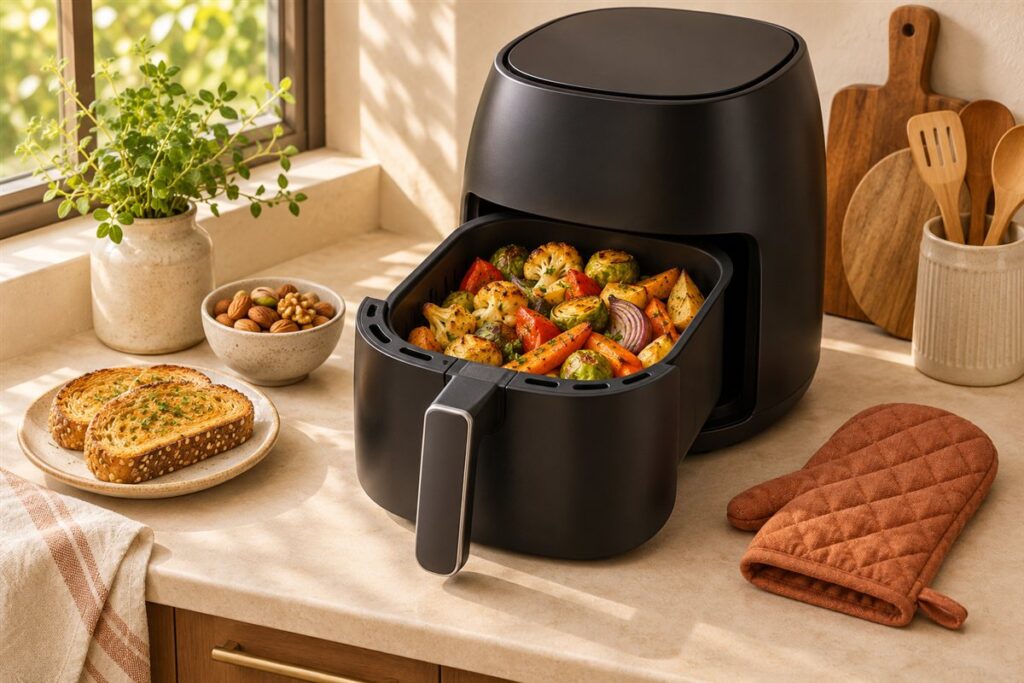
To convert an oven recipe, lower the temperature a little, shorten the cooking time, cook in a single layer, and check early. The exact change depends on your model, so use the numbers below as a loose guide and follow your maker’s manual.
Step-by-Step Conversion
- Read the original recipe and note the temperature, time, and pan type.
- Lower the temperature by a modest amount, since air fryers brown food quickly.
- Cut the time noticeably, then plan to check well before the original time ends.
- Divide large batches so food sits in a single layer with air around each piece.
- Shake, flip, or turn food partway through for even color.
- Confirm doneness with a food thermometer for meat, poultry, and fish.
What Works Well and What Does Not
Foods that crisp in an oven usually do well in a fryer: roasted vegetables, breaded pieces, small cuts of meat, and frozen snacks. Some recipes need extra care:
- Wet batters can drip through the basket before they set, so choose thick coatings or breading instead.
- Loose leafy greens and light cheese can blow around from the fan.
- Large roasts and tall casseroles often do not fit well.
- Very saucy dishes can splatter and may be better in the oven.
Adjusting Pans and Containers
If the recipe uses a baking dish, check that your basket can hold a dish that fits with room around the sides. Use only containers your maker says are suitable for your unit, and keep them clear of the heating element. Smaller portions in smaller dishes often work better than a full-size recipe.
Conversion Quick Reference
| Oven recipe detail | Air fryer adjustment |
|---|---|
| High oven temperature | Lower it a bit, then raise later if needed |
| Long roasting time | Shorten and check often |
| Full tray of food | Cook in two or more batches |
| Sheet pan layout | Spread in a single layer in the basket |
| Foil or parchment lining | Follow your manual; never block airflow |
Worked Example
Say a tray of roasted potatoes calls for 425 F for 35 minutes. In the fryer you might try a somewhat lower setting, cook a smaller batch, and look at the food after about 15 to 20 minutes. If the edges are golden but the centers are firm, add a few minutes. Write the final numbers beside the recipe so the next batch needs no guesswork, and repeat for each recipe you convert.
Choosing Recipes That Convert Well
Not every oven recipe is worth converting, and picking the right ones saves frustration. The best candidates are recipes built around dry heat and browning: roasted vegetables, chicken pieces, sausages, fish fillets, potato dishes, meatballs and anything with a breadcrumb or crumb topping. These all benefit from the strong, circulating heat of the appliance.
Recipes that depend on gentle, even heat or a lot of liquid do less well. Cakes with runny batter, custards, casseroles with deep sauce and bread that needs a long, steady rise and bake are harder, because the fan can dry the top or set the outside before the center is ready. Small versions of baked goods, such as muffins or individual portions, can work if you use suitable molds and follow guidance written for your type of appliance.
Look at the quantity too. If a recipe feeds six and your basket holds one layer for two people, plan batches or halve it. A recipe that calls for a large roasting tin or tall dish needs rethinking. Read the method and ask these questions:
- Does the food fit in a single layer in the basket or on a tray?
- Does it need steam or moisture to cook properly?
- Will the fan blow away light toppings?
- Is there a step that needs a lid, a water bath or a very long bake?
If the answers raise concerns, consider cooking part of the dish another way, then finishing it in the air fryer for color and crunch.
Adapting Fats, Liquids and Sauces
Moisture and fat behave differently in an air fryer. Recipes written for an oven often include more oil than you need, because air fryers brown with less. Start with a light coat and add only if the food looks dry. If a recipe asks you to pour oil over the tray, toss food in a bowl with a small amount instead.
Liquids evaporate fast in a ventilated chamber. Sauces can reduce too far, burn or spatter. Where a recipe adds stock or sauce to the pan from the start, consider cooking the food dry first and adding sauce at the end, or keeping the sauce separate and warming it on the hob. Marinades should be drained and the food patted dry before cooking, or the surface will steam and brown poorly.
Sugar-rich glazes and toppings burn quickly in strong airflow, so apply them for the last few minutes of the cook. Cheese toppings can melt and blow around, so press them down or add them late.
- Reduce added oil and increase it only if needed.
- Pat marinated food dry.
- Add sticky glazes toward the end.
- Serve sauces on the side if they would drip through the basket.
Taste and adjust seasoning at the end, since flavors can concentrate as moisture leaves the food.
Containers, Pans and Accessories
An oven recipe may call for a baking tray, a loaf tin or a casserole dish, and these rarely fit a basket. You have a few options. You can cook directly in the basket in a single layer, use a small dish that your maker allows, or use a tray or rack designed for your model. Whatever you use, make sure it leaves space for air around the sides and above, and never lets food touch the heating element.
Check material suitability. Metal, ceramic and silicone containers are often used, but follow the manual about what is safe at the temperatures you will use. Avoid containers with plastic parts or glued handles that cannot take heat. Lightweight containers can shift in the airflow, so weigh them down with food or choose a stable one.
Parchment and foil need care. Perforated liners made for air fryers are the safest choice if the maker allows them. Foil may be restricted. A loose sheet can fly into the element, so never place it in the unit without food to hold it down. Solid sheets also block airflow.
When a dish is smaller than the original tin, cut the quantity of ingredients to match, since a thick layer will cook unevenly. Handle hot dishes with proper gloves and lift them straight out, taking care to avoid spills.
Testing, Timing and Keeping Notes
Conversion is part guesswork, so test cautiously. On your first try, check the food early and often. Open the basket and look at color, texture and size, and use a thermometer on meat, poultry and fish. If the outside is brown but the inside is not ready, lower the heat and extend the time. If food is pale, raise the heat a little or cook a bit longer.
Make changes one at a time, so you know which adjustment helped. Record the original recipe details and what you changed: temperature, time, quantity, container, oil and any mid-cook steps like shaking or flipping. Add a note about the result, including how you would change it next time.
A simple notebook or a note inside your recipe folder works well. Over a few months you will build a small collection of tested conversions, which is far more reliable than any general rule. It also tells you how your own unit behaves compared with ovens. Some units run hotter or cook faster than others, so your numbers may differ from someone else’s.
Share your notes with other cooks in the household, so everyone can reproduce the result. Treat figures from online recipes as rough guidance, and follow your manual for safe use.
Combining the Oven and the Air Fryer
You do not have to convert every part of a recipe. Some meals work best when the oven and the air fryer share the work. Roast a large main dish in the oven while the air fryer handles crisp sides, or cook the base of a dish in the oven and finish it in the air fryer for browning. Reverse the order if you prefer: cook food in the air fryer first, then keep it warm in a low oven while you prepare other items.
This approach helps with timing for larger meals. The air fryer’s small capacity becomes less of a limit if it handles only one component. It also saves energy when you only need a small amount of crisping, since you avoid heating a full oven for a single tray of vegetables.
Some practical pairings include oven-cooked chicken with air-fried potatoes, oven-baked pasta with air-fried garlic bread, or a pot of soup with air-fried croutons. Think about how each element is best cooked and choose the appliance accordingly. Keep food safety in mind when holding food warm: do not leave cooked food at room temperature for long, and reheat until steaming hot. The aim is a simple, well-timed meal, using each appliance for what it does best.
FAQ
Do I always need to lower the temperature?
Not always, but it is a good first move for foods that brown quickly. If the outside darkens before the inside cooks, lower it further and add time.
Can I use the recipe’s exact times at first?
Treat them only as an upper limit. Check early and write down the new timing on the recipe so the next batch is easier.
Can I bake a cake in an air fryer?
Small cakes can work in suitable molds, but results vary. Use a recipe written for air fryers and check the manual for container guidance.
Why is my converted dish burnt on top but raw inside?
The heat may be too high for the thickness of the food. Lower the temperature, extend the time and consider covering loosely if the manual allows.
Do I need to preheat when converting recipes?
Follow your manual. Preheating often helps with browning, but some units do not need it.
Can I use my oven dishes in the air fryer?
Only if they fit with space around them and are safe for the temperature. Check the manual and the dish maker's guidance.
How do I convert a recipe that serves a crowd?
Divide it into batches that fit in a single layer. Keep the later batches chilled until needed and keep cooked food warm uncovered.
Should I cut food smaller for the air fryer?
Evenly sized pieces cook more uniformly. Smaller pieces cook faster, so check early.
What if the recipe uses a lid?
Lids trap steam, which an air fryer is not designed for. Consider cooking that dish in the oven or on the hob and using the air fryer for finishing.
The Short Version
Lower the heat slightly, cut the time, avoid crowding, and check often. Keep notes on each conversion so you build your own reliable set of recipes for your unit.