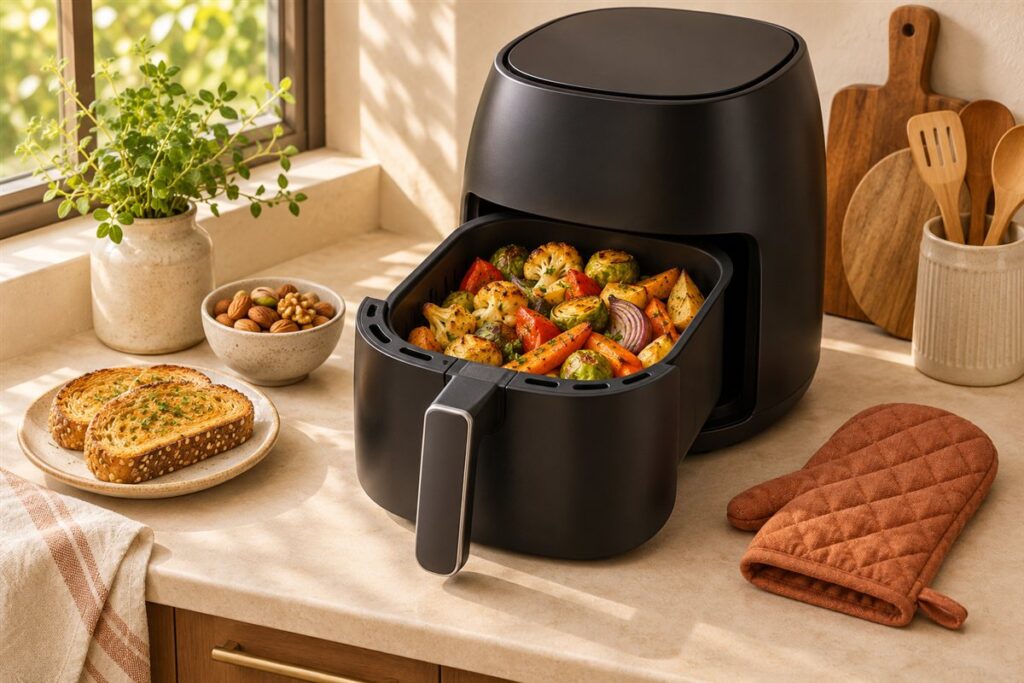
In a small kitchen, you can store an air fryer in a low cabinet, on a sturdy shelf, on a cart, or in a pantry. Whatever you choose, let the unit cool completely and dry before putting it away, and pull it out to a clear spot before each use.
Storage Spots to Consider
- Lower cabinet: Keeps the weight low and the counter free. Choose a cabinet with a wide opening.
- Pantry shelf: Works if the shelf is at waist height and sturdy.
- Rolling cart: Easy to move toward the counter when needed. Choose a cart with brakes or stable wheels.
- Open shelf or corner: Keeps it ready to use, but needs space for ventilation.
- Top of the fridge: Usually not a good choice, since the heavy weight is hard to lift and warm air may collect there.
Steps for Putting It Away
- Turn the unit off and unplug it.
- Wait until the outside, drawer, and basket are fully cool.
- Wash and dry the basket and drawer as the manual allows.
- Wrap the cord loosely, not tight around the body, to avoid strain.
- Store the basket inside the unit or beside it, as the maker recommends.
- Place it on a flat surface where it cannot be knocked over.
Keeping Accessories Organized
Small racks, liners, and tongs can get lost. Use a shallow bin or a drawer divider so they stay together near the unit. Keep an oven mitt or a pair of heat-resistant gloves hanging on a hook nearby. A simple labeled box means you can grab everything in one move and set up in a minute.
Storage Options Compared
| Option | Good for | Think about |
|---|---|---|
| Low cabinet | Occasional use | Lifting weight each time |
| Rolling cart | Frequent use, flexible layout | Floor space and stability |
| Pantry shelf | Hidden storage | Distance from outlet |
| Counter corner | Daily use | Clearance and heat |
Making It Easy to Use
The best storage place is the one you will actually use. If you have to dig the unit out from behind other pots, it will end up unused. Store the heaviest appliance at the front, and keep a clear path from the cabinet to the counter. Write the clearance your manual asks for on a note inside the cabinet door as a reminder.
Measuring Before You Commit to a Spot
Storage plans fail most often because of a few missing measurements. Start with the air fryer itself: width, depth, and height with the handle and any raised parts included. Then add the space the unit needs when it is in use, which is longer than the storage footprint, since the drawer pulls out and vents need clearance. Your manual will tell you how much open space to leave on each side and above the unit while cooking.
Next, measure the storage spot. For a cabinet, check the opening, not only the inside, because shelves, door frames, and hinges can narrow the gap. For a shelf, check the depth and the clearance above it so you can slide the unit in without tilting. Include the cord and plug in your plan, and check that the cord will not be pinched when the door shuts.
Think about the route between storage and the cooking spot. A clear path matters, because you will carry a hot or heavy appliance only a short distance if you plan well. Check for door swings, narrow gaps between fixtures, and anything else that will block your way. Finally, consider the height. A shelf above shoulder level makes lifting awkward and risky, so choose a height between hip and chest for a heavy unit. A quick tape measure session takes ten minutes and prevents a lot of rearranging later.
Vertical and Hidden Storage Tricks
Small kitchens often have more space than it seems if you look up and sideways. A sturdy shelf unit or a freestanding rack can add a level for appliances, as long as it is rated for the weight of the air fryer and stands level on the floor. Check the stated load limit for each shelf, and avoid placing heavy items high.
- Tall pantry cabinet: A pull-out shelf or a sliding tray makes a deep cupboard easier to use, since you slide the unit out without bending into the cabinet.
- Under-counter drawer: A wide, deep drawer can house a compact unit if it supports the weight and the drawer runners are sturdy.
- Appliance garage or counter nook: A recessed space with a lift-up door keeps the unit near the outlet, but only if it has clearance for ventilation during use.
- Side of a cabinet or end of an island: A small cart or shelf can fit in narrow gaps.
- Another room: A hallway cupboard or a utility area can work when the kitchen is very tight, though it adds carrying.
Whatever you choose, make sure the unit sits level, cannot slide, and is not wedged against hot items. A non-slip mat under the unit can stop it moving when the door opens or closes, as long as it is not used while the machine is cooking.
Protecting the Unit and Surfaces
How you store an air fryer affects how long it lasts. Dust, damp, and knocks all take a toll. Before storing, make sure every part is clean and dry, because trapped moisture can cause odors, spotting, and mold. Wrap the cord loosely, and avoid kinks or tight bends. If you have the original box, you can use it for long-term storage, but it takes up space, so many people prefer a dust cover or a clean cloth.
Think about the environment. A cupboard next to the oven or cooktop can get warm, and repeated heat is not good for plastic parts or electronics. Likewise, a spot under the sink may be damp. Choose a cool, dry area away from steam and splashes. Keep the unit away from cleaning chemicals that could leak or spill, and do not store it where it might be knocked by other heavy items.
Protect surfaces too. A hot unit can mark a counter, wooden shelf, or cart top, so let it cool fully before storing. Place a felt pad or a thin mat under the base if it could scratch the shelf. If you store the basket separately, line the shelf or use a soft cloth between the basket and other items to avoid scratching the coating. Check periodically that nothing has leaked or shifted, and clear crumbs from the area.
Storage for Different Kitchen Types
Small kitchens vary a lot, and the best option depends on the layout. In a galley kitchen, the walkway is narrow, so a rolling cart may block movement. A shelf near the end or a cabinet at the end of the run is often better. In a studio flat with an open plan, the unit may sit in a living area, so consider a cabinet that hides it or a neat shelf where it looks tidy.
In a rental, avoid changes that need drilling if the lease forbids them. Freestanding shelves, carts, and over-door racks are options that leave no marks. In a shared kitchen, keep the unit in a labeled box or bin so it stays clean and is clearly yours. If several people use it, put a note about clearance and unplugging near the usual spot.
For families with young children, keep the unit out of reach, with the cord tucked away so it cannot be pulled. For very small counters, consider whether the air fryer can replace another appliance, such as a toaster or a small oven, and free up space that way. Always keep a safe, open spot near a socket for cooking, since the best storage solution still has to allow safe use.
Keeping the Routine Simple
The best system is one that takes little effort. If getting the air fryer out feels like a chore, it will stay on the shelf. Break the routine into small, repeatable steps: take it out, plug it in, cook, cool, clean, and put it back. Keep accessories in a bin beside the unit, so that you carry one thing instead of five.
Try a two-minute reset after each use. Wipe the exterior, check the drawer is dry, and put the cord away. This keeps clutter from building up and prevents grease from hardening. If you cook with it every day, a counter spot may be worth the space, as long as you keep the area clear of items that could block vents.
Review your setup every few months. Habits change, and a spot that worked at first may not suit later. If you find you rarely use the unit, move it to deeper storage. If you use it often, move it closer. Keep the manual in a labeled folder or a digital copy on your phone for quick reference. A few tweaks will keep the arrangement working and the kitchen calm. Small, steady habits matter more than any single storage product.
FAQ
Can I store it with food inside?
No. Empty the basket and clean it so crumbs and oil do not attract pests or cause odors.
Is it fine to cook in the cabinet?
No. Always take the unit out and give it open space for airflow, because heat and steam can damage cabinets.
How much clearance does an air fryer need when in use?
It varies by model, so check the manual. Generally the vents need open space, and the unit should not sit against a wall or under low cabinets.
Can I store the basket inside the unit?
Many makers allow it once everything is clean and dry. Check the manual, and make sure nothing presses on the coating.
Is it okay to keep the air fryer on the counter all the time?
Yes, if you have space and keep the vents clear. Wipe it regularly and keep it away from the edge, the stove, and the sink.
What is the best way to store the cord?
Wrap it loosely without tight bends and keep it away from sharp edges. Avoid winding it tightly around the body of the unit.
Should I keep the original box?
It can protect the unit during a move or long storage, but it takes up space. A dust cover or cloth is fine for everyday storage in a clean cabinet.
Can I store an air fryer in a garage?
Temperature swings, damp, and dust can harm electronics and finishes. A dry indoor space is a safer choice.
The Short Version
Choose a low, sturdy spot, store the unit only when clean, dry, and cool, and keep accessories together. Always bring it to an open area before you cook.