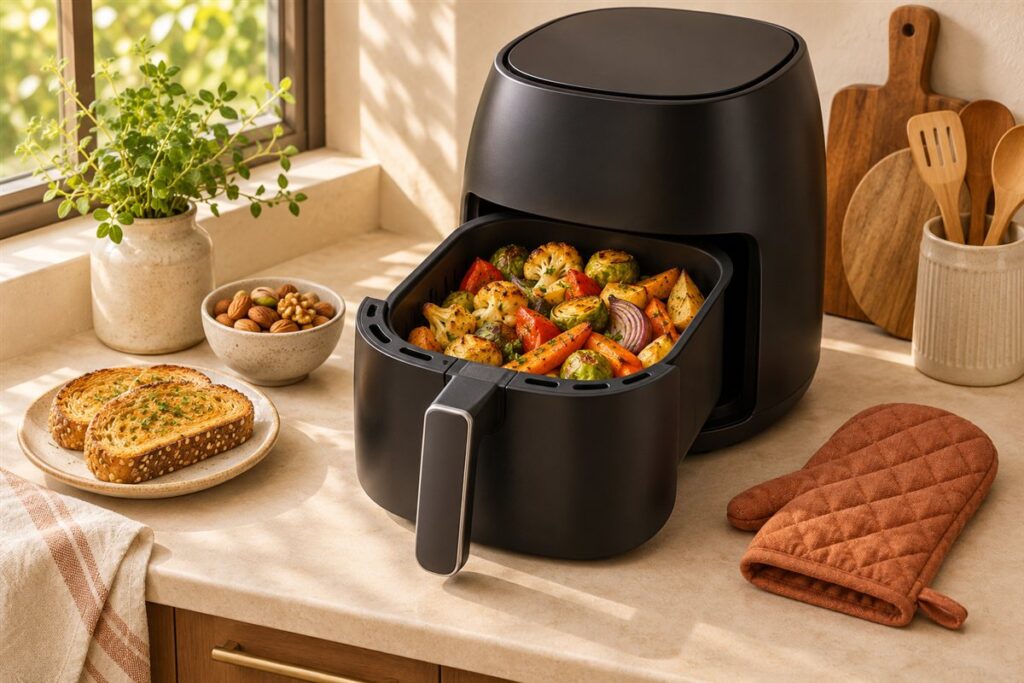
You can bake small cakes, egg bites, and casseroles in many air fryers if the pan fits and is made for the heat. The key points are size, material, and airflow. This guide walks through each.
Types of Pans and Molds
- Round cake pans: good for small layer cakes and deep dish items.
- Muffin and egg bite molds: often silicone, in single or multi-cup shapes.
- Loaf-style pans: narrow, useful for small breads.
- Ramekins: handy for egg dishes and single-serving desserts.
- Casserole dishes: larger, so check fit with care.
Materials Compared
| Material | General traits | Things to check |
|---|---|---|
| Metal | Heats quickly and gives browned edges | Coating care instructions |
| Silicone | Flexible and easy to release food | Stated heat limit and a firm base |
| Ceramic or glass | Heats slowly and holds warmth | Whether the maker allows air fryer use |
Never assume a dish suits every cooking method. Look for a clear statement from the maker about heat limits, and follow your air fryer manual.
Getting the Fit Right
Measure the inside of your basket, then leave a gap of a finger or two around the pan so air can move. A pan that fills the entire space may cook the top and sides unevenly. Pans with low sides let heat reach the food better than tall ones.
If your air fryer has a drawer-style basket, check that the drawer still closes fully with the pan inside.
Simple Baking Tips
- Grease or line the pan as the recipe says.
- Fill it no more than about halfway for batters that rise.
- Lower the temperature slightly if the recipe was written for a full oven, and check the maker’s guide for advice.
- Test doneness with a skewer near the end of the time.
- Let the pan cool a few minutes before turning out the food.
Care and Storage
Wash pans soon after they cool, using a soft sponge so coatings last. Silicone molds can hold onto oils, so a soak in warm soapy water often helps. Dry everything fully before stacking, and keep molds flat so they hold their shape. Check each item for dents or peeling before every use, and replace anything that looks worn.
Handling Hot Pans
Pans stay hot long after cooking. Use a gripper or sturdy mitts to lift them, and set them on a heatproof surface. Keep your face back when you open the unit, since steam can rush out.
How Shape and Depth Affect Results
Two pans with the same volume can bake very differently in an air fryer because the shape changes how air reaches the batter. A shallow, wide pan exposes more surface to moving air, so the top browns and sets sooner. A deep, narrow pan holds the batter in a thick column, and the center can lag behind while the top darkens.
For cakes and breads, a pan with moderate sides is usually the safest choice. For egg bites and muffins, small cups spread the batter thinly, so they tend to cook through quickly and evenly. Tall ramekins work well for custards and egg dishes, but they benefit from a little extra time at a gentler setting.
Consider these points when comparing shapes:
- Straight sides make it easier to lift and release food.
- Sloped sides allow more air to reach the edges of the batter.
- A fluted or ridged base may brown unevenly if the pattern traps batter.
- A removable base helps with delicate cakes but can leak thin batter if the seal is loose.
If a recipe was written for a larger tin, shrink the batter amount so the pan is never more than about half to two-thirds full, depending on how much the mixture rises.
Silicone Versus Metal in Everyday Use
Silicone and metal solve different problems, and the better choice depends on what you bake. Silicone molds are flexible, so muffins, egg bites, and small desserts pop out with gentle pressure. They also store flat and wash easily. The tradeoff is that thin silicone can flop when full, which makes it awkward to carry hot, and it often browns less than metal.
Metal pans conduct heat well, give firmer edges, and suit foods that benefit from a crisp base, such as brownies or small loaves. They are easier to lift when full, though coated versions need soft tools and gentle washing to keep the surface in good shape.
To get the most from either type, try these habits:
- Set a silicone mold on a small tray or rack so it stays level when you lift it.
- Grease metal pans lightly even if the recipe says nonstick.
- Check the listing for a heat rating and match it to your intended temperature.
- Avoid cutting inside nonstick or silicone pans with a knife.
Many home bakers keep one of each: silicone for individual portions, metal for loaves and cakes.
Adapting Oven Recipes to Your Pan
Most baking recipes assume a large oven with still air, so they need changes for an air fryer. Start with the amount of batter. If your pan is smaller than the one in the recipe, divide the batter and bake in two rounds rather than filling the pan to the brim. Overfilled pans overflow, rise into the fan area, and cook unevenly.
Next, adjust the temperature and time. A common approach is to lower the temperature a little and shorten the first time check, but exact changes depend on your model, so follow the manual and any maker guidance. Look at the bake sooner than the recipe suggests, then add short extensions as needed.
A few reliable adjustments:
- Line or grease the pan well, since sticky batters can weld to metal.
- Cover the top loosely if it browns too fast, only if your manual allows foil and you can hold it in place.
- Rotate the pan halfway if one side cooks faster.
- Let the bake rest in the pan before turning it out, so it firms up.
Keep a note of the pan, temperature, and time you used. A written record turns guesswork into a repeatable method.
Safety With Hot Pans and Airflow
Pans in an air fryer sit close to a hot element and a fast fan, so a few safety habits matter. Make sure nothing touches the heating element or blocks the vents. Light items such as paper liners or a thin cover can lift in the airflow, so weigh them down with food or leave them out.
Lifting hot pans is the riskiest moment. Use a gripper, sturdy mitts, or both, and keep your face back because steam escapes when you open the unit. Set pans on a heat-safe surface instead of a plastic board or a delicate countertop. If a pan has no handles, a sling made from a strip of material rated for the heat can help, but only if your manual and the product allow it.
Inspect pans regularly for warping, chips, or peeling coating. Glass or ceramic dishes should be labeled for oven use, and sudden temperature changes, such as placing a hot dish on a wet counter, can crack them. If you are unsure whether a pan is allowed, cook directly in the basket or contact the maker with your model number.
Choosing by Budget and Storage
You do not need a large collection of pans to begin baking. Many cooks get good results with one round cake pan, one set of silicone cups, and a small loaf pan or ramekins. Choose the sizes that fit your basket first, then add shapes as you try new recipes.
Budget tiers show up in material thickness and finish rather than in what the pan can do. Basic pans can work well but may warp or lose their coating sooner. Mid-range pans tend to be sturdier with clearer care notes. Premium options may offer thicker metal or removable bases, though fit and the maker’s heat limits remain more important than price.
Before you buy, ask these questions:
- Do the listed dimensions leave a gap around the pan in my basket?
- Is the heat limit stated, and is it above the temperatures I use?
- Can I wash it easily by hand or in the dishwasher?
- Will it stack or nest in my cabinet?
Replace pans that warp, rust, or lose their coating. A damaged pan can cook unevenly and may not be safe at high heat.
FAQ
Why does the top brown before the middle cooks?
The heat source is close and the fan is strong. A lower setting, a longer time, or loosely covering the top as the recipe permits can help.
Can I use my regular oven pans?
Only if they fit with room for airflow and the maker allows it. When in doubt, choose pans sold for this purpose.
What size pan fits most air fryers?
It depends on your basket. Measure the floor and height, then pick a pan that leaves a gap on all sides. Small round pans and ramekins fit more baskets than large rectangular ones.
Can I bake a boxed cake mix in an air fryer?
You can, if you divide the batter to suit a small pan and watch the time. Follow the box for ingredients, then check early and adjust, because the packaged times assume a full-size oven.
Do I need to grease silicone molds?
Many release well without it, but a light coat of oil can help with sticky batters. Check the instructions that came with the mold.
Why did my muffins spill over the sides?
The cups were probably too full. Fill batter cups about halfway or a little more for rising mixtures, and use a recipe sized for your pan.
Is it safe to use a glass dish in an air fryer?
Only if the dish is labeled oven safe, fits with room around it, and the maker of your air fryer allows it. Avoid sudden temperature changes, which can cause cracking.
How do I stop the bottom of a bake from getting soggy?
Let it cool on a rack after removing it from the pan so steam can escape. A well-greased pan and a long enough cook time also help the base set.
The Short Version
Choose a pan that fits with space around it and has a stated heat limit. Adjust time and temperature from oven recipes, and follow the manual.