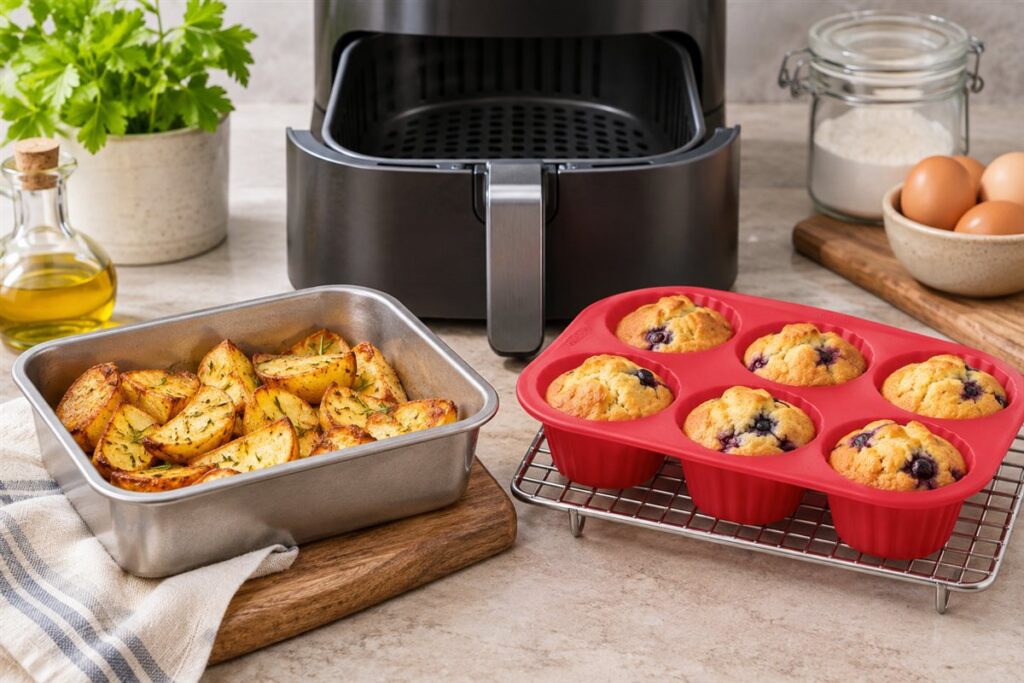
Metal pans brown and crisp food better, while silicone pans are flexible, release easily and are simple to store. Neither is better in every case. Choose metal when you want a firm shape and browned edges, and choose silicone when you want soft foods to slide out without sticking.
What Each Material Is For
Metal pans are rigid. They conduct heat quickly, so the bottom and sides of cakes, breads and roasted vegetables tend to brown well. Silicone pans are soft and heat more gently, which suits muffins, egg cups, frozen treats and anything delicate that you want to pop out.
Key Differences
| Feature | Metal | Silicone |
|---|---|---|
| Browning | Stronger, crisper edges | Softer, paler surfaces |
| Shape when full | Holds firm | Flexes, needs a tray underneath |
| Release | Needs oil or a liner | Often releases easily |
| Storage | Takes more room | Folds or squashes flat |
| Scratching | Can mark with metal tools | Can be cut by sharp knives |
Who Should Choose Which
- Metal: people who bake loaves and cakes, roast vegetables or want crisp bases.
- Silicone: people who make egg bites, small muffins or soft desserts, and want easy release.
- Both: cooks who use the air fryer often for varied dishes.
Using Either Type Well
- Check that the pan fits the basket with space around the edges.
- Confirm the temperature limit in the maker’s guide.
- Oil metal pans lightly, or line them with a liner meant for air fryers.
- Set silicone pans on a flat tray or rack before filling, so they do not tip.
- Let pans cool before handling or washing.
Follow the maker’s manual and safety instructions. Hot pans stay hot for some time, and light silicone can move when the fan runs, so weigh it down with food.
Food Ideas for Each
Metal suits foods that benefit from a crisp edge, such as small loaves, cornbread-style bakes, roasted potatoes and sheet-style snacks. Silicone suits batters that set softly, like muffins, mini cakes, egg dishes and chilled or frozen shapes. If you are not sure, think about whether you want the outside of the food to brown or simply to hold its shape.
Size matters for both. A small pan that leaves room around its sides lets air move, and that usually does more for even cooking than the material alone.
Cleaning Notes
Metal pans may need soaking if sugar or cheese has baked on. Avoid harsh scouring on coated surfaces. Silicone can hold onto oils and smells, so wash with warm soapy water and dry well. A rinse in hot water helps with greasy residue.
Heat Ratings and Durability
Both materials can last a long time if you choose well and look after them, but they age differently. Metal pans tend to hold their shape, and they can warp if exposed to sudden temperature changes or if the metal is thin. A coating on a metal pan can scratch or wear with metal tools or abrasive scrubbing. Plain, uncoated metal avoids coating wear but may need more oil to release food.
Silicone does not rust or dent, but it can stain, hold odors and degrade over time. Cuts from sharp knives can damage it, and thin, low-quality silicone may tear or become tacky. Always check the maximum temperature in the product listing and compare it with your highest cooking setting. If no rating is stated, treat the item with caution.
- Look for even thickness in metal pans, which helps resist warping.
- Choose silicone that feels firm rather than flimsy.
- Avoid pans with loose handles or rivets that trap grease.
- Inspect regularly for chips, tears, rust or stickiness.
Durability matters because a failing pan can contaminate food or release coating flakes, and it should be replaced at the first sign of damage.
Shape, Size and Fit in the Basket
A pan is only useful if it fits. Measure the inside of your basket or drawer, then compare it with the pan’s outer dimensions, including any handles or lips. Leave a gap around the edge so air can circulate. A pan that fills the basket blocks airflow and leads to uneven cooking.
Shape affects results. Round pans suit cakes, egg dishes and small bakes. Square or rectangular pans make good use of corners but can be a tighter fit in round baskets. Shallow pans brown more quickly, while deep ones cook slowly in the center. For silicone, a mold with a firm rim is easier to lift, and sets that come with a rigid base tray are easier to handle.
Pay attention to the height. Tall sides can come close to the heating element, particularly in compact units. Check the clearance and avoid anything that comes near the top. Handles should not stop the basket from closing, and they should be heat-resistant or removable. If you own a dual drawer model, make sure the pan fits within a single drawer.
Cooking Results Compared by Food Type
The material can change how food turns out. Metal conducts heat quickly, so it suits foods where you want a crisp base: roasted vegetables, cornbread, small loaves and savory bakes. Dark metal browns faster than light, so you may need to lower the temperature or shorten the time. Light metal gives gentler browning.
Silicone heats more gently and often gives softer, paler surfaces. It works well for egg bites, soft muffins, frozen treats and custards, where gentle heat and easy release matter more than browning. Because silicone is flexible, put it on a tray or rack before filling it, and keep it steady when moving it in and out of the basket.
For foods in between, such as brownies and cakes, either can work; metal gives firmer edges and silicone gives a softer finish. If you are converting a recipe, begin checking early. Keep notes on the differences between your pans, and adapt timings accordingly. If a recipe does not specify, choose the material that best suits the texture you want.
Buying Checklist and Budget Tiers
Before you buy, ask a few questions. Is the pan the right size for my basket? What is the stated temperature limit? Is it safe for food contact? Can it be washed in the dishwasher, or does it need hand washing? Does it store easily? Is it easy to lift when hot?
Simple metal and silicone pans are generally affordable, and basic versions can serve most needs. Mid-range options tend to offer better thickness, sturdier build and clearer information. Higher-priced options may add features such as rigid support frames, specialty shapes or premium coatings, which are only worthwhile if you will use them.
- Check that the listing states the material and whether it is food-grade.
- Prefer clear temperature ratings over vague claims.
- Avoid sets with many shapes you will not use.
- Consider buying one of each material to learn which you prefer.
It is usually better to buy one or two good pans than a big set of uncertain quality. Keep the manual handy and confirm which pans your maker permits.
Signs of Wear and When to Replace
Pans do not last forever, and knowing when to retire one protects your food and your appliance. For metal pans, replace them if you see rust, deep scratches, peeling coating, warping that stops them sitting flat, or a persistent burnt-on layer that will not wash away. A pan that wobbles may tip when hot and could spill.
For silicone, look for tears, cracks, stickiness, a persistent greasy feel after washing, discoloration that does not fade, or a lingering smell. Silicone that has become sticky or brittle should be replaced. If a pan has been exposed to temperatures beyond its stated limit, it is wise to retire it.
Extend the life of both types by washing gently, using non-scratch tools, avoiding sharp knives on the surface and drying fully before storage. Store metal pans flat or stacked with a protective layer between them, and keep silicone flat or loosely rolled. Do not use damaged pans in the hot air fryer. When you replace one, check that the new one is the right size and rating rather than repeating a poor fit.
FAQ
Does silicone cook slower than metal?
It can, since it heats more gently. Check the center of the food near the end and add time if needed.
Which is easier to clean?
It depends on what you cook. Silicone usually releases food more easily, while metal is firmer for scrubbing.
Do dark metal pans cook differently from light ones?
Dark metal usually browns faster, so you may need to lower the temperature or shorten the time. Light metal tends to give gentler browning.
Can silicone pans go in the dishwasher?
Many can, but check the listing and care instructions. Hand washing with warm soapy water is a safe default.
Why does my silicone feel greasy after washing?
Oil can cling to silicone. Try washing in hot soapy water with a soft brush, and if the residue persists, the item may be nearing the end of its life.
Do I need to grease metal pans?
A light coat of oil or a liner helps food release. Coated pans may need less, but follow the maker's guidance.
Is a coated metal pan better than plain metal?
Coatings make release easier but can wear with scratching. Plain metal is more durable under hard use but needs more oil.
Can I mix pan types in a dual drawer unit?
Yes, as long as each fits its drawer with room for airflow. Remember that cooking times may differ by material.
How do I keep silicone from flopping when I lift it?
Place it on a rigid tray or rack before filling, then lift the tray. Fill it only after it is in a stable position.
The Short Version
Choose metal for browning and firm shapes, and silicone for easy release and storage. Many cooks end up with a small pan of each type.