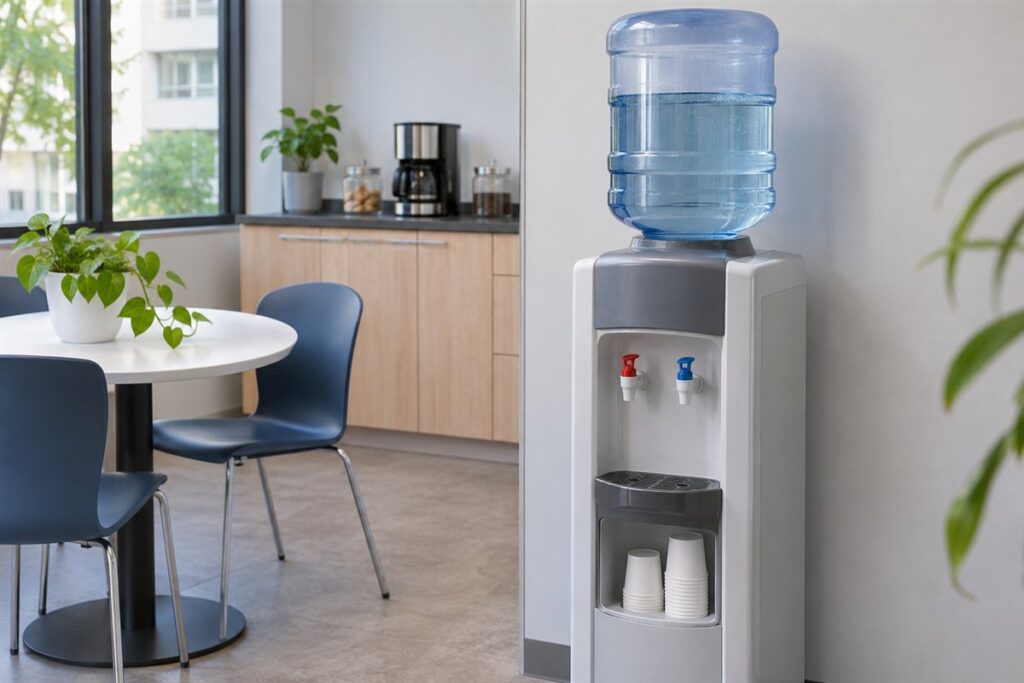
We have not used these products ourselves, so this guide does not claim any personal results. Instead it shows how to choose a top loading water dispenser by looking at the features that shape daily use: jug fit, tap layout, cooling and heating options and how easily the unit cleans. Use the table below to compare options, then check the maker details against your own kitchen or office before you decide.
A top loading dispenser takes a large water jug on the top of the cabinet, so you lift the bottle up rather than sliding it inside. Many people like the clear view of how much water is left. These units differ in tap setup, with some offering room temperature, hot and cold water, and others only one or two options. Size varies too, so measure the floor space and the ceiling height, since you must lift a heavy jug above the cabinet. Think about who will refill it and how often. Check the power needs and where the cord can run. Read each product page closely for what is included, such as a drip tray, a spare cap or cleaning instructions.
As an Amazon Associate we earn from qualifying purchases. Links on this site are affiliate links, and they do not change the information we give.
In this guide
Quick Picks
| Pick | Product | Best For |
|---|---|---|
| 1 | Avalon A1 Top Loading Water Cooler Dispenser (WCBD2B) | Best slim freestanding pick |
| 2 | Brio Limited Edition Top Loading Water Cooler Dispenser (CLTL520) | Best for a polished office look |
| 3 | Brio 130 Series Top-Load Water Cooler Dispenser (CLTL130SS) | Best spill-free bottle changes |
| 4 | Igloo Top Loading Water Cooler (B0C8BS1TN2) | Best removable drip tray |
| 5 | Primo Top-Loading Water Dispenser, 3 Temperature (601087-C) | Best for three temperatures |
Our Picks
1. Avalon A1 Top Loading Water Cooler Dispenser (WCBD2B) — Best slim freestanding pick
The Avalon A1 is a slim freestanding top loader, about 11.25 x 10.75 x 42 inches, that holds standard 3 or 5 gallon bottles so you can see the water level at a glance. It dispenses crisp cold and piping hot water, with a child safety lock on the hot spout, and it is UL Listed and Energy Star approved. Heating is rated at 420W and cooling at 100W, with hot output up to about 185 degrees F. The narrow cabinet suits corners and small kitchens where the guide’s footprint check matters most, and paddle-style spouts keep filling simple. Because the bottle sits on top, plan for the lifting height: the cabinet top is around shoulder height for many people. It fits homes and small offices that want hot and cold taps without a wide cabinet.
View Avalon A1 Top Loading Water Cooler Dispenser (WCBD2B) on Amazon
2. Brio Limited Edition Top Loading Water Cooler Dispenser (CLTL520) — Best for a polished office look
Brio’s Limited Edition top loader (model CLTL520) holds 3 or 5 gallon bottles and serves hot and cold water with a child safety lock on the hot side. It is UL and Energy Star approved, and the top-loading seat is designed to hold the bottle securely so changes stay tidy. The freestanding cabinet has the finished look offices usually want in a client-facing space, while the visible bottle makes it easy to judge when a refill is due, as the guide recommends checking. Hot water suits tea, coffee and instant meals; cold is kept ready for glasses and bottles through the day. As with every top loader, check your ceiling clearance and who will lift a full 5 gallon bottle onto the top before choosing it for a shared space.
View Brio Limited Edition Top Loading Water Cooler Dispenser (CLTL520) on Amazon
3. Brio 130 Series Top-Load Water Cooler Dispenser (CLTL130SS) — Best spill-free bottle changes
The Brio 130 Series is a current top-load model in black and stainless, built around a no-spill loading system: the bottle seats with a tight seal that helps keep changes mess-free and limits contaminants entering the reservoir. It uses standard 3 and 5 gallon bottles and dispenses hot and cold water, with a child safety lock and Energy Star 3.0 rating. The visible bottle keeps the level check the guide describes to a glance, and the freestanding cabinet fits typical kitchen and break-room corners. This is the pick for households that change bottles often and want the swap itself to be the cleanest part of ownership. Measure the cabinet height plus a full bottle before ordering, since the lifted jug needs clearance above the unit.
View Brio 130 Series Top-Load Water Cooler Dispenser (CLTL130SS) on Amazon
4. Igloo Top Loading Water Cooler (B0C8BS1TN2) — Best removable drip tray
Igloo’s top-loading cooler directly answers the guide’s drip-tray point: the tray is removable, so spills and drips can be rinsed in the sink instead of wiped out of a fixed well. It fits 3 and 5 gallon jugs and dispenses hot and cold water, with a child safety lock on the hot tap. The black and stainless styling suits homes, kitchens, offices and dorm rooms, and the tower format keeps the footprint modest. Energy-saving features are part of the maker’s listing, and the top seat keeps the bottle visible so you can see when water is running low. Choose it if easy day-to-day cleaning is your priority: a removable tray and accessible taps make the routine wash-down the guide recommends much simpler to keep up with.
View Igloo Top Loading Water Cooler (B0C8BS1TN2) on Amazon
5. Primo Top-Loading Water Dispenser, 3 Temperature (601087-C) — Best for three temperatures
Most top loaders offer hot and cold; this Primo model (601087-C) adds a third, cool room-temperature tap, which suits drinkers who find compressor-cold water too cold and anyone filling pots or pet bowls. It is made for 5 gallon bottles, with a child safety lock on the hot tap and a removable drip tray for cleaning. The single-spout design in black and stainless keeps the front uncluttered, and the freestanding cabinet needs no plumbing, so placement is flexible anywhere near an outlet. It is an older, proven Primo design sold for years through major retailers. Pick it if the tap-options check in the guide is your deciding factor and three temperatures beat a slimmer cabinet or a newer model line.
View Primo Top-Loading Water Dispenser, 3 Temperature (601087-C) on Amazon
What to Look For
| Factor | Why it matters | What to check |
|---|---|---|
| Jug compatibility | Bottle necks and sizes vary between water suppliers. | Confirm the neck size and jug capacity the maker lists. |
| Tap options | Hot, cold and room temperature taps suit different uses. | Decide which temperatures you actually need. |
| Lifting height | The jug sits above the cabinet. | Consider the cabinet height and who will do the lifting. |
| Footprint | Floor space is limited in many kitchens. | Measure width and depth and the ceiling clearance. |
| Drip tray | Spills reach the floor if the tray is small. | Check that the tray is removable and easy to rinse. |
| Cleaning | Reservoirs and taps need regular washing. | Read the maker’s care steps and look for accessible parts. |
Setup and Care Tips
- Place the cabinet on a flat floor near an outlet with room around the back.
- Wash the reservoir and taps before first use as the manual describes.
- Lift the jug carefully and seat it on the top before turning it over.
- Empty and rinse the drip tray often.
- Clean the unit on the schedule the maker suggests.
Mistakes to Avoid
- Buying a unit without checking the neck size of your jugs.
- Putting it where the ceiling or a shelf blocks lifting.
- Forgetting to leave space behind it for airflow.
- Skipping the cleaning steps in the manual.
- Choosing hot water features in a home with young children without reading about the locks.
Jug Handling, Lifting and Ergonomics
The defining feature of a top loader is that the jug goes on top, so the lift is part of every refill. A full jug is heavy and awkward, and the cabinet height determines how high you must raise it. Think about who will do this task. If the person is short, has a bad back or reduced strength, a top loader may be inconvenient, and a design that hides the jug at the bottom could suit better.
Before buying, measure the cabinet height and add the height of the jug. Compare the total with your ceiling and any shelves or cabinets above the planned spot. Allow headroom to tilt the jug and place it. Also think about the path from where you store spare jugs to the dispenser.
- Lift with your legs, keep the jug close to your body and avoid twisting.
- Consider a jug with a built-in handle, and check that it fits your supplier’s bottle.
- Use a stable platform or cart for moving spare jugs.
- Keep the floor around the dispenser dry and clear.
Seat the jug on the top as the manual describes. Many designs use a probe that pierces or opens the cap, or a spout that fits the neck. Check that the seat is stable and does not leak. Keep a cloth nearby for drips during changes.
Temperature Features and Safety Locks
Most dispensers offer cold, hot and sometimes room temperature water, and the combination changes how useful the unit is. Cold water often comes from a compressor or an electronic cooling system, and hot water comes from a small heated reservoir. Decide which you will use. If you only want chilled water, a simpler unit may be enough. If you make tea, instant meals or baby formula, hot water matters.
Hot water is a safety concern, especially around children. Look for child safety features such as a lock on the hot tap, a two-step action or a separate switch. Read the maker’s description and treat the claims as their own, and check that the lock is easy for adults but not for small children.
- Check how the unit signals that it is heating or cooling, and whether there is an on/off switch for each function.
- Look for an energy-saving or sleep mode if the unit is on all the time.
- Note the reservoir size, since a small reservoir can run out of hot or cold water during heavy use.
- Place the unit away from areas where children can reach hot taps unsupervised.
Be careful when dispensing hot water into cups, and use sturdy containers. Allow time for the reservoir to refill and heat or cool.
Choosing the Location, Power and Airflow
Where you put the dispenser affects performance and safety. Choose a flat, firm floor, near a grounded outlet, with enough space to lift the jug and access the taps. Leave clearance behind and beside the unit for airflow, as specified in the manual, because the cooling system needs to dissipate heat. Avoid placing it directly next to ovens, radiators or in strong sun.
Think about the floor. Water can drip or spill during jug changes, so avoid carpeting or surfaces that stain, or use a mat. In offices, consider foot traffic and whether the unit blocks walkways.
- Do not use extension cords unless the maker approves them.
- Keep the cord out of walkways and away from wet areas.
- Level the unit so the taps and drip tray work properly.
- Let a newly delivered unit stand upright for the time the manual suggests before turning it on, if specified.
Noise is another consideration. Cooling systems may hum or make occasional sounds, which can matter in a bedroom or quiet office. Check whether the maker mentions noise characteristics. If you plan to leave the unit unplugged for long periods, follow the manual’s steps for draining and drying to avoid stale water.
Hygiene and Routine Cleaning Schedules
Water dispensers can harbor biofilm and stale water if neglected. Establish a regular cleaning routine based on the maker’s instructions. Many suggest cleaning the reservoir and the spouts on a schedule, using a mild cleaning solution or a sanitizing approach that the manual approves. Rinse thoroughly to remove any residue.
Start with the parts you touch. Wipe the taps, the drip tray and the area around the jug seat frequently. Wash removable parts in warm, soapy water if the manual allows. When changing jugs, wipe the neck of the new jug and the probe or seat before placing it. Wash your hands first.
- Unplug the unit before cleaning internal parts.
- Drain the reservoirs if the manual describes how.
- Avoid harsh chemicals unless the maker specifically permits them.
- Replace filters or cartridges, if the model has them, on the schedule given.
Use up jugs within a sensible time after opening, and store spare jugs in a cool, clean place away from sunlight and chemicals. If the water tastes or smells off, stop using the dispenser, clean it thoroughly and check the jug source. Keep a simple log to remind you of cleaning dates.
Budget Tiers, Questions to Ask and Signs to Replace
Qualitatively, top loading dispensers range from basic cold-and-room models, through mid-range units with hot and cold taps and child locks, to more feature-rich versions with larger reservoirs, quieter cooling and stylish finishes. Choose the features you will use. A simple model is fine for a small household.
Questions to ask before buying:
- Which jug sizes and neck types does it accept?
- What temperatures does it offer, and what safety features are included?
- What are the cabinet height and footprint?
- How is it cleaned, and which parts are removable?
- What are the warranty and service terms?
Signs it is time to repair or replace include leaks from the base or taps, water that no longer cools or heats properly, unusual noises or odors, a tap that sticks or drips, a cracked reservoir or cabinet, and frayed power cords. Unplug the unit and contact the maker if you notice electrical problems. For minor issues such as worn taps or gaskets, check whether the maker sells replacement parts.
How a Top Loading Dispenser Works Day to Day
A top loading dispenser holds a large bottle upside down on the cabinet, and the water flows down into an internal reservoir whenever a tap is opened. Changing the bottle means lifting a heavy jug overhead and aiming the neck into the seat, which is the part of the job that feels unfamiliar to people switching from bottom loading models. A five gallon jug weighs a good deal when full, so think about your own strength, or the strength of whoever will do the job.
Some designs include a spill-resistant bottle seat or a pierce-style valve that limits dripping during the swap. These features rarely eliminate every drop, so keep a towel nearby for the first few changes while you learn the angle.
Comparing Features Side by Side
| Feature | Why it matters |
|---|---|
| Hot and cold taps | Gives tea or instant meals and chilled drinks from one unit |
| Child lock on the hot tap | Reduces accidental use in a home with small children |
| Drip tray | Catches spills, and a removable one is easy to rinse |
| Cooling method | Compressor units run quieter than thermoelectric ones in many cases |
| Cabinet storage | Hides spare cups or a second bottle |
| Power-saving switch | Lets you turn off heating when it is not needed |
Compressor cooling reaches colder temperatures but is usually a bit heavier, while thermoelectric cooling suits small offices that want a gentle chill.
Keeping the Reservoir Fresh
Every dispenser needs a routine. Unplug the unit and drain the reservoir, then wipe the interior with a cleaning solution of the type the maker recommends, usually a diluted vinegar or a food-safe sanitizer described in the manual. Rinse thoroughly before refilling. Wash the taps and the drip tray weekly, and replace a bottle cap or seal that looks worn. Follow the maker’s schedule for deeper cleaning, which varies by model, and keep the unit a few inches from the wall so air can reach the back panel.
Where to Put It in the Home
Pick a level spot out of direct sun, away from heat sources such as ovens and radiators, which force the cooling system to work harder. A dispenser needs a nearby outlet and enough ceiling clearance to lift a full jug onto the top. Keep it on a floor that tolerates the occasional drip, and avoid placing it where the cord crosses a walkway. A small mat beneath the base catches condensation and makes cleanup simple.
For storage of spare jugs, a cool shelf in a cupboard works well, and a bottle rack or a hand truck helps when the jugs are heavy.
When you change a jug, wipe the neck of the new bottle with a clean cloth first, so dust from storage does not enter the reservoir.
Choosing a Top-Loading Water Dispenser: The Criteria That Matter Most
Bottle handling and household strength
A top-loading dispenser asks someone to lift a full bottle onto the top, so be honest about who will do that change, every time, for years. Bottle size, the height of the unit and whether a bottle cover or spike design helps all matter. If lifting is a concern, note it now rather than after delivery, and weigh the designs in this guide by how their bottle change actually works.
Heating, cooling and safety
Compare how listings describe hot and cold performance, and look for a child safety lock on the hot tap as a non-negotiable in homes with young children. Energy use depends on keeping water hot and cold all day, so controls that let you switch a function off when away are worth noticing. Think about your real pattern: constant cold water for a busy family, or hot water mainly in the morning?
Taps, drip tray and cleaning access
Taps or push levers, their height for filling tall bottles and a drip tray that removes easily decide daily satisfaction. The bottle neck area and reservoir need periodic sanitising, so designs that give clear access and plain instructions age better. Read the maker’s cleaning description before buying, because a dispenser is a drinking-water appliance and its hygiene routine is part of the product.
Real-World Use Cases: Who Gets the Most From a Top-Loading Water Dispenser
A family kitchen uses a top-loading dispenser as the household’s water station, filling bottles for school, sport and work with water that tastes clean enough that people choose it over the fridge’s alternatives. A small office keeps one by the door so clients and staff help themselves without interrupting anyone. A garage or workshop values a robust unit that keeps cold water close during physical work. Homes on well water or with variable tap taste use bottled water for drinking while keeping the tap for cooking. A rental or short-term let benefits from a dispenser that needs no plumbing and can move with the tenants. In every setting the bottle-change routine is the make-or-break habit, so store spare bottles where the lift is shortest and safest.
How to Compare the Picks in This Guide Side by Side
With several strong options in one guide, the fastest way to a good decision is to compare the picks against your own routine rather than against each other in the abstract. Start by writing down the three things your top-loading water dispenser must do well in your home, in order. Then read each review in this guide and score the picks against those three things only. Features outside your list are decoration: they may be impressive, but they will not improve your daily experience, and they often complicate setup, care or storage.
Pay particular attention to how each pick is positioned. In this guide the leading options include Avalon A1 Top Loading Water Cooler Dispenser (WCBD2B), Brio Limited Edition Top Loading Water Cooler Dispenser (CLTL520), Brio 130 Series Top-Load Water Cooler Dispenser (CLTL130SS), and each is recommended for a recognisably different kind of buyer. That positioning is deliberate. A product chosen for a small space, a large household or a first-time buyer solves a different problem from one chosen for an enthusiast, and borrowing somebody else’s answer is the most common reason a good product disappoints a particular owner.
Avalon A1 Top Loading Water Cooler Dispenser (WCBD2B) in everyday terms
Within this guide, the Avalon A1 Top Loading Water Cooler Dispenser (WCBD2B) is positioned as the choice for best slim freestanding pick. Read its full review above alongside the others before deciding, because the differences that matter are usually about fit, routine and the details of how you will use it week after week, rather than a single headline feature. If that positioning matches your household, your space and your habits, it deserves to be on your shortlist; if it does not, the honest answer is to keep comparing, even when the product itself is excellent for somebody else.
Brio Limited Edition Top Loading Water Cooler Dispenser (CLTL520) in everyday terms
Within this guide, the Brio Limited Edition Top Loading Water Cooler Dispenser (CLTL520) is positioned as the choice for best for a polished office look. Read its full review above alongside the others before deciding, because the differences that matter are usually about fit, routine and the details of how you will use it week after week, rather than a single headline feature. If that positioning matches your household, your space and your habits, it deserves to be on your shortlist; if it does not, the honest answer is to keep comparing, even when the product itself is excellent for somebody else.
Brio 130 Series Top-Load Water Cooler Dispenser (CLTL130SS) in everyday terms
Within this guide, the Brio 130 Series Top-Load Water Cooler Dispenser (CLTL130SS) is positioned as the choice for best spill-free bottle changes. Read its full review above alongside the others before deciding, because the differences that matter are usually about fit, routine and the details of how you will use it week after week, rather than a single headline feature. If that positioning matches your household, your space and your habits, it deserves to be on your shortlist; if it does not, the honest answer is to keep comparing, even when the product itself is excellent for somebody else.
Igloo Top Loading Water Cooler (B0C8BS1TN2) in everyday terms
Within this guide, the Igloo Top Loading Water Cooler (B0C8BS1TN2) is positioned as the choice for best removable drip tray. Read its full review above alongside the others before deciding, because the differences that matter are usually about fit, routine and the details of how you will use it week after week, rather than a single headline feature. If that positioning matches your household, your space and your habits, it deserves to be on your shortlist; if it does not, the honest answer is to keep comparing, even when the product itself is excellent for somebody else.
Primo Top-Loading Water Dispenser, 3 Temperature (601087-C) in everyday terms
Within this guide, the Primo Top-Loading Water Dispenser, 3 Temperature (601087-C) is positioned as the choice for best for three temperatures. Read its full review above alongside the others before deciding, because the differences that matter are usually about fit, routine and the details of how you will use it week after week, rather than a single headline feature. If that positioning matches your household, your space and your habits, it deserves to be on your shortlist; if it does not, the honest answer is to keep comparing, even when the product itself is excellent for somebody else.
A final comparison habit is worth adopting: once you have a favourite, read its review once more and look specifically for its stated limitation. Every pick in this guide has one, honestly noted. If you can accept that limitation without it touching your main routine, you have probably found your top-loading water dispenser. If the limitation sits exactly on the thing you care about most, the second-ranked pick for your needs is usually the wiser buy, even if it looks less exciting on first reading.
Setup, Daily Use and Care Routine
Sanitise the reservoir and bottle neck area on the maker’s schedule, and always wash hands before a bottle change. Wipe the taps and drip tray daily, empty the tray before it overflows, and clean the bottle spike or seat whenever a bottle is changed. Keep the dispenser’s rear vents clear of walls and stored items so the cooling system works efficiently, and dust them monthly. If water tastes stale, check the bottle’s age and storage, since bottles kept in sun or heat taint the water before the machine is at fault. When the unit will sit unused, switch off the heating and cooling, drain as directed and leave it clean and dry. A dispenser that is cleaned little and often never becomes the appliance everyone quietly avoids.
A Practical Decision Workflow Before You Order
Step one: measure and check the space
Before ordering any top-loading water dispenser, measure the space it will live in and the route it takes to get there, including doorways, corners and storage. Compare those measurements with the dimensions and requirements in the listing, and leave honest clearance for hands, cables, airflow or movement as the product needs. Most returns and most disappointments in this category begin with a tape measure that stayed in the drawer.
Step two: list your non-negotiables
Write down the two or three requirements you will not compromise on, whether that is a particular fit, a control style, a capacity or a care routine you can genuinely keep up. Check your shortlisted pick against that list and against the guide’s own notes on who each pick suits. A top-loading water dispenser that meets your non-negotiables and misses only on extras is a sound purchase; one that reverses that pattern is not, however strong its reputation.
Step three: plan the first week of use
Decide now where the top-loading water dispenser will live, who will use it, how it will be cleaned or maintained, and what the first simple task you will use it for will be. Owners who plan the first week tend to set products up properly, read the manual while it still matters and build the habits that keep the product performing. Owners who improvise usually discover the same lessons later, at the cost of a frustrating first month.
Step four: keep the paperwork
Save the manual, the receipt and a note of the model details in one place, digital or paper. If anything ever behaves unexpectedly, the first questions any maker or retailer asks are answered by that small file. It also makes future purchases easier, because you can compare a replacement or an accessory against the exact product you own rather than a memory of it.
Getting the Most From Your Top-Loading Water Dispenser in the First Month
The first month with a new top-loading water dispenser sets the pattern for its whole life. Begin with the maker’s setup instructions in full, even the parts that look obvious, because small setup details, levelling, positioning, first cleaning or initial checks, are where long-term performance is quietly decided. Resist the urge to judge the product on its first outing: most owners need a few uses to learn its controls, its rhythms and the way it behaves in their particular home.
Build one small routine and attach it to something you already do. A weekly check, a quick clean after use or a monthly inspection takes minutes when it is habitual and an afternoon when it has been neglected for a season. Note anything that changes, a new sound, a slower response, a mark or a smell, and deal with it while it is small. Products rarely fail without warning; they whisper first, and owners with a routine are the ones who hear it.
Finally, revisit your original reasons for buying. If the top-loading water dispenser is not being used the way you planned, the honest fix is usually a change of position, routine or accessories rather than a replacement. Move it to where the work actually happens, simplify the setup, or adjust the schedule, and give the change a fortnight before judging it. Thoughtful owners get years of extra value from products that impatient owners replace within a season.
Keeping a Top-Loading Dispenser Clean, Safe and Ready
Bottle-fed dispensers need a routine that matches their design. Clean the bottle neck area and the reservoir entry whenever you change the bottle, since that is the point every new supply passes through. Wipe the taps and drip tray frequently in shared spaces like offices, and follow the maker’s schedule for a deeper clean of the reservoir and lines, using only the cleaning method they specify. A dispenser that is cleaned on a calendar rather than when it tastes odd stays ahead of the biofilm that causes most taste complaints.
Handling the bottles well prevents the other half of problems. Store spare bottles away from direct sunlight and chemicals, lift with your legs and use a trolley for full bottles where one is available, and seat each new bottle firmly and check for leaks in the first minutes rather than discovering a slow drip hours later. Keep cups stored cleanly rather than stacked on top of the unit, unplug and drain the dispenser before moving it, and let it stand and settle as the manual directs after any move before switching the heating or cooling back on.
Why does the water from my dispenser taste stale?
Start with the simple causes: a bottle that has been open and sitting for a long time, a reservoir overdue for its scheduled clean, or cups stored in a dusty spot. Refresh the bottle, complete the maker’s cleaning routine, and taste again before assuming the unit itself has a fault.
How can an office keep a shared dispenser hygienic?
Assign the routine to a named person and put it on a calendar, because shared equipment cleaned by everyone in theory is cleaned by no one in practice. Keep the area around the taps wiped daily, empty and wash the drip tray before it becomes unpleasant, and post a small note of who to tell when the bottle is empty or the water tastes off, so problems get reported early rather than discussed for a week. Stock cups in a covered dispenser rather than open stacks. None of this takes more than minutes, and it is the difference between a dispenser people trust and one they quietly avoid.
FAQ
How does a top loader differ from a bottom loader?
A bottom loader hides the jug in the cabinet, so you do not lift it high. A top loader costs less lifting space overhead but shows the jug in plain view.
Do I need a filter?
That depends on your water source. Many people use sealed jugs from a supplier, which already arrive filled.
Will any water jug fit a top loading dispenser?
Not always. Neck sizes and shapes vary, so check the maker's listed jug compatibility and your supplier's bottle.
How heavy is a full water jug?
It depends on the size. Check the jug capacity and consider who will lift it before choosing a top loader.
Do hot taps have child locks?
Many do, but features vary. Check the listing for locks and read how they work.
How often should I clean the dispenser?
Follow the maker's schedule, and wipe the taps and drip tray more frequently. Clean the reservoir as the manual directs.
Can I leave the dispenser on all the time?
Most are designed for that, but you can save energy with an off switch or sleep mode if offered. Check the manual.
Why is my dispenser gurgling?
Gurgling can be normal air entering as water leaves the jug. If it is excessive or the water flow is weak, check the jug seat and the manual.
Can I use filtered or tap water in the jug?
Some people refill jugs, but cleanliness matters. Follow your supplier's rules and the maker's guidance for the jug and dispenser.
How heavy is a full water bottle to change?
Large bottles are genuinely heavy, around the weight of a packed suitcase. If anyone in the household would struggle, plan who changes bottles, store spares at waist height nearby, or reconsider the loading style.
Is the hot water hot enough for tea and instant meals?
Dispenser hot water suits most instant drinks and meals. Check the listing’s temperature description against your habits, and remember a kettle still wins for very large rounds.
How often should I sanitise the dispenser?
Follow the maker’s schedule, commonly every few months, and always when taste changes. The bottle neck, reservoir and taps are the key areas, and the routine is quick once practised.
Why is my dispenser leaking at the top?
A cracked bottle neck or a bottle seated incorrectly is the usual cause. Remove the bottle, inspect its neck, reseat or replace it, and dry the area fully before restarting.
One more consideration deserves a place in any top-loading water dispenser decision, and that is who else will use it. A product that only one person in the household can operate comfortably, clean properly or move safely becomes a bottleneck, however well it performs for that person. Where a top-loading water dispenser will be shared, favour clear controls, forgiving setup and instructions that a second person can follow without a briefing. Shared products also wear faster, so the build quality and care notes in each review deserve extra weight when the whole household will rely on the same item every day.
It is also worth thinking about the season in which you are buying. Many owners purchase a top-loading water dispenser for an immediate need, a project, a trip, a term or a change in the household, and judge every option against that single moment. The better question is how the product will serve across a full year: the busy weeks and the quiet ones, the season it works hardest and the months it mostly rests. A choice that still looks right when you imagine it in a different season is usually the choice that stays satisfying, and it is the surest guard against buying twice.
When two picks remain tied after all this comparison, let the ownership details break the tie. Consider which maker explains its care requirements most clearly, which design looks easiest to keep clean in your home, and which review’s honest limitation bothers you least. These are not glamorous criteria, but ownership is lived at that level: in the five-minute clean, the stored accessory that is either to hand or lost, and the control you can find without thinking. The top-loading water dispenser that wins on ownership details is the one still earning its place long after the novelty of the purchase has faded.
Budget deserves one honest paragraph, without any numbers attached. The right way to think about cost in this category is cost per year of good service, not the figure on the day of purchase. A top-loading water dispenser that suits your space, survives your household’s habits and is maintained on a simple routine will almost always work out better value than a cheaper one that fights your routine and is replaced early, or a premium one whose extra features you never touch. Spend first on fit, build and the features your routine genuinely uses, and let everything else go without regret.
Keep returning to the basics with your top-loading water dispenser: correct setup, honest use matched to its design, prompt cleaning and early attention to small changes. Those four habits, repeated quietly, are what separate products that serve a household for years from products that disappoint within a season, and they cost nothing but consistency.
Keep returning to the basics with your top-loading water dispenser: correct setup, honest use matched to its design, prompt cleaning and early attention to small changes. Those four habits, repeated quietly, are what separate products that serve a household for years from products that disappoint within a season, and they cost nothing but consistency.
Keep returning to the basics with your top-loading water dispenser: correct setup, honest use matched to its design, prompt cleaning and early attention to small changes. Those four habits, repeated quietly, are what separate products that serve a household for years from products that disappoint within a season, and they cost nothing but consistency.
Keep returning to the basics with your top-loading water dispenser: correct setup, honest use matched to its design, prompt cleaning and early attention to small changes. Those four habits, repeated quietly, are what separate products that serve a household for years from products that disappoint within a season, and they cost nothing but consistency.
Keep returning to the basics with your top-loading water dispenser: correct setup, honest use matched to its design, prompt cleaning and early attention to small changes. Those four habits, repeated quietly, are what separate products that serve a household for years from products that disappoint within a season, and they cost nothing but consistency.
Keep returning to the basics with your top-loading water dispenser: correct setup, honest use matched to its design, prompt cleaning and early attention to small changes. Those four habits, repeated quietly, are what separate products that serve a household for years from products that disappoint within a season, and they cost nothing but consistency.
Keep returning to the basics with your top-loading water dispenser: correct setup, honest use matched to its design, prompt cleaning and early attention to small changes. Those four habits, repeated quietly, are what separate products that serve a household for years from products that disappoint within a season, and they cost nothing but consistency.
Keep returning to the basics with your top-loading water dispenser: correct setup, honest use matched to its design, prompt cleaning and early attention to small changes. Those four habits, repeated quietly, are what separate products that serve a household for years from products that disappoint within a season, and they cost nothing but consistency.
The Short Version
A good top loading dispenser fits your jugs, offers the temperatures you want, suits your ceiling height and cleans easily. Measure the space and compare taps next.
Related Guides
- 6 Best Bottom Loading Water Dispensers: Hot and Cold (2026)
- 6 Best Water Dispensers for Home: Bottom and Top Load (2026)
- How to Choose the Best Instant Hot Water Dispensers (2026 Guide)
- How to Choose the Best Tankless Water Dispensers (2026 Guide)
- How to Choose the Best Commercial Water Dispensers (2026 Guide)

