Finding the best espresso coffee machines UK buyers can rely on starts with a simple question: how much work do you want to do before your first sip? Some machines grind, dose and steam at the touch of a button, while others hand you the portafilter and let you learn the craft. Both routes can end with a very good cup, but they suit very different mornings, kitchens and budgets, so the right choice depends on your habits rather than on a single headline feature.
The six machines below cover that whole range. They are all real, currently listed espresso machines for home use, chosen to suit UK kitchens: compact models that fit a smaller worktop, semi-automatic machines for people who enjoy the ritual, and more automatic models for households where the coffee round has to be fast. Each one is described from the details on its own listing, with the strengths and the trade-offs stated plainly, so you can match the machine to the way you actually drink coffee.
Read the guide first if you are new to home espresso, or jump straight to the comparison table and the six picks. The buying guide at the end explains pressure, grinders, milk steaming and size, and the frequently asked questions answer the points UK buyers ask most, including what to check on a listing before ordering.
In this guide
Quick picks: best espresso coffee machines uk
| # | Product | Where to buy |
|---|---|---|
| 1 | Breville BES870XL Barista Express Espresso Machine | Check on Amazon |
| 2 | De’Longhi Classic Matte Black Espresso Machine | Check on Amazon |
| 3 | CASABREWS CM5418 Compact Espresso Machine | Check on Amazon |
| 4 | AMZCHEF Espresso Machine With Grinder | Check on Amazon |
| 5 | Breville BES880BSS Barista Touch Espresso Machine | Check on Amazon |
| 6 | Chefman CraftBrew Espresso Machine | Check on Amazon |
How We Chose the Best Espresso Coffee Machines UK
The picks in this guide were chosen from espresso machines listed on Amazon, looking for models that cover the main ways people make espresso at home rather than six versions of the same machine. A good list needs a compact manual machine, a grinder-equipped semi-automatic, a one-touch automatic and something genuinely small for a tight kitchen, so the six below span those roles. Every pick is a real, currently listed product with a clear identity: a brand, a model and a set of features you can check on its listing before you buy.
Three things mattered most. First, the machine has to be a true espresso machine, meaning it brews with a pump and a portafilter or an equivalent pressurised system, not a moka pot dressed up as espresso. Second, the listing has to state its key features clearly: pump pressure, grinder, steam wand or frother, and size. Third, the range has to work for UK homes, which often means a smaller footprint and controls that are simple to use every day. Machines that failed on any of those points did not make the list.
We have not used these machines ourselves, and this guide does not pretend otherwise. The descriptions, strengths and trade-offs come from the specifications and features stated on each listing, plus the practical realities of owning an espresso machine: cleaning, descaling, counter space and the learning curve. Where a machine asks more of its owner, that is stated as a trade-off rather than hidden.
Quick Comparison
Use this table to narrow the list before reading the detail. The right-hand column is only a pointer to the full section, not a ranking.
| Machine | Headline detail | Section |
|---|---|---|
| Breville BES870XL Barista Express Espresso Machine | Semi-automatic espresso machine | Brushed stainless steel finish | Makes espresso shots, lattes and cappuccinos | 1 |
| De’Longhi Classic Matte Black Espresso Machine | Manual espresso machine | Matte black finish | Easy-to-use milk frother | 2 |
| CASABREWS CM5418 Compact Espresso Machine | Compact espresso machine | Stainless steel | 20-bar pump | Milk frothing steam wand | 3 |
| AMZCHEF Espresso Machine With Grinder | Espresso machine with built-in grinder | Temperature control | 44 grind settings | Hot and cold brew | 4 |
| Breville BES880BSS Barista Touch Espresso Machine | Automatic espresso machine | Brushed stainless steel finish | Makes espresso shots, lattes and cappuccinos | 5 |
| Chefman CraftBrew Espresso Machine | Digital espresso maker | 15-bar pump | Steam wand for latte and cappuccino | Compact design | 6 |
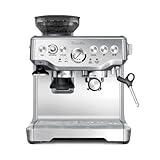

1. Breville BES870XL Barista Express Espresso Machine, Brushed Stainless Steel
The Breville BES870XL Barista Express is the machine most people picture when they think of a serious home espresso setup, and the listing explains why: it is a semi-automatic machine in brushed stainless steel that makes espresso shots, lattes and cappuccinos, with a built-in grinder so the beans go from hopper to cup without a separate appliance on the worktop. That combination is the heart of its appeal. Freshly ground beans make a real difference to espresso, and keeping the grinder inside the machine keeps the morning routine to one appliance, one plug and one footprint.
In daily use, the Barista Express rewards a little attention. You dose and tamp the grounds, lock in the portafilter and pull the shot, which means the first week involves learning how fine to grind and how firmly to tamp. The payoff is control: when a shot runs fast or slow, you can change one variable and taste the result in the next cup. The brushed stainless steel body suits a modern kitchen and wipes clean, and the machine looks like it belongs next to a kettle and a toaster rather than hidden in a cupboard.
The trade-off is size and involvement. A grinder-equipped machine is wider and heavier than a compact manual model, so it needs a permanent spot on the worktop and a bit of clearance above for the bean hopper. It also asks you to clean the grinder and the drip tray regularly, and to descale on schedule, because a machine that brews every day builds up scale and coffee oils quickly. None of that is difficult, but it is a commitment, and a household that wants coffee at the push of a single button will find the ritual slower than an automatic model.
Strengths:
- Built-in grinder keeps beans fresh and saves worktop space.
- Brushed stainless steel body is durable and easy to wipe clean.
- Full manual control over dose, tamp and shot, so you can improve your coffee over time.
Trade-offs:
- Needs a permanent worktop spot and clearance for the hopper.
- Learning curve while you find the right grind and tamp.
- Regular cleaning and descaling are part of ownership.
It fits a household that drinks espresso most days and enjoys the process. The built-in grinder and manual controls make it a machine you grow into rather than outgrow.
Best for: home baristas who want fresh-ground beans and hands-on control. Not suited for: anyone who wants a one-button coffee with no learning curve.
Check price on Amazon: Breville BES870XL Barista Express Espresso Machine

2. De’Longhi Classic Matte Black Espresso Machine, Easy-to-Use Milk Frother
The De’Longhi Classic in matte black is the quiet achiever of this list. It is a manual espresso machine with an easy-to-use milk frother, finished in matte black rather than the usual stainless steel, and it takes a deliberately simple approach: a compact body, a portafilter, a steam wand for frothing milk, and controls that do not need a manual the size of a novel. For a UK kitchen where the worktop is already crowded, that simplicity is a genuine advantage.
What makes this machine easy to live with is how little it demands. It heats up, you fill the portafilter, pull the shot and steam the milk, and the whole routine takes a few minutes. The matte black finish hides fingerprints and water marks far better than polished steel, which matters on a machine you touch with wet hands every morning. The milk frother is straightforward to use, so a flat white or a cappuccino is realistic on a weekday rather than a weekend project.
The trade-off is that a manual machine leaves more to you. There is no built-in grinder, so you will need pre-ground coffee or a separate grinder, and the quality of the shot depends on the grind and the tamp. The water tank and drip tray are sized for a compact machine, so a household that makes four or five drinks in a row will be refilling and emptying more often than with a larger model. Those are fair compromises at this size, but they are worth knowing before you buy.
Strengths:
- Compact manual design fits smaller UK kitchens.
- Matte black finish hides marks and suits most kitchens.
- Simple milk frother makes milky drinks easy on weekdays.
Trade-offs:
- No built-in grinder, so ground coffee or a separate grinder is needed.
- Shot quality depends on your grind and tamp.
- Smaller tank and tray need more frequent attention in a busy household.
It fits a first-time espresso buyer, a small household, or anyone who wants a capable machine without giving up half the worktop.
Best for: small kitchens and first-time buyers who want simple, good espresso. Not suited for: households that want a built-in grinder or high-volume brewing.
Check price on Amazon: De’Longhi Classic Matte Black Espresso Machine

3. CASABREWS CM5418 Compact Espresso Machine with Milk Frothing Steam Wand
The CASABREWS CM5418 is the compact pick of this guide, and its listing makes the case in a single line: a compact espresso machine in stainless steel, with a 20-bar pump and a milk frothing steam wand. The 20-bar pump is the headline number, and it matters because pump pressure drives the extraction that gives espresso its body and crema. A machine that states its pressure clearly is easier to judge than one that hides it, and 20 bars is a strong figure for a machine of this size.
In a small kitchen, the CM5418 earns its place by being genuinely compact rather than merely smaller than a commercial machine. It fits under wall cabinets, leaves room for a grinder or a kettle beside it, and still manages a steam wand for milk, so a latte is possible without a second appliance. The stainless steel body looks more expensive than the footprint suggests, and the controls stay simple: brew, steam, and go. For a flat, a student house or a kitchen where the worktop is shared with everything else, that combination is hard to beat.
The trade-off is capacity. A compact machine holds less water, produces fewer drinks before a refill, and the steam wand, while capable, will not match a larger boiler for back-to-back milk drinks. The portafilter and drip tray are also sized to the machine, so the routine involves more frequent emptying. None of that matters much for one or two drinks a day, but a household of four coffee drinkers will notice it.
Strengths:
- 20-bar pump stated clearly, supporting proper espresso extraction.
- Genuinely compact body fits under cabinets and in small kitchens.
- Steam wand included, so milky drinks need no extra appliance.
Trade-offs:
- Small water tank needs refilling during a busy morning.
- Steam power is modest for several milk drinks in a row.
- Compact drip tray needs emptying more often.
It fits a small household, a flat, or a second machine for a home office, where space matters more than volume.
Best for: small kitchens and one or two daily drinks. Not suited for: large households making many milk drinks back to back.
Check price on Amazon: CASABREWS CM5418 Compact Espresso Machine

4. AMZCHEF Espresso Machine With Grinder, Temp Control, 44 Grind Settings
The AMZCHEF espresso machine with grinder is the value all-rounder of this list, and its listing reads like a checklist of the features people actually ask about: temperature control, 44 grind settings, hot and cold brew, and a built-in grinder for cappuccinos and lattes. The 44 grind settings are the detail worth pausing on, because grind size is the single biggest lever on espresso flavour. A machine that lets you move in small steps between fine and coarse gives you room to dial in different beans, from a dark roast that needs a coarser grind to a light roast that needs a finer one.
Temperature control is the other feature that sets this machine apart at its size. Espresso is sensitive to water temperature, and a machine that holds it steady will produce more consistent shots than one that swings hot and cold. The hot and cold brew options add flexibility for iced coffee in summer, which is a welcome extra in a machine that already covers the standard drinks. The built-in grinder means the beans are ground on demand, and the whole setup stays to a single footprint.
The trade-off is that an all-rounder asks you to learn its settings. Forty-four grind settings are useful only if you are willing to experiment, and the first week will involve a few shots that run too fast or too slow while you find the right one. The machine is also doing a lot in one body, so the grinder and the brewer share the same cleaning routine, and keeping both clean matters more than on a simpler machine. Buyers who want a machine to set once and forget may find the options more than they need.
Strengths:
- 44 grind settings give fine control over extraction.
- Temperature control supports consistent shots.
- Built-in grinder plus hot and cold brew cover many drinks in one machine.
Trade-offs:
- Many settings mean a learning period while you dial in your beans.
- Grinder and brewer share one cleaning routine.
- More features than a buyer who wants a simple machine may use.
It fits a household that likes to experiment with beans and brew styles, and that wants grinder, temperature control and cold brew without buying three appliances.
Best for: curious coffee drinkers who want grind and temperature control. Not suited for: anyone who wants the simplest possible one-button routine.
Check price on Amazon: AMZCHEF Espresso Machine With Grinder

5. Breville BES880BSS Barista Touch Espresso Machine, Brushed Stainless Steel
The Breville BES880BSS Barista Touch sits at the automatic end of the Barista family, and its listing positions it clearly: a brushed stainless steel machine that pulls barista-quality espresso shots, lattes and cappuccinos, with the touch-based controls its name promises. Where the Barista Express asks you to dose and tamp by hand, the Touch automates more of the routine, grinding, dosing and tamping with less input from you, which makes it the fastest route to a consistent drink in this guide.
That automation is the point. A household where several people make coffee, or where mornings are rushed, benefits from a machine that remembers the settings and repeats them. The touchscreen-style interface walks you through the drink choices, so a guest or a teenager can make a flat white without a lesson in tamping pressure. The brushed stainless steel finish matches the rest of the Barista range, so it looks at home in a kitchen that already has steel appliances.
The trade-off is the same as with any automatic machine: you give up some control in exchange for convenience. A hands-on drinker who enjoys adjusting the dose by half a gram will find fewer levers to pull, and the machine has more parts to keep clean, including the milk system, which needs regular rinsing. It is also the largest and most involved machine here in terms of setup, so it needs a permanent home on the worktop and a first week spent learning the menus rather than the manual craft.
Strengths:
- Automated grinding, dosing and tamping give consistent drinks with less effort.
- Touch-based drink selection is easy for the whole household to use.
- Brushed stainless steel finish is durable and looks smart.
Trade-offs:
- Less hands-on control than a manual or semi-automatic machine.
- Milk system and internal parts need regular cleaning.
- Needs a permanent worktop spot and time to learn the menus.
It fits a busy household that wants good espresso every morning without turning coffee into a hobby.
Best for: busy households and multi-drinker homes that want consistency. Not suited for: purists who want full manual control over every shot.
Check price on Amazon: Breville BES880BSS Barista Touch Espresso Machine
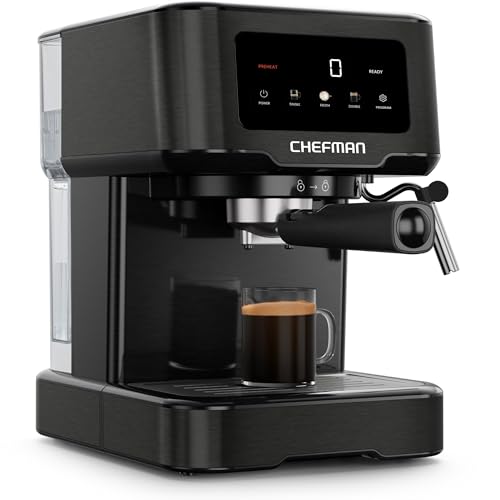
6. Chefman CraftBrew Espresso Machine, 15-Bar Pump Digital Espresso Maker w/Steam Wand for Latte & Cappuccino, Compact Espresso Maker
The Chefman CraftBrew is the compact digital pick of this list, and its listing states the essentials without fuss: a 15-bar pump, digital controls, a steam wand for latte and cappuccino, and a compact body. Fifteen bars is a solid pump figure for home espresso, enough pressure to extract a proper shot with crema, and the digital controls make the machine easy to operate: select, brew, steam, and the display keeps the routine simple.
What makes the CraftBrew easy to recommend is how little space and money it asks for relative to what it does. It is a genuine compact machine, so it fits a small worktop, a flat or a home office, and the steam wand means milky drinks are part of the routine rather than an upgrade to buy later. The digital display takes the guesswork out of the settings, which suits a first machine, and the compact drip tray and tank are proportionate to the one or two drinks a day it is built for.
The trade-off is that a compact digital machine is built for light daily use. The water tank is small, the steam wand is best for one milk drink at a time, and the machine will not keep up with a household that makes drink after drink on a weekend morning. The build is also lighter than the steel-bodied machines in this guide, so it feels less substantial on the worktop, even though that lightness is part of what makes it easy to move and store.
Strengths:
- 15-bar pump supports proper espresso extraction at a compact size.
- Digital controls keep the routine simple for a first machine.
- Steam wand included, so lattes and cappuccinos need no extra kit.
Trade-offs:
- Small tank suits one or two drinks, not a crowd.
- Steam wand is best for single milk drinks, not batches.
- Lighter build feels less substantial than steel-bodied machines.
It fits a first machine, a small kitchen, or a home office where one good espresso a day is the goal.
Best for: first-time buyers and small spaces that want a simple digital machine. Not suited for: large households or heavy daily use.
Check price on Amazon: Chefman CraftBrew Espresso Machine
Buying Guide: How to Choose an Espresso Machine in the UK
Start with the type of machine. A manual machine gives you a portafilter, a pump and a steam wand, and leaves the grinding, dosing and tamping to you. A semi-automatic machine adds a built-in grinder and keeps the manual shot, which is the sweet spot for many home baristas. An automatic machine grinds, doses, tamps and brews with less input, which suits a busy household. There is no best type in the abstract, only the type that matches how much time you want to spend on coffee each morning.
Pump pressure is the next number to check, and the listings in this guide state it clearly: 15 bars on the Chefman CraftBrew, 20 bars on the CASABREWS CM5418. Higher pressure is not automatically better, but a pump that states 15 bars or more is a reasonable sign that the machine is built for real espresso extraction rather than strong coffee. Be wary of any listing that will not state its pressure at all, since that is the one number every true espresso machine should be able to quote.
The grinder question follows. A built-in grinder, like the ones on the Breville Barista Express, the AMZCHEF and the Breville Barista Touch, keeps beans fresh and saves a separate purchase. A machine without one, like the De’Longhi Classic or the CASABREWS CM5418, needs pre-ground coffee or a standalone grinder, which is an extra cost and an extra appliance. If you buy pre-ground coffee, check that it is ground for espresso rather than for a filter machine, since the wrong grind is the most common reason a new machine seems to make weak coffee.
Milk matters if you drink flat whites, lattes or cappuccinos. A steam wand gives you control over the milk texture, while a built-in frother is simpler and more forgiving. Both work; the wand rewards practice and the frother rewards speed. Size is the last practical check, and it matters more in UK kitchens than in many other countries. Measure the space under your wall cabinets, including clearance for a bean hopper lid and a cup under the spouts, before you order. Our guide to home semi-automatic espresso machines covers the middle ground in more depth, and the espresso machines under 200 guide is useful if the budget is tight. Water quality also shapes the result, so read our notes on the best water to use for espresso machines before you settle on a routine, and check the bar pressure guide for home espresso machines if you want the pressure question explained in full.
Finally, check the listing itself before you buy. Confirm the plug and voltage suit UK mains, confirm what is in the box, and confirm the returns policy, since a machine that does not fit your kitchen is easier to return than to live with. A machine is a long-term appliance, so a careful ten minutes at the listing stage is worth more than a rushed purchase.
Using and Looking After Your Espresso Machine
A new espresso machine rewards a calm first week. Start with fresh beans or freshly ground coffee, fill the tank with fresh water, and pull a few shots to learn the machine before you judge it. The first shots may run fast or slow, and that is normal: grind, dose and tamp all interact, and a small change to one of them changes the result. Keep notes for the first few days, even just the grind setting and how the shot looked, and the pattern will emerge quickly.
Daily care is simple but worth doing every time. Empty and rinse the drip tray, wipe the steam wand after every milk drink, and purge the wand with a short burst of steam so milk does not dry inside it. Rinse the portafilter and wipe the group head, and leave the machine to dry with the drip tray out if you can. These small habits take a minute and they keep the coffee tasting clean, because old coffee oils and dried milk are the fastest way to spoil an otherwise good machine.
Descaling is the longer-term job, and it matters more in hard-water areas, which cover much of the UK. Follow the intervals in the machine manual and use a descaler suited to espresso machines rather than a household cleaner. Filtered water reduces scale and improves flavour, and it is worth considering if your tap water is very hard. Keep the machine on a stable, level surface away from the edge of the worktop, and give the grinder a brush-out now and then so old grounds do not go stale in the burrs.
Common Mistakes to Avoid
The most common mistake is buying the wrong grind. Espresso needs a fine, even grind, and coffee ground for a cafetiere or a filter machine will run straight through an espresso machine and taste weak and sour. If you buy pre-ground coffee, make sure the bag says espresso. If you grind at home, start fine and adjust in small steps, changing one thing at a time so you know what made the difference.
The second mistake is skipping the tamp. Loose, uneven grounds let water find the easy path through the puck, which gives a fast, thin shot with little body. Tamp level and firm, wipe the rim, and lock the portafilter in promptly. The third mistake is stale beans: coffee loses aroma quickly once ground, so buy smaller bags more often and keep them sealed, cool and dry rather than in the fridge.
The fourth mistake is ignoring the milk. Overheated milk tastes flat and scorched, and a steam wand left uncleaned will carry that taste into the next drink. Steam the milk to drinking temperature, not boiling, and wipe and purge the wand every time. The fifth mistake is treating descaling as optional. Scale builds up silently, slows the machine and dulls the flavour, so descale on schedule even when the machine still seems to work. Finally, do not judge a machine on its first shot. Give it a week, learn its settings, and only then decide whether it suits you.
Our Recommendation
If you want one answer, start with how you like to make coffee. For the hands-on drinker who wants to learn, the Breville BES870XL Barista Express is the pick that grows with you: built-in grinder, manual control and a solid steel body. For a small kitchen or a first machine, the CASABREWS CM5418 and the Chefman CraftBrew are the sensible choices, compact, clearly specified and easy to live with. For a busy household that wants consistency without the ritual, the Breville BES880BSS Barista Touch does the most work for you.
The De’Longhi Classic is the best fit if you want a simple manual machine in a finish that hides marks, and the AMZCHEF is the pick if grind settings and temperature control are what interest you. Any of the six will make good espresso once you learn it, so choose by the routine you will actually keep, not by the feature list you will admire once and forget.
Frequently Asked Questions
What is the best espresso coffee machine for a small UK kitchen?
The CASABREWS CM5418 and the Chefman CraftBrew are the most compact picks in this guide, and both fit under standard wall cabinets with room to spare. Measure your space first, including clearance for a hopper lid and a cup under the spouts, since a machine that fits on paper can still be awkward if the lid cannot open fully.
Do I need a grinder with an espresso machine?
Not always. Machines like the Breville Barista Express, the AMZCHEF and the Breville Barista Touch have grinders built in. Machines like the De’Longhi Classic and the CASABREWS CM5418 do not, so you will need pre-ground espresso coffee or a separate grinder. Freshly ground beans taste better, but pre-ground espresso coffee works well if the grind is right.
Is 15-bar or 20-bar pressure better?
Both figures appear in this guide and both can make good espresso. Fifteen bars is a solid figure for home use, and 20 bars gives extra headroom, but pressure is only one factor: grind, dose, tamp and bean freshness matter at least as much. A machine that states its pressure clearly is easier to judge than one that does not state it at all.
Can these machines make lattes and cappuccinos?
Yes, every machine in this guide can make milky drinks. The Breville, CASABREWS, AMZCHEF and Chefman models have steam wands, and the De’Longhi Classic has a milk frother. A steam wand gives more control over texture, while a frother is simpler to use.
What should UK buyers check before ordering?
Check the plug and voltage on the listing, confirm what is included in the box, and check the returns policy. Also measure your worktop space and check the water hardness in your area, since hard water means more frequent descaling. Filtered water helps both flavour and machine life.


