This site may earn an affiliate commission when you buy through links we recommend, and that support helps us keep researching kitchen gear and publishing detailed buying guides without turning every recommendation into a sales pitch.
A first espresso machine is easy to buy badly. The box promises café drinks, the product photo shows a glossy portafilter and a cloud of milk foam, and the first week at home delivers sour shots, watery cappuccinos, and a counter that smells faintly of scorched milk. The problem is rarely effort. At this entry tier, machines differ in ways that matter much more than their styling: whether they use a real pump or a steam-driven toy design, whether the portafilter can grow with your skills, how honestly the boiler recovers between drinks, and how much of the work the machine quietly expects your grinder, your beans, and your technique to do.
This guide takes a deliberately honest approach. An entry-level espresso machine can make genuinely enjoyable espresso and milk drinks at home, but it will not forgive stale beans, a blade grinder, or a rushed morning routine the way a mature café setup sometimes can. The best value here is not the machine with the longest feature list. It is the one whose limits are predictable, whose parts are easy to live with, and whose workflow teaches you good habits instead of hiding bad ones behind pressurized baskets and automatic foam claims.
We chose six machines that represent the realistic paths into home espresso at this level: a simple De’Longhi pump machine for beginners who want forgiving extraction, a slim De’Longhi for tiny counters, a familiar Mr. Coffee model for households that value ease, a Gevi machine with a more modern control layout, a CASABREWS model aimed at shoppers who want a compact starter unit, and another De’Longhi variant that suits people who prefer a slightly more traditional routine. None of them should be bought as a magic shortcut. Each one rewards fresh coffee, a capable burr grinder, a small scale, and a few minutes of practice.
If you read only one section before choosing, read the buying criteria. Espresso is a system, not a single appliance. The machine creates pressure and hot water; the grinder creates the resistance that turns that pressure into extraction; the beans decide whether the result can taste sweet at all. A modest pump machine paired with fresh beans and a decent hand or electric burr grinder will usually beat a fancier-looking machine fed with pre-ground coffee that has been open for a month. That is not snobbery. It is physics, and it is the most useful money-saving idea in this entire category.
In this guide
Quick picks: best espresso machines under 200
| # | Product | Where to buy |
|---|---|---|
| 1 | De’Longhi Stilosa | Check on Amazon |
| 2 | De’Longhi Dedica | Check on Amazon |
| 3 | Mr. Coffee Espresso and Cappuccino Maker | Check on Amazon |
| 4 | Gevi Espresso Machine 20 Bar | Check on Amazon |
| 5 | CASABREWS 3700 Essential | Check on Amazon |
| 6 | De’Longhi ECP3420 | Check on Amazon |
Quick answer: which starter espresso machine fits which kitchen?
Choose the De’Longhi Stilosa if you want the most straightforward path: a real pump, a manual routine you can learn quickly, and enough forgiveness for a household that is still deciding whether espresso will become a daily habit. Choose the De’Longhi Dedica if counter depth is the hard limit in your kitchen and you are willing to accept a slimmer, more accessory-driven workflow. Choose the Mr. Coffee Espresso and Cappuccino Maker if the people using it want recognizable controls and milk drinks without studying espresso vocabulary first. Choose the Gevi if you like a more feature-forward layout and plan to experiment with grind and dose rather than treating the machine as a push-button appliance.
Choose the CASABREWS 3700 Essential if your priority is a compact starter machine for occasional lattes and you understand that consistency will depend heavily on your grinder and routine. Choose the De’Longhi ECP3420 if you prefer a slightly older-school De’Longhi layout, keep drinks simple, and want a machine that feels less delicate than the slimmest models. Across all six, the same advice applies: buy the machine for the drinks you will actually make on a tired weekday, not for the elaborate café menu you imagine on a free Sunday.
There is also a category to avoid entirely. Steam-driven espresso makers that build pressure by boiling water in a sealed chamber are not true pump espresso machines, however espresso-like the cup may look in an advertisement. They tend to run too hot, offer little control, and produce something closer to strong moka-style coffee with crema-like foam. They can be fun as a novelty, but they teach the wrong lessons and make troubleshooting almost impossible because you cannot separate grind problems from temperature and pressure problems. Every pick in this guide uses a pump-driven design because that is the minimum foundation for learning real espresso.
What to look for in an entry-level espresso machine
Pump pressure is a starting point, not a quality score
Manufacturers love to print a large bar number on the box, but espresso extraction happens at the coffee puck, not at the pump’s maximum rating. A pump capable of producing strong pressure is necessary; it is not proof that the machine will extract evenly. What matters is whether the machine delivers stable flow once the coffee resists, whether the pressure gauge or control system (when present) behaves predictably, and whether the portafilter and basket seal without drama. Treat headline pressure as a threshold feature. Once a machine is a genuine pump model, move on to the details that shape daily use.
Portafilter size and basket style shape your learning curve
Most machines in this class use a compact portafilter rather than the larger commercial pattern found on prosumer equipment. That is not a deal-breaker, but it changes how much coffee you dose and how accessories fit. Many starter machines include pressurized or double-wall baskets, which create resistance even when the grind is imperfect. They are helpful for beginners and for pre-ground coffee, yet they can mask under-extraction and produce foam that looks like crema without the same texture. If you plan to learn seriously, ask whether the machine can also work with a single-wall basket and whether replacement baskets, tampers, and distribution tools are easy to find in the correct size.
The grinder matters more than the machine at this level
This is the least glamorous and most important buying rule. Espresso needs a fine, consistent grind that can be adjusted in small steps. A blade grinder chops unevenly and makes repeatable shots nearly impossible; one morning the coffee runs too fast and tastes thin, the next it chokes and turns bitter, and the machine gets blamed for both. A burr grinder designed for espresso, or a quality hand grinder if you make only a drink or two, is the difference between a hobby and a guessing game. If your total budget is tight, choose the simpler machine and protect the grinder budget. You can upgrade technique for free; you cannot grind your way out of particles that are all different sizes.
Boiler recovery decides whether the second drink is pleasant
Most entry machines use a small boiler or thermoblock-style heating system that is ready quickly but sensitive to back-to-back demands. Making one espresso is easy. Making espresso, steaming milk, then pulling another shot for a partner is where weak recovery shows up as temperature drift and tired steam. Think about your real routine. A solo drinker can be happy with a compact unit that needs a short pause. A couple that makes two lattes every morning should value steadier steam and a workflow that does not require purging, waiting, and guessing in a different order each day.
Steam wand type changes the milk learning curve
Many starter machines use a panarello-style wand that introduces air automatically. It is forgiving and can produce cappuccino foam quickly, but it often makes thick foam rather than the glossy microfoam needed for latte art. A more traditional wand gives you control and better texture once you learn, while demanding practice and a careful purge before and after steaming. Neither is automatically better. If your household drinks mostly cappuccinos and flavored lattes, convenience may win. If you want to learn milk texture, choose the machine whose wand movement, tip design, and clearance under the wand make a small milk pitcher easy to position.
Water tank access sounds boring until week two
You will refill water and empty the drip tray far more often than you will admire the machine’s front panel. Check whether the tank lifts out from the top, slides from the front, or forces you to move the whole machine away from upper cabinets. Check whether the drip tray is large enough for purging the steam wand and rinsing the portafilter without splashing the counter. A machine that is slightly less elegant but easy to refill will be used more, cleaned more, and cursed less. Good espresso is a routine; friction in the routine becomes flavor in the cup because rushed users skip rinsing, backflushing where applicable, and descaling.
Footprint is about depth, clearance, and heat, not just width
A narrow machine can still be awkward if the portafilter handle sticks out over the counter edge or if the steam wand needs side clearance your cabinets do not allow. Measure the space with the cup you plan to use, the milk pitcher you own, and the cabinet doors open. Leave room above the machine if the tank lifts upward. Leave room behind it if cords and hoses need to bend. Espresso machines live in warm, wet corners of the kitchen, and a cramped installation makes every spill harder to clean. The right size is the one that lets you stand comfortably, see the cup, and move the pitcher without choreography.
Cleaning and descaling are part of the purchase price in time
Every machine here will need regular wiping, drip-tray emptying, wand purging, and periodic descaling based on your water. Hard water shortens heating performance and can make temperature less stable long before the machine fails outright. If your tap water is mineral-heavy, filtered water is not a fussy upgrade; it is protection for the boiler and for flavor. Before choosing, look for a cleaning process you will actually follow. A model with accessible parts and clear routines beats a theoretically superior machine that hides scale problems until the pump sounds strained.
Quick comparison
| Machine | Best for | Portafilter approach | Milk style | Main trade-off |
|---|---|---|---|---|
| De’Longhi Stilosa | First-time learners | Forgiving starter baskets | Simple frothing for cappuccinos | Manual routine needs attention |
| De’Longhi Dedica | Very narrow counters | Compact accessory ecosystem | Fast drinks in a slim body | Small workspace around the group head |
| Mr. Coffee Espresso and Cappuccino Maker | Households wanting familiar controls | Beginner-friendly baskets | Easy foam for casual lattes | Less room to grow into precision habits |
| Gevi Espresso Machine 20 Bar | Tinkerers on a starter budget | Experiment-friendly layout | More manual milk control | Consistency depends on user technique |
| CASABREWS 3700 Essential | Occasional milk drinks | Compact starter setup | Convenient frothing | Back-to-back drinks need patience |
| De’Longhi ECP3420 | Simple daily espresso and cappuccino | Traditional De’Longhi routine | Straightforward steaming | Less refined feedback while dialing in |
The table is a map, not a verdict. Two households can buy the same machine and have opposite experiences because one uses fresh beans and cleans the wand every time while the other stores coffee beside the stove and lets milk bake onto the tip. Use the comparison to narrow the field, then read the pick that matches your routine and pay close attention to its trade-offs. In this category, the right compromise chosen knowingly is better than the wrong strength discovered after the return window closes.
The six picks, reviewed
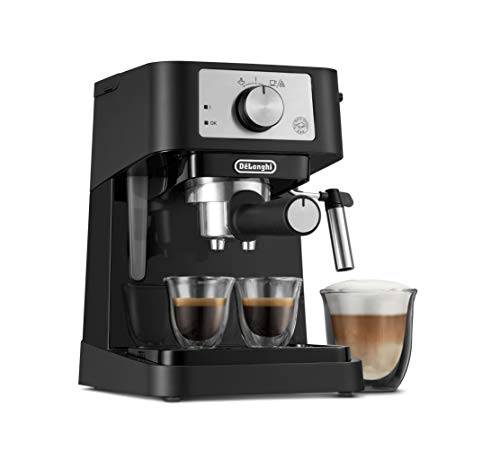
De’Longhi Stilosa: the most sensible first teacher
The Stilosa earns its place because it does not pretend espresso is automatic. It gives you a real pump, a portafilter you lock in yourself, a manual start and stop for the shot, and a frothing wand that asks you to participate. That participation is the point. Within a week, you learn what a fast shot tastes like, what a choked shot looks like, and how milk changes when you introduce too much air too late. For a first machine, that feedback loop is worth more than a touchscreen.
In daily use, the Stilosa suits a simple rhythm: fill the tank, let the machine come to temperature, grind while it warms, dose and tamp carefully, then watch the stream rather than staring at a timer on your phone. The included pressurized approach forgives a coarser grind and older coffee better than a fully manual basket would, which makes it a kind host for beginners and for households where one person grinds fresh and another uses pre-ground on busy days. The espresso will not reach the syrupy clarity of a dialed-in prosumer setup, but it can be round, sweet, and satisfying when the beans are fresh.
Milk performance is best understood as cappuccino-first. The wand makes foam readily, and with a small pitcher and cold milk you can learn to keep the tip near the surface for the first seconds, then sink it to heat without boiling. The texture tends toward airy rather than paint-like, so latte art is possible only in the forgiving sense: a wobbly heart on a Sunday, not a café tulip on demand. For many households, that is a fair trade. The drink tastes like a cappuccino, the kitchen is not covered in milk, and nobody has to watch three tutorial videos before breakfast.
Strengths: honest manual workflow; forgiving extraction for beginners; straightforward controls; easy to understand what went wrong when a shot tastes off; a natural step toward better habits without demanding them on day one.
Trade-offs: the compact portafilter limits accessory choices compared with larger standards; temperature stability is fine for one or two drinks but not endless back-to-back service; the milk texture leans foamy; and the machine rewards a real grinder so strongly that buying it without one wastes much of its potential.
It suits the first-time buyer who wants to learn, the couple making one or two morning drinks, and the gift buyer who wants a real machine rather than a novelty. It is less suited to someone who wants to press one button and walk away, or to a host who plans to serve six lattes after dinner. Keep the routine tidy, purge the wand, and use beans you would happily brew by hand, and the Stilosa becomes a calm little teacher on the counter — finish your research, compare the current bundle and basket options, then check price on Amazon.
Check price on Amazon: De’Longhi Stilosa

De’Longhi Dedica: the slim machine for counters that cannot spare depth
The Dedica’s argument begins before you taste anything: it fits where wider machines simply do not. In a galley kitchen, a small apartment, or a coffee corner carved out of a pantry shelf, a narrow footprint is not a cosmetic feature. It decides whether the machine lives on the counter and gets used daily or gets stored in a cabinet and quietly forgotten. The Dedica is built for that reality, with a slim body, fast readiness, and a drink routine designed for people whose kitchen space is measured in compromises.
That compactness shapes the espresso experience. The work area around the portafilter is tighter, the cup clearance asks you to choose drinkware deliberately, and the whole ritual feels more like operating a well-designed small appliance than standing at a café bar. Shots can be very pleasant, especially with the pressurized baskets doing some of the resistance work, and the machine’s quick warm-up suits weekday mornings when a long heat-up routine would be skipped. If you drink mostly single espressos, macchiatos, and modest lattes, the Dedica’s speed and size are a coherent package.
Where you must be honest is headroom for growth. The Dedica can be part of a more serious setup, and many owners enjoy modifying their routine with better baskets and careful dosing, but the compact platform will always feel compact. Large milk pitchers are awkward, big mugs may not fit the way you expect, and the slim tank and tray ask for more frequent small acts of maintenance. None of this is a flaw if you buy it for the right reason. It becomes a flaw only when a buyer expects a narrow convenience machine to behave like a wide, heavy home café station.
Strengths: genuinely space-saving design; quick to reach readiness; tidy appearance that suits small kitchens; good fit for single drinks and smaller milk portions; approachable for users who value speed on weekday mornings.
Trade-offs: tight workspace around the group head; cup and pitcher size need planning; pressurized workflow can hide grind mistakes until you upgrade your expectations; frequent refills and tray emptying are part of the compact bargain; not the best choice for serving a table of guests.
It suits apartment dwellers, solo drinkers, and anyone whose alternative is no espresso machine at all because the counter is too shallow. It also suits a second-home or office nook where drinks are occasional and storage space is tight. If your kitchen can spare the room and you dream of slow weekend dialing-in sessions, a wider machine will feel calmer. If the Dedica is the machine that actually fits your life, its shots will be far better than the shots from a bigger machine left in a box — confirm the included accessories match your plans, then check price on Amazon.
Check price on Amazon: De’Longhi Dedica
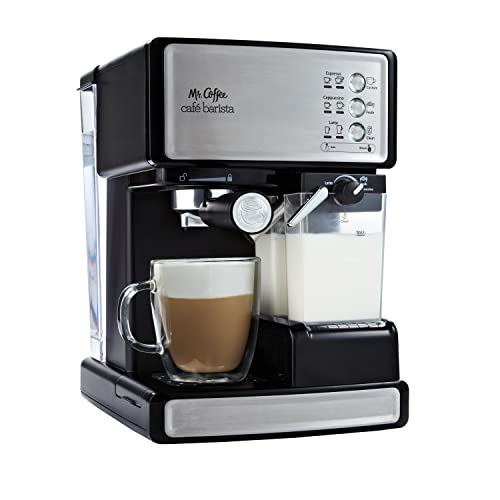
Mr. Coffee Espresso and Cappuccino Maker: the familiar name for low-drama milk drinks
Some households do not want a new vocabulary with their morning coffee. They want a machine that looks understandable, makes a cappuccino without a seminar, and does not turn a partner or a teenager into a reluctant barista. That is the Mr. Coffee lane. Its appeal is familiarity: controls that read like a kitchen appliance rather than a laboratory instrument, a routine centered on espresso and frothed milk drinks, and enough automation in the frothing process to keep the first month friendly.
The espresso itself is best judged by the standard of its audience. With fresh beans ground on a reasonable burr grinder, the cup can be warm, balanced, and clearly a step beyond pod coffee or a steam toy. With pre-ground coffee, the pressurized approach keeps the drink drinkable, especially once milk and a little cocoa or cinnamon enter the picture. Where it will not compete is nuance. Light-roast beans that need careful temperature and even extraction to show sweetness are not this machine’s home turf. Medium and darker roasts, milk drinks, and forgiving blends are.
The milk system is the reason many buyers choose it, and also the habit to manage. Assisted frothing lowers the skill floor, but milk residue is unforgiving in any design that moves milk through or around small passages. Rinse and wipe immediately, follow the cleaning routine while it is still easy, and do not let a Sunday of laziness become a permanent flavor. Used with that basic discipline, the machine fits real family life: a cappuccino before school, an afternoon latte, a decaf drink after dinner without a production meeting.
Strengths: approachable controls for mixed-skill households; milk drinks are the center of the design rather than an afterthought; forgiving with pre-ground coffee compared with fully manual setups; a good bridge away from pods for people who still want convenience.
Trade-offs: less precise feedback for learning extraction; fine light-roast espresso is a stretch; milk-path cleaning must be prompt and consistent; accessory growth is limited; the experience is appliance-like, which enthusiasts may find too guided and not tactile enough.
It suits families, casual latte drinkers, and anyone buying for a household where several people will use the machine with different levels of patience. It is also a reasonable choice for a workplace kitchenette where drinks need to be simple and repeatable. It is not the pick for a hobbyist who wants to weigh every shot and chase single-origin sweetness, and it should not be bought on the assumption that assisted froth removes the need for cleaning. Treat it kindly, feed it decent coffee, and it returns exactly what it promises — look at the current configuration and included parts, then check price on Amazon.
Check price on Amazon: Mr. Coffee Espresso and Cappuccino Maker

Gevi Espresso Machine 20 Bar: for the beginner who likes to tinker
The Gevi speaks to a different kind of starter buyer: the one who reads the manual, watches the shot with a scale underneath, and enjoys changing one variable at a time. Its layout feels more feature-forward than the simplest De’Longhi models, and the ownership experience rewards people who treat the first month as an experiment. If you are the sort of cook who seasons, tastes, and adjusts rather than following a packet blindly, this machine will feel like it is on your side.
Start with the headline number in the name and immediately put it in its place. Pump capability is not extraction quality, and the Gevi is at its best when you ignore the marketing arithmetic and focus on dose, grind, distribution, and time. With a capable grinder, you can coax out shots that are noticeably structured: a darker roast will give you a heavy, chocolate-leaning cup for milk, while a fresher medium roast can show a cleaner edge. The machine gives you enough manual involvement to notice those differences, which is precisely why tinkerers like it and why impatient users may find it inconsistent. The inconsistency is often the mirror, not the machine.
Steam performance fits the same pattern. You have more say in how the milk is textured than with the most assisted designs, so the ceiling is higher and the floor is lower. Early attempts may be bubbly or thin; later attempts, with the pitcher kept cold and the wand purged, can produce milk that folds into espresso instead of sitting on top of it. The learning curve is honest. Keep notes for the first two weeks — bean, dose, grind setting, and one line about taste — and the Gevi becomes a small laboratory rather than a slot machine.
Strengths: engaging manual control for learners who like feedback; satisfying results with medium and darker roasts once dialed in; milk texture can improve with skill instead of being fixed by an automatic frother; a good match for scale-and-timer habits from day one.
Trade-offs: the headline pressure number should not drive the purchase; results vary more with technique than on the most forgiving picks; beginners who change beans and grind settings randomly will struggle; small-machine recovery still limits party service; accessory sizing must be checked carefully before ordering extras.
It suits the methodical beginner, the home cook who enjoys dialing in, and the buyer who plans to pair the machine with a serious grinder and fresh beans from a local roaster. It is less suited to a household that wants identical results from whoever wanders into the kitchen. Buy it as a learning instrument, keep your variables honest, and it will teach you quickly — verify the basket and tamper details for the current version, then check price on Amazon.
Check price on Amazon: Gevi Espresso Machine 20 Bar

CASABREWS 3700 Essential: the compact occasional-latte companion
The CASABREWS 3700 Essential makes sense when espresso is a pleasure in your kitchen but not its organizing principle. It is the machine for the person who wants a latte on Saturday, an espresso after a good dinner, and a counter that still has room for a cutting board. Compact starter machines live or die by expectations, and this one should be bought with clear eyes: it is a convenient entry point, not a high-volume café substitute, and its best drinks come from modest ambitions handled well.
For straightforward milk drinks, the routine is friendly. Warm the cup, use fresh coffee, do not overfill the basket, and let the machine work within its rhythm rather than forcing back-to-back drinks at a sprint. The pressurized starter approach helps when your grind is approximate, and the resulting espresso is at its best as the base of a cappuccino or a flavored latte where milk softens the edges. Drunk straight, shots can taste perfectly pleasant with a forgiving blend, though they will not reward the kind of side-by-side scrutiny that a hobbyist applies to a new roaster’s beans.
The ownership details matter more than the spec sheet here. Compact machines have compact tanks, compact trays, and boilers that appreciate a breath between drinks. Build a small ritual around them: refill before you start, empty the tray when you finish, wipe the wand while the milk is still wet. That ritual takes less than a minute and is the difference between a machine that stays sweet and one that develops the stale, sour smell that owners often blame on the coffee. Water quality matters too; if your kettle furs up quickly, your espresso machine is collecting the same minerals out of sight.
Strengths: compact and approachable; well matched to occasional lattes and cappuccinos; forgiving starter extraction; easy to justify in a kitchen where espresso is one pleasure among many rather than a daily ceremony.
Trade-offs: not built for rapid back-to-back service; straight shots show the limits of the class more than milk drinks do; small water handling parts need frequent attention; enthusiasts will outgrow the feedback and accessory options sooner than on the more manual picks.
It suits occasional drinkers, small households, and buyers who would rather start modestly than save for a year while drinking coffee they do not enjoy. It also suits a guest house or a studio where drinks are a treat, not a production line. If you already know you will make two milk drinks every single morning, choose one of the sturdier-feeling picks above and give your routine more headroom. For the right kitchen, this is a cheerful, honest starter — confirm what is in the box before ordering extras, then check price on Amazon.
Check price on Amazon: CASABREWS 3700 Essential

De’Longhi ECP3420: the traditional routine for simple daily drinks
The ECP3420 feels like the espresso machine equivalent of a well-worn diner recipe: not fashionable, not precious, and capable of giving you the same comforting drink every morning if you meet it halfway. Its layout follows the older De’Longhi pattern that many home users already understand — a front-facing routine, a portafilter that locks in with a familiar motion, and controls that do not ask you to scroll through menus before coffee. For buyers who distrust novelty in appliances, that continuity is a real feature.
Shots from the ECP3420 are at their best with the same formula that flatters the whole class: fresh medium-roast beans, a consistent grind, a level tamp, and a warm cup. The machine’s forgiving side makes it a decent partner for pre-ground coffee in a pinch, but do not build your expectations on that pinch. A small burr grinder transforms it from acceptable to enjoyable, because the extraction finally has the resistance it needs to develop body instead of rushing through. In milk, the espresso holds up well; a cappuccino with a dusting of cocoa tastes like the drink people picture when they buy their first machine.
Steaming follows a traditional rhythm that rewards patience. Purge the wand, texture the milk in a pitcher sized to the drink rather than a large jug, and give the machine its moment when switching between brewing and steaming temperatures. Users who rush that transition get watery steam or milk that heats before it textures. Users who accept the rhythm get a calm routine that can be repeated half-awake. That, for a daily machine, is high praise: the best appliance is the one whose habits become your habits without a fight.
Strengths: familiar, durable-feeling routine; good match for daily espresso and cappuccino with forgiving beans; manual enough to teach basics; simple controls that suit shared households and early mornings.
Trade-offs: feedback while dialing in is less refined than on the more experiment-friendly picks; switching between brew and steam asks for patience; compact-class portafilter accessories require careful sizing; design feels utilitarian next to the Dedica’s slim styling.
It suits the traditionalist, the daily cappuccino drinker, and the buyer who wants a machine that disappears into a routine instead of becoming a project. It is a particularly sensible choice when the person using it most values reliability of habit over novelty of features. Keep up with descaling, treat the wand gently, and it will make the kind of honest home espresso this category is actually for — review the included basket set for your coffee style, then check price on Amazon.
Check price on Amazon: De’Longhi ECP3420
Build the system around the machine, not the other way round
Beans: freshness beats exotic origin at this level
Every machine in this guide will taste better with a fresh, well-roasted blend from a roaster who prints a roast date than with a rare single-origin coffee that has been open for six weeks. Espresso is brewed in under a minute with very hot water under pressure, and it magnifies staleness mercilessly. Look for beans that rest a little after roasting — coffee that is too fresh can be gassy and uneven — then use them within a few weeks of opening, stored in a sealed container away from heat and light. Medium roasts are the kindest starting point: they extract more easily than pale, dense light roasts and taste sweeter than very dark beans that have been roasted into bitterness.
A simple starter kit that actually helps
You do not need a drawer of gadgets, but four inexpensive tools will improve every pick in this guide. A small digital scale lets you repeat a good dose instead of remembering how the scoop felt. A tamper that fits your basket properly matters more than a beautiful one that wobbles. A milk pitcher sized to a single drink textures faster and wastes less milk than a large jug. And a knock container or a sturdy compost caddy keeps puck disposal from becoming a sink-scraping chore. Skip the decorative extras until those basics are in place; distribution gadgets and precision baskets only help once your grind and dose are already consistent.
The five-minute morning workflow
Turn the machine on and place your cup where it will warm. Grind fresh while the machine readies itself, dose into the basket, level the surface, and tamp on a flat counter with your elbow over your wrist so the pressure goes straight down. Lock in and brew immediately — ground coffee sitting in a hot group head starts cooking before water ever flows. Watch the stream: it should darken, then settle into a steady flow rather than spurting at the edges or dripping in pale beads. Steam milk right after the shot if your drink needs it, wipe the wand the moment the pitcher comes away, and knock out the puck while it is still warm. That whole sequence, practiced for a week, becomes muscle memory, and muscle memory is what makes home espresso feel easy.
Maintenance that keeps a small machine tasting clean
Rinse the portafilter and basket after every session, not at the end of the day. Coffee oils go rancid quickly in a warm kitchen, and yesterday’s oils will season today’s shot with a stale bitterness that no bean can overcome. Empty and rinse the drip tray before it becomes a science project. Purge the steam wand before and after every use, and soak the tip if milk has dried on it; a blocked wand hole changes steam behavior so gradually that owners often chase grind settings for a week before noticing the real problem.
Descaling deserves a calendar note rather than good intentions. If your water is hard, minerals will coat the heating surfaces, slow the warm-up, and make temperatures less predictable. Use the descaling process your manufacturer describes, run it on schedule for your water, and consider filtered water if scale builds quickly. The flavor benefit is real — espresso made with balanced water tastes sweeter — but the machine-longevity benefit is the larger one. A small boiler has little margin for neglect, and most early deaths in this category are deaths by mineral, not by motor.
Storage habits matter more than owners expect. Keep beans in their sealed bag or an airtight container in a cupboard, never in the refrigerator, where they absorb odors and gather condensation every time the door opens. Keep the machine’s accessories together in one drawer or box — baskets, tamper, and cleaning supplies that live in three different rooms will not be used consistently. And once a month, take two minutes to look at the shower screen and gasket area above the portafilter with a flashlight. Grounds and oils collect there invisibly, and a soft brush and a damp cloth, used before the buildup hardens, keep the seal tight and the water flowing evenly across the puck.
Troubleshooting the four tastes you will meet
Sour and thin usually means under-extraction: the water rushed through or the coffee was too coarse, too old, or too cool. Grind finer, dose consistently, and make sure the cup and machine are warm. Bitter and harsh points the other way — too fine a grind, too long a shot, or beans roasted darker than your taste. Let the shot run a little shorter and change one variable at a time. Watery with almost no body often traces back to stale pre-ground coffee or a pressurized basket doing all the work while the coffee contributes little; fresh beans fix more than any setting. Good espresso, disappointing milk is a technique problem, not a shopping problem: start with cold milk, keep the pitcher cold, introduce air only at the beginning, and stop before the milk smells cooked. Every owner meets all four tastes. The owners who end up happy are the ones who change a single thing, taste honestly, and write down what happened.
Espresso basics that make a small machine taste bigger than it is
Dose, yield, and time: the three numbers worth learning
You do not need to become a competition barista, but three ideas will organize everything you taste. Dose is how much dry coffee goes into the basket. Yield is how much liquid espresso lands in the cup. Time is how long the water takes to move through the coffee. A common starting relationship is roughly twice as much liquid as dry coffee, arriving in a window that feels neither rushed nor stalled. When the shot runs fast and tastes sour, the water found an easy path; when it crawls and tastes harsh, the coffee resisted too much. Adjust the grind in small steps, keep dose steady while you learn, and change only one thing between shots. That discipline sounds dull and works beautifully.
Distribution and tamping: boring, level, repeatable
Most bad shots in home kitchens are not caused by exotic failures. They are caused by a mound of coffee on one side of the basket, a tilted tamp, or a crack in the puck that lets water carve a channel. Before tamping, settle the grounds with a gentle tap or a fingertip sweep so the surface is even. Tamp straight down on a level surface, with the same pressure each time, and resist the urge to polish, knock, and re-tamp, which can fracture the puck you just built. Then lock in and brew right away. A level puck will not rescue stale beans, but an uneven puck will ruin fresh ones, and the fix costs nothing but attention.
Preheating is free flavor
Small machines warm their water quickly, but the portafilter, basket, and cup start cold and steal heat from the first shot. Run a blank shot of hot water through the empty portafilter into your cup before you grind. It warms the metal, warms the cup, and rinses away yesterday’s residue in one motion. The difference is easy to taste in straight espresso, where a few degrees decide whether the cup reads sweet or sharp. This is the cheapest upgrade in the entire guide, and it is the one most owners skip because it is not sold in a box.
Drink by drink: setting honest expectations
Straight espresso is the hardest test and the most revealing. Expect a good home shot from these machines to be warm, rounded, and clearly coffee-sweet with fresh beans, rather than the dense, syrupy shot of a high-end café setup. If straight shots are your main drink, favor the picks with the most manual control and invest in the grinder first. Cappuccino is where this class shines: the foam-forward milk hides small extraction flaws, the proportions forgive a slightly fast shot, and every pick here can produce a version that feels like a treat. Lattes ask more of the steam system because the milk volume is larger; texture in a smaller pitcher, pour promptly, and accept that two large lattes in a row will take a few unhurried minutes. Americanos are the secret weapon for households with mixed tastes — a decent shot lengthened with hot water tastes cleaner than a long, over-extracted pull, and it lets one espresso drinker and one mug drinker share the same machine happily. Iced drinks forgive almost everything except staleness; pull the shot directly over fresh ice, add cold milk, and even a modest machine produces something better than most bottled coffee drinks.
Setting up the coffee corner safely and sanely
Place the machine on a dry, level surface with the cord kept clear of the sink and the stove, and never operate it with wet hands around the portafilter lock-in. Steam wands burn skin faster than almost any other kitchen surface because the metal looks harmless; teach everyone in the household to treat the wand as hot for minutes after use. Keep the area in front of the machine clear enough that a full, hot cup can be set down without reaching across the drip tray. If children will be near the counter, position the machine so small hands cannot reach the wand or pull the portafilter handle, and unplug it when it will sit unused on a trip. Finally, give the machine air: boilers and warm kitchens are a poor combination in a sealed cabinet, and a little ventilation keeps both the electronics and the coffee stored nearby in better shape.
Dialing in a new bag of beans, step by step
Every new bag resets the puzzle slightly, and a calm method turns that reset from frustration into a ten-minute ritual. Start with the dose you already know fits your basket comfortably, and set the grinder where the previous bag tasted best. Pull the first shot without judging it too harshly; you are gathering information, not delivering a verdict. Taste for direction rather than perfection. If the cup is sour, salty, or thin and the flow looked quick, grind a step finer and pull again. If the cup is bitter, dry, or heavy and the flow barely moved, go a step coarser. Keep the dose and the routine identical so the grind is the only story being told.
By the third shot, most beans will tell you where they want to live. Medium roasts from a fresh bag usually settle quickly; very dark beans may prefer a slightly shorter shot so their roast character stays pleasant rather than ashy, and dense light roasts may never fully shine on a starter machine — that is information about the pairing, not a personal failure. Once the shot tastes balanced, write the grinder setting on the bag with a marker. It sounds like homework, but it saves the first two shots of every morning that follows, and it is how home baristas quietly become consistent. When the bag is a week older, expect to nudge the grind a touch finer as the coffee degasses and offers less resistance; small, timely adjustments beat large, late corrections.
One last habit separates owners who improve from owners who plateau: taste the espresso before the milk goes in, even when the finished drink will be a latte. Milk hides flaws so effectively that a chronically sour shot can survive for months inside sweet, foamy drinks, quietly teaching you that home lattes are just like that. A single sip of the straight shot tells you whether today calls for a grind adjustment, a warmer cup, or simply fresher beans. Thirty seconds of honesty at the sink will improve more drinks than any accessory you can order.
Frequently asked questions
Can a machine at this level make real espresso, or just strong coffee?
It can make real espresso, because the defining elements are present: a pump, a portafilter, and coffee providing resistance to hot water under pressure. What it cannot do is match the temperature stability, build quality, and repeatability of far more expensive equipment across many drinks in a row. Judge it by the right standard — a sweet, balanced shot for one or two people — and the category makes sense. Judge it as a café replacement and everything disappoints.
Do I really need a separate grinder if the machine comes with pressurized baskets?
Pressurized baskets let you start without one, and that is a legitimate way to begin, especially with a gift setup. But the grinder is the first upgrade that changes the ceiling of every drink you make. Fresh grinding, adjusted in small steps, is how you move from drinkable to genuinely good. If you know espresso will be a daily habit, plan the grinder into the purchase from the start rather than treating it as an accessory for later.
Which of these machines is best for lattes every morning?
For a daily latte routine, the Stilosa and the ECP3420 offer the calmest traditional workflows, while the Mr. Coffee suits households that want frothing to feel more assisted. The honest caveat is volume: one or two lattes is a happy routine for this class, but a long line of large milk drinks will expose small boilers and small drip trays. Match the machine to your true headcount at breakfast, not to the brunch you host twice a year.
How long should a starter espresso machine last?
Longevity in this class is mostly a maintenance story. A machine that is descaled on schedule, fed reasonably soft water, wiped down daily, and not forced through endless back-to-back drinks can serve for years. The same machine neglected will decline early, usually through scale and milk residue rather than dramatic failure. Buy the model whose cleaning routine you will actually keep, and treat water as part of the machine.
Should I save for a more expensive machine instead of buying one of these?
Save longer only if you already know you love the ritual — if you have used a friend’s setup, enjoy dialing in, and drink espresso straight often enough to taste small differences. If you are still finding out whether home espresso fits your life, a starter machine plus a good grinder is the smarter experiment: it teaches you your own taste at a modest commitment, and the grinder stays useful if you upgrade the machine later.
Whichever of these six machines earns a place beside your kettle, remember that the first bag of fresh beans and the first quiet week of practice will do more for your mornings than any specification printed on the box, so choose the workflow you will still enjoy in February and let the coffee get better from there.


