The best to unclog kitchen sinks is rarely one product, because a kitchen sink clogs in different ways. Grease from cooking coats the pipes and narrows them over months, food scraps catch on the grease and build a plug, and a disposal that is not run properly leaves waste sitting in the trap. A chemical drain cleaner dissolves grease and food, a drain snake reaches a clog deep in the pipe, and a plunger pushes a shallow clog through with pressure. The six products below cover all three approaches, checked against their full product titles, and each one states kitchen sink use.
This guide covers the best to unclog kitchen sinks, from a gel drain cleaner that cuts through standing water to an enzyme cleaner that digests grease, a 25 foot drain auger, and two sink plungers. Every pick is a real product sold on Amazon, and every use and instruction stated here comes from its product title or its listed features. We explain which clog suits which tool, how to use each product safely, and when to call a plumber instead.
How the picks were chosen
We picked products whose full product titles state drain clog removal or sink unclogging for kitchen use, so the use is confirmed rather than assumed. We covered chemical cleaners, enzyme cleaners, drain augers, and plungers, so the guide compares the three approaches fairly. We looked for stated kitchen sink use, stated instructions, and a stated size or length. We left out bathroom only products, garbage disposal tablets, and products whose titles did not state kitchen sink or drain use. We also checked whether each product is safe for pipes and septic systems, because a cleaner that damages pipes costs far more than the clog it clears.
In this guide
The best to unclog kitchen sinks
The six products below cover the three ways to clear a kitchen sink clog. Three are liquids: a gel drain cleaner, an enzyme drain cleaner, and an ultra concentrated clog remover. One is a 25 foot drain auger with gloves, and two are sink plungers in different sizes. The list runs from the chemical cleaners to the mechanical tools, so the first products suit a slow drain and the later products suit a full blockage. All six products state kitchen sink use in their titles, and all six are sold on Amazon, so the links in this guide go to listings that can be checked before buying.

1. Drano Max Gel Drain Clog Remover and Cleaner, 32 Oz
Drano Max Gel Drain Clog Remover and Cleaner is a 32 ounce gel that works on tough hair, grease, soap, and food clogs, and it is safe for all pipes and septic systems. The gel cuts through standing water to reach the clog, which matters in a kitchen sink that will not drain at all, because a thin liquid would sit on top of the water and never reach the blockage. The maker states that it starts working in 7 minutes, and for best results you pour 16 ounces slowly over the drain, or 32 ounces for a very slow drain or a complete clog, then let it sit for 15 to 30 minutes and flush with hot tap water. The gel also protects against pipe corrosion, which matters for an older kitchen with metal pipes. This is the pick for a kitchen sink that drains slowly or not at all, and for a household that wants a fast chemical fix before trying a tool. The 7 minute start time and the 32 ounce size make this the fastest chemical fix in the guide.
Key specs: 32 ounces. Drano Max Gel, safe for all pipes and septic systems. Works on hair, grease, soap, and food clogs, cuts through standing water, protects against pipe corrosion. Use 16 ounces for a slow drain or 32 ounces for a complete clog, wait 15 to 30 minutes, flush with hot water.
Strengths:
- The gel cuts through standing water to reach the clog.
- It works on grease and food clogs, which are the kitchen sink clogs.
- It starts working in 7 minutes, so the fix is fast.
Trade-offs:
- A chemical cleaner will not clear a solid object such as a bottle cap.
- It needs 15 to 30 minutes to work, so it is not instant.
- It should not be mixed with other cleaners.
This cleaner suits a kitchen sink that drains slowly or not at all because of grease and food, and anyone who wants a fast chemical fix.
Pour 16 ounces slowly over the drain for a slow drain, or 32 ounces for a complete clog. Wait 15 to 30 minutes, then flush with hot tap water. Repeat if needed, and do not mix it with other cleaners.
Best for: Safe for all pipes and septic systems.
Not suited for: A complete blockage caused by a solid object, where a snake or plunger works better.
Check price on Amazon: Drano Max Gel Drain Clog Remover and Cleaner, 32 Oz

2. Green Gobbler Enzyme Drain Cleaner, 1 Gallon, for Grease Traps
Green Gobbler Enzyme Drain Cleaner is a 1 gallon enzyme cleaner for grease traps and septic tanks that breaks down oils and fats. The formula uses enzymes to digest grease, fats, oils, paper, and food waste that cause build up and odours, and it works within hours in drains, septic tanks, and grease traps. The anti-glug bottle reduces splashing when pouring, and the gallon gives up to 8 treatments, which makes it the maintenance pick in this guide. The enzyme approach is an alternative to caustic chemicals, and it is safe for pipes and systems, so it suits a household that wants to clear a slow drain without harsh chemicals. This is the pick for a kitchen sink that drains slowly because of grease build up, and for regular maintenance that stops a clog from forming in the first place. The 8 treatments per gallon make this the best value maintenance cleaner in the guide.
Key specs: 1 gallon, up to 8 treatments. Green Gobbler Enzyme Drain Cleaner, for grease traps and septic tanks. Enzyme formula digests grease, fats, oils, paper, and food waste. Safe for pipes, anti-glug bottle, alternative to caustic chemicals.
Strengths:
- The enzymes digest grease and fats, which are the kitchen sink clog.
- The gallon gives up to 8 treatments for regular maintenance.
- Safe for pipes and septic systems, with no caustic chemicals.
Trade-offs:
- Enzymes work within hours, so this is not a fast fix for a full blockage.
- It will not clear a solid object or a hair clog quickly.
- It needs regular use to keep grease from building up.
This cleaner suits a kitchen sink that drains slowly from grease build up, and anyone who wants regular maintenance without caustic chemicals.
Pour the stated amount into the drain and let the enzymes work for several hours, ideally overnight. Use it regularly to stop grease from building up, and keep it away from caustic cleaners.
Best for: The anti-glug bottle reduces splashing when pouring.
Not suited for: A fully blocked sink that needs clearing today, where a gel or a snake works faster.
Check price on Amazon: Green Gobbler Enzyme Drain Cleaner, 1 Gallon, for Grease Traps

3. Green Gobbler Ultra Concentrated Drain Clog Remover and Cleaner
Green Gobbler Ultra Concentrated Drain Clog Remover and Cleaner is a pro strength liquid that dissolves hair, grease, and soap for bathroom, kitchen, shower, sink, and toilet drains. The maker states that it dissolves hair and soap scum in as little as 30 minutes, which makes it faster than the enzyme cleaner in this guide. The ultra concentrated formula is flexible: pour the full bottle for a tough clog, half a bottle for a lighter clog, or a third of a bottle to prevent standing water. It is safe for pipes and septic systems, and it also helps prevent clogs when used regularly. This is the pick for a kitchen sink with a stubborn clog that needs a strong liquid, and for a household that wants one bottle that covers the kitchen and the bathroom. The three dose sizes make this the most flexible liquid in the guide, from prevention to a tough clog.
Key specs: Green Gobbler Ultra Concentrated Drain Clog Remover and Cleaner. Pro strength, dissolves hair, grease, and soap. For bathroom, kitchen, shower, sink, and toilet drains. Safe for pipes and septic systems. Full bottle for a tough clog, half for a light clog, third for prevention.
Strengths:
- Dissolves hair, grease, and soap in as little as 30 minutes.
- The concentrated formula covers tough, light, and prevention doses.
- Safe for pipes and septic systems.
Trade-offs:
- A chemical cleaner will not clear a solid object in the drain.
- It needs up to 30 minutes to work on a tough clog.
- It should not be mixed with other cleaners.
This cleaner suits a kitchen sink with a stubborn grease or hair clog, and anyone who wants one strong liquid for several drains.
Pour the full bottle for a tough clog, half a bottle for a lighter clog, or a third to prevent standing water. Wait up to 30 minutes, then flush with water.
Best for: One bottle covers the kitchen sink and other drains.
Not suited for: A blockage caused by a solid object, where a snake works better.
Check price on Amazon: Green Gobbler Ultra Concentrated Drain Clog Remover and Cleaner
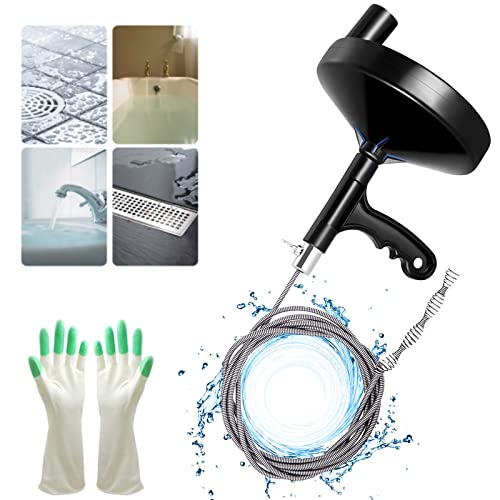
4. Drain Auger 25 Ft with Gloves, Heavy Duty Plumbing Snake
The Drain Auger 25 Ft with Gloves is a heavy duty plumbing snake with 25 feet of flexible spring steel cable for deep clog removal. The cable goes beyond the trap to remove most common household clogs, which is the advantage of a snake over a chemical cleaner: it reaches a blockage that a liquid cannot dissolve, and it pulls the clog out instead of pushing it further down the pipe. The drum auger is reusable, so it pays for itself after a few uses, and the gloves are included for handling a dirty cable. The maker states that the snake is easy to operate with detailed instructions, and it suits a bathroom, a shower, a bathtub, and a kitchen sink. This is the pick for a kitchen sink clog that sits deep in the pipe, and for a household that wants a reusable tool rather than a bottle that runs out. The 25 foot cable and the included gloves make this the most complete snake kit in the guide.
Key specs: 25 feet. Drain Auger with gloves, heavy duty spring steel cable, drum auger. For deep clog removal, reusable, for bathroom, shower, bathtub, and kitchen sink drains.
Strengths:
- The 25 foot cable reaches clogs deep beyond the trap.
- It pulls a clog out instead of pushing it further down.
- Reusable, so it pays for itself after a few uses.
Trade-offs:
- A snake needs care to avoid scratching a pipe or a fixture.
- It is messier than pouring a liquid cleaner.
- It needs storage space for a 25 foot cable.
This auger suits a kitchen sink with a deep clog that a liquid cannot reach, and anyone who wants a reusable tool.
Feed the cable slowly into the drain past the trap, turn the drum to work through the clog, then pull the cable out and clean it. Wear the included gloves and rinse the cable after use.
Best for: Gloves are included for handling a dirty cable.
Not suited for: A slow drain from grease build up, where an enzyme cleaner works better.
Check price on Amazon: Drain Auger 25 Ft with Gloves, Heavy Duty Plumbing Snake

5. Luigi Sink Plunger for Kitchen Sinks, Small, Blue
The Luigi Sink Plunger is a small commercial style plunger with large bellows for kitchen sinks, bathroom sinks, drains, bathtubs, and showers. The large opening sits over the drain and the bellows pump pushes water through the clog, and the maker states that two pumps clear more in 10 seconds than other types of plunger. The small size suits a kitchen sink, because a full size toilet plunger is too large for a sink drain and cannot seal properly. The plunger works on slow and blocked drains, and it clears a sink even when the basin is full of water, because the bellows push the water through the blockage. The blue colour makes it easy to find under the sink, and the compact size stores in a small space. This is the pick for a kitchen sink with a shallow clog near the drain, and for a household that wants a fast mechanical fix with no chemicals. The two pump claim and the small size make this the fastest plunger in the guide for a sink drain.
Key specs: Small, blue. Luigi Sink Plunger, commercial style with large bellows. For kitchen sinks, bathroom sinks, drains, bathtubs, and showers. Clears blockages with two pumps, works even when the basin is full.
Strengths:
- The large bellows push water through a shallow clog fast.
- The small size seals properly on a sink drain.
- It works even when the basin is full of water.
Trade-offs:
- A plunger will not reach a clog deep in the pipe.
- It needs a good seal over the drain to work.
- It can splash if the basin is very full.
This plunger suits a kitchen sink with a shallow clog near the drain, and anyone who wants a fast fix with no chemicals.
Place the large opening over the drain, press down to seal it, and pump twice. Block the overflow if the sink has one, and repeat if the water does not clear.
Best for: No chemicals, so it is safe for any pipes.
Not suited for: A deep clog beyond the trap, where a drain auger works better.
Check price on Amazon: Luigi Sink Plunger for Kitchen Sinks, Small, Blue

6. Korky Beehive Mini Sink and Drain Plunger, T-Handle
The Korky Beehive Mini Sink and Drain Plunger is a compact plunger with a T-handle for sinks, tubs, showers, and flat drains, and it works in bathrooms and kitchens. The beehive shape seals better than a flat cup, which means it needs less effort to push water through a clog, and the T-handle design gives an optimum grip for easy and effective plunging. The plunger head is made from non-marking rubber, so it will not leave marks on the sink or the tub, and the compact design is easy to use and store under the sink or in a closet. The maker states that it eliminates clogs in sinks with or without garbage disposals, as well as shower drains, tubs, and utility sinks. It is made in the USA. This is the pick for a household that wants a compact plunger that stores under the sink and works on a kitchen sink with a disposal. The beehive seal and the T-handle make this the easiest plunger to use in the guide, especially with a disposal.
Key specs: Mini, T-handle. Korky Beehive Mini Sink and Drain Plunger, model 94. Non-marking rubber head, beehive shape seals better, compact design. For sinks with or without garbage disposals, tubs, showers, and flat drains. Made in the USA.
Strengths:
- The beehive shape seals better and needs less effort.
- The T-handle gives a firm grip for effective plunging.
- The non-marking rubber will not mark the sink.
Trade-offs:
- A mini plunger is smaller than a full size plunger, so it moves less water per pump.
- It will not reach a clog deep in the pipe.
- It needs a good seal over the drain to work.
This plunger suits a kitchen sink with a disposal and a shallow clog, and anyone who wants a compact plunger that stores under the sink.
Place the beehive head over the drain, grip the T-handle, and pump firmly. Block the overflow if the sink has one, and repeat until the water clears.
Best for: Compact enough to store under the sink.
Not suited for: A deep clog beyond the trap, where a drain auger works better.
Check price on Amazon: Korky Beehive Mini Sink and Drain Plunger, T-Handle
Comparison table
| Product | Key detail | Suits |
|---|---|---|
| Drano Max Gel, 32 Oz | Gel, cuts through standing water | Slow or blocked drains |
| Green Gobbler Enzyme, 1 Gallon | Enzyme, up to 8 treatments | Grease build up |
| Green Gobbler Ultra Concentrated | Pro strength, 30 minutes | Stubborn clogs |
| Drain Auger 25 Ft with Gloves | 25 ft steel cable, reusable | Deep clogs |
| Luigi Sink Plunger, Small, Blue | Large bellows, 2 pumps | Shallow clogs |
| Korky Beehive Mini Plunger | Beehive seal, T-handle | Sinks with disposals |
Buying guide: choosing the best way to unclog a kitchen sink
Start with the symptom. A sink that drains slowly but still drains has a partial clog, usually grease and food building up on the pipe walls, and an enzyme cleaner or a gel drain cleaner suits it. A sink that does not drain at all has a full blockage, and a gel that cuts through standing water or a plunger suits it first. A sink that drains slowly after every chemical treatment has a clog deep in the pipe, and a drain auger suits it, because a liquid cannot reach that far. Match the tool to the symptom, not to the product you happen to have under the sink.
Next, choose chemical or mechanical. A chemical cleaner dissolves grease and food, and it suits a slow drain and a household that wants a fast fix with no tools. An enzyme cleaner digests grease over hours, and it suits regular maintenance and a household that avoids caustic chemicals. A plunger pushes a shallow clog through with pressure, and it suits a blockage near the drain with no chemicals at all. A drain auger reaches a deep clog and pulls it out, and it suits a blockage that liquids and plungers cannot shift. Many households keep one chemical cleaner and one plunger, because the two together cover most kitchen sink clogs.
Then check safety and fit. A chemical cleaner should be safe for the pipes and the septic system, and it should never be mixed with another cleaner, because mixing can release harmful fumes. Wear gloves and eye protection when pouring a chemical cleaner, and keep the room ventilated. A plunger needs a good seal over the drain, so check that the cup or bellows fits the drain size, and block the overflow if the sink has one, because water escapes through the overflow instead of pushing the clog. A drain auger needs care to avoid scratching a pipe, so feed the cable slowly and never force it. Finally, know when to call a plumber: if the sink, the dishwasher, and the washing machine all drain slowly, the blockage is in the main drain, and no sink product will clear it.
Finally, check the size and the storage before you buy. A 1 gallon enzyme cleaner gives up to 8 treatments and suits a household that maintains the drain regularly, while a 32 ounce gel suits a household that needs a fast fix now. A 25 foot auger needs storage space for the cable, and a plunger needs a place under the sink where it will not tip over. Keep a plunger and a gel cleaner under the sink, and keep the enzyme cleaner for regular maintenance, so the right tool is always in reach when the sink slows down.
How to unclog a kitchen sink step by step
Start with the plunger, because it is the fastest and safest first step. Remove standing water until a few inches remain, place the plunger over the drain, and pump firmly several times. If the water clears, run hot water for a minute to flush the pipe. If the plunger does not work, try a gel drain cleaner: pour the stated amount slowly over the drain, wait 15 to 30 minutes, and flush with hot water. If the drain is still slow, try a drain auger: feed the cable past the trap, turn the drum to work through the clog, and pull the cable out. If none of these work, or if several fixtures drain slowly at once, call a plumber, because the blockage is likely in the main drain or the vent. Never mix chemical cleaners, and never pour a chemical cleaner into a drain after using a plunger with force, because the liquid can splash back.
Common mistakes to avoid when unclogging a kitchen sink
The most common mistake is pouring grease down the drain, which is what causes most kitchen sink clogs in the first place. Let grease cool in a pan, wipe it into the bin, and never pour it down the sink. The second mistake is putting food scraps, coffee grounds, and rice down the drain, because they catch on grease and build a plug. The third mistake is mixing chemical cleaners, which can release harmful fumes. The fourth mistake is using a toilet plunger on a sink, because it is too large to seal and it can splash dirty water. The fifth mistake is forcing a drain auger, which can scratch a pipe or push the clog further down. The sixth mistake is ignoring a slow drain for months, because a partial clog becomes a full blockage and costs more to clear.
Grease: the kitchen sink clog
Grease is the main cause of kitchen sink clogs, because it is liquid when hot and solid when cold. Hot grease poured down the drain coats the inside of the pipe, and as the pipe cools the grease hardens into a sticky layer. Food scraps, coffee grounds, and rice catch on the layer and build a plug, and the drain slows down over weeks until it blocks completely. The fix is to stop the grease at the source: let grease cool in a pan, wipe it into the bin with a paper towel, and never pour it down the sink, even with hot water running.
An enzyme cleaner digests grease over hours and suits regular maintenance, because the enzymes break down oils and fats before they build up. A gel drain cleaner dissolves grease in minutes and suits a sink that is already slow. A plunger will not clear a grease clog on its own, because the grease coats the pipe rather than blocking one spot, and a snake can push through the grease but will not remove the coating. The best defence is prevention: keep grease out of the drain, run hot water after washing greasy pans, and use an enzyme cleaner regularly.
When the clog is not in the sink
A kitchen sink that drains slowly on its own usually has a clog in the trap or the pipe just below the sink, and a plunger, a gel, or a snake will clear it. A sink that drains slowly at the same time as the dishwasher, the washing machine, or the bathroom drains has a blockage further down, in the main drain or the vent, and no sink product will clear it. The signs are water backing up into another fixture, a gurgling sound from the drain, or a bad smell from several drains at once.
If several fixtures are affected, stop using chemical cleaners, because the liquid will sit in the main drain and can damage the pipes, and call a plumber. A plumber can clear a main drain with a long auger or a jet, and can check the vent for a blockage. A vent blocked by leaves or a nest causes slow drainage in the whole house, and it needs clearing from the roof. Knowing when the clog is beyond the sink saves money, because a bottle of drain cleaner will not fix a main drain blockage.
How to keep a kitchen sink from clogging
Keep a drain strainer in the sink at all times, because it catches food scraps, coffee grounds, and rice before they reach the trap. Empty the strainer into the bin after every wash, and clean it weekly so water drains fast. Run the garbage disposal with cold water, not hot, because cold water keeps grease solid so the disposal can grind it and flush it away, while hot water melts grease and lets it coat the pipes further down.
Wipe greasy pans with a paper towel before washing, and never pour cooking oil down the drain. Run hot water for a minute after washing greasy dishes to flush the pipe, and use an enzyme cleaner once a month to digest grease before it builds up. Check the trap under the sink once a year for a slow build up, and clean it before it becomes a blockage. These habits take a minute a day and save a plumber visit.
What not to put down a kitchen sink drain
Grease is the worst thing to put down a kitchen sink drain, because it is liquid when hot and solid when cold, so it coats the inside of the pipe and hardens into a sticky layer that catches everything else. Let grease cool in a pan, wipe it into the bin with a paper towel, and never pour it down the sink, even with hot water running, because the hot water only moves the grease further down the pipe before it cools and hardens.
Coffee grounds, rice, and pasta are the next worst, because coffee grounds clump together in the trap, rice swells with water and blocks the pipe, and pasta does the same. Fibrous vegetables such as celery, artichokes, and onion skins wrap around the disposal grinding plate and jam it. Eggshells do not sharpen the disposal blades, which is a myth, and they add grit to the drain. Potato peels form a starchy paste that blocks the pipe like glue.
The safe list is short: water, small food particles that pass a strainer, and dish soap. Everything else goes in the bin or the compost. A drain strainer catches the particles that do slip through, and it should be emptied after every wash. A household that follows this list will rarely need a drain cleaner at all, while a household that ignores it will need one every month.
Frequently asked questions
What is the best way to unclog a kitchen sink?
Start with a plunger for a shallow clog, then try a gel drain cleaner for grease and food, then a drain auger for a deep clog. An enzyme cleaner suits regular maintenance that stops a clog from forming. Match the tool to the symptom.
Does Drano work on a kitchen sink clog?
Drano Max Gel works on grease, food, hair, and soap clogs, and it cuts through standing water to reach the blockage. Pour 16 ounces for a slow drain or 32 ounces for a complete clog, wait 15 to 30 minutes, and flush with hot water.
Is an enzyme drain cleaner better than a chemical cleaner?
An enzyme cleaner digests grease over hours and is safer for pipes, while a chemical gel works in minutes on a full blockage. Use the enzyme cleaner for maintenance and slow drains, and the gel for a sink that will not drain at all.
Can I use a plunger on a kitchen sink with a garbage disposal?
Yes. The Korky Beehive plunger in this guide states that it clears clogs in sinks with or without garbage disposals. Turn the disposal off first, place the plunger over the drain, and pump firmly.
How do I stop my kitchen sink from clogging again?
Never pour grease down the drain, keep food scraps and coffee grounds out of the sink, run the disposal with cold water, and use an enzyme cleaner regularly to digest grease before it builds up.
When should I call a plumber for a clogged kitchen sink?
Call a plumber if the sink, the dishwasher, and the washing machine all drain slowly, because the blockage is in the main drain. Call a plumber too if a plunger, a chemical cleaner, and an auger all fail, or if water backs up into another fixture.
Can I use baking soda and vinegar to unclog a kitchen sink?
Baking soda and vinegar fizz and can loosen a light build up, but they will not clear a full blockage or dissolve a grease plug. They suit maintenance on a slow drain, not a sink that will not drain at all. A gel cleaner, a plunger, or an auger works better on a real clog.
Is it safe to use a chemical drain cleaner with a septic system?
The gel and enzyme cleaners in this guide state that they are safe for septic systems, but check the label before use, because some caustic cleaners are not. An enzyme cleaner is the safest choice for a septic system, because it digests waste without harsh chemicals.
How often should I clean my kitchen sink drain?
Use an enzyme cleaner once a month to digest grease before it builds up, and clean the drain strainer after every wash. A monthly treatment takes a minute and stops most clogs from forming in the first place.
Can I pour boiling water down a kitchen sink to clear a clog?
Boiling water can melt a light grease build up, but it will not clear a full blockage, and it can damage plastic pipes and the seals in a garbage disposal. Hot tap water is safer. Use a gel cleaner or a plunger for a real clog, and boiling water only for maintenance on a slow drain.
How long does a drain cleaner take to work?
A gel drain cleaner starts working in about 7 minutes and needs 15 to 30 minutes before flushing, while an enzyme cleaner needs several hours. A plunger works in seconds on a shallow clog, and a drain auger clears a deep clog in minutes once the cable reaches it.
Final recommendation
The best way to unclog a kitchen sink depends on the clog. A plunger clears a shallow blockage fast with no chemicals, a gel drain cleaner dissolves grease and food in minutes, an enzyme cleaner digests grease over hours and stops the next clog, and a drain auger reaches a deep blockage that liquids cannot touch. Keep a plunger and a gel cleaner under the sink, use an enzyme cleaner regularly, and never pour grease down the drain. If several fixtures drain slowly at once, call a plumber, because the blockage is beyond the sink. Keep a plunger and a gel cleaner under the sink, use an enzyme cleaner once a month, and never pour grease down the drain, and the sink will stay clear for years.