The best store-bought cleaners for kitchen sinks are the ones that match the sink material, because a cleaner that shines stainless steel can dull a composite sink, and a powder that lifts rust can scratch a soft glaze. A kitchen sink sees grease, coffee, tea, hard water, and food stains every day, and no single cleaner handles all of them on every surface. The six cleaners below cover stainless steel, porcelain, ceramic, composite, and cast iron sinks, checked against their full product titles, and each one states the surfaces it suits.
This guide covers the best store-bought cleaners for kitchen sinks, from a sink cleaner and polish that restores shine to a powder that lifts rust and a plant based spray that removes fingerprints. Every pick is a real cleaner sold on Amazon, and every surface and form stated here comes from its product title or its listed features. We explain how to match a cleaner to the sink, which form suits which stain, and how to clean without damaging the finish.
How the picks were chosen
We picked cleaners whose full product titles state that they clean sinks or stainless steel sinks, so the use is confirmed rather than assumed. We covered powders, creams, liquids, and sprays, and we included cleaners for stainless steel, porcelain, ceramic, composite, cast iron, and fibreglass sinks. We looked for stated surfaces, a stated form, and a stated use on sinks. We left out bathroom only cleaners, garbage disposal tablets, drain cleaners, and general sprays that do not state sink use. We also checked whether each cleaner is safe for food contact surfaces, because a kitchen sink is washed where food is prepared, and a cleaner that needs rinsing must be rinsed well before the sink is used again.
In this guide
The best store-bought cleaners for kitchen sinks
The six cleaners below cover the main forms a buyer meets in a store. One is a sink cleaner and polish in a bottle, two are Bar Keepers Friend products in powder and cream form, one is a plant based stainless steel spray with a cloth, and two are Weiman sink cleaners in liquid and cream form. All six state sink use in their titles, and all six are store-bought cleaners that need no mixing or special equipment. All six cleaners state sink use in their titles, and all six are store-bought cleaners that need no mixing or special equipment, so any of them can be bought and used on the same day.
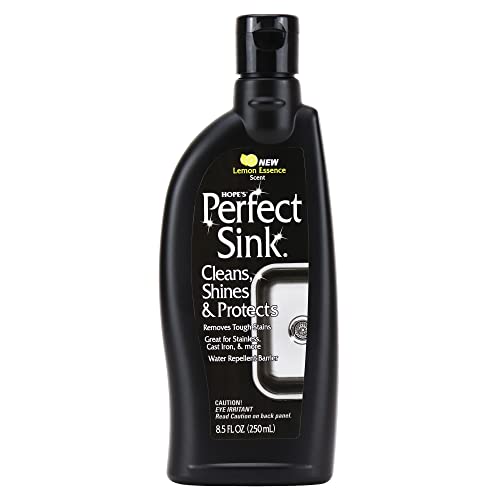
1. HOPE’S Perfect Sink Cleaner and Polish, 8.5 Fl Oz
HOPE’S Perfect Sink Cleaner and Polish is a gentle cleaner that shines, polishes, and protects a sink in one step. The 8.5 fluid ounce bottle treats cast iron, Corian, composite, and acrylic sinks, as well as stainless steel, which makes it the widest ranging cleaner in this guide. The formula is restorative, which means it gives a sink its like-new shine again rather than just removing dirt, and it leaves a water repellent layer that helps the next clean go faster. The fresh lemon essence scent suits a kitchen, and the gentle formula will not scratch a soft surface. This is the pick for a household with more than one sink material, or for a composite or acrylic sink that needs a gentle cleaner rather than a powder. The lemon essence scent and the water repellent layer make this the freshest smelling cleaner in the guide.
Key specs: 8.5 fluid ounces. HOPE’S Perfect Sink Cleaner and Polish. For cast iron, Corian, composite, acrylic, and stainless steel sinks. Gentle cleaner that shines, polishes, and protects in one step, water repellent, lemon essence scent.
Strengths:
- Suits cast iron, Corian, composite, acrylic, and stainless steel sinks.
- Cleans, polishes, and protects in one step.
- The water repellent layer makes the next clean faster.
Trade-offs:
- A gentle cleaner will not lift heavy rust or baked on grease alone.
- The 8.5 ounce bottle is smaller than the other cleaners in this guide.
- It needs regular use to keep the water repellent layer working.
This cleaner suits a household with a composite, acrylic, or cast iron sink, and anyone who wants one gentle cleaner for several sink materials.
Apply a small amount with a soft cloth, work it over the bowl, and rinse. Use it regularly to keep the water repellent layer working, and keep it away from a powder cleaner routine on the same day.
Best for: The gentle formula will not scratch a soft surface.
Not suited for: A kitchen with heavy rust stains, where a powder cleaner works better.
Check price on Amazon: HOPE’S Perfect Sink Cleaner and Polish, 8.5 Fl Oz

2. Bar Keepers Friend Powder Cleaner and Polisher, 12 Oz, 2 Pack
Bar Keepers Friend Powder Multipurpose Cleaner and Polisher is a concentrated powder cleanser in a 12 ounce pack, sold here as a 2 pack. The oxalic acid formula works without bleach to restore shine to stainless steel, porcelain, ceramic tile, aluminium, and other surfaces, and it removes rust stains, hard water mineral deposits, soap scum, and grime. The powder cuts through heavy baked on grease and burnt pots and pans, which makes it the strongest cleaner in this guide for a stained stainless steel sink. It needs no dilution: sprinkle it onto a damp surface, work it with a soft cloth or sponge, and rinse. The formula is septic safe, which matters for a household on a septic system. This is the pick for a sink with rust stains, hard water deposits, or baked on grease that a gentle cleaner cannot lift. The oxalic acid formula and the septic safe claim make this the strongest powder in the guide for a household on a septic system.
Key specs: 12 ounces, 2 pack. Bar Keepers Friend Powder, oxalic acid formula, no bleach. For stainless steel, porcelain, ceramic tile, aluminium, brass, and glass. Removes rust stains, hard water deposits, soap scum, and grime. Septic safe.
Strengths:
- The powder lifts rust stains and hard water deposits that gentle cleaners cannot.
- The oxalic acid formula works without bleach.
- It needs no dilution and is septic safe.
Trade-offs:
- A powder can scratch a soft glaze or a composite surface if it is scrubbed hard.
- It needs rinsing well, because residue can dull the finish.
- It is stronger than a daily cleaner, so it suits weekly use rather than daily use.
This cleaner suits a stainless steel or porcelain sink with rust stains or hard water deposits, and anyone who wants a strong powder for weekly cleaning.
Sprinkle the powder onto a damp surface, work it gently with a soft cloth, and rinse well. Test it on a small hidden area first if the sink is composite or glazed.
Best for: The 2 pack covers a long period of cleaning.
Not suited for: A composite or acrylic sink, where a gentle cream cleaner is safer.
Check price on Amazon: Bar Keepers Friend Powder Cleaner and Polisher, 12 Oz, 2 Pack

3. Bar Keepers Friend Soft Cleanser Liquid, 13 Oz, 2 Pack
Bar Keepers Friend Soft Cleanser Liquid Multipurpose Cleaner is a ready to use cream in a 13 ounce bottle, sold here as a 2 pack. The cream formula suits stainless steel, porcelain, ceramic, fibreglass, and tiles, and it removes grease, rust stains, hard water, and calcium deposits without harsh scrubbing. The gentle micro-abrasive formula lifts stains while being kind to the surface, which makes it the daily cleaner version of the powder in this guide. It needs no mixing: pour it onto a cloth or sponge, work it over the bowl, and rinse. The cream clings to a vertical surface better than a powder, so it works well on the sides of a deep bowl and on the apron front of a farmhouse sink. This is the pick for a household that wants the Bar Keepers Friend cleaning power in a gentler daily form. The cream form and the ready to use bottle make this the easiest Bar Keepers Friend product to use every day.
Key specs: 13 ounces, 2 pack. Bar Keepers Friend Soft Cleanser Liquid, cream formula. For stainless steel, porcelain, ceramic, fibreglass, and tiles. Removes grease, rust stains, hard water, and calcium. Gentle micro-abrasive, ready to use, no mixing.
Strengths:
- The cream clings to vertical surfaces and deep bowl sides.
- The gentle micro-abrasive formula suits daily use.
- It needs no mixing and is ready to use.
Trade-offs:
- A cream is weaker than the powder for heavy rust or baked on grease.
- It needs rinsing well to avoid a dull residue.
- The micro-abrasive can mark a very soft glaze if it is scrubbed hard.
This cleaner suits a household that wants a gentle daily cream for a stainless steel or porcelain sink, and anyone who cleans deep bowls and apron fronts.
Pour the cream onto a soft cloth, work it over the bowl and the sides, and rinse well. Use it for daily or weekly cleaning, and keep the powder for heavy stains.
Best for: The 2 pack covers a long period of cleaning.
Not suited for: A sink with heavy rust stains, where the powder works better.
Check price on Amazon: Bar Keepers Friend Soft Cleanser Liquid, 13 Oz, 2 Pack

4. Therapy Stainless Steel Cleaner and Polish, Lavender Scent, Sink Cleaner
Therapy Stainless Steel Cleaner and Polish is a plant powered spray in a 16 ounce bottle with a premium 16 by 16 inch microfibre cloth included. The formula is made with 100 percent USDA certified biobased content, and it leaves a brilliant polished finish on stainless steel sinks, grills, and appliances. The title states sink cleaner directly, and the maker states that it is safe for sinks, grills, and appliances. The spray removes fingerprints and residue, and it leaves a streak free shine that reveals the brushed finish of the sink. The lavender essential oil scent suits a kitchen that wants a fresh smell without a harsh chemical odour. This is the pick for a stainless steel sink that needs a daily shine rather than a deep clean, and for a household that prefers a plant based formula. The 100 percent biobased formula and the included cloth make this the most eco friendly cleaner in the guide.
Key specs: 16 ounces with a 16 by 16 inch microfibre cloth. Therapy Stainless Steel Cleaner and Polish, lavender scent. 100 percent USDA certified biobased. Removes fingerprints and residue, safe for sinks, grills, and appliances.
Strengths:
- The plant based formula suits a household that avoids harsh chemicals.
- The microfibre cloth is included for a streak free shine.
- It removes fingerprints and residue from stainless steel.
Trade-offs:
- A spray polish will not lift rust stains or baked on grease.
- It suits stainless steel only, not porcelain or composite sinks.
- It needs a clean bowl first, because it polishes rather than deep cleans.
This cleaner suits a stainless steel sink that needs a daily shine, and anyone who prefers a plant based spray with a cloth included.
Clean the bowl first with a mild soap, then spray the polish onto the microfibre cloth and wipe with the grain of the steel. Use it daily to keep fingerprints off the sink.
Best for: The lavender scent is fresh without a harsh chemical odour.
Not suited for: A sink with heavy stains, where a powder or cream cleaner works better.
Check price on Amazon: Therapy Stainless Steel Cleaner and Polish, Lavender Scent, Sink Cleaner

5. Weiman Stainless Steel Sink and Pots and Pans Cleaner and Polish
Weiman Stainless Steel Sink and Pots and Pans Cleaner and Polish is a liquid cleaner made for stainless steel sinks and cookware. The title states sink use directly, which is the check that matters for this guide. The formula is safe for food contact surfaces when rinsed after use, and it removes stains, rust, lime, tarnish, soap scum, and hard water deposits. The polish leaves a protective barrier that prevents smears, dirt, and smudges, which keeps the sink looking clean between washes. The cleaner suits a stainless steel sink and the pots and pans that are washed in it, so one bottle covers the sink and the cookware. This is the pick for a household that wants a single cleaner for the sink and the steel pans, with a protective polish that lasts between cleans. The food contact safety and the protective barrier make this the best cleaner for a sink that is used for food prep.
Key specs: Weiman Stainless Steel Sink and Pots and Pans Cleaner and Polish. For stainless steel sinks and cookware, safe for food contact surfaces when rinsed. Removes stains, rust, lime, tarnish, soap scum, and hard water deposits. Polish leaves a protective barrier.
Strengths:
- Made for stainless steel sinks and the pots washed in them.
- Safe for food contact surfaces when rinsed after use.
- The polish leaves a protective barrier against smears and dirt.
Trade-offs:
- It suits stainless steel only, not porcelain or composite sinks.
- A liquid polish will not lift heavy baked on grease alone.
- It needs rinsing after use on a food contact surface.
This cleaner suits a stainless steel sink and the steel cookware washed in it, and anyone who wants a protective polish between cleans.
Apply the cleaner with a soft cloth, work it over the bowl, and rinse well because the sink is a food contact surface. Use it weekly to keep the protective barrier working.
Best for: It removes rust, lime, tarnish, and soap scum.
Not suited for: A composite or porcelain sink, where a gentler cleaner is safer.
Check price on Amazon: Weiman Stainless Steel Sink and Pots and Pans Cleaner and Polish
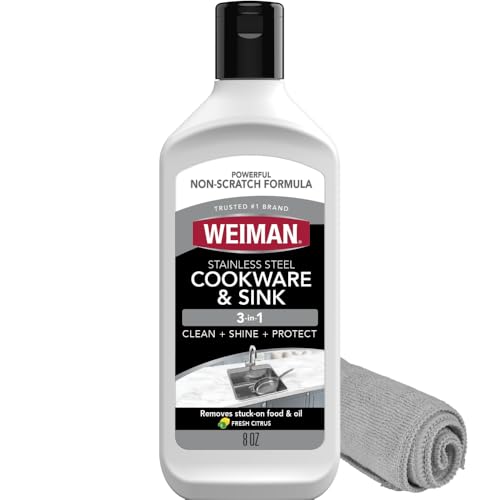
6. Weiman Stainless Steel Sink and Cookware Cleaner and Polish with Microfiber Cloth, 8 Ounce
Weiman Stainless Steel Sink and Cookware Cleaner and Polish with Microfiber Cloth is an 8 ounce bottle with a microfibre cloth included. The formula is the same Weiman sink cleaner as the liquid in this guide: it is safe for food contact surfaces when rinsed after use, and it removes stains, rust, lime, tarnish, soap scum, and hard water deposits. The polish leaves a protective barrier that prevents smears, dirt, and smudges. The difference is the cloth: the included microfibre cloth gives a streak free finish without buying a separate cloth, and the 8 ounce size suits a household that wants to try the cleaner before buying a larger bottle. The title states sink and cookware use directly, so the use is confirmed. This is the pick for a household that wants the Weiman cleaner with a cloth included, in a smaller bottle. The included cloth and the 8 ounce size make this the best cleaner to try first before buying a larger bottle.
Key specs: 8 ounces with a microfibre cloth. Weiman Stainless Steel Sink and Cookware Cleaner and Polish. For stainless steel sinks and cookware, safe for food contact surfaces when rinsed. Removes stains, rust, lime, tarnish, soap scum, and hard water deposits. Polish leaves a protective barrier.
Strengths:
- The microfibre cloth is included for a streak free finish.
- The 8 ounce size suits a household trying the cleaner first.
- Safe for food contact surfaces when rinsed after use.
Trade-offs:
- The 8 ounce bottle runs out faster than a larger bottle.
- It suits stainless steel only, not porcelain or composite sinks.
- A liquid polish will not lift heavy baked on grease alone.
This cleaner suits a household that wants the Weiman sink cleaner with a cloth included, and anyone trying the cleaner in a smaller size first.
Use the included microfibre cloth to apply the cleaner, work it over the bowl with the grain, and rinse well. Keep the cloth for the sink only so it stays clean.
Best for: The polish leaves a protective barrier against smears.
Not suited for: A large household that cleans a big sink every day.
Comparison table
| Product | Key detail | Suits |
|---|---|---|
| HOPE’S Perfect Sink Cleaner and Polish | 8.5 fl oz, gentle, multi-surface | Composite and cast iron sinks |
| Bar Keepers Friend Powder, 2 Pack | 12 oz, powder, oxalic acid | Rust and hard water stains |
| Bar Keepers Friend Soft Cleanser, 2 Pack | 13 oz, cream, micro-abrasive | Daily cleaning |
| Therapy Stainless Steel Cleaner, Lavender | 16 oz spray, biobased, cloth included | Daily shine |
| Weiman Sink and Pots and Pans Cleaner | Liquid, food contact safe | Sinks and steel cookware |
| Weiman Sink and Cookware Cleaner, 8 Oz | 8 oz, cloth included | Trying the cleaner first |
Buying guide: choosing a store-bought cleaner for a kitchen sink
Start with the sink material, because it decides which cleaner is safe. Stainless steel takes a powder, a cream, a liquid, or a spray, and all six cleaners in this guide suit it. Porcelain and ceramic take a powder or a cream, but a harsh scrub can mark the glaze, so use a soft cloth and test a small area first. Composite, acrylic, Corian, and fibreglass need a gentle cleaner such as the HOPE’S sink cleaner, because a powder can scratch a soft surface. Cast iron with an enamel coating takes a gentle cleaner too, because the enamel can chip. Check the surfaces in the product title before buying, and never use a cleaner on a surface it does not list.
Next, match the form to the stain. A powder lifts rust stains, hard water deposits, and baked on grease, because the abrasive works the stain loose, but it needs rinsing well and it suits weekly use rather than daily use. A cream clings to vertical surfaces and deep bowl sides, and it suits daily or weekly cleaning with a gentle micro-abrasive action. A liquid polish removes light stains and leaves a protective barrier, and it suits a sink that is already clean and needs a shine. A spray polish removes fingerprints and residue, and it suits a daily wipe rather than a deep clean. Choose the form for the stain you have, not the form you like best.
Then check the size and the scent. A 2 pack covers a long period of cleaning and suits a household that cleans the sink every week, while an 8 ounce bottle suits a household trying a cleaner first. A spray with a cloth included saves buying a separate cloth, and a microfibre cloth gives a streak free finish on stainless steel. A lemon or lavender scent suits a kitchen, while a harsh chemical smell can linger in a small kitchen. Finally, check whether the cleaner is safe for food contact surfaces: a sink is washed where food is prepared, so a cleaner that needs rinsing after use must be rinsed well before the sink is used again.
Finally, check the scent and the storage before you buy. A lemon or lavender scent suits a kitchen, while a harsh chemical smell can linger in a small kitchen and put people off cooking. Store the cleaner under the sink with the lid closed, and keep a powder away from damp, because a damp powder clumps and is hard to sprinkle. Keep cleaners away from children, and keep the cloth used for the sink separate from the cloth used for the counter, so grit does not spread from one surface to the other.
How to clean a kitchen sink without damaging it
Start by removing dishes and food from the bowl, then rinse the sink with warm water to wash away loose dirt and grit. Apply the cleaner to a soft cloth or sponge, not directly to the sink, so the amount stays controlled and the cleaner does not pool in one spot. Work the cleaner over the bowl with the grain of a brushed stainless steel finish, or in small circles on a porcelain or composite sink, and let it sit for a minute on a stain before wiping. Rinse the bowl well with warm water, because residue dulls the finish and can leave a film. Dry the bowl with a soft cloth, especially on a stainless steel sink, because water spots form as the water dries. For a deep bowl, clean the sides as well as the base, and for a farmhouse sink, wipe the apron front too.
The cost of a cleaner matters less than the cost of using the wrong one, because a cleaner that scratches a composite sink or dulls a glaze costs far more to fix than the price difference between two bottles. A gentle cleaner that suits the material is cheaper in the long run than a strong cleaner that damages the surface. Buy the smallest size first if the cleaner is new to the household, and test it on a hidden area before using it on the whole bowl. A cleaner that works well on the sink will be used every week, so the bottle runs out faster than expected, and a 2 pack saves a second trip to the store.
Common mistakes to avoid when cleaning a kitchen sink
The most common mistake is using steel wool or a harsh scouring pad, which cuts through a brushed finish and leaves marks that catch dirt. The second mistake is using a powder cleaner on a soft composite or acrylic sink, where it can scratch the surface. The third mistake is leaving a cleaner on the surface for too long, which can dull a glaze or a finish. The fourth mistake is not rinsing well, because residue leaves a film that attracts dirt. The fifth mistake is cleaning with a dirty cloth, which spreads grit across the bowl and scratches the finish. The sixth mistake is using a bathroom cleaner on a kitchen sink, because a bathroom cleaner may not be safe for a food contact surface.
Powder vs cream vs liquid vs spray
A powder is the strongest form, because the abrasive works a stain loose, and it suits rust stains, hard water deposits, and baked on grease on stainless steel and porcelain. It needs no dilution and it is septic safe, but it needs rinsing well and it suits weekly use rather than daily use. A powder can scratch a soft glaze or a composite surface if it is scrubbed hard, so test a small area first and use a soft cloth.
A cream is gentler than a powder, and it clings to vertical surfaces and deep bowl sides, so it suits daily or weekly cleaning. A liquid polish removes light stains and leaves a protective barrier, and it suits a sink that is already clean and needs a shine. A spray polish removes fingerprints and residue, and it suits a daily wipe rather than a deep clean. Choose the powder for heavy stains, the cream for daily cleaning, the liquid for protection, and the spray for a fast shine.
How to remove rust stains from a sink
Rust stains come from a metal object left in the sink, from hard water, or from a steel wool pad that leaves iron particles behind. Start with a powder cleaner such as Bar Keepers Friend, because the oxalic acid formula dissolves rust without bleach. Sprinkle the powder onto a damp surface, work it gently with a soft cloth, and let it sit for a minute before rinsing. Do not use steel wool, because it leaves more iron behind and makes the stain worse.
For a light rust stain, a cream cleaner may be enough, and it is gentler on the surface. For a stain that will not lift, repeat the powder treatment rather than scrubbing harder, because scrubbing can scratch the finish. Prevent rust stains by removing metal objects from the sink, drying the bowl after use, and never leaving a steel wool pad in the sink. A sink with a protective polish resists rust better, because the barrier keeps water off the steel.
How to remove hard water deposits from a sink
Hard water deposits are pale crusty marks left when water dries on the sink, and they build up fastest around the drain and the faucet base. Start with a cream or powder cleaner that states hard water removal, such as Bar Keepers Friend, and work it over the deposit with a soft cloth. Let the cleaner sit for a minute so the acid can dissolve the mineral, then rinse well. Do not scrape the deposit with a knife or a scouring pad, because the steel underneath will scratch.
Prevent hard water deposits by wiping the bowl dry after use, especially on a black or dark sink where the marks show clearly. A water repellent polish such as the HOPE’S cleaner helps, because water runs off the surface instead of drying on it. In a very hard water area, a water softener for the whole house is the long term fix, but wiping the sink dry every day is the habit that matters most.
How to clean a sink with a garbage disposal
A kitchen sink with a garbage disposal needs the disposal cleaned as well as the bowl, because food builds up in the grinding chamber and causes odours. Run the disposal with cold water for a minute after every use, because cold water keeps grease solid so the disposal can grind it and flush it away, while hot water melts grease and lets it coat the pipes. Never put grease, coffee grounds, rice, pasta, or fibrous vegetables such as celery down the disposal, because they clog the drain or wrap around the grinding plate.
Clean the disposal once a week by running cold water and a handful of ice cubes through it, which scours the grinding chamber, then a cut lemon, which freshens the smell. Do not use a chemical drain cleaner in a disposal unless the label states it is safe, because the chemical can damage the seals. Clean the rubber splash guard with a brush, because food collects under it and causes odours. Turn the disposal off at the switch before cleaning the guard, and never put a hand inside the disposal.
The sink bowl itself cleans the same way with or without a disposal, with a soft cloth and a cleaner that matches the material. Rinse the bowl after running the disposal, because food particles splash onto the bowl, and dry the bowl to stop water spots. A disposal that is cleaned weekly and used correctly will last years without odours, while a disposal that is ignored will smell within weeks.
Frequently asked questions
What is the best store-bought cleaner for a kitchen sink?
It depends on the sink material and the stain. A gentle sink cleaner and polish suits composite and cast iron sinks, a powder lifts rust and hard water on stainless steel and porcelain, a cream suits daily cleaning, and a spray polish gives a daily shine on stainless steel. Match the cleaner to the material first.
Can I use Bar Keepers Friend on a kitchen sink?
Yes, on stainless steel and porcelain sinks, but use a soft cloth and rinse well. The powder is stronger and suits weekly use for rust and hard water, while the soft cleanser cream is gentler and suits daily use. Test a small area first on a composite or glazed sink.
Is a powder or a cream cleaner better for a sink?
A powder is stronger and lifts rust, hard water, and baked on grease, while a cream is gentler, clings to vertical surfaces, and suits daily use. Use the powder weekly for heavy stains and the cream daily for normal cleaning.
Can I use a stainless steel cleaner on a porcelain sink?
Check the product title first. Some stainless steel cleaners list porcelain as a surface, and some do not. The HOPE’S cleaner in this guide lists cast iron, Corian, composite, acrylic, and stainless steel, while the Weiman cleaners list stainless steel only.
How often should I clean my kitchen sink?
Rinse the bowl after every use, wipe it dry at the end of the day, and deep clean it weekly with a powder or cream cleaner. A daily spray polish keeps a stainless steel sink free of fingerprints between deep cleans.
Do I need to rinse a sink cleaner off?
Yes. A kitchen sink is a food contact surface, so rinse the cleaner off well with warm water after use, and dry the bowl with a soft cloth. A cleaner that states food contact safety still needs rinsing after use.
Can I use vinegar to clean my kitchen sink?
Vinegar dissolves hard water deposits and is safe on stainless steel, but it is acidic and should be rinsed off well. It is not a substitute for a sink cleaner on grease or rust, and it should never be mixed with a bleach cleaner. A store-bought sink cleaner is safer and more effective for most stains.
How do I clean a composite kitchen sink?
Use a gentle cleaner such as the HOPE’S sink cleaner in this guide, with a soft cloth and warm water. Avoid powders and harsh scouring pads, because they can scratch a soft composite surface. Rinse well and dry the bowl to stop water spots.
What should I never use on a kitchen sink?
Never use steel wool, a harsh scouring pad, or a cleaner that does not list the sink material. Never mix cleaners, especially bleach with an acid cleaner, because the fumes are harmful. Never leave a metal object or a steel wool pad sitting in the sink.
Can I use a sink cleaner in a sink with a garbage disposal?
Yes, a sink cleaner is safe for the bowl of a sink with a disposal, but check the label before pouring a chemical cleaner down the drain, because some cleaners can damage the disposal seals. Clean the bowl with a cloth, and rinse well.
How do I remove a bad smell from my kitchen sink?
Run the disposal with cold water and ice cubes, then a cut lemon, and clean the rubber splash guard with a brush. Clean the drain strainer weekly, and use an enzyme cleaner once a month to digest grease and food in the pipes. If the smell persists, the trap may need cleaning.
Final recommendation
The best store-bought cleaner for a kitchen sink is the one that matches the sink material and the stain. Use a gentle cleaner and polish for composite and cast iron sinks, a powder for rust and hard water on steel and porcelain, a cream for daily cleaning, and a spray polish for a daily shine on stainless steel. Clean with a soft cloth, rinse well, dry the bowl, and never use steel wool. The sink will keep its shine, and the cleaner will last longer because it is used the right way. Keep the cleaner that matches the sink material under the sink, and keep the cloth for the sink separate from the cloth for the counter, so grit does not spread.

