The best kerosene cookers are simple, sturdy stoves that cook a meal with no electricity, no gas canister, and no mains connection of any kind. A wick draws kerosene up from a tank, a flame burns steadily under a pot, and the cook adjusts the heat by raising or lowering the wick. That simplicity is the whole point. When the power is out, when the campsite has no hookup, or when a household wants a backup that does not depend on the grid, a kerosene cooker keeps working. This guide covers six portable kerosene stoves that were checked against the site catalogue: an 8,500 BTU cook stove with a model number, an iron camp stove, a multi-use outdoor stove, a two-pack of mini stoves, a compact stove with a rotary knob, and a square ten-wick stove with a stated tank and runtime.
Kerosene cooking is an old technology, and it rewards a buyer who understands what it is and what it is not. It is not as clean as gas and not as fast as induction. It needs ventilation, it needs care with fuel, and it needs a stable surface. What it offers in return is independence. A litre or two of kerosene, a box of matches, and a pot are enough to boil water, fry food, and heat a meal anywhere. The six stoves below differ in wick count, tank size, build, and whether they are built for one pot or for a group, and those differences decide which one fits a given use. Safety comes first throughout this guide, because a kerosene stove is an open flame appliance that burns liquid fuel.
In this guide
Quick picks: best kerosene cookers
| # | Product | Where to buy |
|---|---|---|
| 1 | Alpaca TS-909 kerosene cook stove | Check on Amazon |
| 2 | Soomloom FLAMENCO iron camping stove | Check on Amazon |
| 3 | Garneck portable kerosene stove | Check on Amazon |
| 4 | VANZACK 2-pack kerosene cooking stoves | Check on Amazon |
| 5 | VOSAREA portable kerosene stove | Check on Amazon |
| 6 | Square 10-wick portable kerosene stove | Check on Amazon |
What a Kerosene Cooker Is
A kerosene cooker is a stove that burns kerosene, also called paraffin in some countries, through a wick. The wick sits in a fuel tank and draws kerosene upward by capillary action. Lighting the exposed wick starts a flame, and a knob or lever raises or lowers the wick to control the heat. Most portable models have a frame that holds a pot above the flame, a wind shield or a stable base, and a carry handle. The better ones add a glass chimney or a burner cap that steadies the flame in a breeze. There is no pump, no battery, and no piezo igniter on the simplest models, which is why they are popular as emergency and camping stoves.
Buyers should know the difference between a kerosene cooker and a kerosene heater. A cooker is built to hold a pot and to deliver heat upward into food. A heater is built to radiate heat into a room. Some products do both, and the listings for them say so, but a heater with no pot support is not a cooker, and this guide does not treat it as one. Every pick below is listed as a stove or cooker for cooking, with a pot support and a burner meant for food preparation. Heaters, lanterns, and lamps were excluded, even when their listings mentioned cooking in passing.
How the Picks Were Chosen
The picks were chosen against four tests. First, the listing had to describe a stove built for cooking with kerosene, with a burner, a wick, and a pot support, not a heater or a lamp. Second, the product had to be portable, meaning it can be carried to a campsite, a cabin, or a garden, rather than a fixed installation. Third, the set had to cover the main variations buyers choose between: single stoves and multi-packs, round and square burners, and different wick counts. Fourth, each pick needed a distinct identity in its listing, a brand, a model code, or a clear variant such as a wick count or a tank size, so that a buyer can tell one stove from another. Generic listings with no distinguishing detail were not used.
The result is six stoves from different makers and in different formats. One is a named model with a stated output of 8,500 BTU. One is an iron camp stove with a model name. One is a multi-use outdoor stove. One is a two-pack of mini stoves. One is a compact stove with a rotary control. One is a square ten-wick stove with a stated 1.5 litre tank and a runtime of five to seven hours per fill. The guide weighs build, flame control, capacity, and portability, and it is direct about the safety rules that apply to all six.
Kerosene, Gas and Electric: Cooking Off the Grid
A buyer choosing a kerosene cooker is usually choosing independence from the grid, and it helps to see how kerosene compares with the alternatives. Gas is the closest rival. A gas camping stove lights instantly, burns cleanly, and controls precisely, and a gas canister is light and easy to carry. Its weakness is supply. Canisters run out, they are not sold everywhere, and they cannot be refilled in the field. Kerosene is sold in far more places, it keeps for a long time in a sealed container, and a litre of it carries a lot of cooking. Its weakness is cleanliness and care. It smells, it can smoke if the wick is wrong, and it demands ventilation and careful fuel handling that gas does not.
Electric cooking is the third option, and it depends entirely on a power source. A 12-volt stove or an induction hob is clean, fast, and easy to control, but it needs a battery, a hookup, or a generator, and any of those can run flat. Kerosene needs none of them. A stove, a bottle of fuel, and a match are a complete kitchen, and that is why kerosene remains the backup of choice for cabins, boats, and households that prepare for power cuts. The honest summary is that gas is the easiest, electric is the cleanest, and kerosene is the most independent. A buyer who camps near shops and values convenience will often pick gas. A buyer who camps far from shops, or who wants a backup that never depends on a supply chain, will pick kerosene.
The Best Kerosene Cookers at a Glance
| Model | Format | Burner | Tank and Runtime |
|---|---|---|---|
| Alpaca TS-909 | Cook stove | 8,500 BTU | Not stated |
| Soomloom FLAMENCO | Iron camp stove | Kerosene cooker burner | Not stated |
| Garneck Outdoor Stove | Portable stove | Kerosene burner | Not stated |
| VANZACK 2-Pack | Mini cook stoves, pair | 8-wick | Not stated |
| VOSAREA Portable Stove | Compact stove | Rotary knob control | 7.08 in size |
| Square 10-Wick Stove | Cook stove | 10-wick, even flame | 1.5L tank, 5 to 7 hours |
The Picks in Detail

Top pick
1. Alpaca Kerosene Cook Stove TS-909, 8,500 BTU
The Alpaca TS-909 is the most clearly specified stove in this guide, and that is why it leads the list. It is a kerosene cook stove rated at 8,500 BTU, built for camping and outdoor cooking, with the model code TS-909 stated in its listing. The design includes a steel drip tray, carry handles, and a frame that supports a pot above the burner. Those three details matter more than they sound. A drip tray catches spills before they reach the tank or the ground. Carry handles make a hot stove safer to move once it has cooled enough to shift. A solid pot support keeps a heavy pot steady, which is the first safety requirement of any liquid fuel stove.
The 8,500 BTU rating gives a useful sense of output. It is enough to boil water for a group, to fry in a large pan, and to keep a pot at a rolling simmer in a breeze. Alpaca is a known name in kerosene stoves, and the TS-909 follows the classic pattern of a portable wick stove: a tank below, a burner in the middle, and a cooking frame on top. It is built for outdoor cooking and for emergency use at home when the power is out, and it suits a buyer who wants a single, well specified stove rather than a pair of smaller ones. As with every stove here, it must be used with ventilation and on a stable, heat resistant surface.
Strengths:
- Stated 8,500 BTU output and TS-909 model code make it the clearest specification in this guide.
- Steel drip tray, carry handles, and pot support cover the practical details of safe use.
- Built for both camping and emergency cooking, so it serves two purposes in one purchase.
Trade-offs:
- Tank size and runtime are not stated, so fuel planning needs a first fill to judge.
- Single stove format means one pot at a time, unlike the two-pack options below.
- Needs ventilation and a stable surface, like every open flame kerosene stove.
Who it fits: a camper or a household preparing for power cuts who wants one dependable, clearly specified kerosene stove.
Best for: camping and emergency cooking with a single strong stove. Not suited for: cooking two dishes at once or use in an unventilated room.
Check price on Amazon: Alpaca TS-909 kerosene cook stove

2. Soomloom Iron Camping Stove FLAMENCO Kerosene Cooker Stove
The Soomloom FLAMENCO is an iron camping stove built for outdoor cooking, and its listing describes it as a kerosene cooker stove for campfire use, as well as a paraffin oil utility stove. The FLAMENCO model name and the Soomloom brand give it a clear identity, and the iron build is the point. Iron is heavy, but it is also tough, heat resistant, and stable under a full pot. A stove that lives in a car boot, a shed, or a camp box takes knocks, and an iron frame takes them better than a thin steel one. The portable burner format means it packs down for transport and sets up at a campsite, a cabin, or a garden.
This stove suits a buyer who cooks outdoors as a habit, not only in an emergency. The campfire wording in its listing points to open air use, where wind and uneven ground are part of the job, and a heavy iron stove stays put where a light one would shift. Paraffin is another name for kerosene, and the dual wording in the listing reflects the two names the same fuel carries in different countries. A buyer who already keeps paraffin for a lamp or a heater will find the same fuel works here, which is a practical advantage for a household that already stores it.
Strengths:
- Iron build is tough and stable under a full pot on uneven ground.
- FLAMENCO model name and Soomloom brand give it a clear, traceable identity.
- Portable burner format packs for transport and sets up at a campsite or cabin.
Trade-offs:
- Iron is heavy, so it is less suited to backpacking than to car camping.
- No stated tank size or runtime, so fuel planning needs a trial run.
- Outdoor design means it is not a neat indoor emergency stove without ventilation.
Who it fits: a car camper or outdoor cook who wants a tough iron stove for regular open air cooking.
Best for: campfire cooking and rugged outdoor use. Not suited for: ultralight packing or indoor use without ventilation.
Check price on Amazon: Soomloom FLAMENCO iron camping stove

3. Garneck Outdoor Stove Portable Kerosene Stove
The Garneck Outdoor Stove is a portable kerosene stove that covers three jobs at once: outdoor cooking, barbecue support, and emergency heating. Its listing describes it as a camping heater and barbecue burner as well as a stove, which makes it the most versatile format in this guide. The core is still a kerosene burner for cooking, and the outdoor stove framing keeps the focus on food preparation. For a buyer who wants one stove that can cook a meal, support a barbecue, and give off heat on a cold evening, this is the flexible option.
Versatility has a cost, and it is worth stating plainly. A stove that also serves as a heater and a barbecue burner is a generalist, not a specialist, and it will not match a dedicated cook stove for focused cooking or a dedicated heater for room warmth. What it offers instead is fewer items to carry and store. One stove in the shed covers a camping trip, a garden barbecue, and a power cut, and that is a real advantage for a household with limited storage. The Garneck brand gives the listing a clear identity, and the portable format keeps it easy to move between those uses.
Strengths:
- One stove covers outdoor cooking, barbecue support, and emergency heating.
- Portable format moves easily between campsite, garden, and home.
- Garneck branding gives the listing a clear identity among generic stoves.
Trade-offs:
- Generalist design means it is not the best at any single job.
- No stated wick count, tank size, or output, so cooking performance must be judged in use.
- Heating use still demands ventilation, exactly like cooking use.
Who it fits: a household that wants one portable kerosene stove for camping, garden cooking, and backup heat.
Best for: flexible outdoor use and emergency backup. Not suited for: buyers who want a dedicated cook stove with stated output.
Check price on Amazon: Garneck portable kerosene stove

4. VANZACK 2 Pack Kerosene Cooking Stoves, 8-Wick
The VANZACK 2 Pack is the only multi-pack in this guide, and it changes the cooking maths. Two stoves mean two pots at once: rice on one, a main dish on the other, or water boiling on one while food fries on the other. Each stove is an 8-wick mini cook stove with an adjustable flame, and the pair is non-electric, which is the whole point of a kerosene setup. Eight wicks give a broad, even flame under a pot, and the adjustable flame lets the cook move from a fast boil to a low simmer without changing stoves.
A two-pack also suits a group. On a camping trip, one stove can stay at the cooking area while the other goes to a second tent or a second family. At home during a power cut, one can cook while the other heats water. The VANZACK brand gives the pair a clear identity, and the mini format keeps each stove light and easy to store. The trade is size. Mini stoves have smaller tanks and smaller burners than a full-size cook stove, so they suit smaller pots and shorter cooks, and a buyer planning a large meal for many people should check pot size against the burner before relying on them.
Strengths:
- Two stoves allow two pots at once, which a single stove cannot do.
- 8-wick burners with adjustable flame give a broad, controllable heat.
- Mini format is light, easy to store, and easy to split between two users.
Trade-offs:
- Mini size suits smaller pots and shorter cooks rather than large group meals.
- Two stoves mean twice the fuel handling and twice the safety checks.
- No stated tank size, so runtime per fill must be learned in use.
Who it fits: a camping pair or a small group that wants to cook two things at once on kerosene.
Best for: two-pot cooking and group camping. Not suited for: large pots or long single-pot cooks that need a big tank.
Check price on Amazon: VANZACK 2-pack kerosene cooking stoves

5. VOSAREA Portable Kerosene Stove, 7.08 Inch
The VOSAREA Portable Kerosene Stove is the compact option in this guide, listed at 7.08 inches in size, with a rotary knob for flame control and a stated use for camping, barbecue, and tent cooking. The rotary knob is a useful detail. Many wick stoves adjust by a lever or by lifting the wick, and a knob gives finer, more repeatable control, which matters when moving from a boil to a simmer. The compact size makes it easy to pack and easy to place on a small camp table, and the VOSAREA brand gives it a clear identity.
Compact stoves suit a particular kind of trip: a short camp, a fishing outing, or a barbecue where the stove is a supporting cooker rather than the main kitchen. The 7.08 inch size keeps the footprint small, and the outdoor heating and barbecue wording in its listing shows it is meant to work around people, not only under a pot. A buyer should still treat it with the same respect as a larger stove. Small size does not mean small risk, and the same rules apply: ventilation, a stable surface, and no refuelling while hot.
Strengths:
- Rotary knob gives fine, repeatable flame control.
- Compact 7.08 inch size packs easily and fits a small camp table.
- Stated for camping, barbecue, and tent use, so it covers several outdoor jobs.
Trade-offs:
- Compact size limits pot size and suits smaller meals.
- No stated wick count or tank size, so capacity must be judged in use.
- Small footprint needs a flat, stable surface more than a wide stove does.
Who it fits: a solo camper or a barbecue cook who wants a small, controllable kerosene stove as a second cooker.
Best for: compact camping and barbecue support. Not suited for: large pots or cooking for a big group.
Check price on Amazon: VOSAREA portable kerosene stove
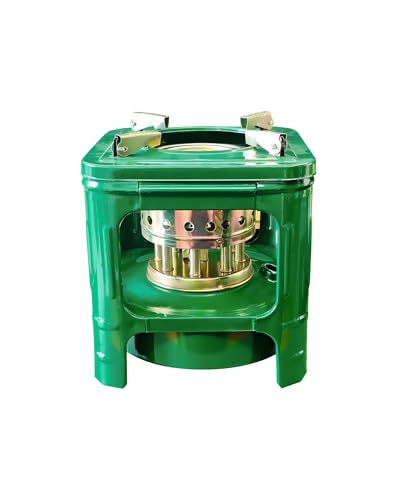
6. Portable Kerosene Stove for Cooking, Square 10-Wick
The Square 10-Wick Stove is the long-burn option in this guide, and it earns its place on stated numbers. It has a square burner with ten wicks, an iron body, a 1.5 litre tank, and a runtime of five to seven hours per fill. Ten wicks spread the flame evenly under a pot, which is the main advantage over a round burner of the same size, and the square shape suits square pans and griddles that wobble on a round burner. The iron body gives it weight and stability, and the stated runtime lets a buyer plan fuel properly, which none of the other picks state as clearly.
Five to seven hours per fill is enough for a full day of camp cooking: breakfast, a midday meal, and an evening cook, with fuel to spare. The 1.5 litre tank is a sensible size for that runtime, large enough to last, small enough to carry and to fill safely. The even flame wording in its listing points to the real benefit of a ten-wick burner, which is steady heat across the whole base of a pot rather than a hot spot in the middle. That matters for rice, for sauces, and for anything that burns easily. It is the most practical stove here for a long day outdoors.
Strengths:
- Stated 1.5 litre tank and five to seven hour runtime allow proper fuel planning.
- Ten-wick square burner spreads heat evenly under a pot.
- Iron body gives weight and stability on uneven ground.
Trade-offs:
- No brand name in the listing, so identity rests on the format and the stated numbers.
- Square format suits square pans best and is less neat with small round pots.
- Long runtime still needs safe fuel storage and a cool-down before refilling.
Who it fits: a camper or outdoor cook who wants a long, steady burn for a full day of cooking.
Best for: long camp cooking days and even heat under wide pans. Not suited for: quick solo brews where a compact stove would do.
Check price on Amazon: Square 10-wick portable kerosene stove
How to Choose a Kerosene Cooker
Start with the job. A solo camper needs a compact stove, a family needs a larger burner or a two-pack, and a household preparing for power cuts needs a stove with a stated output and a tank that lasts. Then look at the burner. More wicks mean a broader, more even flame, and a ten-wick burner will heat a wide pot more evenly than a single-wick burner. Then look at the tank and the runtime. A stove with a stated tank size and a stated runtime, like the square ten-wick model here, lets the buyer plan fuel. A stove with no stated figures needs a trial run before it is relied on. Readers comparing portable cooking options can also look at our guide to the best 12-volt stove, which covers electric portable cooking for campsites with power.
Build matters more with kerosene than with most fuels. Iron is heavy and stable. Steel is lighter and easier to carry. A wide base resists tipping. A pot support that fits the pans you own is not a detail, it is the core of the design, so check pot size against the burner before buying. The wick deserves attention too. It is the part that wears out, and a stove with a wick that is easy to trim, easy to replace, and easy to find spares for will serve far longer than one with a wick that is hard to reach. Before a trip, check that the wick is even, that it moves freely, and that it draws fuel without dry spots. A wick that is blackened, frayed, or uneven will smoke and burn poorly, and it should be trimmed or replaced before the stove is relied on.
Flame control matters too. A rotary knob gives fine control, a lever gives coarse control, and a fixed wick gives none at all. Finally, think about fuel storage. Kerosene must be stored in a proper container, away from heat and out of reach of children, and the stove should be emptied or sealed for transport. A buyer who already stores kerosene for a lamp or a heater has a head start.
Using a Kerosene Cooker Safely
Safety is not an afterthought with a kerosene stove, it is the operating manual. Always use the stove outdoors or in a well ventilated space. Kerosene combustion produces carbon monoxide, which is colourless and odourless, and it can build up to dangerous levels in a closed room. Never use a kerosene cooker in a sealed tent, a closed garage, or a small room with the windows shut. Place the stove on a flat, stable, heat resistant surface, away from tents, dry grass, and anything flammable. Keep children and pets at a distance while it is lit.
Fill the tank only when the stove is cold and unlit, and never fill it indoors. Wipe up spills before lighting, and let the wick soak for a few minutes after filling so it draws fuel evenly. Light with a long match or a lighter, keeping hands clear of the burner. Adjust the flame to the height needed and no higher, since a flame that licks around the sides of a pot wastes fuel and blackens cookware. When finished, lower the wick to put out the flame, let the stove cool fully before moving it, and store it upright.
Fuel storage deserves the same care as the stove itself. Keep kerosene in its original container or in a proper fuel container with a tight cap, clearly labelled, and stored upright in a cool place away from heat, sparks, and direct sun. Never store fuel in a drinks bottle, which invites a terrible mistake, and never carry it in the same bag as food. A shed or a garage shelf is a better store than a kitchen cupboard. When travelling, keep the fuel container upright and sealed, and keep the stove empty or sealed so it cannot leak onto luggage. A small spill in a car boot is a lasting smell and a real hazard, so pack fuel as carefully as the stove.
Common Mistakes With Kerosene Cookers
The most common mistake is using a kerosene stove indoors without ventilation. It is tempting during a power cut, and it is dangerous. The second mistake is refuelling a hot stove, which can ignite spilled fuel in an instant. Always let the stove cool first. The third mistake is overfilling the tank, which leaves no room for the fuel to expand and causes spills. The fourth mistake is using the wrong fuel. Only proper kerosene or paraffin should be used, never petrol, never diesel in a stove not rated for it, and never mixed fuels. The fifth mistake is buying a heater and expecting it to cook. A heater without a pot support is not a cooker, and balancing a pot on it is unsafe. The sixth mistake is ignoring the wick. A worn, uneven, or carboned wick burns poorly and smokes, and it should be trimmed or replaced following the maker instructions. For readers building a broader outdoor cooking kit, our guide to the best camping grills covers the grill side of camp cooking.
Storing a Kerosene Cooker Between Trips
A kerosene stove that is stored well is ready the next time it is needed, and one that is stored badly can be a disappointment at the worst moment. Before putting a stove away, let it cool fully, then empty the tank or seal it tightly, following the maker instructions. Wipe the body, the drip tray, and the burner, and trim the wick so it is even and free of carbon. A stove stored with a dirty wick and a half full tank will smoke on its next use and may refuse to light evenly.
Store the stove upright in a dry place, away from heat and out of reach of children, with its parts together so nothing is lost. Keep spare wicks and a small bottle of fuel with it, so the kit is complete when it is grabbed in a hurry. Before a trip, or at the start of storm season, take the stove out and run it for a few minutes outdoors. That short check confirms that the wick draws, the flame adjusts, and the pot support is sound, and it is far better to learn of a problem at home than at a dark campsite or during a power cut.
Our Recommendation
For most buyers, the Alpaca TS-909 is the right starting point. It is a named model with a stated output of 8,500 BTU, a steel drip tray, carry handles, and a pot support, and it is built for both camping and emergency cooking. It is the most clearly specified stove in this guide, and the one easiest to buy with confidence. Campers planning a full day outdoors should look at the square ten-wick stove instead, because its stated 1.5 litre tank and five to seven hour runtime make fuel planning simple. Groups and pairs should take the VANZACK two-pack, which cooks two dishes at once. Solo campers packing light should take the VOSAREA, whose compact size and rotary knob suit a small table and a single pot. Whichever stove is chosen, the rule is the same: try it once outdoors before relying on it, learn its flame, and keep fuel, matches, and a spare wick with it. For readers who also cook on a portable electric setup, our guide to the best stovetop pressure cookers shows how a pressure cooker pairs with a portable stove for faster camp meals.
Frequently Asked Questions
Is it safe to use a kerosene cooker indoors? A kerosene cooker should only be used outdoors or in a well ventilated space. Burning kerosene produces carbon monoxide, which can build up to dangerous levels in a closed room. Never use one in a sealed tent, a closed garage, or a small room with the windows shut.
What fuel does a kerosene cooker use? Proper kerosene, which is also sold as paraffin in some countries. Do not use petrol, and do not use diesel unless the stove is rated for multi-fuel use. Store fuel in a proper sealed container, away from heat and out of reach of children.
How long does a kerosene stove burn on one fill? It depends on the tank and the flame height. The square ten-wick stove in this guide states a 1.5 litre tank and five to seven hours per fill. Other models do not state a runtime, so a trial run before a trip is the reliable way to learn it.
Can a kerosene stove heat a room as well as cook? Some portable kerosene stoves give off useful heat while cooking, and a few are listed for both cooking and heating. A dedicated heater will warm a room better, and a heater without a pot support should never be used as a cooker.
How do I light a kerosene stove? Fill the tank while the stove is cold, let the wick soak for a few minutes, then light the exposed wick with a long match or a lighter, keeping hands clear of the burner. Raise the wick slowly to the flame height needed, and trim the flame so it sits under the pot rather than licking around its sides.
How do I clean a kerosene stove? Let it cool fully, then wipe the body and the drip tray with a cloth, trim carbon from the wick, and clear any soot from the burner. A clean wick and a clean burner give a steadier flame with less smoke, so a quick clean after each trip is worth the few minutes it takes.
What is the difference between a kerosene cooker and a kerosene heater? A cooker is built to hold a pot over a burner and to deliver heat upward into food. A heater is built to radiate heat into a room. Some products do both, but a heater with no pot support is not a cooker, and this guide only includes stoves built for cooking.


