As an Amazon Associate, this site may earn an affiliate commission from qualifying purchases made through links on this page.
Flour is the quiet variable in bread machine baking. The machine does the kneading, the timing, the temperature control and the baking, so when a loaf comes out short, dense or pale, the flour usually takes the blame — and most of the time it deserves it. A bread machine runs a fixed script: it mixes, rests, kneads, proofs and bakes on a schedule that was written for a particular dough strength, and the flour you pour in decides whether the dough can keep up with that script. Too little protein and the structure collapses before the bake. Too much whole grain and the bran shreds the gluten network the machine is trying to build. Too little hydration capacity and a recipe calibrated for one flour turns dry with another. None of this is visible from the bag, which is why choosing flour for a bread machine deserves more attention than grabbing whatever white bag is cheapest.
This guide compares six flours that cover the realistic range of bread machine baking: a high-protein bread flour, a budget bread flour, an artisan stone-ground option, a whole wheat flour, a gluten-free blend and a dependable all-purpose flour. Each one was judged on how it behaves inside a machine — protein content, gluten development, water absorption across the machine’s cycle, crumb texture, crust colour, and how forgiving it is when the recipe is slightly off.
best affordable bread machines
Quick comparison: the six flours at a glance
| Flour | Best for | Protein level | Hydration appetite | Crumb character |
|---|---|---|---|---|
| King Arthur Bread Flour | Everyday white loaves with tall rise | High | Moderate to high | Open, chewy, even |
| Gold Medal Bread Flour | Budget-friendly daily baking | High | Moderate | Soft, fine, reliable |
| Bob’s Red Mill Artisan Bread Flour | Rustic loaves with deeper flavour | High | High | Open, hearty, flavourful |
| King Arthur Whole Wheat Flour | Whole grain loaves and blends | High | Very high | Dense, moist, nutty |
| Bob’s Red Mill Gluten Free 1-to-1 Baking Flour | Gluten-free machine loaves | Low (no gluten) | High | Tender, fine, moist |
| King Arthur All-Purpose Flour | Flexible everyday baking | Moderate | Moderate | Soft, light, versatile |
In this guide
What to look for in a flour for bread machines
Protein content and gluten strength
Protein is the headline number for bread machine flour because it predicts how much gluten the dough can form, and gluten is the scaffolding that traps the gas produced by the yeast. A bread machine kneads on a timer, not on feel. It cannot sense that a dough is underdeveloped and give it three more minutes, the way a baker’s hands can. So the flour has to carry the structure on its own, through a knead that is fixed in length and a proof that is fixed in time. Flour in the bread flour range, roughly twelve to thirteen and a half percent protein, builds a strong, elastic network quickly enough to survive the machine’s schedule. All-purpose flour, usually around ten to eleven and a half percent, can work, but the network it builds is weaker and the loaf often rises less and stales faster. Whole wheat flour carries high protein on paper, yet the bran and germ in the flour physically cut gluten strands as the machine kneads, so a whole wheat loaf needs extra water, extra time or a blend with white flour to reach the same height. The number on the bag is a starting point; what matters is how that protein behaves under a fixed, automated cycle.
It also helps to think about protein as a range rather than a single target. A machine with a long knead and a long rise, typical of a two-pound basic cycle, can make good use of a strong flour and will reward it with height and chew. A machine with a short cycle, or a rapid-bake setting, asks less of the flour in some ways and more in others: the yeast has less time to produce gas, so the flour’s structure must form fast and hold what little gas appears. In either case, a flour that forms gluten slowly — an under-milled or very soft flour — leaves the dough slack at the moment the machine moves on to proofing, and no amount of later baking can fix a slack dough. This is why bread flour, milled and blended specifically for yeast bread, is the default recommendation for machine baking, and why switching from it to a general-purpose flour often produces a loaf that looks fine on the outside and disappoints in the slice.
Water absorption and the machine’s fixed hydration
Every bread machine recipe assumes a certain amount of water per cup of flour, and flour brands absorb water differently. A flour that drinks more water will turn a standard recipe into a dry, tight dough that the paddle struggles to move; a flour that drinks less will leave the dough wet and slack, spreading instead of rising. Whole wheat and stone-ground flours are thirsty, often needing noticeably more water than the same weight of white bread flour, while finely milled white flours are comparatively restrained. The practical consequence is that changing flour is never a one-for-one swap: the same three cups of flour can produce a dough that is too dry or too wet, and the machine will not correct it. Experienced machine bakers learn to watch the dough during the first knead and add a tablespoon of water or flour to bring it to a smooth, tacky ball that clears the sides of the pan. That single habit matters more than any brand loyalty, because it compensates for the absorption differences between bags, between seasons, and between the first and last cup in a bag that has been open for a month.
Humidity plays a quiet role here too. Flour stored in a humid kitchen absorbs moisture from the air, which means the same scoop carries more water into the dough than it did in winter. None of this demands laboratory precision; it means the best flour for your machine is the one whose absorption you have learned to read, and the most useful skill in machine baking is the willingness to peek in during the first five minutes of kneading and adjust. A flour that forgives a slightly off hydration — that still rises when the dough is a touch wet or a touch dry — is worth more than a flour that produces a perfect loaf only when the water is measured to the gram.
Grind, milling and how the dough feels
Milling changes how flour behaves in ways that protein percentage alone cannot explain. Stone-ground flour keeps more of the wheat’s character, with slightly larger particles that hydrate more slowly and produce a dough that feels alive and textured. Roller-milled flour is more uniform, hydrates fast and produces a predictable, smooth dough. For a machine, the practical difference shows up in timing: a stone-ground flour may still be absorbing water when the machine’s knead ends, which can leave the crumb slightly uneven on the first bake and better on the second, once you have learned to give it a little extra water or a longer rest. A finely milled flour is ready almost immediately, which suits the machine’s schedule, and it is also why many machine recipes were developed and tested with exactly that kind of flour. Neither style is better in the abstract; the question is whether your machine’s timing matches the flour’s hydration speed. If your machine offers a whole wheat or artisan cycle with a longer rest, it is effectively compensating for slower-hydrating flours, and using those cycles with the matching flour is one of the easiest wins in machine baking.
Bleached versus unbleached is a smaller distinction. Bleaching softens the flour and makes it whiter, which can produce a slightly softer crumb; unbleached flour is a touch stronger and often preferred for bread because its gluten is less disrupted. For most machine recipes the difference is subtle. What matters more is freshness: flour that has sat open for months loses some of its gluten-forming power and picks up off flavours, and a machine, which cannot compensate with extra kneading or a longer proof, will show that staleness in a loaf that rises less and tastes flat.
Matching flour to the machine’s cycle
Bread machines offer cycles for a reason, and the flour should be chosen with the cycle in mind. A basic white cycle expects a strong white flour and a straightforward rise. A whole wheat cycle adds time for the bran to hydrate and for the gluten to develop around the bran particles; using white flour on that cycle is harmless but wastes time, while using whole wheat on a basic cycle often produces a short, dense loaf. A gluten-free cycle is a different animal altogether: it usually skips a second rise and bakes at a different profile, because gluten-free doughs do not behave like wheat doughs at all — they are batters that set rather than doughs that rise, and the flour blend must contain gums and starches that mimic structure. Using a gluten-free blend on a basic wheat cycle is one of the most common machine-baking mistakes, and it is the flour’s fault only in the sense that the flour and the cycle were never meant to meet. The sweet-dough and rapid cycles have their own expectations too, and a flour that works beautifully on a three-hour basic cycle can produce a gummy centre on a one-hour rapid cycle simply because the crumb never had time to set.
The most practical approach is to pick a primary flour for the cycle you use most, learn its hydration by feel, and only then branch out. A household that bakes a white sandwich loaf three times a week needs a reliable bread flour above all else. A household that bakes whole wheat on weekends needs a whole wheat flour plus a white bread flour for blending. A household with a gluten-free member needs a blend and a machine with a genuine gluten-free cycle. The flour drawer can grow from there, but it should grow around the machine’s habits, not in spite of them.
Storage and freshness
Flour is a living ingredient in the sense that it changes in storage, and a bread machine exposes those changes. Whole wheat flour, which contains the wheat germ’s oils, goes rancid faster than white flour, especially in a warm kitchen; a loaf made with stale whole wheat tastes bitter and rises poorly, and the machine cannot hide it. White flour keeps longer, but it still absorbs humidity and odours, and it still loses strength over months. The simple rules are airtight containers, a cool dark cupboard, and the freezer for whole grain flour you will not use within a few weeks. Buying a five-pound bag that you finish in a month beats buying a twenty-five-pound sack that sits open for half a year, even if the larger bag costs less per pound. Fresh flour rises better, tastes cleaner and forgives small errors; stale flour punishes them. For machine baking, where the baker’s hands never touch the dough after loading, freshness is one of the few variables you can fully control, and it is worth controlling.
The best flours for bread machines, reviewed
The six flours below were chosen to cover the real decisions a bread machine owner faces: which white flour to use every day, whether a premium flour is worth it, how to bake whole wheat in a machine, and how to bake gluten-free without a second machine. Each review looks at the flour through the machine’s lens — how it kneads, how it rises, how the crumb turns out — rather than through a hand-baking lens, because a flour that shines in a Dutch oven can still disappoint in a bread pan.

King Arthur Bread Flour: the high-protein standard for tall, chewy machine loaves
King Arthur Bread Flour is the flour most bread machine recipes were effectively written for, even when the recipe does not name it. At twelve point seven percent protein, unbleached and consistently milled, it builds gluten fast and holds it through a machine’s fixed knead and proof. In a basic white cycle, it produces a loaf that rises to the top of the pan with a domed, evenly browned crust and a crumb that is open without being holey, chewy without being tough. The dough it forms during the first knead is smooth and elastic, clearing the sides of the pan and slapping gently against the paddle, which is exactly the behaviour a machine recipe assumes. Because it is so consistent from bag to bag, it is also the flour that makes troubleshooting easiest: if a loaf fails with this flour, the problem is almost certainly the recipe, the yeast or the machine, not the flour, and that diagnostic clarity is worth a great deal to anyone still learning their machine.
What sets this flour apart in a machine is not just the protein number but the quality of the gluten it forms. Some high-protein flours build a network that is strong but brittle, producing a loaf that rises well and then tears or collapses at the top. King Arthur’s forms a network that is both strong and extensible, so the loaf stretches as the yeast produces gas and holds its shape through the bake. This matters in a machine because the dough gets no shaping by hand; it goes straight from proofing to baking in the same pan, and a fragile structure shows up as a sunken top or a split crust.
Its hydration appetite sits in the middle of the range, which makes it forgiving. A recipe written for a generic bread flour will usually work as written, and if your kitchen is humid or your flour has been open for a few weeks, a tablespoon of water either way brings the dough back to the right consistency. It also blends well, which matters for bakers who want to add a portion of whole wheat or rye without losing the loaf’s height: replacing a quarter to a third of the flour with a whole grain still leaves enough gluten from the King Arthur to carry the rise, and the machine’s fixed timing handles the blend without complaint. That flexibility makes it the right first flour for a new machine owner, and the flour most experienced machine bakers keep returning to even after trying more exotic options.
Strengths: Consistent twelve point seven percent protein that builds strong, extensible gluten quickly; tall, even rise on a basic white cycle; dough that clears the pan and kneads cleanly; blends well with whole grain flours; widely available in grocery stores and online; unbleached, so the crumb has a clean, natural flavour.
Trade-offs: Costs more per pound than store-brand bread flour, which adds up for households that bake several loaves a week; the strong gluten can make a loaf slightly chewy for bakers who prefer a very soft, cake-like crumb; in very short rapid cycles the extra strength is not fully used, so the premium over a cheaper bread flour is less visible; the five-pound bag is the common size, so heavy bakers will go through bags quickly.
Who it suits: Anyone who bakes white sandwich bread in a machine at least once a week and wants a reliable, tall, chewy loaf without fussing over hydration. It is the best starting flour for a new machine owner and the safest choice for recipes that do not specify a brand.
If you want a flour you can trust to make a tall, chewy loaf from your bread machine every single time, this is the one to keep in the cupboard — check price on Amazon.

Gold Medal Bread Flour: the budget workhorse that still rises well
Gold Medal Bread Flour is the quiet value pick in the bread flour category: a high-protein flour, milled for yeast breads, sold at a price that makes daily machine baking affordable. It does not carry the artisan branding of its more expensive rivals, and it does not need to, because in a machine its performance is close enough to the premium options that most households will not notice the difference in the finished loaf. The dough it produces is smooth and workable, the rise on a basic cycle is strong, and the crumb is soft and fine, with a slightly tighter structure than the more open crumb of a premium bread flour. For a sandwich loaf that will be sliced, buttered and eaten the same day, that tighter crumb is arguably an advantage: it holds fillings better and toasts evenly.
Where this flour earns its place is in the economics of machine baking. A bread machine pays for itself by replacing store-bought bread, and that arithmetic works best when the flour is affordable. Gold Medal’s price per pound is low enough that a household baking three or four loaves a week spends noticeably less on flour than it would with a premium brand, and the loaf it produces is still a genuine homemade bread, far better than the sliced bread it replaces. The flour is also widely available in large bags, which suits heavy bakers, and it is consistent enough that once you have dialled in the hydration for your machine, you can repeat the result bag after bag.
Its trade-offs are real but modest. The protein is high, but the gluten it forms is a little less extensible than the premium flours, so a very tall loaf can occasionally show a slightly uneven dome, and the crumb, while soft, is a touch less open. In a rapid cycle, where the dough has little time to develop, the difference is slightly more visible, and the loaf may come out a little shorter than the same recipe made with a premium flour. None of this matters much for everyday sandwich bread, and it matters not at all for loaves that will be toasted, used for sandwiches or turned into breadcrumbs. What matters is that it is a true bread flour, with the protein to survive a machine’s fixed schedule, at a price that does not punish frequent baking.
Strengths: Genuine high-protein bread flour at a budget price; soft, fine crumb that slices cleanly and toasts evenly; widely available in large bags; consistent milling that repeats well from bag to bag; good rise on basic and whole wheat cycles; an economical choice for households baking several loaves a week.
Trade-offs: Gluten is slightly less extensible than premium bread flours, so very tall loaves can dome unevenly; crumb is tighter and less open, which some bakers find less interesting; rapid-cycle loaves can come out a little shorter; the flour is bleached in some markets, which softens the crumb but slightly weakens the gluten compared with unbleached options.
Who it suits: Households that bake often and want the cost of homemade bread to stay low without dropping to all-purpose flour. It is ideal for daily sandwich loaves, toast bread and any recipe where the flour is a workhorse rather than the star.
For everyday machine baking on a sensible budget, this flour delivers a dependable rise and a soft, sliceable crumb without the premium price — check price on Amazon.

Bob’s Red Mill Artisan Bread Flour: stone-ground character for rustic machine loaves
Bob’s Red Mill Artisan Bread Flour brings a different philosophy to the bread machine: instead of chasing the most uniform, predictable white loaf, it aims for flavour and character, with a stone-ground milling style that leaves the flour slightly coarser and more aromatic. The protein is high, in the bread flour range, so the machine’s knead still produces a strong dough, but the hydration story is different. This flour drinks more water than a finely milled bread flour, and it drinks it more slowly, which means the dough can look dry during the first minutes of kneading and then come together as the flour hydrates. A baker who has learned to give it a little extra water — a tablespoon or two beyond the recipe — and to let the dough rest, will be rewarded with a loaf that has a deeper, nuttier flavour and a more interesting crumb than a standard white flour can offer.
The crumb this flour produces is the reason to choose it. It is open and hearty, with a chew that feels substantial and a flavour that carries a hint of wheat even in a white loaf. The crust browns a little more deeply than a finely milled flour, which suits a machine’s baking cycle and gives the loaf a more artisan appearance straight out of the pan. In a machine with a French or artisan cycle, which gives the dough a longer rise, the flour’s slower hydration becomes an advantage rather than a problem: the extra time lets the flavour develop and the gluten network mature.
This is not the flour for a baker who wants a set-and-forget experience. It asks for attention during the first knead, and it punishes a recipe that is already on the dry side, because its thirst will turn a borderline dough into a stiff one that the paddle drags around the pan. But for a baker who enjoys the craft and wants a machine loaf that tastes like it came from a bakery rather than a supermarket, the extra attention is a small price. It also works well in blends, where a portion of artisan flour adds flavour to a base of standard bread flour, giving the loaf character without demanding that the baker learn a new hydration for every bake.
Strengths: Stone-ground milling gives a deeper, nuttier flavour and a more interesting crumb; high protein builds strong gluten for a good rise; crust browns beautifully in a machine; excellent on French and artisan cycles with longer rises; adds character to blends with standard bread flour; unbleached and minimally processed.
Trade-offs: Thirstier and slower to hydrate than finely milled flours, so recipes often need extra water; dough can look dry in the first minutes of kneading, which tempts beginners to add too much flour; costs more than standard bread flour; the coarser grind can produce a slightly less uniform crumb; not ideal for very short rapid cycles.
Who it suits: Bakers who want a rustic, flavourful loaf from their machine and are willing to watch the dough during the first knead. It is the best choice for weekend loaves, French-style bread and anyone who finds standard white bread a little bland.
When you want your bread machine to turn out a loaf with real bakery character and a deep, nutty flavour, this is the flour to reach for — check price on Amazon.

King Arthur Whole Wheat Flour: whole grain loaves that still rise in a machine
Whole wheat flour is the hardest test of a bread machine, and King Arthur Whole Wheat Flour is one of the few that passes it with a loaf worth eating. The challenge is structural: the bran and germ that make whole wheat nutritious also cut gluten strands as the machine kneads, and they absorb a great deal of water, so a whole wheat dough that is not hydrated enough will be stiff, short and dense. This flour is milled finely enough to limit the damage — the bran particles are small, so they shred the gluten network less than a coarse whole wheat — and it carries a high protein content that gives the dough something to build with even after the bran has done its work. The result is a whole wheat loaf that rises respectably on a whole wheat cycle, with a moist, nutty crumb and a crust that browns deeply.
Hydration is the key to this flour, and it is where most machine bakers go wrong. A whole wheat recipe needs noticeably more water than the same recipe made with white flour, and the water needs time to reach the bran. The whole wheat cycle on most machines is designed for exactly this, with a longer rest at the start of the cycle that lets the bran hydrate before kneading begins. Using this flour on a basic white cycle is the most common mistake, and it produces the short, brick-like loaf that gives whole wheat a bad reputation. On the right cycle, with the right water, the same flour produces a loaf that is dense in the good sense — moist, flavourful, satisfying — rather than dense in the sense of a doorstop.
The flour also rewards blending. A loaf made with half whole wheat and half bread flour rises taller than a pure whole wheat loaf, keeps most of the whole grain flavour, and is more forgiving of small hydration errors. Many machine bakers settle on a blend as their everyday whole grain loaf, using this flour as the whole grain component and a strong white bread flour as the structural base. Storage matters more with this flour than with white flour, because the germ’s oils go rancid in a warm kitchen; keep it sealed, keep it cool, and freeze what you will not use within a few weeks.
Strengths: Finely milled whole wheat that limits bran damage to the gluten network; high protein supports a respectable rise on a whole wheat cycle; moist, nutty crumb with deep flavour; blends well with white bread flour for taller, more forgiving loaves; unbleached and widely available; the germ and bran add fibre and flavour that white flour cannot match.
Trade-offs: Needs significantly more water than white flour and a whole wheat cycle to rise well; pure whole wheat loaves are still shorter and denser than white loaves; goes rancid faster than white flour, so storage matters; the bran can make the crumb slightly coarse; recipes written for white flour will not work as written without adjustment.
Who it suits: Bakers who want whole grain bread from their machine and are willing to use the whole wheat cycle and add extra water. It is ideal for everyday whole wheat sandwich bread and for blends that keep most of the whole grain character with a taller rise.
If whole grain bread is your goal and you want a flour that gives you a moist, nutty loaf instead of a dense brick, this is the whole wheat flour to bake with — check price on Amazon.
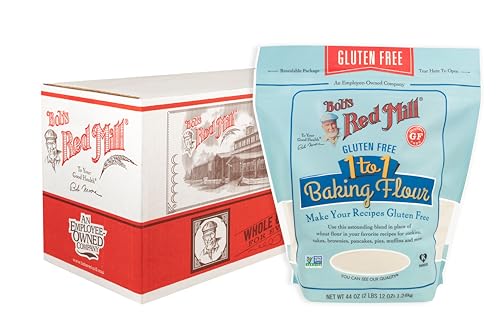
Bob’s Red Mill Gluten Free 1-to-1 Baking Flour: the gluten-free blend that works in a machine
Gluten-free baking in a bread machine is a different craft from wheat baking, and Bob’s Red Mill Gluten Free 1-to-1 Baking Flour is the blend most likely to make it work on the first try. Because there is no gluten, the dough is really a thick batter, and structure comes from the blend’s starches and xanthan gum, which trap gas and set during baking. This flour is formulated as a one-to-one replacement for wheat flour in recipes, which means a machine baker can adapt a familiar recipe without re-engineering it from scratch, and it is the blend that most gluten-free machine recipes were developed around. On a machine’s gluten-free cycle, which usually skips the second rise and bakes at a profile suited to a batter, it produces a loaf that is tender, fine-crumbed and moist, with a crust that browns gently rather than deeply.
The most important thing to understand about this flour is that it behaves nothing like wheat flour during the cycle, and judging it by wheat standards leads to mistakes. The batter will look wet and slack during kneading, and a baker who adds flour to firm it up will end up with a dry, crumbly loaf. The batter is supposed to look wet; the starches and gum need that moisture to hydrate and set properly, and the loaf’s structure forms in the oven rather than in the kneading. It also helps to use the gluten-free cycle if the machine has one, because a standard wheat cycle’s second rise is wasted on a batter that cannot hold gas the way a gluten dough can.
Flavour and texture are the blend’s strong points. Many gluten-free flours taste beany or gritty, a consequence of the bean flours and coarse rice flours in the mix; this blend is based on sweet white rice flour, brown rice flour and potato starch, which gives it a neutral, clean flavour and a fine, even crumb. It is not a perfect replica of wheat bread — no gluten-free flour is — but it is the closest a machine baker is likely to get without blending flours from scratch, and it is the blend that makes gluten-free machine baking feel like baking rather than chemistry. For a household with a coeliac member or a gluten sensitivity, it is the difference between a machine that gathers dust and a machine that earns its place on the counter.
Strengths: Formulated as a one-to-one wheat flour replacement, so familiar recipes adapt easily; clean, neutral flavour with no beany aftertaste; fine, tender crumb that slices well; contains xanthan gum, so no extra binder is needed; works on a machine’s gluten-free cycle; widely available in grocery stores and online.
Trade-offs: The batter looks wet and slack during kneading, which tempts bakers to add flour and ruin the loaf; needs a gluten-free cycle — a standard wheat cycle can cause collapse; loaves are shorter and denser than wheat loaves; the blend costs more per pound than wheat flour; the crumb can dry out faster than wheat bread, so storage matters.
Who it suits: Anyone baking gluten-free in a bread machine, especially households with a coeliac member or gluten sensitivity. It is the best first gluten-free flour for a machine owner and the safest choice for adapting a favourite wheat recipe.
For a gluten-free loaf that actually rises, slices cleanly and tastes like bread instead of a science experiment, this blend is the one to try first — check price on Amazon.

King Arthur All-Purpose Flour: the flexible everyday flour
King Arthur All-Purpose Flour is the flour for the baker who uses a bread machine for more than bread. It is an unbleached all-purpose flour milled to a noticeably higher protein level than most supermarket all-purpose brands, which puts it in an interesting middle position: it will not quite match the tallest, chewiest loaf a dedicated bread flour produces, but it comes closer than a typical all-purpose flour has any right to, and it will also make pizza dough, pancakes, biscuits and quick breads without a second bag in the cupboard. For a small kitchen or a household that bakes bread only once or twice a week, that flexibility is worth the small sacrifice in height. The loaf it produces on a basic cycle is soft, light and fine-crumbed, with a gentle chew and a pale, even crust — a pleasant everyday bread, even if it is not a showpiece.
In a machine, this flour’s protein level is both its limit and its virtue. The gluten network it builds is a little less forceful than the network from the same mill’s bread flour, so the loaf rises a touch less and the crumb is finer and softer, which suits sandwich bread and toast. But the dough is also more forgiving of a slightly long proof, because a less aggressive network is less likely to over-expand and collapse, and that forgiveness matters in a machine whose proofing time is fixed and whose kitchen may be warmer than the recipe assumed. On a hot day, a strong bread flour can over-proof and fall; a well-milled all-purpose flour is more likely to hold its shape, and this one holds it better than most because its protein starts higher.
The flour is unbleached, with no preservatives, which gives it a slightly stronger gluten than a bleached all-purpose and a cleaner, wheaty flavour, and it is certified kosher and Non-GMO Project Verified, which matters to households that read labels closely. The five-pound bag is the standard size, large enough for regular machine baking without the storage burden of a bulk sack. It works best in recipes that were written for all-purpose flour, or in bread machine recipes that call for a mix of bread flour and all-purpose, and it is a good choice for sweet doughs and enriched loaves, where a very strong gluten would make the crumb tough and a softer flour produces a more tender result. For a baker who wants one bag that does everything reasonably well — and does bread machine loaves better than the average all-purpose bag — this is the bag.
Strengths: Versatile enough for bread, pizza, pancakes and baking beyond the machine; higher protein than typical all-purpose flours, so machine loaves rise better than expected; soft, light, fine crumb that suits sandwich bread and toast; unbleached, so the gluten is a little stronger than bleached all-purpose; forgiving of warm kitchens and long proofs; good for sweet and enriched doughs where a strong gluten would toughen the crumb.
Trade-offs: Still sits below a true bread flour, so loaves are shorter and less chewy than the best bread flour loaves; not the best choice for tall, open-crumbed artisan loaves; the crumb can be a little too soft for bakers who like a hearty chew; in a rapid cycle the difference from bread flour shows more clearly; costs more than store-brand all-purpose flour.
Who it suits: Bakers who want one flexible flour for the machine and the rest of the kitchen, and households that bake bread occasionally rather than daily. It is ideal for soft sandwich loaves, sweet doughs and anyone short on cupboard space.
When you need a single bag that handles your bread machine and everything else you bake, this all-purpose flour is the practical, flexible choice — check price on Amazon.
How the six flours compare in the machine
| Flour | Rise on basic cycle | Crumb | Crust | Forgiveness | Best cycle |
|---|---|---|---|---|---|
| King Arthur Bread Flour | Tall, domed | Open, chewy | Even, golden | High | Basic white |
| Gold Medal Bread Flour | Tall, slightly uneven dome | Soft, fine | Even, pale gold | High | Basic white |
| Bob’s Red Mill Artisan Bread Flour | Tall with long rise | Open, hearty | Deep brown | Moderate | French / artisan |
| King Arthur Whole Wheat Flour | Moderate, moist | Dense, nutty | Deep brown | Moderate | Whole wheat |
| Bob’s Red Mill Gluten Free 1-to-1 | Modest, tender | Fine, tender | Light, gentle | Moderate | Gluten-free |
| King Arthur All-Purpose | Moderate, soft | Soft, fine | Pale, even | High | Basic white |
The table above makes the trade-offs visible. No single flour wins on every row. The premium bread flour wins on rise and crumb, the budget bread flour wins on price, the artisan flour wins on flavour, the whole wheat wins on nutrition and character, the gluten-free blend wins by being the only flour that can do its job at all, and the all-purpose wins on flexibility. The right choice depends on which row matters most to you, and that answer changes from household to household and from week to week.
Tips for getting the best loaf from any flour
Watch the dough, not the clock
The single most useful habit in bread machine baking is to open the lid during the first knead and look at the dough. A good dough forms a smooth, slightly tacky ball that clears the sides of the pan and slaps gently against the paddle. If the dough is stiff and the paddle is dragging it around in a lump, add water a tablespoon at a time. If the dough is wet and spreading across the bottom of the pan, add flour a tablespoon at a time. This habit matters more than the brand of flour, because it compensates for the differences in absorption between flours, between bags, and between seasons. A flour that is perfect in a recipe written in winter may need more water in summer, and a flour that is perfect in one machine may need less in another, because machines differ in how aggressively they knead and how warm their proofing environment runs. The dough tells the truth; the recipe is a starting point.
Measure flour by weight, not by volume
A cup of flour can weigh anywhere from a hundred and twenty to a hundred and sixty grams depending on how it is scooped, and that variation is larger than the difference between many flours. Scooping directly from the bag compacts the flour and adds as much as a quarter cup of extra flour to a recipe, which dries out the dough and shortens the loaf. Spooning the flour into the measuring cup and levelling it off is better; weighing it on a kitchen scale is best. A scale removes the largest source of variation in machine baking, and makes it possible to repeat a good loaf exactly.
Use the right cycle for the flour
Every cycle on a bread machine is a set of assumptions about the flour, and matching the flour to the cycle is one of the easiest ways to improve a loaf. Whole wheat flour belongs on a whole wheat cycle, with its longer rest and knead. Gluten-free blends belong on a gluten-free cycle, with its different rise and bake profile. Artisan and stone-ground flours benefit from a French cycle’s longer rise. White bread flour is at home on a basic cycle. Using the wrong cycle is not always a disaster — a white flour on a whole wheat cycle will still bake — but it wastes time and can produce a loaf that is drier or shorter than it should be. The cycle buttons are not decoration; they are the machine’s way of asking what flour you have loaded, and answering honestly is free.
Keep flour fresh and dry
Flour loses strength and flavour as it ages, and a bread machine, which cannot compensate with extra kneading or a longer proof, will show that loss in a loaf that rises less and tastes flat. Store white flour in an airtight container in a cool, dark cupboard, and use it within a few months of opening. Store whole wheat flour in the freezer if you will not use it within a few weeks, because the germ’s oils go rancid quickly in a warm kitchen. Do not store flour near the stove, where heat and humidity fluctuate, and do not leave the bag open on the counter. Fresh flour is one of the few variables in machine baking that is entirely under your control, and it is one of the most powerful. A fresh bag of a modest flour will outperform a stale bag of a premium flour, every time.
Blend when a single flour cannot do the job
Blending is the bread machine baker’s quiet superpower. A loaf that is half whole wheat and half bread flour rises taller than a pure whole wheat loaf and tastes better than a pure white loaf. A loaf that is three quarters bread flour and one quarter artisan flour has character without demanding a new hydration. A loaf that is mostly all-purpose with a little bread flour added rises a touch higher than pure all-purpose. Blending lets you tune the loaf to your taste without buying a new flour for every recipe, and it lets you use up a bag of flour that is not quite right on its own. The rule is simple: keep the strong flour as the base, add the character flour in a proportion you can repeat, and write down what you did so you can repeat a good result.
Frequently asked questions
Can I use all-purpose flour in a bread machine?
Yes, and it will bake a perfectly edible loaf, but the loaf will be shorter and softer than one made with bread flour, because all-purpose flour has less protein and forms a weaker gluten network. For sandwich bread and toast, the difference is small and many bakers will not mind it. For a tall, chewy artisan-style loaf, the difference is noticeable, and bread flour is the better choice. If all-purpose is what you have, use it, but do not judge your machine by the result — the flour, not the machine, is the limiting factor.
Do I need to add extra water when I switch to whole wheat flour?
Almost always, yes. Whole wheat flour absorbs significantly more water than white flour, because the bran and germ drink up moisture, and a recipe written for white flour will produce a stiff, dry dough if you swap in whole wheat without adjusting. Start by adding two to three tablespoons of extra water per loaf, and watch the dough during the first knead: it should form a smooth, tacky ball, not a stiff lump. Use the whole wheat cycle, which gives the bran time to hydrate before kneading. If the loaf still comes out short, add a little more water next time, or blend the whole wheat with white bread flour to lighten the load on the gluten network.
Why did my bread machine loaf collapse in the middle?
A collapsed top usually means the dough rose too fast and then ran out of structure, and flour is one of the usual suspects. Too much yeast for the flour’s strength, too much water, or a flour whose gluten is too weak to hold the gas will all produce a loaf that rises beautifully and then falls. A strong bread flour is more resistant to this than a weak all-purpose, which is why switching to bread flour often fixes a collapsing loaf. Other causes include a kitchen that is warmer than the recipe assumed, which speeds up the yeast, and a machine whose proofing environment runs hot. Check the dough during the first rise: if it has already reached the top of the pan before the bake begins, it is over-proofed, and reducing the yeast slightly or using a stronger flour will help.
How should I store bread machine flour?
White flour keeps best in an airtight container in a cool, dark cupboard, and should be used within a few months of opening. Whole wheat flour, which contains the germ’s oils, goes rancid faster and is best kept in the freezer if you will not use it within a few weeks. All flour absorbs humidity and odours, so keep it away from the stove and from strongly scented foods. Buying a size you will finish within a month beats buying a large sack that sits open for half a year, because fresh flour rises better and tastes cleaner. If a bag of flour smells stale or bitter, it is past its best, and no machine setting will rescue the loaf it makes.
Is bread flour worth the extra cost over all-purpose for a machine?
For a household that bakes bread more than once a week, yes, because the difference in the finished loaf is visible in every slice: taller, chewier, better structured, and slower to stale. The extra cost per loaf is small, often only a few cents, and the improvement in rise and crumb is larger than the improvement from any other single change, including a more expensive machine. For a household that bakes occasionally, or that uses the machine mostly for sweet doughs and enriched loaves where a softer flour is actually an advantage, all-purpose is a reasonable choice and the premium for bread flour is harder to justify. The honest answer is that bread flour is worth it when the loaf is the point, and all-purpose is worth it when flexibility is the point.
bread machine black friday deals
The best flour for your bread machine is the one that matches your machine’s cycle, your recipe’s hydration and the loaf you want to eat, and once you find it, the machine stops being a gamble and starts being a habit worth keeping.


