Disclosure: As an Amazon Associate, airfryerkitchensupply.com earns from qualifying purchases. Links on this page are affiliate links; they cost you nothing extra. Prices and availability change often, so check the current Amazon listing before you buy.
Reading window air conditioner reviews well is a skill in itself, because the same unit can be praised as a whisper and condemned as a racket by two honest owners whose rooms, windows and expectations differ. This guide to window air conditioner reviews does two jobs at once. It reviews the leading designs as a group — the names that recur across seasons because they represent the main ideas in the category — and it teaches you how to weigh any review you read, including this one, against your own room. By the end you should be able to open any listing, skim its feedback with a practised eye, and know which comments predict your experience and which describe someone else’s window.
The group under review here spans the category’s whole personality. There is the U-shaped innovator, the inverter line, the premium conventional ranges from two long-established makers, the value workhorse line, and a specialist brand known for heavy-duty and dual-hose thinking applied to window formats. Between them they cover entry, mid and premium tiers, quiet-first and power-first priorities, and simple and smart control philosophies. No single model wins everything, which is exactly what a trustworthy set of window air conditioner reviews should show.
Key Takeaways From These Window Air Conditioner Reviews
Key takeaways: Across the group, the recurring winners share three traits — honest sizing guidance, a serious approach to installation hardware, and a filter you can wash in minutes. The recurring complaints in owner feedback are rarely about cooling power; they are about noise traced back to installation, water traced back to tilt and drainage, and disappointment traced back to buying too large or too small for the room. Inverter and U-shaped designs earn their premium in bedrooms. Conventional designs earn their keep everywhere else. And every model in this group is a heavy, awkward cabinet that needs two people, proper support and a direct connection to a suitable wall outlet — no extension cord, no power strip — before any of its virtues can be enjoyed.
The short group verdict: for a main bedroom, start with the quiet designs. For a living room in daily use, start with the premium conventional and inverter lines. For a spare room, a first flat or a rental, start with the simple value line and spend the difference on doing the installation properly. The detailed reasoning follows, model by model and theme by theme, and readers who want the single-product deep dive instead can find it in our window air conditioner review.
In this guide
How to Read Window Air Conditioner Reviews Like an Editor
Start by sorting every comment by its cause. Cooling complaints divide into sizing stories and installation stories far more often than machine stories. A reviewer whose unit never cools a large, sun-baked, open-plan space is usually reporting a capacity mismatch, and the same model in a modest bedroom collects praise in the next review down the page. Noise complaints divide the same way: a cabinet that is well supported, secured and sealed hums, while the identical cabinet resting loose on a sash buzzes and drums, and the review blames the brand. When you read, ask what the reviewer did, not only what the machine did.
Next, weight reviews by room match. A report from a bedroom tells a bedroom buyer more than three reports from workshops. Look for reviewers who describe their room, their window type and their sleep sensitivity, because those are the variables that decide whether their experience transfers to you. Treat superlatives in both directions with suspicion in the first week of ownership: installation euphoria and installation frustration both fade, and the reviews that age best are the ones written after a filter wash, a storm and a month of nights.
Finally, remember what reviews cannot tell you. They cannot tell you whether a model fits your window, whether your outlet is where the cord needs it, or whether your household will actually wash the filter. Those answers come from measuring, from the maker’s installation guide, and from honesty about your own habits. Use reviews to choose between well-matched finalists, not to outsource the matching itself. The sizing background at BTU ratings for air conditioners explained and the shortlist context at best window mounted air conditioners will help you build that shortlist before you weigh a single opinion.
One more editorial habit is worth adopting: read the middle of the distribution, not the edges. The most useful reports are the measured ones, where an owner names a strength, names a limitation, describes the room and explains what they would do differently — which is usually a sizing or installation adjustment rather than a different badge. Those reviews read like advice from a neighbour who has lived with the machine. The extremes, by contrast, usually review a delivery, a heat wave or a frustrating Saturday with a screwdriver. Both are human, but only one kind will still be helping you in August.
And keep a small notebook of your own once you buy, even if it is only a note in a phone: the date of the installation, the filter washes, the first storm’s verdict on the seals, the first month’s impression of the sound at night. By the second summer you will own the most useful review of your unit in existence — the one written in your room, at your window, by the person whose sleep it guards — and if you ever replace or add a unit, that notebook will make the next choice the best-informed one in the category.
The Group Under Review: Five Designs, Five Ideas

Midea U Window Air Conditioner
The Midea U appears in these reviews as the category’s disruptor. The U-shaped cabinet lets the window close into its channel, which does three things owners consistently praise: the compressor sits beyond the closed sash, so the room hears less of it; the window can still open on mild days; and the supplied bracket system makes the support feel designed rather than improvised. Reviewers who sleep lightly single this model out, and its inverter-driven variants add temperature steadiness to the acoustic advantage. Its honest limitations are a more involved first installation, a need to check window compatibility carefully, and mid-to-premium positioning. Best for: bedrooms and fresh-air lovers. Not suited for: unsupported window styles or buyers wanting the simplest possible fitting. Check the current listing before you buy.

LG Dual Cool Window Air Conditioner
The LG Dual Cool line is the inverter representative, and the theme across its feedback is calm. Because the compressor modulates instead of lurching between full power and off, rooms hold temperature in a narrower band and the sound settles rather than cycles. Owners working from home rate this highly, because the unit can run all day beside a desk without staging repeated start-up events. Smart controls across much of the range add scheduling that owners actually use. The limitations are the premium over basic conventional models and the fact that the inverter advantage is cumulative and subtle rather than dramatic on any single afternoon. Best for: long-hours rooms, studies and bedrooms. Not suited for: rarely used rooms where a simpler unit suffices. Check the current listing for the size your room needs.
Friedrich Window Air Conditioner
Friedrich brings a different heritage to the group: a maker long associated with sturdy, commercial-grade room air conditioning, whose residential lines emphasise build, robust cooling and, in its premium ranges, notably disciplined sound. Owners describe Friedrich units as the ones bought after a cheaper unit disappointed — heavier in the hand, more serious in the cabinet, and intended to be installed once and kept for years. The trade-offs follow from that positioning: premium tier pricing within the category, and a range that rewards careful reading, because the line spans everything from straightforward room units to feature-rich smart models. Best for: buyers planning to keep a unit for many seasons, and larger rooms that work a machine hard. Not suited for: the tightest budgets or anyone who moves home frequently and dreads re-installing a substantial cabinet. Check price on Amazon against the current listing.
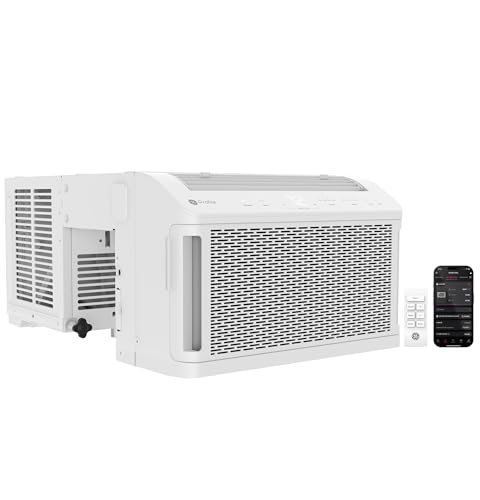
GE Profile Window Air Conditioner
GE Profile is the polished mainstream premium in the group, and its reviews cluster around refinement: quiet operation for a conventional shape, capable filtration, confident smart features and controls that feel finished. Households cooling a main living room tend to land here, because the unit is on display and in earshot all summer and the Profile line behaves accordingly. Its limitations are the familiar premium ones — you pay for polish you may not need in a utility space — and a range broad enough that matching the size to the room still requires the same care as any other brand. Best for: primary living spaces and main bedrooms in daily use. Not suited for: storerooms, workshops or strict budgets. Check the current listing before deciding.

Frigidaire Window Air Conditioner
Frigidaire closes the group as its value anchor, and the reviews reflect a brand people buy without drama: clear controls, washable filters, a size for almost every room and tiers that start where first-time buyers need them to start. The feedback theme is adequacy exceeded — owners who expected a basic box report that it simply cools, season after season, with a filter wash as the whole maintenance liturgy. The limitations are equally consistent: the quietest and cleverest behaviours in the category live further up the market, and the sound of a small conventional unit at full tilt is the sound of its class. Best for: first purchases, spare rooms, rentals and straightforward cooling. Not suited for: the most noise-sensitive bedrooms. This is an entry-to-mid tier line; check the current listing for current configurations.
A sixth name deserves an honourable mention in any honest round-up. Whynter built its reputation on portable and specialty cooling, and its window-format offerings appeal to buyers who prioritise robust cooling and dehumidification behaviour in difficult, humid rooms. Treat Whynter as the group’s specialist alternative: worth a close look where moisture is the enemy, with the same advice as everywhere else here — verify the current model, its window requirements and its tier on the listing before committing.
Design, Build and Setup Across the Group
Build impressions converge across these window air conditioner reviews in a useful way. Every design in the group is a dense steel cabinet with the weight concentrated towards the outdoor end, and every one of them is a two-person lift — heavy, awkward, and unforgiving of a solo attempt, especially anywhere near stairs or a ladder. Where the makers differ is in how much thought they have given to the hour of installation. The Midea U’s bracket-led approach is the most choreographed. Friedrich and GE Profile supply hardware that feels matched to the cabinet’s weight. Frigidaire keeps the ritual classic: measure, support, set, secure, extend the side panels, seal. LG follows the conventional pattern and moves its extra effort into the digital setup afterwards.
Setup quality is the hinge the whole ownership experience swings on, and the group agrees on the non-negotiables even where their manuals phrase them differently. The unit must be supported and secured so it cannot fall in or out of the window — a falling unit is a serious hazard, and no reviewer’s convenience argument survives contact with that fact. The cabinet sits with a slight outward tilt where the maker specifies it, so condensate drains outside rather than into the room. Gaps around the cabinet get sealed against hot air, insects and driven rain. And the cord plugs directly into a suitable wall outlet: no extension cords and no power strips for air conditioners, full stop. Readers planning the job itself should work through how to install a window air conditioner alongside the maker’s own guide.
One build theme deserves its own paragraph, because reviewers mention it constantly without naming it: the front of the unit is a door you will open all season. Grilles that lift away cleanly, filters that slide out without flexing, and panels that refit without a wrestling match are the difference between a filter washed monthly and a filter washed never. On this measure the group is uniformly decent and occasionally excellent, and it is worth weighting in your own shortlist if you know your household’s habits are, charitably, relaxed.
Performance in Real Use: What the Group Teaches
Cooling and Humidity, Room by Room
Put any correctly sized member of this group in its intended room and the cooling verdict is the same: decisive. The interesting differences appear at the edges. In humid climates, owners praise the models that run longer, steadier cycles, because those cycles condense more moisture and leave rooms feeling dry as well as cool — the inverter behaviour of the LG Dual Cool and the better conventional models both earn mentions here. In dry heat, raw recovery matters more: how fast the room comes back after doors have stood open at a barbecue. Friedrich and the larger GE Profile units collect their praise in exactly those larger, harder-working rooms. The consistent lesson is that capacity matched to the room beats capacity in reserve, every time, and the explainer at how to choose a window air conditioner turns that lesson into a method.
Noise: The Theme That Decides Bedroom Reviews
If one theme dominates owner feedback across the category, it is sound. The group’s quiet end is occupied by the Midea U, whose closed-sash isolation is a physical advantage no amount of conventional insulation fully matches, and by the inverter LG, whose steadiness removes the start-stop events that wake people. The premium conventional lines from Friedrich and GE Profile sit close behind, separated from the value tier less by their fan note — a smooth rush most sleepers accept — than by how well their compressors are isolated and their cabinets damped. The practical advice that emerges from hundreds of these judgements is simple: bedroom buyers should shortlist from the quiet end of the group and work down only if budget forces it, while buyers cooling a kitchen or a workshop can safely start at the value end and never miss the refinement.
Controls, Remotes and Smart Features
Control philosophies split the group cleanly. At one pole, mechanical simplicity: dials and switches that anyone can operate, that survive power cuts without reprogramming, and that suit spare rooms and rentals perfectly. At the other pole, the app-connected models from LG, GE Profile and the smarter Friedrich and Midea variants, which add scheduling, remote adjustment and voice control that working households genuinely use — pre-cooling a bedroom from the train is a real pleasure, not a gimmick. The middle ground, electronic panels with a remote and a timer, is where most owners land happily. Reviews suggest choosing based on the room’s routine: the more predictable and occupied the room, the more the scheduling earns; the more occasional the room, the more simplicity wins.
Running Costs and Efficiency Patterns
Efficiency feedback across the group follows physics rather than branding. Owners who sealed their installation, washed their filters and set sensible temperatures report modest running costs for the comfort gained, because a window unit cools one room instead of a whole home. Owners who left gaps, oversized the unit or ran it against open doors to uncooled spaces report the opposite, sometimes in reviews that blame the machine. Inverter models show their advantage in long, steady running — studies, bedrooms, all-day living rooms — while in short bursts the conventional designs are closer than marketing implies. The honest summary: buy the behaviour first (sizing, sealing, scheduling) and the efficient hardware second, and the bills will take care of themselves.
Strengths and Trade-Offs of the Group
Strengths
- A design for every priority: quiet-first U-shaped and inverter models, premium conventional builds for main rooms, and honest value models for spare rooms — the category’s breadth is real, not cosmetic.
- Genuine cooling with modest commitment: every model here delivers refrigerated cooling and dehumidification for one room without ductwork, building work or a permanent installation.
- Mature, serviceable designs: washable filters, widely understood controls and installation rituals refined over many seasons make these appliances easy to live with and easy to get help with.
Trade-offs
- Installation is a real job: the units are heavy and awkward, need two people, proper support and securing, and a direct wall-outlet connection — shortcuts show up later as noise, leaks or worse.
- Reviews transfer imperfectly: because outcomes depend so heavily on room, window and installation, even honest feedback from another household is guidance, not a guarantee.
- Seasonal care is required: filters, seals, drainage and end-of-season drying or storage decide how the unit performs and smells in its second and third summers.
How the Group Compares With the Alternatives
Every round-up owes its readers the exit doors. If the reviews above leave you doubting the format itself, the alternatives divide by what they sacrifice. A tower fan, reviewed in depth at our tower fan review, sacrifices cooling itself: it is lighter, quieter in character and far cheaper to run, and it cannot lower a room’s temperature by a single degree, which is why the direct comparison at tower fan vs window air conditioner is the most-read cross-check for this category. A portable air conditioner sacrifices efficiency and floor space to gain wheels and freedom from window dimensions. An evaporative cooler, set against refrigerant cooling in evaporative cooler vs air conditioner, sacrifices everything in humid weather and shines only in dry heat. A mini-split sacrifices money and permanence and wins on almost everything else. The window unit’s ground — real cooling, one room, removable, mid-tier commitment — remains the ground most households actually need.
Who Each Design Suits: The Buying-Guide Layer
Match the household to the design and the reviews almost write themselves. The light sleeper in a small bedroom: Midea U first, LG Dual Cool second. The professional working from a sunlit study: LG Dual Cool, for steadiness across long days. The family cooling the room everyone actually lives in: GE Profile or Friedrich, sized honestly, with the premium justified by daily exposure. The landlord, the first-time buyer, the spare room, the rental with a tolerant lease: Frigidaire, installed properly, delivering quiet adequacy for years. The humid-climate problem room: look closely at Whynter’s specialty thinking alongside the group’s strong dehumidifying performers. And the reader still asking whether the purchase itself makes sense should step back one level to is a window air conditioner worth it before choosing a badge.
The pre-buy checklist is the same whichever badge you choose: measure the room and the window; confirm the design supports your window type; plan the maker’s support and securing method; confirm a suitable wall outlet within direct cord reach, with no extension cord or power strip anywhere in the plan; arrange the second person for the lift; decide where condensate will drip; and decide where the unit will spend the winter. Reviews can rank models, but only this checklist can make the chosen model succeed in your home.
Setup, Care and Maintenance Essentials
The care consensus across the group is refreshingly short. Wash the filter on a rhythm — sooner with pets, dust or long running hours — and let it dry fully before it goes back. Keep the outdoor coil face clear of the lint and leaves the fan will plaster against it. Check the side seals mid-season, because foam compresses and gaps creep back. Dry the internals on fan-only before covering or storing, and store removed units upright, dry and indoors. The complete routine, including gentle coil care and what never to spray where, is set out in how to clean a window air conditioner, and the tower-fan equivalent at how to clean a tower fan makes a good companion read for households running both.
Final Verdict on the Group
Read as a group, these window air conditioner reviews tell a reassuring story: the category has matured into a set of genuinely different answers rather than a row of identical boxes. The innovator is quieter, the inverter is steadier, the premium lines are more polished, the value line is more capable than its tier suggests, and the specialists cover the humid corners. Choose by room and priority, install with respect for weight and water, maintain the small rituals, and whichever member of this group you bring home is likely to earn the review you would have wanted to read.
There is a final, quieter conclusion underneath the comparisons, and it is about the reader rather than the machines. The households in these reviews who end up satisfied are rarely the ones who bought the most powerful or the most decorated unit; they are the ones who measured their room and their window, chose the design whose strengths matched their nights, installed it with a helper and a proper support, sealed it like weather mattered, and washed a filter without being reminded. The category rewards that kind of ownership generously and forgives almost everything else slowly. If you bring that approach to whichever model you choose from this group, the odds are strongly in your favour — and your own review, written after your second summer, will be one of the useful ones.
A Deeper Look at the Specialist: Whynter

Whynter Window Air Conditioner
Whynter earns its own section in these reviews because it approaches the category from the moisture side. The brand built its name on portable units and specialty cooling for difficult spaces, and that heritage shows in an emphasis on dehumidification behaviour and robust cooling in rooms where humidity, not raw heat, is the daily complaint — basements that double as living space, coastal rooms, and ground-floor flats that never quite dry out. Owners who choose Whynter typically arrive with a specific problem rather than a general wish to be cooler, and the feedback reflects that focus: satisfaction runs high where the problem matched the design’s strengths.
The honest limitations are about range and refinement rather than competence. Whynter’s window-format line is narrower than the big mainstream ranges, so size and window compatibility need especially careful checking, and the polish of the very top premium lines — the quietest cabinets, the most finished smart layers — is not the brand’s battleground. Position it as a mid-tier specialist: not the default first look for a light sleeper, but a serious candidate where damp is the enemy. Best for: humid problem rooms and buyers who have read their room correctly. Not suited for: shoppers who want the widest choice of sizes and finishes from one badge. As throughout this round-up, the treatment is; check the current listing before you buy.
Reading the Specification Sheet Without Being Fooled
Reviews make more sense once the specification sheet stops being a fog of badges, so here is the short course this group teaches. Capacity comes first, and the rule is matching, not maximising: the makers publish room guidance for each size, and the right size is the one whose guidance brackets your room with your burdens — sun, ceilings, occupants, open doors — honestly counted. Energy efficiency figures reward comparison within a size class, not across the whole shelf, and inverter models complicate the picture in your favour by using less during the long holding pattern that dominates real running. Sound figures, where published, are measured under laboratory conditions that your sash, sill and walls will modify, which is why installation keeps returning to centre stage in every honest review.
Electrical requirements deserve a slower read than they usually get. A window air conditioner is a serious appliance load, and the larger sizes in any range may ask more of a circuit than a small bedroom unit does. The rules that protect you are simple and absolute: the unit plugs directly into a suitable wall outlet, with no extension cord and no power strip, and the circuit should not already be carrying other heavy loads that will trip it on the hottest evening of the year. If your room’s outlets are scarce or elderly, solve that problem properly before installation day, because the cord’s reach is a design constraint, not a suggestion to be negotiated with an adapter.
Window compatibility is the third specification and the one most often skipped. Every design states the window styles and opening ranges it supports, and the U-shaped and saddle designs are more particular than plain boxes. Measure the opening the way the maker’s guide directs, note obstructions like storm windows and security bars, and check the sill’s condition, because the window becomes a structural part of the installation. A model that fits your window properly will outperform a nominally better model forced into a poor fit, in quietness, in sealing and in safety, all season long.
What Owners Learn in the Second Summer
The most instructive reviews are the ones written a year on, and they teach a consistent curriculum. First, the filter schedule stops being advice and becomes autobiography: owners who washed monthly report units that blow like new, while owners who waited for the airflow to fade describe a slow, puzzling decline that a five-minute wash reversed in an afternoon. Second, seals settle. Foam compresses, side panels shift a fraction, and the owners who re-checked and re-sealed in the second spring report quieter, cheaper cooling than those who assumed the first installation was permanent. Third, drainage tells the truth about tilt: any error in the cabinet’s slight outward slope announces itself in the second season’s humidity, and correcting it ends a category of complaint that owners had been attributing to the machine.
Second summers also clarify the tier decision. Owners of value models in spare rooms remain content, because the room never asked for more. Owners of value models in main bedrooms sometimes upgrade, having learned precisely which refinement — quiet, steadiness, scheduling — their nights were missing, and their second purchase is usually the best-informed in the whole category. Owners of premium models in main rooms, meanwhile, tend to disappear from the review pages entirely, which is its own kind of verdict. The lesson for a first-time buyer is to buy for the room the unit will actually serve, with the honesty of someone who has already lived a second summer.
Storage writes the final second-summer lesson. Units that were dried on fan-only, washed, and then either covered securely in place or brought in with a helper to rest upright and dry come out of winter smelling of nothing and running like the previous August. Units that were switched off wet and forgotten come out smelling of the oversight. None of this requires talent, only a place on the autumn calendar, and the full routine is waiting in how to clean a window air conditioner whenever the season turns.
Installation Day: What Reviewers Wish They Had Known
Read enough installation accounts and a chorus forms. Nobody wishes they had lifted alone; several wish they had not tried. These cabinets are heavy and awkward, with the weight biased to one end, and the moment of maximum risk is the slow transfer from floor to sill, especially on an upper floor or anywhere a ladder is involved — never install alone from a ladder, and never treat the second pair of hands as a luxury. Reviewers who arranged help, cleared the route, opened the box near the window and read the maker’s support instructions before touching the unit describe a calm half hour. Reviewers who improvised describe the reviews they later wrote.
The second chorus is about support. Every maker specifies how the cabinet is to be carried — brackets, sill support, screws into sound framing as directed — and the purpose is absolute: the unit must be supported and secured so it cannot fall in or out of the window. A falling air conditioner is a serious hazard to anyone below and to the room behind it, and this is the one area where reviewers’ hindsight is unanimous and blunt. Foam and optimism are not a support method. The third chorus concerns the small hours after the fitting: sealing every gap while the panels are fresh in mind, confirming the slight outward tilt for drainage, and running the unit long enough to watch where the condensate actually goes. Each of those checks costs minutes on installation day and saves a category of complaint for the whole season. The full, ordered version of the job lives in how to install a window air conditioner, and the safety-first live companion at how to install a window air conditioner safely deserves a read before the box is opened.
The Verdict by Tier: Entry, Mid and Premium
Because this round-up spans the category’s tiers, it owes readers a plain statement of what each step up actually buys. The entry tier, represented here by Frigidaire’s simpler models, buys real cooling with mechanical honesty: a dial, a fan switch, a washable filter and a cabinet that does the one job. What it does not buy is hush, scheduling or steadiness, and in a spare room none of that matters. The mid tier buys the refinements most households feel daily: electronic controls with remotes and timers, better sound management, and in the Midea U’s case a fundamentally better relationship with the window itself. For most main rooms, the mid tier is where these reviews land their readers, because the step from entry to mid is felt every evening.
The premium tier — Friedrich’s serious builds, GE Profile’s polish, the inverter flagships — buys accumulation rather than transformation. Quieter nights, steadier temperatures, better filtration, smarter scheduling and cabinets built to be kept: none of it changes what the appliance is, and all of it changes how a decade of summers feels. Premium makes sense where the unit will run daily for years in a room the household lives in, and it makes little sense in a room used a dozen nights a year. That is not a judgement on any reader’s budget; it is the shape of the value curve the whole group traces, and it is why this round-up refuses to name a single winner. The winner is the tier that matches the room, wearing whichever badge earned it.
How This Round-Up Weighed the Evidence
A round-up is only as good as its weighting, so here is ours, stated plainly. Cooling adequacy in the intended room counted first, because it is the job the appliance exists to do, and every design here passes when sized honestly — which is why this guide spends so much of its length on matching rather than on marginal differences in raw power. Sound counted second, weighted by room: in bedroom evidence it nearly tied for first, while in kitchen and workshop evidence it faded behind recovery speed and simplicity. Installation counted third and everywhere, because it is the variable owners control completely and the one whose failures masquerade as product failures in review after review.
Care counted fourth. A design whose filter washes in minutes, whose grille refits without a struggle and whose cabinet dries and stores gracefully will be maintained; a design that fights its owner will not be, whatever its first-month performance. Running behaviour counted fifth, with inverter steadiness and scheduling credited where long hours make them real, and discounted where a room’s timetable cannot reveal them. Build and finish counted last, not because they are trivial — a Friedrich-grade cabinet is a genuine pleasure to install and to keep — but because they amplify the other five rather than substitute for any of them.
Two things were deliberately not weighted. Star-shaped summaries and raw counts of praise were ignored entirely, because they compress room, window, installation and expectation into a single number that predicts almost nothing for the next household; this site does not print fixed ratings for exactly that reason, and readers should be wary of any round-up that leans on them. Launch-window enthusiasm was also discounted: the first fortnight of ownership measures installation day more than it measures the appliance, and the evidence that matters accumulates across filter washes, storms, heat waves and second summers. What remains, after those discounts, is the pattern this guide has reported — a mature category, honestly differentiated, in which the right match beats the highest badge. Readers who want the same evidence organised around a single product class verdict can continue to our window air conditioner review, and readers deciding the prior question — whether to buy at all — will find it argued fairly in is a window air conditioner worth it.
Patterns Across Window Air Conditioner Listings Worth Verifying Yourself
Reading across many window air conditioner listings and owner reports, the same patterns surface again and again, and they are more useful than any single verdict. This section gathers those recurring signals, explains what each one usually means in practice, and shows how to verify the important ones against the specific listing you are considering.
Across owner reports on the window air conditioner, praise clusters in a predictable place: households whose routine centres on cooling a single room through the warm season are consistently the happiest, and their reviews read almost boringly satisfied. Complaints cluster just as predictably around fit, which is why the first pattern to check in any listing is whether it states clearly the facts behind the cooling capacity against your room size, ceiling height and sun exposure. Vague dimensions in a listing correlate with disappointed reviews more than any design flaw does.
The second pattern is the slow complaint. Early reviews glow; the criticisms that arrive months later describe a unit that cools poorly because the filter is clogged or warm air leaks around the seals. When you read reviews, sort mentally by ownership length rather than enthusiasm, and give extra weight to anyone describing the upkeep honestly, because cleaning the filter through the season and storing or covering the unit properly in winter. Reports that mention a model like LG Dual Cool Window Air Conditioner holding up after a year of regular use tell you more than a dozen five-line first impressions.
The third pattern is mismatch, not malfunction. Owners who checked compatibility in advance, meaning window dimensions, frame type and the support and sealing the installation needs, rarely report the product failing them, while owners who assumed it would fit their setup supply most of the one-paragraph horror stories. Use reviews, then, as a checklist of things to verify on your chosen listing, and run the edge case early yourself: the hottest afternoon of the year, which is the only honest test of sizing. Verified against your own home, the crowd consensus becomes a reliable guide instead of background noise.
A Final Decision Checklist
- In listings, look first for clear statements behind the cooling capacity against your room size, ceiling height and sun exposure; vagueness here predicts complaints.
- In owner reports, weight long-term posts describing how a unit that cools poorly because the filter is clogged or warm air leaks around the seals developed.
- Treat upkeep reports as data, because cleaning the filter through the season and storing or covering the unit properly in winter is where ownership verdicts are decided.
- Cross-check compatibility claims, since window dimensions, frame type and the support and sealing the installation needs is the mismatch owners report most.
- Verify the edge case yourself rather than trusting reviews, because the hottest afternoon of the year, which is the only honest test of sizing.
- Write down your two most frequent uses and search reviews from owners with the same ones.
- Keep packaging and paperwork until your own first week confirms the consensus.
- Photograph the setup once it works well, so you can compare it with review photographs later.
- Verify against listings that every included part against the listing description on arrival day, while an exchange is still painless.
- Note how often owners sound, weight and effort during normal use, the everyday qualities that decide long-term satisfaction.
- Look for reports that the storage spot honestly: if putting it away is awkward, the window air conditioner will slowly stop being used.
- Note how often owners the edge case on a quiet day first, since the hottest afternoon of the year is a poor thing to meet unprepared.
- Cross-check instructions photographed on your phone, so troubleshooting never starts with a search through drawers.
- Look for reports that the second year in advance: replaceable parts and a serviceable design matter more than launch-day shine.
- Search owner reports for the failure signs monthly, so you catch the stage where a unit that cools poorly because the filter is clogged or warm air leaks around the seals is still a five-minute fix.
- Look for reports that compatibility once more before ordering parts or accessories, remembering that window dimensions.
- Verify against listings that the largest regular job, not the largest imaginable one, when judging whether the size is right.
- Search owner reports for the shortlist against your written criteria, not against whichever listing photographs best.
- Note how often owners the person who cleans it most a veto, because their friction decides how long it stays in service.
Frequently Asked Questions
Which window air conditioner is best for a bedroom?
Bedroom verdicts across reviews consistently favour the designs that manage sound: the U-shaped Midea U, which puts the closed window sash between you and the compressor, and inverter models such as the LG Dual Cool, which avoid repeated start-up events. Premium conventional lines from Friedrich and GE Profile follow closely. Whichever you choose, correct sizing matters as much as the badge, because an oversized unit cycles noisily and leaves the air clammy. Install it firmly and seal it well, and a mid-group model will sleep better than a quiet model installed loosely.
Why do reviews of the same model disagree so much?
Because the model is only one variable in the result. Room size, sun load, window fit, installation quality, electrical supply and the reviewer’s own noise sensitivity all feed the verdict, and two households can honestly report opposite experiences of the same cabinet. Read reviews for patterns rather than verdicts: repeated mentions of the same strength or the same frustration are signal, while a single furious or euphoric account is usually a story about a particular room, window or installation day. Match reviewers whose situation resembles yours, and weight their reports most heavily.
Are inverter window air conditioners worth the premium?
For rooms that run for long hours, the reviews suggest yes. Inverter models hold temperature more steadily, avoid the on-off cycling that disturbs light sleepers and studies, and generally use less energy once the room is at temperature. For a guest room used a few weekends a summer, the same premium buys benefits the room will never accumulate enough hours to reveal, and a straightforward conventional model serves better. The deciding question is not the technology but the timetable: count the hours the unit will run in a season, and let that number judge the tier.
How much should I trust a review that mentions a leak?
Take it seriously as a symptom and cautiously as a diagnosis. Water where it should not be is most often an installation story — the cabinet tilted inward instead of slightly outward, a blocked drainage path, or condensate forming on an unsealed, cold surface meeting humid room air. Makers design these cabinets to move moisture outside, and a correctly installed unit does so. A pattern of leak reports around one model deserves attention; a single report usually deserves a tape measure and a spirit level. If your own unit drips indoors, check tilt and drainage before blaming the machine.
Do I need a smart window air conditioner?
Only if your routine will use what smart features actually do: start the cooling before you get home, follow a weekly schedule, and adjust the room without crossing it. Households with predictable timetables and long absences get real value from that discipline, and the app-connected models in this group deliver it well. Households that are home most of the day, cooling a room they are sitting in, gain little beyond a remote control, which mid-tier conventional models already provide. Buy the refrigeration and the fit first; let connectivity break a tie, not make the decision.
What is the most common mistake reviewers reveal?
Buying by square-one instinct instead of by the room: choosing the largest unit available, or the cheapest, without measuring either the space or the window. The second most common is installation haste — a solo lift, improvised support, unsealed gaps, or a cord reaching the outlet through an extension lead, which must never be part of an air conditioner’s setup. The third is skipping the filter washes until performance fades and then blaming the brand. All three mistakes are avoidable with one careful hour before ordering and one careful hour on installation day.
Related Guides
window air conditioner review · is a window air conditioner worth it · how to install a window air conditioner · how to clean a window air conditioner · best window air conditioners · tower fan buying guide
