Disclosure: As an Amazon Associate, airfryerkitchensupply.com earns from qualifying purchases. Links on this page are affiliate links; they cost you nothing extra. Prices and availability change often, so check the current Amazon listing before you buy.
So, is a vegetable chopper worth it? The honest short answer is that the question has no universal answer, because a vegetable chopper is not a product so much as a bet — a bet that your cooking involves enough dicing of firm vegetables, week after week, for a specialised tool to repay its cupboard space, its wash-up, and its purchase tier many times over. For a large and identifiable group of home cooks that bet wins easily. For another, equally identifiable group it loses just as clearly, and the tool joins the drawer of honourable mistakes. This article exists to tell you which group you are in before you spend anything: what you actually get, what it really costs beyond money, the households it pays off for, the households it does not, the alternatives that might serve you better, and a decision checklist you can run in two minutes. Prices are not printed — they change too often to be honest in print — so value is argued the durable way: in time, in consistency, in space, and in use.
Is a Vegetable Chopper Worth It? The Short Answer
Worth it if: you dice onions, peppers, carrots, potatoes, or celery at least three times a week; you cook for a family or in batches; your knife dice are uneven or slow; and you will brush a blade grid clean after use without resentment. Not worth it if: your cooking is mostly slicing, salads of soft produce, or single small meals; your knife work is already fast and even; or your kitchen has no guarded storage to offer a set of blades. Everything below is the evidence for those two sentences.
In this guide
Key Takeaways
- Value in this category is measured in uses, not features: a modest chopper used four times a week is a bargain; a flagship used monthly is a loss.
- The real purchase is consistency — even dice that cook evenly — with speed as the welcome second dividend.
- The real costs are space, washing, and routine, and they are paid weekly, so they outweigh the one-off purchase tier in any honest accounting.
- The break-even household is easy to recognise: firm vegetables, diced, several times a week, in family or batch quantities.
- Alternatives beat the chopper for specific kitchens — a knife for the skilled, a mandoline for the slicing-led, a mini electric for the mince-led.
- Safety is part of the value equation: the tool only earns its pros inside the handling routine set out below.
Blade Safety: The Condition on Which the Whole Value Case Rests
A vegetable chopper’s blade grid is extremely sharp, and the value case in this article assumes the safety routine is followed for the life of the tool. A chopper that injures someone is not worth it at any tier, so read this block as part of the price.
- Press food with the pusher or lid only — never your fingers. If a piece sits awkwardly, open the press and reposition it. On plunger models, keep hands on the cap, never inside the chamber.
- Wash blades with a brush, moving away from the edge — never wash a blade grid bare-handed in soapy water. Suds conceal edges; keep blades visible from sink to drying rack.
- Clear stuck food with the cleaning comb or a brush from the back of the grid. No fingertips, no knife points.
- Store blades guarded and out of children’s reach — in their storage box or inside the lidded container, never loose in a drawer.
- Check for cracked plastic before every use. A cracked hinge or lid can fail mid-press toward the blades; retire cracked parts immediately.
- Keep the base planted on a dry, flat surface; stop and reset if the unit slides while you press.
Inside those rules, the enclosed cut is a controlled, comparatively safe way to dice. Outside them, the honest verdict of this article flips: not worth it, for that household, at any price.
What You Actually Get
Strip the marketing away and a vegetable chopper delivers four concrete things. The first is uniform dice: pieces cut by a grid are the same size, and same-sized pieces cook at the same rate, which quietly upgrades every soup, curry, stew, roast, and air-fried tray you make — no raw centres beside collapsed edges. This is the benefit owners still praise in year two, long after the novelty of speed has faded. The second is time on repetition: not much on a single onion, a great deal on the sixth, because the press does not tire, slow, or lose precision as the batch grows. The third is containment: dice land in a container instead of scattering across a board and floor, and the container carries them to pan, freezer, or fridge. The fourth is independence from skill: the least practised cook in the house produces the same dice as the most practised, on their first day, which changes who can usefully help with dinner. Notice what is not on the list: slicing, peeling, trimming, and ripe tomatoes. You get a dicing machine of genuine excellence and nothing else, and the worth-it question is really whether that one excellence sits at the centre of your cooking or at its edge.
There is a fifth, less tangible return worth naming: willingness. Cooks consistently report that lowering the friction of prep changes what they cook — more vegetables bought because they will actually be used, more soups started on tired evenings, more from-scratch meals surviving contact with a long day. A tool that converts “I should make soup” into soup, three extra times a month, has paid for itself in a currency no stopwatch measures. This return is real but conditional: it only materialises if the tool is reachable, rinsed, and ready — which is why the costs in the next section, all of which govern readiness, matter as much as the purchase itself.
The Real Costs Beyond Money
The purchase tier — entry to mid for every design in this cluster — is the smallest cost of ownership, and fixating on it is how buyers misjudge the category. The first real cost is space: a full press set is a sizeable box, and it must be stored guarded, dry, and reachable, which in a small kitchen means displacing something else. Space spent on a tool used daily is well spent; space spent on a tool used monthly is a weekly irritation with a lid. The second cost is washing time and will: grid, pusher, lid, and container after every use, with the grid brushed cell by cell. It is roughly ninety seconds done immediately — and it is the cost that retires more choppers than breakage ever will, because it is charged at 9 p.m. on tired evenings. The third cost is routine: sizing pieces to the grid, pressing centred, crack checks, guarded storage. None is burdensome; together they are a small discipline that a household either adopts or does not. The fourth cost is eventual replacement: hinges are multi-year consumables, so the honest price of the category is the purchase repeated on a long cycle. The fifth cost is subtler — opportunity: the same money and shelf could hold a superb knife, a mandoline, or a mini food processor, and for some kitchens those tools return more. A worth-it verdict that ignores these five costs is advertising; one that counts them and still says yes is a recommendation.
Who It Pays Off For
The batch-cooking household. If your weekends involve a stockpot, a freezer restock, or a curry base built from a small mountain of onions, the chopper’s arithmetic is overwhelming: hours of knife work across a month compress into minutes, dice quality rises, and the wash-up is amortised across batches so large it becomes a rounding error. This is the profile with the fastest, clearest payback, and the one that should buy the strongest hinge — the Mueller Pro-Series — without hesitation. The family weeknight cook. Dinner for four or five, several nights a week, built on the onion-pepper-carrot foundation of most cuisines: the chopper pays in time on exactly the evenings time is scarcest, and in consistency that makes one-pot dishes forgiving. A mid-tier press earns its shelf here within the first month of school-night cooking. The cook whose knife skills never arrived. Not everyone has the time, inclination, or physical ease to build knife fluency, and there is no virtue in pretending otherwise. For this cook the chopper is not a shortcut but an equaliser: proper dice, safely enclosed cutting, and recipes that finally behave as written. Add cooks with grip difficulties, who can press with body weight more reliably than they can steer a blade, and the payoff is measured in independence as much as in minutes.
Who Should Skip It
The skilled and happy knife cook. If your dice are already even, your speed is real, and you enjoy the board, a chopper duplicates your ability while adding a wash-up and a storage box. Your money compounds better in knife care, a great board, or ingredients. The salad-led, soft-produce kitchen. If your flagship dishes are ripe tomatoes, soft fruit, leafy salads, and sliced things, the grid’s fence excludes your cooking: the tool would sit idle through your best meals and emerge for the occasional soup. A mandoline serves the slicing half of that kitchen far better — see is a mandoline slicer worth it for the same honest test applied there. The small-quantity solo cook with no storage. One small onion twice a week cannot amortise a boxed set, and a kitchen without a guarded, reachable home for blades should not import them. A plunger-style mini chopper is the honourable exception — small, cheap in space, and matched to small jobs — and for mince-led solo cooking, the electric route may serve better than any press.
The Ownership Ledger: Strengths and Trade-Offs
Strengths of owning one
- Even dice that improve finished dishes — the return that never depreciates.
- Batch speed without fatigue — the sixth onion costs the same seconds as the first.
- More home cooking, more vegetables used — the willingness dividend, compounding weekly.
Trade-Offs of owning one
- A washing bill at every use — the cost most likely to end the relationship.
- Guarded storage consumed permanently — rent paid in the kitchen’s scarcest currency.
- A hard boundary at soft produce and slicing — the knife stays employed regardless.
The full two-sided treatment, with the trade-offs scored per household, is in vegetable chopper pros and cons.
Alternatives to Consider Before You Decide
A better knife and board. For cooks near the fence, investing in the tool you already use daily can beat adding a specialist: a sharp chef’s knife on a stable board narrows the chopper’s speed and consistency edge for small quantities, and never needs its grid brushed. Start with best chef knife sets and best cutting boards for home cooks. A mandoline slicer. If the prep you actually dread is slicing — potatoes, cucumbers, cabbage, onions into rings — the mandoline is the specialist you are looking for, with its own safety discipline; the head-to-head is vegetable chopper vs mandoline slicer. A mini electric chopper or compact food processor. If your “chopping” is mostly garlic, herbs, nuts, and sauce bases, a spinning blade serves you better than a grid: the Ninja Express Chop at counter scale, or the wider field in best compact food processors. Each alternative is the right answer for a real kitchen — which is precisely why the worth-it question must be asked per household rather than per product.
How to Get the Most Value If You Buy
Value is not fixed at purchase; owners create or destroy it with habits. Buy the hinge, not the bundle: the strongest press in your tier, with two dice grids, out-earns a maximalist set whose extra inserts only add washing — the Mueller Pro-Series for volume, the OXO Good Grips chopper for everyday ease, the Fullstar if you are still learning your repertoire, the Brieftons QuickPush for small jobs, the Ninja Express Chop for mincing. All are at their tiers in vegetable chopper buying guide. Place it within arm’s reach of your prep zone; a chopper stored high or deep is a chopper retired. Wash it immediately, every time, brushing the grid from the back — the ninety-second habit that protects both the tool and the relationship. Assign jobs honestly: firm dice to the grid, soft produce and slicing to the knife and mandoline, mincing to the electric if you own one; a tool asked only to do its best work is a tool that stays loved. Build two or three anchor dishes — a soup, a curry, a salsa — where the chopper is simply how the dish starts, because anchored habits survive tired evenings that vague intentions do not. Inspect monthly: hinge, lid, and grid frame for cracks, retiring any damaged part at once. Follow those six and the cost-per-use of even a mid-tier press falls to nearly nothing within the first year.

Mueller Pro-Series Vegetable Chopper
The value pick for volume households: strongest hinge in the class, clean-clearing pusher, batch-sized container. Mid tier. Best for: families and batch cooks, whose use count makes its cost per press negligible within months. Not suited for: small kitchens or light users, who will not use it enough to win the bet.

OXO Good Grips Vegetable and Onion Chopper
The value pick for everyday cooks: one dice size, the fastest wash-up in the press class, and refinement that keeps it in daily use. Mid tier. Best for: couples and small households dicing most nights. Not suited for: batch day or cooks who need several cut sizes.

Fullstar Vegetable Chopper
The value pick for the undecided: an entry-tier survey of the whole category in one box, letting a new cook discover their real repertoire before committing to a specialist. Best for: first kitchens and experimenters. Not suited for: heavy daily hard-vegetable work, where its hinge asks for gentle technique.

Brieftons QuickPush Food Chopper
The value pick where space is the binding constraint: plunger action, tiny footprint, rinse-clean washing, honest small-job output. Entry–mid tier. Best for: solo cooks and small kitchens. Not suited for: anyone whose value case depends on batch speed.
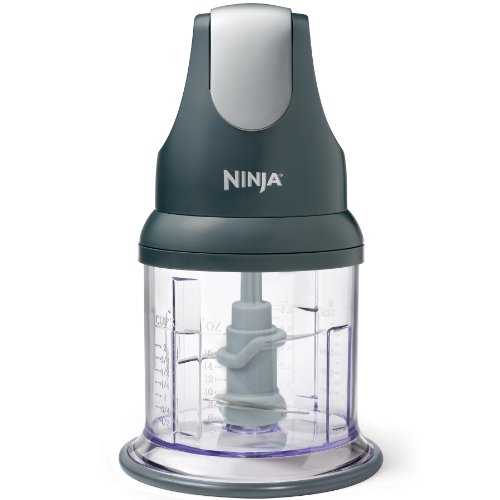
Ninja Express Chop
The value pick for a different definition of chopping: if your weekly reality is garlic, herbs, nuts, and sauce bases, this electric mincer returns more per week than any press. Mid tier. Best for: mince-led cooking. Not suited for: dice — and buying it for dice is the classic way to make a good tool look worthless.
The Decision Checklist
Answer yes or no, honestly, from a normal week — not a holiday week, not an aspirational one. One: do I dice firm vegetables at least three times a week? Two: do I cook for three or more people, or in batches, at least weekly? Three: are my knife dice uneven or slow enough to notice in finished dishes? Four: do I have a guarded, reachable storage spot for a boxed set of blades? Five: will I brush a blade grid clean immediately after use, every time? Six: is my cooking’s centre of gravity dicing rather than slicing or soft produce? Seven: am I willing to follow the safety routine — pusher only, brush only, crack checks — for the life of the tool? The rule: five or more yes answers, buy with confidence and spend on hinge strength. Three or four, buy the simplest design that covers your main job and reassess in a season. Two or fewer, skip it without regret and put the money toward the knife, board, or mandoline your cooking actually describes.
The Time Audit: Counting a Real Week Honestly
Worth-it claims dissolve or solidify when a real week is counted, so here is the audit method and a worked example. Take your last seven days of cooking and list every chopping task: the vegetable, the quantity, and roughly how long the board work took. Now re-price each task at chopper rates — a press produces dice at a few seconds per piece plus a fixed cost per session of setup and washing, roughly ninety seconds to two minutes all-in for the cleaning done properly and immediately. Small tasks shrink barely at all: a single small onion by knife might take a minute, by chopper a minute and a half once washing is counted, which is why solo small-job cooking fails the worth-it test. Batch tasks transform: a soup base of three onions, four carrots, celery, and potatoes that takes a knife twenty unhurried minutes takes a press perhaps six, washing included. The worked example most households recognise — weeknight cooking for four, five nights, one to two onions plus two other vegetables nightly, one weekend batch — lands at roughly an hour of knife prep weekly, of which a chopper returns perhaps half, every week, indefinitely. Whether half an hour a week is “worth it” is a values question, but note that the returned minutes sit at the day’s most contested moment, the pre-dinner half hour, where they are worth more than minutes at noon. Run your own audit before buying; it takes ten minutes and it does not lie, which is more than can be said for most product pages.
Worth It at Different Life Stages
The same household can honestly answer this question differently across a decade, and recognising the stages prevents both premature purchases and overdue ones. The new-cook stage: skills are low, enthusiasm is high, quantities are small — a modest plunger or single-grid press can be worth it as training wheels that produce good food while knife skills develop, provided the safety routine is learned as part of the tool. The young-family stage: quantities jump, evenings compress, batch cooking appears — this is the category’s peak value window, and the stage where a strong press pays back fastest. The established-cook stage: knife skills have often caught up, and the verdict depends on whether volume still justifies the tool; many households find it does, for batch days alone, with the chopper demoted from daily driver to weekend specialist — a demotion that still clears the worth-it bar. The cooking-for-one-again stage: quantities fall, and the full press may retire while a compact design continues the relationship at the right scale. The reduced-grip or reduced-confidence stage: the enclosed press and body-weight pressing can restore prep independence that knife work no longer offers, and at this stage “worth it” is measured in autonomy, not minutes. None of these stages is the “right” one to buy in; each simply reprices the same tool.
The Willingness Dividend, Examined
The short answer mentioned that choppers change what households cook, and the claim deserves scrutiny rather than repetition, because it is the strongest soft argument in the value case. The mechanism is friction: home cooking decisions are made at the tired end of the day, and every step between intention and dinner is a chance to abandon the plan. Chopping is, for many cooks, the highest-friction step — longer than the cooking itself for vegetable-led dishes, and the step most associated with mess. Remove most of that friction and a measurable share of abandoned plans survive: the soup gets made, the stir-fry happens, the vegetables bought on Sunday are used by Thursday instead of composted the next Sunday. The dividend compounds in two directions — money, because home-cooked meals displace purchased ones and used vegetables displace wasted ones; and health, because the meals that survive friction are disproportionately the vegetable-heavy ones. Scepticism is appropriate about the size of the effect in any given kitchen, but its direction is not really in doubt among owners, and it is why “I use it more than I expected” is such a common long-term report. If your household’s pattern is good intentions defeated by prep, weight this section heavily; it may be your largest return.
A Sceptic’s Objections, Answered Fairly
“It’s a unitasker.” True, and priced accordingly — the question is whether the one task is frequent in your kitchen. A corkscrew is a unitasker too; frequency, not versatility, is the test. “A knife does the same thing.” A knife does the same thing in the way a bicycle does what a car does: same destination, different effort, skill, and batch economics. For small quantities the objection stands; for batches it does not. “It’s plastic that will break.” Partly true of the lightest designs under abuse; the strong-hinge tier, used with sized pieces and centred pressing, serves for years, and the category’s tier is low enough that even a replacement cycle leaves the economics favourable for frequent users. “The washing cancels the saving.” For one small onion, yes — counted honestly above. For anything batch-sized, the arithmetic is not close. “Real cooks don’t use gadgets.” Real cooks use the tools that get dinner cooked well on a Tuesday; the grid’s dice are objectively more even than most professionals produce by hand, which is why prep kitchens prize consistency machinery at every scale. The sceptic’s strongest objection is the simplest — “I would not use it” — and when that one is true, it is decisive, and this article’s checklist exists to surface it before the purchase rather than after.
What Owners Say a Year Later
Anniversary verdicts are the most trustworthy in the category, because a year is long enough for novelty to die and habits to declare themselves. The satisfied year-two owner sounds like this: the chopper lives within reach, the grid is brushed without thinking, two anchor dishes depend on it weekly, and its absence — a holiday kitchen, a borrowed cottage — is noticed within two dinners. They rarely talk about speed; they talk about consistency and about cooking more vegetables than they used to. The dissatisfied year-two owner sounds different: the tool lives in a deep cupboard, the inserts are a jumble, and the honest summary is “fine, but I just use a knife.” Note that almost nobody in either group says the tool failed mechanically at its job. The dice were always good. What separated the groups was decided before purchase — frequency, storage, washing honesty — which is the most encouraging finding in this entire article, because it means your outcome is largely under your control and predictable from the checklist above. A smaller third group deserves mention: owners who bought the wrong mechanism — an electric for dice, a press for a mincing life — and whose year-two verdict is really about the mismatch. Their fix is not abandoning the category but correcting the mechanism, and the two-mechanism kitchens that result are among the most satisfied of all.
Cost Per Use: The Only Price Math That Matters
Since this article prints no prices, here is the arithmetic to run with the number you find on the listing. Divide the purchase tier by your realistic weekly uses, then by the years a sound hinge serves — say a conservative few years for a mid-tier press used with decent technique. A family chopper used ten times a week reaches a cost per use measured in tiny fractions of its tier within the first year; by year three the figure is effectively negligible, and the tool has also returned hundreds of prep minutes. A chopper used twice a month tells the opposite story at any tier: the cost per use stays stubbornly high, and the storage rent dominates. The exercise takes thirty seconds and converts a vague “is it worth it” into a personal number, which is why retailers do not print it for you. Run it with your checklist answers in hand — frequency first, tier second — and you will find the decision mostly makes itself. If the number only works with optimistic frequency, believe the pessimistic one; kitchens do not become more ambitious because a box arrived.
Worth It, Cuisine by Cuisine
Because cuisines dice differently, the verdict tilts by what a household actually cooks. South and Southeast Asian kitchens — curries, stir-fries, fried rice — dice firm vegetables constantly and in quantity: strong yes, with the caveat that garlic and herbs, equally constant, belong to the knife or the electric. Italian kitchens split: soffritto-based cooking is a press’s home ground, while tomato-led fresh cooking is not; most land on a qualified yes. Mexican kitchens — salsas, pico de gallo, tacos — are among the strongest yeses in this article, because fresh dice is the cuisine’s texture and the press produces it at salsa-party scale. Soup-and-stew traditions everywhere — the mirepoix and its cousins — are the original use case and an unqualified yes. Salad-led and raw kitchens are the honest no: slicing, shaving, and ripe produce dominate, and the mandoline and knife divide the work. Roast-and-air-fryer kitchens score a strong yes on the uniformity dividend alone, since even cubes and batons are what tray cooking rewards. Find your cuisine in this list and you have a second, independent estimate to set against the checklist.
Trying the Idea Before You Commit
If the checklist leaves you at three or four yeses — the genuine fence — there are honest ways to test the hypothesis cheaply in effort. Borrow one: choppers are common enough that a friend or neighbour likely owns one, and a single soup session at batch scale will tell you more than a month of deliberation. Simulate the wash-up before simulating the chopping: the dice delight everyone; it is the grid at the sink that decides, so if you borrow, insist on washing it yourself, immediately and again after a deliberately delayed session, and notice which version your household tolerates. Alternatively, buy the simplest adequate design first — a single-grid press or a plunger at entry tier — as a paid experiment, accepting that a later upgrade may follow; the category’s tiers make this a cheap experiment compared with most kitchen equipment. What not to do is buy the maximalist bundle as the experiment: its washing load contaminates the test, and a household that might have loved a simple press concludes instead that choppers are a chore. Test the mechanism and the routine, not the feature list.
The Waste and Sustainability Angle
A complete value case should count the tool’s footprint honestly in both directions. Against it: a chopper is a plastic-bodied object with a finite hinge life, and a household that buys three in a decade has spent more plastic than a knife ever asks. For it: the strong-hinge tier stretches that life to years, parts and grids from better makers extend it further, and the tool’s effect on food waste runs the other way — vegetables prepped easily are vegetables eaten, and the crisper-drawer casualties of good intentions are a real and recurring waste stream in most kitchens. Even dice also cook more predictably, trimming the burnt-and-discarded fraction of tray cooking. The balanced verdict is that a well-chosen, long-serving chopper in a kitchen that uses it is defensible on waste grounds, while the category’s true environmental villain is the unused chopper — purchased against the evidence, stored, and eventually discarded with its value never extracted. Which returns, for the last time, to the checklist: the greenest chopper is the one whose purchase was honest.
Two Kitchens, Two Verdicts
Consider two real-shaped households arriving at opposite answers, to see the checklist working as biography. Kitchen A cooks for five. Weeknights rotate through curries, a big soup, stir-fries, and a tray-bake; weekends include a batch session for the freezer. The cook’s knife dice are serviceable but slow, onion tears are a genuine misery, and a deep cupboard shelf sits free beside the prep zone. Their checklist scores six or seven yeses without optimism. They buy the strong press, anchor it to the soup and the curry, brush the grid while the pot heats, and within a month the question “was it worth it” has stopped occurring to them — the surest sign of a won bet. A year on, their cost per use is negligible and their vegetable consumption is visibly up. Kitchen B cooks for two, salad-led, in a small flat. Their flagship meals are grain bowls, big salads, and grilled things with sliced accompaniments; the knife work is shared and honestly enjoyed; storage is a single drawer already negotiating with a mandoline they use weekly. Their checklist scores two yeses. They close the tab, spend the money on a better board, and lose nothing — the chopper would have diced the occasional soup onion beautifully and spent fifty weeks a year as guarded clutter. Both kitchens read the same article and both decided correctly. The tool did not change between them; the kitchens did, and that is the entire thesis of this page.
If You Decide Yes: The First-Month Plan
Buyers on the right side of the checklist can still fumble the landing, so here is the month that converts a purchase into a habit. Week one: unbox with the safety rules in hand, wash everything with blades visible, store the set in its box in its permanent home, and make the friendliest first dish — a soup — so the tool’s debut is a success at batch scale. Week two: deliberately run the small jobs too, learning where your personal crossover sits between chopper and knife. Week three: try the second grid on an anchor dish and notice what cut size does to it; this is the week the tool becomes a cooking instrument rather than a shortcut. Week four: do the monthly crack check early to build the habit, review honestly whether the wash-up routine has stuck, and — if it has — stop thinking about the purchase entirely. A tool that has become invisible infrastructure by day thirty has answered the worth-it question in the only court that matters.
The Bottom Line on Worth
Everything in this article compresses into a single test you can apply in the shop, at the listing, or at a friend’s counter: picture the tool in your kitchen on an ordinary tired Tuesday, three months from now. Is it within reach, rinsed, with a soup’s worth of onions in its near future — or is it behind the waffle maker, still faintly resented from the last wash-up? Your honest picture is the verdict, and it is almost never wrong, because it silently includes your frequency, your storage, your washing temperament, and your cuisine — the four variables this whole page has been circling. If the picture is the first one, the chopper is worth it at any tier in this cluster’s range, and you should buy the strongest hinge your budget tier allows. If the picture is the second, it is not worth it at any discount, and the most valuable thing this article can do is save you the shelf space. Between the two pictures sits the fence, and the fence has its own honourable answer — the simple design, the borrowed trial, the season of evidence. Decide by the picture, and the bet this category asks you to place becomes one you place with your eyes open.
A Note for Shared Households and Gift-Givers
Two situations bend the checklist and deserve a sentence each. In shared households, the worth-it calculation belongs to the household’s total cooking, not one cook’s: a chopper used by three people across a week clears frequency bars that no individual reaches, but only if the safety and washing routines are shared knowledge rather than one person’s private system — a tool whose rules live in one head is a hazard in a house of four. For gift-givers, the worth-it question must be answered from the recipient’s kitchen, observed rather than assumed: their cuisine, their storage, their washing temperament. A chopper is a wonderful gift for the batch-cooking new parent and a baffling one for the salad-led minimalist, and the difference is entirely in the observation, not the intention. When in doubt, gift the simpler design — or ask, and let the checklist do the rest.
Worth It for Whom? A Vegetable Chopper Break-Even Test Based on Your Actual Routine
Buying a vegetable chopper takes an afternoon; living with it happens at the prep area, where onions, peppers and salads begin, while getting uniform pieces quickly for weeknight cooking and meal preparation, and that daily reality is what this section judges. So work backwards from daily life: fix the routine, the space and the people in your mind first, and only then weigh the features that looked persuasive on a product page. Before anything else, settle that the blade grids match the dice and slice sizes your recipes actually use; it is the unglamorous detail that quietly decides whether the rest of the specification ever gets a chance to matter. Think about handing the task over: if someone else had to use, clean or reset the vegetable chopper from your brief description alone, the design and your setup would pass or fail together.
Also picture the opposite extreme, because chopping one small onion, where setting up and washing can exceed the saving, and a choice that only works in average conditions will quietly disappoint at both ends of real life. Worth-it questions are really frequency questions, so count how often the vegetable chopper will be used in an honest month and let that number, not optimism, carry the argument. Permission to not buy is part of honest advice. If your current arrangement already handles the routine, the worth-it answer may simply be no, for now. Compatibility deserves a slower look than it usually gets, because a vegetable chopper never works alone; it must suit the surfaces, fittings, storage, light and other items already around it.
- Name the simpler alternative and what it cannot do for you.
- Set the minimum usage that justifies keeping it.
- Estimate real monthly uses without optimism.
- Add storage, cleaning and replacement-part costs to the reckoning.
- Set a one-month review date to test your own prediction.
If two options still look equal, choose the one whose weaknesses land where you care least, because every design trades something away and the honest question is which trade your household tolerates best. Cleaning time is an ownership cost like any other, so favour the design whose care routine fits the time you genuinely have, not the time you would have in an ideal week. Get the tape measure out before you get the shortlist out. Written measurements settle arguments that photographs start, especially around clearances that only matter when the vegetable chopper is actually in use. The first fortnight involves unlearning old habits as much as learning new ones, so allow the vegetable chopper that adjustment period before delivering a final verdict, unless a basic fit check has failed.
Where the vegetable chopper involves weight, heat, blades, water or power, and most do in some combination, the safe choice is the one whose correct use is also its easiest use. Ownership is easier with a small paper trail. Keep the instructions, note the model details from the listing, and record any quirk as it appears rather than reconstructing it months later. The second check is whether the container, lid and blades come apart for complete washing, a point shoppers skip because it is hard to judge from photographs, yet it is painfully obvious within the first week of ownership. Idle items still occupy your home. A vegetable chopper with no proper resting place becomes clutter with a function, so settle its storage before it arrives rather than after.
Weekday and weekend versions of the same routine can want different things from a vegetable chopper, so check your choice against both rhythms rather than averaging them into a routine nobody actually lives. The most future-proof question is also the simplest: if your routine changed moderately, would this vegetable chopper adapt, or would it become the wrong tool kept out of guilt? Before ordering, list everything the first week of use requires and confirm, item by item, whether it arrives with the vegetable chopper or has to be found separately. Uncertainty about your own routine cannot be fixed by research about products. Settle how, where and how often the vegetable chopper will be used, and the shortlist usually shortens itself.
Ask the least enthusiastic person in the home what would annoy them about it. Their answer usually identifies the storage, cleaning or noise issue that the buyer was too optimistic to see. Include the hidden costs in your reckoning: storage space, cleaning time, replacement parts, accessories and the attention the item demands when something small goes wrong. First impressions flatter almost everything. The one-month verdict, after the routine has tested the vegetable chopper properly, is the opinion worth trusting and acting on. Sometimes the right purchase is smaller than planned because an existing possession covers the heavy or rare jobs, leaving the new vegetable chopper to specialise in the frequent ones.
Beware of solving a problem you do not have, because the largest or most elaborate version of a vegetable chopper adds cleaning, storage and cost in effort to a routine a simpler version would have served perfectly. Prevention is unglamorous and effective: rinsing blades immediately, using the cleaning tool and drying every part before assembly, done consistently, protects performance better than any occasional rescue effort after problems have set in. For something used every day, durability and fit deserve the larger share of your attention, because the purchase happens once and the using happens hundreds of times. Every item leaves a footprint on the home beyond its dimensions: noise, mess, heat, moisture, effort or visual clutter. Weigh that footprint for a vegetable chopper as seriously as its size.
Problems deserve a sequence, not a panic. Check the simple, free causes first, in the order a technician would, and only suspect the vegetable chopper itself once those are ruled out. Most disappointment with a vegetable chopper traces back to food forced through the wrong grid, bending blades and leaving half-cut pieces. It is a slow, predictable process, which is good news, because predictable problems can be designed out before you buy. Plan the end at the beginning: a vegetable chopper should be repairable, passable on, recyclable or at least easy to dispose of responsibly when its service ends, and designs differ widely on this. For items that suffer from constant use without rest, a planned spare is not extravagance; it is how the routine survives the day the main one is wet, dirty, broken or missing.
Frequently Asked Questions
How long does a vegetable chopper take to pay for itself?
In use terms rather than printed prices: a household dicing four or more times a week typically feels the purchase justified within the first month, because the time saved and the dishes improved accumulate immediately. A twice-a-week household takes a season to reach the same feeling, and a monthly user may never reach it — which is why the checklist weights frequency so heavily. The tool does not change; the use count writes the verdict, and your use count is knowable before you buy.
Is a vegetable chopper worth it for a single person?
Usually not in its full press form — the quantities are too small to amortise the storage and wash-up. The exceptions are real, though: a solo cook who meal-preps weekly in batches crosses into batch-cook arithmetic, and a solo cook with knife difficulties gains the safety and independence benefits at any quantity. For everyone else cooking alone, a plunger-style mini chopper matches the workload better, or the money serves better in a knife you enjoy using.
Is a more expensive chopper more worth it?
Only if the extra tier buys hinge strength, pusher fit, and cleaning ease — the qualities that extend the tool’s useful, pleasant life — and only if your use count is high enough to exploit them. A daily cook wins real value moving from entry to mid tier. A weekly cook gains little, because the entry tool’s limits may never be reached at that workload. Extra inserts, by contrast, almost never add worth at any tier; they add washing. Spend upward on structure, not on breadth.
What if I already own a food processor?
Then ask what the processor actually does in your kitchen. If it dices — badly, as processors do — and chopping is its main job, a press chopper does that job better with a faster setup and a smaller wash-up, and is worth it on those terms. If the processor earns its place shredding, slicing in volume, and puréeing, the chopper complements rather than duplicates it. If the processor lives in a high cupboard unused, its theoretical capability should not block a tool you would genuinely reach for weekly.
Does a vegetable chopper save enough time to matter?
Per session, modestly — minutes, not hours, at weeknight scale. The saving that matters is cumulative and qualitative: minutes returned on the evenings when time decides between cooking and not cooking, plus prep quality that does not degrade with fatigue. Batch cooks see the dramatic version, with prep stages compressing severalfold. Judge the claim against your own bottleneck: if chopping is the step that makes you sigh, the saving matters; if chopping is your favourite part of cooking, there is nothing to save.
When is a mandoline worth it instead?
When slicing, not dicing, is your bottleneck: gratins, scalloped potatoes, cucumber salads, pickles, slaws, and onion rings all belong to the mandoline’s thin, even slices, which no chopper grid can imitate. Many produce-heavy kitchens eventually own both, because the two tools partition prep almost without overlap. If you can only justify one, let your three most-cooked dishes decide — the tool that serves two of them is the one worth buying first. The full comparison is in vegetable chopper vs mandoline slicer.
Related Reading
Complete the decision with the balanced ledger in vegetable chopper pros and cons, the model-by-model evidence in vegetable chopper reviews, and the step method in how to choose a vegetable chopper. For the neighbouring specialist, see mandoline slicer review.


