Disclosure: As an Amazon Associate, airfryerkitchensupply.com earns from qualifying purchases. Links on this page are affiliate links; they cost you nothing extra. Prices and availability change often, so check the current Amazon listing before you buy.
Short answer first, because the question is a throw blanket worth it deserves one. Is a throw blanket worth it? Yes — if your evenings are spent seated in rooms that run slightly cool, if one person in your home is always colder than the rest, or if your sofa simply looks unfinished. A throw is one of the cheapest comforts per hour of use that a household can buy, because it gets used nightly and asks almost nothing back. It is not worth it if what you actually need is bed coverage or a substitute for heating, because a lap-scale layer cannot do either job, and no fibre, tier or brand changes that geometry.
Key Takeaways
- Worth it if: cool evenings on the sofa, mixed-temperature households, guests, pets on furniture, styled rooms.
- Not worth it if: your real problem is a cold bed, an unheated room, or a cupboard already full of unused blankets.
- Value concentrates in use frequency — a throw used nightly repays even a premium tier quickly in comfort terms.
- Fleece maximises value for family duty; wool maximises it for long-term keepers.
- The two-throw strategy is often the highest-value configuration of all.
In this guide
What You Actually Get
The classic throw blanket job is the evening sofa shift: legs up, book or screen in hand, room a degree or two cooler than you would set the thermostat for. In that role a throw is brilliantly efficient, because it warms the person rather than the whole room, and it folds away in seconds when guests arrive or the evening ends. It is also a forgiving layer for households where people run at different temperatures; the cold person takes the throw, the warm person stays comfortable, and nobody has to relitigate the thermostat. That small domestic peacekeeping role is, for many owners, the entire case for owning one.
A throw also earns its keep in the in-between moments that full bedding never sees. It is the layer you pull over a sleeping toddler on the sofa without waking them, the wrap for a video call that runs long in a draughty home office, the extra warmth for a guest who feels the cold more than you do, and the familiar comfort object that makes a rented cabin or a hospital waiting room feel slightly more like home. None of these jobs needs a large or expensive blanket. They need something soft, washable, the right size for one person, and always within arm’s reach of the seat where life actually happens.
You also get a room that looks finished, and it is worth pricing that honestly into the decision. A throw is a large, soft colour block on the biggest furniture in the living room; it can tie a scheme together, soften tired upholstery, and change the room’s mood with the seasons. People routinely spend more on cushions that do less. When a single purchase delivers nightly physical comfort and a daily visual improvement, its value case is stronger than its modest reputation suggests, and that dual role is why throws survive every decluttering wave that removes cleverer gadgets from the home.
What you do not get deserves equal clarity. You do not get bed coverage, whole-room warmth, or a shareable blanket for two adults in standard size. You do not get a product that improves with neglect: wool stored dirty invites moths, fleece washed with the wrong companions collects lint, and any throw stored damp turns musty. The value of a throw is real but it is conditional, and the conditions — right job, right fibre, basic care — are exactly what the rest of this article examines.
The Real Costs Beyond Money
The purchase tier is only the first cost. There is a laundry cost: throws join the wash rhythm of the household, fleece frequently and wool carefully, and a household at laundry capacity should count that honestly. There is a storage cost, small but real, in cupboard or basket space, multiplied if the household collects throws the way some collect cushions. There is a replacement rhythm at the entry tier, where hard-used fleece may tire after a few heavy seasons while wool keeps going. And there is an attention cost in choosing well once — reading fibre, size and care honestly — which this article exists to make a one-time expense rather than a recurring one.
Set against those costs, the savings side of the ledger is mostly comfort rather than cash, and it should be described without exaggeration. A throw lets one cold person be comfortable in a room kept at a temperature the rest of the household enjoys, which can mean the heating sits a notch lower on seated evenings. It protects sofa upholstery from pets and daily wear, extending the good looks of a far more expensive object. And it converts guest duty from a scramble into a folded blanket at the foot of a bed. None of these savings is dramatic alone; together, across years of evenings, they are the substance of the worth-it case.
Who It Pays Off For
The cold person in a warm household
If you are the person wearing a jumper indoors while everyone else is comfortable, a throw is almost absurdly worth it. It targets warmth exactly where the mismatch lives — your lap, your legs, your shoulders in a chair — without renegotiating the whole home’s temperature. Choose dense fleece for instant relief or wool if your evenings are long and temperatures swing. Keep it permanently within reach of your seat. For this profile, the throw is not a decorative extra; it is the difference between enduring evenings and enjoying them, and it pays off on the first night.
The host with a spare room
For households that regularly welcome guests, a throw earns its place as quiet hospitality. Folded on the spare bed or the sofa, it offers warmth without instructions, covers the gap between your home’s temperature and your guest’s comfort, and washes quickly between visits. An easy-care fleece in a forgiving colour is the value champion here, because its worth is measured in guest comfort per laundry cycle. Hosts who entertain often will use a throw more in a month of visitors than some households use theirs in a season.
The pet-owning sofa household
Where a dog or cat has claimed a seat, a washable throw is protective equipment that happens to be cosy. It intercepts hair, mud and wear before they reach upholstery that cannot go in a washing machine, and it launders in an ordinary cycle. The value calculation here favours two entry-tier fleece throws in rotation over anything precious, and the protected sofa underneath is where the real money is saved. For this profile the question is not whether a throw is worth it, but why the sofa spent so long unprotected.
Who Should Skip It
Skip the throw if your cold problem lives in the bedroom. Cold sleepers need bed-sized layers with real coverage, and money spent on a throw delays the purchase that will actually fix their nights. Skip it, too, if your living room is genuinely unheated in winter: a throw will take the edge off for an hour, but it cannot hold back a cold room across an evening, and you will end up buying heating help anyway with less goodwill toward the category. And skip premium wool if your household’s laundry is one undifferentiated weekly avalanche, because the fibre’s care needs and your routine will collide, and the throw will lose.
There is one more honest skip: the household that already owns folded blankets it never uses. A throw’s value comes entirely from being used, and an unused throw is just stored fabric at any tier. If that cupboard exists in your home, run the experiment first — put an existing blanket on the sofa for two weeks. If it gets used nightly, buy the throw with confidence, in the fibre those two weeks taught you to want. If it migrates back to the cupboard, you have saved the money and learned something true about your household.
Strengths and Trade-Offs of Owning One
Strengths
- Used nightly, so even premium tiers spread their cost across hundreds of evenings.
- Comfort is immediate and personal, with no running costs, setup or learning curve.
- Protects upholstery and hosts guests without ceremony.
- Doubles as the room’s easiest decorative refresh.
Trade-offs
- Lap-scale coverage only; sharing and bed use expose the limit at once.
- Fibre care is a standing obligation, gentle for wool and frequent for family fleece.
- Entry fleece wears faster under heavy use, so replacement rhythm belongs in the maths.
the full throw blanket pros and cons, weighed fairly
Alternatives to Consider
The honest alternatives clarify the throw’s value by contrast. A full bed blanket solves sleeping cold and does it well, but it is clumsy on a sofa and belongs to the bedroom’s economy. A quilt adds structured bed warmth and a crafted look, again at bed scale. Turning the heating up warms everyone, including the people who were already comfortable, which is precisely the inefficiency the throw exists to avoid. A second jumper costs nothing and helps, but it does not cover legs on a sofa, host a guest, or finish a room’s look. Each alternative wins its own job; the throw’s job is seated, personal, immediate comfort, and within that job its value is hard to beat.

Bedsure Fleece Throw Blanket
The Bedsure Fleece Throw Blanket is the reference point for the everyday fleece end of this category, and it earns that position by doing the simple things consistently. The brushed fleece surface feels soft from the first use rather than after a breaking-in period, it warms up quickly against the legs, and it is light enough to fold over one arm of the sofa without looking bulky. In entry-tier terms it sits exactly where most households should start: inexpensive in positioning, easy to wash, and available in enough colours that matching a room is rarely a problem.
Its honest limitations are the limitations of its tier and fibre. Fleece at this level can shed loose fibres in the first washes, it can build static in dry heated rooms, and it will not regulate temperature like wool on a warm evening. It is a lap and sofa layer in a standard throw size, so expect personal coverage rather than bed coverage or generous two-person sharing. Judged as what it is — a hard-working, washable, everyday fleece throw — it is easy to recommend. Judged as a luxury textile, it was never trying to be one, and paying premium money elsewhere buys drape and fibre quality, not a different category of product.
Best for: everyday sofa use, first throw purchases, households with pets or children where easy washing matters more than heirloom fibre. Not suited for: anyone wanting bed-sized coverage, wool-level temperature regulation, or a decorative statement piece for a styled room.
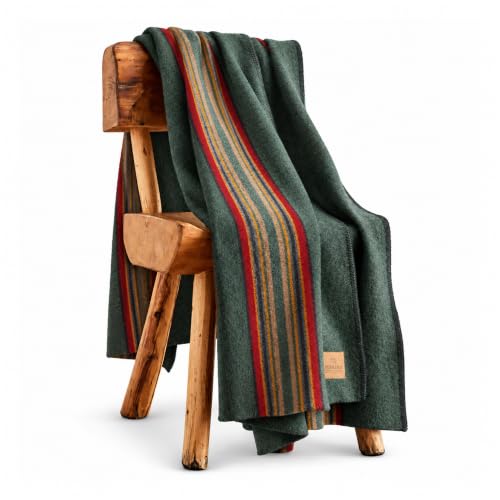
Pendleton Wool Throw Blanket
The Pendleton Wool Throw Blanket represents the premium wool tradition in this category: a woven wool throw with the weight, drape and temperature regulation that made wool the classic throw fibre long before fleece existed. Wool warms without clamminess, breathes as the room warms up, resists odours between airings, and carries patterns and colours with a depth that printed synthetics imitate rather than match. Draped over a chair it looks like furniture, not bedding, and with gentle care a wool throw like this is the one most likely to still be in service many winters from now.
Premium wool asks for premium care and a premium-tier budget, and both demands are honest parts of the deal. Wool wants gentler washing than fleece, some people find any wool faintly scratchy against bare skin (over clothing it is rarely an issue), and it should be stored clean and protected during the moth season. It is also still a throw: personal, lap-scale coverage, however beautiful the weaving. Buy it for fibre quality and longevity, not for size.
Best for: buyers who keep things for years, anyone who runs alternately hot and cold and needs regulation rather than maximum insulation, and rooms where the throw is a permanent visible feature. Not suited for: rough family or pet duty, anyone unwilling to follow gentler care labels, or buyers who prioritise the lowest tier.
How to Get the Most Value If You Buy
Value is mostly placement. A throw stored in a cupboard earns nothing, so give it a home within arm’s reach of the seat where evenings happen — over the sofa arm, folded on the reading chair, or in a basket beside them. Wash it before first use to shed loose fibres, keep it in a simple care rhythm, and store it clean and fully dry out of season. If two people will use it, buy for two from the start rather than upgrading after a winter of negotiation. And match tier to duty: premium money where the throw will be kept and seen for years, entry money where life is rough and replacements are painless.
our throw blanket buying guide for fibre and size decisions
Is a Throw Blanket Worth It? The Decision Checklist
- Do you spend most evenings seated in one or two rooms? Yes points to buying.
- Is one person regularly colder than the rest of the household? Yes points strongly to buying.
- Is your real problem a cold bed instead? Yes points to bedding, not a throw.
- Will pets, children or guests use it weekly? Yes points to easy-care fleece, possibly two.
- Can your laundry routine honour the fibre you want? If not, change the fibre, not the routine.
- Do you already own an unused blanket? Test it on the sofa for two weeks first.
- Will it live within reach of its seat? If it would live in a cupboard, skip it.
Score your answers plainly. Mostly yes on the first, second and last questions means a throw will very likely earn its place in your home, and the remaining questions only decide fibre and number. A yes on the cold-bed question redirects the budget to bedding with no regrets. A failed two-week blanket test settles the matter cheapest of all. The checklist’s purpose is not to sell you a throw; it is to make sure the throw you buy is the one your household’s actual life will reward.
More Detail Worth Knowing
Running the Numbers in Comfort Terms
Try valuing a throw the way you would value any household workhorse: by cost per use, counted in evenings rather than currency. A throw on a main sofa is used most nights of the cooler half of the year and many nights beyond it — hundreds of uses across a few years, thousands across a wool throw’s life. Spread even a premium tier across that many evenings and the cost per comfortable night becomes trivially small, smaller than almost any other comfort a home buys. Spread an entry fleece across its shorter, harder life and the same arithmetic holds. The throws that fail this test are never the expensive or the cheap ones; they are the unused ones, whose cost per use is infinite at any tier.
The same arithmetic explains why the two-throw configuration, which sounds like buying the same thing twice, is often the value peak. Two throws double the seats covered, halve each throw’s wear and washing frequency, end the sharing negotiation, and keep one in service while the other dries. Their combined cost per use beats a single throw’s, because the single throw’s hidden costs — the cold partner, the bare sofa on laundry day, the accelerated wear — never appear on its receipt. Value in this category lives in configurations and habits, not in individual products, and households that think that way consistently report the highest satisfaction per purchase.
There is also a replacement-cost honesty worth practising. An entry fleece bought for family duty should be mentally purchased as a consumable with a multi-season life, not as a permanent fixture; judged that way, its eventual tiredness is the plan completing, not a betrayal. A wool throw should be mentally purchased as furniture — a decade-scale object whose care is part of its ownership. Confusing the two contracts is the root of most value disappointment in this category: the fleece condemned for not lasting like furniture, the wool resented for needing furniture-level care. Sign the right contract at purchase and both products keep their promises.
The Worth-It Question Across a Year
Ask the worth-it question in October and the answer is obvious: the throw comes out, the evenings improve, the purchase justifies itself nightly. Ask it in April and a different truth appears — the throw must be washed, dried completely and stored well, or October’s hero becomes next autumn’s musty disappointment. A throw is worth it across a year only if its owner performs that small seasonal closing ceremony, which is why this article counts care among the real costs. The ceremony is genuinely small: one wash, one thorough dry, one clean shelf. But its omission is the single most common way a good throw’s value quietly evaporates between seasons.
Mid-year is the third vantage point. In summer the heavy throw rests while a light layer, if the household owns one, takes the air-conditioned evenings. Households in warm climates sometimes discover at this point that their true year-round need was the light layer all along, and the winter throw was a seasonal guest. That discovery does not make the winter purchase a mistake — it makes the pair a system — but it should inform the next purchase’s tier: spend the premium money on the layer your climate uses most, and let the seasonal guest be the modest one. Worth-it is a climate-relative judgement, and your postcode votes in it.
Stories the Checklist Catches
The checklist in this article exists because the same few stories repeat. There is the couple who bought one beautiful standard throw for shared film nights and spent a winter in low-level blanket diplomacy; the checklist’s sharing question would have bought them two fleeces for the same money and a happier sofa. There is the cold sleeper who bought throw after throw for the bed, each faithfully lap-sized, each a fresh disappointment; the checklist’s cold-bed question redirects that budget to bedding in one step. And there is the careful buyer who purchased premium wool for a house with a mud-loving dog, whose story ends, as it had to, in the wash.
Against those, set the stories where the answer was quietly yes. The grandmother whose reading chair became warm territory again for the price of a fleece. The host whose spare room stopped generating apologetic conversations about the cold. The remote worker whose legs finally joined the rest of her at a comfortable temperature. None of these stories involves a remarkable product; all of them involve a matched one. That is the deepest finding of the worth-it analysis: in this category, value is created by matching — fibre to climate, size to bodies, tier to duty — far more than by spending, and matching is free.
The Long View: A Throw Across Five Years
Project a fleece throw five years forward in a family home and its biography writes itself: hundreds of evenings, dozens of washes, a surface gradually less plush than its first winter, a colour slightly softened, a role utterly secure. Its worth across those years is not in doubt at any point, because its cost was modest and its service was weekly. The interesting question is only whether, at year five, the household replaces like with like or graduates — and either answer confirms the original purchase. A product whose worst outcome is being faithfully re-bought has passed the worth-it test in the most practical way a product can.
Project the wool throw across the same five years and the curve bends the other way: its costliest year is its first, when the premium is fresh and its virtues are still promises. By year five the promises have compounded — the drape, the regulation, the absence of replacement — and the premium has divided itself into something negligible per evening. Worth-it judgements made at purchase systematically underrate wool and overrate novelty, because they price the object at its most expensive moment. The long view corrects the bias: buy the throw whose year five you most want to live with, and let year one’s arithmetic look after itself.
Project the unused throw across five years, because it is the cautionary tale this article keeps returning to. It costs the same as the used one, occupies the same cupboard, and delivers nothing but an occasional pang of wastefulness when the door opens. Its problem was never quality; households own beautiful unused throws. Its problem was the mismatch nobody examined — wrong seat, wrong fibre, wrong household habit — at the moment of purchase. Five-year thinking is really purchase-moment thinking with the volume turned up, and it asks only one question: given everything true about your evenings, will this object be reached for in year five as it is in week one?
There is a sentimental line in the long view that deserves one honest paragraph. Throws become witnesses. The fleece that covered a sleeping newborn on a sofa, the wool that appears in a decade of Christmas photographs, the holiday throw a family argues over inheriting — these objects accrue a value no tier describes, and it is not irrational to count it. It does, however, argue for one purchasing habit: when two throws otherwise tie, choose the one you would be pleased to still own in ten years. Sentiment cannot be the first criterion, but as a tiebreaker it has a better track record than most specifications.
So the long view settles the article’s question with unusual completeness. A throw is worth it when it is matched — to climate, to bodies, to laundry, to the seat it will live on — because matched throws are used for years and used throws are bargains at any tier. It is not worth it when it is mismatched, because mismatched throws are cupboard stock at any tier, including free. The money question that opened this article turns out to have been a matching question all along, and matching, unlike money, is entirely within the buyer’s control. That is the most encouraging verdict a value analysis can honestly reach.
If a single purchase pattern had to be recommended from all of this, it would be the staged one. Begin with a good fleece at the main seat, because it tests the household’s throw life at the lowest risk. Let a season reveal the truths no article can: who is coldest, which seat wins, how the laundry really flows. Then, if the life justifies it, add the keeper — the wool, the woven piece, the oversized sharer — with evidence in hand. Staged buying converts the worth-it question from a gamble into a observation, and households that buy this way almost never own a throw they regret.
Worth It, Revisited at the Point of Sale
Stand at the point of sale — physical or digital — with this article’s analysis in hand, and the decision simplifies into a sequence of recognitions. You recognise your evenings: seated, slightly cool, one person colder than the others. You recognise your rooms: a sofa that could look finished, a spare bed that could look welcoming. You recognise your laundry: honest about its habits, matched to the fibre in your hand. Each recognition is a small yes, and the purchase that collects enough of them is not an indulgence to be justified later but a conclusion already reached. Worth-it, at the till, should feel less like spending and more like agreeing with yourself.
The opposite experience is equally diagnostic. If the point of sale finds you hoping — hoping the size will stretch, hoping the care will not matter, hoping the cold sleeper will be satisfied with a lap layer — then the analysis has already answered, and the answer is to redirect the money toward the product your hopes are describing. Hope is a poor specification. The households in this article’s success stories share a trait that has nothing to do with budgets: they bought what their lives described, not what their hopes embellished, and their throws have been repaying that honesty nightly ever since.
One more point-of-sale discipline: buy the throw for the household you have this winter, not the one you intend to become. The intending household reads more, hosts more, keeps a tidier sofa and launders like a magazine. The actual household has a dog, a deadline and a favourite seat. Throws bought for intended lives become the cupboard stock this article keeps warning about, while throws bought for actual lives — washable, reachable, correctly sized for real bodies — become infrastructure. Worth-it is a property of the match between object and life, and life, at the point of sale, deserves the casting vote.
And when the purchase is made, close the question. A throw’s value compounds quietly over evenings, and reopening the analysis with every wash — comparing, second-guessing, reading other reviews — taxes a product whose whole virtue is thoughtlessness. The checklist was for before; after belongs to use. Fold it, place it, sit down. The worth-it question, properly answered once, should never need to be asked about the same throw again, and the households that understand this are the ones whose throws look, in every photograph, exactly where they belong: in use.
Objections, Answered at Full Strength
Objection one, at full strength: a throw is just a small blanket, and small blankets are a marketing invention. The answer concedes the geometry and disputes the conclusion. Size is not a defect scaled down; it is the specification that makes the object work — foldable, movable, washable in an ordinary load, present in the room without dominating it. A bed blanket on a sofa is not a bigger throw; it is a worse one, trailing, bunching and living half on the floor. Categories earn their existence by fit, and the throw fits seated life the way the blanket fits the bed. The objection proves the product’s point by measuring it against the wrong job.
Objection two: the money is better spent on heating, which warms everything. At full strength this is true for cold houses and false for comfortable ones, and most worth-it questions live in comfortable houses. Heating warms rooms indiscriminately, including the people who were already warm, the empty hallway and the ceiling. A throw warms a person, precisely, for the hours they are seated. The two are not rivals across most evenings; they are layers of the same system, and the throw is the layer with the finest aim. Households that frame it as either-or are solving a problem their thermostat does not actually have.
Objection three: people buy throws and never use them, so the category is a trap. The observation is accurate and the conclusion misaimed. Unused throws are real, and every one of them traces to a mismatch this article has catalogued — wrong seat, wrong fibre, wrong household, a cupboard instead of a basket. A category is not a trap because its mismatches fail; shoes would fail the same test bought two sizes small. The worth-it question is personal by construction — is a throw blanket worth it for this household, this sofa, this laundry — and asked that way, with the checklist as witness, it has a reliable answer in both directions.
Objection four: premium throws are pure indulgence, since a fleece does the job. Half true, and the true half matters: fleece does do the warming job, and anyone buying wool for warmth alone is overpaying for physics they already own. But the premium was never only buying warmth. It buys regulation across long evenings, drape that furnishes a room, fibres that age into character, and a decade of service that re-prices the purchase entirely. Indulgence is spending on what you will not use or notice; a keeper’s wool, used nightly for years, is the opposite of indulgence by any honest accounting. The objection does, however, permanently disqualify premium purchases for rough duty, where the fleece’s case is unanswerable.
Objection five, the quietest and the strongest: my home is already comfortable, so a throw adds nothing. If that is literally true — every seat, every evening, every household member, every guest — then this article’s answer for you is no, and the checklist would have told you so in a minute. But comfort audited that completely is rare. Most homes have one cold corner, one cold person, one chair that nobody chooses, one guest who shivers politely. A throw is worth it at the margin, and margins are where domestic comfort is actually decided. The question was never whether your home is comfortable in general. It is whether it is comfortable everywhere it is lived in.
The Answer, Restated for the Last Time
Restate the answer with everything now on the table. A throw blanket is worth it for the household whose evenings are seated, whose rooms run a degree cool, whose members disagree about temperature, whose guests arrive in winter, whose dog owns a chair, or whose sofa simply deserves to look finished. It is not worth it for the household shopping for a bed, heating a cold house with textiles, or stocking a cupboard against a life it does not lead. Between those two households lies no grey area worth agonising over — only a checklist, honestly answered, and the small courage to buy, or not buy, what the answers describe.
Notice what the answer never depended on. It never depended on a brand being remarkable, a tier being reached, or a bargain being hunted. The worth of a throw is manufactured almost entirely by fit — to climate, body, laundry and room — and fit is free, available at every tier, in every shop, to every buyer willing to spend ten honest minutes on it. That is a genuinely hopeful conclusion for a consumer question, because it means the best outcome in this category cannot be bought away from you by anyone’s larger budget. It can only be thought away by haste, and haste, unlike money, is entirely yours to refuse.
Buy it, then, if the answers said buy — and buy it completely: the right fibre, the honest size, the forgiving colour, the second one if sharing is real. Place it where the evenings happen. Wash it before its first night and dry it like you mean it. Then let the question close, and let the throw do the quiet, nightly work that made the answer yes. Years from now, folded over the arm of a chair it has outlasted trends on, it will still be making the same argument it makes tonight — that some purchases are worth it not because they are impressive, but because they are used, and used, and used.
Postscript: The Throw in the Photograph
There is a reason throws appear in so many photographs of homes that look loved. It is not styling trickery, or not only that. A throw in a photograph signals a room that is used at the speed of life — sat in, read in, napped in, argued comfortably in — because households that stage rooms do not need throws, and households that live in them cannot do without one for long. When you picture your own home as you would like it to feel, notice whether a throw is in the picture. For most people it quietly is, draped exactly where their evenings happen. That image is not evidence, but it is a clue, and worth-it decisions have been made on worse.
The counter-image deserves its moment too: the immaculate, throw-free room, beautiful and faintly hotel-like, where comfort is architectural and nothing is ever out of place. Some households genuinely live that way and love it, and for them this article’s honest answer remains no — a throw would be clutter in search of a purpose. Knowing which photograph is yours is the whole decision wearing its simplest clothes. Buy for the room you actually inhabit, furnish the life you actually lead, and the worth-it question answers itself before the checklist is even opened — the checklist merely writes the answer down.
If You Buy Only One Thing From This Article
If the analysis must shrink to a single purchase, it is this: one good fleece throw, generously sized, in a colour your room forgives, placed tonight on the seat where your evenings actually happen. That single configuration captures the great majority of the value this article has documented — the warmth, the peace-keeping, the guest-readiness, the protected upholstery — at the lowest risk and the simplest care. Everything beyond it is refinement for households that already know their throw life from the inside. Start where the value concentrates. The category will still be there, with its wools and weaves and upgrades, when experience comes asking for more.
And if the analysis must shrink to a single sentence, it is the one the checklist kept proving from every angle: a throw blanket is worth it exactly when it will be used, and the buyer’s whole task is knowing — honestly, specifically, in advance — whether it will be. Everything else is shopping. Answer the use question truthfully and the money question answers itself, in whichever direction your evenings dictate. That is as much certainty as any purchase of comfort can honestly offer, and in this category, happily, it is enough.
The Quiet Coda
Comfort purchases are usually judged in the loud currency of first impressions — the unboxing, the first evening, the photograph. Throws are judged in a quieter currency: the hundredth evening, when nobody mentions the blanket because nobody has had to think about being cold. That is the currency this article has been counting in all along, and it is why the verdict favours the matched, placed, unglamorous purchase over the exciting one. Excitement depreciates. Use does not. Buy for the hundredth evening, and the first one will take care of itself, as first evenings under a new throw reliably do.
There is nothing left to analyse, and that is itself the final finding. Few consumer questions resolve this completely: a clear yes for a described household, a clear no for its opposite, a checklist that separates them in a minute, and a product simple enough that the answer cannot be ambushed by fine print. If your answers said yes, the remaining work is ten minutes of choosing and a lifetime of evenings. If they said no, you have saved money with a clear conscience, which is the second-best outcome any honest guide can deliver. Either way, the question has been answered — and answered questions, like warm laps, are a form of comfort too.
Worth It for Whom? A Throw Blanket Break-Even Test Based on Your Actual Routine
The purchase is the easy part. A throw blanket proves itself at the sofa, armchair or foot of the bed, in the middle of adding warmth and texture where people actually sit and rest in the evening, long after the packaging has gone. Judge in this order: routine first, space second, features last. Reversing that order is how most disappointing purchases of a throw blanket begin. Start with the size against the sofa or bed, including whether two people can share it. If that check fails, stop there, since the remaining virtues of any throw blanket are built on a foundation your home has already rejected. The second check is whether the fabric suits the washing routine your household will honestly keep, a point shoppers skip because it is hard to judge from photographs, yet it is painfully obvious within the first week of ownership.
Worth-it questions are really frequency questions, so count how often the throw blanket will be used in an honest month and let that number, not optimism, carry the argument. When performance slips, troubleshoot in order: position, load, cleanliness, alignment and whether the routine has quietly changed since the throw blanket arrived all come before blaming the item itself. If you cannot name those things yet, you are not ready to choose, and an hour spent clarifying the routine will save more disappointment than an hour spent comparing near-identical listings. Nothing is kept forever. Favour the throw blanket you could repair, rehome or responsibly retire over the one that becomes an awkward problem the day it stops working.
- Include space, upkeep and parts in the true cost.
- State what the simpler alternative leaves undone.
- Estimate real monthly uses without optimism.
- Decide the usage level below which it stops earning its place.
- Calendar a one-month check against your prediction.
Beware of solving a problem you do not have, because the largest or most elaborate version of a throw blanket adds cleaning, storage and cost in effort to a routine a simpler version would have served perfectly. Ownership is easier with a small paper trail. Keep the instructions, note the model details from the listing, and record any quirk as it appears rather than reconstructing it months later. Ask which part of the throw blanket will look tired first and whether that tiredness is cosmetic, cleanable, repairable or terminal, because the answer sets the realistic lifespan. The care habit that matters most is simple: washing as the maker directs, drying fully and storing it clean between seasons. Built into the routine from the first week, it prevents most of the decline owners later blame on the product.
Read the included-parts list as carefully as the feature list. Many disappointing first days with a throw blanket are simply the discovery that an essential accessory was never in the box. Picture the busiest realistic version of your week, with guests arriving, children underfoot, a meal running late or the weather turning, whichever applies, and ask whether the throw blanket still works then. The first fortnight involves unlearning old habits as much as learning new ones, so allow the throw blanket that adjustment period before delivering a final verdict, unless a basic fit check has failed. A throw blanket can be excellent in isolation and wrong in your room, so judge it against the exact surroundings it will meet rather than against a showroom or a styled photograph.
Try this decision exercise: write down three non-negotiable jobs, one acceptable compromise and one walk-away flaw. If a candidate survives that list, it deserves its place on the shortlist. If two options still look equal, choose the one whose weaknesses land where you care least, because every design trades something away and the honest question is which trade your household tolerates best. The opposite mistake is just as costly over time: a throw blanket that is slightly too small, too light or too basic for a daily routine will be resented long after the saving is forgotten. Delegation exposes weak choices. A throw blanket that only works in one person’s hands, with one person’s knack, is a fragile solution for a shared home.
Frequently Asked Questions
Is a throw blanket worth it for a small apartment?
Usually yes, and small spaces can benefit most. A throw adds comfort and colour without furniture, folds into a basket, and can soften a single multi-purpose room’s mood instantly. The caution is storage discipline: one or two throws used constantly beat a collection competing for the same cupboard. Choose a versatile mid-tone that works with everything you own.
Is a wool throw worth the premium over fleece?
For keepers, yes. Wool regulates temperature across long evenings, resists odours, drapes beautifully and can serve for many winters, so its premium spreads thin across years of use. For rough family or pet duty, fleece delivers more practical value per purchase. The premium is worth it exactly when longevity and fibre feel are what you are buying.
How long does a throw blanket last?
It depends on fibre and duty. A quality wool throw cared for gently can last many years, even decades of seasonal use. Family fleece in weekly service works hard and may look tired sooner, though it remains functional. Rotating two throws, washing gently and storing them clean and dry extends the life of every fibre noticeably.
Will a throw blanket save on heating?
It can contribute modestly: warming one seated person lets a household keep the thermostat a notch lower on sofa evenings without anyone being uncomfortable. It will not replace heating in a cold home, and claims beyond that modest effect should be distrusted. Treat any saving as a bonus on top of the comfort, which is the real purchase.
Is one throw enough, or should I buy two?
Two is the configuration many households graduate to: one in use, one in the wash or on the second seat; or one each for two people, ending the sharing negotiation. If budget forces a choice, buy one good throw for the main seat first. You will know within a month whether your household’s life justifies the second.
What if I already own blankets I never use?
Run the two-week test before spending anything. Put an existing blanket where a throw would live and see whether the household actually uses a living-room layer. If it is used nightly, a purpose-chosen throw — right fibre, right size, right colour — will be used even more. If it is ignored, the honest answer for your home is that a throw is not worth it.
Related Reading
blankets sized generously for couples sharing one sofa
blankets chosen for genuinely cold rooms and winter nights