Disclosure: As an Amazon Associate, airfryerkitchensupply.com earns from qualifying purchases. Links on this page are affiliate links; they cost you nothing extra. Prices and availability change often, so check the current Amazon listing before you buy.
Most product writing hides its doubts in the final paragraph. This look at throw blanket pros and cons does the opposite: it gives the disadvantages the same space, the same detail and the same honesty as the advantages, because a throw blanket is a simple purchase that people still manage to regret — usually not because the throw was bad, but because nobody told them plainly what a throw cannot do. So here is the whole picture. The pros are real and, for the right household, decisive. The cons are also real, and for the wrong household they are decisive too. Your job is only to work out which household is yours.
Quick Verdict and Key Takeaways
- Pros in one line: instant personal warmth, total simplicity, easy care in fleece, and a room that looks finished.
- Cons in one line: lap-scale size, fibre-dependent fussiness, shedding and static in cheap fleece, and no help as bed coverage.
- Suits: sofa-centred households, cold individuals in warm homes, hosts, readers, pet owners with washable fleece.
- Does not suit: anyone shopping for bed warmth, or anyone unwilling to match fibre care to their laundry habits.
The balanced summary is that a throw blanket is excellent at a narrow job. Almost every pro below flows from that narrowness — small, personal, immediate — and almost every con flows from it too. Read both lists with your own evenings in mind, because the same fact, such as a throw’s modest size, appears as a virtue in the pro column (folds anywhere, moves anywhere) and as a limitation in the con column (covers one lap, not one bed).
In this guide
The Pros
Pro: warmth that arrives in minutes, aimed at one person
A throw warms the person rather than the room, and that targeting is its superpower. Instead of heating a whole living room to keep one reader comfortable, you wrap the reader. Fleece delivers that warmth almost immediately, wool sustains it evenly across a long evening, and even a light cotton layer takes the edge off a cool night. In homes where people run at different temperatures, this single quality ends the nightly thermostat negotiation more effectively than any compromise setting, because each person finally controls their own climate.
Pro: zero setup, zero learning curve, zero maintenance burden
Few comforts in a home ask as little as a throw does. There is nothing to install, assemble, charge, programme or update. You unfold it, use it, fold it, and occasionally wash it. Easy-care fleece versions can be washed and dried within an ordinary laundry day and returned to the sofa the same evening. Compare that with almost any other comfort purchase — heaters with filters and safety rules, bedding systems with layers and sizes — and the throw’s simplicity is not a small thing. It is the reason throws actually get used daily while cleverer purchases gather dust.
Pro: it makes a room look finished
A draped throw is one of the fastest ways to make a sofa look intentional rather than merely present. It adds colour, texture and softness to the largest piece of furniture in the room, it can carry a seasonal change of mood for the price of a textile rather than a redecoration, and it softens the look of worn upholstery while protecting the seat beneath it. Design-led woven throws and textured fleece options exist largely because this daytime, visual job is real work, and a good throw does it every hour it is on display, not only when someone is cold.
Pro: endlessly flexible across rooms and moments
A throw also earns its keep in the in-between moments that full bedding never sees. It is the layer you pull over a sleeping toddler on the sofa without waking them, the wrap for a video call that runs long in a draughty home office, the extra warmth for a guest who feels the cold more than you do, and the familiar comfort object that makes a rented cabin or a hospital waiting room feel slightly more like home. None of these jobs needs a large or expensive blanket. They need something soft, washable, the right size for one person, and always within arm’s reach of the seat where life actually happens.
Pro: kind to sofas, guests and routines
A washable throw spread over the favourite seat quietly protects upholstery from pet hair, spills and the slow polish of daily use, and it can be laundered in a way a sofa cannot. For guests, a throw is hospitality without ceremony: it says the spare layer is there if you want it, with no instructions and no awkwardness. And for routines — the evening film, the morning coffee on the porch, the child’s story time — the throw becomes part of the ritual furniture of a home, which is a disproportionate amount of comfort for a folded rectangle of fabric.
Pro: modest tiers buy genuine comfort
Unlike categories where the entry tier is a trap, an entry-tier fleece throw honestly does the core job: it is soft, warm and washable, and a household can own two or three for multi-room coverage without serious budgeting. Premium tiers buy real things — wool’s regulation, better drape, finer finishing, longer life — but they refine the experience rather than unlocking it. That makes the throw a rare category where spending less is a legitimate strategy, provided the size and fibre are right for the job you have in mind.
The Cons
Con: the size is a hard limit, not a suggestion
Size honesty matters more with throws than with almost any other bedding purchase, so let us state it plainly: a throw blanket is a lap and sofa layer, not bed coverage. A standard throw is made to cover one person from roughly the waist or chest down while they sit or recline, or to wrap around shoulders on a chair. It will not span a bed, it will not tuck in, and two adults sharing one standard throw on a sofa will spend the evening negotiating over corners. That is not a flaw in any particular product; it is the definition of the category. Oversized throws exist for taller people and determined sharers, and they are worth seeking out if either description fits your household.
Con: cheap fleece sheds, pills and crackles
Shedding deserves its own honest paragraph. New fleece and plush throws commonly release loose fibres in their first few washes; that is the surface settling, not necessarily a defect, and it usually calms down. Washing a new throw on its own before first use keeps that loose lint off your other laundry and off the sofa. A throw that still sheds heavily after several washes, or that pills into hard little bobbles across its whole surface, is telling you something about its quality tier. Premium fibres and denser weaves shed less and pill later, which is one of the few differences between tiers that you can genuinely feel month after month.
Con: fibre care is a real obligation
Every fibre sends you a bill in laundry terms. Wool wants gentle handling and protected storage. Heavy cotton takes its time drying. Plush textures hold pet hair and need shaking out. None of this is unreasonable, but all of it is real, and the buyer who ignores the label will eventually own a felted, faded or musty throw and blame the product. The con is not that throws need care; it is that the care differs by fibre, so a household with one laundry routine for everything will quietly punish whichever throw does not match it.
Con: warmth has a ceiling
A throw is a layer, not a heating system, and in a genuinely cold room it will lose. Thin knits and cotton throws in particular can disappoint buyers who expected insulation from what is essentially a decorative layer with benefits. Even the warmest fleece or wool throw covers only part of you, so cold shoulders, cold rooms and cold nights eventually defeat it. Buyers in cold homes should treat a throw as the finishing comfort on top of a heated room, and anyone hoping to substitute it for heating will join the ranks of the disappointed.
Con: sharing exposes every weakness
One throw, two people, one sofa: the geometry does not work, and the nightly result is a low-level negotiation over corners, feet and who is colder. The throw is designed for one, so sharing turns its defining virtue — personal size — into its defining frustration. The fixes are simple but they are purchases, not settings: an oversized throw, or a second throw so each person has their own. Households that ignore this con do not stop sharing; they just add a small recurring argument to their evenings and blame the blanket for arithmetic.
Con: decorative throws can be style over substance
At the design-led end of the market, some throws are woven to be looked at: open knits that let the air through, pale colours that show every mark, delicate finishes that fear the washing machine. None of that is dishonest if the buyer knows the job is decoration, but buyers who purchase by photograph alone regularly discover that the beautiful layer contributes little warmth and demands careful handling. The con is the gap between the styled image and the lived reality, and it widens exactly in proportion to how little the listing says about fibre, weight and care.
Throw Blanket Pros and Cons: What the Trade-Offs Mean for You
For the solo reader or worker in a cool corner, the pros dominate completely: personal warmth, no setup, a chair that feels like a place. For couples, the verdict hinges on one decision — buy for two deliberately, with oversized or twin throws, and the cons mostly evaporate. For families with pets and children, fleece turns the care con into a routine and the protection pro into a headline, while wool’s cons grow teeth. For design-led rooms, the decorative con is only a con if you secretly wanted warmth to lead; own the priority and the trade-off is fair.
decide the money question in is a throw blanket worth it
Context: Throws Against the Alternatives
| Option | Fibre and feel | Warmth character | Care | Tier |
|---|---|---|---|---|
| Throw blanket | Fleece, wool, cotton or knit | Personal lap warmth, instant | Easy to moderate, by fibre | Entry to premium |
| Full bed blanket | Various, bed-sized | Whole-bed sleeping warmth | Bedding laundry routine | Entry to premium |
| Quilt | Stitched layered cotton | Structured bed layer, moderate warmth | Washable types vary | Mid to premium |
| Extra duvet layer | Filled bed layer | Maximum bed insulation | Bulky to wash and store | Mid |
The table makes the throw’s position clear: it is the only option designed for seated life. Every alternative wins on a bed and loses on a sofa, where their size becomes clumsiness. That is why the pros and cons of a throw should never be judged against bedding at all. Judged against its real rivals — turning the heating up, wearing another jumper, or simply being slightly cold every evening — the throw’s balance sheet looks very strong, and its cons shrink to size honesty and fibre care.
How to Buy Smart
Buying smart means converting the cons into checklist items before money moves. Confirm the real size and buy oversized if sharing or tall legs are involved. Choose fibre by your climate and your laundry routine, not by the photograph. Read the care summary first. Pick colours that forgive your household’s life. Prefer listings that state fibre content plainly, and treat vague softness adjectives as decoration rather than information. Finally, consider the two-throw strategy from the start: in many homes it dissolves the sharing con, the laundry con and the wrong-room problem in a single decision.
full guidance in the throw blanket buying guide
Setup and Care That Reduce the Cons
Care is where throw blankets quietly succeed or fail over the years. The label on the individual blanket always wins, because fibres and dyes vary, but the broad pattern is consistent: fleece and most synthetic throws tolerate a gentle machine wash and dry quickly, cotton throws wash easily but heavier weaves dry slowly, and wool asks for the gentlest handling of all, with cool water, mild detergent and no aggressive spinning or heat. The two habits that protect every fibre are washing a throw separately from lint-catching or lint-shedding laundry companions, and making sure it is completely dry before it is folded away, because a throw stored even slightly damp will smell musty and can mildew in a cupboard.
Most cons soften with habits rather than money. Wash new fleece separately to contain early shedding. Shake throws out outdoors to cut washing frequency. Store wool clean and protected, fold knits instead of hanging them, and keep a basket by the sofa so the throw lives where it is used instead of migrating to a cupboard. None of these habits is burdensome, and together they address shedding, mustiness, stretching and the mysterious disappearance of the throw at the exact moment the evening turns cold.
how to clean a throw blanket, step by step
Bottom Line
The pros and cons of a throw blanket describe the same object from two sides: small, personal, immediate, fibre-dependent. If your life includes cool evenings spent seated, the pros will run your household and the cons will read as fine print. If you need bed warmth or heating replacement, the cons are the headline and you should buy bedding instead. That is the honest bottom line of this category — not that throws are wonderful or flawed, but that they are wonderfully clear about what they are, for buyers willing to read both columns before choosing.
More Detail Worth Knowing
The Pros and Cons in Specific Rooms
In the living room, the pros lead by a wide margin. The throw’s size fits sofas and chairs exactly, its warmth matches the room’s seated life, and its decorative role is at its most valuable where guests actually sit. The cons that matter here are sharing geometry and, for open knits, warmth that underdelivers on cold nights. A living room with two throws of different weights — one plush, one light — quietly cancels most of the cons on this list while doubling down on every pro, which is why settled living rooms so often end up that way without anyone planning it.
In the bedroom, the balance tightens. As a daytime layer and nap companion the throw is charming and useful, but the size con becomes the headline the moment anyone tries to sleep under it properly, and the warmth con follows for cold sleepers. The fair verdict is that a bedroom throw is a supporting actor: excellent in its scenes, miscast as the lead. Households that buy it for the supporting role are delighted; households that cast it as bedding write the disappointed reviews that make this category look more controversial than it is.
In the home office, the pros surprise people. A throw over the legs under a desk addresses the specific cold of stillness — hours of sitting while the room’s heating serves a whole house — and it does so without any equipment, noise or running cost. The cons barely apply: nobody shares a desk throw, its size is exactly right for one seated person, and its care is an occasional wash. If there is a room where the pros and cons stop being a debate at all, it is this one, and remote workers in cool homes are among the most converts this category produces.
For outdoor-adjacent life — porches, balconies, garden evenings, camping chairs — the fleece throw’s pros travel well: light, forgiving, quick to dry, unbothered by being dragged between indoors and out. The cons travel too: wind finds the gaps in a lap-scale layer, and damp evenings punish cotton’s slow drying. Wool’s regulation tempts here, but its care needs argue against garden duty. The room-by-room pattern generalises into the article’s whole thesis: the pros and cons are not properties of the throw alone, but of the throw in a place, doing a job, for a person.
How the Balance Shifts by Person
For the person who runs cold, nearly every con shrinks. Size is adequate because the throw is theirs; warmth ceilings rarely bind because the room is heated and they are the supplement’s target; care is a fair price for nightly comfort. For the person who runs warm, the mirror image holds: fleece’s stuffiness becomes the headline con, cotton’s lightness the headline pro, and wool’s regulation the tiebreaker. Neither person is wrong about the same object, which is why household arguments about blankets are really arguments about bodies, and why the two-throw household is so often a peace treaty rather than a purchase.
For the tidy-minded, the decorative pro and the storage con fight openly: a throw is either the finishing touch or one more textile to fold, depending on temperament. For the relaxed household, the throw is simply where it lands. For the frugal, entry fleece’s honest service makes the premium tiers look like the con; for the keeper, fleece’s replacement rhythm makes wool’s tier look like the pro. Lay these profiles over the lists in this article and a pattern emerges: the pros and cons are stable facts, but their weights are personal, and the weighing — not the facts — is the actual decision.
Two Picks That Show the Balance Clearly

Bedsure Fleece Throw Blanket
Seen through the pros-and-cons lens, the Bedsure fleece is the category’s balance sheet in miniature. Its pros are the everyday ones: fast warmth, easy washing, quick drying, entry-tier positioning and a softness that pleases almost everyone. Its cons are fleece’s own: early shedding, static in dry rooms, and warmth that can turn stuffy on mild evenings. Crucially, none of its cons is a surprise — each is predictable from its fibre — and a buyer who has read this article can price every one of them in advance, which is more than can be said for most household purchases.
Best for: buyers who want the pros to dominate and the cons to stay boring — family sofas, first throws, pet households. Not suited for: buyers seeking wool’s regulation or a woven throw’s looks, for whom this fleece’s cons would be the wrong ones to accept.
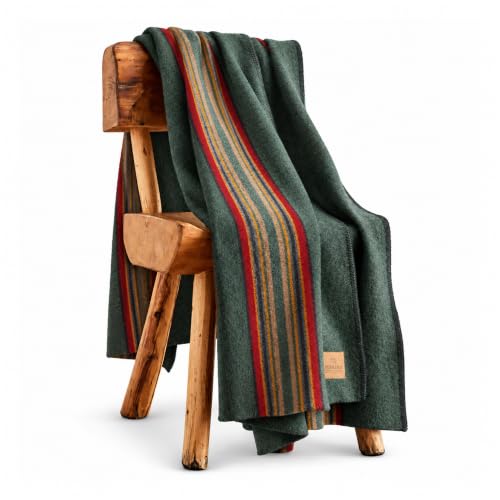
Pendleton Wool Throw Blanket
The Pendleton inverts the same ledger. Its pros are the connoisseur’s list: regulating warmth, beautiful drape, odour resistance and a lifespan measured in winters rather than seasons. Its cons are equally clear: premium positioning, gentler washing, protected storage and a feel some people dislike on bare skin. Neither list is longer than the fleece’s; they are simply weighted toward different households. That is the whole lesson of this article in two products — pros and cons are not scores, they are matches waiting to be made.
Best for: keepers with gentle laundry habits and long evenings. Not suited for: rough family duty or anyone whose routine would turn its care cons from fine print into fate.
Weighing It Up, Household by Household
Take the young family first, because their weighing is the most lopsided. Every pro that involves washing, protecting, forgiving and costing modestly lands at full weight; every con that involves delicacy lands on products they should simply not buy. For them the fleece throw is nearly all pros, and the honest cons list functions as a filter rather than a warning: it steers them away from wool and pale weaves and toward the washable workhorse their life requires. When the cons of a category mostly describe products outside your shortlist, the category itself is a good match for your household, and that is precisely the young family’s position.
Take the design-conscious household next, where the weighing is subtler. The decorative pro carries real weight — their rooms are composed, and a throw is a large instrument in the composition — while the warmth cons matter less because their homes are warm and their evenings are as much about the room as the layer. Their danger is not cold but disappointment of a different kind: the beautiful open knit that pills, the pale weave that greys. For them the cons list is a quality checklist, pointing at density, finishing and fibre honesty. Read that way, the disadvantages do not argue against the purchase; they argue for buying the decorative throw well rather than merely beautifully.
Take the elderly household, where the weighing turns on details younger buyers skip. Warmth without weight matters, because heavy layers are genuinely unwelcome; easy handling matters, because a throw is folded and carried daily; and trip awareness matters, because a throw that slides to the floor is a hazard as well as an annoyance. The pros of lightness, immediacy and simplicity weigh heavily here, and the cons that matter are the practical ones — sliding, static, care complexity. A light fleece or a soft wool in a manageable size answers nearly every item on both lists, which is why throws are such reliably successful gifts to older relatives when chosen with this weighing in mind.
Take the renter, whose weighing is shaped by impermanence. A throw is one of the few comforts that improves a room without touching it — no fixings, no permission, no trace left behind — and it packs in a box when the lease ends. The pros of portability and reversibility weigh double; the cons of premium longevity weigh half, because a decade-scale wool throw is a commitment a mobile life may not want. Entry and mid fleece, chosen well, is the renter’s rational champion, and the category’s modest tiers stop looking like economy and start looking like design for a life stage.
Take the cold-climate household last, where honesty matters most. Their weighing gives the warmth ceiling con its full, serious weight: a throw supplements their heating, it does not join it. Within that truth, the pros still flourish — the layer over legs in a heated room is the difference between comfort and endurance on a long night — but they flourish in order: dense fleece and wool only, sizes generous, expectations exact. This household writes the most satisfied reviews in the category, paradoxically, because their expectations were the most precisely set. The pros and cons never changed; the weighing was simply done with open eyes.
What all five weighings share is a method, and the method is this article’s real content. List the facts — the two columns are short and stable — then weight them with your household’s life, honestly and specifically. The same throw is a bargain in one home and a blunder in another, and no review can collapse that difference for you. What a review can do, and what this one has tried to do, is refuse to hide either column, so that the weighing you perform is performed on the whole truth. Products chosen that way are rarely regretted, and throws chosen that way are regretted least of all.
One last balance deserves stating, between the throw and the thermostat, because households feel it monthly. Every evening a throw lets a room sit a little cooler for the people not wearing it, small savings and small comforts compound across a season. Set against that, the throw’s own costs — washing, replacing the tired fleece in its year — are visible and modest. The ledger is not close. But it only balances in homes where the throw is actually used, which returns the verdict, one final time, to placement and matching: the pros are collected by households that put the right throw within reach, and the cons are collected by everyone else.
The Small Print, Read Aloud
Small print item one: a throw’s warmth is partly your own. A layer traps the heat your body produces, so a person who comes to the sofa already chilled will warm more slowly than the same person under the same throw an hour into the evening. This is why two members of a household can honestly disagree about the same blanket’s warmth on the same night, and why the con of insufficient warmth is sometimes a fact about timing rather than textiles. The throw is not failing; it is physics, and a hot drink is its traditional accomplice.
Small print item two: static is a seasonal con with a calendar. Fleece in dry, heated winter air can crackle and cling, startling cats and styling hair, while the same throw in humid summer behaves impeccably. Households bothered by static can lean toward cotton or wool in the driest months, keep fleece for the shoulder seasons, or simply accept the crackle as winter’s sound effect. The point of reading the small print aloud is that most cons in this category have seasons, workarounds or expiry dates — they are conditions to manage, not verdicts to fear.
Small print item three: throws accumulate. Because each individual purchase is modest and each colour is tempting, households drift from two throws to seven without a single decision ever being made, until storage — the quietest con on the list — becomes the loudest. The discipline that prevents it is the same one this article recommends for sharing: buy by role. A throw with a named seat and a named job is furniture; a throw bought because the colour was lovely in October is inventory. Inventory is what cupboards are full of, and furniture is what evenings are made of.
Small print item four: the pro of protection has a direction. A throw protects the sofa beneath it by absorbing the evening itself — the hair, the crumbs, the slow polish of use — which means the throw ages faster so the furniture ages slower. That trade is the entire point for pet households, but it should be made knowingly: the working throw is a consumable shield, and its gradual tiredness is the receipt for the sofa’s youth. Households that understand the direction of the trade replace working throws without resentment; households that miss it feel vaguely cheated by a product that did its job perfectly.
Small print item five: children rewrite both columns without asking. A throw’s pros multiply — fort architecture, comfort object, picnic rug, sick-day companion — while its cons concentrate into one word: washing. The correct response is not a better throw but a more washable one, plus a spare, because a beloved throw in the wash is a household emergency of the first order. Families who grasp this buy fleece in duplicate early and sail; families who buy one beautiful woven piece learn it in a single tearful laundry day. The columns do not change for children; the weights simply become unmistakable.
Small print item six: the con of the cold shoulder is literal. A lap throw warms what it covers and abandons the rest, so on the coldest evenings the uncovered shoulders become the complaint. The experienced fix is layering posture rather than a bigger blanket: the throw over the legs, a cushion behind the back, perhaps a second light layer over the shoulders for the truly cold night. Households that expect one rectangle to solve every latitude of cold will list it as a con; households that dress the chair properly discover the con was a styling problem wearing a warmth problem’s coat.
Read together, the small print teaches the same lesson as the main columns, at higher resolution: nearly every disadvantage of a throw blanket is conditional — on fibre, on season, on household, on expectation — and conditional disadvantages can be chosen, priced and managed before purchase. The only unconditional facts are size and physics. A buyer who absorbs that distinction owns the whole subject, and will find the pros and cons of the next textile, appliance or piece of furniture equally legible, because the method — facts first, weights personal, conditions named — is the real product this article has been selling.
The Columns, Applied to One Evening
Imagine the columns applied to a single ordinary evening, because that is where they stop being analysis. Six o’clock: the room cools, the throw comes off the sofa arm — pro, immediacy, no equipment, no wait. Seven: two people, one throw, a brief negotiation — con, geometry, solved by the second throw in the basket, which exists because someone read the cons list before buying rather than after arguing. Nine: the dog joins, shedding happily onto fleece rather than upholstery — pro, protection, working exactly as designed. Eleven: the throw is shaken, folded, left ready — care, thirty seconds, the whole maintenance burden of the day. One evening, both columns, no drama: that is the lived shape of this product.
Now imagine the same evening with the wrong throw, to see the columns bite. The beautiful open knit contributes atmosphere and lets the cold through, so its owner is decorative and chilly — the warmth con, in person. The standard size bought for a tall household leaves feet negotiating with the floor — the size con, unanswerable by quality. The wool, washed last week on a hopeful hot cycle by a well-meaning partner, is now a smaller, denser object — the care con, irreversible division. Nothing in the evening required a better product; it required the right one, which is the sentence this entire article has been walking toward from its first paragraph.
The columns also explain the category’s review landscape, which puzzles newcomers. Read owner comments anywhere and you will find the same throw praised as life-changing and dismissed as useless, often in adjacent paragraphs. The pros-and-cons method dissolves the puzzle: the praisers bought the throw their household’s weighting favoured, the dismissers bought against theirs, and both are reporting honestly on different matches rather than different products. Once you see that, the sensible way to read any review — including this one — is to extract its facts, ignore its weights, and supply your own. Facts travel; weights are household property.
A final application, to the gift buyer standing in a shop with this article half-remembered. The columns reduce to a safe path: choose the throw whose cons the recipient will never meet. For most recipients that means fleece’s cons — shedding that settles, static that seasons — over wool’s cons of care and cost, because a gift should never arrive carrying obligations. Add a forgiving colour, honour the lap size without apology, and the gift lands in the pros column of someone else’s evening. That is the whole method, portable to any product: facts first, weights personal, cons chosen to be the ones your household — or your recipient — will never have to pay.
Balance, as a Habit of Mind
There is a reason this article gave the cons first-class treatment instead of a apologetic paragraph, and it generalises beyond blankets. Products fail households at their unexamined edges — the size assumed, the care ignored, the season forgotten — far more often than at their advertised centres. A buyer trained to ask for the cons at full strength, and to weigh them against their own life rather than against an average life, becomes difficult to disappoint. That is a transferable skill disguised as a blanket article, and it may be the most valuable thing in these pages, worth more than any single verdict offered along the way.
It also changes how the pros feel. Advantages discovered after purchase feel like luck; advantages weighed beforehand feel like design. The household that knew fleece would shed, and washed it solo, experiences the settling pile as a plan unfolding. The household that knew the size, and bought for one, experiences the fit as competence. Nothing about the throws differs between those households and their disappointed counterparts — only the weighing does. Pros and cons are not the product’s report card. They are the buyer’s rehearsal, and the performance is always better for having had one.
So the balance this article recommends is not fifty-fifty thinking, splitting every judgement down the middle until nothing is decided. It is full-strength thinking in both directions, followed by a decision that belongs to your household alone. The throw that survives that process — cons priced, pros verified, role named — stops being a purchase and becomes a fixture, in the deep sense: a thing whose presence is assumed by the life around it. Aim for fixtures. They are the only bargains that never need replacing, and a well-weighed throw is among the easiest fixtures a home can acquire.
A Closing Word From Both Columns
If the two columns of this article could speak in one voice, they would ask for something modest: to be read together, before the purchase, by the person who will live with the result. The pros are not a sales pitch and the cons are not a warning label; they are the same object described completely, and completeness — not enthusiasm, not caution — is what good decisions are made of. A throw bought on complete information joins a household the way good furniture does, without a probationary period of doubt. A throw bought on half the information must spend its first season proving which half was true, and even the winners of that process carry the memory of the argument.
So weigh, decide, and then stop weighing. The columns will still be here if a second throw is ever needed, and by then your household will supply weights no article can: a season of evenings, a laundry routine tested, a dog’s opinion registered. Until then, let the decision you made stand at full height. The pros will collect themselves nightly, the cons you priced will stay priced, and the throw — small, honest, exactly the size it always said it was — will do the work both columns promised it could, in the room where you needed it done.
Truly the Last Weighing
One weighing remains unattempted, and it is the simplest: the throw against doing nothing. Doing nothing costs nothing and delivers the cold lap, the undecorated sofa, the guest improvising with a cushion, the dog directly on the upholstery. Against that baseline, even the cons column reads as the price of admission to a warmer, softer, better-protected domestic life — a price itemised honestly in these pages and payable mostly in attention rather than money. Households rarely regret admission bought at that price with open eyes. They regret, when they regret, the upgrades they skipped: the second throw, the honest size, the fibre their climate asked for. Let the baseline have its say, and then decide.
And so the article ends where a balanced account should: not with a score, but with a household — yours — holding two honest lists and a clear method for weighting them. The throw has not changed throughout these pages. What has changed, if the article worked, is the quality of the attention you will bring to choosing one. That attention is the real deliverable, and unlike the blanket, it fits every product you will ever weigh. Use it here first: fibre, size, care, role. Then sit down, pull the chosen layer over your legs, and let both columns retire for the evening.
Signed, Both Columns
Both columns, having been heard at full length, rest their case together: the throw is worth its pros and priced by its cons, and your household holds the exchange rate. Decide accordingly, and welcome to the sofa.
The Trade-Offs in Daily Life: Where a Throw Blanket Earns Its Place and Where It Does Not
The purchase is the easy part. A throw blanket proves itself at the sofa, armchair or foot of the bed, in the middle of adding warmth and texture where people actually sit and rest in the evening, long after the packaging has gone. So work backwards from daily life: fix the routine, the space and the people in your mind first, and only then weigh the features that looked persuasive on a product page. The first check is the size against the sofa or bed, including whether two people can share it, and it outranks everything else, because no styling or extra capacity compensates when that basic fit is wrong. The second check is whether the fabric suits the washing routine your household will honestly keep, a point shoppers skip because it is hard to judge from photographs, yet it is painfully obvious within the first week of ownership.
Photograph complicated setups before you change them and note settings that worked. With a throw blanket, your own records become the manual for your particular home. The most future-proof question is also the simplest: if your routine changed moderately, would this throw blanket adapt, or would it become the wrong tool kept out of guilt? Consider what the throw blanket gives off while it works and what it leaves behind afterwards, because living with the by-products is part of living with the product. Beware of solving a problem you do not have, because the largest or most elaborate version of a throw blanket adds cleaning, storage and cost in effort to a routine a simpler version would have served perfectly.
- Score every advantage by how often your household will feel it.
- Give daily annoyances more weight than twice-a-year inconveniences.
- Re-read the verdict imagining your busiest week, not your calmest.
- Decide which trade-off your household tolerates most easily.
- Mark each disadvantage with whether a simple habit can manage it.
Dead heats between two candidates are broken by weaknesses, not strengths: pick the throw blanket whose compromises fall on the jobs you do least often. Sometimes the right purchase is smaller than planned because an existing possession covers the heavy or rare jobs, leaving the new throw blanket to specialise in the frequent ones. Measure the real space, including clearance for doors, drawers, lids, handles and people passing, and write the numbers down before comparing anything, because memory is generous in exactly the wrong direction. Plan the end at the beginning: a throw blanket should be repairable, passable on, recyclable or at least easy to dispose of responsibly when its service ends, and designs differ widely on this.
Ownership is easier with a small paper trail. Keep the instructions, note the model details from the listing, and record any quirk as it appears rather than reconstructing it months later. Wear arrives at predictable points: hinges, seals, edges, handles, surfaces and anything that is folded, dragged, filled or emptied. Inspect those areas in photographs and descriptions before you buy. When every option looks equally good, the missing information is rarely about the products; it is about your household, and that is the gap to close before spending anything. Cleaning time is an ownership cost like any other, so favour the design whose care routine fits the time you genuinely have, not the time you would have in an ideal week.
Most faults that appear months in are really maintenance or setup faults wearing a disguise, so return to the basics, position, load, cleanliness and fit, before concluding anything has failed. A useful test is to name the three jobs this throw blanket must do well, the one job it may do merely adequately, and the one situation in which you would replace it without regret. For items that suffer from constant use without rest, a planned spare is not extravagance; it is how the routine survives the day the main one is wet, dirty, broken or missing. When owners give up on a throw blanket, the cause is often pilling, snagging and a blanket that lives folded because it suits nobody’s chair, not a dramatic breakdown, so treat that pattern as the main risk your decision has to answer.
Frequently Asked Questions
What is the biggest disadvantage of a throw blanket?
Its size. A throw is lap-scale by design, so it cannot cover a bed or warm two adults generously, and buyers who miss that fact are the ones who end up disappointed. Every other disadvantage — shedding, care, warmth ceilings — can be managed by fibre choice and habits, but no habit makes a standard throw bigger than it is.
Do throw blankets shed a lot?
Fleece and plush throws commonly shed loose fibres during their first few washes, then settle. Washing a new throw separately before use contains most of it. Dense, quality surfaces shed least, while persistent heavy shedding after several washes signals a lower-quality pile rather than normal behaviour. Wool and smooth cotton weaves shed far less than plush synthetics.
Are throw blankets warm enough for winter?
As a personal layer in a heated room, yes — dense fleece and wool throws are genuinely warm across a winter evening. As the only defence in an unheated, very cold room, no throw is enough, because it covers only part of you and adds a layer rather than heat. Pair the throw with a reasonably warm room and it performs exactly as promised.
Is a throw blanket better than a regular blanket?
For seated life, yes: it is the right size, easier to handle, quicker to wash and made to live on a sofa. For sleeping, no: a regular blanket’s bed size is the entire point. The two products overlap in looks but not in job, and most settled households end up owning both rather than choosing between them.
Do wool throws have more cons than fleece throws?
They have different cons. Wool asks for gentler washing, protected storage and a premium tier, and some people dislike its feel on bare skin. Fleece counters with shedding, static and stuffiness in warm rooms. Neither list is longer; they simply punish different households, which is why fibre should be matched to your laundry routine and climate.
Can the cons of a throw blanket be avoided?
Mostly, yes. The size con is avoided by buying oversized or two throws. The shedding con fades with a separate first wash. The care con shrinks when fibre matches your routine. The warmth con disappears when the throw is used as a layer in a heated room. What cannot be avoided is expecting a throw to be bedding — that is a different product.
Related Reading
blankets long enough for taller readers and loungers
blankets that work well as Christmas gifts