Disclosure: As an Amazon Associate, airfryerkitchensupply.com earns from qualifying purchases. Links on this page are affiliate links; they cost you nothing extra. Prices and availability change often, so check the current Amazon listing before you buy.
A throw blanket buying guide should save you from the two purchases people actually regret: the beautiful throw that turns out to be a decoration with delusions of warmth, and the warm throw bought in a size that starts an argument every time two people share a sofa. This throw blanket buying guide is built around the decisions that prevent both regrets — fibre first, because fibre decides warmth, breathability and care; size second, because a throw is a lap layer and honesty about that fact prevents most disappointment; and use case third, because the right throw for a toddler’s blanket fort is the wrong throw for a styled reading chair.
Key Takeaways
- Choose fibre before colour: fleece for fast warmth, wool for regulation, cotton for breathability, knits for looks.
- A standard throw covers one person’s lap and legs; oversized exists for tall people and sharers.
- Best overall default: the Bedsure Fleece Throw Blanket. Best premium keeper: the Pendleton Wool Throw Blanket.
- Care is a buying criterion, not an afterthought — match the label to your laundry reality.
- Two modest throws in the right rooms beat one expensive throw in the wrong one.
In this guide
What a Throw Blanket Does and the Main Types
A throw blanket is a personal comfort layer for seated and reclining life: sofa evenings, reading chairs, home-office desks, guest duty and decorative layering at the foot of a bed. It warms the person rather than the room, folds away in seconds, and moves between rooms as life requires. It is not bed coverage and not a heating system, and every type below should be judged inside that honest job description.
Fleece throws
Fleece throws earn their popularity honestly. The brushed synthetic surface traps a layer of still air against your body, and that trapped air is what warmth actually is, so a fleece throw feels cosy within moments of pulling it over your legs rather than after a long warm-up. Fleece is also forgiving: it tolerates frequent washing, dries quickly, shrugs off the crumbs and pet hair of everyday sofa life better than most fibres, and stays soft without special handling. The honest trade-off is breathability. On a mild evening or over warm pyjamas, fleece can tip from cosy to stuffy, and very cheap fleece can shed lint and pill where it rubs against upholstery or clothing.
Wool throws
Wool sits at the opposite end of the throw spectrum. A wool throw blanket regulates temperature in a way synthetics struggle to match: it warms you when the room is cold, yet it rarely leaves you clammy when the heating kicks in, because the fibres absorb and release moisture as conditions change. Wool also drapes with a satisfying weight, resists odours between washes, and ages gracefully when it is cared for gently. The costs are real, though. Wool usually sits in the premium tier, it asks for gentler washing than fleece, some people find it faintly scratchy against bare skin, and a wool throw stored carelessly can attract moths in the warmer months.
Cotton throws
Cotton throws are the quiet all-rounders of the category. A woven or knitted cotton throw breathes well, feels cool and clean against the skin, and suits people who run warm or who want a layer for spring and autumn rather than deep winter. Cotton washes easily, softens with use, and carries none of the static cling that fleece can build up in dry heated rooms. What cotton does not do is insulate like fleece or wool at the same weight; a thin cotton throw on a January evening is a comfort layer, not a heating strategy. Heavier cotton weaves and chunky knits close some of that gap, but they also take longer to dry after washing.
Knitted and decorative throws
Knitted and acrylic throws live somewhere between decoration and function, and it pays to be clear-eyed about which job you are buying one for. A loose, open knit looks wonderful draped over a sofa arm and adds a genuine layer of warmth on a cool evening, but the open structure lets air move through, so it will not match a dense fleece for insulation. Acrylic yarns hold colour beautifully and resist fading in sunny rooms, and modern acrylic knits can feel surprisingly soft. The weaknesses are pilling over time, a tendency to stretch out of shape if they are dragged or hung wet, and warmth that varies enormously from one knit pattern to another.
Top Picks at a Glance
| Option | Fibre and feel | Warmth character | Care | Tier |
|---|---|---|---|---|
| Bedsure Fleece Throw Blanket | Brushed fleece, plush and soft | Fast, cosy warmth for cool evenings | Easy machine care, dries quickly | Entry |
| Chanasya Fleece Throw Blanket | Textured patterned fleece | Honest mid-level fleece warmth | Easy machine care | Entry to mid |
| Utopia Bedding Fleece Throw Blanket | Plain fleece, simple finish | Everyday sofa warmth | Easy machine care | Entry |
| Pendleton Wool Throw Blanket | Woven wool, weighty drape | Regulating warmth, never clammy | Gentler handling, store protected | Premium |
| Brooklinen Throw Blanket | Woven, design-led texture | Moderate, decorative layer warmth | Check the specific label | Premium |
| West Elm Throw Blanket | Woven or knitted, coordinated colours | Cool-evening layer | Varies by fibre, check the label | Premium |
- Best Overall — Bedsure Fleece Throw Blanket: the everyday default for warmth, softness and easy care at an entry tier.
- Best for Long-Term Keeping — Pendleton Wool Throw Blanket: premium wool regulation, drape and longevity.
- Best Texture on Show — Chanasya Fleece Throw Blanket: patterned plush presence for living rooms.
- Best for Several Rooms — Utopia Bedding Fleece Throw Blanket: sensible value for multi-throw households.
- Best for Styled Rooms — Brooklinen Throw Blanket and West Elm Throw Blanket: design-led woven layers.
Throw Blanket Buying Guide: The Criteria That Decide Satisfaction
How warm do you actually need it to be?
Answer with your room, not your hopes. If your living room runs genuinely cool in the evening and you feel the cold, dense fleece or wool will satisfy you and a light knit will not, whatever it looks like draped in a photograph. If your home is warm and the throw is for the last chilly hour of the evening, cotton or a knit is honestly enough, and fleece may spend its life folded because it feels like too much. People who run hot and cold across one evening are wool’s natural audience, because regulation matters more to them than maximum insulation.
What size should you choose?
Size honesty matters more with throws than with almost any other bedding purchase, so let us state it plainly: a throw blanket is a lap and sofa layer, not bed coverage. A standard throw is made to cover one person from roughly the waist or chest down while they sit or recline, or to wrap around shoulders on a chair. It will not span a bed, it will not tuck in, and two adults sharing one standard throw on a sofa will spend the evening negotiating over corners. That is not a flaw in any particular product; it is the definition of the category. Oversized throws exist for taller people and determined sharers, and they are worth seeking out if either description fits your household.
Think about size in terms of the job, not the label. For a reading chair, a standard throw that covers your legs and tucks slightly around your feet is plenty. For a sofa where two people watch films together, one oversized throw or two individual throws both work, and many couples quietly prefer two, because each person controls their own warmth and nobody loses the blanket war at the climax of the film. For a guest bed, a throw is a decorative top layer and a light extra for chilly shoulders, never the main insulation. Buying the size for the job you actually have is the single easiest way to avoid disappointment in this category.
Which fibre fits your laundry reality?
Be brutally honest about your household’s washing habits, because the care label you will actually follow beats the fibre you admire in theory. If everything in your home goes into one mixed wash, fleece is your fibre and wool will eventually be ruined by kindness. If you already handle delicates separately, wool’s gentler routine costs you nothing. Cotton sits happily in the middle. And whatever the fibre, a throw that sheds should be washed on its own at first, and every throw must be dried completely before it is stored, or the cupboard will smell of your optimism.
How will it look in the room all day?
A throw spends far more hours being looked at than being used, so its daytime job is real. Draped over a sofa arm or folded at a bed’s foot, it is one of the largest colour blocks in the room. Mid-tones hide daily life best; pale designer weaves show every paw and crumb; strong patterns forgive the most and coordinate the least forgivingly. Texture matters too: plush fleece reads casual and cosy, woven wool reads classic, and open knits read decorative. Choose the daytime personality deliberately rather than discovering it when the parcel arrives.
Who else will use it?
Other users rewrite the specification. Pets argue for washable fleece, forgiving colours and a second throw in rotation. Children argue for easy care, quick drying and nothing precious. Guests argue for freshness and simplicity — a throw that looks clean and feels welcoming without instructions. A partner who runs colder than you argues for an oversized throw or a second one. Write these users into the purchase before choosing, because a throw bought for an imaginary solo reader will be conscripted by the whole household within a week.
How to Prioritise by Use Case
The cold person’s sofa
Prioritise warmth and drape: dense fleece for fast comfort or wool for long-evening regulation. Keep the throw permanently on the sofa in a basket or over the arm, because a throw in a cupboard warms nobody. If the cold person is also tall, go oversized so feet stay covered without a tug of war with the top edge. This household gets more value from one excellent throw in the right place than from any other configuration in this guide.
The busy family room
Prioritise washing speed and numbers. Two or three entry-tier fleece throws — the Utopia Bedding approach, or Bedsure throws in different colours for different seats — will outperform one premium blanket that is always in the wash or being protected from the life it was bought for. Choose mid-tone colours, wash new throws separately once, and let the family room be a place where the textiles work as hard as the furniture does.
The styled living room
Prioritise texture, colour coordination and drape, and let the Chanasya, Brooklinen or West Elm options lead. Accept honestly that part of the budget buys daytime looks, and check fibre and care labels individually on design-led ranges. Many styled rooms quietly run a two-throw system: the beautiful woven layer on display, and a fleece workhorse in the basket for the coldest evenings and the dog. There is no rule that says a room may only contain one philosophy of blanket.
The guest room and spare bed
Prioritise freshness and easy turnaround. A washable fleece throw folded at the foot of the spare bed reads as a welcome, adds shoulder warmth for a guest who reads in bed, and can be laundered and dried quickly between visits. Keep the colour forgiving and the care simple, and resist placing your best wool where a guest may treat it as ordinary bedding, because guests cannot know its rules and should never need to.
The Picks in Brief

Bedsure Fleece Throw Blanket
The Bedsure Fleece Throw Blanket is the reference point for the everyday fleece end of this category, and it earns that position by doing the simple things consistently. The brushed fleece surface feels soft from the first use rather than after a breaking-in period, it warms up quickly against the legs, and it is light enough to fold over one arm of the sofa without looking bulky. In entry-tier terms it sits exactly where most households should start: inexpensive in positioning, easy to wash, and available in enough colours that matching a room is rarely a problem.
Its honest limitations are the limitations of its tier and fibre. Fleece at this level can shed loose fibres in the first washes, it can build static in dry heated rooms, and it will not regulate temperature like wool on a warm evening. It is a lap and sofa layer in a standard throw size, so expect personal coverage rather than bed coverage or generous two-person sharing. Judged as what it is — a hard-working, washable, everyday fleece throw — it is easy to recommend. Judged as a luxury textile, it was never trying to be one, and paying premium money elsewhere buys drape and fibre quality, not a different category of product.
Best for: everyday sofa use, first throw purchases, households with pets or children where easy washing matters more than heirloom fibre. Not suited for: anyone wanting bed-sized coverage, wool-level temperature regulation, or a decorative statement piece for a styled room.
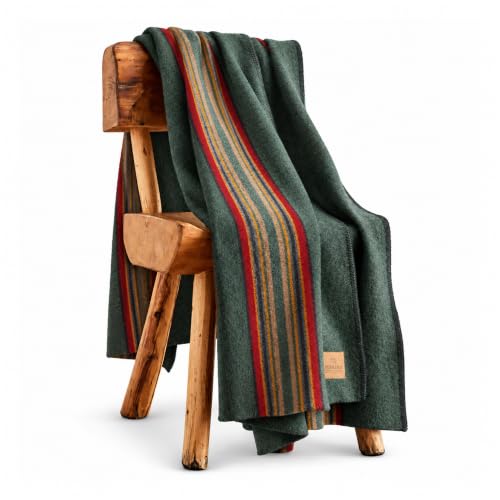
Pendleton Wool Throw Blanket
The Pendleton Wool Throw Blanket represents the premium wool tradition in this category: a woven wool throw with the weight, drape and temperature regulation that made wool the classic throw fibre long before fleece existed. Wool warms without clamminess, breathes as the room warms up, resists odours between airings, and carries patterns and colours with a depth that printed synthetics imitate rather than match. Draped over a chair it looks like furniture, not bedding, and with gentle care a wool throw like this is the one most likely to still be in service many winters from now.
Premium wool asks for premium care and a premium-tier budget, and both demands are honest parts of the deal. Wool wants gentler washing than fleece, some people find any wool faintly scratchy against bare skin (over clothing it is rarely an issue), and it should be stored clean and protected during the moth season. It is also still a throw: personal, lap-scale coverage, however beautiful the weaving. Buy it for fibre quality and longevity, not for size.
Best for: buyers who keep things for years, anyone who runs alternately hot and cold and needs regulation rather than maximum insulation, and rooms where the throw is a permanent visible feature. Not suited for: rough family or pet duty, anyone unwilling to follow gentler care labels, or buyers who prioritise the lowest tier.

Chanasya Fleece Throw Blanket
The Chanasya Fleece Throw Blanket competes on texture and looks as much as on warmth. Its textured, patterned fleece faces give it more visual presence than a plain flat fleece, so it reads as part of the room’s decoration when it is draped over a chair, while still doing the basic fleece job of trapping warm air against your legs on a cool evening. For buyers who found plain fleece throws a little too plain, this is the natural step within the same easy-care fibre family.
The trade-offs mirror the Bedsure’s, with one addition: textured and patterned surfaces can show wear in the raised areas first, and very plush faces hold pet hair more visibly between washes. Warmth is honest mid-level fleece warmth — good for the sofa shift, not a substitute for heating a cold room. It remains a standard throw size, which means one person’s lap and legs, not a couple’s shared blanket and not a bed layer.
Best for: living rooms where the throw is on display all day, gift buyers who want something that looks a step above basic, and anyone who likes fleece’s easy care but wants texture. Not suited for: buyers who want the plainest, cheapest workhorse fleece, or anyone expecting wool-like breathability.

Utopia Bedding Fleece Throw Blanket
The Utopia Bedding Fleece Throw Blanket is the straightforward value option in this line-up: plain fleece, sensibly finished, positioned in the entry tier, and aimed at households that want several throws in service at once — one on the sofa, one on the guest bed, one in the car — rather than one precious blanket. There is a real logic to that approach, because a throw’s usefulness scales with being in the right room at the right moment, and a modest throw in three rooms can outperform a beautiful throw that is always somewhere else.
Value positioning means managing expectations about the finer points. Expect fleece that is soft and warm in the ordinary way, with the usual early shedding, and do not expect the drape, edge finishing or long-term pile resilience of premium textiles. As a standard-size lap layer it does its defined job. What it will not do is cover a bed, warm two adults generously, or impress anyone as a design object — and for spare rooms, rentals and family rooms, none of that may matter at all.
Best for: multi-room households, spare-room and rental use, buyers who would rather own three decent throws than one expensive one. Not suited for: a single statement purchase for a main living room, or anyone sensitive to the look and feel differences between entry and premium textiles.
First Setup and Care Essentials
There is no assembly, but there is a first-week routine worth following. Wash a new throw separately before first use to remove loose surface fibres, especially with fleece and plush textures. Let it dry completely, then place it where it will live rather than where it looks best in a photograph. After that, care is rhythm rather than effort: shake it out outdoors occasionally, wash it when it needs it rather than to a rigid schedule, and store it clean and fully dry when its season ends.
Care is where throw blankets quietly succeed or fail over the years. The label on the individual blanket always wins, because fibres and dyes vary, but the broad pattern is consistent: fleece and most synthetic throws tolerate a gentle machine wash and dry quickly, cotton throws wash easily but heavier weaves dry slowly, and wool asks for the gentlest handling of all, with cool water, mild detergent and no aggressive spinning or heat. The two habits that protect every fibre are washing a throw separately from lint-catching or lint-shedding laundry companions, and making sure it is completely dry before it is folded away, because a throw stored even slightly damp will smell musty and can mildew in a cupboard.
how to clean a throw blanket, step by step
Mistakes to Avoid
- Buying a throw to cover a bed, then blaming the throw for its size.
- Choosing fibre by photograph instead of by season, climate and laundry habits.
- Buying one standard throw for a couple who both run cold.
- Spending premium wool money on pet and toddler duty.
- Ignoring the care label until the first wash has already happened.
- Judging warmth by the first five seconds of touch instead of a full evening.
Every mistake on that list is a mismatch between expectation and category, which is why this guide repeats its central fact without embarrassment: a throw is a lap and sofa layer. Buyers who accept that fact almost always end up satisfied, because the product then only has to do a job it is genuinely good at. Buyers who quietly hope the throw will be bigger, warmer or more magical than its fibre and size allow will be disappointed by even the finest example in the category.
the balanced throw blanket pros and cons
More Detail Worth Knowing
Working Through the Decision in Real Homes
Consider a concrete household: two adults, one dog, a living room that runs cool after sunset, and a washing machine that sees everything on one mixed cycle. This guide’s logic walks them past wool immediately — not because wool is worse, but because their laundry reality would destroy it — and lands them on fleece. Size comes next: two adults who watch together means either an oversized throw or two standard ones, and the dog settles the colour question toward a forgiving mid-tone. Their correct purchase is unglamorous and almost certainly right: fleece, generous sizing, washable, duplicated. Every criterion in this guide existed to produce exactly that unglamorous confidence.
Now consider the opposite household: one reader, a beautiful chair in a cool corner, a careful laundry routine, and a ten-year horizon for household things. Fleece would work here and satisfy nobody; the reader would feel its stuffiness across long evenings and its ordinariness every time they looked at the chair. Wool is this household’s honest answer — regulation for the long read, drape for the chair, longevity for the horizon — and the premium tier is not indulgence but arithmetic, one purchase replacing several lesser ones. The guide’s criteria are the same; the answers invert completely, which is the sign of criteria that are actually doing their job.
A third household splits the difference, as most real homes do: a styled main room, a messy family reality, and guests most months. Their answer is the two-throw system this guide keeps returning to — a woven or textured throw where the room’s look is made, a fleece workhorse where life happens, and a spare washable layer for guests. Splitting the budget across roles beats concentrating it in one compromise throw that is too precious for the dog and too plain for the room. When a single product is asked to win every argument, it usually loses them all narrowly; roles let each throw win its own.
Questions Worth Asking Before You Buy
Ask where the throw will spend its nights. If the answer is a cupboard, stop and reconsider the whole purchase, because stored throws deliver no value; if the answer is a specific seat, you have already made the most important decision. Ask who will be cold under it, and be specific — a tall partner, a grandmother who visits monthly, a child who builds forts — because each answer edits the size, fibre and tier. Ask what it will be washed with, honestly, on an ordinary tired weekday rather than in your best intentions. The throw that fits those three answers will fit your life; the throw that fits a photograph may not survive contact with either.
Ask also what success looks like in a year. For some buyers it is a sofa that still looks intentional in photographs; for others it is a dog-haired fleece that has saved the upholstery a hundred times; for others it is the wool throw that comes out each autumn like a seasonal ceremony. Naming the success picture exposes the real priority, which is sometimes decoration wearing warmth’s clothing, and sometimes warmth embarrassed to admit it cares about looks. Both priorities are respectable. Buying against the wrong one is the only actual mistake available in this category, and it is made silently, at the moment of choosing, long before the throw arrives.
Finally, ask what you already own. Many homes contain a folded blanket that could serve a two-week trial on the sofa, teaching the household its true throw habits — who uses it, where it migrates, what gets spilled on it — at no cost. That trial converts this guide from advice into measurement. Buyers who run it choose fibre with evidence: they know whether their evenings need fleece’s speed or wool’s patience, whether sharing is real or hypothetical, and whether the throw will be used nightly or admired occasionally. Evidence beats preference in purchasing, and nowhere is evidence cheaper to gather than here.
After the Purchase: The First Fortnight
The buying decision does not end at delivery; the first fortnight is where a good choice is confirmed or a marginal one is rescued. Wash the throw before first use, separately, to clear loose fibres. Place it deliberately at its station rather than wherever the parcel was opened. Then watch how it is actually used: if it migrates to a different seat, let it — the household is voting. If one person monopolises it, that is the sharing answer arriving late, and a second throw is a cheaper fix than a winter of negotiation. If it stays folded and admired, its job is decoration, and it should be judged kindly on those terms rather than blamed for warmth it was never asked to provide.
The fortnight is also when care habits form, and habits formed early tend to persist for the life of the textile. The throw that is shaken out on Saturdays and washed on its own stays pleasant; the throw that joins every mixed load and is folded away warm from the dryer without checking will quietly decline. None of this requires diligence worthy of a ceremony — it requires the same modest rhythm described in this guide’s care section, begun while the throw is new. Buyers who treat the first fortnight as part of the purchase, rather than an epilogue to it, consistently end up with throws that still please them years later.
The Guide Applied: Three Budgets, One Logic
Apply this guide at an entry budget and the logic produces a confident, unfussy basket: one or two fleece throws in forgiving colours, sized generously, placed at the household’s real seats. Nothing about that basket is a compromise to apologise for; it covers warmth, guests, pets and laundry with the least friction available at any tier. The entry buyer’s most valuable upgrade is not a better throw but a second one, because coverage and rotation multiply usefulness in ways a single finer object cannot. This guide’s criteria protect entry buyers from the category’s only real trap at their tier — spending the whole budget on one standard throw for a sharing sofa.
At a mid budget, the logic starts mixing fibres deliberately. Fleece keeps the family seats, while one better throw — a heavier cotton weave, a textured showpiece, or the first step toward wool — takes the main chair or the room that guests see. The mid buyer’s advantage is role clarity: each purchase has a named job, so money stops leaking into duplicates of the same function. Their characteristic mistake is upgrading everything slightly instead of differentiating anything, ending with three similar throws and no true keeper. The criteria in this guide — fibre, size, use case, care — exist to force the differentiation that makes a mid budget feel generous.
At a premium budget, the logic buys time: wool for the keeper’s chair, design-led weaving for the room’s scheme, and — this is the part premium buyers resist — fleece still, unapologetically, for the dog and the grandchildren. Premium money spent refusing fleece its proper jobs is money spent making beautiful objects anxious. The premium buyer’s characteristic mistake is aesthetic consistency: one fibre, one palette, every room, regardless of duty. This guide’s final advice at every tier is identical, because it is the whole method: let the job choose the throw, and let the budget merely decide how fine an example of the right throw you bring home.
A note on gifts, since throws are bought for other people constantly. The guide’s criteria translate into three gift rules. Buy easy care, because you are also gifting the laundry, and wool’s gentler demands are a present only to someone who welcomes them. Buy forgiving colours, because you know the recipient’s sofa less well than you think. And buy lap-scale honestly — a throw is a complete gift at its own size, needing no apology about coverage. A fleece or textured throw chosen by those rules is one of the safest comfort gifts available; a delicate premium weave chosen by optimism is how regifting begins.
Finally, a word on timing. Throws bought in the first cold week of autumn are bought in a hurry, at the mercy of whatever is available, by people already cold. The same purchase made calmly — fibre considered, size checked, care read — produces a measurably better decade of evenings. If this guide has a seasonal message, it is to buy your winter comfort while you are still comfortable, the way you would service a bicycle in spring. Your future self, reaching for the right throw on the first cold night, will consider the earlier self unusually wise, and will be correct.
The Guide in the Shop: A Five-Minute Method
Take this guide into an actual shop and it compresses into five minutes and four touches. First touch: the surface, for your household’s honest texture preference, because hands vote first and veto everything. Second: lift it and feel the weight settle, imagining it across your legs at hour two of a film rather than second two of a demonstration. Third: find the label — fibre, size description, care — and read all three as the contract they are. Fourth: hold the colour against the largest thing it will live beside, in the shop’s least flattering light, and choose forgiveness over drama. A throw that passes those four touches, inside the criteria this guide has built, will not embarrass the method.
Online, the same method translates into four readings. Read the fibre line before the description’s adjectives. Read the size language — standard or oversized — and translate it against your own sofa rather than the photograph’s furniture. Read the care summary as a promise you are making to your future laundry self. And read the reviews of strangers specifically for the words shedding, size and wash, because those three topics are where owner experience concentrates and where this guide’s warnings either confirm or dissolve. An hour of that reading is worth more than any single recommendation, including the ones in this guide, because it is reading about your exact finalists.
One more shop-floor observation: throws are often displayed folded to a fraction of their size, in lighting warmer than any home, beside furniture smaller than yours. Every element of that display flatters. Counter it by unfolding the throw fully — a reasonable request in any shop — and draping it over your own forearm and lap while seated. The throw that still pleases you at full size, in your own posture, under your own scepticism, is the throw this guide has been trying to lead you to. Displays are arguments; your lap is evidence.
And a final method note on deciding between the guide’s own picks. The Bedsure and the Pendleton are not rivals; they are answers to different first questions. If your first question is how the household will actually live this winter, choose fleece and spend the difference on the second throw. If your first question is what you want to still own in ten winters, choose wool and accept its care as rent. The Chanasya, Utopia Bedding, Brooklinen and West Elm options answer first questions about texture, coverage, schemes and coordination. Name your first question honestly and the guide’s table resolves itself — which is what a buying guide is for.
Buying for Others, Buying Again, Buying Better
Buying a second throw is a different exercise from buying the first, and this guide would be incomplete without saying how. The first purchase tests the hypothesis that your household uses a living-room layer; the second is made with evidence. You know which seat won, whose legs were cold, what the laundry did to the first one, and whether sharing was peace or diplomacy. Spend the second purchase correcting the first one’s specific lesson — larger if size pinched, woollier if evenings run long, cheaper and duplicated if life proved rougher than hoped. Households that treat the second throw as data-driven rarely need a third decision; the system is complete.
Buying for a new home is the third distinct case. A bare room tempts buyers toward the decorative end first, because the scheme is being imagined whole. Resist sequencing by imagination; buy the working throw first — the fleece that will warm the unpacking evenings on a sofa still wearing its delivery dust — and let the scheme’s woven piece arrive when the room has revealed its light and its furniture has settled into real positions. Throws bought for imagined rooms are the category’s most returned items, and the reason is never quality. It is that imagined rooms have no weather, no dog and no favourite chair, and real ones have all three.
Buying better, finally, is a phrase worth defining before it spends your money. In this category better means, in order: the right fibre more purely expressed, the size more honestly matched, the construction more carefully finished, the colour more durably dyed. It does not mean more features, because there are none; it does not mean warmer beyond the fibre’s nature, because physics declines; and it does not mean larger claims, because the honest size is the product. A buyer who defines better that way can walk past a great deal of persuasive packaging with a calm heart, and will recognise the genuinely better throw — denser, cleaner-finished, truer to its label — the moment their hands find it.
There is a quiet environmental footnote to buying better that deserves its sentence. A throw kept for a decade is a smaller footprint than three throws landfilled in the same span, which is one more argument for the keeper’s wool where the household suits it — and, symmetrically, for not buying wool where the household will ruin it in a year. The greenest throw is the one that stays in service, whatever its fibre, and staying in service is precisely what this guide’s matching method maximises. Buy once where you can, buy honestly where you cannot, and let longevity — not labels — carry the argument.
The Last Page of the Guide
Guides end, but the decision they were built for happens once, in a shop or on a screen, usually in under ten minutes. Everything in these pages exists to make those ten minutes well spent: fibre before colour, size before style, care before adjectives, roles before bargains. A buyer who carries only those four orderings into the decision will buy well even if they forget every product name in this guide — including the recommended ones, which would be a pity for the Bedsure and the Pendleton but no tragedy for the buyer, because the method matters more than its current answers.
That is worth dwelling on for a paragraph, because it is the difference between a guide and an advertisement. Products change their names, their ranges and their tiers; the physics of fleece, wool and cotton does not change, and neither do the dimensions of a human lap or the habits of a household’s laundry. A guide that teaches the physics outlives its own picks. So if this document is ever out of date, let it be out of date in its product names first and its method never — and if you are reading it in some later season, trust the criteria, re-derive the picks, and buy with the same confidence it was written to give you.
One genuinely final thought, about satisfaction. Buyers in this category report a particular pleasure that has little to do with the object: the feeling of a small decision made completely correctly. A throw is one of the few purchases where research, budget and outcome align almost perfectly — where a household can know, within a fortnight, that it chose exactly right. That pleasure is available at every tier and is forfeited only by haste. Take the ten minutes. Read the label. Picture the seat. The evenings will do the rest, for years, without asking anything further of you at all.
Before You Buy: A Throw Blanket Fit, Space and Routine Checklist
Buying a throw blanket takes an afternoon; living with it happens at the sofa, armchair or foot of the bed, while adding warmth and texture where people actually sit and rest in the evening, and that daily reality is what this section judges. Judge in this order: routine first, space second, features last. Reversing that order is how most disappointing purchases of a throw blanket begin. Before anything else, settle the size against the sofa or bed, including whether two people can share it; it is the unglamorous detail that quietly decides whether the rest of the specification ever gets a chance to matter. Long-term performance usually comes down to whether you keep up with one routine: washing as the maker directs, drying fully and storing it clean between seasons. Decide honestly whether your household will do it before you rely on it.
If a shortlist is already forming, run these checks against the exact listings you are comparing, for example the Bedsure Fleece Throw Blanket and the Pendleton Wool Throw Blanket, reading the current listing details rather than relying on memory. Wear arrives at predictable points: hinges, seals, edges, handles, surfaces and anything that is folded, dragged, filled or emptied. Inspect those areas in photographs and descriptions before you buy. Specification creep is real. Each extra feature on a throw blanket must be paid for in money, space or maintenance, so make every addition justify itself against your actual routine. If a candidate fails either of the first two checks, stop scoring it altogether, because strengths elsewhere in a throw blanket almost never repay a fundamental mismatch with your space or routine.
- List three must-do jobs and the single compromise you are willing to live with.
- Verify the included parts in the current listing and note anything extra to source.
- Decide the care routine and where it will be stored or dried.
- Confirm the first two fit checks against your own home, not a showroom.
- Write down the dimensions of the space and the clearances around it before shortlisting.
Nothing is kept forever. Favour the throw blanket you could repair, rehome or responsibly retire over the one that becomes an awkward problem the day it stops working. Dead heats between two candidates are broken by weaknesses, not strengths: pick the throw blanket whose compromises fall on the jobs you do least often. Keep a brief note of when any problem started and what changed around then, because that record turns a vague complaint into a solvable question if you ever need parts, repair or a replacement decision. There is always a learning curve, however small. Decide who in the household faces the steepest part of it with this throw blanket and whether the design helps or hinders them.
Problems deserve a sequence, not a panic. Check the simple, free causes first, in the order a technician would, and only suspect the throw blanket itself once those are ruled out. Sometimes the right purchase is smaller than planned because an existing possession covers the heavy or rare jobs, leaving the new throw blanket to specialise in the frequent ones. A rotation or spare strategy suits some households, where one throw blanket rests, dries, charges or waits in reserve while another works, and it can double useful life for surprisingly little organisation. The opposite mistake is just as costly over time: a throw blanket that is slightly too small, too light or too basic for a daily routine will be resented long after the saving is forgotten.
Frequently Asked Questions
What is the best fibre for a throw blanket?
It depends on the job. Fleece is best for fast, easy-care warmth on family sofas. Wool is best for temperature regulation, drape and long service life. Cotton is best for breathability in mild weather and warm households. Knits are best when decoration leads. There is no universally best fibre — only a best match between fibre, climate and laundry habits.
Should I buy a standard or oversized throw?
Choose standard if one average-height person will use it seated, which covers most reading chairs and solo sofa use. Choose oversized if you are tall, if you like your feet fully covered while reclining, or if two people genuinely intend to share. When in doubt between the two, oversized disappoints far fewer buyers than standard does.
How much should I expect to spend on a good throw?
Think in tiers rather than fixed figures. Entry-tier fleece throws do the everyday job honestly and make multi-room ownership affordable. Premium tiers buy natural fibre, better drape, finer finishing and longer life — qualities you feel over years rather than minutes. Spend premium money only when the throw will be kept, cared for and seen daily.
Is one expensive throw better than two cheaper ones?
For a keeper household with gentle laundry habits, one wool throw can be the better buy. For families, pet owners and multi-room homes, two modest fleece throws usually deliver more real comfort, because one is always available while the other washes. The right answer follows your household’s life, not a general rule about quality.
What colour throw hides everyday use best?
Mid-tone colours and gentle patterns hide crumbs, pet hair and light marks far better than stark white or deep black, both of which advertise every fibre. If the throw is decorative and lightly used, colour can follow the room freely. If it works for a living, choose the forgiving end of your colour scheme.
Can a throw blanket go on a bed?
Yes, as a top layer: folded at the foot for decoration, extra warmth for legs and feet, and a handy layer for daytime naps on top of the covers. It cannot replace bed-sized blankets for sleeping, because its lap-scale size leaves shoulders and sides uncovered. Treat it as the bed’s finishing layer, not its insulation.
Related Reading
blankets sized generously for couples sharing one sofa
blankets chosen for genuinely cold rooms and winter nights