Disclosure: As an Amazon Associate, airfryerkitchensupply.com earns from qualifying purchases. Links on this page are affiliate links; they cost you nothing extra. Prices and availability change often, so check the current Amazon listing before you buy.
Reading shower head reviews well is a skill, because shower head reviews are written from different homes, different water and different expectations than yours. This guide gathers the category into one place: what reviewers consistently praise, what they consistently regret, which models represent each format, and how to translate other people’s experiences into a decision that fits your bathroom, your supply and your household’s real routine.
Key Takeaways
- Weight reviews from homes like yours: similar pressure, similar water hardness, similar users.
- Repeated comments about spray coherence and clogging matter more than one-off opinions about style.
- Format explains most satisfaction: handheld, fixed, rainfall and dual owners praise different things.
- Check the current listing before buying.
In this guide
Shower Head Reviews: What the Pattern of Opinions Shows
Across shower head reviews, satisfaction clusters around a handful of themes. Owners praise a spray that feels fuller than the old head on the same supply, nozzles that stay clear, and controls that work with wet hands. They regret heads that looked generous in photographs but sprayed thinly, selectors that stiffened within months in hard water, and docks that dropped the handheld at inconvenient moments. Notice that almost none of the durable praise or regret is about appearance after the first week. Reviews reward what a head does on an ordinary Tuesday, and so should you.
Another pattern: the happiest reviewers usually chose the format deliberately. They knew they wanted to rinse the tub with a handheld, or to stand under falling water, or to keep things utterly simple. The least happy often bought a format on impulse and then reviewed its nature as if it were a defect, complaining that a rainfall head is gentle or that a fixed head cannot be lifted down. Read reviews through that lens and they become remarkably predictive: match the format to the life, then use reviews to choose among models within it.
Fixed, Handheld, Rainfall and Dual Designs Explained
A fixed shower head mounts directly on the shower arm and stays where it points, apart from the small swivel most models allow at the joint. It is the simplest format, the easiest to install and usually the easiest to keep clean, because there is no hose to manage and no dock to align. For a single-person household with a straightforward routine, a good fixed head is often all the shower ever needs, and its simplicity is a feature rather than a limitation. The weakness appears when the shower has to do more than wash the person standing under it.
A handheld head sits in a bracket and lifts out on a flexible hose, and that one change transforms what the shower can do. You can rinse the walls and the tub ledge, wash a child or a dog without chasing them under a fixed stream, direct water exactly where a stiff shoulder needs it, and clean the enclosure itself far more easily. The costs are a hose that can twist or knock against fittings, a dock that must hold the head securely, and a slightly busier look. Households with mobility needs often find a handheld close to essential, because it brings the water to the person instead of asking the person to move under the water.
Rainfall heads are wide, flat and usually mounted overhead, either on a longer arm or from the ceiling, so the water falls more or less straight down in a soft sheet. The experience is calm and distinctive, and many people love it, but it asks more of the installation: the arm must support the wider face, the position has to suit the size of the enclosure, and rinsing shampoo away can take a little longer because the water arrives gently rather than with direction. Dual designs try to give you both worlds by pairing a fixed or rainfall head with a handheld on the same fitting, which suits families well, at the price of more parts, more seals and a little more cleaning.
Understanding Spray Patterns and What They Actually Feel Like
A spray pattern is simply the shape the water takes between the face of the head and your shoulders, and it matters more than almost any other feature because you feel it every single day. A concentrated pattern gathers the water into a narrower, more purposeful stream that is good at rinsing shampoo from thick hair and at blasting soap off skin quickly. A wide pattern spreads the same water across a broader area, which feels gentler and more enveloping but can feel less forceful in a home where the supply pressure is already modest. Neither is better in the abstract; they answer different preferences, and the honest test is how you actually shower rather than how a feature list reads.
Many modern heads let you move between patterns with a lever, a dial or a rotating face, and that flexibility is genuinely useful in a shared bathroom. One person may want the focused setting for a fast morning rinse while another wants the wide setting for a slower evening shower, and a head that serves both avoids a compromise nobody loves. The trade-off is mechanical: every moving selector is a part that can stiffen as mineral scale builds up inside it, especially in hard-water homes. If you live with hard water, a simpler head with fewer moving parts, cleaned regularly, often outlasts a complicated one that is neglected.
It also helps to separate spray pattern from spray pressure in your mind, because the two are often confused. Pressure is about how forcefully the water arrives, and that depends heavily on your home supply and on the internal design of the head. Pattern is about distribution. A head can feel weak because the pattern is very wide even when the supply behind it is healthy, and another can feel strong because it concentrates a modest supply into a smaller area. When you read descriptions, look for language about how the water is distributed, and treat raw pressure claims with calm scepticism until the head is on your own shower arm.
The Models Reviewers Return To, Format by Format

Moen Magnetix
The Moen Magnetix represents the premium-leaning tier of this category, known for a magnetic-docking handheld design. In prose terms, what you are buying is a particular answer to the coverage-versus-focus question: how the water is gathered, shaped and delivered, and how the head behaves after months of daily use in real water rather than in a showroom. Judge it by the steadiness of its spray, the honesty of its materials and the ease of keeping its nozzles clear, because those are the qualities still visible long after the finish has stopped looking new.
Best for: households that want a handheld that parks itself neatly. Not suited for: buyers who want the opposite character to the one described here, or whose enclosure, arm angle or household routine fights the format. As with every pick in this guide, treat the description as a starting point for checking the current listing in detail, confirm the exact variant and finish.

Delta In2ition
The Delta In2ition represents the mid-tier tier of this category, known for a two-in-one design that combines a fixed head with a detachable handheld. In prose terms, what you are buying is a particular answer to the coverage-versus-focus question: how the water is gathered, shaped and delivered, and how the head behaves after months of daily use in real water rather than in a showroom. Judge it by the steadiness of its spray, the honesty of its materials and the ease of keeping its nozzles clear, because those are the qualities still visible long after the finish has stopped looking new.
Best for: families who want one fitting to serve two jobs. Not suited for: buyers who want the opposite character to the one described here, or whose enclosure, arm angle or household routine fights the format. As with every pick in this guide, treat the description as a starting point for checking the current listing in detail, confirm the exact variant and finish.

Kohler Forte
The Kohler Forte represents the premium-leaning tier of this category, known for a polished, traditional-leaning design from a long-running plumbing brand. In prose terms, what you are buying is a particular answer to the coverage-versus-focus question: how the water is gathered, shaped and delivered, and how the head behaves after months of daily use in real water rather than in a showroom. Judge it by the steadiness of its spray, the honesty of its materials and the ease of keeping its nozzles clear, because those are the qualities still visible long after the finish has stopped looking new.
Best for: buyers who value finish matching with existing Kohler fittings. Not suited for: buyers who want the opposite character to the one described here, or whose enclosure, arm angle or household routine fights the format. As with every pick in this guide, treat the description as a starting point for checking the current listing in detail, confirm the exact variant and finish.
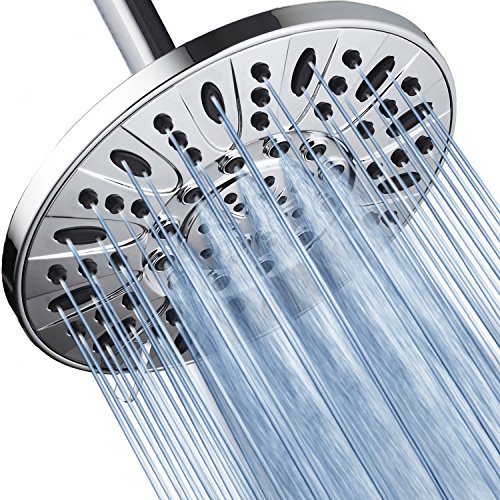
AquaDance
The AquaDance represents the entry-tier tier of this category, known for a value-focused multi-setting approach. In prose terms, what you are buying is a particular answer to the coverage-versus-focus question: how the water is gathered, shaped and delivered, and how the head behaves after months of daily use in real water rather than in a showroom. Judge it by the steadiness of its spray, the honesty of its materials and the ease of keeping its nozzles clear, because those are the qualities still visible long after the finish has stopped looking new.
Best for: shoppers who want lots of spray choice on a sensible budget tier. Not suited for: buyers who want the opposite character to the one described here, or whose enclosure, arm angle or household routine fights the format. As with every pick in this guide, treat the description as a starting point for checking the current listing in detail, confirm the exact variant and finish.
Speakman
The Speakman represents the mid-tier tier of this category, known for a hotel-shower heritage and a focused, drenching spray character. In prose terms, what you are buying is a particular answer to the coverage-versus-focus question: how the water is gathered, shaped and delivered, and how the head behaves after months of daily use in real water rather than in a showroom. Judge it by the steadiness of its spray, the honesty of its materials and the ease of keeping its nozzles clear, because those are the qualities still visible long after the finish has stopped looking new.
Best for: people who chase a strong, simple, no-nonsense rinse. Not suited for: buyers who want the opposite character to the one described here, or whose enclosure, arm angle or household routine fights the format. As with every pick in this guide, treat the description as a starting point for checking the current listing in detail, confirm the exact variant and finish.

Hansgrohe Raindance
The Hansgrohe Raindance represents the premium tier of this category, known for a wide rainfall-style face and refined European engineering. In prose terms, what you are buying is a particular answer to the coverage-versus-focus question: how the water is gathered, shaped and delivered, and how the head behaves after months of daily use in real water rather than in a showroom. Judge it by the steadiness of its spray, the honesty of its materials and the ease of keeping its nozzles clear, because those are the qualities still visible long after the finish has stopped looking new.
Best for: buyers planning a calm, rain-like everyday shower. Not suited for: buyers who want the opposite character to the one described here, or whose enclosure, arm angle or household routine fights the format. As with every pick in this guide, treat the description as a starting point for checking the current listing in detail, confirm the exact variant and finish.
Design and Build Themes Across Reviews
Reviewers forgive plain styling and punish flimsy execution, and the build details they name are consistent: threads that start cleanly without cross-threading, washers that seal without heroic force, selector mechanisms with positive, findable positions, and hoses on handhelds that drape instead of fighting. Finish durability earns mentions months into ownership, especially in hard-water homes where pale deposits test every surface. When several independent reviewers describe the same build trait in the same words, believe them; manufacturing consistency is exactly the thing individual reviewers cannot fake in aggregate.
Materials, Finishes and How a Head Ages
Shower heads are made from combinations of metal, engineered plastic and rubber-like nozzle materials, and each choice shows up later in how the head ages. Metal-bodied heads feel substantial and tend to shrug off knocks, while quality plastic bodies are lighter, which matters on longer arms and in handhelds that get lifted many times a day. The honest point is that construction quality matters more than the material label alone: a well-made plastic head with good seals will outserve a cheaply made metal one with poor threads and thin plating.
Finishes are the visible layer, and the practical advice is to match the finish family of the fittings already in the bathroom so the room reads as one set rather than a patchwork. Chrome remains the easiest finish to live with because it tolerates cleaning well and matches the widest range of existing taps and rails. Brushed and matte finishes hide water spots more gracefully between cleans, which suits busy households, while darker finishes can show pale mineral marks sooner in hard-water areas and ask for a gentler wipe-down habit. Whatever the finish, avoid abrasive pads and harsh scouring cleaners, which dull the surface long before the head itself wears out.
The nozzles deserve attention because they decide how gracefully a head handles hard water. Many designs use soft, flexible nozzle tips that let you break up early mineral deposits with a thumb rub under running water, which can postpone or even prevent the crooked, spitting jets that signal a clogged face. Rigid drilled holes can be perfectly good in soft-water homes but are less forgiving where scale builds quickly. If your kettle furs up fast, your shower head is living in the same water, and nozzle design plus a simple cleaning routine will matter more to you than almost any style decision.
Filters in Shower Heads, Described Honestly
Some shower heads include a filter stage, usually a cartridge of sediment and chlorine-taste style media sitting in the handle or the neck of the head. Described plainly, these media are there to catch grit and to reduce the chlorine character that can make shower water smell like a swimming pool, and many users say the water simply feels and smells more pleasant with one fitted. That is the honest scope of what to expect, and it is enough for the people who enjoy them. A shower filter is a comfort feature, not a treatment plant.
What a filter head should never be sold as is a device that makes water safe or strips out toxins, and this guide makes no such claim. If you have a genuine concern about what is in your water supply, the answer is proper testing and, if needed, a treatment system designed and certified for that purpose, discussed with a qualified professional. A replaceable cartridge in a shower handle is not that system, and treating it as one would be a disservice. Buy a filter head because you like how the water feels and smells, with clear eyes about what it is.
Filters also bring a running commitment that fixed heads do not: cartridges need replacing on the maker’s schedule, and a cartridge left far beyond its life can restrict flow and stop doing even its modest job. Before choosing a filter model, check how the cartridge is changed, whether replacements are easy to source, and whether the head can still be used sensibly while you wait for a spare. Households that enjoy simple routines sometimes prefer to skip the filter entirely and put the same effort into regular descaling, which addresses the problem they actually notice most, namely uneven spray.
Performance Themes: Pressure, Coverage and Rinsing
Performance comments in reviews make most sense once you separate the head from the house. A reviewer with strong supply calling a head powerful, and a reviewer with weak supply calling the same head gentle, can both be telling the truth. The useful signal is comparative: reviewers who replaced a clogged old head almost always report a dramatic improvement, which says as much about descaling as about the new model. Reviewers who compared two new heads on the same shower give the cleanest evidence, and their language about coverage and rinsing speed is the language to trust when you shortlist.
Strengths and Trade-Offs of the Category
Strengths
- Daily impact far beyond the size or cost tier of the purchase.
- A hand-fitted, reversible upgrade suitable even for renters.
- Formats and finishes to match almost any enclosure and household.
- Performance that can be protected with simple, cheap maintenance.
Trade-Offs
- Reviews are supply-dependent; your pressure may tell a different story.
- Hard water punishes neglected heads regardless of tier.
- Dual and filter models add parts, seals and consumables.
- Temperature problems belong to the valve and will survive any head swap.
Water Pressure, Flow and Honest Expectations
Every shower head works within limits set by your home, and no head can manufacture pressure that the supply does not provide. What a well-designed head can do is make the most of what arrives: shaping the nozzles and internal passages so the spray feels coherent and satisfying rather than thin and scattered. That is why two heads on the same shower arm can feel completely different, and why swapping a tired, scale-choked old head for a clean new one often feels like a pressure upgrade even though the plumbing behind the wall has not changed at all.
Most heads contain a flow restrictor, a small insert that limits how much water passes so the fitting complies with water-efficiency rules. Those rules exist for good reasons, and in many places removing a restrictor would put the installation outside local regulations. This guide does not tell you to remove one. If a shower feels weak, work through the honest causes first: mineral scale in the nozzles, a partially blocked inlet screen, an ageing head, or genuinely low supply pressure. If those checks leave you with a shower that still disappoints, talk to a plumber about the supply itself rather than defeating a compliance part.
Expectations deserve a word of their own. A new head can transform the feel of a shower, fix a spray that had become uneven, and make rinsing faster and more pleasant. It cannot fix water that arrives lukewarm because of a valve problem, it cannot add hot water capacity your heater does not have, and it cannot silence pipes or cure pressure that drops whenever another tap opens elsewhere in the house. Knowing where the head’s influence ends keeps you from blaming a good product for a plumbing issue, and from buying a second and third head to chase a problem that lives behind the wall.
Cleaning and Descaling: The Habit That Protects Everything
Mineral scale is the quiet enemy of every shower head. Water evaporates at the nozzles after each shower, leaves its minerals behind, and over weeks those deposits narrow the tiny passages until jets go crooked, some nozzles stop entirely, and the spray that once felt generous turns patchy and mean. The frustrating part is that owners often blame the head or the water pressure, when the real story is simply build-up that a basic cleaning routine would have prevented. In hard-water homes this process is faster; in soft-water homes it still happens, just more slowly.
The core method is a soak that lets a mild household acid dissolve the scale, and plain white vinegar is the classic choice because it is cheap, familiar and effective on mineral deposits. The head is removed, or bagged in place if removal is awkward, and left in contact with the vinegar long enough for the deposits to soften, then rinsed thoroughly and run under the shower so the loosened debris flushes out of the nozzles. Rinsing thoroughly matters: you want the dissolved scale and the vinegar gone, not sitting in the passages. Stubborn individual nozzles respond to a gentle rub or a soft brush, never to a metal pin forced into the opening, which can deform the nozzle and make the jet permanently crooked.
How often depends on your water. A practical approach is to clean on a schedule you set after the first signs appear, then shorten or lengthen the interval based on how the spray behaves. Wiping the face dry after showers slows build-up, and rubbing flexible nozzles with a thumb during a shower breaks up early deposits before they harden. Keep a note of when you last descaled, because spray declines so gradually that most people adapt to a mediocre shower for months before realising how much performance they have lost. A head that is cleaned on rhythm keeps the spray you paid for; a neglected premium head will eventually shower worse than a clean basic one.
How to Use Reviews Without Being Misled
Give the most weight to reviewers who describe their context: water hardness, household size, the format they replaced and how long they have owned the head. Discount first-day enthusiasm and first-day outrage equally, because both are usually about expectation rather than performance. Look for the review written months later by someone who has descaled once and still sounds pleased; that is the closest thing to your own future opinion. And when reviews conflict, ask which reviewer’s bathroom resembles yours, because that reviewer is your proxy and the others are simply reporting from different showers.
Final Verdict From the Reviews
The collective verdict of shower head reviews is reassuring: this is a category where ordinary buyers routinely succeed, provided they choose format first, respect their water, and install with care. The failures are predictable and therefore avoidable. Pick a representative model from the format that fits your life, verify its current listing in detail, fit it gently, keep it descaled, and the reviews suggest you will join the satisfied majority rather than the cautionary minority.
Further Notes From the Wider Guide
Households often inherit a shower head rather than choose one, moving into homes where the fitting was selected by a builder, a landlord or a previous owner with different water and different habits. That inheritance explains a great deal of quiet dissatisfaction: the head may be perfectly good and perfectly wrong for the people now using it. Recognising that mismatch is liberating, because it reframes the purchase. You are not declaring the old head defective; you are choosing, probably for the first time, a head that was actually selected for your enclosure, your supply and your family’s routine, and that act of choosing is where most of the improvement lives.
A word about gifts and recommendations, because shower heads travel between households as advice more often than as objects. A model that transformed a friend’s soft-water, high-pressure bathroom may behave unremarkably in your hard-water home, and both experiences are true. When someone recommends a head, ask about their water, their enclosure and what they replaced, and you will learn whether their evidence transfers to your bathroom. The same discipline applies in reverse when you recommend yours: describe your context along with your enthusiasm, and your advice becomes genuinely useful instead of merely confident.
Seasonality plays a small, real part in how a shower feels. In colder months the bathroom air is cooler, the enclosure loses heat faster, and coverage that felt generous in summer can feel marginal, because stepping partly out of the stream means stepping into noticeably colder air. In warmer months the same household may prefer a gentler, wider spray. A head with two genuinely distinct characters quietly serves both seasons, which is another argument for difference over quantity in settings: one coherent, warming spray and one soft, wide spray cover the year better than a dial crowded with near-duplicates.
If the shower is shared with someone who has sensitive skin, fragrance sensitivities or a clinician’s guidance about bathing, keep the reasoning in this guide in its proper lane. A shower head is a comfort and convenience fitting. Filter models use sediment and chlorine-taste style media that many people find more pleasant in smell and feel, and that is the whole of the claim that should be made for them. Anything touching health belongs in a conversation with a qualified professional, and any product that promises medical outcomes from a shower fitting should be set aside, however appealing its packaging looks.
Storage and spares sound mundane until the moment they are not. Keep the spare washers from the box, a roll of PTFE tape and the old head, if it still works, together in one labelled bag near the bathroom. When a joint begins to weep on a Sunday evening or a guest reports a dripping hose connection, that bag converts a small crisis into a ten-minute fix. The households that cope best with fittings are rarely the ones with the most expensive fittings; they are the ones who can lay a hand on a washer and a roll of tape without a search party.
Do not overlook the shower arm itself when you assess the whole fitting. An arm angled oddly, positioned very low, or showing corrosion at its threads sets limits that no head can fully overcome, because the head can only deliver water from where the arm places it. Sometimes the highest-value change in the bathroom is an arm or bracket adjustment made alongside the head, done carefully and within the limits of a home job. Judge the assembly as a system, head, arm, bracket, hose and valve each doing their own job, and the system will usually tell you plainly which part deserves attention next.
Patterns Across Shower Head Listings Worth Verifying Yourself
Reading across many shower head listings and owner reports, the same patterns surface again and again, and they are more useful than any single verdict. This section gathers those recurring signals, explains what each one usually means in practice, and shows how to verify the important ones against the specific listing you are considering.
Across owner reports on the shower head, praise clusters in a predictable place: households whose routine centres on daily showers with the spray pattern and pressure you prefer are consistently the happiest, and their reviews read almost boringly satisfied. Complaints cluster just as predictably around fit, which is why the first pattern to check in any listing is whether it states clearly the facts behind the head size and spray settings against your shower space and water pressure. Vague dimensions in a listing correlate with disappointed reviews more than any design flaw does.
The second pattern is the slow complaint. Early reviews glow; the criticisms that arrive months later describe spray turning uneven because mineral deposits are blocking individual nozzles. When you read reviews, sort mentally by ownership length rather than enthusiasm, and give extra weight to anyone describing the upkeep honestly, because soaking the head to dissolve limescale and wiping nozzles to keep the pattern even. Reports that mention a model like Delta In2ition holding up after a year of regular use tell you more than a dozen five-line first impressions.
The third pattern is mismatch, not malfunction. Owners who checked compatibility in advance, meaning the fitting thread, arm angle and whether a hose or fixed mount suits your routine, rarely report the product failing them, while owners who assumed it would fit their setup supply most of the one-paragraph horror stories. Use reviews, then, as a checklist of things to verify on your chosen listing, and run the edge case early yourself: low household water pressure, which changes which spray designs feel satisfying. Verified against your own home, the crowd consensus becomes a reliable guide instead of background noise.
A Final Decision Checklist
- In listings, look first for clear statements behind the head size and spray settings against your shower space and water pressure; vagueness here predicts complaints.
- In owner reports, weight long-term posts describing how spray turning uneven because mineral deposits are blocking individual nozzles developed.
- Treat upkeep reports as data, because soaking the head to dissolve limescale and wiping nozzles to keep the pattern even is where ownership verdicts are decided.
- Cross-check compatibility claims, since the fitting thread, arm angle and whether a hose or fixed mount suits your routine is the mismatch owners report most.
- Verify the edge case yourself rather than trusting reviews, because low household water pressure, which changes which spray designs feel satisfying.
- Write down your two most frequent uses and search reviews from owners with the same ones.
- Keep packaging and paperwork until your own first week confirms the consensus.
- Photograph the setup once it works well, so you can compare it with review photographs later.
- Search owner reports for the footprint with tape on the floor for a day if space is tight, and live around the outline first.
- Cross-check the fit again after a week of real use, when the head size and spray settings against your shower space and water pressure can be judged against experience rather than hope.
Frequently Asked Questions
How long should a good shower head last?
A well-made head, cleaned on a sensible rhythm, should serve for years of daily showers. Lifespan is decided less by the calendar than by water quality and care: hard water left to crust the nozzles, harsh cleaners on the finish and forced, overtightened fittings shorten life far more than ordinary use does. Expect to replace washers and descale periodically, and treat a gradual decline in spray as a maintenance signal first and a replacement signal only after cleaning has been tried properly.
Can I change a shower head myself?
In most homes, yes. The head unscrews from the shower arm by hand, the threads are cleaned, fresh PTFE tape is wrapped on, and the new head is fitted hand-tight plus a small extra turn. Flush the arm briefly before fitting so debris does not enter the new head. The jobs that justify a plumber are damaged arms, non-standard old fittings, leaks that persist after re-taping, and any work on the valve behind the wall, which is a different and more serious undertaking.
Why does my shower feel weak even with a new head?
Work through the causes in order. Mineral scale may already be limiting an older head, but on a new head check the inlet screen for debris flushed from the arm, confirm nothing is trapped in the fitting, and consider the home supply itself, especially if every outlet feels weak or pressure falls when other taps run. Remember that scald protection and temperature stability live in the mixing valve, not the head, and persistent supply problems are a plumber conversation rather than a reason to keep swapping heads.
Do filter shower heads make water safe?
No, and any seller implying that should be treated with caution. Filter heads use sediment and chlorine-taste style media that can make water smell and feel more pleasant, which is a legitimate comfort benefit. They are not treatment systems and do not make water safe. If you have a real concern about your supply, arrange proper testing and, if needed, a certified treatment solution with professional advice, rather than relying on a replaceable cartridge in a shower handle.
How often should I descale a shower head?
Let your water decide. In a hard-water home, visible spray changes can appear within a couple of months; in soft water, the interval can be far longer. A practical method is to note when jets first go crooked or a nozzle stops, clean thoroughly, and then set a repeating reminder a little shorter than that interval. Wiping the face and rubbing flexible nozzles during showers stretches the time between deep cleans considerably, whatever your water is like.
Should I remove the flow restrictor for a stronger shower?
This guide does not recommend it. Restrictors exist so fittings comply with water-efficiency rules, and removing one may breach local regulations where you live, so check the rules that apply to your home before even considering it. More importantly, a weak-feeling shower usually has another cause, from scale and blocked screens to supply pressure, and those causes deserve diagnosis first. A head chosen well for your supply will feel satisfying within the rules.
Related Guides
Related reading: the full shower head review
Related reading: the shower head buying guide
Related reading: shower head pros and cons in full
Related reading: whether a shower head is worth it
Related reading: the bath mat buying guide
Related reading: how to clean a bath mat
Related reading: the best shower heads already tested on this site
Related reading: rainfall shower heads compared
Related reading: dual shower head systems
Related reading: how to choose a bath mat
More Practical Notes Before You Decide
Noise is an underrated part of shower quality. A head that whistles, chatters or hums at certain settings will grate every single day, and the cause is usually water moving through passages that do not suit the supply pressure in that home. Because noise is so specific to the pairing of head and plumbing, it is hard to predict from a description, which is another reason to buy from sellers with straightforward returns. A quiet, even hiss of water is what you want; anything musical should be treated as a mismatch, not a personality trait.
Consider also who cleans the bathroom, and be honest about it. A wide rainfall face with many nozzles is a pleasure under the water and a longer wipe-down above it. A compact head with flexible nozzles can be refreshed with a thumb rub in seconds. Neither choice is wrong, but choosing the elaborate option while knowing the cleaning will not happen is how good heads end up performing badly within a year. Match the maintenance the head wants to the maintenance your household will genuinely give it, and the product will seem better made than it is.
Renters have a special version of this decision, and it is a favourable one. Because a shower head unscrews by hand in most homes, it is one of the few bathroom upgrades a renter can make, enjoy daily, and reverse completely on moving day by refitting the original head. Keep the old head in a labelled bag, keep the landlord’s fitting exactly as found, and the upgrade costs nothing in goodwill. For a rental bathroom with a tired, clogged original head, this single swap is often the highest-impact change available anywhere in the property.
Households with children think about a shower head differently again. A handheld that a parent can lift down makes hair washing calmer, turns rinsing a reluctant toddler into a game rather than a struggle, and helps wash the tub itself after bath paint and bubbles have done their work. A fixed head asks the child to adapt to the water; a handheld lets the water adapt to the child. That difference, repeated every evening, is why so many family bathrooms end up dual or handheld even when the adults personally prefer a simple fixed spray.
Older relatives and anyone recovering from an injury bring the same logic into sharper focus. Standing balance, reach and grip all argue for water that can be brought close, at a chosen height, without stretching toward a fixed stream. A slide rail or a well-placed bracket, a hose with easy drape, and a head that is light enough to hold comfortably matter more in that bathroom than any spray novelty. Choosing with that user in mind is not a niche consideration; it is designing the shower for the years when it will matter most.
Water saving and shower quality are often presented as enemies, and they do not have to be. A head that shapes its spray well can feel generous while using water responsibly, because satisfaction comes from coverage and coherence more than from sheer volume. The genuinely wasteful shower is the long one spent under a patchy, unsatisfying spray, rinsing twice because the first pass did not work. Judge a head by how completely it does its job per shower, and let the efficiency engineering do its quiet work in the background, as it was designed to.
One more angle worth weighing is how the shower fits the rhythm of the household rather than any single user. A bathroom that serves a rushed weekday queue needs a head that reaches a satisfying spray the moment the water runs, rinses quickly and does not demand fiddling with settings at dawn. The same bathroom on a weekend may host long, unhurried showers where coverage and calm matter more. A head with a small number of genuinely distinct settings serves both rhythms well, whereas a head crowded with near-identical settings tends to be left on one and judged by it alone.
Guests reveal truths about a shower that owners stop noticing. If visitors emerge mentioning the shower unprompted, the head is doing something right; if they quietly take shorter showers than they do at home, something about coverage, temperature stability or spray quality is off. When you replace a head, pay attention in the first fortnight, while the contrast with the old one is still vivid. That is when you learn whether the change solved the real complaint or merely replaced one compromise with another, and it is the easiest time to adjust angle, height or bracket position.
Noise is an underrated part of shower quality. A head that whistles, chatters or hums at certain settings will grate every single day, and the cause is usually water moving through passages that do not suit the supply pressure in that home. Because noise is so specific to the pairing of head and plumbing, it is hard to predict from a description, which is another reason to buy from sellers with straightforward returns. A quiet, even hiss of water is what you want; anything musical should be treated as a mismatch, not a personality trait.
Consider also who cleans the bathroom, and be honest about it. A wide rainfall face with many nozzles is a pleasure under the water and a longer wipe-down above it. A compact head with flexible nozzles can be refreshed with a thumb rub in seconds. Neither choice is wrong, but choosing the elaborate option while knowing the cleaning will not happen is how good heads end up performing badly within a year. Match the maintenance the head wants to the maintenance your household will genuinely give it, and the product will seem better made than it is.
Renters have a special version of this decision, and it is a favourable one. Because a shower head unscrews by hand in most homes, it is one of the few bathroom upgrades a renter can make, enjoy daily, and reverse completely on moving day by refitting the original head. Keep the old head in a labelled bag, keep the landlord’s fitting exactly as found, and the upgrade costs nothing in goodwill. For a rental bathroom with a tired, clogged original head, this single swap is often the highest-impact change available anywhere in the property.
Households with children think about a shower head differently again. A handheld that a parent can lift down makes hair washing calmer, turns rinsing a reluctant toddler into a game rather than a struggle, and helps wash the tub itself after bath paint and bubbles have done their work. A fixed head asks the child to adapt to the water; a handheld lets the water adapt to the child. That difference, repeated every evening, is why so many family bathrooms end up dual or handheld even when the adults personally prefer a simple fixed spray.
Older relatives and anyone recovering from an injury bring the same logic into sharper focus. Standing balance, reach and grip all argue for water that can be brought close, at a chosen height, without stretching toward a fixed stream. A slide rail or a well-placed bracket, a hose with easy drape, and a head that is light enough to hold comfortably matter more in that bathroom than any spray novelty. Choosing with that user in mind is not a niche consideration; it is designing the shower for the years when it will matter most.
Water saving and shower quality are often presented as enemies, and they do not have to be. A head that shapes its spray well can feel generous while using water responsibly, because satisfaction comes from coverage and coherence more than from sheer volume. The genuinely wasteful shower is the long one spent under a patchy, unsatisfying spray, rinsing twice because the first pass did not work. Judge a head by how completely it does its job per shower, and let the efficiency engineering do its quiet work in the background, as it was designed to.


