Disclosure: As an Amazon Associate, airfryerkitchensupply.com earns from qualifying purchases. Links on this page are affiliate links; they cost you nothing extra. Prices and availability change often, so check the current Amazon listing before you buy.
A shower head buying guide should save you from the two classic errors: buying a format your bathroom cannot use well, and paying for features your water will quietly disable. This shower head buying guide works through types, criteria and household profiles in plain language, names representative models at qualitative tiers, and ends with the setup and care essentials that keep a good purchase performing like one.
Key Takeaways
- Decide format first: fixed, handheld, rainfall or dual shapes daily life more than any model detail.
- Match nozzle design and maintenance appetite to your water hardness.
- Check enclosure size, arm angle and user heights before ordering anything.
- Scald safety belongs to the mixing valve; spend head money on spray, coverage and convenience.
In this guide
What a Shower Head Does and the Main Types
Fixed Heads
The fixed head is the category’s baseline: mounted on the arm, simple to fit, simple to clean, and entirely sufficient for a straightforward shower in a smaller enclosure. Its virtues compound quietly over years because there is so little to go wrong. Choose it when one or two users share a conventional routine and nobody needs the water brought to them. Avoid assuming it is the basic option in a dismissive sense; in the right bathroom it is the correct option, and money saved here is not money wasted elsewhere, it is money not spent at all.
Handheld Heads
A handheld adds a hose, a bracket and a new set of abilities: rinsing people who cannot stand under a fixed stream, washing children and pets, cleaning the enclosure, and targeting water precisely. It suits families, seated showering and anyone who cleans the bathroom with the shower itself. The buying checks are the dock’s grip, the hose’s drape and the head’s weight in a wet hand. Households that adopt a handheld rarely return to fixed-only life, which tells you the convenience is real rather than a novelty that fades.
Rainfall Heads
Rainfall heads trade direction for atmosphere: a wide face, water falling in a soft sheet, and a calmer, quieter shower. They need room, a suitable arm so the face sits level, and a user who enjoys gentle coverage more than a purposeful jet. Rinsing takes a touch longer and the face asks a little more cleaning, which are fair prices for the experience when it is genuinely wanted. Bought for looks alone in a small enclosure, a rainfall head is the category’s most common regret, so let the room vote before the catalogue does.
Dual and Combination Systems
Dual designs pair a fixed or rainfall head with a handheld, usually with a diverter to run either or both. They are the household-compromise format: overhead calm for one user, flexible practicality for another, and no arguments. The costs are more seals, more surfaces and a busier fitting, plus a diverter control that must stay easy to turn as scale builds. For mixed households they are often the wisest money in the category, provided the cleaning rhythm in the home can keep the extra parts sweet.
Shower Head Buying Guide: Top Picks at a Glance

Delta In2ition
The Delta In2ition represents the mid-tier tier of this category, known for a two-in-one design that combines a fixed head with a detachable handheld. In prose terms, what you are buying is a particular answer to the coverage-versus-focus question: how the water is gathered, shaped and delivered, and how the head behaves after months of daily use in real water rather than in a showroom. Judge it by the steadiness of its spray, the honesty of its materials and the ease of keeping its nozzles clear, because those are the qualities still visible long after the finish has stopped looking new.
Best for: families who want one fitting to serve two jobs. Not suited for: buyers who want the opposite character to the one described here, or whose enclosure, arm angle or household routine fights the format. As with every pick in this guide, treat the description as a starting point for checking the current listing in detail, confirm the exact variant and finish.

Moen Magnetix
The Moen Magnetix represents the premium-leaning tier of this category, known for a magnetic-docking handheld design. In prose terms, what you are buying is a particular answer to the coverage-versus-focus question: how the water is gathered, shaped and delivered, and how the head behaves after months of daily use in real water rather than in a showroom. Judge it by the steadiness of its spray, the honesty of its materials and the ease of keeping its nozzles clear, because those are the qualities still visible long after the finish has stopped looking new.
Best for: households that want a handheld that parks itself neatly. Not suited for: buyers who want the opposite character to the one described here, or whose enclosure, arm angle or household routine fights the format. As with every pick in this guide, treat the description as a starting point for checking the current listing in detail, confirm the exact variant and finish.

Hansgrohe Raindance
The Hansgrohe Raindance represents the premium tier of this category, known for a wide rainfall-style face and refined European engineering. In prose terms, what you are buying is a particular answer to the coverage-versus-focus question: how the water is gathered, shaped and delivered, and how the head behaves after months of daily use in real water rather than in a showroom. Judge it by the steadiness of its spray, the honesty of its materials and the ease of keeping its nozzles clear, because those are the qualities still visible long after the finish has stopped looking new.
Best for: buyers planning a calm, rain-like everyday shower. Not suited for: buyers who want the opposite character to the one described here, or whose enclosure, arm angle or household routine fights the format. As with every pick in this guide, treat the description as a starting point for checking the current listing in detail, confirm the exact variant and finish.
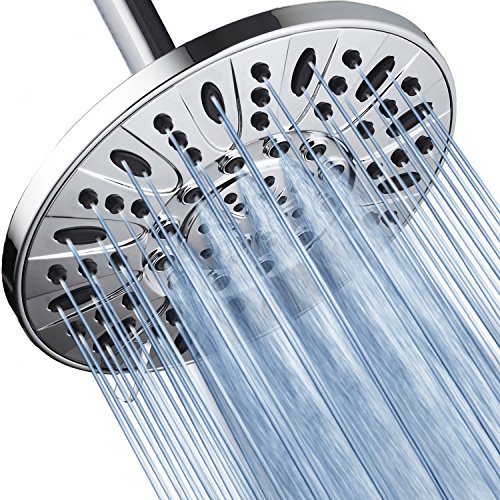
AquaDance
The AquaDance represents the entry-tier tier of this category, known for a value-focused multi-setting approach. In prose terms, what you are buying is a particular answer to the coverage-versus-focus question: how the water is gathered, shaped and delivered, and how the head behaves after months of daily use in real water rather than in a showroom. Judge it by the steadiness of its spray, the honesty of its materials and the ease of keeping its nozzles clear, because those are the qualities still visible long after the finish has stopped looking new.
Best for: shoppers who want lots of spray choice on a sensible budget tier. Not suited for: buyers who want the opposite character to the one described here, or whose enclosure, arm angle or household routine fights the format. As with every pick in this guide, treat the description as a starting point for checking the current listing in detail, confirm the exact variant and finish.
Temperature Safety Lives in the Valve, Not the Head
It is worth stating plainly, because marketing sometimes blurs it: protection against scalding lives in the mixing valve behind the wall, not in the shower head. The head delivers whatever mixture the valve sends it. A thermostatic or pressure-balancing valve is the fitting that reacts when a toilet flushes or a tap opens elsewhere and keeps the delivered temperature steady. If your shower swings hot and cold when other water runs in the house, the head is not the culprit and a new head will not be the cure; the valve and the supply are where a plumber will look.
This matters for buying decisions because it stops you paying for the wrong fix. Spend on a head for spray quality, coverage, convenience and ease of cleaning. Look to the valve, and to professional advice, for temperature stability and safety, especially in homes with children or older relatives who react more slowly to a sudden change. Many valve and trim ranges are designed so the visible trim and the head can be chosen to match in finish, which lets you solve the safety question and the style question in one coherent set without confusing the two jobs.
A related honesty point concerns temperature displays and similar novelties sometimes built into heads. A readout can be convenient, but it reports the water arriving at the head; it does not control it, and it is not a safety device. Treat such features as information, enjoy them if they suit you, and keep the real safety conversation with the valve where it belongs. Clear thinking about which part does which job is the difference between a bathroom that merely looks upgraded and one that actually works better in every respect that counts.
Sizing, Reach and Fitting the Shower You Actually Have
Before falling for any head, look at the enclosure you actually have. Measure roughly how far the shower arm reaches into the space, how high it sits, and how much room there is for a wider face or a handheld on its hose. A broad rainfall face in a compact enclosure can leave you standing closer to the wall than you expect, while a modest fixed head in a large walk-in can feel lost. The right size is the one that puts comfortable, even coverage where you stand, not the largest face that will physically fit through the door.
Height deserves its own check, especially in households with tall and short users sharing one shower. A head mounted too low forces taller users to stoop, and a handheld on a slide rail solves this elegantly by letting each person set the height in seconds. Where a slide rail is not practical, an adjustable bracket or a dual design can offer some of the same flexibility. Think about who uses the shower with limited reach or from a seated position as well; for them, a handheld that can be brought down and used comfortably is not a luxury but the difference between independence and assistance.
Also check the humble details: the thread on your shower arm is a standard fitting in most homes, which is why head swaps are famously simple, but older or imported fittings occasionally differ, and an adaptor conversation with the supplier is cheaper than a forced fit. Look at the angle of the arm, too. A strongly angled arm suits a conventional head; a rainfall face usually wants to sit level, which may mean a different arm. None of this is difficult, but five minutes with a tape measure and a phone photo of your current fitting prevents the most common buying mistake in this category, which is ordering a head that fights the room instead of fitting it.
How Much Coverage Do You Actually Need?
Coverage is a geometry question disguised as a luxury question. Stand where you shower and consider the width of comfortable water you want across your shoulders, then compare it honestly with the enclosure. In a compact cubicle, a modest face already covers you because there is nowhere else for you to stand. In a wide walk-in, the same face leaves cold margins. Bigger is only better when the room and the supply support it: a very wide face on a weak supply spreads the same water thinner, which can feel less satisfying than a smaller, coherent spray. Buy coverage for your cubicle, not for a photograph.
How Much Should Settings Matter to You?
Settings matter when they are genuinely different and genuinely used. A focused rinse, a wide everyday spray and perhaps a gentle option cover almost every real need, and most households live on one favourite with occasional visits to a second. Long lists of settings mostly add mechanism, and mechanism in hard water is maintenance. Ask of any model: can I change settings with wet, soapy hands, do the positions feel distinct, and would I notice if half of them vanished? If the honest answers are no, maybe, and no, choose the simpler head and spend the difference nowhere at all.
What Does Your Water Demand From the Design?
Your water is a specification, whether or not it appears on any box. Hard water argues for flexible nozzles you can rub clear, simple selectors, finishes that tolerate frequent gentle cleaning, and a descale routine you will actually keep. Soft water forgives almost any design, which frees you to choose on experience alone. Filter models belong in this conversation as a comfort choice about smell and feel, using sediment and chlorine-taste style media, never as a promise about safety. Read your kettle, your taps and your current head’s face; they have already written the water section of your buying brief.
Understanding Spray Patterns and What They Actually Feel Like
A spray pattern is simply the shape the water takes between the face of the head and your shoulders, and it matters more than almost any other feature because you feel it every single day. A concentrated pattern gathers the water into a narrower, more purposeful stream that is good at rinsing shampoo from thick hair and at blasting soap off skin quickly. A wide pattern spreads the same water across a broader area, which feels gentler and more enveloping but can feel less forceful in a home where the supply pressure is already modest. Neither is better in the abstract; they answer different preferences, and the honest test is how you actually shower rather than how a feature list reads.
Many modern heads let you move between patterns with a lever, a dial or a rotating face, and that flexibility is genuinely useful in a shared bathroom. One person may want the focused setting for a fast morning rinse while another wants the wide setting for a slower evening shower, and a head that serves both avoids a compromise nobody loves. The trade-off is mechanical: every moving selector is a part that can stiffen as mineral scale builds up inside it, especially in hard-water homes. If you live with hard water, a simpler head with fewer moving parts, cleaned regularly, often outlasts a complicated one that is neglected.
It also helps to separate spray pattern from spray pressure in your mind, because the two are often confused. Pressure is about how forcefully the water arrives, and that depends heavily on your home supply and on the internal design of the head. Pattern is about distribution. A head can feel weak because the pattern is very wide even when the supply behind it is healthy, and another can feel strong because it concentrates a modest supply into a smaller area. When you read descriptions, look for language about how the water is distributed, and treat raw pressure claims with calm scepticism until the head is on your own shower arm.
Water Pressure, Flow and Honest Expectations
Every shower head works within limits set by your home, and no head can manufacture pressure that the supply does not provide. What a well-designed head can do is make the most of what arrives: shaping the nozzles and internal passages so the spray feels coherent and satisfying rather than thin and scattered. That is why two heads on the same shower arm can feel completely different, and why swapping a tired, scale-choked old head for a clean new one often feels like a pressure upgrade even though the plumbing behind the wall has not changed at all.
Most heads contain a flow restrictor, a small insert that limits how much water passes so the fitting complies with water-efficiency rules. Those rules exist for good reasons, and in many places removing a restrictor would put the installation outside local regulations. This guide does not tell you to remove one. If a shower feels weak, work through the honest causes first: mineral scale in the nozzles, a partially blocked inlet screen, an ageing head, or genuinely low supply pressure. If those checks leave you with a shower that still disappoints, talk to a plumber about the supply itself rather than defeating a compliance part.
Expectations deserve a word of their own. A new head can transform the feel of a shower, fix a spray that had become uneven, and make rinsing faster and more pleasant. It cannot fix water that arrives lukewarm because of a valve problem, it cannot add hot water capacity your heater does not have, and it cannot silence pipes or cure pressure that drops whenever another tap opens elsewhere in the house. Knowing where the head’s influence ends keeps you from blaming a good product for a plumbing issue, and from buying a second and third head to chase a problem that lives behind the wall.
How to Prioritise by Use Case
The Busy Family Bathroom
Prioritise a handheld or dual format, a dock that cannot drop its head, settings a child can manage, and nozzles that forgive missed cleans. Durability of the everyday mechanism outranks spray novelty, because this shower works several times a day for users who will not baby it. A mid-tier model chosen on those grounds will outserve a premium model chosen for its brochure.
The Calm Retreat Bathroom
Prioritise coverage and atmosphere: a rainfall or wide-face design, a finish that suits unhurried cleaning, and an arm arrangement that puts the water exactly overhead. This buyer showers for restoration, so coherence and quiet matter more than a forceful jet. Confirm the enclosure dimensions twice, because atmosphere depends on geometry more than on any single product.
The Practical Rental Upgrade
Prioritise reversibility and value: a handheld or fixed head that fits by hand in minutes, transforms a tired original, and can be removed cleanly at the end of the tenancy with the landlord’s head refitted. Keep every original part labelled. This is the highest-impact, lowest-risk upgrade in the rental home, and it needs no permission-shaped hole in a wall to achieve it.
First Setup and Care Essentials
Fit the new head on clean threads with fresh PTFE tape, after flushing the arm, and tighten hand-tight plus a small extra turn rather than forcing it. Run every setting, check the joint with a dry hand, and seat handhelds properly in their docks. Then start the care rhythm immediately: wipe the face, rub flexible nozzles during showers, and descale on a schedule set by your water. The first month sets the pattern; a head maintained from new stays easy to maintain, while a head neglected from new becomes a project.
Mistakes to Avoid
Avoid buying a head to cure temperature swings, which belong to the valve. Avoid defeating the flow restrictor, which exists for water-rule compliance and may breach local regulations if removed. Avoid overtightening, which cracks plastic threads and fittings. Avoid judging by setting counts, photograph widths or pressure promises detached from your supply. And avoid skipping the tape-measure stage: enclosure, arm angle and user heights are knowable facts, and ignoring knowable facts is the only truly expensive mistake in this category.
Further Notes From the Wider Guide
If the shower is shared with someone who has sensitive skin, fragrance sensitivities or a clinician’s guidance about bathing, keep the reasoning in this guide in its proper lane. A shower head is a comfort and convenience fitting. Filter models use sediment and chlorine-taste style media that many people find more pleasant in smell and feel, and that is the whole of the claim that should be made for them. Anything touching health belongs in a conversation with a qualified professional, and any product that promises medical outcomes from a shower fitting should be set aside, however appealing its packaging looks.
Storage and spares sound mundane until the moment they are not. Keep the spare washers from the box, a roll of PTFE tape and the old head, if it still works, together in one labelled bag near the bathroom. When a joint begins to weep on a Sunday evening or a guest reports a dripping hose connection, that bag converts a small crisis into a ten-minute fix. The households that cope best with fittings are rarely the ones with the most expensive fittings; they are the ones who can lay a hand on a washer and a roll of tape without a search party.
Do not overlook the shower arm itself when you assess the whole fitting. An arm angled oddly, positioned very low, or showing corrosion at its threads sets limits that no head can fully overcome, because the head can only deliver water from where the arm places it. Sometimes the highest-value change in the bathroom is an arm or bracket adjustment made alongside the head, done carefully and within the limits of a home job. Judge the assembly as a system, head, arm, bracket, hose and valve each doing their own job, and the system will usually tell you plainly which part deserves attention next.
Finally, remember that satisfaction in this category tends to be quiet. Nobody throws a celebration for a shower head; they simply stop thinking about the shower as a problem, which is the highest praise a daily fitting can earn. If, a month after your decision, the shower has disappeared from your list of household irritations, the choice was right regardless of tier, brand or setting count. Aim for that disappearance. It is a more reliable target than any specification, and every step in this guide, from diagnosis to descaling rhythm, exists to get you there.
One more practical lens is the viewpoint of the person who will eventually remove this head again. Fittings installed gently, on clean threads with fresh tape, come away in minutes years later, whether the next hands belong to you, a family member or a plumber doing other work. Fittings forced on with maximum torque announce themselves at removal with damaged threads and bad tempers. Installing with the future removal in mind is a small act of craftsmanship available to absolutely anyone, and it costs nothing beyond resisting the urge to give the wrench one more turn.
Water temperature behaviour deserves one final clarification because it generates so much confusion in this category. The head is the last and least influential part of the temperature story. The heater decides how much hot water exists, the mixing valve decides the blend delivered, and the head merely presents the result. When the result displeases you, work backwards along that chain with the right help rather than forwards into repeated head purchases. A household that understands this chain spends its money once, in the right place, and then enjoys the shower instead of investigating it.
Think about the first shower of the day as the honest test of any decision in this category. Nobody stands in a morning shower conducting an experiment; they notice, in passing, whether the water rinses the shampoo out without a second effort, whether their shoulders stay warm without turning, and whether the settings they reach for are the ones the head actually offers easily. A choice that passes that half-awake test will be praised in this house for years, and a choice that fails it will be quietly resented every single day, which is why the unglamorous criteria in this guide outrank every novelty. When two options seem equal on paper, pick the one that will behave better at dawn, with wet hands and no patience, because that is the user you actually are most of the time.
There is a useful habit to borrow from careful tradespeople: change one thing at a time and observe. If you descale, change format and adjust the bracket in the same weekend, you will never know which change earned the improvement, and you will misjudge the next purchase accordingly. Clean first and live with the result for a few showers. Then change the head if the complaint survives, and live with that before adding anything else. This patience sounds slow, but it is the fastest route to a bathroom that genuinely works, because every step is diagnosed rather than guessed, and money is only spent at the exact point where evidence says it will help.
Consider the sound and feel of the water as information, not just sensation. A spray that arrives as a soft, even hiss is usually moving through passages that suit it, while sputtering, spitting or a pattern that pulses often points to trapped air after a fitting change, debris at the inlet screen, or deposits breaking up inside the nozzles. After any installation or deep clean, give the shower a few full runs before judging it, because air clears and loosened scale flushes out. Judging in the first thirty seconds condemns many good fittings; judging after a week of ordinary use almost never does.
Households often inherit a shower head rather than choose one, moving into homes where the fitting was selected by a builder, a landlord or a previous owner with different water and different habits. That inheritance explains a great deal of quiet dissatisfaction: the head may be perfectly good and perfectly wrong for the people now using it. Recognising that mismatch is liberating, because it reframes the purchase. You are not declaring the old head defective; you are choosing, probably for the first time, a head that was actually selected for your enclosure, your supply and your family’s routine, and that act of choosing is where most of the improvement lives.
A word about gifts and recommendations, because shower heads travel between households as advice more often than as objects. A model that transformed a friend’s soft-water, high-pressure bathroom may behave unremarkably in your hard-water home, and both experiences are true. When someone recommends a head, ask about their water, their enclosure and what they replaced, and you will learn whether their evidence transfers to your bathroom. The same discipline applies in reverse when you recommend yours: describe your context along with your enthusiasm, and your advice becomes genuinely useful instead of merely confident.
Seasonality plays a small, real part in how a shower feels. In colder months the bathroom air is cooler, the enclosure loses heat faster, and coverage that felt generous in summer can feel marginal, because stepping partly out of the stream means stepping into noticeably colder air. In warmer months the same household may prefer a gentler, wider spray. A head with two genuinely distinct characters quietly serves both seasons, which is another argument for difference over quantity in settings: one coherent, warming spray and one soft, wide spray cover the year better than a dial crowded with near-duplicates.
If the shower is shared with someone who has sensitive skin, fragrance sensitivities or a clinician’s guidance about bathing, keep the reasoning in this guide in its proper lane. A shower head is a comfort and convenience fitting. Filter models use sediment and chlorine-taste style media that many people find more pleasant in smell and feel, and that is the whole of the claim that should be made for them. Anything touching health belongs in a conversation with a qualified professional, and any product that promises medical outcomes from a shower fitting should be set aside, however appealing its packaging looks.
Before You Commit: A Shower Head Fit and Compatibility Checklist
A buying guide earns its keep in the last ten minutes before you order, when broad advice has to become a yes or no for one specific home. Use this section as that final pass for a shower head: it turns the criteria covered earlier into checks you can physically make, in order, so the version you choose fits your space, your habits and the other items it has to work alongside.
Work through fit before features, in this exact order. First confirm the head size and spray settings against your shower space and water pressure; write the numbers down, because memory rounds measurements in the direction of the product you already want. Then settle compatibility in plain terms: the fitting thread, arm angle and whether a hose or fixed mount suits your routine. Only once both pass should you compare the shortlist, and when a listing names a model such as Delta In2ition, confirm the exact variant and included parts on that listing rather than assuming every version is identical.
Now price the decision in effort rather than money. The upkeep reality is simple: soaking the head to dissolve limescale and wiping nozzles to keep the pattern even. If that routine fits a habit you already keep, ownership will feel easy; if it demands a new ritual you know you will skip, the shower head will age badly no matter how well it scores elsewhere. The same honesty applies to storage, setup time and the person who will actually do the cleaning, whose opinion deserves the casting vote.
Close the decision with the hardest test, not the easiest: low household water pressure, which changes which spray designs feel satisfying. If the shower head you favour handles that case and your two most frequent uses comfortably, stop researching and buy it. If it fails either test, walk away even from an attractive offer, because you will re-live that failure every time the situation repeats, long after the saving is forgotten.
A Final Decision Checklist
- Start the shortlist with size: confirm the head size and spray settings against your shower space and water pressure before comparing any features.
- Then settle fit with what you already own: the fitting thread, arm angle and whether a hose or fixed mount suits your routine.
- Ask how it fails before how it shines: the usual story is spray turning uneven because mineral deposits are blocking individual nozzles.
- Check the upkeep suits your routine, since soaking the head to dissolve limescale and wiping nozzles to keep the pattern even.
- End with the hardest regular test, because low household water pressure, which changes which spray designs feel satisfying.
- Judge finalists against your two most frequent uses, written down, not against occasional ones.
- Keep packaging and paperwork until a full week of real use has passed without a problem.
- Photograph the setup once it works well, so you can restore it after cleaning or rearranging.
- Verify the fit again after a week of real use, when the head size and spray settings against your shower space and water pressure can be judged against experience rather than hope.
- Write down and check the upkeep into an existing routine, because soaking the head to dissolve limescale and wiping nozzles to keep the pattern even only happens reliably when it rides on a habit.
Frequently Asked Questions
How long should a good shower head last?
A well-made head, cleaned on a sensible rhythm, should serve for years of daily showers. Lifespan is decided less by the calendar than by water quality and care: hard water left to crust the nozzles, harsh cleaners on the finish and forced, overtightened fittings shorten life far more than ordinary use does. Expect to replace washers and descale periodically, and treat a gradual decline in spray as a maintenance signal first and a replacement signal only after cleaning has been tried properly.
Can I change a shower head myself?
In most homes, yes. The head unscrews from the shower arm by hand, the threads are cleaned, fresh PTFE tape is wrapped on, and the new head is fitted hand-tight plus a small extra turn. Flush the arm briefly before fitting so debris does not enter the new head. The jobs that justify a plumber are damaged arms, non-standard old fittings, leaks that persist after re-taping, and any work on the valve behind the wall, which is a different and more serious undertaking.
Why does my shower feel weak even with a new head?
Work through the causes in order. Mineral scale may already be limiting an older head, but on a new head check the inlet screen for debris flushed from the arm, confirm nothing is trapped in the fitting, and consider the home supply itself, especially if every outlet feels weak or pressure falls when other taps run. Remember that scald protection and temperature stability live in the mixing valve, not the head, and persistent supply problems are a plumber conversation rather than a reason to keep swapping heads.
Do filter shower heads make water safe?
No, and any seller implying that should be treated with caution. Filter heads use sediment and chlorine-taste style media that can make water smell and feel more pleasant, which is a legitimate comfort benefit. They are not treatment systems and do not make water safe. If you have a real concern about your supply, arrange proper testing and, if needed, a certified treatment solution with professional advice, rather than relying on a replaceable cartridge in a shower handle.
How often should I descale a shower head?
Let your water decide. In a hard-water home, visible spray changes can appear within a couple of months; in soft water, the interval can be far longer. A practical method is to note when jets first go crooked or a nozzle stops, clean thoroughly, and then set a repeating reminder a little shorter than that interval. Wiping the face and rubbing flexible nozzles during showers stretches the time between deep cleans considerably, whatever your water is like.
Should I remove the flow restrictor for a stronger shower?
This guide does not recommend it. Restrictors exist so fittings comply with water-efficiency rules, and removing one may breach local regulations where you live, so check the rules that apply to your home before even considering it. More importantly, a weak-feeling shower usually has another cause, from scale and blocked screens to supply pressure, and those causes deserve diagnosis first. A head chosen well for your supply will feel satisfying within the rules.
Related Guides
Related reading: the full shower head review
Related reading: our shower head reviews roundup
Related reading: shower head pros and cons in full
Related reading: whether a shower head is worth it
Related reading: the bath mat buying guide
Related reading: how to clean a bath mat
Related reading: the best shower heads already tested on this site
Related reading: rainfall shower heads compared
Related reading: dual shower head systems
Related reading: how to choose a bath mat
More Practical Notes Before You Decide
Renters have a special version of this decision, and it is a favourable one. Because a shower head unscrews by hand in most homes, it is one of the few bathroom upgrades a renter can make, enjoy daily, and reverse completely on moving day by refitting the original head. Keep the old head in a labelled bag, keep the landlord’s fitting exactly as found, and the upgrade costs nothing in goodwill. For a rental bathroom with a tired, clogged original head, this single swap is often the highest-impact change available anywhere in the property.
Households with children think about a shower head differently again. A handheld that a parent can lift down makes hair washing calmer, turns rinsing a reluctant toddler into a game rather than a struggle, and helps wash the tub itself after bath paint and bubbles have done their work. A fixed head asks the child to adapt to the water; a handheld lets the water adapt to the child. That difference, repeated every evening, is why so many family bathrooms end up dual or handheld even when the adults personally prefer a simple fixed spray.
Older relatives and anyone recovering from an injury bring the same logic into sharper focus. Standing balance, reach and grip all argue for water that can be brought close, at a chosen height, without stretching toward a fixed stream. A slide rail or a well-placed bracket, a hose with easy drape, and a head that is light enough to hold comfortably matter more in that bathroom than any spray novelty. Choosing with that user in mind is not a niche consideration; it is designing the shower for the years when it will matter most.
Water saving and shower quality are often presented as enemies, and they do not have to be. A head that shapes its spray well can feel generous while using water responsibly, because satisfaction comes from coverage and coherence more than from sheer volume. The genuinely wasteful shower is the long one spent under a patchy, unsatisfying spray, rinsing twice because the first pass did not work. Judge a head by how completely it does its job per shower, and let the efficiency engineering do its quiet work in the background, as it was designed to.
One more angle worth weighing is how the shower fits the rhythm of the household rather than any single user. A bathroom that serves a rushed weekday queue needs a head that reaches a satisfying spray the moment the water runs, rinses quickly and does not demand fiddling with settings at dawn. The same bathroom on a weekend may host long, unhurried showers where coverage and calm matter more. A head with a small number of genuinely distinct settings serves both rhythms well, whereas a head crowded with near-identical settings tends to be left on one and judged by it alone.
Guests reveal truths about a shower that owners stop noticing. If visitors emerge mentioning the shower unprompted, the head is doing something right; if they quietly take shorter showers than they do at home, something about coverage, temperature stability or spray quality is off. When you replace a head, pay attention in the first fortnight, while the contrast with the old one is still vivid. That is when you learn whether the change solved the real complaint or merely replaced one compromise with another, and it is the easiest time to adjust angle, height or bracket position.
Noise is an underrated part of shower quality. A head that whistles, chatters or hums at certain settings will grate every single day, and the cause is usually water moving through passages that do not suit the supply pressure in that home. Because noise is so specific to the pairing of head and plumbing, it is hard to predict from a description, which is another reason to buy from sellers with straightforward returns. A quiet, even hiss of water is what you want; anything musical should be treated as a mismatch, not a personality trait.
Consider also who cleans the bathroom, and be honest about it. A wide rainfall face with many nozzles is a pleasure under the water and a longer wipe-down above it. A compact head with flexible nozzles can be refreshed with a thumb rub in seconds. Neither choice is wrong, but choosing the elaborate option while knowing the cleaning will not happen is how good heads end up performing badly within a year. Match the maintenance the head wants to the maintenance your household will genuinely give it, and the product will seem better made than it is.
Renters have a special version of this decision, and it is a favourable one. Because a shower head unscrews by hand in most homes, it is one of the few bathroom upgrades a renter can make, enjoy daily, and reverse completely on moving day by refitting the original head. Keep the old head in a labelled bag, keep the landlord’s fitting exactly as found, and the upgrade costs nothing in goodwill. For a rental bathroom with a tired, clogged original head, this single swap is often the highest-impact change available anywhere in the property.
Households with children think about a shower head differently again. A handheld that a parent can lift down makes hair washing calmer, turns rinsing a reluctant toddler into a game rather than a struggle, and helps wash the tub itself after bath paint and bubbles have done their work. A fixed head asks the child to adapt to the water; a handheld lets the water adapt to the child. That difference, repeated every evening, is why so many family bathrooms end up dual or handheld even when the adults personally prefer a simple fixed spray.
Older relatives and anyone recovering from an injury bring the same logic into sharper focus. Standing balance, reach and grip all argue for water that can be brought close, at a chosen height, without stretching toward a fixed stream. A slide rail or a well-placed bracket, a hose with easy drape, and a head that is light enough to hold comfortably matter more in that bathroom than any spray novelty. Choosing with that user in mind is not a niche consideration; it is designing the shower for the years when it will matter most.
Water saving and shower quality are often presented as enemies, and they do not have to be. A head that shapes its spray well can feel generous while using water responsibly, because satisfaction comes from coverage and coherence more than from sheer volume. The genuinely wasteful shower is the long one spent under a patchy, unsatisfying spray, rinsing twice because the first pass did not work. Judge a head by how completely it does its job per shower, and let the efficiency engineering do its quiet work in the background, as it was designed to.
Match the head to the shower, the water and the people who will actually stand under it every day. A Delta In2ition or Moen Magnetix handheld suits families and anyone who needs water brought closer, a Hansgrohe Raindance rewards a calm, wide spray, and a straightforward AquaDance can transform a tired rental bathroom for very little effort. Check thread fit, hose reach and spray coverage before spray settings, descale on schedule, and judge the result by one complete, comfortable shower. Chosen that way, the upgrade keeps earning its place morning after morning.


