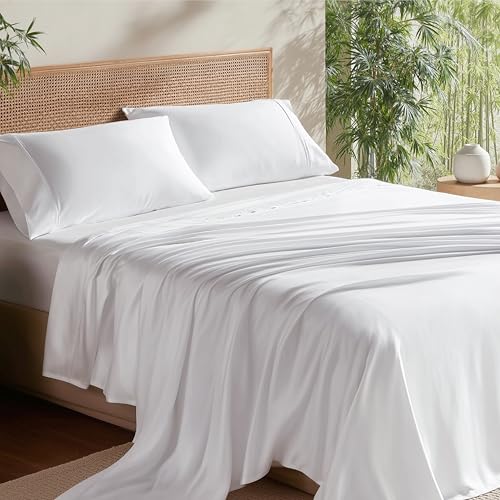
Disclosure: As an Amazon Associate, airfryerkitchensupply.com earns from qualifying purchases. Links on this page are affiliate links; they cost you nothing extra. Prices and availability change often, so check the current Amazon listing before you buy.
This mattress protector buying guide exists because the category looks simple and is not: two protectors can share a packet photograph and sleep completely differently. What follows is the full decision, in order — what a protector does, the main types, the picks at a glance, the questions that actually separate good from bad, and the care rules that decide how long any of them last. By the end you should be able to choose in minutes and defend the choice honestly.
Key Takeaways
- Decide protection level first: waterproof barrier, water-resistant, or simple cover.
- Measure the mattress and buy the fit — skirt depth and grip beat every other feature.
- Warm sleepers should prioritise breathability and accept the protection balance.
- Care per the label, gentle heat only; hot dryers destroy waterproof membranes.
In this guide
Mattress Protector Buying Guide: What a Protector Does and the Main Types
Fully Waterproof Barrier Protectors
The mainstream choice: a membrane layer that stops liquid reaching the mattress, in a fitted-sheet format. This is the type for children’s beds, guest beds, new mattresses, and any bed where drinks appear. Its honest costs are a little warmth and a little sound, weighed throughout this guide.
It is worth being plain about what a protector is not. A protector is a barrier, not a treatment: it does not relieve allergies, asthma, or any other condition, and no honest review should suggest otherwise. It also does not sanitise or rescue a mattress that is already soiled — if a mattress is already stained or carrying odours, covering it traps the problem underneath rather than solving it, and the right move is to clean or replace the mattress first and only then protect the clean surface. Keeping those boundaries clear makes the buying decision simpler, because you are choosing a shield, not a remedy.
Fit is the first thing experienced owners talk about, and for good reason. A protector that is slightly too small rides up at the corners, bunches under the sheet, and leaves the mattress edges — exactly where spills run — exposed. A protector that is too loose wrinkles into ridges you can feel through the sheet. The better designs use deep, elasticated skirts that grip like a fitted sheet and stay put when you toss and turn, and the difference between a skirt that holds and one that wanders is the difference between a protector you forget and one you fight with every laundry day.
Water-Resistant and Lightweight Covers
A lighter class that shrugs off splashes and guards against dust and wear without a full membrane. Cooler and quieter, but a real spill given time will pass through. Suits careful adult beds where the risk is sweat and dust rather than liquids.
Care decides lifespan more than any other factor. The rule that matters most is simple: wash per the label, every time, without improvising. Hot dryers destroy waterproof membranes — the heat breaks down the very layer you paid for, quietly, so the protector looks fine while its protection is gone. Gentle cycles, mild detergent, and modest drying heat, or line drying where you can, keep the barrier working. Fabric softeners and harsh bleach are also poor friends to membranes and elastic, coating fibres and shortening the skirt’s grip. Treat the protector kindly and it returns the favour for a long time.
Noise is a small detail that looms large at three in the morning. Protectors differ noticeably here: some membranes rustle with every shift of weight, others are engineered to move quietly with the mattress. If you share the bed, your partner’s tolerance matters as much as yours. A practical trick is that the sheet matters too — a smooth, well-fitted sheet over the protector damps sound, while a loose sheet amplifies every wrinkle. Many owners find a protector that seemed crinkly on the first night becomes unnoticeable once the bedding settles and the membrane softens through its first washes.
Quilted and Padded Protectors
A middle path adding slight surface softness over basic protection. It still is not a topper — the cushioning is cosmetic — but for sleepers who dislike a flat membrane feel, the quilted face can be the difference between keeping a protector on the bed and quietly removing it.
Top Picks at a Glance
| Pick | Badge | Tier |
| SafeRest Mattress Protector | Best Overall | Entry to mid |
| Linenspa Mattress Protector | Best Budget | Entry |
| Coop Home Goods Mattress Protector | Best for Light Sleepers | Mid to premium |
| SureGuard Mattress Protector | Best for Thorough Coverage | Mid |
Each pick below is and tier-positioned in this buying guide, with its verdict stated plainly.
SafeRest Mattress Protector
The SafeRest Mattress Protector is the dependable all-rounder of this group, the one most households picture when they picture a mattress protector at all. Its appeal is straightforwardness: a waterproof barrier layer, a fitted-sheet style skirt that behaves itself, and a surface designed to disappear under your normal sheets. In an entry-to-mid tier position, it suits the main bed, the children’s beds, and the guest bed with the same uncomplicated logic — fit it, forget it, and let it catch what life spills. Owners who want protection without ceremony tend to land here first, and many never feel the need to look further.
Best for: sleepers whose priorities match the description above, and households that will wash it per the label and keep it in regular rotation. Not suited for: buyers whose needs point the other way — a different fibre, a different level of protection, or a different tier — because no single product in this category honestly serves everyone, and choosing against your own sleeping habits is how good products end up in the returns pile. As a pick in this guide it carries a qualitative tier position rather than a link, so compare current listings on the qualities described here.
Linenspa Mattress Protector
The Linenspa Mattress Protector is the practical value pick, and proudly so. Linenspa’s protector covers the essentials — a waterproof barrier, a fitted fit, easy washing — in an entry-tier package that makes protecting every bed in the house a realistic decision rather than a luxury one. Landlords, parents equipping several children’s beds, and anyone furnishing a first apartment tend to choose exactly this kind of protector: honest protection, simple care, no ceremony. It will not claim the softest hand-feel in this group, but as straightforward insurance spread across multiple beds, its logic is hard to argue with.
Best for: sleepers whose priorities match the description above, and households that will wash it per the label and keep it in regular rotation. Not suited for: buyers whose needs point the other way — a different fibre, a different level of protection, or a different tier — because no single product in this category honestly serves everyone, and choosing against your own sleeping habits is how good products end up in the returns pile. As a pick in this guide it carries a qualitative tier position rather than a link, so compare current listings on the qualities described here.
Coop Home Goods Mattress Protector
The Coop Home Goods Mattress Protector is the comfort-first entry in the line-up, from a brand built around sleep products rather than household generics. The emphasis here is on how the protector feels and sounds in the night — a quieter, softer sleeping surface that happens to carry a waterproof barrier, rather than a barrier that happens to be sleepable-on. It suits light sleepers and hot sleepers who have tried a crinkly protector before and sworn off the category; positioned in the mid-to-premium tier, it asks a little more and aims to give back invisibility, which for sensitive sleepers is the whole product.
Best for: sleepers whose priorities match the description above, and households that will wash it per the label and keep it in regular rotation. Not suited for: buyers whose needs point the other way — a different fibre, a different level of protection, or a different tier — because no single product in this category honestly serves everyone, and choosing against your own sleeping habits is how good products end up in the returns pile. As a pick in this guide it carries a qualitative tier position rather than a link, so compare current listings on the qualities described here.

SureGuard Mattress Protector
The SureGuard Mattress Protector is the choice for buyers who read the construction details before anything else. SureGuard presents itself as the thorough option — a barrier designed to be complete rather than partial, with attention paid to how the waterproof layer and the fitted skirt work together at the edges, where spills actually travel. It sits in the mid tier and suits careful buyers protecting a mattress they intend to keep for a long time: new-mattress owners, in particular, tend to choose this style of protector in the same week the mattress arrives, while everything is still clean and worth defending.
Best for: sleepers whose priorities match the description above, and households that will wash it per the label and keep it in regular rotation. Not suited for: buyers whose needs point the other way — a different fibre, a different level of protection, or a different tier — because no single product in this category honestly serves everyone, and choosing against your own sleeping habits is how good products end up in the returns pile. As a pick in this guide it carries a qualitative tier position rather than a link, so compare current listings on the qualities described here.
How Much Protection Do You Actually Need?
Think about who uses the bed, because that decides how much protector you need. A child’s bed, a guest bed that hosts grandchildren, a bed shared with a dog, or a bed where breakfast happens on Sundays all argue for a genuinely waterproof, easy-washing protector that can be changed in minutes. A careful adult’s bed in a no-drinks household may only need a lighter barrier against sweat and dust. Neither choice is wrong; the mistake is buying for an imaginary household instead of your own, and then either overpaying for armour you never use or under-protecting a bed that needed it.
The edges and corners tell you a lot about build quality. Spills do not politely stay in the middle of the bed — they run to the seams. A protector whose waterproof layer wraps over the top surface and whose skirt holds the sides snugly gives liquid nowhere easy to go. When you fit a new protector, take thirty seconds to walk around the bed and check each corner is fully seated and the surface lies flat without tension ridges. That small ritual at fitting time prevents the classic disappointment of a protector that was technically on the bed but functionally absent where it mattered.
How Deep Is Your Mattress, Really?
Fit is the first thing experienced owners talk about, and for good reason. A protector that is slightly too small rides up at the corners, bunches under the sheet, and leaves the mattress edges — exactly where spills run — exposed. A protector that is too loose wrinkles into ridges you can feel through the sheet. The better designs use deep, elasticated skirts that grip like a fitted sheet and stay put when you toss and turn, and the difference between a skirt that holds and one that wanders is the difference between a protector you forget and one you fight with every laundry day.
The waterproof question deserves honest treatment. A waterproof membrane is what turns a simple cover into real insurance against liquids, but that membrane comes with a trade-off you should expect rather than be surprised by: waterproof layers tend to sleep slightly warmer and can be slightly crinklier than a plain cotton cover, especially when new. For most sleepers the difference fades into the background within a few nights, and a good fitted sheet over the top muffles most of the sound, but very light sleepers and people who already sleep hot should weigh it deliberately instead of discovering it at midnight.
How Warm Do You Sleep?
Noise is a small detail that looms large at three in the morning. Protectors differ noticeably here: some membranes rustle with every shift of weight, others are engineered to move quietly with the mattress. If you share the bed, your partner’s tolerance matters as much as yours. A practical trick is that the sheet matters too — a smooth, well-fitted sheet over the protector damps sound, while a loose sheet amplifies every wrinkle. Many owners find a protector that seemed crinkly on the first night becomes unnoticeable once the bedding settles and the membrane softens through its first washes.
Temperature runs through almost every protector conversation, and the honest summary is that protection and coolness pull in opposite directions. If you sleep hot, prioritise the most breathable construction you can find, accept that it is a balance rather than a perfect solution, and pair it with breathable sheets so the whole stack works together. If you sleep neutral or cool, the warmth of a waterproof layer is unlikely to trouble you at all. What you should not do is buy the heaviest, most industrial-feeling barrier for a bed that never sees a spill — match the protection level to the life the bed actually lives.
How to Prioritise by Use Case
The new-mattress owner should buy thorough coverage in the same week the mattress arrives and treat it as part of the mattress purchase. The parent should buy washability and duplicates, in the entry or mid tier, and care about changeover speed above all. The host should protect the guest bed before the first visitors and check the fit after they leave. The hot, light sleeper should spend the premium tier on breathability and quietness, because for that sleeper the trade-offs are the product. Four households, four correct answers, one category — prioritising by use case is the whole skill this buying guide teaches.
First Setup and Care Essentials
Guest beds deserve a special mention, because they combine low use with high risk. A guest mattress may sit untouched for months and then host a week of visitors, children, and morning coffee. A protector is arguably more valuable here than on your own bed: it keeps a rarely used mattress fresh between visits and quietly handles the one spill that would otherwise become a permanent souvenir. Fit it before guests arrive, check it after they leave, wash it with the guest sheets, and the mattress underneath stays the way you bought it. It is inexpensive insurance for the bed you monitor least.
Finally, set your expectations at the right level and a protector becomes one of the most satisfying small purchases in the home. It will not change how your mattress feels, improve your sleep directly, or fix a mattress that has already had a hard life. What it does — reliably, invisibly, night after night — is keep a clean mattress clean, turn potential stains into a laundry load, and stretch the useful life of one of the most expensive items in the bedroom. Judge it on barrier honesty, fit, quietness, and washability, and you will judge it well.
Mistakes to Avoid
The classic mistakes are few and avoidable: buying by packet photograph without measuring the mattress; expecting a protector to change comfort or to rescue an already-soiled mattress; washing it like a towel in hot water and hotter drying until the membrane silently dies; owning exactly one protector for a nightly bed and leaving the mattress bare on laundry day; and believing medical promises no bedding can keep. Avoid those five and almost any sensibly chosen protector will serve you well for years.
Putting It All Together: Living With the Choice
Finally, keep a small honesty about replacement. Bedding does not last forever, and pretending otherwise leads to the slow misery of sleeping on worn-out layers out of inertia. Elastic relaxes, surfaces roughen, membranes quietly tire, colours fade — and each is a signal, not a failure of character. Replace the working layers when the signals accumulate, retire the old ones to lighter duty, and the bed returns to being what it should be: the most reliably pleasant place in the house, maintained by routine rather than by luck.
A word about buying for the bed you have rather than the bed in the photograph. Catalogue beds are dressed in daylight, on new mattresses, with everything freshly laundered and nothing lived in. Your bed hosts real life: a partner who runs warm, a dog with opinions, a child with a juice box, a Sunday-morning coffee habit. Products chosen for that bed — washable, forgiving, honestly fitted — will satisfy you daily, while products chosen to recreate a photograph will be quietly resented by Friday. Let your household’s actual habits write the specification, and let the photograph inspire only the colours.
One under-discussed factor is the sound a household makes at night, and bedding’s contribution to it. A bed is an instrument whether you like it or not: every turn, every shift, every early-morning exit is either muffled by well-chosen layers or announced by crinkly, loose ones. Light sleepers learn this in the first week with a new product, which is why this guide returns so often to quietness as a first-class criterion rather than a footnote. When in doubt between two otherwise equal options, choose the quieter one — nobody has ever been kept awake by bedding that made too little noise.
When you are comparing listings, read for specifics and be suspicious of superlatives. A maker who tells you how the skirt is elasticated, how the set should be washed, and where the product’s trade-offs lie is giving you the material of a real decision. A listing built entirely from words like luxurious, premium, and revolutionary is giving you weather, not information. The products recommended in this guide were chosen because their descriptions survive that test: they say what the product is, what it suits, and what it does not do — and honest description correlates strongly with honest manufacture.
Finally, let the bed be the easiest system in your house to run. If a bedding routine needs a spreadsheet, it will fail; if it needs a fixed wash day, a spare set, and a note on a cupboard door, it will run itself for a decade. Every recommendation in this guide — protection early, rotation always, gentle washing, restrained heat, dry storage — was chosen because it survives contact with real, busy, forgetful households. Simple systems, honestly maintained, are what great sleep is actually made of.
Storage is the unglamorous final stage of bedding ownership. Clean sets stored fully dry, folded inside one of their own pillowcases, in a cupboard that is itself dry, stay fresh for months; the same sets stored faintly damp or in a steamy bathroom cupboard emerge smelling of their storage rather than their washing. Protectors store flat or loosely rolled rather than crushed into a ball, which treats the membrane kindly. Ten seconds of care at storage time is the difference between bedding that greets you fresh and bedding that needs re-washing before it can be used at all.
Bedding also ages unevenly across a household, and planning for that saves money. The main bed works hardest and deserves the best of everything; children’s beds work dirtiest and deserve the most washable; guest beds work rarely and deserve reliability after long storage. Buying identical products for all three is tidier but rarely optimal. Match the tier and the construction to the duty each bed actually performs, and the household’s bedding budget suddenly stretches much further without any bed feeling short-changed.
Layering is the idea that ties this whole corner of the bedroom together. No single product makes a bed good; the mattress supports, the protector defends, the sheets touch, the pillow cradles, and each layer does its own job better when the others are doing theirs. Buying in that order of thinking — support first, protection second, surface third — prevents the common error of spending heavily on the visible layer while leaving the expensive layer underneath undefended. A modest protector under good sheets will out-serve beautiful sheets over a mattress that is slowly absorbing every spill of the year.
Guests judge a bed in about four seconds, and what they judge is not thread specifications but freshness, smoothness, and whether everything stays in place. That is excellent news for hosts, because all three are process outcomes rather than price outcomes: bedding washed before first use and after every visit, a fitted sheet that genuinely fits, a protector quietly doing its work underneath. A modest set cared for properly will out-score an expensive set cared for carelessly in every guest’s memory, which is one more reason this guide spends so many words on routine.
Shared beds add a negotiation layer that solo sleepers never face. Two people rarely agree perfectly on warmth, smoothness, or how much sound a bed should make, and bedding choices land in the middle of those preferences. The practical approach is to prioritise the layer each person feels most: the surface for the texture-sensitive partner, breathability for the hotter sleeper, quietness for the lighter sleeper. A protector or sheet set that represents a thoughtful compromise will be slept on happily for years, while a unilateral purchase that ignores one partner’s sleep tends to be relitigated at two in the morning.
One more practical habit separates satisfied owners from disappointed ones: inspect on arrival. Unfold the product fully, check seams, elastic, and surface, test the fit on the actual bed, and run the first wash before the return window closes rather than after. Almost every bedding disappointment is discoverable in that first afternoon — a pocket too shallow, a surface rougher than expected, a skirt that will not grip — and almost every one is only fixable while returning is still easy. The first day is your quality-control department; use it while it is free.
Allergy-adjacent language surrounds this category, so a word of discipline is worthwhile. Bedding can be part of a clean household routine — washed regularly, kept dry, changed often — and that routine is a reasonable comfort measure for anyone. What bedding cannot honestly promise is medical benefit, and this guide deliberately makes no such promise for any product in it. If a health condition is part of your household’s life, let your clinician guide the medical side and let bedding do its plain, useful work: being clean, dry, comfortable, and easy to keep that way.
Children change the calculation completely, and honestly. Beds used by children see more spills, more accidents, more midnight drinks, and more washing than any other beds in the house, and bedding for them should be chosen for washability and changeover speed above elegance. A protector that can be stripped and refitted in minutes, and sheets that wash and dry quickly and come back smooth without ironing, are worth more in a child’s room than any refinement of hand-feel. Buy duplicates without guilt: in a child’s bedroom, the spare set is not a luxury, it is the system working as designed.
It is worth saying plainly that none of the products in this guide will fix a bed whose foundations have failed. A sagging mattress needs replacing, not dressing; a pillow that has gone flat needs retiring, not a new case. Bedding works its quiet magic on sound foundations, and part of buying well is recognising when the honest purchase is the foundation itself. Protect and dress what is sound, replace what is not, and never ask a thin layer of fabric to perform a structural rescue it was never designed for.
Travel teaches bedding lessons that home hides. After a week of hotel beds, most people come home knowing exactly what they like: the crispness or the softness, the weight or the lightness, the pillow height. Use that knowledge while it is fresh. The sheet and protector choices in this guide map directly onto those travel impressions — percale crispness, sateen smoothness, microfibre silkiness, a barrier you never noticed — and a purchase made in the week after a trip is often the best-judged purchase of the year, because your preferences are briefly, unusually clear to you.
There is a rhythm to well-run bedding that visitors never see and residents always feel. Sheets changed on a fixed day, protectors rotated without drama, spares folded and waiting, worn items retired before they become unpleasant — none of it is visible, and all of it is the difference between a bedroom that merely looks calm and one that actually is. The products in this guide are simply the cast; the routine is the play, and households that learn the routine find that even modest products perform like premium ones.
It helps to think of bedding purchases on two different clocks. The mattress runs on a long clock, measured in years, and deserves slow, careful choosing. Protectors and sheets run on a shorter clock: they are washed constantly, they age visibly, and they are replaced on feel. Mixing the clocks up causes most buying mistakes — people either replace sheets far too late, sleeping on rough fabric for a year out of inertia, or replace a mattress early because an unprotected surface made it feel older than it was. Protect the long-clock purchase with short-clock purchases, and replace the short-clock items without sentimentality.
The environmental arithmetic of bedding quietly favours the approach this guide recommends. Protecting a mattress extends the life of the largest, hardest-to-dispose item in the bedroom. Rotating two sheet sets extends both beyond what either would manage alone. Washing gently, at sensible temperatures, with measured detergent, and drying with restraint all reduce the footprint of every load while also — not coincidentally — being exactly the care that makes fabrics last. Durability is the greenest feature a textile can have, and it is mostly a habit, not a purchase.
If you share laundry duties, write the routine down. A note on the cupboard door — colours separate, gentle cycle, measured detergent, no hot drying for the protector, store only when dry — converts one person’s knowledge into a household system that survives holidays, teenagers, and helpful relatives. Most bedding damage in shared homes is not carelessness but inconsistent information, and a twenty-word note eliminates nearly all of it. Systems beat intentions, in laundry as in everything else.
When a product description and your own priorities disagree, trust your priorities. A protector engineered for maximum barrier may be wrong for the hottest sleeper; the silkiest sheet set may be wrong for the household that washes everything hot and fast. Manufacturers design for an average sleeper who does not exist, in a household that resembles nobody’s. Your bed, your climate, your laundry, your partner, your dog — those are the specifications that matter, and every section of this guide has been written to help you apply them rather than to override them.
Reading care labels is a small literacy that pays for itself across the whole house. The label on a protector or sheet set compresses the maker’s entire knowledge of their fabric into a few lines: temperature, cycle, what to avoid, how to dry. Households that follow labels keep textiles noticeably longer than households that wash everything on one heroic setting, and the difference is not effort — the label takes twenty seconds to read, once — but attention. Tape a note inside the laundry cupboard door if several people share the washing, and the whole household inherits the benefit.
Small bedrooms and small budgets teach the same lesson: versatility beats specialisation. A protector that serves the main bed now can serve the guest bed later; a sheet set in a calm colour works in every season and with every duvet you will ever own. Choosing versatile, honestly made basics first builds a linen cupboard that can absorb life’s changes — a new mattress depth, a new partner’s preferences, a child arriving, a parent moving in — without starting again from nothing. Specialised luxuries can be layered on later, on top of a foundation that already works.
There is a quiet economics to all of this that rarely appears in product descriptions. The cost of protection and rotation is small spread across the nights it serves, while the cost of the item being protected is large and concentrated. Households that internalise that ratio tend to protect early, rotate sheets properly, and replace worn bedding on schedule — not because they are extravagant, but because they have done the arithmetic the other way and seen what an unprotected mattress and a single overworked sheet set actually cost across a few years of nightly use.
Ownership, in the end, is the real review. The first night with new bedding tells you about novelty; the fiftieth wash tells you about the product. Everything recommended here was chosen to still be earning its place at the fiftieth wash — seams intact, elastic alive, surface smooth, barrier working — provided the simple care rules in this guide are followed. Keep those rules, keep a spare in the drawer, and the bed will quietly repay you every single night, which is all any of us actually ask of it.
Think, too, about the order in which a bed is made after washing, because sequence prevents the classic frustrations. Protector first, seated at every corner and smoothed flat. Fitted sheet next, deepest corner first. Flat sheet and duvet last, falling evenly. Made in that order, the bed takes minutes and stays made; made in any other order, something is always being tugged out from under something else. It sounds trivial until you have remade a bed at midnight, at which point it becomes the most practical paragraph in this guide.
Seasonal thinking improves bedding more than most upgrades do. The bed that delights in January can genuinely disappoint in July, because warmth is a property of the whole stack, not of any one layer. Rather than searching for a mythical all-season perfection, many households keep the protector constant — protection is seasonless — and rotate the sheet set and duvet weight with the weather. That division of labour is tidy: the barrier never changes, the comfort layers do, and each purchase can be optimised for its actual job instead of compromised across all of them.
There is also the matter of the bed’s second life as furniture: reading chair, homework headquarters, film screen, dog sofa, sick bay. Layers chosen only for sleeping are often wrong for the bed’s daytime duties, which is another quiet argument for protection and washability over delicacy. A protector does not care whether the spill came from midnight water or afternoon juice; a washable sheet set does not care whether it is changed for sleep or for guests. Buy for the bed’s whole life and the night-time performance takes care of itself.
If budget forces a sequence, protect first and beautify later, every time. A protector bought in the mattress’s first week defends the full value of the largest purchase in the room, while decorative layers bought first defend nothing and can themselves be ruined by the first unprotected spill. Sheets come second, in pairs, because rotation is a durability feature disguised as a convenience. Pillows and decorative touches come last, when the working layers are sound. Households that follow this order rarely regret a purchase; households that reverse it often end up buying the working layers twice.
Do not overlook the humble second set. One protector and one sheet set is a system with no slack: every wash is urgent, every stain is a deadline, every guest arrival is a logistics problem. Doubling the working layers converts all of that into calm — laundry happens on your schedule, a spill at midnight is a two-minute change rather than a crisis, and each set ages at half speed because it rests between uses. If you take one idea from this entire guide into your next purchase, let it be that duplication beats specification almost every time.
A useful test for any bedding purchase is the two-in-the-morning test. Imagine the product failing at that hour — a corner loose, a spill spreading, a surface suddenly too warm — and ask what you would do. Good bedding has a two-in-the-morning answer: a spare set in the drawer, a protector that strips off in seconds, a fitted sheet that goes back on by feel. If the honest answer is misery until morning, the system needs a spare or a simpler product, and it is far better to learn that in the shop than in the dark.
Humidity is the invisible variable in bedding performance. In a humid climate or a steamy flat, fabrics dry slower, store worse, and feel clammy sooner, which argues for quick-drying fibres, disciplined airing, and absolute strictness about storing only fully dry textiles. In a dry climate the same products behave almost effortlessly. Read every recommendation in this guide through your own climate: the right product in the wrong humidity regime will always feel like a disappointment, and the fix is usually process — airing, spacing, patience — rather than replacement.
Consider the bed from the perspective of the person who maintains it, because that person is usually you at the end of a long day. Every bedding choice is also a laundry choice: how often it must be washed, how gently, how long it takes to dry, how easily it goes back on. Products that respect the maintainer — machine washable, quick to refit, forgiving of an ordinary routine — stay in service for years, while fussy products are quietly abandoned to the back of the cupboard no matter how impressive their first week was. When two candidates seem equal, choose the one whose care routine you will actually keep.
Before You Commit: A Mattress Protector Fit and Compatibility Checklist
A buying guide earns its keep in the last ten minutes before you order, when broad advice has to become a yes or no for one specific home. Use this section as that final pass for a mattress protector: it turns the criteria covered earlier into checks you can physically make, in order, so the version you choose fits your space, your habits and the other items it has to work alongside.
Work through fit before features, in this exact order. First confirm the protector size and pocket depth against your mattress thickness, including any topper; write the numbers down, because memory rounds measurements in the direction of the product you already want. Then settle compatibility in plain terms: fit style, fabric feel under your sheets and whether it changes the sleep surface temperature. Only once both pass should you compare the shortlist, and when a listing names a model such as SafeRest Mattress Protector, confirm the exact variant and included parts on that listing rather than assuming every version is identical.
Now price the decision in effort rather than money. The upkeep reality is simple: washing on the care label schedule and drying fully before refitting to protect the waterproof layer. If that routine fits a habit you already keep, ownership will feel easy; if it demands a new ritual you know you will skip, the mattress protector will age badly no matter how well it scores elsewhere. The same honesty applies to storage, setup time and the person who will actually do the cleaning, whose opinion deserves the casting vote.
Close the decision with the hardest test, not the easiest: a spill in the night, which is the one moment the protector either proves itself or does not. If the mattress protector you favour handles that case and your two most frequent uses comfortably, stop researching and buy it. If it fails either test, walk away even from an attractive offer, because you will re-live that failure every time the situation repeats, long after the saving is forgotten.
A Final Decision Checklist
- Start the shortlist with size: confirm the protector size and pocket depth against your mattress thickness, including any topper before comparing any features.
- Then settle fit with what you already own: fit style, fabric feel under your sheets and whether it changes the sleep surface temperature.
- Ask how it fails before how it shines: the usual story is a protector that bunches or shifts because the pocket is too shallow for the mattress.
- Check the upkeep suits your routine, since washing on the care label schedule and drying fully before refitting to protect the waterproof layer.
- End with the hardest regular test, because a spill in the night, which is the one moment the protector either proves itself or does not.
- Judge finalists against your two most frequent uses, written down, not against occasional ones.
- Keep packaging and paperwork until a full week of real use has passed without a problem.
- Photograph the setup once it works well, so you can restore it after cleaning or rearranging.
- Confirm the storage spot honestly: if putting it away is awkward, the mattress protector will slowly stop being used.
- Re-check the shortlist against your written criteria, not against whichever listing photographs best.
- Put on the list and check the person who cleans it most a veto, because their friction decides how long it stays in service.
- Verify the fit again after a week of real use, when the protector size and pocket depth against your mattress thickness can be judged against experience rather than hope.
- Re-check the footprint with tape on the floor for a day if space is tight, and live around the outline first.
- Re-check the failure signs monthly, so you catch the stage where a protector that bunches or shifts because the pocket is too shallow for the mattress is still a five-minute fix.
Frequently Asked Questions
Will a mattress protector help with allergies or asthma?
No, and you should be wary of any listing that implies otherwise. A protector is a physical barrier layer between you and the mattress surface, which is a household-cleanliness benefit, but it is not a medical device and it does not relieve allergies, asthma, or any other condition. If you have a health concern, the right conversation is with your clinician, not with bedding marketing. Buy a protector to keep a mattress clean and to make spills a laundry problem instead of a mattress problem — those are honest, sufficient reasons.
Can a protector save a mattress that is already stained?
No. A protector protects a clean mattress; it does not sanitise or rescue one that is already soiled. Fitting a protector over existing stains or odours simply covers and traps the problem, and the covered mattress stays exactly as soiled underneath. The honest sequence is to clean the mattress as thoroughly as its care guidance allows — or accept replacement if the damage is deep — and only then fit a protector so the clean surface stays clean. Protectors are prevention, and prevention only works when it starts from clean.
How do I wash a mattress protector without ruining it?
Follow the label on your specific protector, because the label outranks all general advice. The principles that protect most waterproof membranes are a gentle cycle, mild detergent, and restraint with heat: hot dryers destroy waterproof membranes, breaking down the barrier while leaving the protector looking unchanged, which is the worst kind of failure because you discover it at the next spill. Line drying or gentle drying heat, no harsh bleach, and no fabric softener unless the label invites it will keep both the membrane and the elastic skirt working.
Do waterproof protectors sleep hot and crinkly?
They can sleep slightly warmer and slightly crinklier than a plain cover — that is the honest trade-off of a waterproof membrane, and any review denying it entirely is selling rather than informing. In practice the effect is modest for most sleepers, fades as the membrane softens through early washes, and is muffled further by a well-fitted sheet. Very light sleepers and people who already sleep hot should choose the most breathable construction they can find and weigh this trade-off deliberately; everyone else usually stops noticing within the first week.
Does a mattress protector change how a mattress feels?
Barely, and that is the point. A protector is a thin barrier layer, not a cushioning layer, so the support and firmness of your mattress stay exactly as they were. You may notice a slight difference in surface feel or sound, particularly with a waterproof membrane in the first nights, but the character of the bed comes from the mattress and any topper — the protector simply keeps both clean. If you want to change feel, you want a topper; if you want to protect feel, you want a protector.
Related Guides and Next Steps
Continue with the guides that sit closest to this one: the mattress protector reviews round-up; our mattress protector review; mattress protector vs mattress topper explained; our bed pillow review; the best bed sheet set options for a first rotation; cooling mattress topper guides for warm sleepers; pillow protectors for down pillows. Each covers a neighbouring decision — protection, bedding, or pillows — so the layers of the bed work together rather than being bought in isolation.