Disclosure: As an Amazon Associate, airfryerkitchensupply.com earns from qualifying purchases. Links on this page are affiliate links; they cost you nothing extra. Prices and availability change often, so check the current Amazon listing before you buy.
This bed pillow review starts from a simple belief: a pillow is a piece of fit, not a piece of furniture. In the first hundred words of any honest bed pillow review, the same point should appear — the right bed pillow is the one whose loft and feel match your sleep position, your mattress, and your habits, and no feature list can make that decision for you. What guidance can do is teach you what to look at, what to ignore, and how to test fairly, which is exactly what the sections below are for.
Key Takeaways
- Choose by sleep position first: side sleepers need the most loft, back sleepers a medium loft, stomach sleepers the least.
- Fill decides feel — shredded fill moulds, solid foam stays consistent, latex bounces back, and fiber gives easily.
- Adjustable fill is genuinely useful only if you will actually adjust it, a little at a time, over several nights.
- A thin protector and a correctly sized pillowcase protect both hygiene and feel.
- Dry any washed pillow completely, right to the centre, before it goes back on the bed.
- Replace a pillow when it stays folded, stays lumpy, or stops recovering — not by the calendar.
In this guide
Bed Pillow Review: The Short Answer First
A bed pillow earns a recommendation when its loft holds your head level in your real sleep position, its fill feels the way you like a surface to feel, and its care routine fits your life. This review looks at the bed pillow as a category through six representative designs, judges each by position and feel rather than by features, and is frank about who should walk past each one. If you want one sentence: match the loft to your position, match the fill to your favourite feel, and let everything else be a tie-breaker.
What a Bed Pillow Is and Where It Fits
Sleep position is the most useful starting point because it sets the gap a pillow has to fill. Back sleepers rest with a modest gap between the head and the mattress, so a medium loft usually keeps things level without pushing the chin forward. Side sleepers carry a much wider gap, from the ear down to the outer shoulder, and generally need more loft to span it. Stomach sleepers have almost no gap at all and usually do best with something low and soft that does not tilt the head upward. None of this is a medical rule; it is simple geometry and comfort, and your own preference always gets the final vote.
Loft is the working height of a pillow once your head is actually resting on it, and it matters more than the height printed or photographed before use. A pillow that looks tall and grand on a shelf compresses the moment weight lands on it, and different fills compress by very different amounts. That is why two pillows that look identical in a product photo can sleep completely differently. When you compare options, picture the compressed result: your head settled in, your shoulders on the mattress, and the pillow holding whatever height remains. That settled height is the loft you are really buying, and it is the number — felt rather than measured — that decides whether a pillow feels right.
A pillow never works alone; it works with a mattress, and changing one changes the other. On a soft mattress your body sinks deeper, your shoulder drops further, and the gap your pillow must fill on your side grows smaller — so side sleepers on soft mattresses often need less loft than the charts suggest. On a firm mattress you ride higher, the gap grows, and the same pillow can suddenly feel too low. This is why a pillow that was perfect in a previous home can disappoint after a mattress change, and why honest guides always ask about the bed underneath before recommending a loft.
Design, Build and Setup
A gusset is the band of fabric around a pillow edge, and it is more than tailoring. By giving the pillow a structured side wall, a gusset helps the fill spread evenly instead of squeezing out into a rounded, peaked middle. The result is usually a flatter, more even sleeping surface with support that reaches closer to the edges. Non-gusseted pillows tend to form a soft dome, which some sleepers adore and others find unstable. Neither is better in the abstract; the gusset simply trades a sculpted, even platform for that classic puffy mound, and knowing which shape you prefer narrows the field quickly.
Standard, queen, and king pillows differ mainly in length, and longer is not automatically better. A king pillow on a smaller bed can crowd the sleeping space, push against a partner pillow, and hang awkwardly when you sit up to read. A standard pillow on a wide bed can look lost but sleep perfectly well. Match the pillow to the bed, the pillowcases you own, and how you actually use the bed. People who hug a pillow or fold one under an arm often enjoy extra length, while tidy sleepers who stay centred usually prefer the neater footprint of a standard or queen size.
The pillowcase is not decoration only; it is the surface your face actually meets, and its fabric shapes both temperature and texture. Smooth, breathable cotton feels familiar and washes without fuss. Smoother, silkier fabrics reduce friction against hair and skin, which some sleepers enjoy, though they can feel slippery and let the pillow wander. A case that is too small will compress a plump pillow and make it feel firmer and higher than it is, while an oversized case lets fill slump. When a pillow feels wrong, checking that the case fits the pillow is a two-minute test worth doing before anything else.
Performance in Real Use
Combination sleepers are the hardest to fit because they ask one pillow to do two or three different jobs in a single night. A medium loft with a fill that recovers quickly tends to serve them best: high enough when they roll onto a side, low enough when they settle on the back. Very slow, dense fills can feel perfect in one position and stubborn in another, while very soft fills can feel lovely on the back and vanish under a shoulder. If you move a lot, prioritise a pillow that feels acceptable everywhere over one that feels perfect somewhere and wrong everywhere else.
A solid foam pillow offers the opposite bargain: no arranging, no migrating fill, and the same shape every night. The feel is consistent from edge to edge, and the pillow quietly returns to form each morning. The trade-off is that there is nothing to adjust if the height is wrong for you. That makes the first choice more important, and it makes honest descriptions of firmness and loft more valuable than any feature list. Solid foam also tends to feel warmer and denser than airy fiber fills, which some sleepers love for its settled calm and others find too still and too close.
Shredded fill pillows behave like a bag of soft building material: you can push the fill where you want it, bunch it under the edge, or flatten the middle. That mouldability is their charm and their chore. They reward sleepers who like to arrange a pillow just so, and they frustrate sleepers who want the pillow to look after itself. Expect to fluff and reshape them often, because the fill migrates with use. In return you get a pillow that can be personalised in a way a single solid piece never can, especially in adjustable versions where you can remove fill and store it for later.
How It Compares
Latex pillows feel alive under the head: responsive, springy, and quick to push back when you move. Where memory foam changes slowly, latex changes instantly, which suits restless sleepers and anyone who dislikes waiting for a pillow to reshape itself. Latex is also naturally durable and holds its loft well over time. The feel is not for everyone, though. Some sleepers find the bounce a little busy, and latex pillows are often heavier than they look, which matters if you like to drag your pillow into place half asleep. They also cannot be adjusted, so the loft you buy is the loft you keep.
Down alternative fills use fine polyester fibers spun to imitate the soft, compressible feel of down without using feathers. They are usually machine friendly, widely available, and gentle on budgets, and they suit back and stomach sleepers who like a pillow that gives easily. Their weakness is lifespan: the fibers gradually lose their spring, clump, and flatten, and a pillow that began plump can turn thin and uneven. Fluffing helps for a while, and a tumble in a dryer on a gentle setting can revive loft temporarily, but once the fibers are tired the pillow is telling you it is near the end of its service.
Cooling pillows deserve a calm reading. Covers that feel cool to the touch really do feel cool — for the first minutes. Gel-infused foams and phase-change style fabrics can take the edge off that first warm contact, and ventilated or open structures let air move more freely than a dense solid block. What no pillow can do is refrigerate a warm room. The honest expectation is a cooler first impression and a surface that warms up more slowly, especially when paired with a breathable pillowcase and a protector that is not heavily padded. Judge cooling as a comfort bonus, never as the whole reason to buy.
Who Should Buy It and Who Should Skip It
Shoulder width and body size quietly shape pillow fit. A broad-shouldered side sleeper needs noticeably more loft than a narrow-shouldered one on the same mattress, and a heavier head compresses soft fills further, which effectively lowers them. Petite back sleepers often find standard medium pillows push them too high, while larger back sleepers sink into those same pillows and call them flat. There is no shame in any of this; it is simply fit, like shoe size. Use general guidance as a starting guess, then let your own mirror check — head level, chin neutral, shoulders relaxed — make the final call.
The simplest fitting tool you own is a mirror, or a partner willing to look. Lie in your usual position and check the line of your head and spine from the side: on your back, your head should rest level without your chin tipping toward your chest or your forehead tilting back; on your side, your head should continue the line of your back rather than dropping toward the mattress or being propped at an angle. You are judging comfort geometry, nothing medical. If the line looks level and the position feels easy to hold without effort, the loft is close. If you keep adjusting, something is off.
Testing a pillow properly takes more than a squeeze in a shop aisle. Sleep on it in your real position, on your real mattress, for several nights, because mattresses change how a pillow behaves: a soft mattress lets your shoulder sink, which changes the gap the pillow must fill. Keep the packaging and know the return terms before the first night, not after the seventh. Change one variable at a time — do not judge a new pillow on the same night you change sheets, protector, and bedroom temperature, or you will never know which change did what. Give a genuinely promising pillow a fair week before deciding.
Setup, Care and Maintenance Essentials
A pillow protector is the cheapest comfort decision in the whole category. It sits between the pillow and the pillowcase, guards against moisture and everyday grime, and washes easily and often, which keeps the pillow itself fresher for far longer. A thin, quiet protector changes the feel of a pillow very little; a thick, padded, or crinkly one can change it a lot, muting softness and adding warmth. If a new pillow feels mysteriously worse than expected, try it for a night with a simpler protector before blaming the fill. Many a good pillow has been returned because of a bad protector.
A thirty-second morning fluff does more for a pillow than most products sold to rescue it. Shake it, knead the fill back toward the middle, smooth the lumps, and stand it so air can move around it while the bed airs. Shredded and fiber fills benefit most, because they migrate and mat where your head rests. Making the bed tightly over a pillow the moment you rise traps the night warmth and moisture against it; a little airing first is a small hygiene habit with an outsized effect. Pillows age from the inside out, and daily air plus a protector slows that ageing more than any occasional deep clean.
Washing a pillow starts with the label, because fills behave very differently in water. Many polyester and down alternative pillows machine wash well on a gentle cycle with mild detergent, while solid foam and latex should never be machine washed or soaked; they are spot-cleaned and aired instead. Wash two pillows together where the machine allows it, which keeps the load balanced, and use an extra rinse so detergent does not stay in the fill and stiffen it. Whatever the fill, the rule that outranks all others is drying: a pillow must be dried completely, right to the centre, before it goes back on the bed.
Final Verdict
Money in this category buys materials, consistency, and adjustability more than it buys magic. Entry-level fiber pillows can be genuinely comfortable; they simply tend to tire sooner, so their real cost is measured in replacements. Mid-range pillows usually bring better covers, more consistent fill, and in some cases adjustability. Premium pillows charge for distinctive materials — latex, dense adaptive foam, engineered layers — whose feel is different rather than automatically better. The sensible question is never which pillow costs most, but which feel you prefer and how long that feel is likely to last in the form you are buying it.
Pillow reviews, including this one, are most useful when you read them by sleeper type rather than by verdict. A pillow praised by back sleepers and criticised by side sleepers is not inconsistent; it is specialised, and the pattern tells you more than any average could. Look for reviewers who describe their position, their mattress firmness, and how long they used the pillow before judging, and discount first-night rapture and first-night fury equally. Notice what people say after washing, because that is where easy-care claims meet reality. Your goal is not to find the pillow everyone loves; it is to find the pillow people like you keep loving.
The Pillows in This Guide
They were chosen to represent genuinely different feels — adjustable shredded fill, plush hotel-style fiber, solid adaptive foam, a layered pillow-in-pillow, a responsive latex combination, and an easy-care gusseted value pick — because comparing different characters teaches you more than comparing six versions of the same pillow.
Coop Home Goods Original Adjustable Pillow
Best for: people who have never quite found a ready-made loft that feels right. Not suited for: anyone who wants a pillow that feels finished the moment it leaves the packaging, with nothing to tune. This is a adjustable shredded fill design: shredded memory foam style fill inside a zippered inner case, so you can add or remove fill at home. In tier terms it sits in the mid-to-premium range for this category, and the honest way to judge it is by how its loft and feel match your usual sleep position rather than by any single headline feature.
In everyday use, the Coop Home Goods Original Adjustable Pillow earns its place when its basic character matches the sleeper. The surface feel is the first thing you notice, then how the fill behaves after an hour, then how it feels on the third night when novelty has worn off. Judge it on that third night. A pillow that feels impressive for ten minutes in a shop can feel very different at three in the morning, and the reverse is also true: a quiet, unremarkable pillow that simply stays comfortable is often the one people keep for years.
Care is straightforward but worth respecting: use a washable protector, fluff it back into shape in the morning, and follow the maker label before washing the pillow itself, because fills differ and not every pillow should go through a machine cycle. If the feel is nearly right, small changes — a thinner or thicker pillowcase, a protector with less padding, or a slight change in how far you pull it under your shoulders — can fine-tune the result before you decide the pillow itself is wrong.

Beckham Hotel Collection Gel Pillow
Best for: back sleepers and guest rooms where a gentle, forgiving feel suits most visitors. Not suited for: committed side sleepers who want a tall, firmly held loft through the whole night. This is a plush gel fiber design: a soft gel-fiber fill with a smooth cotton-feel cover, sold as an easy, familiar hotel-style pillow. In tier terms it sits in the entry-to-mid range for this category, and the honest way to judge it is by how its loft and feel match your usual sleep position rather than by any single headline feature.
In everyday use, the Beckham Hotel Collection Gel Pillow earns its place when its basic character matches the sleeper. The surface feel is the first thing you notice, then how the fill behaves after an hour, then how it feels on the third night when novelty has worn off. Judge it on that third night. A pillow that feels impressive for ten minutes in a shop can feel very different at three in the morning, and the reverse is also true: a quiet, unremarkable pillow that simply stays comfortable is often the one people keep for years.
Care is straightforward but worth respecting: use a washable protector, fluff it back into shape in the morning, and follow the maker label before washing the pillow itself, because fills differ and not every pillow should go through a machine cycle. If the feel is nearly right, small changes — a thinner or thicker pillowcase, a protector with less padding, or a slight change in how far you pull it under your shoulders — can fine-tune the result before you decide the pillow itself is wrong.
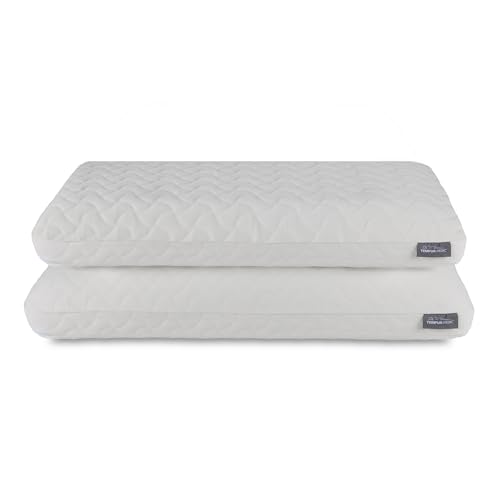
TEMPUR-Pedic TEMPUR-Cloud Pillow
Best for: back sleepers who like a slow, settled, cradled feeling rather than bounce. Not suited for: stomach sleepers, who usually find a firmer, denser feel too much under the head. This is a solid adaptive foam design: a single piece of pressure-responsive foam that softens under warmth and weight and holds a consistent shape. In tier terms it sits in the premium range for this category, and the honest way to judge it is by how its loft and feel match your usual sleep position rather than by any single headline feature.
In everyday use, the TEMPUR-Pedic TEMPUR-Cloud Pillow earns its place when its basic character matches the sleeper. The surface feel is the first thing you notice, then how the fill behaves after an hour, then how it feels on the third night when novelty has worn off. Judge it on that third night. A pillow that feels impressive for ten minutes in a shop can feel very different at three in the morning, and the reverse is also true: a quiet, unremarkable pillow that simply stays comfortable is often the one people keep for years.
Care is straightforward but worth respecting: use a washable protector, fluff it back into shape in the morning, and follow the maker label before washing the pillow itself, because fills differ and not every pillow should go through a machine cycle. If the feel is nearly right, small changes — a thinner or thicker pillowcase, a protector with less padding, or a slight change in how far you pull it under your shoulders — can fine-tune the result before you decide the pillow itself is wrong.
Casper Original Pillow
Best for: combination sleepers who roll between back and side and want one pillow to cover both. Not suited for: purists who want a single traditional fill and nothing layered or engineered. This is a pillow-in-pillow design design: a firmer inner core wrapped in a softer outer layer, aiming to balance support underneath with softness on top. In tier terms it sits in the mid range for this category, and the honest way to judge it is by how its loft and feel match your usual sleep position rather than by any single headline feature.
In everyday use, the Casper Original Pillow earns its place when its basic character matches the sleeper. The surface feel is the first thing you notice, then how the fill behaves after an hour, then how it feels on the third night when novelty has worn off. Judge it on that third night. A pillow that feels impressive for ten minutes in a shop can feel very different at three in the morning, and the reverse is also true: a quiet, unremarkable pillow that simply stays comfortable is often the one people keep for years.
Care is straightforward but worth respecting: use a washable protector, fluff it back into shape in the morning, and follow the maker label before washing the pillow itself, because fills differ and not every pillow should go through a machine cycle. If the feel is nearly right, small changes — a thinner or thicker pillowcase, a protector with less padding, or a slight change in how far you pull it under your shoulders — can fine-tune the result before you decide the pillow itself is wrong.
Purple Harmony Pillow
Best for: warm sleepers and side sleepers who like support that responds the moment they move. Not suited for: anyone who prefers a soft, sink-in, slow-changing surface over a bouncy one. This is a latex and elastic grid combination design: a responsive latex core paired with a stretchy elastic grid layer, giving a buoyant, instantly springy feel. In tier terms it sits in the premium range for this category, and the honest way to judge it is by how its loft and feel match your usual sleep position rather than by any single headline feature.
In everyday use, the Purple Harmony Pillow earns its place when its basic character matches the sleeper. The surface feel is the first thing you notice, then how the fill behaves after an hour, then how it feels on the third night when novelty has worn off. Judge it on that third night. A pillow that feels impressive for ten minutes in a shop can feel very different at three in the morning, and the reverse is also true: a quiet, unremarkable pillow that simply stays comfortable is often the one people keep for years.
Care is straightforward but worth respecting: use a washable protector, fluff it back into shape in the morning, and follow the maker label before washing the pillow itself, because fills differ and not every pillow should go through a machine cycle. If the feel is nearly right, small changes — a thinner or thicker pillowcase, a protector with less padding, or a slight change in how far you pull it under your shoulders — can fine-tune the result before you decide the pillow itself is wrong.

Utopia Bedding Gusseted Pillow
Best for: budget-minded shoppers stocking a family home, a rental, or a spare room. Not suited for: shoppers looking for natural fills or a highly tailored, adjustable loft. This is a gusseted polyester fill design: a gusseted edge that helps the pillow keep a fuller shape, with a plump polyester fill and a simple, easy-care build. In tier terms it sits in the entry range for this category, and the honest way to judge it is by how its loft and feel match your usual sleep position rather than by any single headline feature.
In everyday use, the Utopia Bedding Gusseted Pillow earns its place when its basic character matches the sleeper. The surface feel is the first thing you notice, then how the fill behaves after an hour, then how it feels on the third night when novelty has worn off. Judge it on that third night. A pillow that feels impressive for ten minutes in a shop can feel very different at three in the morning, and the reverse is also true: a quiet, unremarkable pillow that simply stays comfortable is often the one people keep for years.
Care is straightforward but worth respecting: use a washable protector, fluff it back into shape in the morning, and follow the maker label before washing the pillow itself, because fills differ and not every pillow should go through a machine cycle. If the feel is nearly right, small changes — a thinner or thicker pillowcase, a protector with less padding, or a slight change in how far you pull it under your shoulders — can fine-tune the result before you decide the pillow itself is wrong.
Strengths
- Real variety of feel: mouldable, plush, dense, layered, bouncy, and budget-friendly designs are all represented.
- Honest fit guidance: every pick names who should skip it, not only who should buy it.
- Care is treated as part of the product, because a pillow you cannot maintain is a pillow with a short life.
Trade-offs
- No single pick suits every position; the variety that makes the guide useful also means you must choose.
- Distinctive materials feel different rather than universally better, and preference decides.
- Adjustable and specialty designs ask more of the buyer — patience, care, or budget — than a simple fiber pillow.
Going Deeper: Fit, Feel and Everyday Care
Firmness words in this category are slippery, because one brand medium is another brand firm, and the same pillow feels softer under a heavier head. Treat the label as a rough neighbourhood, not an address. More reliable clues are the fill type and how it behaves: airy fibers give easily, shredded fills can be packed firmer or looser, latex pushes back, and dense foams hold their ground. Reviews written by people with your sleep position are worth more than a firmness chart. And remember that a pillow almost always feels a touch firmer on night one than it will after a week of use.
Adjustable pillows are often sold as if adjustability guarantees a perfect fit, and that is only half true. Being able to add or remove fill is a real advantage, especially for side sleepers fine-tuning height or anyone between standard lofts. But adjustment takes patience: most people need several nights of small changes, removing or adding a little at a time, and the removed fill needs a clean, dry place to live. A pillow you can adjust but never do is just a pillow with a zip. Buy adjustable when you genuinely enjoy dialling things in, and buy fixed when you honestly prefer decisions made for you.
Sleeping with two pillows stacked is common, and it can work, but it is worth understanding what it does. Two soft pillows rarely equal one supportive pillow; the stack shifts, the top one slides, and the combined height can tilt the head at an odd angle by morning. If you love height, a single higher-loft pillow usually holds its shape more honestly through the night. If you love the softness of a stack, consider using the second pillow differently — under an arm, between the knees on your side, or behind you for reading — and let one good pillow do the head work. Comfort is personal; just make the arrangement a choice rather than a habit you never questioned.
Guest room pillows face a different brief: they must suit strangers. A medium, forgiving pillow that offends nobody beats a highly specialised pillow that delights one visitor and defeats the next. Offering two pillows per guest — one fuller, one flatter — quietly solves most preferences and looks generous besides. Protectors matter even more here, because guest pillows sit unused for weeks and then work hard for a weekend. Wash the protectors between guests, fluff the pillows back to life, and replace guest pillows on the same honest schedule as your own rather than letting the spare room become a retirement home for pillows you stopped liking.
Many people ask a bed pillow to do a second job: propping them up to read, watch, or work in bed. A pillow that is perfect lying flat is often too low and soft for sitting up, and a pillow firm enough for reading can feel like a board at midnight. Rather than compromising both jobs, separate them. Keep the sleeping pillow for sleeping, and add a firmer spare, a folded blanket, or the second pillow for upright time, then move it aside. Your sleeping pillow will also last longer when it is not being folded, sat on, and used as furniture every evening before its real work begins.
If you sleep badly away from home, your pillow may be more individual to you than you realised. Hotels use medium, forgiving pillows chosen to suit almost everyone, which means they suit almost no one perfectly. Frequent travellers sometimes carry a compressible version of their home pillow, or at least their own pillowcase, which restores a familiar surface even on a strange pillow. At home, the lesson runs the other way: when you find a pillow that truly suits you, consider buying a second one while it is still available, because models change and the exact feel you love may not be on sale when the first one wears out.
A pillow is ready to retire when it stops recovering. Fold it in half and let go: a pillow with life left springs back toward flat, while a tired one stays folded or returns slowly and sadly. Lumps that will not smooth out, a permanent thin spot where your head rests, yellowing that washing no longer lifts, and waking to find you have folded or bunched the pillow in the night to get any height from it — these are all the same message in different forms. Replacing on condition rather than on a calendar keeps you from both waste and from sleeping for months on a pillow that quietly gave up.
Incomplete drying is the one laundry mistake that can ruin an otherwise fine pillow. A pillow that feels dry on the surface can still hold moisture deep in the fill, and that hidden dampness is what leads to musty smells and mildew. Use low, patient heat, stop the dryer to break up clumps and redistribute fill by hand, and give the pillow extra time rather than less. Tennis-ball style dryer aids or clean dryer balls help keep fill separated. When in doubt, air the pillow for several more hours in a dry, ventilated spot after the dryer. Fully dry is not a suggestion; it is the whole job.
A pillow that smells stale is usually telling you about moisture and time rather than about dirt you can see. Sunlight and moving air are old, effective fresheners for pillows that cannot be washed: a few hours outside on a dry day, turned once, can lift a surprising amount of staleness. Baking-soda style freshening — sprinkled on, left, and vacuumed off thoroughly — can help surface odours on fabric covers. But freshness tricks have limits. If a pillow still smells after washing, thorough drying, and airing, the fill itself has absorbed more than surface treatment can reach, and replacement is the honest answer rather than another round of perfume.
Because pillows are so personal and models change, there is a case for buying a matched pair once you find a winner: one in use, one resting, or one for each side of a shared bed even if partners pretend not to have preferences. Resting a pillow a day between uses lets fill recover and moisture escape, which extends life. The risk is committing twice to a pillow you have only slept on for two nights. The compromise is simple: live with the first pillow for a few weeks, through laundry day and a hot night and a tired night, and only then buy its twin if it still earns the place.
Household pillows multiply: children graduate to their first pillow, spare rooms fill, and suddenly you are managing a small fleet. Keep it simple. Younger sleepers generally need lower, softer pillows than adults because their shoulders are narrower; the family hand-me-down that suits a tall adult will prop a small sleeper at a strange angle. Label spare pillows with their purchase season if your memory is anything like most people, because a fleet of identical white rectangles hides its ages well. And when a pillow is demoted from the main bed, let it go to the guest room with a fresh protector — not into indefinite storage, where it only gathers dust.
A pillow is bulky household waste, so getting the choice right first time is worth a little patience. Before discarding a tired pillow, check whether the cover can be washed and the whole thing repurposed — pet bedding, cushion stuffing for a craft project, or a kneeling pad for gardening are common second lives where local rules allow. When you do replace, choosing a durable fill that suits you, protecting it well, and keeping it longer is the most practical sustainability move available in this category. The greenest pillow is usually the one you do not have to replace twice because the first choice was wrong.
Pillows feel different across the year, and noticing that saves unnecessary purchases. In warm months, a pillow that felt cosy in winter can feel close and hot, and breathable cases and protectors matter more; in cold months, dense foams feel firmer at first because cool rooms keep foam stiffer until body warmth softens it. Before replacing a pillow in the first hot week of the year, try the lighter case, the thinner protector, and a good airing. Seasonal tuning often restores comfort that felt lost, and it teaches you what your pillow actually does across the whole year rather than in one weather snapshot.
Keep exploring the cluster while you decide: our bed pillow reviews guide; our bed pillow buying guide guide; our bed pillow pros and cons guide; our guide to cooling pillows for warm sleepers; our roundup of Talalay latex pillows; our soft cooling pillow picks. Each companion piece takes a different angle on the same decision, so read the one that matches the question you are actually asking rather than working through all of them in order.
Testing a Bed Pillow Properly: What to Check in the First Week of Use
The purchase is the easy part. A bed pillow proves itself at the bed, where loft and fill decide how the pillow feels by morning, in the middle of sleeping through the night and waking without having fought the pillow flat, long after the packaging has gone. So work backwards from daily life: fix the routine, the space and the people in your mind first, and only then weigh the features that looked persuasive on a product page. Start with the loft against your usual sleeping position and mattress firmness. If that check fails, stop there, since the remaining virtues of any bed pillow are built on a foundation your home has already rejected. Photograph complicated setups before you change them and note settings that worked. With a bed pillow, your own records become the manual for your particular home.
Wear arrives at predictable points: hinges, seals, edges, handles, surfaces and anything that is folded, dragged, filled or emptied. Inspect those areas in photographs and descriptions before you buy. Problems deserve a sequence, not a panic. Check the simple, free causes first, in the order a technician would, and only suspect the bed pillow itself once those are ruled out. Give the decision a checkpoint: after a month of real use, ask whether the bed pillow does its three jobs without being thought about, because invisibility is the sign of a genuinely good match. Then turn to whether the fill can be plumped, aired or adjusted rather than only replaced. It sounds secondary while you are shopping and becomes primary the moment the bed pillow joins your routine.
- Decide within the return window using notes rather than impressions.
- Check fit, finish and moving parts again after several real uses.
- Judge it against the three jobs named before purchase.
- Use it under the hardest normal condition during the first week.
- Note every small friction point as it happens, not from memory later.
The first fortnight involves unlearning old habits as much as learning new ones, so allow the bed pillow that adjustment period before delivering a final verdict, unless a basic fit check has failed. The opposite mistake is just as costly over time: a bed pillow that is slightly too small, too light or too basic for a daily routine will be resented long after the saving is forgotten. Test the bed pillow under the hardest normal condition your home offers rather than a gentle demonstration, since performance on easy days tells you almost nothing you did not already know. Other people in the household get a vote too, since the person who cleans, moves, stores or shares the bed pillow will find friction that the buyer, focused on the main job, can easily miss.
Frequently Asked Questions
How long should a bed pillow last?
It depends on the fill and how it is cared for, but the honest test is performance rather than age. Fiber pillows tend to flatten soonest, shredded and adjustable fills last longer when they are fluffed and topped up, and latex and solid foam usually hold their shape the longest. When a pillow stays folded, feels lumpy, or leaves you bunching it up at night for height, it has finished its useful life whatever the calendar says.
What loft is best for side sleepers?
Side sleepers generally need the most loft, because the pillow has to fill the distance between the ear and the outer shoulder while the head stays level with the spine. Broad shoulders and a firm mattress increase that distance; a soft mattress reduces it because the shoulder sinks in. Start fuller rather than flatter, use the mirror check described in this guide, and prefer an adjustable fill if you are unsure, because you can remove fill far more easily than you can add height to a fixed pillow.
Can I wash a bed pillow in a machine?
Many can, but the label on your specific pillow is the authority, because fills differ. Polyester and down alternative pillows commonly machine wash on a gentle cycle with mild detergent. Solid foam and latex pillows should not be machine washed or soaked; spot-clean them and air them instead. Washable fills still need complete drying afterwards, right to the centre of the fill, before the pillow returns to the bed. When a label and a general guide disagree, follow the label every time.
Is an adjustable pillow a good idea?
It is a good idea for sleepers who enjoy fine-tuning and for anyone caught between two standard lofts, because adding or removing fill changes height and firmness in small steps. It is a poor idea if you know you will never open the zip after the first night, because then you are carrying the extra cost and fuss for nothing. Adjustable fills also need somewhere clean and dry to store the fill you remove. Buy adjustability as a tool you will actually use, not as insurance you will never claim.
Why does my new pillow feel too high?
New pillows sit at their fullest before use, and most fills settle noticeably over the first week or two as they compress to your shape. A too-small pillowcase or a thick padded protector can also add height and firmness you did not buy. Try the pillow with a correctly sized case, give it several nights, and check your position in a mirror. If it still feels like a ramp after a fair trial, the loft is simply wrong for your position and mattress, and exchanging it beats enduring it.
What size pillow should I buy?
Match the size to your bed, your cases, and your habits. Standard suits most single and smaller double beds and sleepers who stay centred. Queen adds length that suits wider beds and people who shift around. King pillows fill a king bed handsomely but can crowd smaller beds and overwhelm anyone who likes a neat sleeping space. Whatever the size, keep the loft decision separate: a bigger pillow is longer, not automatically higher or firmer, and size should never be asked to do loft work.
Related Guides
Keep exploring the cluster while you decide: our is a bed pillow worth it guide; our how to choose a bed pillow guide; our how to clean a bed pillow guide; our pillow protector guide for down pillows; our dust mite resistant pillow picks; our bed sheet set guide. Each companion piece takes a different angle on the same decision, so read the one that matches the question you are actually asking rather than working through all of them in order.