Disclosure: As an Amazon Associate, airfryerkitchensupply.com earns from qualifying purchases. Links on this page are affiliate links; they cost you nothing extra. Prices and availability change often, so check the current Amazon listing before you buy.
This how to install a medicine cabinet guide starts with the decision most readers actually face: whether a mirrored cabinet will make a real bathroom calmer, safer, and easier to use every day. The short answer is that the right cabinet, measured honestly, mounted securely, and organised with child safety kept separate from convenience, earns its wall space, while the wrong size or mounting style creates daily friction. What follows works through fit, storage, materials, installation, and care in plain language, with real brand examples discussed.
Key Takeaways
Measure first, choose mounting second, and storage third, in that order. Keep medicines and sharp items out of children’s reach or in locked storage regardless of the cabinet. Mount heavy mirrored cabinets into studs or proper anchors with a two-person lift. Adjustable shelves and moisture-aware materials matter more than decorative extras. Check inside the wall before any recessed cut, and choose surface-mount or a professional when in doubt.
A cabinet is opened many times a day. Smooth hinges, a door that stays where you leave it, and a gentle close are small details that separate a cabinet you enjoy from one you tolerate. If you can, operate a display model before deciding. In the context of how to install a medicine cabinet, that point is practical rather than theoretical: check it against your own wall, your own routine, and the people who share the bathroom, and write down what you find before you commit. Small notes made early prevent expensive corrections later, and they turn a vague preference into a clear decision you can defend when you compare models side by side. Take your time here, because a cabinet is a daily-use fixture, not a decorative afterthought, and the best choice is the one that still makes sense on an ordinary busy morning months from now.
Accessibility belongs in the plan. Reach height, door pull effort, shelf depth, and mirror angle should suit everyone who uses the room, including older family members and anyone with limited mobility. Comfort is a feature, not an afterthought. In the context of how to install a medicine cabinet, that point is practical rather than theoretical: check it against your own wall, your own routine, and the people who share the bathroom, and write down what you find before you commit. Small notes made early prevent expensive corrections later, and they turn a vague preference into a clear decision you can defend when you compare models side by side. Take your time here, because a cabinet is a daily-use fixture, not a decorative afterthought, and the best choice is the one that still makes sense on an ordinary busy morning months from now.
Evening routines are different. The bathroom is quieter, lighting is lower, and you notice rattles, stiff hinges, and doors that drift. Testing how a cabinet behaves in calm moments tells you a lot about how it will feel after years of use. In the context of how to install a medicine cabinet, that point is practical rather than theoretical: check it against your own wall, your own routine, and the people who share the bathroom, and write down what you find before you commit. Small notes made early prevent expensive corrections later, and they turn a vague preference into a clear decision you can defend when you compare models side by side. Take your time here, because a cabinet is a daily-use fixture, not a decorative afterthought, and the best choice is the one that still makes sense on an ordinary busy morning months from now.
In this guide
How to Install a Medicine Cabinet: What You Need Before You Start
You need a tape measure, pencil, level, stud finder where appropriate, drill, suitable fixings per the maker, protective covering for the sink, and a second person. Optional items include painter’s tape for marking and a torch for inspecting a wall cavity. Anything electrical or plumbing-related beyond your competence is a stop-and-call-a-professional item, not an improvisation opportunity.
Delivery and handling deserve a thought. Mirrored products need intact packaging, a careful unboxing, and an immediate inspection under good light. Photograph any damage before installation and keep packaging until the door hangs true. In the context of how to install a medicine cabinet, that point is practical rather than theoretical: check it against your own wall, your own routine, and the people who share the bathroom, and write down what you find before you commit. Small notes made early prevent expensive corrections later, and they turn a vague preference into a clear decision you can defend when you compare models side by side. Take your time here, because a cabinet is a daily-use fixture, not a decorative afterthought, and the best choice is the one that still makes sense on an ordinary busy morning months from now.
Accessibility belongs in the plan. Reach height, door pull effort, shelf depth, and mirror angle should suit everyone who uses the room, including older family members and anyone with limited mobility. Comfort is a feature, not an afterthought. In the context of how to install a medicine cabinet, that point is practical rather than theoretical: check it against your own wall, your own routine, and the people who share the bathroom, and write down what you find before you commit. Small notes made early prevent expensive corrections later, and they turn a vague preference into a clear decision you can defend when you compare models side by side. Take your time here, because a cabinet is a daily-use fixture, not a decorative afterthought, and the best choice is the one that still makes sense on an ordinary busy morning months from now.
Returns are harder after cutting a wall, so dry-fit everything you can first. Hold the cabinet in place, check level, mark studs, and confirm door swing with the faucet and lights in mind before any permanent step. In the context of how to install a medicine cabinet, that point is practical rather than theoretical: check it against your own wall, your own routine, and the people who share the bathroom, and write down what you find before you commit. Small notes made early prevent expensive corrections later, and they turn a vague preference into a clear decision you can defend when you compare models side by side. Take your time here, because a cabinet is a daily-use fixture, not a decorative afterthought, and the best choice is the one that still makes sense on an ordinary busy morning months from now.
Safety and Before-You-Start Checks
Child safety comes first in every storage discussion in this article, and it needs to be stated plainly: a medicine cabinet is convenient storage, not childproofing. Medicines, razors, nail clippers, and other sharp or harmful items must be kept out of children’s reach or in locked storage regardless of the cabinet you choose. A child who can climb onto a closed toilet lid or pull up at the sink can reach and open a typical cabinet door, and mirrored doors often invite curiosity rather than deterring it. Treat the cabinet as a tidy home for adult toiletries, and keep anything dangerous in a genuinely locked box, a high locked cupboard, or another room entirely.
Installation safety matters just as much. Mirrored cabinets are heavy for their size, and the weight is concentrated in the door. Mount the cabinet into studs or use proper anchors rated for the load, exactly as the maker directs, and use a two-person lift for holding, levelling, and fastening. For a recessed install, remember that plumbing and wiring may run inside the wall behind the sink, so check carefully before cutting and stop if you find anything unexpected. If you are in doubt at any point, choose a surface-mount model or call a professional rather than guessing.
Handle mirror glass with care throughout. Keep the door closed and supported while you work, protect the edges from knocks against tile and stone, and never lean a removed door against a hard floor where a corner can chip. Small chips weaken edges and look worse over time, while careful handling keeps the reflection clear and the cabinet safe to use every day.
Returns are harder after cutting a wall, so dry-fit everything you can first. Hold the cabinet in place, check level, mark studs, and confirm door swing with the faucet and lights in mind before any permanent step. In the context of how to install a medicine cabinet, that point is practical rather than theoretical: check it against your own wall, your own routine, and the people who share the bathroom, and write down what you find before you commit. Small notes made early prevent expensive corrections later, and they turn a vague preference into a clear decision you can defend when you compare models side by side. Take your time here, because a cabinet is a daily-use fixture, not a decorative afterthought, and the best choice is the one that still makes sense on an ordinary busy morning months from now.
Returns are harder after cutting a wall, so dry-fit everything you can first. Hold the cabinet in place, check level, mark studs, and confirm door swing with the faucet and lights in mind before any permanent step. In the context of how to install a medicine cabinet, that point is practical rather than theoretical: check it against your own wall, your own routine, and the people who share the bathroom, and write down what you find before you commit. Small notes made early prevent expensive corrections later, and they turn a vague preference into a clear decision you can defend when you compare models side by side. Take your time here, because a cabinet is a daily-use fixture, not a decorative afterthought, and the best choice is the one that still makes sense on an ordinary busy morning months from now.
Flat interiors, removable shelves, and surfaces that tolerate a damp cloth make weekly cleaning quick. Deep grooves, unfinished edges, and fussy trim collect toothpaste and dust and turn a simple wipe into a chore. In the context of how to install a medicine cabinet, that point is practical rather than theoretical: check it against your own wall, your own routine, and the people who share the bathroom, and write down what you find before you commit. Small notes made early prevent expensive corrections later, and they turn a vague preference into a clear decision you can defend when you compare models side by side. Take your time here, because a cabinet is a daily-use fixture, not a decorative afterthought, and the best choice is the one that still makes sense on an ordinary busy morning months from now.
Step-by-Step Installation
Step 1: Plan, measure, and mark
Bathrooms are humid, steamy rooms. Aluminium, stainless steel, sealed wood, and quality plastic each handle moisture differently, and edges, hinges, and backing deserve as much attention as the mirror itself. Ventilation in the room helps any cabinet last longer. In the context of how to install a medicine cabinet, that point is practical rather than theoretical: check it against your own wall, your own routine, and the people who share the bathroom, and write down what you find before you commit. Small notes made early prevent expensive corrections later, and they turn a vague preference into a clear decision you can defend when you compare models side by side. Take your time here, because a cabinet is a daily-use fixture, not a decorative afterthought, and the best choice is the one that still makes sense on an ordinary busy morning months from now.
A medicine cabinet is shallow by design. It excels at small daily items and will not replace a linen cupboard for towels or bulk supplies. List what must live elsewhere before you buy, and the cabinet will feel spacious instead of overloaded. In the context of how to install a medicine cabinet, that point is practical rather than theoretical: check it against your own wall, your own routine, and the people who share the bathroom, and write down what you find before you commit. Small notes made early prevent expensive corrections later, and they turn a vague preference into a clear decision you can defend when you compare models side by side. Take your time here, because a cabinet is a daily-use fixture, not a decorative afterthought, and the best choice is the one that still makes sense on an ordinary busy morning months from now.
An interior mirror helps when the outer door is open, and magnifying sections help with close tasks. At the same time, extra mirror surfaces mean extra cleaning, so weigh convenience against the few minutes of wiping they will ask for each week. In the context of how to install a medicine cabinet, that point is practical rather than theoretical: check it against your own wall, your own routine, and the people who share the bathroom, and write down what you find before you commit. Small notes made early prevent expensive corrections later, and they turn a vague preference into a clear decision you can defend when you compare models side by side. Take your time here, because a cabinet is a daily-use fixture, not a decorative afterthought, and the best choice is the one that still makes sense on an ordinary busy morning months from now.
Step 2: Check the wall and find support
Organisation systems should stay simple. A few small trays or dividers inside a cabinet can separate daily items from occasional ones, but too many inserts eat the very space you bought. Start plain, live with it for a week, then add only what solves a real problem. In the context of how to install a medicine cabinet, that point is practical rather than theoretical: check it against your own wall, your own routine, and the people who share the bathroom, and write down what you find before you commit. Small notes made early prevent expensive corrections later, and they turn a vague preference into a clear decision you can defend when you compare models side by side. Take your time here, because a cabinet is a daily-use fixture, not a decorative afterthought, and the best choice is the one that still makes sense on an ordinary busy morning months from now.
Some cabinets include lights, outlets, or USB charging inside. Those features can declutter a counter, but they need proper electrical planning and professional help where required. Never improvise wiring inside a bathroom wall. In the context of how to install a medicine cabinet, that point is practical rather than theoretical: check it against your own wall, your own routine, and the people who share the bathroom, and write down what you find before you commit. Small notes made early prevent expensive corrections later, and they turn a vague preference into a clear decision you can defend when you compare models side by side. Take your time here, because a cabinet is a daily-use fixture, not a decorative afterthought, and the best choice is the one that still makes sense on an ordinary busy morning months from now.
Delivery and handling deserve a thought. Mirrored products need intact packaging, a careful unboxing, and an immediate inspection under good light. Photograph any damage before installation and keep packaging until the door hangs true. In the context of how to install a medicine cabinet, that point is practical rather than theoretical: check it against your own wall, your own routine, and the people who share the bathroom, and write down what you find before you commit. Small notes made early prevent expensive corrections later, and they turn a vague preference into a clear decision you can defend when you compare models side by side. Take your time here, because a cabinet is a daily-use fixture, not a decorative afterthought, and the best choice is the one that still makes sense on an ordinary busy morning months from now.
Step 3: Dry-fit and level with help
Width, height, depth, swing, faucet clearance, light fixture position, and the distance to the side wall all decide whether a cabinet feels generous or awkward. Measure twice, tape the outline on the wall, and open an imaginary door in the mirror with tape so you can see conflicts before any box arrives. In the context of how to install a medicine cabinet, that point is practical rather than theoretical: check it against your own wall, your own routine, and the people who share the bathroom, and write down what you find before you commit. Small notes made early prevent expensive corrections later, and they turn a vague preference into a clear decision you can defend when you compare models side by side. Take your time here, because a cabinet is a daily-use fixture, not a decorative afterthought, and the best choice is the one that still makes sense on an ordinary busy morning months from now.
Width, height, depth, swing, faucet clearance, light fixture position, and the distance to the side wall all decide whether a cabinet feels generous or awkward. Measure twice, tape the outline on the wall, and open an imaginary door in the mirror with tape so you can see conflicts before any box arrives. In the context of how to install a medicine cabinet, that point is practical rather than theoretical: check it against your own wall, your own routine, and the people who share the bathroom, and write down what you find before you commit. Small notes made early prevent expensive corrections later, and they turn a vague preference into a clear decision you can defend when you compare models side by side. Take your time here, because a cabinet is a daily-use fixture, not a decorative afterthought, and the best choice is the one that still makes sense on an ordinary busy morning months from now.
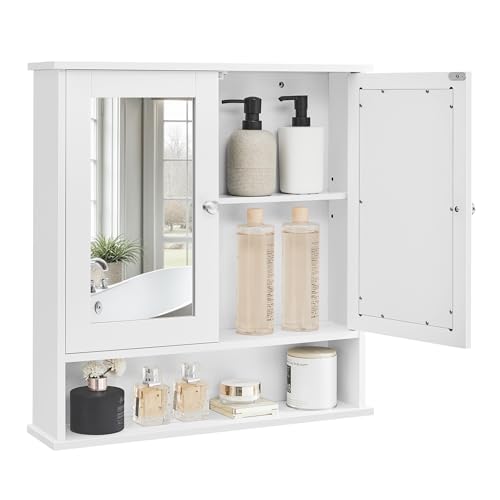
Single-door, double-door, tri-view, sliding, and open-shelf hybrids each suit different sink widths and habits. A wide single door gives an uninterrupted mirror but needs swing room, while split doors suit double sinks and let two people use the space at once. In the context of how to install a medicine cabinet, that point is practical rather than theoretical: check it against your own wall, your own routine, and the people who share the bathroom, and write down what you find before you commit. Small notes made early prevent expensive corrections later, and they turn a vague preference into a clear decision you can defend when you compare models side by side. Take your time here, because a cabinet is a daily-use fixture, not a decorative afterthought, and the best choice is the one that still makes sense on an ordinary busy morning months from now.
Step 4: Fasten securely per the maker
Installation safety matters just as much. Mirrored cabinets are heavy for their size, and the weight is concentrated in the door. Mount the cabinet into studs or use proper anchors rated for the load, exactly as the maker directs, and use a two-person lift for holding, levelling, and fastening. For a recessed install, remember that plumbing and wiring may run inside the wall behind the sink, so check carefully before cutting and stop if you find anything unexpected. If you are in doubt at any point, choose a surface-mount model or call a professional rather than guessing. In the context of how to install a medicine cabinet, that point is practical rather than theoretical: check it against your own wall, your own routine, and the people who share the bathroom, and write down what you find before you commit. Small notes made early prevent expensive corrections later, and they turn a vague preference into a clear decision you can defend when you compare models side by side. Take your time here, because a cabinet is a daily-use fixture, not a decorative afterthought, and the best choice is the one that still makes sense on an ordinary busy morning months from now.
Framed, frameless, arched, and minimalist cabinets can all work, but the cabinet should agree with the vanity, faucet finish, and lighting. A calm match usually ages better than a bold contrast chosen in a hurry. In the context of how to install a medicine cabinet, that point is practical rather than theoretical: check it against your own wall, your own routine, and the people who share the bathroom, and write down what you find before you commit. Small notes made early prevent expensive corrections later, and they turn a vague preference into a clear decision you can defend when you compare models side by side. Take your time here, because a cabinet is a daily-use fixture, not a decorative afterthought, and the best choice is the one that still makes sense on an ordinary busy morning months from now.
Bathrooms are humid, steamy rooms. Aluminium, stainless steel, sealed wood, and quality plastic each handle moisture differently, and edges, hinges, and backing deserve as much attention as the mirror itself. Ventilation in the room helps any cabinet last longer. In the context of how to install a medicine cabinet, that point is practical rather than theoretical: check it against your own wall, your own routine, and the people who share the bathroom, and write down what you find before you commit. Small notes made early prevent expensive corrections later, and they turn a vague preference into a clear decision you can defend when you compare models side by side. Take your time here, because a cabinet is a daily-use fixture, not a decorative afterthought, and the best choice is the one that still makes sense on an ordinary busy morning months from now.
Step 5: Hang, adjust, and load carefully
Delivery and handling deserve a thought. Mirrored products need intact packaging, a careful unboxing, and an immediate inspection under good light. Photograph any damage before installation and keep packaging until the door hangs true. In the context of how to install a medicine cabinet, that point is practical rather than theoretical: check it against your own wall, your own routine, and the people who share the bathroom, and write down what you find before you commit. Small notes made early prevent expensive corrections later, and they turn a vague preference into a clear decision you can defend when you compare models side by side. Take your time here, because a cabinet is a daily-use fixture, not a decorative afterthought, and the best choice is the one that still makes sense on an ordinary busy morning months from now.
Budget in qualitative terms rather than chasing a headline number. Entry-level cabinets cover the basics, mid-tier models usually improve materials, hinges, and shelf flexibility, and premium models add refined finishes, integrated features, and more careful construction. Decide which tier matches how long you plan to stay. In the context of how to install a medicine cabinet, that point is practical rather than theoretical: check it against your own wall, your own routine, and the people who share the bathroom, and write down what you find before you commit. Small notes made early prevent expensive corrections later, and they turn a vague preference into a clear decision you can defend when you compare models side by side. Take your time here, because a cabinet is a daily-use fixture, not a decorative afterthought, and the best choice is the one that still makes sense on an ordinary busy morning months from now.
A simple inventory helps more than any showroom visit. Empty your current storage onto a towel, discard expired items safely, group what remains, and measure the tallest and widest pieces. That pile is the brief your new cabinet must answer. In the context of how to install a medicine cabinet, that point is practical rather than theoretical: check it against your own wall, your own routine, and the people who share the bathroom, and write down what you find before you commit. Small notes made early prevent expensive corrections later, and they turn a vague preference into a clear decision you can defend when you compare models side by side. Take your time here, because a cabinet is a daily-use fixture, not a decorative afterthought, and the best choice is the one that still makes sense on an ordinary busy morning months from now.
Troubleshooting and Common Mistakes
Bathrooms are humid, steamy rooms. Aluminium, stainless steel, sealed wood, and quality plastic each handle moisture differently, and edges, hinges, and backing deserve as much attention as the mirror itself. Ventilation in the room helps any cabinet last longer. In the context of how to install a medicine cabinet, that point is practical rather than theoretical: check it against your own wall, your own routine, and the people who share the bathroom, and write down what you find before you commit. Small notes made early prevent expensive corrections later, and they turn a vague preference into a clear decision you can defend when you compare models side by side. Take your time here, because a cabinet is a daily-use fixture, not a decorative afterthought, and the best choice is the one that still makes sense on an ordinary busy morning months from now.
A recessed cabinet sits inside the wall and saves projection in a tight bathroom, while a surface-mount cabinet avoids cutting and works when pipes, vents, or studs block the cavity. Neither is automatically better; the wall you have and the storage you need should decide. In the context of how to install a medicine cabinet, that point is practical rather than theoretical: check it against your own wall, your own routine, and the people who share the bathroom, and write down what you find before you commit. Small notes made early prevent expensive corrections later, and they turn a vague preference into a clear decision you can defend when you compare models side by side. Take your time here, because a cabinet is a daily-use fixture, not a decorative afterthought, and the best choice is the one that still makes sense on an ordinary busy morning months from now.
Width, height, depth, swing, faucet clearance, light fixture position, and the distance to the side wall all decide whether a cabinet feels generous or awkward. Measure twice, tape the outline on the wall, and open an imaginary door in the mirror with tape so you can see conflicts before any box arrives. In the context of how to install a medicine cabinet, that point is practical rather than theoretical: check it against your own wall, your own routine, and the people who share the bathroom, and write down what you find before you commit. Small notes made early prevent expensive corrections later, and they turn a vague preference into a clear decision you can defend when you compare models side by side. Take your time here, because a cabinet is a daily-use fixture, not a decorative afterthought, and the best choice is the one that still makes sense on an ordinary busy morning months from now.
Surface-mount models and reversible changes suit rentals and homes you may sell soon. Recessed work is more permanent. Think about who will use the bathroom in three years, not only who uses it this month. In the context of how to install a medicine cabinet, that point is practical rather than theoretical: check it against your own wall, your own routine, and the people who share the bathroom, and write down what you find before you commit. Small notes made early prevent expensive corrections later, and they turn a vague preference into a clear decision you can defend when you compare models side by side. Take your time here, because a cabinet is a daily-use fixture, not a decorative afterthought, and the best choice is the one that still makes sense on an ordinary busy morning months from now.
Gear for This Guide

Kohler Medicine Cabinet
Judge it by the same checklist as every other model: measured fit, door swing, adjustable storage for your tallest items, moisture-appropriate materials, hinge feel, and how its mirror and frame sit with your vanity and lighting. Best for readers whose priorities match that positioning and whose wall suits its mounting style. Not suited for anyone who needs the opposite mounting style, a very different scale, or locked storage, because no standard cabinet in this guide provides genuine locked protection for children.
Evening routines are different. The bathroom is quieter, lighting is lower, and you notice rattles, stiff hinges, and doors that drift. Testing how a cabinet behaves in calm moments tells you a lot about how it will feel after years of use. In the context of this pick, that point is practical rather than theoretical: check it against your own wall, your own routine, and the people who share the bathroom, and write down what you find before you commit. Small notes made early prevent expensive corrections later, and they turn a vague preference into a clear decision you can defend when you compare models side by side. Take your time here, because a cabinet is a daily-use fixture, not a decorative afterthought, and the best choice is the one that still makes sense on an ordinary busy morning months from now.
Installation safety matters just as much. Mirrored cabinets are heavy for their size, and the weight is concentrated in the door. Mount the cabinet into studs or use proper anchors rated for the load, exactly as the maker directs, and use a two-person lift for holding, levelling, and fastening. For a recessed install, remember that plumbing and wiring may run inside the wall behind the sink, so check carefully before cutting and stop if you find anything unexpected. If you are in doubt at any point, choose a surface-mount model or call a professional rather than guessing. In the context of this pick, that point is practical rather than theoretical: check it against your own wall, your own routine, and the people who share the bathroom, and write down what you find before you commit. Small notes made early prevent expensive corrections later, and they turn a vague preference into a clear decision you can defend when you compare models side by side. Take your time here, because a cabinet is a daily-use fixture, not a decorative afterthought, and the best choice is the one that still makes sense on an ordinary busy morning months from now.

Jensen Medicine Cabinet
Judge it by the same checklist as every other model: measured fit, door swing, adjustable storage for your tallest items, moisture-appropriate materials, hinge feel, and how its mirror and frame sit with your vanity and lighting. Best for readers whose priorities match that positioning and whose wall suits its mounting style. Not suited for anyone who needs the opposite mounting style, a very different scale, or locked storage, because no standard cabinet in this guide provides genuine locked protection for children.
Surface-mount models and reversible changes suit rentals and homes you may sell soon. Recessed work is more permanent. Think about who will use the bathroom in three years, not only who uses it this month. In the context of this pick, that point is practical rather than theoretical: check it against your own wall, your own routine, and the people who share the bathroom, and write down what you find before you commit. Small notes made early prevent expensive corrections later, and they turn a vague preference into a clear decision you can defend when you compare models side by side. Take your time here, because a cabinet is a daily-use fixture, not a decorative afterthought, and the best choice is the one that still makes sense on an ordinary busy morning months from now.
Surface-mount models and reversible changes suit rentals and homes you may sell soon. Recessed work is more permanent. Think about who will use the bathroom in three years, not only who uses it this month. In the context of this pick, that point is practical rather than theoretical: check it against your own wall, your own routine, and the people who share the bathroom, and write down what you find before you commit. Small notes made early prevent expensive corrections later, and they turn a vague preference into a clear decision you can defend when you compare models side by side. Take your time here, because a cabinet is a daily-use fixture, not a decorative afterthought, and the best choice is the one that still makes sense on an ordinary busy morning months from now.
Pegasus Medicine Cabinet
Judge it by the same checklist as every other model: measured fit, door swing, adjustable storage for your tallest items, moisture-appropriate materials, hinge feel, and how its mirror and frame sit with your vanity and lighting. Best for readers whose priorities match that positioning and whose wall suits its mounting style. Not suited for anyone who needs the opposite mounting style, a very different scale, or locked storage, because no standard cabinet in this guide provides genuine locked protection for children.
A recessed cabinet sits inside the wall and saves projection in a tight bathroom, while a surface-mount cabinet avoids cutting and works when pipes, vents, or studs block the cavity. Neither is automatically better; the wall you have and the storage you need should decide. In the context of this pick, that point is practical rather than theoretical: check it against your own wall, your own routine, and the people who share the bathroom, and write down what you find before you commit. Small notes made early prevent expensive corrections later, and they turn a vague preference into a clear decision you can defend when you compare models side by side. Take your time here, because a cabinet is a daily-use fixture, not a decorative afterthought, and the best choice is the one that still makes sense on an ordinary busy morning months from now.
Bathrooms are humid, steamy rooms. Aluminium, stainless steel, sealed wood, and quality plastic each handle moisture differently, and edges, hinges, and backing deserve as much attention as the mirror itself. Ventilation in the room helps any cabinet last longer. In the context of this pick, that point is practical rather than theoretical: check it against your own wall, your own routine, and the people who share the bathroom, and write down what you find before you commit. Small notes made early prevent expensive corrections later, and they turn a vague preference into a clear decision you can defend when you compare models side by side. Take your time here, because a cabinet is a daily-use fixture, not a decorative afterthought, and the best choice is the one that still makes sense on an ordinary busy morning months from now.
TEHOME Medicine Cabinet
Judge it by the same checklist as every other model: measured fit, door swing, adjustable storage for your tallest items, moisture-appropriate materials, hinge feel, and how its mirror and frame sit with your vanity and lighting. Best for readers whose priorities match that positioning and whose wall suits its mounting style. Not suited for anyone who needs the opposite mounting style, a very different scale, or locked storage, because no standard cabinet in this guide provides genuine locked protection for children.
Guests notice storage too. A cabinet that closes cleanly and hides everyday clutter makes a small bathroom feel cared for, while an overstuffed open shelf makes even a clean room feel unsettled. In the context of this pick, that point is practical rather than theoretical: check it against your own wall, your own routine, and the people who share the bathroom, and write down what you find before you commit. Small notes made early prevent expensive corrections later, and they turn a vague preference into a clear decision you can defend when you compare models side by side. Take your time here, because a cabinet is a daily-use fixture, not a decorative afterthought, and the best choice is the one that still makes sense on an ordinary busy morning months from now.
Maintenance and Keeping It Working
Final Verdict
After the Fitting Is Done: Settling-In Checks and Small Adjustments for a Medicine cabinet
Installation day is not the finish line for a medicine cabinet. The first weeks in the bathroom wall and daily routine it will serve reveal the small misalignments, settling movements and habit clashes that no fitting session can predict. The checks below belong to that settling-in period: quick to do, easy to postpone, and responsible for most of the difference between an installation that feels finished and one that nags.
Check this in the first week, while adjustment is still easy. Start with fit, because fit failures cannot be fixed by enthusiasm later. In practice that means three things: confirm shelf spacing against your tallest bottles and everyday items; check the mirror size and door swing against taps, lights and nearby walls; and decide whether internal features like adjustable shelves matter for your mix of items. Write the answers down rather than holding them in your head, because a medicine cabinet is usually chosen over several browsing sessions, and the constraint you checked on Monday is the one forgotten by Friday. If any of the three checks produces an awkward answer, treat it as information about format, not as a problem to wave away — a different format of medicine cabinet often removes the conflict entirely, while a compromise on fit tends to be re-litigated every time the product is used.
Fitters rarely return for details this small, so they belong to you now. Then picture the product in its real situations rather than its best one. The routine cases are easy to imagine: a small ensuite where counter space is too limited for bottles, or a guest bathroom needing simple storage that visitors understand instantly. The more useful exercise is the harder day: a door opened into a wall light or tile edge because swing was never checked; and heavy glass bottles concentrated on one shelf beyond sensible loading. A medicine cabinet does not need to be perfect in those moments, but it does need a workable answer to them — a way to be moved, covered, adjusted, cleaned or simply tolerated until conditions improve. If the honest answer is that the hard day would make you stop using it altogether, that is a decision-grade fact, and it is far cheaper to learn it now than after delivery.
Frequently Asked Questions
Is a medicine cabinet safe for storing medicines around children?
No cabinet described here should be treated as childproof. Keep medicines and sharp items out of children’s reach or in locked storage regardless of the cabinet, because a child who can climb or reach the sink can open a standard door. Use the cabinet for adult toiletries and keep anything harmful genuinely locked away.
Should I choose recessed or surface-mount?
Choose recessed when the wall cavity is clear, you want less projection, and you accept cutting work. Choose surface-mount when pipes or wiring may be in the wall, when you rent, or when you want a simpler, reversible install. When in doubt, surface-mount or call a professional.
How do I know what size to buy?
Measure width, height, depth, faucet clearance, light position, and door swing, then tape the outline on the wall and live with it for a day. The right size leaves swing room, centres sensibly over the sink, and holds your tallest daily items without crowding.
How do I clean the mirror and interior?
Use a soft cloth and a mild cleaner suited to mirrors, wipe gently without soaking edges, and dry afterwards. Remove shelves where possible for a thorough clean, and keep ventilation running during showers to reduce moisture sitting on surfaces.
Can I install a mirrored cabinet alone?
It is safer with two people. Mirrored cabinets are heavy, awkward, and fragile at the edges, so one person should hold and level while the other fastens. Mount into studs or proper anchors per the maker, and stop for professional help if the wall or wiring is uncertain.
What should I store elsewhere?
Store bulk supplies, towels, cleaning chemicals, and anything dangerous to children elsewhere, ideally locked or well out of reach. The cabinet works best for small daily toiletries arranged by height and frequency of use, with nothing balanced precariously at the front edge.
Related Guides
Continue with Medicine Cabinet Review Medicine Cabinet Reviews Medicine Cabinet Buying Guide Medicine Cabinet Pros and Cons Is a Medicine Cabinet Worth It How to Choose a Medicine Cabinet best sauder bathroom storage best traditional bathroom vanities best 42 inch bathroom vanities best vigo bathroom sinks for connected advice on this topic and nearby bathroom storage decisions.