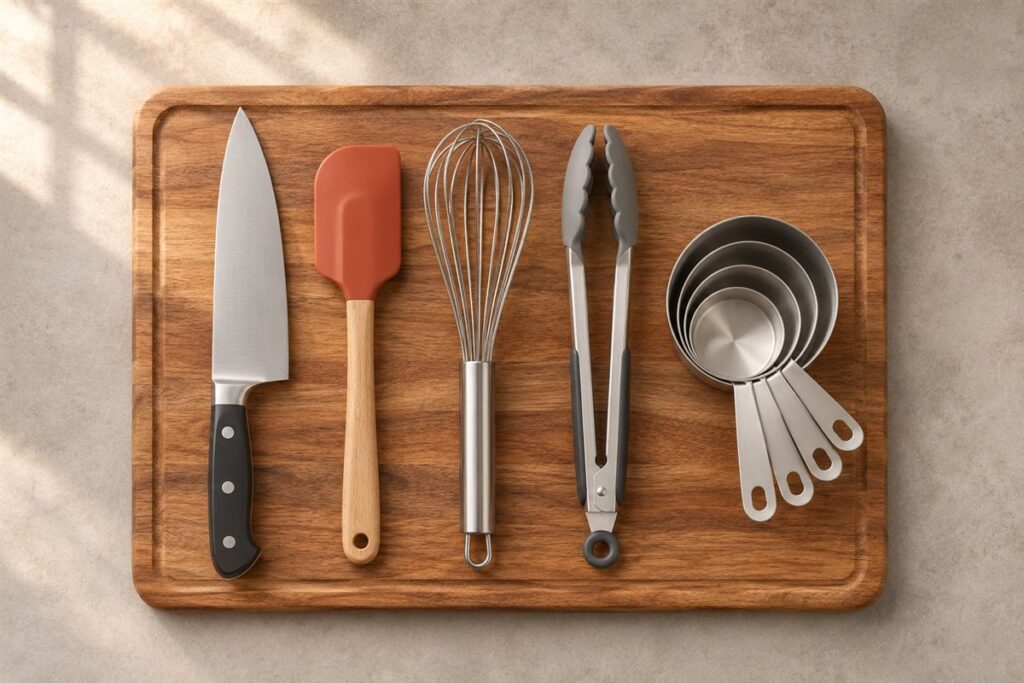
A large wood cutting board gives you space to chop, slice and carve without ingredients falling off the edge. It can also double as a serving surface for bread, cheese or a roast. The trade-off is weight and storage, so size needs real thought.
We have not used these products ourselves, so nothing here is a claim about how any single board cuts, wears or ages. Wood is a natural material, and listed measurements and species notes tell you more than a glossy product photo ever will. This guide covers how to choose a large wood board by comparing listing details and maker descriptions, so you can judge each option against your counter, your sink and the way you cook.
As an Amazon Associate we earn from qualifying purchases. Links on this site are affiliate links, and they do not change the information we give.
What to Look For
| Factor | Why it matters | What to check |
|---|---|---|
| Dimensions | The board must fit your counter and your sink for washing | Measure the space, then compare length, width and thickness |
| Wood type | Harder woods resist knife marks, softer woods are kinder to edges | Read the species the maker lists |
| Grain construction | End grain, edge grain and face grain wear differently | Check how the pieces are joined |
| Thickness and weight | Thick boards stay put, thin ones may warp or slide | Look at the listed thickness and weight |
| Juice groove | A groove catches liquid from meat and fruit | See whether it is on one side or both |
| Handles and feet | Cut-out handles help lifting, feet help airflow | Read the design notes |
Setup and Care Tips
- Wipe the board with a damp cloth and mild soap, then dry it upright.
- Do not soak wood boards or put them in a dishwasher.
- Apply food-grade mineral oil from time to time to keep the surface from drying.
- Place a damp towel under the board to keep it from sliding.
- Turn the board over regularly so wear spreads evenly.
Mistakes to Avoid
- Buying a board too big for the sink and counter.
- Ignoring thickness, which affects warping and stability.
- Leaving the board wet on one side.
- Using one board for everything without cleaning between tasks.
- Choosing by look alone and skipping the construction details.
FAQ
Is end grain better than edge grain?
End grain boards are often described as gentler on knife edges and more forgiving, while edge grain boards are usually lighter and simpler. Both can work well when made carefully.
How often should I oil a wood board?
There is no fixed schedule. Oil it when the surface looks dry or pale, and follow the care notes from the maker. Smaller boards are easier to wash and store, so some cooks pair one large board for big jobs with a smaller one for daily tasks.
The Short Version
A big board is a long-term kitchen tool, so think about where it will live, how you will wash it and how often you will care for it. Those habits matter as much as the wood itself.Measure your counter and sink, then choose a thickness, wood type and grain style that fit how you cook. Look for sensible extras such as a groove or handles, and plan to oil the board regularly.