A keypad door lock lets people enter with a code instead of a key, which can be handy for families, guests and rental spaces. The right one fits your door’s bore holes and thickness, runs on a power source you are happy to maintain and has a keypad that is easy to read. The wrong one needs drilling you did not plan for or runs through batteries faster than you expected. Here is how to narrow the field.
We have not used these products ourselves and do not make claims about how any lock will perform. This guide describes construction and features, such as door fit, keypad layout, power source and code options, so you can read maker descriptions with a clear checklist. Measure your door thickness and the hole spacing before you shop, since a listing only helps when you know your own numbers.
As an Amazon Associate we earn from qualifying purchases. Links on this site are affiliate links, and they do not change the information we give.
In this guide
Quick Picks
| Pick | Product | Best For |
|---|---|---|
| 1 | Schlage Camelot Keypad Lever (FE595) | Best lever handle with a physical keypad |
| 2 | Kwikset Powerbolt 250 Keypad Deadbolt | Best straightforward deadbolt on a budget |
| 3 | Yale Assure Lock Touchscreen (YRD226) | Best touchscreen for hub-based smart homes |
| 4 | Schlage Encode Camelot (BE489) | Best Wi-Fi keypad lock with no hub needed |
| 5 | ULTRALOQ U-Bolt Pro WiFi | Best for the most ways to get in |
Our Picks

1. Schlage Camelot Keypad Lever (FE595) — Best lever handle with a physical keypad
The FE595 Camelot is a lever lock rather than a deadbolt, which suits doors where the handle itself should do the locking — a garage entry or side door is the classic case. Its keypad uses physical buttons you can feel, and it holds up to 19 user codes, so family members and a cleaner or dog walker can each have their own. The Flex-Lock feature answers the guide’s behavior question directly: set it to re-lock automatically a few seconds after entry, or leave the door unlocked while you are carrying things in and out. Power is a single 9V battery, and a standard key cylinder with a 5-pin C keyway covers the backup-entry point if the battery dies. The levers are reversible for right- or left-handed doors, and Schlage backs the electronics for three years. Choose this one if you want a lever, real buttons, and no app or hub involved at all.


2. Kwikset Powerbolt 250 Keypad Deadbolt — Best straightforward deadbolt on a budget
The Powerbolt 250 is the plain, does-the-job keypad deadbolt in this group. Its 10-button keypad is backlit for night entry, codes are customizable, and the lock adds auto-locking plus a Vacation Mode that disables the keypad while you are away — a neat answer to the guide’s code-management section. The SmartKey cylinder matters for backup entry and for landlords: you can re-key the lock to a new key yourself instead of replacing the hardware when tenants or circumstances change. It runs on four AA batteries, and Kwikset’s manual puts battery life at roughly a year, which makes the guide’s spare-battery advice easy to schedule. Installation replaces a standard deadbolt in the existing bore, so door fit is the usual thickness and backset check rather than new drilling in most cases. Choose the Powerbolt 250 if you want keypad entry and re-keyable backup without paying for smart-home features.

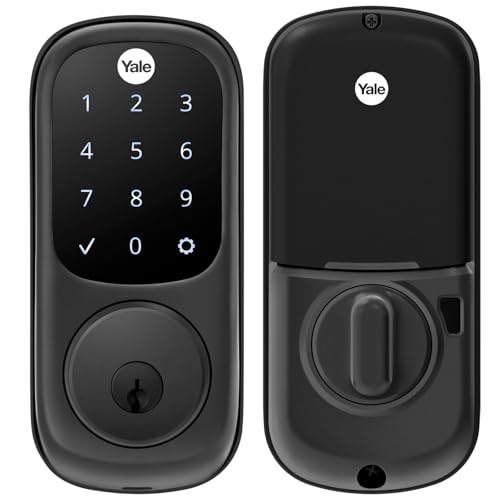
3. Yale Assure Lock Touchscreen (YRD226) — Best touchscreen for hub-based smart homes
The YRD226 Assure Lock replaces the whole deadbolt with a touchscreen keypad on the outside face — no buttons, just a flat pad that wakes when touched. This version carries a Z-Wave module, so it joins a hub such as Ring Alarm or Samsung SmartThings and gains remote access, code management from the hub app, and voice-assistant control through that system; the hub is required and sold separately, which is the one condition to accept before buying. Entry is by code, by app through the hub, or by the physical backup key, covering the guide’s backup-entry check. It runs on four AA batteries, with the key as your way in if they run flat. Finishes include satin nickel, oil rubbed bronze and black suede in the same model line. Choose the YRD226 if your home already runs on a Z-Wave hub and you want the lock inside that system rather than on its own app.

4. Schlage Encode Camelot (BE489) — Best Wi-Fi keypad lock with no hub needed
The Encode is Schlage’s answer to the hub question: Wi-Fi is built into the lock, so it connects to your home network directly and works with Alexa and Hey Google without extra hardware. The outside face is a touchscreen keypad in the Camelot trim, and codes are created and managed in the Schlage Home or Key by Amazon app — the listing calls out guest codes for visitors and Airbnb-style hosting, which is the code-management scenario the guide describes. You can check the lock’s status and lock up remotely from the app, and a physical key still backs up the electronics. Because Wi-Fi is always on call, battery changes come more often than with a plain keypad lock, so keep the guide’s spare-battery habit. Choose the Encode if you want app control and guest codes on a rental or family front door, but do not own — and do not want — a smart-home hub.
View Schlage Encode Camelot (BE489) on Amazon
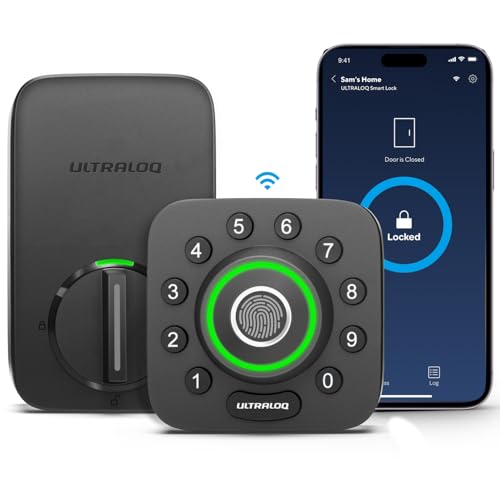
5. ULTRALOQ U-Bolt Pro WiFi — Best for the most ways to get in
The U-Bolt Pro WiFi stacks more entry methods into one deadbolt than anything else here: the maker counts eight, including fingerprint ID, an anti-peep keypad that lets you hide your code inside extra digits, app control with built-in Wi-Fi, eKey sharing for guests, voice control, and two mechanical backup keys. A door sensor is included, which powers the auto-lock and the door-left-open alert, so the lock knows the door is actually shut rather than just timed out. The exterior carries an IP65 waterproof rating, the strongest weather answer in this group and a direct fit for the guide’s finish-and-weather section on exposed doors. Four AA batteries are in the box, and ULTRALOQ rates the lock to ANSI/BHMA Grade 1, the highest residential grade in its listing. Choose the U-Bolt Pro if different people need different ways in — prints for family, codes for guests, keys as the last resort — on a door that faces the weather.
What to Look For
| Factor | Why it matters | What to check |
|---|---|---|
| Door fit | Bore size and thickness differ, and a poor match needs extra work. | Compare the listed door thickness range and backset with your door. |
| Keypad style | Buttons, touchscreens and backlit pads feel very different in use. | Look at button type, backlight and how clear the layout is. |
| Power source | Batteries need changing, and wired options need extra setup. | Check battery type, expected life as described by the maker and any low warning. |
| Backup entry | You will want a way in if the power runs out. | Look for a key cylinder, an external power contact or both. |
| Code management | Families and guests may need several codes. | See how many codes are listed and how you add or remove them. |
| Finish and weather use | Outdoor doors face rain, sun and temperature swings. | Read about the finish and the maker’s guidance on exterior use. |
Setup and Care Tips
- Read the install guide through once before you remove your old lock.
- Check that the latch lines up with the strike plate and the door closes smoothly.
- Set a code that is easy for you to recall and hard for others to guess.
- Replace batteries on a regular schedule and keep spares in the house.
- Wipe the keypad with a soft, slightly damp cloth and avoid harsh cleaners.
Mistakes to Avoid
- Ordering before measuring door thickness and hole spacing.
- Using an obvious code such as a birth date or a simple number run.
- Ignoring the backup key and then locking yourself out.
- Waiting for a low battery warning with no spare batteries on hand.
- Assuming an indoor lock will suit an exposed exterior door.
Deadbolt or lever: which keypad door lock style fits your door?
A keypad deadbolt suits a main entry door that already has a separate handle, while a keypad lever replaces the handle itself and suits side doors, garage entries and interior rooms. Knowing which style your door uses today is the quickest way to rule out half the listings.
Most front doors carry two pieces of hardware: a handle set that holds the door shut and a deadbolt above it that adds strength. A keypad deadbolt swaps only the upper piece, so your existing handle stays. A keypad lever swaps the handle and often includes its own latch, which is why it can look like a bigger job.
There is also a third group, the all-in-one sets that replace both pieces. These are tidy, but they usually need the right hole layout, so confirm what your door has now.
- Deadbolt style: a good match when you want the extra strength of a bolt and are happy to keep your current handle.
- Lever style: a good match for doors where the handle should do the locking, and for people who find a round knob hard to turn.
- Handle-and-lock sets: convenient if you are updating both pieces, but check the hole spacing carefully.
Whichever you choose, compare the listed door thickness range and the backset, which is the distance from the door edge to the center of the main hole. These two numbers decide whether the lock drops in or needs extra work. If your door has no pre-drilled holes at all, read the installation notes closely, because that is a different job from a swap.
How long do batteries last, and what happens when they die?
Battery life depends on how often the lock is used, the keypad type and whether it has Wi-Fi, so treat any figure as the maker’s estimate and not a promise. The more important question is what you can do when the batteries run flat.
Plain keypad locks with no wireless radio generally sip power, because they only wake when someone touches the keypad. Locks with built-in Wi-Fi stay in contact with your network, which draws more power, so expect to change batteries more often. Touchscreens and backlit pads also use more energy than simple buttons.
Plan for the dead-battery moment before it happens:
- Look for a low-battery warning that gives you days of notice, and find out how it signals, by light, sound or app message.
- Keep fresh spare batteries in a drawer near the door, not in the car.
- Know the backup route. Some locks have a key cylinder, some have contact points for a temporary battery, and a few have both.
- Hide a spare key somewhere safe with a trusted neighbor or in a lockbox, not under the mat.
Use the battery type the maker lists and replace the whole set at once. Mixing old and new cells can shorten life and cause false warnings. If a lock behaves oddly after a battery change, check the manual for a reset or re-sync step before assuming the lock is faulty.
Is a smart keypad lock better than a standalone one?
A smart keypad lock is better only if you will use the remote features, such as sending guest codes or checking whether the door is shut. A standalone keypad lock is simpler, usually uses less power and has fewer things to break.
The picks above show the spread. The Schlage Camelot Keypad Lever (FE595) and the Kwikset Powerbolt 250 Keypad Deadbolt work on their own with no app and no hub. The Yale Assure Lock Touchscreen (YRD226) joins a hub, the Schlage Encode Camelot (BE489) connects through Wi-Fi directly, and the ULTRALOQ U-Bolt Pro WiFi adds several extra entry methods on top.
Ask yourself these questions:
- Do you want to create or delete codes from your phone while away?
- Do you already own a hub that the lock must be compatible with?
- Are you comfortable with an app account and occasional software updates?
- Would a power or internet outage leave you with a working keypad and a backup key?
If most answers are no, a standalone lock keeps life simple. If you host guests, manage a rental or share the house with many people, remote code control can save real hassle. Whichever you pick, check what the lock does when the network is down, because a good design keeps the keypad working locally.
How do you keep a keypad door lock secure?
Keep a keypad door lock secure by choosing codes that are hard to guess, changing them when people move on and keeping the batteries healthy. The lock is only as strong as the habits around it.
Start with the code itself. Avoid birthdays, house numbers, repeating digits and simple runs. A longer code is harder to guess, so use the maximum length the lock allows if it offers a choice. Some models let you enter extra digits before or after the real code, which helps hide it from anyone watching your hand.
Good habits to build:
- Give each regular visitor, such as a cleaner or dog walker, a separate code so you can remove one without disturbing the others.
- Delete temporary codes as soon as the job or stay is over.
- Wipe the keypad now and then, since worn or greasy buttons can show which digits are used most.
- Check that the door closes fully and the bolt extends the whole way, because a lock cannot help if the door sits ajar.
- Change the master or programming code from any factory default.
Also look at the listing for any lockout feature, which pauses entry after repeated wrong attempts. If you want stronger protection against forced entry, a keypad does not replace a solid door frame and a strike plate fixed with long screws, so check those parts too.
Which keypad door lock should you buy?
Choose by how you live, not by the longest feature list. Here is how the five picks map to common buyer needs.
- If you want a lever handle with real buttons and no app, go for the Schlage Camelot Keypad Lever (FE595).
- If you want a plain keypad deadbolt that you can re-key yourself and keep simple, choose the Kwikset Powerbolt 250 Keypad Deadbolt.
- If your home already runs on a hub, look at the Yale Assure Lock Touchscreen (YRD226), and remember the hub is a separate purchase.
- If you want app control and guest codes without a hub, pick the Schlage Encode Camelot (BE489).
- If different people need different ways in and the door faces the weather, choose the ULTRALOQ U-Bolt Pro WiFi.
A few extra shortcuts help. For a rental where you change tenants, a re-keyable cylinder and easy code deletion matter most. For a family with young children and older relatives, large readable buttons and a dependable backup key matter more than app features. For a garage entry or side door, a lever without wireless parts is often plenty.
If two picks seem close, decide on the power source and the backup entry first, then on finish. Those are the details that you will notice every week. Finish is easy to live with, but a lock that is awkward to open or runs flat at a bad moment becomes annoying quickly.
What to check before you buy a keypad door lock
Before you press the buy button, run through a short checklist against the listing. Most returns come from a mismatch that a few minutes of checking would have caught.
- Door thickness: measure your door and compare it with the supported range.
- Backset and hole size: confirm the distance from the door edge and the size of the main hole.
- Handing: for levers, find out whether the handle is reversible or made for one side.
- Power source: note the battery type and whether batteries are included in the box.
- Backup entry: confirm whether a physical key, an external power contact or both are provided, and how many keys come with it.
- Hub or app needs: if the lock depends on a hub or an account, check that your phone and router are supported.
- Finish: confirm the finish matches your other hardware and suits an exterior door if yours is exposed.
- Warranty and returns: read what the listing says about coverage for the mechanism and the electronics, and what the return window is.
- What is included: look for the strike plate, screws and any template.
Also consider tools. Most swaps need only a screwdriver, but check the manual in case a special step is listed. If you rent, confirm with your landlord before changing locks, and ask whether the old hardware must be kept.
Is a keypad door lock worth it, and who should skip it?
A keypad door lock is worth it when you often hand out access, hate carrying keys or want to stop worrying about lost copies. It is not worth it if you want zero maintenance or live somewhere you cannot rely on a spare battery routine.
Be honest about the downsides. Electronics can fail, batteries need attention and a code can be shared without you knowing. A good keypad lock also costs more than a plain mechanical one, and paying more for smart features only pays off if you use them.
- Is it worth paying more? Pay more for features you will use weekly, such as guest codes or fingerprint entry. Skip the extras if you only need a code for yourself and your family.
- Who should skip it? People who cannot check batteries, who want the simplest possible hardware or who rent without permission to change the lock.
- What are the main trade-offs? Convenience against upkeep, and connected features against simplicity.
If a basic keypad covers your needs, a simpler model is often the calmer choice. If you need remote codes and logs, accept the extra setup as the price of those features.
Compare the picks above, check the current listing for door fit and what is included, then choose the one that fits how you will use it.
Going Deeper: Matching Keypad door locks to Real Life
The shortlist above gives you the headline differences between these keypad door locks, but the right choice usually becomes obvious only when you picture an ordinary week with the product in your home. Think about where it will live, who will use it most often, and what will make you stop using it if you get that part wrong. A product that looks ideal on a listing page can still be the wrong fit if it fights your space, your routine or the other people and things around it. The sections below walk through that thinking in the order experienced buyers tend to use, so you can test each pick on this page against your own situation before you commit.
Start with the job you actually need done
Write down, in one plain sentence, the main job you want these keypad door locks to do, and then a second sentence for the job you hope they will also handle occasionally. Most disappointment comes from buying for the occasional job and living every day with the compromise that creates. If the main job is daily and demanding, favour the pick that handles that job with the least fuss, even if another option looks more versatile on paper. If the main job is light and occasional, ease of storage, simple setup and low-maintenance care usually matter more than maximum capability. Keep those two sentences beside you as you re-read the picks above, and score each one honestly against them rather than against an idealised version of your routine.
Next, think about the conditions around the job. Will these keypad door locks be used indoors, outdoors, or moved between the two? Will they be used by one person or shared, by beginners or by people who already know what they are doing? Will they be used in short bursts or for long stretches at a time? Each answer quietly rules some designs in and others out: shared and frequent use rewards sturdiness and simple controls, while occasional solo use rewards compact size and quick setup. None of this appears in a headline feature list, yet it decides how satisfied you will feel a few months from now, when the novelty has worn off and only the everyday experience remains.
Measure the space, then measure it again
Space is the most common reason purchases like these get returned or quietly abandoned, so measure before you fall for any particular model. Note the full footprint the product needs in use, not just at rest: allow room to walk around it, to open anything that opens, to plug in, load, adjust or get on and off safely, and to store the accessories that come with it. Check doorways, hallways and storage spots it must pass through or live in, and compare those numbers with the dimensions the maker lists, in the same units, before ordering. If two people will use the space at once, allow for both of them. A few minutes with a tape measure now is far cheaper than repacking a bulky box later.
It also helps to think about what the product displaces. Few homes have genuinely empty space waiting, so these keypad door locks will usually push something else aside, share a corner, or need a small reorganisation to work well. Decide in advance where the displaced things go, and whether the new arrangement still leaves the room comfortable to move through. Consider light, airflow and noise as well: a spot that is technically big enough can still be a poor home if it is gloomy, cramped to reach, or likely to disturb people in the next room. Choosing the location first, and the model second, reverses the order most people use, and it prevents the classic mistake of a good product exiled to a bad corner.
Match the design to the user, not the brochure
Every design in this category involves a trade-off between capability, convenience and care. Simpler designs tend to be lighter, cheaper to maintain and easier to learn, but they may ask more of the user in patience or technique. More elaborate designs can take work off your hands or add comfort and control, yet they usually bring more parts to clean, more settings to understand and more that can wear or fail over time. Neither direction is better in the abstract. The better question is which trade-offs you personally mind least. If you know you abandon fiddly routines, choose the option you will actually use on a tired weekday, not the one that impresses on the first weekend.
If the product will be shared, involve the other users before you buy rather than after. People differ in height, strength, confidence and patience, and a design that suits the person who did the research can quietly exclude everyone else. Where the maker lists sizes, capacities or user limits, check them against the real people involved, including whoever is likely to grow, join in or help with setup and cleaning. Where adjustability is offered, value it properly: a little flexibility in fit or configuration often matters more over years of use than a small difference in headline features, because it lets one purchase keep working as people and habits change around it.
How the Picks Above Compare in Everyday Use
With that groundwork done, the picks in this guide sort themselves more clearly. Each one below earned its place for a different kind of buyer, so instead of asking which is best overall, ask which description sounds most like your household. The notes that follow use only what this guide has already said about each product, reframed around daily use, so you can compare them on the things that will actually decide your experience.
Schlage Camelot Keypad Lever (FE595) is this guide’s choice for best lever handle with a physical keypad. Read its description above with your two job sentences in mind: if that best-for use is your main job, this is the benchmark the others have to beat. Pay attention to how it is meant to be set up and stored, because that routine is the one you would repeat most often, and to any sizing or user guidance the maker gives, since a good match there matters more than small feature differences. If its best-for use sounds like your occasional job rather than your main one, keep it on the list by all means, but let a pick aimed squarely at your everyday need lead, and treat this one as the alternative to choose only if its particular strengths genuinely outweigh that focus.
Kwikset Powerbolt 250 Keypad Deadbolt is this guide’s choice for best straightforward deadbolt on a budget. Read its description above with your two job sentences in mind: if that best-for use is your main job, this is the benchmark the others have to beat. Pay attention to how it is meant to be set up and stored, because that routine is the one you would repeat most often, and to any sizing or user guidance the maker gives, since a good match there matters more than small feature differences. If its best-for use sounds like your occasional job rather than your main one, keep it on the list by all means, but let a pick aimed squarely at your everyday need lead, and treat this one as the alternative to choose only if its particular strengths genuinely outweigh that focus.
Yale Assure Lock Touchscreen (YRD226) is this guide’s choice for best touchscreen for hub-based smart homes. Read its description above with your two job sentences in mind: if that best-for use is your main job, this is the benchmark the others have to beat. Pay attention to how it is meant to be set up and stored, because that routine is the one you would repeat most often, and to any sizing or user guidance the maker gives, since a good match there matters more than small feature differences. If its best-for use sounds like your occasional job rather than your main one, keep it on the list by all means, but let a pick aimed squarely at your everyday need lead, and treat this one as the alternative to choose only if its particular strengths genuinely outweigh that focus.
Schlage Encode Camelot (BE489) is this guide’s choice for best wi-fi keypad lock with no hub needed. Read its description above with your two job sentences in mind: if that best-for use is your main job, this is the benchmark the others have to beat. Pay attention to how it is meant to be set up and stored, because that routine is the one you would repeat most often, and to any sizing or user guidance the maker gives, since a good match there matters more than small feature differences. If its best-for use sounds like your occasional job rather than your main one, keep it on the list by all means, but let a pick aimed squarely at your everyday need lead, and treat this one as the alternative to choose only if its particular strengths genuinely outweigh that focus.
ULTRALOQ U-Bolt Pro WiFi is this guide’s choice for best for the most ways to get in. Read its description above with your two job sentences in mind: if that best-for use is your main job, this is the benchmark the others have to beat. Pay attention to how it is meant to be set up and stored, because that routine is the one you would repeat most often, and to any sizing or user guidance the maker gives, since a good match there matters more than small feature differences. If its best-for use sounds like your occasional job rather than your main one, keep it on the list by all means, but let a pick aimed squarely at your everyday need lead, and treat this one as the alternative to choose only if its particular strengths genuinely outweigh that focus.
A useful final comparison is to imagine the worst ordinary moment with each pick: the rushed morning, the crowded room, the day something needs cleaning or putting away quickly. The right choice is usually the one whose worst ordinary moment you can live with easily. Also weigh how forgiving each design is of mistakes. Beginners, guests and children rarely use things exactly as intended, so a design that tolerates imperfect setup, rough handling or skipped steps gracefully will feel better in a real home than a more delicate design that demands everything be done just so. When two picks still seem equal after all this, choose the one that is simpler to care for and easier to store, because those are the qualities you will still be benefiting from long after the first impressions fade.
Setup, First Use and Settling In
When your choice arrives, resist the urge to rush it into full use. Unpack it somewhere with room to work, lay the parts out, and check everything against the maker’s list before you throw any packaging away; keep the box and paperwork until you are sure the product suits you, in case it needs to go back. Read the instructions all the way through once before starting, because the order of steps often matters and a step skipped early can be awkward to undo later. Assemble or set up on a clean, level surface with the tools the maker specifies, tighten and adjust things gradually rather than forcing them, and stop to re-read whenever something does not feel right. A careful first setup is the cheapest quality control there is.
Then give the product an honest breaking-in period. First uses are for learning, not judging: work out the settings, positions or techniques that suit you, expect a little awkwardness, and make small adjustments rather than large ones so you can tell what helped. Show anyone else who will use it how it works and agree the basic ground rules while enthusiasm is high, including where it lives, what it should never be used for, and who deals with cleaning and putting it away. If something seems wrong rather than merely unfamiliar, check the troubleshooting section of the manual before assuming a fault, since most early problems trace back to a setup step. Within a short time the routine should feel natural, and that, more than any first impression, tells you the purchase was right.
Safety checks worth making a habit
Care, Cleaning and Storage
Long life in this category is mostly about small, regular care rather than occasional heroic effort. After use, a quick wipe, shake-out, airing or tidy, following the maker’s guidance for the materials involved, stops dirt and moisture becoming the ingrained kind that is hard to shift later. Set a simple rhythm: a light clean as part of putting the product away, a slightly deeper clean on a regular cycle that suits how often you use it, and a periodic check of fastenings, surfaces and moving parts while you clean, so wear is spotted early when it is usually cheapest and easiest to address. Use only the cleaning methods and products the maker allows, because the wrong solvent, temperature or abrasive can damage finishes and fabrics in ways that are not covered by any warranty.
Storage deserves the same thought as use. Keep these keypad door locks somewhere dry, out of harsh sunlight and away from heat sources, in the position the maker recommends rather than balanced, squashed or loaded with other things. If the product folds, breaks down or comes apart for storage, practise the routine once while you are not in a hurry, and keep any tools, caps or small fittings together in one labelled place so they are not lost. Before a long break from use, clean everything thoroughly, let it dry fully, and check it over; before using it again, repeat the safety glance rather than assuming it is exactly as you left it. Treated this way, most products in this category repay their cost over a long period, and staying tidy also means the product is ready the moment you want it, which is half of why you bought it.
When something goes wrong
If performance drops or something breaks, work through the simple causes first: correct setup, correct settings, cleanliness, and whether anything has loosened, filled up, worn smooth or been stored badly. Consult the manual’s troubleshooting guidance and the maker’s support channels before paying for repairs or deciding the product is finished, and keep your proof of purchase and any warranty paperwork together from the start so that conversation is easy. If a part is replaceable, replacing it promptly usually protects the rest of the product from knock-on damage. And if the honest conclusion is that the product no longer suits your needs, that is useful information rather than failure: the notes you have made about what worked and what did not are exactly what will make your next choice in this category a better one.
A Calm Decision Checklist Before You Order
- I can state the main job I need these keypad door locks to do, in one sentence.
- I have measured the space in use and in storage, including access and clearance.
- I have checked the maker’s sizing, capacity and user guidance against the real people involved.
- I know how the product is set up, cleaned and put away, and I am willing to do that routine.
- I have compared the picks above by their best-for use, not by headline features alone.
- I have read the full description of my chosen pick on this page, including its limitations.
- I will check the current details, options and availability on the product page before ordering, since listings change.
- I will keep the packaging and paperwork until I am sure the product suits my home.
FAQ
Do keypad locks work without batteries?
That depends on the model. Many include a key cylinder or a contact point for a temporary power source, so read the entry options in the listing before you buy.
Can I fit a keypad lock myself?
Many are made to replace a standard lock using common tools, but doors differ. Compare your door’s holes and thickness with the maker’s notes, and ask a local pro if your door needs changes.
How secure is a keypad door lock compared with a key lock?
A keypad lock can be as secure as a key lock when it uses a solid bolt and you keep the code private. The weak points are usually guessable codes and a weak door frame. Check the grade or standard the maker lists and the strength of your strike plate.
What happens if I forget my keypad lock code?
Most locks let you use the backup key or reset the code through a programming step in the manual. Smart locks may let you create a new code in the app. Keep the manual and a spare key somewhere safe.
Can a keypad door lock be re-keyed?
Some models have a cylinder that can be re-keyed, which helps when tenants change or a key goes missing. Others use a fixed cylinder. Check the listing for re-keying details before you buy.
Do keypad door locks need Wi-Fi?
No, many keypad locks work with no network at all. Wi-Fi is only needed for app control, remote codes and alerts. Choose a standalone model if you do not want an account or wireless connection.
Can I use a keypad lock on an exterior door in the rain?
It depends on the finish and any weather rating the maker lists. Read the exterior-use guidance in the listing and the manual. A covered porch is gentler on any lock than a fully exposed door.
How many codes can a keypad door lock store?
The number varies by model, so check the listing. Family homes often need only a handful, while rentals and busy households benefit from a larger list. Separate codes make it easy to remove one person without affecting others.
Will a keypad lock work during a power cut?
Battery-powered locks keep working in a power cut because they do not rely on house power. Wi-Fi locks may lose app control if your router is down, but the keypad should still work locally. Confirm this in the listing.
How do I choose the right size or capacity?
Start from the people and the space, not from the biggest option available. Use the maker’s sizing and capacity guidance, compare it honestly with who will use the product and how much room you measured, and remember that a slightly generous fit usually feels better than one that only just works on paper. If you fall between two options, favour the one that leaves comfortable clearance in use and in storage, because a product that is awkward to live around gets used less, however capable it is.
What should I check first when the product arrives?
Check the contents against the maker’s list, look everything over for damage, and read the instructions fully before setting anything up. Confirm that fixings, accessories and any tools you need are present, keep the packaging until you have used the product a few times, and register or file the warranty paperwork somewhere you will find it later. A slow first half hour prevents most of the problems people blame on the product itself.
How often does this kind of product need cleaning?
Little and often works best. A quick clean as part of putting the product away, plus a deeper clean on a regular cycle matched to how heavily you use it, keeps dirt and wear from building up. Always follow the maker’s guidance for the materials involved, and use the cleaning time to glance over fastenings and surfaces, so small issues are caught while they are still small.
Can I use it in a smaller home or a rented property?
Often, yes, but let the space lead the decision. Measure carefully, favour designs that store compactly or set up without permanent changes where that matters to you, and check any rules that apply to your home before choosing a model that fixes, hangs or installs in a lasting way. The descriptions above note which picks suit tighter or less permanent setups, and those are the ones to shortlist first if space or renting is your main constraint.
What is the most common mistake buyers make in this category?
Buying for features instead of fit. Shoppers compare headline specifications, choose the most capable option, and then discover it is too big for the room, too involved for their routine, or wrong for the people actually using it. Measuring first, being honest about how often and how carefully the product will be used, and choosing by best-for use rather than by specification lists avoids nearly all of it.
How long should a product like this last?
That depends far more on use and care than on the badge. Set up correctly, used within the maker’s guidance, cleaned little and often and stored dry and unstressed, a well-chosen product in this category should give long, uneventful service. Neglect, overloading and poor storage shorten life quickly, which is why the care and storage sections above are worth following even when everything seems fine.
What if the product turns out not to suit us?
First, check whether the problem is setup or fit rather than the product: re-read the instructions, try the maker’s troubleshooting steps, and make the small adjustments suggested in the guide above. If it genuinely does not suit, keeping the packaging, paperwork and proof of purchase makes returning or exchanging far easier, and the notes you made about why it did not work will point you straight to the pick that will.
The Short Version
Choose a keypad door lock by checking door fit first, then compare the keypad style, power source, backup entry and code options. Keep this checklist with you while you read listings. A calm look at those few details will serve you better than chasing the longest list of features.
Related Guides
- How to Choose the Best Fingerprint Door Locks: A Buyer's Guide
- How to Choose the Best Sliding Door Locks: Buyer's Guide (2026)
- How to Choose the Best Smart Locks: Buyer's Guide (2026)
- 6 Best Refrigerator Locks: Child Safety and Cable Locks (2026)
- 6 Best Thermal Insulated Curtains: Panels and Door (2026)