Disclosure: airfryerkitchensupply.com is reader-supported. When you buy through links on our site, we may earn an affiliate commission at no extra cost to you.
Where to buy
Every cushion below is a real meditation cushion — zafu, zabuton or crescent — with its fill and dimensions taken from the manufacturer’s own listing, verified through Amazon’s product data. This category is polluted with throw pillows and baby floor cushions wearing meditation keywords, so the filter here was strict: if it is not made to sit a meditation posture, it is not in the guide. We print no prices or scores; use the link under each pick to check price on Amazon.
renoo Round Organic Meditation Cushion Zafu (GOTS Cotton Cover) — Best Overall: check price on Amazon.
FelizMax Zafu Buckwheat Meditation Cushion — Best Value Zafu: check price on Amazon.
Zafuko Foldable Cushion — Organic Kapok — Best for Travel & Kneeling: check price on Amazon.
Hihealer Premium Crescent Meditation Cushion — Best Crescent: check price on Amazon.
Mindful Modern Zabuton Meditation Mat (Cotton Filled) — Best Traditional Zabuton: check price on Amazon.
TokSay Velvet Zabuton Meditation Mat (31×31 in, Foam) — Best Foam Zabuton: check price on Amazon.
Introduction
The best meditation floor pillows do one job: they put your pelvis at the height and tilt that lets your spine stack itself, so a twenty-minute sit is limited by your mind rather than your knees. That job is done by three shapes. The zafu — a round, pleated cushion, usually buckwheat-filled — lifts the hips above the knees in cross-legged postures. The zabuton is the flat mat underneath, padding knees and ankles against the floor. The crescent zafu splits the difference, supporting the thighs along its curved edge. Everything in this guide is one of those three, because everything else sold under this search is a floor cushion that happens to be near a meditation keyword.
Fill is the second decision, and it is a genuine fork. Buckwheat hulls pour and settle like sand: firm, heavy, exactly moldable to your sit bones, and adjustable — open the zipper, remove a cup of hulls, and the cushion is lower and softer. Kapok is the traditional alternative: much lighter, springier, quieter to carry to a class or a garden. Foam zabutons trade the natural-fill story for even, washable practicality. None is best in the abstract; the reviews match each fill to the sitter it serves.
A note on claims, because this category attracts them: a cushion can support a posture, and a supported posture can make sitting still easier. That is the whole honest promise. Nothing here treats backs, aligns chakras or deepens anyone’s practice by itself, and where a listing’s language wanders in that direction, this guide stays with the measurable facts — fill, height, diameter, cover — which are what you are actually buying.
Key Takeaways
- Zafu lifts the hips for cross-legged sits, zabuton pads knees and ankles underneath, crescent supports the thighs — most sitters eventually want a zafu on a zabuton.
- Buckwheat is firm, heavy and adjustable; kapok is light and springy; foam is even and washable. Fill is a real fork, not a detail.
- The renoo zafu (GOTS-certified organic cotton cover, buckwheat fill) is the best all-round pick.
- Heights here run about 5–7 inches of loft; if your hips sit below your knees, go taller or add the zabuton.
In this guide
Quick Picks

renoo Round Organic Meditation Cushion Zafu (GOTS Cotton Cover) — Best Overall
A 13-inch round buckwheat zafu, about 7 inches tall, with a GOTS-certified organic cotton cover that removes for washing and an adjustable fill height. The most complete classic zafu in this guide.
Check the current price on Amazon

FelizMax Zafu Buckwheat Meditation Cushion — Best Value Zafu
The straightforward buckwheat zafu: 33 cm across (about 13 inches), 14 cm tall (about 5.5 inches), with a zippered cotton cover, in black. (The listing title muddles ‘zafu’ and ‘zabuton’ — by shape and fill, this is a zafu; we classify it by what it is.)
Check the current price on Amazon

Zafuko Foldable Cushion — Organic Kapok — Best for Travel & Kneeling
A foldable cushion filled with organic kapok — use it folded for a higher seat or unfolded as a lower mat. Kapok is the light, springy traditional fill, and the folding design makes this the one pick that travels and kneels.
Check the current price on Amazon

Hihealer Premium Crescent Meditation Cushion — Best Crescent
A crescent-shaped buckwheat cushion: the curved edge supports both thighs in cross-legged postures, where a round zafu only lifts the pelvis. For sitters whose knees and outer thighs are the complaint, the crescent is the shape to try.
Check the current price on Amazon
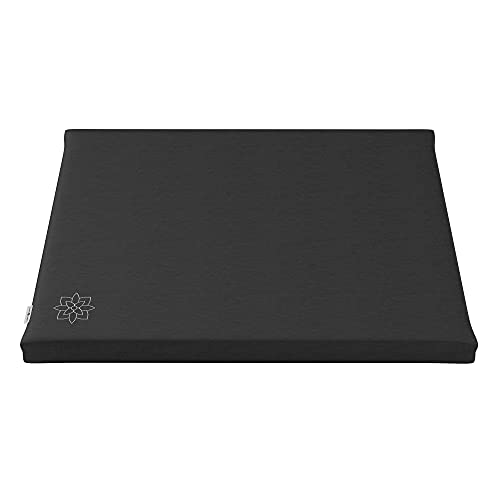
Mindful Modern Zabuton Meditation Mat (Cotton Filled) — Best Traditional Zabuton
The under-cushion: a large rectangular cotton-filled zabuton that goes under a zafu (or a bench, or bare knees) and pads knees, shins and ankles against the floor. If your zafu sit ends because of your knees, this is the missing half.
Check the current price on Amazon
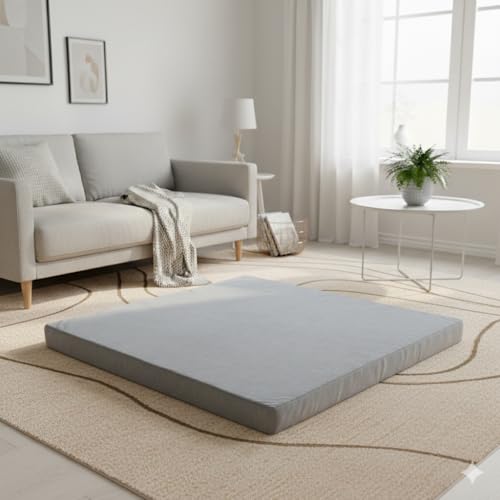
TokSay Velvet Zabuton Meditation Mat (31×31 in, Foam) — Best Foam Zabuton
The modern zabuton: a 31×31-inch square mat in high-density foam with a velvet, washable cover. Even, light and easy-care where the cotton classic is dense and traditional — the foam answer to the same knee-and-ankle job.
Check the current price on Amazon
How These Picks Were Chosen
Picks were chosen cache-first from cushions already verified on this site, with ASIN and full listing title cross-checked before writing. The qualifying rule was functional: the product must be a meditation cushion by design — zafu, zabuton or crescent, with a meditation fill (buckwheat, kapok) or a stated meditation purpose.
Within the verified shortlist, the six slots build a working set rather than six rival zafus: two buckwheat zafus at different characters (one with a GOTS-certified organic cotton cover, one a value classic), a foldable kapok cushion for travel and kneeling, a crescent for thigh support, and two zabuton mats — one traditional cotton-filled, one modern foam — because a zabuton is the second half of most people’s eventual setup.
Dimensions and fills are printed exactly as listings state them. Certification language is precise: the renoo cover’s GOTS certification means its cotton is certified organic; it does not certify the buckwheat or the finished cushion as a whole, and the article says so. No prices, reader scores or review tallies are printed.
The 6 Best Meditation Floor Pillows
renoo Round Organic Meditation Cushion Zafu (GOTS Cotton Cover) — Best Overall
The renoo is the classic zafu done with the details right. The fill is buckwheat hulls — the firm, pourable, settle-where-you-sit fill that experienced sitters tend to end up with — in a round cushion the listing sizes at 13 inches across and 7 inches tall. That height is on the generous side of the zafu range, which suits most Western hips: tight hip flexors need lift before they need anything else, and an adjustable fill means the lift is tunable rather than fixed.
Adjustability is the feature to underline. Buckwheat zafus have an inner zipper for a reason: remove hulls a cup at a time across your first weeks and the cushion descends to your height, instead of you adapting to its guess. The cover is the second detail: GOTS-certified cotton — GOTS is the organic textile standard, so the claim is specifically that the cover’s cotton is certified organic — and it removes for washing, which matters for an object that lives on floors and absorbs a daily practice.
Buckwheat’s nature is the trade-off: it is heavy to carry (a filled zafu is a solid object), it rustles faintly as you settle, and it feels firm — supportive-firm, but firm — compared with kapok. The 13-inch diameter is standard rather than generous; very large sitters may want a wider cushion. Within the classic form, though, this is the zafu to measure others against.
Strengths
- Buckwheat fill with adjustable height — tune the lift to your hips
- GOTS-certified organic cotton cover, removable and washable
- 7 in loft suits tight hips that need real lift
Trade-offs
- Buckwheat is heavy and rustles slightly when settling
- Firm feel compared with kapok
- Standard 13 in diameter, not an oversized cushion
| Specifications (from the manufacturer listing) | |
|---|---|
| Fill | Buckwheat hulls |
| Dimensions | 13 in diameter x 7 in, per listing |
| Cover | GOTS-certified organic cotton, washable, removable |
| Height | Adjustable via fill |
| Shape | Round zafu |
Best for: Daily cross-legged sitters who want the classic zafu, tunable / Not suited for: Travelers who need a light cushion to carry
Check the current price on Amazon
FelizMax Zafu Buckwheat Meditation Cushion — Best Value Zafu
The FelizMax is the no-drama zafu: buckwheat fill, a round pleated shape at 33 cm diameter and 14 cm height per the listing — about 13 by 5.5 inches, the textbook zafu dimensions — and a zippered cotton cover so the fill can be adjusted and the cover washed. If the renoo is the zafu with every detail polished, this is the same instrument in its plain, working form, and for many sitters the instrument is all they need.
Its height sits at the middle of the range, which makes it the safer first zafu for average flexibility: enough lift for most cross-legged postures, less of the perched feeling a 7-inch cushion gives a flexible sitter. The black cotton cover is the practical color for a floor object, and the zipper access means the buckwheat can be topped up in a few years when the hulls have compacted — a real maintenance path that sealed cushions do not offer.
The listing’s own title is a keyword pile-up — it calls the cushion a zabuton and a bolster as well as a zafu — so buy by the stated dimensions and shape, not by its vocabulary; by form, this is unambiguously a round buckwheat zafu. The cotton cover carries no organic certification claim, unlike the renoo’s. And buckwheat’s weight and firmness apply here as everywhere. As a first or a spare zafu, it is honestly specified and honestly made.
Strengths
- Textbook zafu dimensions (33 cm x 14 cm) suit most sitters
- Zippered cotton cover — fill adjustable, cover washable
- Black cover is the practical choice for a floor cushion
Trade-offs
- Listing title mixes zafu/zabuton terms — buy by dimensions
- Cover has no organic certification claim
- Buckwheat weight and firmness, as with all hull cushions
| Specifications (from the manufacturer listing) | |
|---|---|
| Fill | Buckwheat |
| Dimensions | 33 cm diameter x 14 cm height, per listing |
| Cover | Cotton, zippered |
| Color | Black |
| Shape | Round zafu |
Best for: First-time zafu buyers and anyone wanting a spare for a second space / Not suited for: Sitters who need maximum (7 in) lift for very tight hips
Check the current price on Amazon
Zafuko Foldable Cushion — Organic Kapok — Best for Travel & Kneeling
The Zafuko solves the zafu’s two inconveniences — bulk and single-purpose — with a hinge. Folded, it is a raised meditation seat; unfolded, it flattens into a mat for kneeling postures, a bench cushion, or a low seat. For practitioners who sit in more than one posture, or who meditate where they travel rather than in one arranged corner, that two-in-one geometry is worth more than another inch of loft.
The fill is organic kapok, and kapok changes the sitting experience in kind, not degree. Where buckwheat is firm and moldable like sand, kapok is light, buoyant and springy — the cushion pushes back a little, which some sitters find kinder over long sits and everyone finds kinder to carry. A kapok cushion weighs a fraction of its buckwheat equivalent, which is the difference between a cushion that goes to the retreat and one that stays home.
Kapok’s trade-offs are the mirror of buckwheat’s virtues: it is less precisely moldable (it will not take and hold the exact shape of your sit bones), it compresses gradually over years of daily use, and its support feel is softer — sitters who need maximum lift and firmness should stay with the buckwheat picks. The fold also introduces a seam line to position thoughtfully. For mobile practice and mixed postures, though, this is the cleverest cushion in the guide.
Strengths
- Folds for height, unfolds for kneeling or a mat — two cushions in one
- Organic kapok fill is light and springy — genuinely portable
- Softer support feel suits sitters who find buckwheat hard
Trade-offs
- Kapok molds less precisely than buckwheat and compresses over years
- Less maximum lift than a tall buckwheat zafu
- Fold seam needs positioning so it does not sit under a bone
| Specifications (from the manufacturer listing) | |
|---|---|
| Fill | Organic kapok, per listing |
| Design | Foldable — folded or unfolded use |
| Use | Meditation seat, kneeling, yoga prop |
| Portability | Lightweight kapok |
| Shape | Folding cushion |
Best for: Travelers, retreat-goers and mixed-posture practitioners / Not suited for: Sitters who want buckwheat’s firm, moldable support
Check the current price on Amazon
Hihealer Premium Crescent Meditation Cushion — Best Crescent
The crescent is the zafu’s thoughtful cousin. A round zafu lifts the pelvis and leaves the thighs to slope down unsupported; a crescent’s wide, curved front edge extends that support out under both thighs, which distributes the posture’s load and lets the knees rest lower with less hip strain. The Hihealer builds the shape in buckwheat, so the support is the firm, settle-in kind, and the listing positions it as a floor pillow for sitting as much as formal meditation — a fair description of how crescents actually get used.
Who should choose it: cross-legged sitters whose discomfort lives in the outer hips and knees rather than the sit bones, and sitters who find a round zafu’s edge digs in at one point. The crescent’s broader contact patch is genuinely kinder there. It also moonlights better than a zafu as a general floor seat — for reading on the floor, board games, kids at a low table — because the shape reads as a seat, not a ritual object.
The shape is also its limit: a crescent is committed to cross-legged-style postures. Kneeling (seiza) sitters get nothing from it, and Burmese or lotus variations that want a compact round base may find the crescent’s width in the way. Buckwheat weight applies. And ‘ergonomic’ in the listing is the seller’s word — the honest claim is narrower: thigh support, by shape, which many sitters prefer. Try it for that reason and it will not disappoint.
Strengths
- Crescent shape supports both thighs, not just the pelvis
- Buckwheat fill gives firm, moldable support
- Doubles naturally as a general floor seat
Trade-offs
- Shape suits cross-legged postures only — no help for kneeling
- Width can crowd compact postures
- Buckwheat weight, as with all hull fills
| Specifications (from the manufacturer listing) | |
|---|---|
| Fill | Buckwheat, per listing |
| Shape | Crescent zafu |
| Support | Thigh support by shape |
| Use | Meditation and floor sitting |
| Audience | Adults, per listing |
Best for: Cross-legged sitters whose hips and knees are the limiting factor / Not suited for: Kneeling (seiza) sitters — choose the foldable or a bench instead
Check the current price on Amazon
Mindful Modern Zabuton Meditation Mat (Cotton Filled) — Best Traditional Zabuton
Ask experienced sitters what purchase most improved their sits and many will name the unglamorous one: the zabuton. Knees and ankles press into the floor with the body’s weight behind them, and on hardwood that pressure — not the back, not the hips — is what ends sits early. The Mindful Modern is the traditional answer: a large rectangular mat, cotton filled per the listing, sized to take a zafu on top with room for knees and feet around it.
Cotton fill gives the zabuton its classic character: a dense, even pad that stays where it is put and does not bounce. The listing notes it works under a bench as well as a zafu, which is correct and useful — kneeling-bench sitters need knee padding most of all. As a standalone, it is also a legitimate low seat for floor-sitting households, though its job in this guide is the supporting one.
A cotton zabuton is a substantial textile: it is heavy to move, slow to dry if it ever gets wet, and it wants a dry floor and an occasional airing. It also does not lift — new sitters sometimes buy a zabuton alone expecting a meditation cushion and find a mat; the lift comes from the zafu, the pad from this. Buy the pair in the order your body complains: hips first (zafu), knees first (this).
Strengths
- Pads knees, shins and ankles — the pressure points that end sits
- Large rectangular size takes a zafu plus knees with room
- Cotton fill is dense, even and stays put; works under benches too
Trade-offs
- Provides padding, not lift — it is a mat, not a seat cushion
- Heavy textile; slow to dry, keep it on dry floors
- Airing and care are more involved than foam
| Specifications (from the manufacturer listing) | |
|---|---|
| Fill | Cotton, per listing |
| Shape | Large rectangular mat |
| Use | Under zafu or bench; kneeling and sitting support |
| Style | Traditional zabuton |
| Audience | Meditation and yoga practice |
Best for: Sitters whose knees and ankles end their sits early / Not suited for: Anyone expecting a zabuton alone to provide seat lift
Check the current price on Amazon
TokSay Velvet Zabuton Meditation Mat (31×31 in, Foam) — Best Foam Zabuton
The TokSay takes the zabuton’s job description — a large padded square under the sitter — and rebuilds it in modern materials: high-density foam in a 31×31-inch mat, per the listing, with a velvet cover that removes for washing. Where the cotton zabuton is a heavy textile, this is a light, even pad you can shake out, wipe down and throw the cover in the wash — a genuinely easier object to live with in a multi-use room.
High-density foam pads differently from cotton: springier, more uniform, and quicker to recover its shape between sits. Under a zafu it gives knees and ankles a resilient layer that suits sitters who found cotton’s dense flatness unforgiving. The square 31-inch format covers a zafu and both knees for most sitters, and the grey velvet reads calm and modern in a living-room corner rather than announcing a meditation studio.
Foam’s trade-offs are longevity and feel: even high-density foam softens gradually over years in a way cotton batting does not, and the sitting experience is more ‘mat’ than ‘textile’ — some practitioners simply prefer the traditional material under them. The velvet surface also grips clothing slightly, which matters if you adjust posture mid-sit. As the easy-care, modern half of the zabuton choice, it is a clean pick.
Strengths
- High-density foam pads evenly and recovers between sits
- Washable velvet cover — the easy-care zabuton
- 31×31 in covers zafu and knees; light to move and store
Trade-offs
- Foam softens over years where cotton stays dense
- Surface feel is modern mat, not traditional textile
- Velvet grips clothing slightly during posture adjustments
| Specifications (from the manufacturer listing) | |
|---|---|
| Fill | High-density foam, per listing |
| Dimensions | 31 x 31 in |
| Cover | Velvet, washable |
| Color | Gray |
| Use | Zabuton / floor seating |
Best for: Multi-use rooms and sitters who want washable, modern padding / Not suited for: Traditionalists who want cotton batting under them
Check the current price on Amazon
Comparison Table
| Pick | Badge | Key spec | Best for |
|---|---|---|---|
| renoo Round Organic Meditation Cushion Zafu (GOTS Cotton Cover) | Best Overall | Buckwheat zafu, 13×7 in, GOTS organic cotton cover | Daily cross-legged sitters who want the classic zafu, tunable |
| FelizMax Zafu Buckwheat Meditation Cushion | Best Value Zafu | Buckwheat zafu, 33×14 cm, zippered cotton cover | First-time zafu buyers and anyone wanting a spare for a second space |
| Zafuko Foldable Cushion — Organic Kapok | Best for Travel & Kneeling | Organic kapok, foldable two-height design | Travelers, retreat-goers and mixed-posture practitioners |
| Hihealer Premium Crescent Meditation Cushion | Best Crescent | Crescent buckwheat cushion, thigh support | Cross-legged sitters whose hips and knees are the limiting factor |
| Mindful Modern Zabuton Meditation Mat (Cotton Filled) | Best Traditional Zabuton | Cotton-filled zabuton mat, large rectangular | Sitters whose knees and ankles end their sits early |
| TokSay Velvet Zabuton Meditation Mat (31×31 in, Foam) | Best Foam Zabuton | 31×31 in foam zabuton, washable velvet cover | Multi-use rooms and sitters who want washable, modern padding |
How to Choose the Best Meditation Floor Pillows: Height, Shape, Fill
Diagnose your sit before you shop. Sit cross-legged on the floor for two minutes and notice where the complaint arrives. Hips tight, knees floating high, lower back rounding? You need lift — a zafu, and the tighter the hips the taller the zafu (the renoo’s 7 inches exists for you; flexible sitters sit happily at 5). Knees, shins or ankles aching against the floor? You need a zabuton under whatever you sit on. Outer thighs and knees straining in the cross-legged fold itself? The crescent’s thigh support is aimed at you. Most daily sitters end with a zafu on a zabuton; buying them in complaint order saves buying twice.
Shape follows posture. Cross-legged postures (easy pose, Burmese, lotus variations) are zafu and crescent territory. Kneeling (seiza) wants a bench or a folded cushion — the Zafuko unfolded or folded low — with a zabuton under the knees; a round zafu does a kneeling sitter no good at all. Chair-bound meditators need none of this and should not let a product category talk them onto the floor: a firm chair with feet flat is a legitimate meditation seat, full stop.
Fill decides feel and logistics. Buckwheat: firm, heavy, moldable, adjustable via its zipper, the connoisseur’s default and the traveler’s burden. Kapok: light, springy, softer, the traditional travel and retreat fill, compressing slowly over years. Cotton batting (in a zabuton): dense, even, immovable. Foam (in a zabuton): light, washable-covered, resilient, gradually softening. There is no hierarchy here — there is your floor, your posture, your practice frequency, and whether the cushion must ever leave the house.
Finally, size honestly. A standard zafu is about 13 inches across; larger bodies and wider postures may want more diameter, and the listing’s stated dimensions — printed for every pick in this guide — are the numbers to trust over any adjective. Height is measured uncompressed; you will sit a couple of inches into any fill. When between heights, choose taller: you can remove buckwheat or fold differently, but you cannot add height a cushion does not have.
Zafu + Zabuton: Why the Pair Is the Real Product
Meditation shops sell the zafu as the product and the zabuton as the accessory, but the body experiences them as one system. The zafu sets the pelvis geometry — hips above knees, spine able to stack — while the zabuton removes the floor from the equation, padding the three bony contact points (two knees, two ankles sharing one mat) that otherwise set a timer on every sit. Sitters who buy only the zafu often conclude their hips ‘cannot’ meditate on the floor when the actual saboteur was an ankle on hardwood.
If budget forces an order, let your complaint decide: back and hip complaints first means zafu first; knee and ankle complaints first means zabuton first — a zabuton under a folded blanket used as a temporary seat is a workable stopgap, while there is no household substitute for knee padding that stays put. The two zabutons in this guide split the choice by temperament: cotton for the traditional, dense, stay-put mat; foam for the light, washable, modern one. Either completes any zafu or crescent above it.
Beyond the Cushion: Building a Sitting Practice the Cushions Can Support
A cushion is equipment, and equipment is the smallest part of floor sitting. The sitters who thrive on the cushions in this guide share a few habits that no product supplies. The first is duration honesty: a body new to floor sitting should start with sits it can finish well — ten or fifteen minutes in a clean posture beats forty minutes dissolving into a slump — and let the posture’s endurance grow over weeks. The cushion’s job in those early weeks is mostly to be correctly set up (front edge, hips above knees, zabuton under the bones) so that the limiting factor is attention, not anatomy.
The second habit is leg rotation. Cross-legged postures load the hips asymmetrically; alternating which leg rests in front, sit by sit or day by day, evens the load and quietly extends the years a floor practice stays comfortable. Kneeling sitters have their own version — alternating a bench with a folded cushion changes the knee angle enough to matter. The third habit is a standing break culture: floor sitters who rise, walk and return between sits protect their circulation and their knees better than any cushion upgrade can. Equipment serves these habits; it does not replace them.
The space matters more than beginners expect. A cushion that lives rolled in a closet gets used on weekends; a cushion that lives set up — zabuton down, zafu plumped, in a corner that is allowed to stay arranged — gets used daily, because the friction of setup is the true enemy of practice. If your home allows one square meter of permanent sitting geography, give it to the cushions rather than to a nicer cushion in a cupboard. The two zabutons in this guide split exactly on this point: the cotton classic belongs to a dedicated corner, the foam mat to a room that must be reassembled — choose by your floor’s reality, not your aspirations.
Finally, a word about borrowing trouble from other bodies. Cushion advice travels by anecdote — a friend swears by a height, a teacher by a shape — but hip anatomy varies more than almost any other joint’s, and the only reliable instrument is your own two-minute floor test from the buying guide, repeated after your first week on a new cushion. The adjustable fills in this guide exist because the category’s honest makers know this. Use the adjustability. A cushion tuned to your hips by the cupful will serve you better than a famous cushion at a famous height that was never yours.
Cushion Materials in Depth: Hulls, Fiber and Batting
Buckwheat hulls are the inside of a seed — a hard, pyramidal shell that pours like a liquid and locks like a solid. In a zafu, that dual nature is the whole technology: the hulls flow to fill the space under your sit bones, then their angular shapes interlock and hold the arrangement against your weight, which is why a buckwheat cushion feels firm yet personal. Hulls also breathe — air moves through the fill — so a buckwheat zafu never feels warm the way foam does. Their costs are weight (a filled zafu is a genuinely heavy object), a faint rustle as you settle, and slow compaction over years as hulls polish against each other; the zippered access on both buckwheat picks in this guide exists so that compaction is a maintenance event — top up or refresh the fill — rather than a replacement event.
Kapok is a tree fiber — silky, hollow, buoyant — and the traditional stuffing of meditation cushions across Asia long before foam existed. A kapok cushion is dramatically lighter than its buckwheat twin and springier in feel: it pushes back. That buoyancy is why some sitters find kapok kinder over long sits and why every traveling cushion in this guide’s research was kapok-filled. Its aging is the mirror of buckwheat’s: instead of compacting by polishing, kapok fibers gradually break and settle, softening the cushion over years — a change many sitters experience as the cushion becoming theirs, until the day it becomes simply low, at which point kapok, too, can be refreshed by a maker or replaced.
The zabuton fills split on a different axis: tradition versus convenience. Cotton batting is dense, still and cool — a pad that feels like a folded quilt’s serious cousin and behaves like furniture, staying where it is put for years. High-density foam is resilient and light, recovers its shape between sits, and partners with a washable cover to make the zabuton a washable object, which in a multi-use room is no small thing. Neither is the ‘real’ zabuton in any sense that matters to your knees. Your knees care about thickness and density; your household cares about weight and washing. Choose for the household you have, and the knees will be equally grateful either way.
One practical footnote on where cushions live between sits: natural fills and sunlight have a complicated relationship. A cushion stored in direct sun will fade its cover unevenly — cotton covers especially — while a cushion stored in a dark, damp corner risks the mustiness that natural fibers can develop when air never reaches them. The happy storage is the boring one: indoors, dry, shaded, with air around it, ideally in the corner where it is used. Fills that are aired weekly and kept out of both sunbeams and cupboards simply last longer, and a cushion that lives where it works gets sat on more — which was the point of buying it.
How to Set Up Your Meditation Floor Pillows and Sit Well on Them
A cushion cannot fix a posture, but a posture can be set up well or badly on the same cushion. This sequence — the way most teachers set a seat — takes two minutes and is worth doing deliberately for your first weeks, until it becomes automatic.
- Lay the zabuton first, on a flat, dry floor. Smooth it fully — a bunched mat edge under an ankle will announce itself at minute fifteen. If you sit on carpet, you may not need the zabuton; on hard floors, you do.
- Place the zafu on the back half of the zabuton. You sit on the front third of the zafu, so its bulk belongs behind you, with the zabuton’s open area in front for your legs.
- Sit on the front edge of the zafu, not the middle. Perch so your sit bones are on the cushion and your pelvis can tip slightly forward. This is the single most useful instruction in floor sitting: edge, not center.
- Cross your legs in front of the cushion, knees down toward the zabuton. Hips above knees is the geometry the lift bought you. If a knee floats high, add height (more fill, a folded blanket under the zafu) rather than forcing the knee down.
- Stack the spine by feel: pelvis tipped, chest open, chin level. Hands rest on thighs where they land naturally. If your lower back rounds hard, you are still too low — height is the fix, not effort.
- Adjust the fill after your first week, not your first sit. Buckwheat sitters: remove or add a cup of hulls at a time via the zipper. Kapok and foam sitters: a folded towel under the cushion is your height adjustment.
- When you finish, plump and air the cushions. Shake a zafu back to shape, stand zabutons to air occasionally, and store everything dry. Fills last years longer for this small ritual.
Discomfort audit for the first month: numb feet usually mean a knee is compressing — shift the leg arrangement or add height; a sore lower back means more lift; aching knees mean the zabuton is missing or too thin. Every common complaint has a setup answer before it has a shopping answer.
Common Buying Mistakes
Buying a throw pillow or floor cushion for meditation
Decorative floor pillows lack the fill density and shape to hold a posture — you sink, slump and conclude floor sitting is not for you. The zafu’s buckwheat or kapok density is the product. This guide excluded the throw pillows and baby cushions that crowd the keyword for exactly this reason.
Buying only a zabuton and expecting lift
A zabuton is a mat. It pads knees beautifully and raises your seat by almost nothing. New sitters who buy one alone and sit on the floor anyway have bought half a system — pair it with a zafu, crescent or bench.
Choosing height by someone else’s body
Cushion height is hip anatomy, not virtue. Sitting too low rounds the back and strains the knees; sitting needlessly high perches and numbs. The 5-to-7-inch range in this guide spans real bodies — use the adjustable fills to land on yours.
Forcing knees down instead of adding height
A floating knee is information: the pelvis needs more lift. Pushing knees toward the floor strains the joints the practice is supposed to be kind to. Add fill, add a blanket under the cushion, or choose the taller pick.
Storing cushions damp or sealed
Natural fills — buckwheat, kapok, cotton — need air. A cushion stored damp or in a sealed plastic box will smell and degrade. Air after practice, store dry and open, and wash removable covers (two picks here have them) rather than the fill.
Final Recommendation
Most sitters should start with the renoo zafu — adjustable buckwheat lift under a certified organic cotton cover — and add the Mindful Modern cotton zabuton when their knees file their first complaint, which for most people is week one. Budget-conscious beginners can start with the FelizMax and the same zabuton logic. Tight-hipped and outer-thigh sitters should try the Hihealer crescent; travelers and kneelers, the foldable kapok Zafuko; and anyone who wants the modern, washable mat, the TokSay foam zabuton.
Buy in complaint order — lift for the hips, padding for the knees — set the seat up the way the how-to describes, and give the arrangement a month of daily sits before you judge it. The cushion’s job is to disappear under a stable posture; when you stop noticing it, it is working.
The shortlist to start from: renoo Round Organic Meditation Cushion Zafu (GOTS Cotton Cover), FelizMax Zafu Buckwheat Meditation Cushion, Zafuko Foldable Cushion — Organic Kapok.
Related guides on this site: Best Soft Organic Pillows Best Standard Bed Pillows Best Type Of Pillows For Stomach Sleepers Best Low Pillows For Side Sleepers Best Support Pillows For Elderly
Frequently Asked Questions
What is the difference between a zafu and a zabuton?
A zafu is the round seat cushion that lifts your pelvis; a zabuton is the flat rectangular mat that goes underneath and pads your knees and ankles. They are a system: the zafu sets your posture geometry, the zabuton removes the hard floor from it. This guide includes both, plus a crescent and a foldable cushion.
Buckwheat or kapok — which fill is better?
Neither in the abstract. Buckwheat is firm, heavy, precisely moldable and adjustable through a zipper — most daily home sitters end up preferring it. Kapok is light, springy and softer — better for travel, retreats and sitters who find buckwheat hard. The Zafuko is this guide’s kapok pick; the renoo and FelizMax are buckwheat.
How tall should my meditation cushion be?
Tall enough that your hips sit above your knees in your posture, with your lower back able to keep its natural curve. In practice that is roughly 5 to 7 inches of uncompressed loft for most adults — tighter hips need the taller end. Adjustable buckwheat fills let you fine-tune by the cupful after your first week.
My feet go numb when I meditate. Is the cushion wrong?
Usually it is geometry, not the cushion brand: a knee compressed against a cushion edge or a leg folded too tightly restricts circulation. Sit on the zafu’s front edge, rearrange which leg is in front (alternate daily), add height if a knee floats, and let the zabuton pad the ankles. Persistent numbness deserves the same common-sense response as any recurring symptom — mention it to a clinician.
Can I meditate on a regular floor pillow instead?
You can sit on anything, but a decorative floor pillow will not hold a posture: the fill is too soft and shapeless, so you sink and slump within minutes. Meditation cushions use dense fills (buckwheat, kapok) and specific shapes for a reason. The baby floor cushions and throw pillows that share this search are not substitutes.
How do I care for a buckwheat zafu?
Keep it dry, air it after practice, and wash the removable cover rather than the hulls — two picks here have washable covers. Hulls compact over years; a zippered cushion (both buckwheat zafus here) can be topped up or partly refreshed instead of replaced. Never soak buckwheat fill.

