Disclosure: airfryerkitchensupply.com is reader-supported. When you buy through links on our site, we may earn an affiliate commission at no extra cost to you.
Where to buy
The fastest route to any pick below is Amazon: search the exact product name from each review heading, or use the Check on Amazon links in this guide. Every linked pick in this article was matched to a real listing before it earned a link. Picks without a link are described without a link, and we say so where it happens. Prices on down bedding move with sales and fill stock, so treat any number you see on a listing page as that day’s number and use the links here to check the current price on Amazon rather than trusting a figure printed anywhere else.
Introduction
Shoppers hunting for the best inexpensive down pillows usually discover the same uncomfortable truth within ten minutes: a pillow filled with nothing but high-loft white goose down is a luxury item, and no honest seller can make it cheap. Down clusters are the expensive part of the bird. Feathers are the affordable part. So the inexpensive end of this category is not really a down market at all — it is a feather-and-down blend market, and the good news is that a well-built blend is exactly what most sleepers actually want. Pure down compresses almost flat under the weight of a head. Feathers, with their quill shafts, are what give a pillow its spine. The six picks in this guide are the blends that get that balance right at the accessible end of the market: real goose feather and down fills, cotton shells that keep quills from poking through, and construction details — gussets, chambers, down-surrounded cores — that used to appear only on hotel-supply pillows costing far more.
That framing matters because it tells you how to read every label you will meet while shopping. When a listing says “goose down pillow” at a budget-friendly tier, open the fill description and look for the blend ratio. A 50/50 pillow is half down clusters and half feathers by weight. A “feather and down” pillow with no ratio printed is usually feather-dominant, which is fine — feathers are the support — as long as the down portion is there to soften the surface and the shell is a tight enough cotton weave to contain the quills. What you should not accept at any price is a pillow whose fill cannot be described at all, or a microfiber pillow wearing the word “down” in its name as decoration. Every pick below names its fill honestly in its own listing title, which is the first filter we applied.
The second filter was the shell. Inexpensive feather pillows fail in one predictable way: quills migrate through a loose weave and start needling you at 3 a.m. A 300 thread count cotton shell, like the one on our Best Overall pick, is the traditional fix — the weave is dense enough that quill tips mostly stay inside. Gussets help too, because a pillow that keeps its shape spreads pressure instead of concentrating it at one thin spot. Chambers help most of all: a feather core wrapped in a down outer layer puts the pokey material in the middle and the soft material against your face. Three of the six picks below use some version of that trick, and the buying guide further down explains how to choose between them based on how you sleep.
One more piece of honesty before the picks. “Inexpensive” in this category means inexpensive for real feather-and-down bedding. These are not the cheapest pillows on Amazon, because the cheapest pillows on Amazon are polyester. If your budget is truly at the polyester level, a good down-alternative pillow will serve you better than a bad feather pillow, and our FAQ explains how to tell where that line sits. But if you want the specific feel of natural fill — the way it molds, breathes, and re-fluffs with a shake — the six pillows below are where that feel starts at a fair price.
Key Takeaways
- At this tier, “down pillow” honestly means a feather-and-down blend. Feathers provide support; down provides surface softness. A stated ratio, like 50/50, is the most useful number on any listing.
- The shell decides whether you love or return the pillow: look for a stated cotton thread count (300 or higher), a gusset, or a chambered fill — or add a zippered protector.
- Match loft to sleep position: medium-firm for side sleepers, medium for back sleepers, soft and low for stomach sleepers, combination-loft for people who rotate.
- Buy the true size for your bed. Standard/Queen is a compromise dimension, not a size.
- Daily fluffing and a protector are worth more years of service than any upgrade within this tier.
In this guide
Quick Picks
- East Coast Bedding 50/50 Goose Down & Feather Pillow — Best Overall. A true half-and-half blend in a 300 thread count cotton shell, medium support, Standard size. Check the current price on Amazon
- puredown® Goose Feathers and Down Pillow, Set of 2 — Best Value Set. Gusseted edges, 100% cotton cover, sold as a pair in Standard/Queen. Check the current price on Amazon
- Three Geese White Goose Feather Down Pillows, Set of 2 — Best Standard Pair. A 600 thread count cotton cover over a medium-firm, down-surrounded fill. Check the current price on Amazon
- WhatsBedding Goose Down Pillows, Set of 2 — Best Soft and Fluffy. Standard 20×26 sizing with a plush, hotel-style loft for sleepers who like to sink in. Check the current price on Amazon
- AIKOFUL Goose Feathers and Down Pillows, Queen, Set of 2 — Best Queen-Size Pair. Cotton cover, positioned for all sleeping positions, sized for queen beds. Check the current price on Amazon
- Eastwarmth Natural Goose Down & Feather Pillows, Set of 2 — Best for Side and Back Sleepers. A Standard 20×26 pair whose listing is built specifically around combination side-and-back sleeping. Check the current price on Amazon
How These Picks Were Chosen
Every product in this guide was verified: we searched by brand and product name, matched the returned listing title to the pillow we intended to describe, and took the ASIN from the listing response. Nothing here carries a link unless that match was confirmed, and no specification is printed in this article unless the listing itself states it. Where a listing title does not state a detail — a fill ratio, a chamber layout — we write “not stated” instead of guessing, because a buying guide that invents specs is worse than one that admits a gap.
Beyond verification, four criteria decided the final six. First, the fill had to be genuinely feather and down — blends were welcome, undisclosed fills and down-alternative products wearing down language were not. Second, the shell had to be cotton with a stated thread count or a gusseted/chambered construction that manages quill poke-through, since that is the number-one comfort failure at this tier. Third, the pillow had to be offered in a standard bed size (Standard, Standard/Queen, or Queen) rather than a decorative or travel format. Fourth, we favored sets of two where the per-pillow value was clearly the point of the product, because most shoppers buying inexpensive pillows are furnishing a whole bed, not auditioning a single luxury pillow. Support levels were balanced across the list on purpose: medium and medium-firm picks for back and side sleepers, one deliberately soft pick for stomach sleepers and pillow-huggers, and one adjustable-feel option in the Eastwarmth pair’s positioning for people who move between positions all night.
The 6 Best Inexpensive Down Pillows

East Coast Bedding 50/50 Goose Down & Feather Pillow — Best Overall
This is the pillow we would hand to someone who asked for “a real down pillow that does not cost a fortune” without any further questions. The 50/50 blend is the honest center of this category: half goose down for surface softness and moldability, half goose feather for the structural support that keeps your head from bottoming out on the mattress. The listing states medium support, a 300 thread count 100% cotton shell, and Standard sizing — a combination that reads like a specification sheet for a classic hotel pillow, because that is essentially what it is.
Strengths
- The stated 50/50 ratio is the most down-rich blend on this list, so the surface feel is closer to a true down pillow than feather-dominant rivals.
- The 300 thread count cotton shell is the traditional defense against quill poke-through, woven tight enough to contain feather shafts.
- Medium support suits the widest range of sleepers — back sleepers especially — without the neck-cranking height that firm feather pillows can produce.
Trade-offs
- Sold as a single pillow, so furnishing a bed costs two purchases where rivals bundle pairs.
- Standard size only in the verified listing; queen and king sleepers who want matching dimensions should look at the AIKOFUL or puredown sets below.
- A 50% feather fill still means some quill feel through the case for very sensitive sleepers, especially in the first weeks before the fill settles.
Spec box (from the listing): Fill: 50/50 goose down and feather blend · Support: medium · Shell: 300 thread count, 100% cotton · Size: Standard · Count: 1 pack
The deeper story with a 50/50 pillow is loft behavior over a full night. Down clusters compress and recover; feathers bend and spring. In a half-and-half fill the two materials divide the work — the feathers hold the pillow’s architecture while the down fills the gaps around your head and neck, which is why this style of pillow feels supportive without feeling hard. It also re-fluffs convincingly with a morning shake, a small ritual that feather-dominant pillows reward less because their loft is mostly shaft, not cluster. If you sleep on your back and wake with a stiff neck from pillows that are either marshmallow-soft or board-firm, this middle path is the one to try first.
Best for: back sleepers and anyone who wants the most genuine down feel available at this tier. / Not suited for: strict stomach sleepers, who will find even a medium 50/50 loft pushes the neck up too far. Check the current price on Amazon
puredown® Goose Feathers and Down Pillow, Set of 2 — Best Value Set
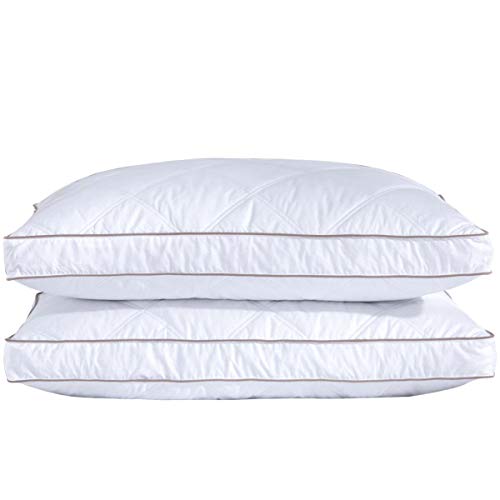
puredown built its name on exactly this product shape: a goose feather and down fill, a 100% cotton cover, a gusseted edge, and a two-pack format that furnishes a bed in one order. The gusset is the detail to notice. Instead of two pieces of fabric sewn directly together — which pulls a pillow into a thin-edged, fat-middle shape — a gusset adds a fabric wall around the perimeter, so the pillow keeps an even loft from edge to edge. For back sleepers that means support that does not fall away when your head drifts toward the pillow’s edge at 4 a.m.
Strengths
- Gusseted construction holds loft evenly across the whole sleeping surface instead of peaking in the middle.
- The two-pack format is the straightforward value play in this category: one order, both sides of the bed done.
- The 100% cotton cover breathes better than the microfiber shells common on budget pairs, which matters for warm sleepers.
Trade-offs
- The verified listing does not state a fill ratio, so shoppers who want a guaranteed down percentage should choose the East Coast Bedding pick instead.
- The listing size is Standard/Queen, a compromise dimension that slightly underfills a true queen pillowcase.
- Feather-dominant value sets need regular fluffing to redistribute fill; neglect them for a month and they sleep noticeably flatter.
Spec box (from the listing): Fill: goose feathers and down (ratio not stated) · Cover: 100% cotton · Construction: gusseted · Size: Standard/Queen · Count: set of 2
What makes this pair the value anchor of the list is not any single feature but the absence of a weak one. The cover is the right material, the edges are built the right way, and the fill is the right category. Shoppers furnishing a guest room — where the pillow must please a rotating cast of sleepers with different preferences — will find the middle-of-the-road character here is a feature, not a compromise. A gusseted feather-and-down pillow is the closest thing bedding has to a crowd-pleaser.
Best for: furnishing a full bed or guest room in one purchase, and back sleepers who like edge-to-edge support. / Not suited for: shoppers who need a stated fill ratio or a true queen dimension. Check the current price on Amazon

Three Geese White Goose Feather Down Pillows, Set of 2 — Best Standard Pair
Three Geese leans into the shell. The verified listing states a 600 thread count 100% cotton cover — double the thread count of our Best Overall pick — wrapped around a medium-firm fill described as goose feather down with a down-surrounded structure. That combination targets the two classic complaints about inexpensive feather pillows at once: quills poking through (answered by the dense shell) and a scratchy surface feel (answered by keeping down at the outside of the fill, where your face actually touches).
Strengths
- The 600 thread count cotton cover is the densest shell on this list and the strongest poke-through defense here.
- Medium-firm support gives side sleepers more shoulder-gap filling than the medium picks, without going to a hard hotel-brick feel.
- The down-surrounded fill design puts the softest material at the surface, which is where cheaper pillows usually feel roughest.
Trade-offs
- Medium-firm is too much loft for most stomach sleepers; this is a back-and-side pillow.
- The exact feather-to-down ratio is not stated in the listing title, so the down content cannot be compared numerically with the 50/50 pick.
- Standard size only in the verified listing.
Spec box (from the listing): Fill: white goose feather and down, down-surrounded (ratio not stated) · Support: medium firm · Cover: 600 thread count, 100% cotton · Size: Standard · Count: set of 2
Think of this pair as the pick for people who have been burned by a cheap feather pillow before — specifically, burned by quills. Every design choice here points at containment and surface comfort. The trade is a slightly firmer, more structured sleep than the WhatsBedding plush pick below, and for side sleepers who need the pillow to hold the gap between shoulder and ear, that structure is the entire point.
Best for: side sleepers, and anyone whose last feather pillow poked them. / Not suited for: stomach sleepers or anyone who wants a soft, sink-in feel. Check the current price on Amazon

WhatsBedding Goose Down Pillows, Set of 2 — Best Soft and Fluffy
Every roundup of inexpensive down pillows needs one pick that admits what a large group of sleepers actually wants: a soft pillow. Not a supportive orthopedic instrument — a cloud. The WhatsBedding pair, in Standard 20×26 sizing, is listed with a fluffy, soft feather-down fill and hotel positioning, and it earns its slot by being the deliberate low-loft, high-plush option on a list otherwise built around medium support.
Strengths
- The softest, most compressible feel on this list — the right shape for stomach sleepers and for people who sleep with an arm under the pillow.
- Standard 20×26 dimensions are stated precisely in the listing, so cases you already own will fit as expected.
- Sold as a set of two, keeping the per-pillow cost in true budget territory.
Trade-offs
- Soft feather-down compresses under a side sleeper’s head and can leave the neck angled down; side sleepers should choose the Three Geese or Eastwarmth picks.
- The listing title does not state a thread count for the shell, so poke-through resistance cannot be verified from the listing — a pillow protector is a wise pairing.
- Plush fills need the most frequent fluffing of any pick here to keep their loft.
Spec box (from the listing): Fill: goose feather and down, soft/fluffy (ratio not stated) · Size: Standard, 20×26 inches · Count: set of 2 · Shell thread count: not stated
There is a honest pleasure in a pillow like this that firmer-is-better advice tends to steamroll. If you scrunch your pillow into a ball, hug it, fold it, and generally treat it as a shape-shifting comfort object rather than a neck-support device, a soft feather-down fill is the material that cooperates. It also makes a kind sham-filler for decorative cases on a made bed, if your guest pillows double as decor.
Best for: stomach sleepers, pillow-scrunchers, and anyone furnishing a bed on a softness-first brief. / Not suited for: side sleepers who need loft that holds under load. Check the current price on Amazon

AIKOFUL Goose Feathers and Down Pillows, Queen, Set of 2 — Best Queen-Size Pair
Queen beds are the most common bed in the country, yet inexpensive natural-fill pillows are disproportionately sold in Standard. The AIKOFUL pair closes that gap: a Queen-size set of two with a goose feather and down fill, a 100% cotton cover, and positioning for all sleeping positions. The extra width matters more than it sounds — a Standard pillow on a queen bed leaves gaps at the edges that restless sleepers find with their shoulders all night.
Strengths
- True Queen sizing in a category where budget natural-fill options skew Standard.
- The 100% cotton cover keeps the breathable, natural-material story consistent from fill to shell.
- All-positions positioning makes the pair a safe default for couples with different sleep styles sharing one bed purchase.
Trade-offs
- Fill ratio and firmness level are not stated numerically in the listing title, so precision shoppers should treat this as a generalist pick.
- Queen pillows need queen cases; your existing standard cases will fit tightly and change the feel.
- Like all feather-dominant value pairs, loft depends on regular fluffing.
Spec box (from the listing): Fill: goose feathers and down (ratio not stated) · Cover: 100% cotton · Size: Queen · Count: set of 2 · Firmness: not stated
The all-positions claim deserves a translation: it means the loft sits in the middle of the range, neither the low profile a stomach sleeper needs nor the high firm wall a broad-shouldered side sleeper needs. For the large middle of the market — back sleepers, combination sleepers, guest beds — that is the correct target, and getting it in a true queen dimension with a cotton shell and natural fill at a pair price is the whole value proposition.
Best for: queen beds, couples with mixed sleep styles, and guest rooms. / Not suited for: sleepers with a specific firmness prescription, who should pick a stated medium or medium-firm option above. Check the current price on Amazon
Eastwarmth Natural Goose Down & Feather Pillows, Set of 2 — Best for Side and Back Sleepers
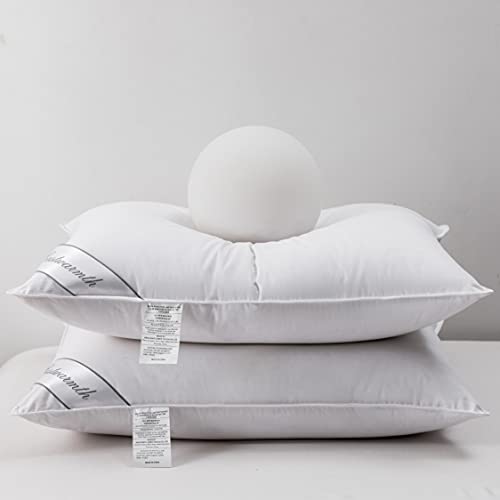
Most people do not sleep in one position; they rotate. The Eastwarmth pair is the one pick on this list whose listing is written directly for that majority — “for Side and Back Sleepers” is in the product name itself. The fill is a natural goose down and feather blend, the shell is 100% cotton, the size is a true Standard 20×26, and the format is a set of two.
Strengths
- Positioning and loft are aimed at combination sleepers, the largest and least-served group in budget bedding.
- True Standard 20×26 dimensions are stated in the listing, so the fit with standard cases is predictable.
- Natural goose down and feather fill with a full cotton shell — no synthetic shell surprises.
Trade-offs
- The blend ratio is not stated in the listing title; shoppers counting down percentage should pick the East Coast Bedding 50/50.
- A combination-loft pillow is a compromise by design — dedicated side sleepers with wide shoulders may still want the firmer Three Geese pair.
- Standard size only; queen-bed owners who want edge-to-edge coverage should take the AIKOFUL pair.
Spec box (from the listing): Fill: natural goose down and feather (ratio not stated) · Shell: 100% cotton · Size: Standard, 20×26 inches · Count: set of 2 · Positioning: side and back sleepers
What we like about this pair is the honesty of its target. Rather than claiming to suit everyone, it names the two positions most adults actually rotate between and builds the loft for that rotation — high enough to fill the shoulder gap on your side, compressible enough not to crane your neck on your back. If that description matches your night, this is the most tailored inexpensive option we verified.
Best for: combination sleepers who split the night between side and back. / Not suited for: pure stomach sleepers, or anyone who wants a stated fill ratio. Check the current price on Amazon
Comparison Table
| Pick | Badge | Key spec | Best for |
|---|---|---|---|
| East Coast Bedding 50/50 Pillow | Best Overall | 50/50 goose down & feather, 300 TC cotton, medium | Back sleepers wanting the richest down blend |
| puredown® Feather & Down, Set of 2 | Best Value Set | Gusseted, 100% cotton cover, Standard/Queen | Furnishing a whole bed in one order |
| Three Geese Pillows, Set of 2 | Best Standard Pair | 600 TC cotton cover, medium firm, down-surrounded | Side sleepers and quill-sensitive sleepers |
| WhatsBedding Pillows, Set of 2 | Best Soft and Fluffy | Soft feather-down fill, Standard 20×26 | Stomach sleepers and pillow-scrunchers |
| AIKOFUL Pillows, Queen, Set of 2 | Best Queen-Size Pair | True Queen size, 100% cotton cover | Queen beds and mixed-style couples |
| Eastwarmth Pillows, Set of 2 | Best for Side and Back Sleepers | Natural goose blend, Standard 20×26 | Combination sleepers |
How to Choose the Best Inexpensive Down Pillows for Your Sleep Style
Start with the blend, because the blend is the pillow. Down clusters provide softness, moldability, and insulation; feathers provide structure and spring. A pillow described as 50/50 splits the difference evenly and feels the most like the classic down pillow of hotel memory. A pillow described simply as “feather and down,” with no ratio, will be feather-dominant — firmer, springier, a little more prone to quill feel, and usually the better value per pillow. Neither is a defect. What should end a purchase is a fill you cannot identify at all. If a listing cannot tell you what is inside the pillow, in plain words, close the tab.
Next, match loft to position — honestly, not aspirationally. Side sleepers need the thickest, firmest pillow on the bed because the pillow must fill the distance between the ear and the mattress while the shoulder takes the body’s weight; medium-firm is the floor, not the ceiling, for this group. Back sleepers need medium loft: enough to cradle the head and support the neck’s curve, not so much that the chin tips toward the chest. Stomach sleepers need the opposite of everyone else — a soft, low, compressible pillow, or none at all — because any real loft bends the neck backward for hours. Combination sleepers should buy for the position they wake up in, which is usually the truest signal of where the body wants to be.
Then read the shell the way you would read a contract. Thread count in a pillow shell is not a luxury statistic; it is a containment specification. Feather quills are, mechanically, tiny spears, and they work their way through loose weaves one night at a time. A 300 thread count cotton shell is the traditional minimum for feather containment, and the 600 thread count cover on the Three Geese pair is genuinely meaningful for sensitive sleepers. Gussets and chambers are the structural alternatives: a gusset keeps loft even, a chambered design — feather core, down outer — keeps the spears in the middle of the pillow and the softness at the surface. If a budget pillow offers neither a stated thread count nor a gusset nor a chamber, budget a few dollars for a zippered pillow protector, which adds a containment layer of your own.
Finally, size with your bed, not with the listing’s default. Standard (20×26) fits standard and queen cases passably and suits twin and full beds. Queen pillows are wider and fill a queen bed properly. Buying a pair in the wrong size is the most common and most avoidable disappointment in this category, and it is why we flagged the size format in every spec box above — including the Standard/Queen compromise format, which is a real dimension with real trade-offs, not a typo.
Down, Feather, and Down-Alternative: What the Words Actually Mean
Down is the undercoating of waterfowl — soft clusters with no quill shaft — and it is priced like the scarce material it is. Feather is the bird’s outer plumage, flat with a central shaft, cheaper and springier. “Down-surrounded” and “chamber” pillows put a feather core in the middle and down at the faces. Fill power, a number you will see on premium pillows, measures how much space one ounce of down occupies; it is a loft-per-weight figure, not a firmness figure, and most inexpensive blends do not state it — when a listing in this guide does not state it, we do not print it.
Certification language deserves the same precision. OEKO-TEX certification means the product was tested for harmful substances; it is a safety screening, not an organic certification, and it says nothing about how the fill was sourced. RDS (Responsible Down Standard) addresses animal-welfare traceability in the down supply chain. Neither term means “organic,” and a guide that uses them interchangeably is not reading its own labels. We mention this because inexpensive down pillows attract exactly the shoppers most likely to be handed vague green language in place of specifications.
Down-alternative pillows — polyester microfiber fills engineered to imitate down’s hand feel — are a legitimate neighboring category, and for shoppers with down allergies or strict budgets they may be the right purchase. But they are not down pillows, they do not breathe or age like down pillows, and they do not belong in this roundup’s pick list. If you are cross-shopping, our related guides cover that category on its own terms (see the internal links at the end of this article).
How to Fluff, Wash, and Make an Inexpensive Down Pillow Last
Feather-and-down pillows reward a small amount of routine. Fluff daily — thirty seconds of shaking, punching, and re-shaping redistributes the fill and restores the loft you paid for. A pillow that is never fluffed develops a permanent head-shaped valley within months, and no amount of later fluffing fully reverses it. Rotate the pillow end-to-end weekly for the same reason you rotate a mattress: even wear is longer wear.
Use a pillow protector under the case from day one. The protector is a washable barrier against the oils and moisture that break down natural fill, and on an inexpensive pillow — whose shell may be its weakest component — it doubles as quill containment insurance. Wash the protector monthly; wash the case with your sheets.
When the pillow itself needs washing, most feather-and-down pillows tolerate a gentle machine wash in warm water with a small amount of mild detergent, followed by the step people skip and regret: complete drying. Dry on low heat with dryer balls or clean tennis balls to break up clumps, and run extra cycles until the fill is bone dry all the way through — damp down clumps, smells, and degrades. A pillow that feels dry on the surface can hold moisture in its core for hours longer than you expect. If your pillow’s care label says dry clean only, believe it; shell fabrics and stitching vary, and the label knows its own pillow.
Retire a pillow when it fails the fold test: fold it in half on the bed and let go. A living pillow springs back open. A dead one stays folded. Inexpensive blends typically give several good years before that day, and regular fluffing plus a protector is what separates the long end of that range from the short end.
Common Buying Mistakes
Believing the word “down” on a feather pillow. The inexpensive tier is blend territory. Read the fill description, find the ratio or the feather-first wording, and buy the pillow that is actually being sold — several picks above are excellent feather-dominant pillows, and none of them is improved by pretending otherwise.
Buying firmness by adjective instead of by sleep position. “Medium” from one brand is not “medium” from another, but your shoulder width and sleep position are constants. Side sleepers: err firmer. Stomach sleepers: err softer. Everyone else: err medium, and prefer gusseted or chambered builds that forgive a wrong guess.
Ignoring the shell until the quills arrive. Poke-through is the number-one return reason in this category and it is almost entirely a shell specification problem. Thread count, gussets, chambers, or a protector — one of the four must be in your plan.
Skipping the protector to save a few dollars. On an inexpensive pillow this is false economy twice over: the protector extends fill life and contains quills. It is the highest-value accessory in this entire guide.
Expecting luxury-loft longevity at a blend price. These pillows are good, honest bedding, and they will still age faster than a premium high-fill-power down pillow. Buy them for what they are — the best feel-per-dollar in natural fill — and replace them on the fold test, not on a calendar.
Final Recommendation
If you buy one pillow from this list, buy the East Coast Bedding 50/50: it is the most genuinely down-like experience at this tier, in the safest shell, at a medium support that suits the most people. If you are furnishing a whole bed, the puredown gusseted pair is the value play, and the Three Geese pair is the upgrade for side sleepers and anyone quill-shy. Stomach sleepers should go straight to the WhatsBedding soft pair and ignore everything firmer. Queen-bed owners should start with the AIKOFUL pair for true sizing, and combination sleepers who cannot decide should take the Eastwarmth pair, which was designed for exactly their indecision. Whichever you choose, add a zippered protector to the order — then check the current price on Amazon through the links above and sleep on it, literally.
Still deciding between natural fill and its imitators? These related guides from our pillow program go deeper on the neighboring questions: Best 100 Down Pillows · Best Alternative To Down Pillows · Best Feather And Down Pillows · Best King Size Down Pillows · Best Soft Down Pillows
What “Inexpensive” Buys You in Down Bedding, Tier by Tier
Because we do not print product prices in this guide — they change too often to be honest in print — it helps to understand what each qualitative tier of this market actually buys, so you can recognize which tier a listing belongs to when you see its current price on Amazon. At the entry tier, you are buying feather-dominant fills in serviceable cotton or cotton-blend shells, usually in pairs. The pillows sleep well; the corners are cut in shell density, fill sorting, and finishing, which is why the protector advice in this guide matters most exactly here. Several of our picks live in this tier and earn their place by cutting the least important corners.
The middle tier — where the East Coast Bedding 50/50 and the Three Geese pair sit — buys you three upgrades that you can feel: a higher stated down share, a denser stated shell, and construction details like gussets and down-surrounded chambers that used to be hotel-supply signatures. This is the tier we recommend for a primary bed, because the cost difference over the entry tier is modest while the poke-through resistance and surface feel differences are not.
The premium tier, above everything in this guide, buys high fill power down, high down percentages, and branded shell fabrics. It is genuinely better and genuinely expensive, and for most households it belongs on the primary bed of a committed down lover rather than across every bed in the house. The sensible household strategy this guide is built around: premium money, if it exists, goes to the pillow you sleep on nightly; the six picks above cover partners, teenagers, and guest rooms without anyone feeling punished. A guest room pillow that a guest compliments in the morning is almost always a gusseted feather-and-down pair from the middle of this list, not a luxury pillow — hotels learned that arithmetic long before we did.
A Realistic First Month With an Inexpensive Down Pillow
Set expectations for the break-in, because inexpensive natural-fill pillows change character in their first weeks and shoppers who do not know this return good pillows. In week one, a feather blend sleeps at its puffiest and its pokiest: the fill has not yet settled into its working arrangement, and stray quills near the surface make themselves known. This is the week the protector earns its keep. By week three, daily fluffing has redistributed the fill, the surface quills have mostly migrated inward or been removed, and the pillow reaches the loft and feel it will keep for most of its life — judge it then, not on night one. By the end of the first month you should also know whether the firmness family was right: morning neck stiffness that improves through the day points at a pillow slightly too high or too firm; a sore shoulder on your sleeping side points at one too soft to hold the gap. Those signals, read honestly, tell you whether to keep, exchange within the list above, or change firmness families entirely — and every pick in this guide was chosen to make that second choice easy, because the six span soft, medium, and medium-firm in overlapping sizes.
Frequently Asked Questions
Are inexpensive down pillows actually filled with down?
Mostly they are filled with a blend. At this tier, expect goose feather and down combinations — sometimes with a stated ratio like 50/50, more often feather-dominant with down included for surface softness. A pillow that is 100% down exists, but it is a premium product, and any listing implying pure down at a budget tier deserves a careful read of its fill description before you believe it.
Why do feathers poke out of cheap pillows, and how do I stop it?
Feather quills are stiff shafts that migrate through fabric weaves over time. The defenses are a denser shell (higher cotton thread count), a chamber design that keeps feathers in the pillow’s core, and — simplest of all — a zippered pillow protector worn under the case, which adds a second containment layer. Shaking and fluffing the pillow daily also redistributes quills away from the surface.
How long should an inexpensive feather-and-down pillow last?
Expect several years of good service with daily fluffing and a protector in place. Use the fold test to judge your own pillow rather than a calendar: fold it in half, and if it does not spring back open on its own, the fill has lost its resilience and it is time to replace it.
Can I machine wash a feather-and-down pillow?
Most can be washed on a gentle cycle with mild detergent, but the drying matters more than the washing: tumble dry on low with dryer balls and keep going until the core is completely dry, which takes longer than most people expect. Always follow your own pillow’s care label first, since shells and stitching vary.
Are feather-and-down pillows a problem for allergy sufferers?
Reactions attributed to down are often reactions to dust and residue in poorly cleaned fill rather than to the down itself, and modern processed fills are washed before filling. That said, anyone with a diagnosed feather or dust-mite allergy should talk to their doctor and consider a quality down-alternative pillow instead — that category exists for a reason, and comfort framing is as far as a buying guide should go on a health question.
What is the difference between Standard, Standard/Queen, and Queen pillow sizes?
A Standard pillow is 20×26 inches. A Queen is wider, at roughly 20×30 inches. “Standard/Queen” is a compromise size sold to fit both case sizes passably; it will feel slightly loose in a queen case and slightly full in a standard case. Buy the true size for your bed when it is offered — in this guide, the AIKOFUL pair is the true Queen option.

