Disclosure: airfryerkitchensupply.com is reader-supported. When you buy through links on our site, we may earn an affiliate commission at no extra cost to you.
Where to buy
Shortlist first: if you are comparing the best non skid bathtub chairs, know that every chair in this guide was confirmed against Amazon catalog data before it earned a link. Start with the Drive Medical Suction Feet Chair for a standard smooth tub, the Hiqufet 500 lb Chair for maximum stability margin, or the DMI Transfer Bench if stepping over the tub wall is the real problem. Check the current price on Amazon for each model, and measure your tub before ordering any of them.
Introduction
The best non skid bathtub chairs are bought for one moment: the transfer of weight onto a wet seat in a slippery tub, and the reverse move at the end of the bath. Everything about a good bath chair serves that moment — feet that grip rather than skate, a seat height that lets feet rest flat, a frame that does not flex or rust, and a capacity rating with honest margin. The six picks below were verified in Amazon catalog data, and each one leads with its grip system, because in this category the grip is the product.
Two honest notes before the picks. First, “non-skid” is a system, not a sticker: suction feet excel on smooth tubs and widened rubber feet excel everywhere else, and this guide matches each chair to the floor it suits rather than declaring one technology the winner. Second, these are comfort and safety products described in plain terms — this guide makes no medical claims for any of them, and capacity figures are quoted exactly as the verified listings state them, because a load rating is a measurement, not a promise to embellish.
Key Takeaways
- Grip is a system: suction feet for smooth tubs, widened rubber feet for textured ones — match the chair to your tub floor.
- Choose a capacity rating comfortably above the user’s weight; every rating here is quoted from the verified listing.
- Seat height should let the user’s feet rest flat — adjustability is a safety feature, not a convenience.
- A transfer bench removes the step-over-the-wall move entirely; for many households it is the real answer.
In this guide
Quick Picks
- Best Overall: Drive Medical Adjustable Shower and Bath Chair with Suction Feet — Standard smooth bathtubs and first-time bath chair buyers. Check the current price on Amazon.
- Best Heavy Duty: Hiqufet Shower Chair, 500 lbs Heavy Duty — Larger users, textured tub floors and anyone prioritising stability margin. Check the current price on Amazon.
- Best with Backrest: HOMLAND Shower Chair with Removable Back — Users who bathe seated for longer, and shared bathrooms needing a convertible chair. Check the current price on Amazon.
- Best Transfer Bench: DMI Tub Transfer Bench and Shower Chair — Anyone for whom stepping over the tub wall is the hard part. Check the current price on Amazon.
- Best Comfort: Drive Medical Premium Shower Chair with Back and Padded Arms — Independent bathers who want back and arm support for sit-to-stand. Check the current price on Amazon.
- Best Tool-Free Assembly: Vaunn Adjustable Shower Chair with Removable Back — Fast setup, guest bathrooms and households that store the chair between visits. Check the current price on Amazon.
How These Picks Were Chosen
We cross-checked candidate bath chairs against Amazon catalog data in a fresh verification run for this guide, keeping only complete chairs and benches with confirmed listings. Each pick had to state its non-skid approach in the listing itself — suction feet, non-slip feet or body, or widened feet — plus a verifiable frame material and, where claimed, a capacity figure we could quote exactly.
We excluded baby bath seats and infant bather products, which surface in these searches but serve an entirely different purpose, as well as replacement feet, pads and accessories sold without a chair. The six slots cover the real decision space: the suction-foot standard chair, the heavy-duty wide-foot chair, two backed chairs at different comfort levels, a transfer bench, and a tool-free option for fast or temporary setups. Prices are never printed; check the current price on Amazon when you buy.
The 6 Best Non Skid Bathtub Chairs
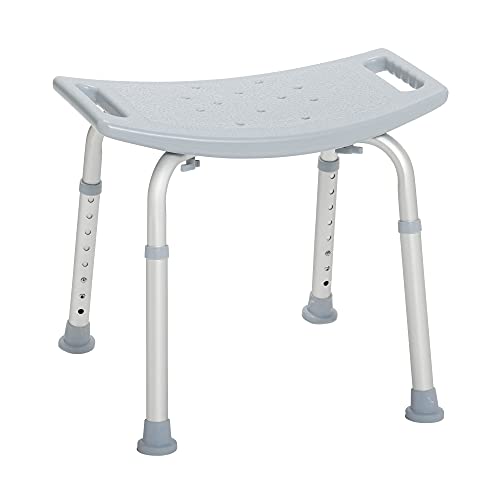
Drive Medical Adjustable Shower and Bath Chair with Suction Feet — Best Overall
This Drive Medical chair is the most literal answer to the keyword we verified: an adjustable aluminum shower and bath chair whose own title names its two non-skid systems — suction feet that grip the tub floor and a non-slip design brief. For a standard bathtub, it is the default recommendation.
Strengths
- Suction feet anchor the chair to smooth tub floors, the core non-skid mechanism
- Adjustable height lets the seat match the user and the tub wall
- Aluminum frame keeps it light enough to lift in and out for cleaning
Trade-offs
- Suction cups need a smooth tub surface; textured tubs reduce their grip
- Backless format (this configuration) gives less support than backed chairs
- Assembly required, though it is a simple hand-fit design
| Grip | Suction feet, non-slip (per Amazon title) |
| Frame | Aluminum |
| Format | Adjustable shower and bath chair |
| Brand | Drive Medical |
Non-skid performance in a wet tub is a system, not a feature. The feet decide whether the chair stays where it was put when weight shifts — and weight always shifts, at the moment of sitting down and standing up. Suction feet work by evacuating air against a smooth surface, which is why this chair suits the common smooth acrylic or enamel tub so well. The aluminum frame matters for a different reason: a chair that must be lifted out for the next person’s bath, or for cleaning, gets lifted — and a light chair gets put back properly, feet seated, every time.
Drive Medical is a long-standing name in home bathing equipment, and the value of that here is boring but real: replacement feet and parts exist, and the design has been refined over many production runs. For most households buying their first bath chair, boring and proven is exactly right.
Best for: Standard smooth bathtubs and first-time bath chair buyers / Not suited for: Textured or refinished tub floors where suction cannot seal (see the Hiqufet instead)
Check the current price on Amazon

Hiqufet Shower Chair, 500 lbs Heavy Duty — Best Heavy Duty
The Hiqufet is the capacity and stability pick: a verified 500 lb rating, an extra-wide seat, five height settings and widened non-slip feet, with tool-free assembly the listing puts at three minutes. For larger users, or anyone who wants the widest possible margin, it is the strongest specification in this roundup.
Strengths
- 500 lb verified capacity is the highest here — a real safety margin
- Widened non-slip feet spread load and resist tipping on any tub floor
- Extra-wide seat and 5 height settings fit more bodies properly
Trade-offs
- Bigger and heavier than the minimalist chairs
- Extra-wide seat needs a tub wide enough to receive it — measure first
- Tool-free claim is the maker’s; allow a few unhurried minutes regardless
| Capacity | 500 lbs (per Amazon title) |
| Heights | 5 height settings |
| Seat | Extra-wide bath bench |
| Feet | Widened non-slip feet |
Capacity ratings deserve respect rather than skimming: the right way to use them is to choose a chair rated comfortably above the user’s weight, so the chair works in the middle of its engineering range, not at its edge. At 500 lbs, the Hiqufet gives almost every household that margin. The widened feet are the second half of the story — where suction chairs rely on adhesion, wide rubber feet rely on footprint and friction, which keeps working on lightly textured tub floors that defeat suction cups.
The extra-wide seat is a comfort feature with a safety shadow: a seat that fits the user fully, without edges pressing, makes sitting down a controlled movement rather than a negotiation. Paired with five height settings — the most granular adjustment here — this is the chair to choose when the standard picks feel almost right but not quite secure.
Best for: Larger users, textured tub floors and anyone prioritising stability margin / Not suited for: Narrow tubs or users who need a backrest (see the HOMLAND or Drive Premium)
Check the current price on Amazon

HOMLAND Shower Chair with Removable Back — Best with Backrest
The HOMLAND adds the feature most bath chairs make you pay a tier for: a proper backrest, removable when you do not want it. Its verified listing confirms an aluminum height-adjustable frame in a heavy-duty bath seat format — a backed chair that still lifts out of the tub easily.
Strengths
- Removable backrest adapts the chair to different users in one household
- Height adjustable aluminum frame keeps it light and rust-proof
- Back support makes longer seated showers genuinely comfortable
Trade-offs
- A backrest adds bulk in a small tub; check your dimensions
- Removable parts are one more thing to keep track of
- No padded arms, unlike the Drive Premium below
| Back | Removable back (per Amazon title) |
| Frame | Aluminum frame, height adjustable |
| Format | Bath seat for bathtub |
| Positioning | Heavy duty (per Amazon title) |
A backrest changes what a bath chair is for. Without one, the chair is a perch for a quick shower. With one, seated bathing becomes restful — the user can lean, let the water do the work, and take their time, which for anyone with limited stamina is the difference between a chore and a pleasure. Making the back removable is the thoughtful detail: households share bathrooms, and a chair that converts between backed and backless serves the grandparent at eight and the teenager at nine.
Height adjustment matters with a backrest more than without, because the back only supports if the seat height puts the user’s feet flat and their back actually against the rest. Set it up once, properly, with the user seated, and the HOMLAND delivers the most complete seated-bathing experience in this list short of the padded-arm premium pick.
Best for: Users who bathe seated for longer, and shared bathrooms needing a convertible chair / Not suited for: Very small tubs or buyers wanting padded armrests
Check the current price on Amazon

DMI Tub Transfer Bench and Shower Chair — Best Transfer Bench
A transfer bench solves a different problem from a bath chair: getting into the tub at all. The DMI bench spans the tub wall — part sits outside, part inside — so the user sits down outside and slides across, never stepping over the wall. Its verified title confirms a non-slip aluminum body, adjustable height, cut-out access and a 400 lb capacity.
Strengths
- Eliminates the step-over-the-tub-wall move, the riskiest moment in bathing
- Non-slip aluminum body with a 400 lb verified capacity
- Cut-out access in the seat aids washing while seated
Trade-offs
- Needs floor space beside the tub for the outside legs
- Shower curtain must be arranged around the bench to keep water in
- Overkill for users who step into the tub comfortably
| Capacity | Holds up to 400 lbs (per Amazon title) |
| Body | Non slip aluminum body |
| Seat | Adjustable seat height, cut-out access |
| Format | Transfer bench — spans the tub wall |
Bathroom safety thinking starts from an honest observation: most bathing difficulty is not washing, it is the transfer — the high step over a wet tub wall with one foot in a slippery basin. The transfer bench removes that move from the routine entirely. The user backs up to the bench outside the tub, sits, lifts their legs over the wall while seated and supported, and slides across. Every part of that sequence happens seated, which is why occupational guidance so often starts with this format.
The DMI’s details suit the job: a non-slip aluminum body that will not rust in a wet room, height adjustment so both pairs of legs sit level despite the tub floor and bathroom floor being at different heights, and a cut-out that makes seated washing thorough. The listing also notes FSA eligibility — a practical point for households buying through flexible spending accounts; eligibility rules vary, so confirm with your plan.
Best for: Anyone for whom stepping over the tub wall is the hard part / Not suited for: Bathrooms with no floor space beside the tub, or confident step-in users
Check the current price on Amazon

Drive Medical Premium Shower Chair with Back and Padded Arms — Best Comfort
The Drive Medical Premium is the comfort specification: back, padded arms and adjustable height, with a verified 350 lb capacity. The padded arms are the headline — they give hands something soft and secure to push against when standing, which is the moment a bath chair earns its keep.
Strengths
- Padded arms support the sit-to-stand move, the hardest part of seated bathing
- Back plus arms is the most supportive configuration in this roundup
- Adjustable height from a proven bathing-equipment maker
Trade-offs
- 350 lb capacity is lower than the Hiqufet and DMI — check it suits the user
- Arms and back make it the bulkiest chair here for small tubs
- Premium positioning within this category’s sensible tiers
| Capacity | Supports 350 pounds (per Amazon title) |
| Arms | Padded arms (per Amazon title) |
| Back | Back included |
| Height | Adjustable height seating |
Armrests are easy to dismiss as padding and wrong to dismiss at all. Standing from a low, wet seat is a strength move; arms convert it into a push that arms and legs share, which is steadier and far less tiring. Padding matters because wet hands on hard plastic slide, and a padded arm gives grip as well as comfort. Drive Medical’s premium chair is built around that moment — back for the bath itself, arms for the transitions that bookend it.
Choose this chair when the user bathes independently and you want every transition supported, or when two people share the chair and both value the back. Measure the tub before ordering — arms need width — and set the height so the user’s feet rest flat with knees at a comfortable angle. Configured properly, it is the closest thing here to a piece of bathroom furniture rather than an accessory.
Best for: Independent bathers who want back and arm support for sit-to-stand / Not suited for: Users above its 350 lb rating or very narrow tubs
Check the current price on Amazon

Vaunn Adjustable Shower Chair with Removable Back — Best Tool-Free Assembly
The Vaunn closes the list on practicality: a verified tool-free assembly claim, a removable back, and an adjustable aluminum frame in a clean white finish. For households that need a chair in service today — a parent arriving this weekend, a bathroom that cannot wait — the absence of tools and fiddly hardware is the feature.
Strengths
- Tool-free assembly means no hunting for screwdrivers or lost bolts
- Removable back adapts between users like the HOMLAND
- Lightweight aluminum frame is easy to move and store
Trade-offs
- Hand-tightened fittings should be re-checked periodically
- White finish shows soap film sooner than darker frames
- No padded arms or suction-foot specialisation
| Assembly | Tool-free assembly (per Amazon title) |
| Back | Removable back |
| Frame | Aluminum, white |
| Format | Spa bathtub seat bench, adjustable |
Tool-free design is more than convenience; it is a safety property. Bath chairs assembled with loose hardware invite a specific failure — the fitting that was never quite tightened — while hand-fitted designs either click together obviously or obviously do not. The Vaunn’s spa-bench positioning also gives it the least clinical look in this roundup, which matters in homes where the chair will be seen by guests and used by several generations.
The removable back and adjustable legs make it the flexible guest-bathroom option: set it up when grandparents visit, break it down flat-ish for storage after. Re-check the hand fittings monthly — a ten-second wiggle test per leg — and a tool-free chair stays as secure as any bolted rival.
Best for: Fast setup, guest bathrooms and households that store the chair between visits / Not suited for: Buyers wanting padded arms or maximum capacity ratings
Check the current price on Amazon
Comparison Table
| Pick | Badge | Key spec | Best for |
|---|---|---|---|
| Drive Medical Adjustable Shower and Bath Chair with Suction Feet | Best Overall | Grip: Suction feet, non-slip (per Amazon title); Frame: Aluminum | Standard smooth bathtubs and first-time bath chair buyers |
| Hiqufet Shower Chair, 500 lbs Heavy Duty | Best Heavy Duty | Capacity: 500 lbs (per Amazon title); Heights: 5 height settings | Larger users, textured tub floors and anyone prioritising stability margin |
| HOMLAND Shower Chair with Removable Back | Best with Backrest | Back: Removable back (per Amazon title); Frame: Aluminum frame, height adjustable | Users who bathe seated for longer, and shared bathrooms needing a convertible chair |
| DMI Tub Transfer Bench and Shower Chair | Best Transfer Bench | Capacity: Holds up to 400 lbs (per Amazon title); Body: Non slip aluminum body | Anyone for whom stepping over the tub wall is the hard part |
| Drive Medical Premium Shower Chair with Back and Padded Arms | Best Comfort | Capacity: Supports 350 pounds (per Amazon title); Arms: Padded arms (per Amazon title) | Independent bathers who want back and arm support for sit-to-stand |
| Vaunn Adjustable Shower Chair with Removable Back | Best Tool-Free Assembly | Assembly: Tool-free assembly (per Amazon title); Back: Removable back | Fast setup, guest bathrooms and households that store the chair between visits |
How to Choose a Non-Skid Bathtub Chair
Start with your tub floor. Run a hand over it dry. If it is smooth acrylic, fibreglass or enamel, suction feet (the Drive Medical pick) will seal and hold superbly. If it is textured, anti-slip coated or refinished, suction cannot seal — choose widened rubber feet (the Hiqufet) or a transfer bench whose stability does not depend on the tub floor at all.
Then choose the format by the hardest move. If the user steps into the tub comfortably and needs seated support, a chair suffices. If the step over the wall is the frightening part, no chair fixes that — the DMI transfer bench does, by moving the sit-down outside the tub. If standing back up is the effort, prioritise arms: the Drive Premium’s padded arms exist for exactly that push.
Size the chair to the body and the tub. Capacity first: rated comfortably above the user. Height next: feet flat on the tub floor when seated, knees at roughly a right angle. Width last: the chair must fit the tub’s internal width with room for the user’s hands. Measure the tub before ordering — returns in this category are usually tape-measure failures, not product failures.
Understanding Capacity Ratings and Frame Materials
A capacity rating is the maker’s stated maximum for the complete chair used correctly — legs evenly adjusted, user seated centrally. The verified figures in this guide run from 350 lbs (Drive Premium) through 400 lbs (DMI) to 500 lbs (Hiqufet). Treat them as ceilings to stay comfortably under, not targets to approach: a chair working mid-range feels rigid, and rigidity is what users describe as “feeling safe.”
Aluminum dominates this category for sound reasons, and every pick here uses it: it does not rust in a permanently wet room, it is light enough for the chair to be lifted out for cleaning and other bathers, and it is strong at these load levels. Plastic seats and backs are normal and appropriate — they are warm to the touch and easy to clean — while the load path that matters runs through the aluminum legs and their feet.
Seat Height, Backs and Arms: The Comfort Triangle
Seat height is the adjustment buyers most often leave wrong. Too low, and standing becomes a deep squat from a wet seat; too high, and feet dangle, which feels unstable and is. The correct setting puts feet flat with weight through the whole foot. Every pick here adjusts, so the only failure mode is not bothering — set the height with the actual user seated, in the actual tub, before the first bath.
Backs and arms trade tub space for support. A backrest (HOMLAND, Vaunn, Drive Premium) turns a perch into a seat and suits longer baths. Arms (Drive Premium) serve the transitions. In a generous tub, take both. In a narrow tub, a backless chair that fits properly beats a fully featured one wedged in at an angle — fit is a safety property too.
How to Set Up a Bathtub Chair Safely, Step by Step
Assemble the chair outside the tub on a dry floor, following the maker’s order, and confirm every leg fitting is fully seated or tightened. Set all legs to the same height notch — a chair with one leg a notch out will rock, and rocking is the enemy this whole category exists to defeat. Place the chair in the dry tub, press down firmly on the seat to seat the feet (for suction feet, press each foot deliberately), and push the chair sideways with real force: it should not slide. If it slides on a dry tub, it will slide on a wet one — reseat the feet or reconsider the match between foot type and tub floor.
Before the first bath, do a dry run fully clothed: sit, shift weight, stand, using the same movements the bather will use. Check that feet stay flat, that the seat height feels like a normal chair, and that any backrest meets the back where expected. In use, keep the tub floor rinsed of soap film — grip lives on the contact patch, and a soapy tub defeats the best feet ever made. Re-check fittings and feet monthly, and replace worn rubber feet promptly; they are the wear part of the whole system.
Bathtub Chairs vs Shower Chairs vs Transfer Benches
The names blur in listings, so here is the working distinction this guide used. A bathtub chair sits entirely inside the tub, sized for the tub’s width. A shower chair or stool is the same idea for a shower stall, often smaller. A transfer bench is longer, spans the tub wall, and exists to eliminate the step-over. Several picks here serve both tub and shower — their listings say so — but a bench belongs to the tub conversation specifically.
Choosing wrongly usually means choosing a chair when the problem was the transfer. If the bather says “I am fine once I am in,” buy a chair. If they say “it is getting in that scares me,” buy the bench. That single question, asked honestly, is worth more than any specification in this guide.
Keeping Grip: Feet, Soap Film and Maintenance
Non-skid performance decays for mundane reasons. Soap and shampoo film coats both the tub floor and the rubber feet, turning two grippy surfaces into two slippery ones. The fix is a weekly rinse-and-wipe of the tub floor where the chair stands and a wipe of the feet themselves — thirty seconds that restores the system to specification. Suction feet additionally need their cups kept clean and undamaged; a cup with a nicked rim cannot seal.
Inspect monthly: feet for cracks or hardening, leg fittings for tightness, seat and back for stress marks. Rubber hardens with age and loses grip before it looks worn, so in a chair used daily, treat feet as a consumable on a yearly horizon. Every maker in this roundup sells or supports replacement parts — another reason this guide favoured established bathing-equipment names.
Bathing Comfort: Making Seated Bathing Pleasant
A bath chair succeeds when the bath becomes enjoyable again, not merely possible. Small comforts compound: a handheld shower head within reach of the seated position turns rinsing from a negotiation into a pleasure. A non-slip mat outside the tub covers the exit, which is the other slippery moment. Towels and toiletries placed within seated reach mean no wet leaning — leaning is when chairs get tested sideways, and sideways is their weakest direction.
Water temperature deserves a practical note: seated bathers cool faster than bathers lying in water, so a slightly warmer fill and a shorter, unhurried routine is the comfortable pattern. None of this is medical advice — it is the accumulated household wisdom of everyone who has made a bath chair part of a home that works.
Who Should Choose What: A Household Guide
For a parent moving in or visiting often, the Vaunn or HOMLAND: backed, adjustable, removable between visits. For a larger bather, the Hiqufet, on capacity and seat width alone. For a bather who dreads the tub wall, the DMI bench, full stop. For an independent bather who wants support standing, the Drive Premium and its padded arms. For the standard family tub, the Drive suction-foot chair, the default that this category is built around.
When two needs compete — capacity and a back, say — prioritise in this order: grip on your tub floor, capacity margin, the hardest physical move, then comfort features. That ordering is the whole philosophy of this guide compressed into one sentence, and it will steer you to the right pick even among models we did not list.
Troubleshooting: Wobble, Slide and Other Chair Problems
Problem: the chair rocks. → One leg is a notch out or a foot is not seated; reset all legs to the same setting on a dry, flat floor and test again. Problem: the chair slides on a wet tub. → Soap film is the first suspect — clean the tub floor and feet — and a texture mismatch is the second; suction feet on a textured tub need replacing with a wide-foot chair. Problem: the seat feels too low. → Raise one notch at a time until feet are flat and standing feels like rising from a dining chair. Problem: water pools on the seat. → Check the chair is level; drainage assumes level legs. Nearly every complaint in this category is a setup issue, and setup is free to fix.
Storing and Sharing a Bath Chair
In shared bathrooms the chair leads a double life, and the picks here were partly chosen for how gracefully they do it. Aluminum chairs are light enough to lift out and stand in a corner; the Vaunn and HOMLAND break down further with their removable backs. Store the chair dry where possible — a chair stored wet in a closed cupboard ages its rubber feet faster — and rinse it when it comes out, since stored chairs collect dust that turns to paste in a wet tub.
If two bathers with different needs share one chair, the adjustable, removable-back models earn their place: height and back configuration can be reset in a minute. Write each user’s leg-notch setting on a piece of tape under the seat — a tiny household system that removes all guesswork from the changeover.
Materials and Cleaning: Living With Aluminum and Plastic
A bath chair lives in the harshest room in the house: permanently damp, regularly soaped, occasionally bleached. Aluminum frames shrug this off — the metal does not rust, and anodised or coated finishes need nothing beyond a rinse. Plastic seats and backs tolerate bathroom cleaners well, though abrasive powders scratch them, and scratches hold grime; a soft cloth and ordinary bathroom cleaner is the right pairing. Rinse the whole chair when you clean the tub and it will look new for years.
The one material with a lifespan is rubber. Feet soften, harden or crack depending on water, heat and time, and they are designed to be replaced rather than mourned. When the tread of a foot looks smooth or its edge starts to split, replace the set — the entire non-skid promise of the chair is standing on those four small parts, and they are the cheapest safety maintenance in the home.
Small Bathrooms and Awkward Tubs
Not every tub is a standard rectangle. Slipper tubs narrow at the ends, corner tubs waste their width diagonally, and old cast-iron tubs have curved internal corners that eat inches. Measure the tub’s internal width at its narrowest point at seat height, not at the rim, and compare it against the chair’s footprint rather than its seat width — legs splay, and splayed legs are what meet the tub walls.
In a genuinely small bathroom, the transfer bench may be impossible for lack of outside floor space, and a compact chair becomes the only route; in a bathroom where the tub is the only bathing option for several people, the lightest chair wins because it will be moved most. Constraints are not failures — they are simply the first specifications, and they narrow this list to the right pick faster than any preference does.
What a Bath Chair Cannot Do
Plain limits, stated plainly. A bath chair does not make a tub shallow, does not help a bather into a standing shower, and does not substitute for grab bars, which are a separate and worthwhile addition to any bathroom used by someone unsteady. It also does not forgive misuse: standing on the seat, perching on its edge, or using it as a step stool are outside every design here, whatever the capacity rating says.
This guide describes household comfort and safety products in general terms. Anyone whose bathing difficulty comes from a specific condition should take advice from their own clinician or occupational therapist about equipment — they can assess the actual bathroom and the actual person, which no buying guide, however careful, can do from a page.
Buying for Someone Else: A Short Etiquette of Equipment
Many bath chairs are bought by adult children for parents, and the purchase lands better when it is framed as comfort rather than incapacity. The language of this guide is deliberate: these are products that make bathing easier and more pleasant, in the same family as a better mattress or a reading chair. Let the bather choose between the final two picks where possible — people use equipment they chose with far more consistency than equipment that arrived as a verdict.
Practically: measure their tub, not yours; check the capacity with margin; set the chair up with them present and adjust it together; and do the clothed dry run as a shared, slightly comic ritual rather than an inspection. The households where bath chairs succeed are the ones where the chair is treated as furniture that helps, not as a symbol that worries.
The Exit Matters: Floor Mats, Towels and the Last Wet Step
Safety thinking tends to stop at the tub wall, but the bath ends on the bathroom floor. A bather leaving a chair steps onto a floor that may be wet, in feet that are certainly wet. A absorbent, non-slip bath mat placed where the exit step lands is the natural partner to every pick in this guide — and the transfer bench user needs it most of all, because their exit is a seated slide followed by a stand on that same floor.
Keep the towel within reach of the seated position so the first drying happens before the first step. These are thirty-second arrangements, not purchases of consequence, but they complete the system the chair starts: grip in the tub, support during the bath, and a steady landing at the end of it.
Cost and Value in a Sensible Category
Bath chairs are one of the happier corners of home equipment: the engineering is mature, the materials are cheap, and the difference between a sensible pick and a premium one is comfort detailing rather than basic function. Every pick in this guide sits in the category’s honest middle — aluminum frames, replaceable feet, verified capacities — and the premium step, to the Drive padded-arm chair, buys exactly what it advertises: padding and arms, not a different level of safety.
Spend the savings on the system around the chair instead: a handheld shower head if the bathroom lacks one, a good exit mat, and eventually a set of replacement feet. A well-supported mid-tier chair outperforms a flagship chair standing alone in a badly arranged bathroom, every single bath.
When to Replace a Bath Chair
Replace the chair, not just the feet, when the frame shows cracks or deep corrosion pitting, when a leg fitting no longer holds its notch under load, or when the seat develops a crack — plastic fatigue in a wet, loaded product deserves respect. Also replace when the bather’s needs outgrow the chair: a backless chair that was fine last year is the wrong chair for someone who now bathes longer and tires sooner, and the backed picks here exist for that progression.
A chair that has served for years and simply looks tired — faded plastic, worn feet — usually needs feet and a deep clean rather than replacement. Judge by structure, not cosmetics: if it passes the sideways-push test on a clean, dry tub and every fitting holds, it is still the chair you bought.
Common Buying Mistakes
Matching suction feet to a textured tub. Suction needs smooth. Feel your tub floor first and choose the foot technology that suits it.
Buying at the edge of the capacity rating. Ratings are ceilings. A chair used mid-range feels rigid; a chair used at its limit feels like a warning.
Never adjusting the height. Chairs ship at a middle setting that suits almost nobody exactly. Set it with the real user, in the real tub.
Skipping the dry run. The first sit should happen clothed, dry and unhurried — not naked, wet and committed.
Letting soap film build up. Grip lives at the contact patch. A soapy tub floor defeats the best non-skid feet ever moulded.
Final Recommendation
For most tubs, buy the Drive Medical Suction Feet Chair: the grip system matches smooth tubs exactly, from a maker that specialises in this equipment. Choose the Hiqufet for capacity and textured floors, the DMI Transfer Bench if the tub wall is the obstacle, the Drive Medical Premium for padded-arm comfort, the HOMLAND for a removable back, and the Vaunn for tool-free speed. Related guides: Best Shower Chairs With Backs, Best Sliding Bath Chairs Disabled, Best Bath Towels For Small Bathrooms and Best Mildew Resistant Towels.
Frequently Asked Questions
Do suction feet work on every bathtub?
No — they need a smooth surface to seal against. On smooth acrylic, fibreglass or enamel they are excellent. On textured, coated or refinished tubs, choose widened rubber feet like the Hiqufet’s, which grip by footprint and friction instead.
How do I know what seat height to set?
Sit on the chair in the tub (dry, clothed, first time) and adjust until your feet rest flat on the tub floor with your knees at a comfortable, roughly right angle. Standing should feel like rising from a dining chair, not climbing out of a pit.
What capacity should I choose?
A rating comfortably above the bather’s weight. The verified ratings here run from 350 to 500 lbs. A chair used in the middle of its range feels rigid and secure; a chair used at its ceiling does not.
Is a transfer bench better than a chair?
It solves a different problem. If stepping over the tub wall is the difficulty, the bench is better because it removes that move. If the bather steps in comfortably and needs seated support, a chair is simpler and takes less room.
How do I keep the chair from slipping over time?
Rinse soap film from the tub floor and the feet weekly, re-check leg fittings monthly, and replace hardened or cracked rubber feet. Grip is maintenance-dependent on every chair ever made.
Can these chairs be used in a shower stall too?
Most of these listings describe chairs for inside showers and bathtubs both. Measure the stall floor, confirm the footprint fits with room for the bather’s feet, and the same grip logic applies.
How often should I check the chair?
A quick check monthly is enough for most households: push the chair sideways on a dry tub to test grip, wiggle each leg fitting, and look at the rubber feet for cracks or hardening. In a chair used several times a day, fold the check into a weekly bathroom clean so it never gets forgotten for long in a busy household cleaning routine each week.


