Disclosure: airfryerkitchensupply.com is reader-supported. When you buy through links on our site, we may earn an affiliate commission at no extra cost to you.
Where to buy
The quickest way to buy any of the best high chairs and booster seats in this guide is through Amazon, where every pick below was matched against the Amazon catalogue before it earned a link. Colours and configurations change, so open the listing for the exact seat you want and confirm the harness type, tray setup and age range before you order:
- Graco Blossom 6 in 1 Convertible High Chair, Redmond — Best Overall. Check the current price on Amazon.
- Abiie Beyond Junior Convertible Wooden High Chair with Removable Tray — Best Grow-With-Me Wooden Chair. Check the current price on Amazon.
- Cosco Kids Simple Fold Portable High Chair, Comet — Best Budget Pick. Check the current price on Amazon.
- Inglesina Fast Table Baby High Chair, Black — Best Hook-On Space Saver. Check the current price on Amazon.
- hiccapop OmniBoost Booster Seat with Tray, Grey — Best Travel Booster. Check the current price on Amazon.
- Fisher-Price Feeding Booster Seat for Toddlers — Best Booster for Toddlers. Check the current price on Amazon.
Parents shopping for the best high chairs and booster seats usually discover the same thing within the first week of weaning: the seat is not really furniture, it is a workstation. It gets used three times a day, it gets covered in food three times a day, and it has to keep a wriggling child safely at table height while an adult cooks, serves and cleans with one eye on the clock. A seat that is annoying to strap, hard to wipe or bulky in a small kitchen does not stay a minor irritation — it becomes the most resented object in the house. That is why this guide weighs cleaning effort, harness design and footprint as heavily as headline features.
The six picks below deliberately cover the four real formats families choose between. There are full-size convertible high chairs that start at six months and reconfigure for years, a wooden grow-with-me chair rated by its listing from six months all the way to a 250 lb capacity, a folding budget high chair for grandparents’ houses and small kitchens, a hook-on chair that clamps to the table and removes the floor footprint entirely, and two booster seats — one built for travel, one built for everyday toddler use at the family table. Every product was verified in the Amazon catalogue; specifications quoted in the spec boxes come from the verified listing titles, and where a listing does not state a detail, we say so rather than guess.
In this guide
Quick Picks
Best Overall: Graco Blossom 6 in 1 Convertible High Chair, Redmond. Six configurations in one purchase, from infant high chair through to booster and youth seating, which makes it the seat most families can buy once and stop thinking about.
Best Grow-With-Me Wooden Chair: Abiie Beyond Junior Convertible Wooden High Chair with Removable Tray. A water-resistant wooden chair whose listing covers six months to 250 lbs — the longest service life of any pick here, and the best-looking at an adult table.
Best Budget Pick: Cosco Kids Simple Fold Portable High Chair, Comet. A wipeable, folding full-size high chair with a 3-position tray and cup holder, rated from six months up to 50 lb, at a budget-tier cost.
Best Hook-On Space Saver: Inglesina Fast Table Baby High Chair, Black. Clamps to tables 0.8 to 3.5 inches thick for children up to 37 lbs, collapses flat, and travels in its own bag — no floor space used at all.
Best Travel Booster: hiccapop OmniBoost Booster Seat with Tray, Grey. A folding booster with a dishwasher-safe removable tray and a machine-washable seat, built to move between home, grandparents and restaurants.
Best Booster for Toddlers: Fisher-Price Feeding Booster Seat for Toddlers. An adjustable-tray booster with safety straps that folds for travel, sized for ages 1 and up — the natural second seat once a toddler outgrows the high chair stage.
How These Picks Were Chosen
We started from the formats families actually buy — convertible high chairs, wooden grow-with-me chairs, folding high chairs, hook-on chairs and booster seats — and shortlisted the models with the strongest verified listings in each format. Every candidate was then checked in the Amazon catalogue: the listing title had to confirm the product type, the age or weight range, and the features we planned to describe. Products whose listings did not confirm a claim were either dropped or described only in the terms the listing itself uses. You will see that discipline in the spec boxes: if a number is not in the verified listing, it is not in the box.
Four criteria decided the final six. First, restraint quality: a 3-point harness is the floor for boosters, and full high chairs should keep a young baby upright and secure without a wrestling match at every meal. Second, cleaning reality: wipeable pads, removable trays and dishwasher-safe parts matter more over two years than any recline angle. Third, fit: the seat has to suit real tables, real dining chairs and real kitchen footprints, so stated table-thickness ranges and fold behaviour counted heavily. Fourth, service life: a seat that converts, adjusts or hands down to a sibling returns its cost many times over. Recalled or discontinued formats were excluded, and no pick is a bare cushion or an accessory — every one is a complete feeding seat.
The 6 Best High Chairs and Booster Seats
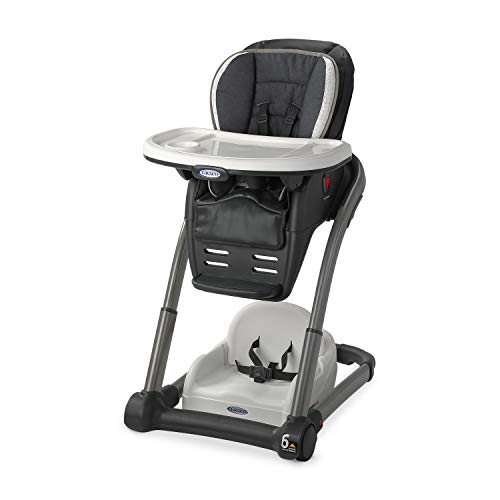
Graco Blossom 6 in 1 Convertible High Chair, Redmond — Best Overall
The Graco Blossom earns the top spot by removing the most common regret in this category: buying a seat that the child outgrows in eighteen months. Its 6-in-1 convertible design is built to move through the feeding years in stages — full high chair first, then reconfigured seating as the child grows — so the purchase keeps working long after the puree stage ends. For a first child, that also means the seat is still useful when a sibling arrives, because the older child can graduate to one of the later configurations while the baby takes the high chair mode.
Strengths
- Six configurations in one seat, covering infant feeding through to older-child seating at the table.
- Convertible format spreads the cost across years instead of one short stage.
- A full-size high chair footprint gives young babies proper support during early weaning.
Trade-offs
- A full-size convertible takes more kitchen space than a booster or hook-on chair.
- More configurations mean more parts to keep track of between stages.
- The verified listing title confirms the 6-in-1 format and colourway; it does not state a weight limit, so check the listing for the current specification before ordering.
Specifications (from the verified listing)
- Type: 6-in-1 convertible high chair
- Colour listed: Redmond
- Brand: Graco
- Weight limit: not stated in the verified listing title
Who it suits: first-time parents who want one considered purchase, and families planning more than one child. The Blossom’s value is in the hand-offs — baby to toddler, toddler to sibling — and in the fact that the later modes keep a child at the table in a proper seat rather than kneeling on a dining chair. Who should look elsewhere: anyone in a genuinely small kitchen, where the Inglesina hook-on or a booster below will serve better, and anyone who wants a minimalist wooden look, where the Abiie is the stronger match. As a daily tool it is the most complete answer here to the actual question most buyers are asking, which is not “which seat is best this month” but “which seat will still be right in three years”.
Best for: families who want one seat from first foods through the preschool years. / Not suited for: very small kitchens or buyers who want a folding travel seat.
Check the current price on Amazon

Abiie Beyond Junior Convertible Wooden High Chair with Removable Tray — Best Grow-With-Me Wooden Chair
The Abiie Beyond Junior is the pick for parents who dislike the idea of a plastic appliance living in their dining room for years. It is a wooden convertible chair with a removable tray, and its verified listing states an unusually wide brief: adjustable seating for babies and toddlers from six months, growing with the child up to a stated capacity of 250 lbs, with a water-resistant finish. In plain terms, the chair is designed to end its life as an ordinary chair at the family table rather than in the garage.
Strengths
- Listing-stated range from 6 months to 250 lbs — the longest claimed service life in this guide.
- Water-resistant wooden finish wipes down more easily than unfinished wood.
- Removable tray lets the chair pull up to the table as the child grows.
Trade-offs
- Wooden chairs are heavier to move around the kitchen than plastic or folding models.
- It sits in a premium tier compared with basic folding high chairs.
- The cushion colour is part of the specific listing (this one is natural wood with an olive cushion), so check the variant you are ordering.
Specifications (from the verified listing)
- Type: convertible wooden high chair with removable tray
- Stated range: 6 months to 250 lbs
- Finish: water resistant, natural wood with olive cushion
- Brand: Abiie
The honest way to judge the Beyond Junior is as furniture, not baby gear. Baby gear is priced against a two-year window; furniture is priced against a decade. If your household eats at a wooden table and you expect the chair to blend in, stay useful as a homework seat, and then serve a second child, the maths works. If you need to fold the seat away after every meal or carry it between houses, it is the wrong tool — the Cosco and the boosters below exist for exactly that. Assembly and adjustment are part of the ownership deal with wooden convertibles: expect to spend time with the Allen key at each growth stage rather than clicking parts together daily.
Best for: design-conscious families who want a chair that becomes ordinary furniture. / Not suited for: buyers who need to fold, carry or store the seat daily.
Check the current price on Amazon

Cosco Kids Simple Fold Portable High Chair, Comet — Best Budget Pick
The Cosco Simple Fold is the honest workhorse of this guide: a full-size high chair with a 3-position adjustable tray, a cup holder, a wipeable seat pad, and a frame that folds for storage or transport, rated by its listing from six months up to 50 lb. It does not convert into six things. It does the one job — a safe, wipeable seat at the right height — at a budget-tier price, which is why it is the classic second seat for grandparents and the classic first seat for families who would rather spend the difference on the next stage of baby gear.
Strengths
- Folds down for storage and car transport — rare at this tier.
- Wipeable seat pad keeps daily cleaning to a quick pass with a cloth.
- 3-position tray adjusts as the child grows, with a cup holder built in.
Trade-offs
- No convertible modes — when the child outgrows it at the stated 50 lb limit, it is done.
- A simpler pad and frame than the premium picks; comfort extras are minimal.
- Budget construction means it suits a defined job rather than a decade of service.
Specifications (from the verified listing)
- Type: folding portable high chair with tray
- Stated range: 6 months up to 50 lb
- Tray: 3-position adjustable, with cup holder
- Seat pad: wipeable
Where the Cosco quietly wins is logistics. It is the seat you can leave at a grandparent’s house, lend to a sibling, or fold into a cupboard in a flat where the kitchen is also the hallway. The wipeable pad matters more than it sounds: at three meals a day, a pad that needs machine washing is a pad that is often dirty, while a wipe-clean surface resets in seconds. Buy it with clear eyes — it is a stage-specific tool, not an heirloom — and it is excellent value for exactly the months it covers.
Best for: budget-conscious families, grandparents’ houses and small homes that need a folding seat. / Not suited for: buyers who want one chair to last from six months to school age.
Check the current price on Amazon

Inglesina Fast Table Baby High Chair, Black — Best Hook-On Space Saver
The Inglesina Fast Table removes the floor from the equation entirely. It clamps onto the edge of a table — the verified listing states a fit range of 0.8 to 3.5 inches of table thickness — and seats babies and toddlers up to 37 lbs right at the family table, then collapses flat and goes into its included travel bag. For small apartments, breakfast bars and restaurant trips, nothing else in this guide comes close on footprint: when the meal ends, the chair effectively disappears.
Strengths
- Zero floor footprint — the child sits at the table itself, not next to it.
- Collapsible design with a travel bag included, per the verified listing.
- Stated table fit range (0.8–3.5 in thick) makes compatibility checkable before you buy.
Trade-offs
- Only works on suitable tables — glass tops, pedestal tables and very thick or bevelled edges are out; measure first.
- Lower stated weight limit (37 lbs) than full-size chairs, so the stage it covers is shorter.
- No tray on this listing — the child eats from the table surface, which changes the mess equation.
Specifications (from the verified listing)
- Type: hook-on table chair
- Stated capacity: up to 37 lbs
- Table fit: 0.8 to 3.5 inches thick
- Includes: travel bag; collapsible frame
The Fast Table is also the most honest travel seat here, because it was designed for tables rather than adapted to them. In restaurants and holiday rentals it gives a baby a consistent seat at the table instead of a borrowed high chair of unknown cleanliness. The discipline it demands is compatibility: check your table’s thickness and construction against the stated range, avoid lightweight tables that could tip, and never treat a hook-on chair as a set-and-forget device — the child is suspended from the table edge, so the table is part of the safety system. Within those rules, it is a superb piece of design and the only pick here a city family in a small flat should consider first.
Best for: small homes, travel and eating out with a baby or young toddler. / Not suited for: glass or pedestal tables, or children over the stated 37 lbs limit.
Check the current price on Amazon

hiccapop OmniBoost Booster Seat with Tray, Grey — Best Travel Booster
The OmniBoost is a booster seat engineered around movement. It straps to a dining chair, folds on a compact frame, and its verified listing highlights the two cleaning features travelling parents actually use: a dishwasher-safe removable tray and a machine-washable seat. The listing also states a maximum of 200 lb — that figure is the seat’s stated structural capacity as printed in the listing, and in practice the seat is a toddler booster; we quote the number because the listing states it, not because any toddler needs it.
Strengths
- Dishwasher-safe removable tray — the fastest possible reset after a messy meal away from home.
- Machine-washable seat and a compact folding frame, both confirmed by the listing.
- Works as a home booster and a travel high chair in one purchase.
Trade-offs
- A booster depends on the host dining chair — it needs a suitable, stable chair with a back to strap to.
- Boosters suit toddlers who can sit up confidently; young babies still need a full high chair.
- The stated 200 lb figure is a structural rating from the listing, not a guide to child size — follow the maker’s age guidance on the listing.
Specifications (from the verified listing)
- Type: booster seat with tray, travel high chair format
- Tray: removable, dishwasher-safe
- Seat: machine-washable; compact folding frame
- Listing-stated maximum: 200 lb
Families who eat at other people’s houses a lot will understand this pick instantly. The OmniBoost lives in the car boot or the hallway cupboard and turns any suitable dining chair into a toddler seat with its own tray — which also means the mess lands on a tray you can put in the dishwasher rather than on a relative’s table. At home it doubles as the everyday booster once your toddler graduates from a high chair. It is not a replacement for a full high chair during early weaning, and it should only ever be used strapped to a proper dining chair, never on stools, benches or swivel chairs.
Best for: families who travel, visit and eat out with a toddler. / Not suited for: early weaning babies or homes without suitable dining chairs to strap it to.
Check the current price on Amazon
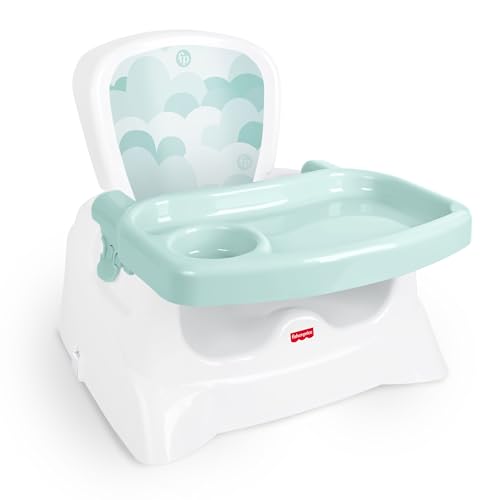
Fisher-Price Feeding Booster Seat for Toddlers — Best Booster for Toddlers
The Fisher-Price Feeding Booster is the straightforward second-stage seat: a booster with an adjustable tray and safety straps, sized by its listing for ages 1 and up, that folds for travel. It assumes your child already sits confidently and eats at the family table, and it gives them their own defined seat — with a tray of their own — without a full-size high chair taking up the kitchen.
Strengths
- Adjustable tray keeps the setup right as the toddler grows through the stage.
- Safety straps secure the booster to the dining chair, per the verified listing.
- Folds for travel, so the same seat works at home and away.
Trade-offs
- For ages 1 and up per the listing — not a seat for early weaning.
- Like every booster, stability depends on the dining chair underneath it.
- A simpler seat than the OmniBoost for dedicated travel use.
Specifications (from the verified listing)
- Type: feeding booster seat / portable high chair format
- Stated age: ages 1+
- Tray: adjustable
- Straps: safety straps included; folds for travel
This is the pick that marks the end of the high chair era in most houses. Toddlers who have been straining against a high chair harness often settle immediately in a booster, because it puts them at the table like everyone else while the tray still contains the blast radius of a self-feeding two-year-old. Fisher-Price’s long history in this category shows in the format: nothing exotic, everything washable-minded, and a fold that makes it a genuine second seat for the car. Pair it with a stable, four-legged dining chair, use both straps every time, and it will carry the family through to the point where a cushion and good manners take over.
Best for: toddlers aged 1+ graduating from a high chair to the family table. / Not suited for: babies under the stated age or early-weaning support.
Check the current price on Amazon
Comparison Table
| Pick | Badge | Key spec (verified listing) | Best for |
|---|---|---|---|
| Graco Blossom 6 in 1 Convertible High Chair | Best Overall | 6-in-1 convertible format | One seat from weaning to preschool |
| Abiie Beyond Junior Wooden High Chair | Best Grow-With-Me Wooden Chair | 6 months to 250 lbs stated; water resistant | Long-life furniture-style seating |
| Cosco Kids Simple Fold High Chair | Best Budget Pick | 6 months to 50 lb; wipeable pad; folding | Budget and grandparents’ houses |
| Inglesina Fast Table Chair | Best Hook-On Space Saver | Up to 37 lbs; tables 0.8–3.5 in thick | Small homes and travel |
| hiccapop OmniBoost Booster Seat | Best Travel Booster | Dishwasher-safe tray; machine-washable seat | Eating away from home |
| Fisher-Price Feeding Booster Seat | Best Booster for Toddlers | Ages 1+; adjustable tray; folds | Graduating to the family table |
How to Choose the Best High Chairs and Booster Seats for Your Household
Start with the format, because format decides almost everything else. A full-size high chair is the right tool for early weaning: it supports a baby who has only just learned to sit, positions them at a safe height away from table edges, and contains food within a tray perimeter. A convertible high chair adds years by reconfiguring — the Graco Blossom and the wooden Abiie Beyond Junior are the two expressions of that idea here, one in a mainstream multi-mode format and one as furniture. A booster seat assumes a child who sits confidently and eats at the table; it trades support for compactness. A hook-on chair is a special case of the booster idea that removes the dining chair from the equation and uses the table instead.
Next, match the seat to your actual dining setup. Boosters need a stable dining chair with a backrest and a seat deep enough for the booster base — measure before you buy, and rule out stools, benches and swivel or folding chairs entirely. Hook-on chairs need a table whose thickness falls inside the stated range and whose construction can take a clamped load at the edge; the Inglesina’s stated 0.8 to 3.5 inch range is exactly the kind of number to check with a tape measure, not a guess. Full-size chairs need floor space plus a swing radius for the tray and a path for an adult to walk past without tripping over splayed legs three times a day.
Then think in stages, not months. The feeding journey runs roughly: supported sitting and first foods; confident sitting and self-feeding with maximum mess; table eating with a tray; table eating without a tray; and finally an ordinary chair. Each pick in this guide covers a different span of that journey. Buying for the whole journey in one seat (the convertibles) costs more up front and less overall. Buying stage by stage (a budget high chair, then a booster) costs less at each step and lets you hand seats down or sell them on. Neither strategy is wrong — but mixing them accidentally, buying a premium stage-specific seat and then a premium booster, is how families overspend.
Safety Checks That Matter More Than Features
Whatever format you choose, the safety routine is the same and it is not optional. Use the harness at every meal, even for a calm child, even for five minutes — most falls happen during the unbuckled reach for a dropped spoon. On boosters, use both sets of straps: the ones that hold the child and the ones that hold the booster to the chair, and check strap tension weekly because toddlers are talented at loosening things. Never place a booster on a raised surface, a stool or a chair without a back, and never let a child stand in any of these seats.
For hook-on chairs, the table is part of the product. Confirm the tabletop thickness is inside the stated range, that the edge is solid rather than a decorative apron, and that the table cannot tip — a lightweight table with a heavy toddler clamped to one edge is a lever waiting for a load. Keep feet off the chair rungs and table supports: a child who can push against something with their feet can push a hook-on chair off its clamp or tip a high chair backwards. Finally, position any seat away from hazards a seated child can suddenly reach — stove heat, tablecloths that pull dishes down, cords and cutlery drawers.
Budget Tiers, Honestly Explained
This category splits into three honest tiers. The budget tier — where the Cosco Simple Fold sits — buys a safe, wipeable, stage-specific seat and nothing more; it is the right spend for second seats and short windows of use. The mid tier buys convertibility and better materials: seats like the Graco Blossom that reconfigure across stages, or travel boosters like the OmniBoost with dishwasher-safe parts that save time daily. The premium tier buys longevity and looks: the Abiie Beyond Junior’s wooden construction and listing-stated range up to 250 lbs is furniture economics, not baby-gear economics. What no tier buys is safety in any graded sense — every pick here is a complete, purpose-built feeding seat; the tiers buy years of service, cleaning convenience and footprint, not a safer child. Spend on the tier that matches how long and how often the seat will actually be used in your house.
How to Set Up and Clean a High Chair or Booster Seat
Setup, done once and done properly, prevents most of the daily friction in this category. Work through it in order:
- Assemble on a clear floor. Lay out every part, build the seat fully, and only then place it in the kitchen. Half-built seats invite missed locking pins.
- Test every lock and strap. Tug the tray, rock the frame gently, and run each strap through its full adjustment. Everything should feel boringly solid.
- Position with clearance. Leave room behind the seat so the child cannot push off a wall or counter with their feet, and keep the seat out of reach of heat and cords.
- For boosters, strap to the chair first, child second. Secure the booster to a stable dining chair, check it cannot slide in any direction, then buckle the child in.
- For hook-on chairs, verify the table. Measure the tabletop thickness against the stated range, clamp fully, and load-test with your own weight pressing down before the first use.
- Clean in layers. Tray in the dishwasher or sink after messy meals (the OmniBoost tray is dishwasher-safe per its listing), pads wiped daily (the Cosco’s pad is wipeable by design), straps and crevices weekly — crumbs ferment in strap webbing faster than anywhere else.
- Inspect monthly. Check harness stitching, clamp pads, tray latches and leg locks. A two-minute inspection catches the wear that three meals a day inevitably causes.
Feeding Stages, Stage by Stage: Matching the Seat to the Child
Stage one: first foods. The baby has just learned to sit with support and everything is puree. What matters is upright support, a harness that holds a small body without slumping, and a tray that contains liquid food. This is full high chair territory — the Graco Blossom’s first configuration, the Cosco, or the Abiie with its tray on. A booster is the wrong tool here no matter how confident the baby looks in a photograph.
Stage two: confident sitting and self-feeding. The mess peaks and the child’s reach grows. Tray size and edge height matter, cleaning speed matters more, and the seat starts travelling — to grandparents, to restaurants, to the garden. This is where folding chairs and the Inglesina hook-on earn their keep, and where a dishwasher-safe tray stops sounding like a luxury.
Stage three: table eating with training wheels. The child wants to be at the table like everyone else but still needs a defined seat and, for most families, a tray. Boosters take over: the Fisher-Price for everyday home use, the OmniBoost when the seat needs to travel. The dining chair underneath becomes part of the system, so this is also the stage to audit your chairs.
Stage four: the long tail. Tray gone, booster eventually gone, but a child still needs height at the table for years — for eating, homework and board games. This is the stage the convertibles were bought for: the Blossom’s later modes and the Abiie as an ordinary chair. Families who bought stage by stage reach this point with a cushion; families who bought convertible reach it with the same seat they started with. Both are fine outcomes — the mistake is paying convertible money without ever using the later stages.
Materials and Cleaning Design: What Two Years of Puree Does to a Seat
Feeding seats age in a specific way: not structural failure, but accumulated grime in the places design either anticipates or ignores. Strap webbing absorbs food and sours if it cannot be removed and washed. Seat pad seams trap puree; a smooth, wipeable pad like the Cosco’s is a deliberate answer to that. Tray undersides grow a archaeology of dried meals unless the tray is light enough to carry to the sink one-handed — or, like the OmniBoost’s, goes straight into the dishwasher. Wooden seats like the Abiie answer with a water-resistant finish that wipes rather than soaks, which is why the finish is part of the listing rather than a footnote.
When you compare listings, read the cleaning vocabulary carefully, because each term commits the maker to something different. “Wipeable” means a cloth and mild soap, in place, in seconds — the daily standard. “Removable” only helps if removal is tool-free and reassembly is obvious at 7 a.m. “Machine-washable” (the OmniBoost seat) suits weekly deep cleans but means the part is out of service while it dries, so check whether the seat is usable in the meantime. “Dishwasher-safe” (the OmniBoost tray, and the tray designs on several convertibles) is the strongest claim and the one worth paying for if your household runs the dishwasher daily anyway. A seat whose every surface needs the weakest method will quietly become the dirtiest object in your kitchen; a seat designed around the strongest methods stays pleasant for years.
Second-Hand Seats and Hand-Me-Downs: What to Check
Feeding seats circulate between families more than almost any other baby product, and a hand-me-down from someone you know can be a genuinely good outcome — several picks in this guide, the Abiie especially, are built to survive exactly that. But a second-hand seat deserves a stricter inspection than a new one, because you inherit its whole history. Work through the harness first: webbing should be unfrayed, stitching intact, and buckles should click and hold under a firm tug; a harness that has been cut, shortened or replaced with non-original parts is a reason to walk away. Check every locking mechanism — folding joints, tray latches, height adjustments, hook-on clamps — for cracks, bent metal and smooth positive engagement.
Then check the paperwork you cannot see. Ask whether the seat has ever been in a fall or had a child stand and rock in it, both of which stress joints invisibly. Look the model up for recalls before money changes hands; a recalled seat should never be resold or passed on, whatever its condition appears to be. Missing trays, cushions and strap pads are negotiable; missing structural parts are not. Finally, clean a second-hand seat as if it were evidence: straps off and washed where the design allows, every crevice detailed, pads wiped down — then run the same monthly inspection routine you would for a new seat. Done this way, a hand-me-down is a sensible saving. Done casually, it is the one economy in this category that is not worth making.
Common Buying Mistakes
- Buying for the photograph, not the kitchen. A beautiful chair that does not fit your table, your chairs or your floor space will be resented daily. Measure first; admire second.
- Skipping the harness because the child seems calm. Falls from feeding seats are a classic kitchen injury, and they happen in the unbuckled minute. Buckle every time.
- Putting a booster on the wrong chair. Stools, benches, swivel chairs and folding chairs are all unsuitable hosts. A booster is only as stable as what it is strapped to.
- Ignoring the cleaning design. Fixed fabric pads and unsealed crevices turn every meal into laundry. Wipeable pads, removable trays and dishwasher-safe parts are worth more than extra recline positions.
- Buying a hook-on chair without measuring the table. The stated thickness range is a hard compatibility limit, not a suggestion — and glass or pedestal tables are out regardless of thickness.
- Paying for the whole journey twice. A premium stage-specific seat followed by a premium booster costs more than one convertible. Decide your strategy before the first purchase.
Final Recommendation
For most families, the answer is the Graco Blossom 6 in 1: one convertible seat that covers the journey from first foods to the preschool years and hands down well. If you want that same long view in a form that belongs at a wooden dining table, the Abiie Beyond Junior is the premium alternative. On a budget, or buying a second seat for another house, the Cosco Simple Fold is the sensible spend. Short on space, choose the Inglesina Fast Table and reclaim your floor; always on the move, choose the hiccapop OmniBoost; and when your toddler is ready to graduate to the table, the Fisher-Price Feeding Booster is the clean finishing step.
Keep exploring the cluster: Best Booster Chairs For Toddlers · Best High Chairs Easy To Clean And Safe · Best High Chairs For Older Babies · Best High Chairs That Attach To A Chair · Best High Chairs For Traveling · Best Slim High Chairs
Related guides
Frequently Asked Questions
When should a baby move from a high chair to a booster seat?
When they sit confidently unaided, eat mostly at the family table, and start treating the high chair as a climbing frame — commonly somewhere in the second year. The boosters in this guide state their own floors: the Fisher-Price booster is listed for ages 1 and up. Keep using the harness in the booster stage; the format changes, the restraint habit should not.
Are hook-on high chairs safe?
Used within their stated limits, they are a legitimate format with decades of use behind them. The conditions are strict, though: a solid table within the stated thickness range (0.8 to 3.5 inches for the Inglesina pick), a table heavy and stable enough not to tip, clamps fully tightened, and no foothold the child can push against. If your table is glass, pedestal-based or lightweight, choose a different format.
What weight limits should I pay attention to?
Use the limits stated on each listing, because they vary widely by format: 50 lb for the Cosco folding chair, 37 lbs for the Inglesina hook-on, 60 lbs for some convertibles, and furniture-style chairs like the Abiie state far higher capacities because they convert to ordinary chairs. Treat the limit as a hard stop for the feeding-seat configuration, and retire or convert the seat when your child reaches it.
Is a convertible high chair worth it over a basic one?
If the seat will serve one child through several stages — or two children in sequence — yes: one convertible typically costs less than a basic high chair plus a booster plus a youth seat bought separately. If the seat is a second one for another household, or you only need to cover the weaning window, a basic folding chair like the Cosco is the smarter spend.
How do I keep a high chair from becoming permanently grubby?
Choose cleaning-friendly design first (wipeable pads, removable dishwasher-safe trays), then keep a rhythm: tray washed after messy meals, pad wiped daily, straps and crevices detailed weekly, and a monthly inspection while you clean. The seats that stay pleasant are the ones whose design makes the quick clean the easy clean.
Do I need a tray, or can my child eat straight from the table?
A tray earns its place during the self-feeding stage: it contains the mess, defines the child’s own space, and gives small hands a raised edge to scoop against. Once a child eats with reasonable control, eating from the table in a booster or a tray-free convertible mode is fine and socially better. Hook-on chairs like the Inglesina are tray-free by design, which is one reason they suit slightly older babies and toddlers better than brand-new weaners — and why a wipeable table surface matters if you choose one.
How long will one of these seats actually be used?
Longer than most baby purchases. A feeding seat typically works three meals a day from around six months until somewhere between three and five years in its later modes — thousands of uses. That volume is why format, cleaning design and conversion range matter more here than in almost any other baby category, and why a seat that fits your kitchen and your routine beats a seat with a longer feature list that fits neither.
Can a booster seat be used on any dining chair?
No. It needs a stable, four-legged dining chair with a backrest, a seat pan deep enough for the booster’s base, and straps that can cinch tightly underneath and behind. Never use a booster on stools, benches, armchairs with gaps, swivel chairs or folding chairs, and never place a booster on a counter or table.


