Disclosure: airfryerkitchensupply.com is reader-supported. When you buy through links on our site, we may earn an affiliate commission at no extra cost to you.
Where to buy
Every linked pick in this guide to the best towels for espresso machine use was verified against Amazon’s catalog on 2026-11-22, so the brands, sizes, and pack counts quoted below match the listings you will land on. Start with the watchget Barista Microfiber Cloths for the standard café-format towel in a four-pack, the Normcore Barista Cleaning Towels if you want the espresso-specialist brand’s two-cloth set, or the Solyra Barista Towels for a waffle-weave six-pack with a stated 380 GSM weight. Check the current price on Amazon from any pick’s link, and note that a few of these listings’ titles run long — the specifications this guide relies on are the ones stated in full below.
The best towels for espresso machine duty are barista towels, and they are a more specific tool than their humble appearance suggests. An espresso station destroys ordinary kitchen towels in three ways: steam wands bake milk residue onto whatever touches them, so the towel must scrub and release soil in the wash; portafilters and drip trays drip constantly, so the towel must absorb quickly without leaving lint in the group head or on a polished machine; and the whole station — chrome, steel, painted panels — shows every smear, so the towel must wipe clean without scratching or streaking. A barista towel is a microfiber cloth sized and weighted for exactly that triangle of jobs, and a home espresso setup with the right towels in rotation runs cleaner, looks better, and tastes better — because yesterday’s milk, left to bake on a steam wand, is a flavor nobody ordered.
This guide compares six verified barista towel options across the realistic range: the café-standard 12×12 inch format, a larger 12×20 format for big stations, waffle weave versus flat microfiber, and packs sized for a solo home bar versus a household that entertains. Two picks come from the same maker — watchget, in two genuinely different sizes — and that is disclosed openly where it happens, because in this small category the honest size comparison matters more than a forced brand count.
In this guide
Quick Picks
| Pick | Badge | Why it stands out |
|---|---|---|
| watchget Barista Microfiber Cloths, 4 Pack, 12″x12″ | Best Overall | The café-standard size and format, positioned for espresso machines, steam wands, and countertops |
| Normcore Barista Cleaning Towels, 2 Pack | Best Specialist Brand | Two-color assorted set from a dedicated espresso accessories maker |
| MHW-3BOMBER Barista Towels, 4 Pack, 11″ | Best for Gear Enthusiasts | Compact 11-inch cloths from a coffee-gear specialist brand |
| Solyra Barista Towels, 6 Pack, Waffle Weave 380 GSM | Best Waffle Weave | Stated 380 GSM waffle weave, OEKO-TEX certified fabric, six-pack |
| EubooTree Barista Towels, 6 Pack, 12″x12″ | Best Value Rotation | Six full-size cloths — enough for a true wash rotation |
| watchget Barista Towel, 4 Pack, 12″x20″, Black | Best Large Format | The bigger 12×20 towel for drip trays, big machines, and countertop duty |
A terminology note before the reviews: “OEKO-TEX certified,” which appears on one pick, means the fabric has been tested for harmful substances — it is a safety-testing certification, not an organic certification, and this guide describes it as exactly that. Precision about labels is a standing rule here, in towels as in everything else.
How These Picks Were Chosen
Every pick was verified fresh on 2026-11-22 through this site’s own Amazon listing data connection — these are real, current listings from the barista towel category, not generic microfiber cloths relabeled for the occasion. Sizes, pack counts, weave, and the one stated GSM figure are quoted from the verified listing records; where a search record’s title is truncated, the cut-off portion is not quoted or relied on anywhere in this article, and the source file notes each case.
The criteria were station criteria. Task fit came first: every pick is positioned by its maker for espresso machines and steam wands specifically — the steam wand is the harshest test a towel faces, and generic cleaning cloths were excluded even when their microfiber was similar. Size came second, with the café-standard 12×12 as the reference and larger and smaller formats judged by the jobs they suit. Rotation depth came third: espresso towels soil fast and wash often, so pack counts were weighed as a system property, not a bonus. Finally, fabric honesty — stated weave and weight scored over adjectives, which is why the guide’s one GSM figure belongs to the one listing that states it.
The Quiet Economics: Towels vs the Alternatives
It is worth doing the small math that justifies this entire category, because the numbers are not close. A home barista pulling two drinks a day and wiping properly with paper towels works through them at a rate that turns into a standing weekly purchase — and paper still cannot scrub a wand, polish a panel without fiber, or survive being dampened and reused within a session. Disposable espresso wipes exist and multiply the cost while adding a waste stream. Against that, a rotation of microfiber barista towels — even the specialist sets in this guide — is a one-time modest purchase that serves for a year or more of daily use, washed in loads you are already running. The reusable system is cheaper by an order of magnitude, performs better at every task named in this guide, and produces a fraction of the waste. Rarely does the correct tool win on performance, cost, and conscience simultaneously; at the espresso station, it does, which is why cafés standardized on cloth generations ago and why the home bar should too.
One honest qualification completes the picture: microfiber is a synthetic textile, and washing any synthetic sheds microfibers into wastewater. Households that weigh that concern can wash barista towels in a microfiber-catching laundry bag and retire towels fully rather than early — small mitigations that keep the system’s large advantages intact. What the concern does not justify is the paper habit, whose production footprint per wipe dwarfs the cloth system’s per-wipe share by any honest accounting.
The 6 Best Towels for Espresso Machine Use

watchget Barista Microfiber Cloths, 4 Pack, 12″x12″ — Best Overall
The watchget four-pack is the reference towel of this guide: microfiber cloths in the 12″x12″ format cafés standardized on, positioned by the maker for espresso machines, steam wands, and countertops. The size deserves its standard status — large enough to fold into a padded square for wiping a hot steam wand safely, small enough to maneuver around a group head and under a portafilter without bunching. A four-pack supports the minimal real rotation: one on the wand, one on the counter, one in the wash, one clean in reserve. For most home espresso setups, this is the purchase that ends the improvisation with paper towels and retired dish cloths.
Strengths
- Café-standard 12″x12″ size hits the fold-and-wipe ergonomics that steam wand work demands.
- Purpose-positioned for espresso machines, steam wands, and countertops — the three surfaces a home bar actually has.
- Four-pack depth makes a genuine rotation possible from the first purchase.
Trade-offs
- The search record’s title is truncated before any GSM or weave detail, so this guide claims neither for this pick — judge it as the standard format, honestly unspecified beyond size and purpose.
- Four cloths is a minimum rotation; heavy daily use will want a second pack or the six-pack picks below.
- Microfiber ground rules apply: no fabric softener in the wash, or absorbency dies slowly.
Key specs (from the verified listing): barista microfiber cloths; 4 pack; 12″x12″; positioned for espresso machines, steam wands, and countertops.
The watchget four-pack earns Best Overall by being the correct default: right size, right purpose, right count to start. Most readers should buy this or its six-pack rivals, and the rest of the guide exists for the readers whose stations differ from standard.
Best for: the standard home espresso station, first barista towel purchase / Not suited for: high-volume households that need deep rotation from day one
Check on Amazon — check the current price on Amazon before ordering.
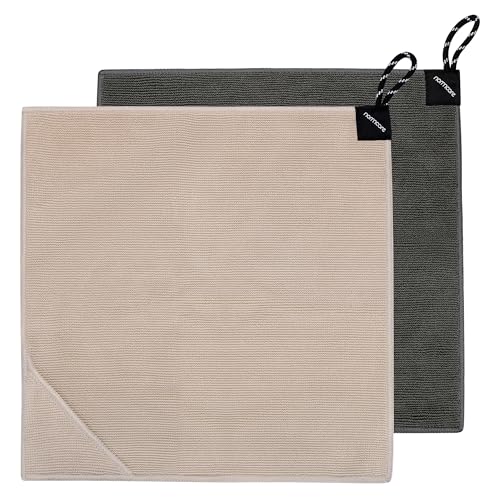
Normcore Barista Cleaning Towels, 2 Pack — Best Specialist Brand
Normcore is a name home baristas know from tampers, distributors, and other precision espresso accessories, and its barista cloth set brings that specialist positioning to the towel drawer: two microfiber cloths in assorted colors, made for steam wands, the machine, and the bar around it. The two-color design is a quiet system feature — dedicate one color to the steam wand and milk work, the other to counters and the machine’s exterior, and cross-contamination of tasks becomes visible at a glance. Two cloths is a starter count, not a rotation, so this set suits the tidy solo barista who washes frequently, or serves as the “good set” alongside a workhorse pack.
Strengths
- Specialist espresso brand with a coherent accessory ecosystem — the towels match the maker’s other bar tools in intent.
- Two-color assortment enables a simple, hygienic task-dedication system.
- Microfiber positioned explicitly for steam wand and machine care.
Trade-offs
- Two cloths is the shallowest rotation in the guide; laundry discipline is mandatory.
- Specialist branding sits in a higher tier per cloth than the value packs.
- The search record truncates the title before full specifications, so beyond the set’s format and purpose this guide claims nothing further.
Key specs (from the verified listing): barista cleaning towels; 2 pack; microfiber cloth set with 2 color assorted; for steam wand, espresso machine, and bar accessories care.
Choose the Normcore set if you value the specialist ecosystem and a tidy two-cloth system — or as the designated milk-and-wand pair within a larger rotation built from the value packs.
Best for: solo home baristas, brand-system builders, task-dedication hygiene / Not suited for: anyone who wants a week’s rotation in one purchase
Check on Amazon — check the current price on Amazon before ordering.

MHW-3BOMBER Barista Towels, 4 Pack, 11″ — Best for Gear Enthusiasts
MHW-3BOMBER is another coffee-gear specialist — the kind of brand that sells WDT tools and dosing funnels to people who weigh their shots — and its barista towels come in a slightly compact 11-inch format, four to a pack. That inch smaller than standard is a real ergonomic choice: on a crowded home bar with a compact machine, a smaller cloth folds neater, hangs closer, and gets in around a small drip tray and a tight group head with less excess fabric trailing into the puck bin. Enthusiasts who keep a minimal, deliberate station will recognize the intent immediately.
Strengths
- Compact 11-inch format suits small machines and crowded home bars better than the standard square.
- Specialist coffee-gear brand; the towels are designed inside an espresso workflow, not adapted from janitorial cloths.
- Four-pack gives a workable rotation at the smaller size.
Trade-offs
- Less fabric per cloth means less absorbency per wipe and less padding between your hand and a hot steam wand — fold discipline matters.
- The listing title in the search record is truncated at the end; specifications beyond size, count, and purpose are not claimed here.
- Big commercial-style home setups will find the standard 12-inch cloths more natural.
Key specs (from the verified listing): barista towels; 4 pack; 11″ microfiber barista cloths; positioned for espresso machine, steam wand, and countertop.
The MHW-3BOMBER set is the enthusiast’s format pick: smaller, deliberate, and at home on the kind of station where every tool was chosen. If your bar is compact and curated, this is your towel.
Best for: compact home bars and espresso gear enthusiasts / Not suited for: large machines or users who want maximum cloth per wipe
Check on Amazon — check the current price on Amazon before ordering.

Solyra Barista Towels, 6 Pack, Waffle Weave 380 GSM — Best Waffle Weave
The Solyra six-pack is the specification-lover’s pick, because its listing actually states the numbers: 12×12 inch microfiber towels in a waffle weave at 380 GSM, six to a pack, in dark gray. Waffle weave is a genuine functional variant — the textured grid increases surface area and gives the cloth a light scrubbing action that flat microfiber lacks, which is exactly what a steam wand with milk film and a drip tray with coffee scale want. The stated 380 GSM puts these at the substantial end of barista towels: more absorption per cloth, more padding at the wand. The fabric carries OEKO-TEX certification — tested for harmful substances, as the terminology note above explains — and the dark gray colorway is the pragmatic choice for a station where every cloth eventually meets coffee.
Strengths
- Waffle weave adds scrubbing texture for steam wand milk film and drip tray residue.
- Stated 380 GSM — the only verified weight figure in this guide, and a substantial one.
- Six-pack depth plus a stain-forgiving dark colorway: the working rotation, solved.
Trade-offs
- Waffle texture is slightly less silky on polished machine panels than flat microfiber — use a light touch on mirror finishes.
- The listing title truncates after the drip-tray mention; nothing beyond the confirmed specs is claimed here.
- Dark gray only in the verified listing — color-coding by task requires mixing with another pick.
Key specs (from the verified listing): barista towels; 6 pack; 12×12 in microfiber; waffle weave; 380 GSM; OEKO-TEX certified fabric (tested for harmful substances — not an organic certification); dark gray.
For the home barista who reads specifications before buying — this guide’s favorite kind of reader — the Solyra is the towel whose listing respects you back. It is also, on the merits, an excellent working cloth.
Best for: spec-driven buyers, steam wand scrubbing, deep rotations / Not suited for: anyone who wants color variety in a single pack
Check on Amazon — check the current price on Amazon before ordering.

EubooTree Barista Towels, 6 Pack, 12″x12″ — Best Value Rotation
The EubooTree six-pack makes the simplest argument in the guide: six full-size 12″x12″ barista cloths, positioned for espresso machines and steam wands, at a value tier. Rotation depth is the unglamorous secret of a clean espresso station — towels soil with milk and coffee oils faster than any other cloth in the kitchen, and a station with six in rotation always has a clean one at hand, which is precisely when good habits survive busy mornings. If the watchget four-pack is the correct minimum, the EubooTree six is the comfortable margin, and for households pulling drinks for two or more people daily, the margin is the recommendation.
Strengths
- Six full-size cloths — the deepest standard-format rotation in the guide.
- Standard 12″x12″ café format with espresso and steam wand positioning.
- Value tier per cloth makes replacing a tired set painless.
Trade-offs
- The search record truncates the title before weave or weight details; neither is claimed here.
- Value-tier finishing is functional rather than luxurious next to the specialist brands.
- A single colorway in the pack means task-dedication requires your own marking system.
Key specs (from the verified listing): barista towels; 6 pack; 12″x12″; microfiber coffee cleaning cloths; positioned as espresso machine accessories for steam wands and countertops.
Buy the EubooTree set if your station’s problem is logistics — never a clean towel when you need one. It solves that problem completely and cheaply, which is a more valuable trick than it sounds.
Best for: multi-drinker households, rotation depth, value shoppers / Not suited for: buyers who want stated GSM or specialist branding
Check on Amazon — check the current price on Amazon before ordering.

watchget Barista Towel, 4 Pack, 12″x20″, Black — Best Large Format
The second watchget pick in this guide — flagged openly, as promised — is a different tool from its sibling: a 12″x20″ towel, four to a pack, in black. The larger rectangle changes the job list. Draped over a drip tray during a backflush session, laid under a grinder to catch the scatter, folded long for two-handed polishing of a big machine’s panels, or spread as the landing pad for a disassembled portafilter and baskets during a deep clean — these are tasks the 12-inch square does awkwardly and the 12×20 does naturally. Black is also the honest color for the dirtiest jobs on the station.
Strengths
- 12″x20″ format covers drip trays, grinder zones, and deep-clean disassembly in one cloth.
- Black colorway hides the coffee staining that retires lighter towels cosmetically long before they wear out.
- Same maker’s microfiber as the guide’s standard pick, in the size big stations actually need.
Trade-offs
- Too much cloth for the steam wand’s quick fold-and-wipe — pair it with a standard-size pack rather than replacing one.
- Second watchget listing in the guide: the brand duplication is disclosed here and in the Quick Picks note, and reflects sizes, not favoritism.
- Larger cloths take more laundry space per wash load — trivial, but real in a small household.
Key specs (from the verified listing): barista towels; 4 pack; 12″x20″; black; microfiber; positioned for espresso machines and steam wands.
Think of the 12×20 as the station’s work mat and heavy-duty cloth in one. Most complete home bars end up with this size alongside the standard squares — buy it second, or first if your machine is large and your counter is busy.
Best for: large machines, grinder zones, deep-clean sessions / Not suited for: being the only towel format at a small station
Check on Amazon — check the current price on Amazon before ordering.
Comparison Table
| Pick | Badge | Key spec | Best for |
|---|---|---|---|
| watchget Cloths 4-Pack 12×12 | Best Overall | 12″x12″, 4 pack, café standard | The standard home station |
| Normcore Towels 2-Pack | Best Specialist Brand | 2 colors, specialist maker | Task-dedication, solo baristas |
| MHW-3BOMBER Towels 4-Pack | Best for Gear Enthusiasts | 11″ compact format | Small machines, curated bars |
| Solyra Towels 6-Pack | Best Waffle Weave | Waffle weave, 380 GSM stated | Scrubbing power, spec readers |
| EubooTree Towels 6-Pack | Best Value Rotation | 12″x12″, 6 pack | Deep rotation, value |
| watchget Towel 4-Pack 12×20 | Best Large Format | 12″x20″, black | Big stations, deep cleans |
The table’s lesson is that “best towel” decomposes into size, weave, and count. The buying guide below turns those three variables into a decision for your specific station. One further pattern deserves naming: the two specialist brands in this table — Normcore and MHW-3BOMBER — sell the fewest cloths per pack, while the value brands sell the most. That is not a coincidence or a criticism of either side; it reflects two legitimate products, the curated tool and the working rotation, and most mature home bars end up owning one of each kind.
How to Choose Towels for Your Espresso Machine
Why microfiber, and why not cotton or paper
Microfiber owns the espresso station for structural reasons: its split fibers lift and hold soil and oils instead of smearing them, it absorbs several times its weight in water, and it releases that soil in the wash instead of setting it. Cotton bar towels are the traditional café alternative and they work — but they lint more, absorb slower once saturated, and hold milk odor through washes in a way microfiber mostly does not. Paper towels are the expensive habit: they shred on steam wand knurling, leave fiber on the group head, and turn a daily ritual into a weekly purchase. Every pick in this guide is microfiber because the material is not a preference here; it is the correct engineering answer.
Size is a job description
Choose sizes by task. The 12×12 square is the wand-and-counter standard because it folds into a thick, safe pad for hot metal and still handles like a cloth, not a blanket. The 11-inch compact suits small machines and tight bars. The 12×20 rectangle is station infrastructure: drip tray cover, grinder mat, polishing cloth, disassembly pad. A complete home bar usually runs two sizes — squares for the daily ritual, a large format for cleaning day — and the picks above are arranged so you can build that pairing from any two rows of the table.
Count is a hygiene system
Espresso towels fail socially before they fail physically: the moment no clean towel is at hand, someone wipes the wand with the counter cloth, and the system collapses. Count your household’s drinks per day and your laundry interval honestly. A solo barista washing twice a week thrives on four to six cloths; a two-drinker household entertaining on weekends should think in sixes and twelves. This is why pack count features so heavily in this guide’s badges — the EubooTree and Solyra six-packs are not “more,” they are the difference between a rotation that survives the week and one that does not.
Weave and weight, honestly weighed
Flat microfiber wipes polished panels cleanest; waffle weave scrubs wands and trays best. Weight, stated as GSM, predicts absorbency and wand-padding — but only one listing in this category states it, which is itself information about the category’s marketing habits. Buy stated facts where they exist (the Solyra’s 380 GSM waffle), and elsewhere buy format and count, which are verifiable from any listing, rather than absorbency adjectives, which are not.
The Espresso Station Cleaning Routine Your Towels Make Possible
Towels are the instrument; the routine is the music. Here is the schedule that keeps a home station café-clean, organized by the rhythm each task actually needs rather than by good intentions.
Every drink
Wipe the steam wand the second the pitcher comes off — before you pour, before you admire the latte art — and purge a burst of steam. Knock the puck, wipe the portafilter basket dry with the counter cloth so the next shot starts clean, and swipe the drip tray if the shot ran long or the rinse splashed. These are ten-second acts; strung together across a morning, they are the entire difference between a station that gleams and one that crusts.
Every day you use the machine
Wipe down the group head area and the shower screen’s visible face with a clean section of cloth, empty and rinse the drip tray rather than letting coffee water stand in it, and polish the machine’s exterior panels with a dry pass — microfiber’s finest party trick is making stainless and chrome look detailed with nothing but a dry wipe. Hang the day’s towels where they dry fully; swap in fresh ones from the rotation.
Weekly
Backflush per your machine’s guidance, using a towel under the group to catch the detergent water. Wash the drip tray and grate properly at the sink. Clean the grinder’s chute area and the counter zone beneath it — the large-format towel’s home territory — and launder the week’s towels hot, as a dedicated load, so the rotation resets to fully clean. Inspect each towel as it comes out of the wash: thinning, smearing, or sour survivors get demoted before they rejoin the station.
Monthly
Deep-clean day: portafilter and baskets disassembled on the large towel, steam wand tip removed and soaked if your machine allows, water reservoir washed, and the machine’s panels given a careful full polish. This is also when you count your rotation honestly — if the set has thinned below four working cloths, that is the moment a fresh pack from this guide earns its place, before the shortage starts making hygiene compromises for you.
Microfiber Up Close: Why the Right Cloth Does Not Scratch or Lint
Two fears keep people wiping expensive machines with paper: scratching the finish and leaving lint in the group. Both fears are really about cloth quality, and both are manageable with knowledge. Microfiber’s working surface is a dense field of split synthetic fibers, each far finer than a human hair; quality cloth presents that field evenly, so it lifts soil without any hard point that could mark chrome or paint. The scratch risk in practice comes not from microfiber itself but from grit — a cloth that has wiped the counter, picked up a coffee-ground-and-sugar abrasive load, and then been rubbed hard across a polished panel. The fix is the task-dedication system this guide keeps returning to: the panel cloth never does floor or spill duty.
Lint is the other quality axis. Cheap microfiber sheds its shortest fibers from the first wash, and at an espresso station those fibers land in baskets and on shower screens. Better cloths — and all six picks here are positioned by their makers for barista work, where lint is a known disqualifier — hold together through repeated hot washing. You can test any new towel before trusting it: wash it once, then wipe a black surface and a glass panel in good light. What you see is what your machine would have worn. Towels that pass join the rotation; towels that fail become counter cloths, where their lint harms nothing.
How to Use and Care for Barista Towels
- Dedicate towels by task. Steam wand and milk work get their own cloth — the one that never touches the floor, the sink, or a spill. Counter and exterior work get another. The Normcore two-color set builds this in; with single-color packs, mark a corner or use separate hooks.
- Wipe the steam wand immediately, every time. Milk bakes onto a hot wand in under a minute. Fold the towel into a thick pad, wipe the wand clean, then purge steam briefly to clear the tip. This ten-second ritual is the single highest-value habit in home espresso.
- Keep the wand towel damp, not wet. A damp microfiber releases milk film best; a dripping one sprays. Rinse and wring it at the start of a session, and refresh it when it loads up.
- Wash hot, wash separately, never soften. Microfiber’s enemies are fabric softener and dryer sheets, which coat the fibers and quietly kill absorbency, and lint-shedding wash companions like cotton towels. Wash barista towels together, with a plain detergent, and tumble dry low or hang.
- Retire towels by performance. When a cloth starts smearing instead of wiping, or holds a sour smell after washing, demote it to garage duty and promote a fresh one. Towels are consumables with a long fuse, not heirlooms.
- Store them at the station, folded. A towel that lives in a drawer across the kitchen will not be used at the moment the wand needs it. Hooks or a small stack beside the machine are part of the system.
Towels by Station Type: Matching the Set to Your Setup
The compact starter station
A small machine on a kitchen counter corner — the most common home setup — lives or dies on tidiness, because every square inch shows. The compact 11-inch MHW-3BOMBER set or a single watchget four-pack covers it completely: one cloth folded at the wand, one under the machine’s front edge as a drip catcher, and the rotation in a drawer within arm’s reach. Resist over-buying here; a small station with four correct towels looks sharper than one buried under a laundry pile of cloths.
The enthusiast’s bench
Grinder, scale, distribution tools, a machine with real panel acreage — enthusiast benches generate more mess across more surface and reward the full system: standard squares for the ritual, the Normcore pair as the dedicated wand set, and a 12×20 under the grinder and on cleaning day. This is also the station where the Solyra’s scrubbing weave earns its keep, because enthusiasts backflush, soak, and disassemble more than anyone.
The household café
When the machine serves a family and its guests, volume rules: drinks per day times days between laundry is the whole calculation, and it points at six-packs, doubled. Two EubooTree sets — or a Solyra set for the wand work and an EubooTree set for everything else — keep clean cloth available through a weekend of guests without a mid-week wash. Color separation stops mattering less than sheer count; mark wand towels with a stitched corner or a dedicated hook and let the rotation do the rest.
What cafés do differently (and what to steal)
Commercial bars run towel systems with a discipline home users can copy at smaller scale: color or position coding so a cloth’s job is never ambiguous, a used-towel bin that makes the dirty state physically obvious, laundering as a daily closing task rather than a weekly event, and — most worth stealing — the rule that a dropped towel is a dirty towel, retired instantly rather than shaken and reused. Your home version needs no bin and no closing shift; it needs the mindset that towels are a managed rotation, not a cloth that happens to be nearby. Every pick in this guide is sized and packed to support exactly that mindset.
Common Buying Mistakes
Buying one beautiful towel. A single premium cloth is a hygiene failure with good branding. Rotation count beats per-cloth luxury at an espresso station, every time.
Using the kitchen’s general towels. They carry cooking oils, detergent residues, and lint into the one place those things are flavors and clogs. Espresso towels are dedicated equipment.
Washing with fabric softener. The silent killer of microfiber. A month of softened washes can halve a towel’s absorbency while it still looks new.
Ignoring the steam wand’s heat. Thin, cheap cloths folded too few times let the wand’s heat straight through to your fingers. Fold to a real pad, or choose a substantial cloth — the stated-GSM pick exists partly for this.
Buying by absorbency adjectives. “Ultra-absorbent” is unfalsifiable. Sizes, counts, weave, and GSM are facts; this guide chose on facts and flagged every place a listing declined to provide them.
Forgetting the grinder. Half the mess at a home station is ground coffee, not liquid. If your grinder scatters, a large-format towel under it — the 12×20 pick — saves more daily wiping than any other single change.
Final Recommendation
Most home baristas should start with the watchget 12×12 four-pack or, for a household of drinkers, the EubooTree six-pack — the standard format in a workable rotation. Specification-minded buyers and steam-wand scrubbers should take the Solyra waffle-weave set; compact-station enthusiasts, the MHW-3BOMBER 11-inch set; system builders, the Normcore two-color pair as the dedicated wand set inside a larger rotation; and large stations should add the watchget 12×20 as infrastructure. One last piece of advice that applies to every row of the table: buy the towels before the machine’s first weekend, not after it. A station that starts life with a proper rotation builds clean habits from the first shot, while a station that improvises with paper and dish cloths for its first month builds the other kind — and habits, at an espresso bar, are the whole game. Related guides: Best Bar Towels For Drying Glassware, Best Kitchen Towels For Cleaning, Best Cloth Towels For Cleaning, and Best Side Towels For Chefs.
Troubleshooting: Three Towel Problems and Their Fixes
Problem: the towels smear coffee oils across the machine instead of lifting them. The cloth is saturated or its fibers are coated — usually by fabric softener in a past wash, sometimes simply by a long shift without a rinse. Fix: wash the set hot with plain detergent and no additives; if a softener history is the cause, a strip wash with a small amount of white vinegar in the rinse can restore much of the absorbency. Prevention is the rotation itself — a cloth swapped at the right time never reaches the smearing state.
Problem: lint appears on the portafilter basket and shower screen after wiping. One cloth in the rotation is shedding — identify it with the black-surface test from the microfiber section, and demote it to counter duty where lint is harmless. If all your cloths shed, they were a low-grade batch; the picks in this guide are positioned for barista work precisely because the category punishes shedders, and replacing the set is cheaper than fishing fibers out of a group head for a year.
Problem: the steam wand still crusts despite wiping. Technique, not towel: the wipe is happening too late, too dry, or with too thin a fold. Milk proteins set within a minute on hot metal — wipe before you pour the drink, with the cloth damp and folded thick, then purge. If crust has built up over weeks of late wipes, do the hot soak described in the FAQ below and reset the habit; no towel, however good, can out-wipe a workflow that gives milk a five-minute head start.
Frequently Asked Questions
How many barista towels does a home espresso setup actually need?
Four is the workable minimum — wand, counter, wash, reserve — and six is comfortable for a daily drinker. Two-drinker households and anyone who entertains should think in double digits across two packs. The right count is the one that survives your laundry interval without ever forcing a dirty towel back into service.
Can I use regular microfiber cleaning cloths instead?
You can, and many are physically similar — but general cleaning cloths are often larger, thinner per area, or finished with edges and tags that snag on portafilter baskets, and they are rarely sold in the café’s 12-inch format or in rotation-friendly counts. Barista towels are the same material cut and packed for the job. If you already own good microfiber, dedicate four of them to the station permanently; the dedication matters more than the label.
How do I get baked-on milk off a steam wand?
Prevention first: wipe immediately after every steaming, while the residue is still soft. For film that has already set, soak the wand tip in hot water with a drop of espresso-machine detergent, then scrub with the waffle side of your rotation — the Solyra’s weave exists for this — and purge steam. Never use a metal scourer on the wand; scratches give future milk more to grip.
Why do my towels smell sour even after washing?
Milk residue plus a damp storage habit, usually compounded by fabric softener sealing the fibers. Wash the set hot with plain detergent, dry them completely before storing, and hang the in-use wand towel where it can dry between sessions rather than balling it on the counter. A towel that stays sour after a proper hot wash has reached retirement.
Does towel color actually matter?
Practically, yes. Dark colors hide coffee staining, extending a towel’s presentable life at a visible station; light colors show soil honestly, which some home baristas prefer as a hygiene cue. Color-coding — different colors for wand and counter — is the most functional use of all, and is why two-color sets exist.
Where should towels live at the station?
Within one step of the machine, visible, and off the work surface: a small hook rail on the machine’s side or the wall beside it for the two in-service cloths, a folded stack in the nearest drawer for the clean rotation, and a designated spot — a small bin or a specific hook — for used towels awaiting wash. Layout is behavior: the wand towel hanging at the wand gets used at the wand, every time, while a towel stored across the room gets replaced in the moment by whatever is nearest, which is how kitchen sponges end up on steam wands. Spend five minutes on placement once and the system runs itself.
Are barista towels worth it for a pod or super-automatic machine?
Yes, in a reduced role. Pod and super-automatic machines still have drip trays, spouts that splash, milk carafes and wands on many models, and panels that show every smear — the same jobs, minus the portafilter work. A single four-pack covers such a station completely, with the wand rule applying to any milk-steaming attachment the machine has. The category scales down gracefully; it does not disappear.
What does GSM mean for a barista towel?
Grams per square meter — the fabric’s weight, and a useful proxy for how much liquid a cloth holds and how much padding it gives your hand at a hot steam wand. Higher is generally more substantial, within reason. Only one pick in this guide’s category states its GSM (380, on the Solyra), so elsewhere this guide judges towels by the verifiable facts of size, weave, and count.


