Disclosure: airfryerkitchensupply.com is reader-supported. When you buy through links on our site, we may earn an affiliate commission at no extra cost to you.
Where to buy
Garage floors destroy ordinary vacuums: concrete dust clogs fine filters, screws and gravel shred brush rolls, and meltwater overwhelms machines built for living rooms. Every pick below is a wet/dry shop vacuum whose listing was confirmed before it earned a link, and the capacities and power figures cited are the ones stated in those verified titles. Prices shift constantly, so each pick links to its live Amazon listing instead of a printed number.
- CRAFTSMAN 16 Gallon 6.5 Peak HP Wet Dry Vac with Detachable Blower (CMXEVBE17607) (Best Overall): Check the current price on Amazon
- Shop-Vac 12 Gallon 6.0 Peak HP Stainless Wet/Dry Vacuum (Best Stainless Tank): Check the current price on Amazon
- STANLEY SL18116P Wet/Dry Vacuum (6 Gallon, 4 HP) (Best Value Mid-Size): Check the current price on Amazon
- Armor All AA255W Wet/Dry Utility Vac (2.5 Gallon, 2 Peak HP) (Best for Car Cleanup): Check the current price on Amazon
- DEWALT 9 Gallon Wet/Dry Vac with Blower Function (DXV09PA) (Best Mid-Size with Blower): Check the current price on Amazon
- CRAFTSMAN 4 Gallon 5.0 Peak HP Wet Dry Shop Vacuum (CMXEVBE17040) (Best Portable Full-Power): Check the current price on Amazon
Buy for the biggest mess you actually make, not the average one. A garage vacuum that is slightly too large costs you a little floor space; one that is too small costs you a second machine, or a ruined Saturday emptying a 4-gallon tank eleven times.
The best vacuums for garage floors are wet/dry shop vacuums, and the reason is the floor itself. A garage floor produces a diet no household vacuum survives for long: abrasive concrete dust, sawdust, drywall powder, leaves tracked in on tyres, spilled oil dry, meltwater and the occasional puddle from a washed car. A shop vac eats all of it because it has no brush roll to shred, a large-bore hose that passes gravel instead of choking on it, and a tank you can rinse out with a garden hose when the job is done.
This guide compares six verified shop vacuums from 2.5 gallons to 16 gallons. That spread is deliberate. The right size depends on whether your garage is a parking space with a workbench or a genuine workshop, and the reviews are organised so you can match tank capacity, power and format to your actual mess rather than buying the biggest drum on the page.
Two safety notes frame everything that follows. Wet/dry vacuums are for water-based messes only — never vacuum petrol, solvents or other flammable liquids, because the motor can ignite vapours. And fine dust like drywall or cement powder needs the filter and dust-bag discipline described in the how-to section, or suction falls off long before the tank looks full.
In this guide
Quick Picks
Six machines, six garage profiles: the all-round 16-gallon workhorse, the stainless mid-size, the value 6-gallon, the compact car-detailing vac, the blower-equipped 9-gallon, and the portable 4-gallon for small garages and quick jobs.
| Pick | Badge | Why it made the list | Check |
|---|---|---|---|
| CRAFTSMAN 16 Gallon 6.5 Peak HP Wet Dry Vac with Detachable Blower (CMXEVBE17607) | Best Overall | A 16-gallon, 6.5 peak HP machine with a detachable blower, filter and dust bag included — the complete garage system for workshops that generate serious debris. | Check on Amazon |
| Shop-Vac 12 Gallon 6.0 Peak HP Stainless Wet/Dry Vacuum | Best Stainless Tank | A 12-gallon stainless-steel tank with a drain port and 3-in-1 function — the pick for garages where the tank gets knocked, dented and left wet. | Check on Amazon |
| STANLEY SL18116P Wet/Dry Vacuum (6 Gallon, 4 HP) | Best Value Mid-Size | A straightforward 6-gallon, 4 HP wet/dry vac — the sensible middle for garages that need real shop-vac capability without workshop scale. | Check on Amazon |
| Armor All AA255W Wet/Dry Utility Vac (2.5 Gallon, 2 Peak HP) | Best for Car Cleanup | A 2.5-gallon utility vac built around car interiors and small garage messes — the detailing pick that lives on a shelf and deploys in seconds. | Check on Amazon |
| DEWALT 9 Gallon Wet/Dry Vac with Blower Function (DXV09PA) | Best Mid-Size with Blower | A heavy-duty 9-gallon, 5 peak HP machine with blower function and attachments included — the balanced pick between the value 6-gallon and the workshop 16-gallon. | Check on Amazon |
| CRAFTSMAN 4 Gallon 5.0 Peak HP Wet Dry Shop Vacuum (CMXEVBE17040) | Best Portable Full-Power | A portable 4-gallon vac with a stated 5.0 peak HP — unusually strong for its size — plus filter, hose and attachments for home and automotive cleaning. | Check on Amazon |
How These Picks Were Chosen
Picks were chosen from listings verified, matching each listed title to the machine intended. Capacities, peak horsepower and included functions are cited only as stated in those titles. Where a title does not state a detail — cord length, hose diameter, noise level — the review does not invent it, because shop-vac listings vary by production run and region more than most product categories.
Selection weighted the jobs a garage floor actually presents: dry debris capacity, because sawdust and leaves fill tanks faster than any other mess; wet pickup, because meltwater, spills and car-washing runoff are weekly events in many garages; blower function, because blowing out corners and then vacuuming the pile is faster than chasing debris across concrete; and filter practicality, because concrete and drywall dust will strangle a machine whose filter setup you neglect.
Peak horsepower figures are the manufacturers’ stated ratings as they appear in the verified titles. Treat them as a rough size class rather than a precise measure — tank size, hose diameter and filter condition move real-world pickup more than the difference between two similar HP ratings. We say this plainly because honest guidance matters more than repeating the biggest number on the box.
Finally, every pick had to be a complete working machine as listed — tank, motor head, hose and basic filtration — not a bare drum, a replacement filter or an accessory kit. Garage buyers are frequently caught by listings that photograph like a vacuum and ship like a spare part; the verified titles here describe whole machines, and the links lead to exactly those listings.
- Every linked machine’s capacity and power confirmed in its Amazon title
- All six are true wet/dry machines — no dry-only hand vacs dressed up as garage tools
- Sizes span 2.5 to 16 gallons so small and workshop garages are both covered
- Blower-equipped models flagged, because blowing-then-vacuuming is the fastest garage routine
- No prices or star ratings printed; filter care guidance included because it decides real suction
The 6 Best Vacuums for Garage Floors

CRAFTSMAN 16 Gallon 6.5 Peak HP Wet Dry Vac with Detachable Blower (CMXEVBE17607) — Best Overall
This is the machine for a garage that is really a workshop. Sixteen gallons swallows a full day of sawdust, planer shavings and leaf litter without an emptying trip, and the stated 6.5 peak HP puts it in the strongest class of consumer shop vacs. The verified listing includes the filter, a dust bag, hose and attachments, so the box contains the complete working system rather than a bare drum.
The detachable blower is the feature that changes your routine. Pop the blower off, walk the garage blowing leaves, dust and cobwebs out of corners and from under benches into one pile, then reattach and vacuum the pile in a single pass. It is measurably faster than chasing debris across a double garage with a hose, and it doubles outdoors for patios and driveways.
Strengths
- 16-gallon tank handles workshop-scale debris without constant emptying
- Detachable blower transforms corner-cleaning speed
- Dust bag included — the accessory that protects suction on fine dust
Trade-offs
- A full 16-gallon tank of wet debris is heavy to carry and tip
- Takes real floor space in a tight single garage
- More machine than a parking-only garage will ever use
| Tank capacity | 16 gallons |
|---|---|
| Motor | 6.5 peak HP (manufacturer rating, per Amazon title) |
| Blower | Detachable blower (per Amazon title) |
| Included | Filter, dust bag, hose and attachments (per Amazon title) |
| Model | CMXEVBE17607 |
On dry garage work, run it with the dust bag fitted. The bag does the fine filtering, keeps the main filter clean far longer, and turns emptying into a lift-out job instead of a dust cloud. On wet work, remove the bag as the how-to section explains, and the big tank becomes a genuine asset: meltwater from two cars, a spilled wash bucket or a leaking water heater’s worth of puddle disappears in one session.
The honest cost is bulk. This vac wants a parking spot of its own in the garage and a clear path to roll out. If your garage fits one car and a shelf, the 4-gallon CRAFTSMAN below is the same idea at your scale. If your garage fits projects, this is the benchmark the others are measured against.
Best for: workshop garages, woodworkers, and anyone renovating or maintaining vehicles at home / Not suited for: small single garages or users who only vacuum out a car interior
Check on Amazon to see the current price and the exact configuration before you order.

Shop-Vac 12 Gallon 6.0 Peak HP Stainless Wet/Dry Vacuum — Best Stainless Tank
Poly tanks are fine until the garage happens to them: a dropped tool, a car nudged too close, a winter of being kicked aside. This Shop-Vac’s stainless steel tank shrugs off the knocks that crack or scar plastic, and it does not hold odours the way poly can after a season of wet debris. For a machine that will live its whole life in a working garage, that tank is a genuine durability argument.
The drain port is the second practical win. Twelve gallons of dirty water weighs around a hundred pounds; tipping that out of a top opening is a back strain and a mess. A drain port lets you wheel the vac to the garage door or a floor drain and empty it under control, which is how wet pickup stays a feature you use rather than one you avoid.
Strengths
- Stainless tank resists dents, cracks and odour retention
- Drain port makes wet emptying safe and controlled
- 12-gallon size balances capacity against garage footprint
Trade-offs
- Stainless tier costs more than equivalent poly machines
- A full wet tank is still heavy to wheel over rough thresholds
- Brand purists should note Shop-Vac machines vary by production series — check the listing configuration
| Tank capacity | 12 gallons |
|---|---|
| Tank material | Stainless steel (per Amazon title) |
| Motor | 6.0 peak HP (manufacturer rating, per Amazon title) |
| Wet handling | Drain port (per Amazon title) |
| Functions | 3-in-1 vacuum with attachments (per Amazon title) |
The stated 6.0 peak HP places it a half-step below the biggest CRAFTSMAN on paper, a difference you are unlikely to feel on garage debris; what you will feel is the tank quality every time you rinse it out and it comes up clean. Stainless also suits garages that store the vac near fertilisers, pool chemicals or road salt, all of which are unkind to lesser materials over years.
Choose this over the 16-gallon pick if your messes are mixed wet and dry in moderate volumes and your priority is a machine that survives the environment. Choose the CRAFTSMAN if raw capacity and the detachable blower matter more than tank material.
Best for: garages with frequent wet messes and a rough-and-tumble storage environment / Not suited for: buyers who need maximum dry capacity above all else
Check on Amazon to see the current price and the exact configuration before you order.

STANLEY SL18116P Wet/Dry Vacuum (6 Gallon, 4 HP) — Best Value Mid-Size
Not every garage is a workshop, and not every buyer needs sixteen gallons. The Stanley SL18116P is the honest middle: six gallons of wet/dry capacity and a 4 HP motor, enough for the standard garage diet of leaves, grit, sawdust from weekend projects and the odd spill, in a machine that stores in a corner and carries up a step without drama.
The verified title for this listing is brief, and we keep our claims equally brief: capacity, power and wet/dry function are what the listing confirms. That restraint is deliberate. Stanley sells several similar-looking variants, and the safe way to buy is to check the exact listing configuration through the link rather than assume accessories from a sibling model.
Strengths
- 6-gallon size suits the majority of real garages
- Light enough to carry to the driveway or a basement spill
- Simple, proven format with widely available bags and filters
Trade-offs
- Project-scale sawdust will fill it quickly — woodworkers should size up
- Accessory bundle varies by listing; confirm what is in the box
- No blower feature is stated in the verified title
| Tank capacity | 6 gallons |
|---|---|
| Motor | 4 horsepower (per Amazon title) |
| Model | SL18116P |
| Functions | Wet and dry pickup (per Amazon title) |
In practice this is the vac that lives ready. It rolls out for the Saturday sweep — grit from the week’s parking, leaves from the door seal, dust from the workbench — and it handles the spring meltwater puddle without a second thought. Its limits appear on renovation days, when drywall dust and debris volume turn emptying into a recurring chore; on those days you will wish for the bigger tanks above, and the rest of the year you will be glad you did not store one.
Pair it with dust bags for fine work and it punches above its size on suction retention. For a first shop vac, or a second vac dedicated to the garage while a bigger machine serves a workshop, it is the value anchor of this guide.
Best for: typical home garages, car owners, and first-time shop vac buyers / Not suited for: heavy woodworking or renovation debris volumes
Check on Amazon to see the current price and the exact configuration before you order.
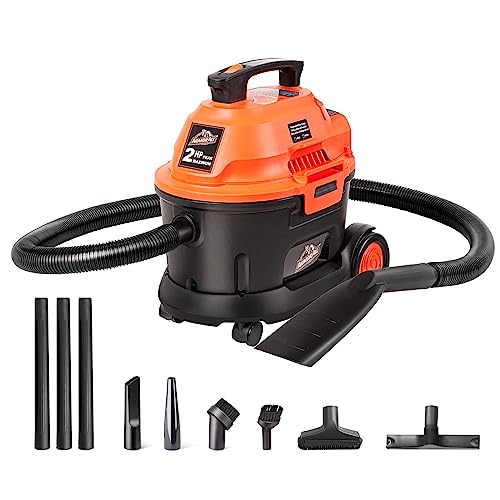
Armor All AA255W Wet/Dry Utility Vac (2.5 Gallon, 2 Peak HP) — Best for Car Cleanup
The Armor All AA255W answers a different garage question: not ‘how do I clean the whole floor?’ but ‘how do I clean the car, the boot tray and the spilled plant soil without hauling out the big machine?’ At 2.5 gallons it is a shelf-sized utility vac that you carry with one hand to exactly the mess, which is why small vacs like this end up used weekly while big vacs wait for big days.
Armor All’s home territory is auto care, and this machine’s natural habitat is the car interior: crumbs, grit in footwells, pet hair on seats, and the wet slush that winter boots deposit. It is wet/dry, so the melted-snow puddle on the garage floor by the driver’s door is also fair game.
Strengths
- Truly portable — shelf storage, one-hand carry, instant deployment
- Ideal size for car interiors and spot messes
- Wet/dry ability covers slush and small spills, not just crumbs
Trade-offs
- 2.5 gallons fills fast on floor-wide debris — it is not a whole-garage machine
- 2 peak HP is a small-mess rating; do not expect workshop suction
- Short working radius compared with full-size vacs
| Tank capacity | 2.5 gallons |
|---|---|
| Motor | 2 peak HP (manufacturer rating, per Amazon title) |
| Format | Portable utility wet/dry vac (per Amazon title) |
| Model | AA255W |
Buy this as a complement, not a competitor, to the bigger picks. Households that own both use the small vac constantly and the large vac monthly, and the garage stays cleaner for it because the friction of starting a job drops to nearly zero. If you can only own one machine and your garage sees project mess, buy bigger and accept the bulk.
Note the model letters when ordering: Armor All sells near-identical 2.5-gallon variants (AA255 and AA255W appear as separate listings), so use the link on this page to land on the exact verified listing rather than searching the name and guessing.
Best for: car detailing, small garages, apartments with a parking space, and spot messes / Not suited for: floor-wide debris, workshops, or renovation cleanup
Check on Amazon to see the current price and the exact configuration before you order.
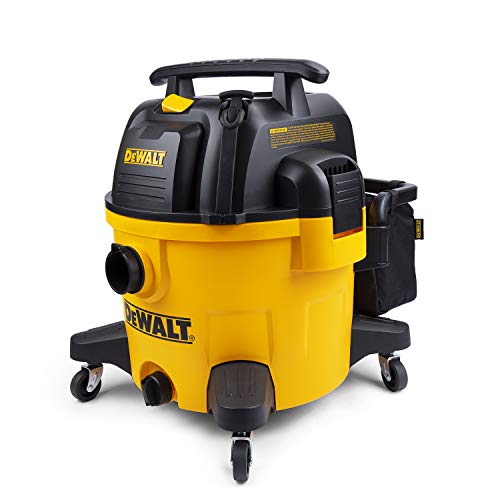
DEWALT 9 Gallon Wet/Dry Vac with Blower Function (DXV09PA) — Best Mid-Size with Blower
Nine gallons is the garage sweet spot nobody advertises: big enough for a full floor sweep and a project’s worth of sawdust, small enough to store against a wall and lift into a car boot for a job at another house. The DEWALT DXV09PA fills that slot with a stated 5 peak HP, a blower function and attachments included in the verified listing.
The blower function earns its keep in garages specifically, because garage debris hides where hoses reach badly: under benches, behind stored bikes, along the door track. Blow it into the open, then vacuum the pile — the two-step that professionals use because it is simply faster.
Strengths
- 9-gallon capacity hits the store-it / fill-it balance for most garages
- Blower function speeds up corner and under-bench cleaning
- Heavy-duty build positioning from a tool brand, with attachments in the box
Trade-offs
- Blower here is a function of the vac, not a detachable separate blower like the big CRAFTSMAN
- Mid-size still fills quickly on renovation debris
- Costs more than the value-tier 6-gallon for buyers who rarely need the extra room
| Tank capacity | 9 gallons |
|---|---|
| Motor | 5 peak HP (manufacturer rating, per Amazon title) |
| Blower | Blower function (per Amazon title) |
| Included | Attachments (per Amazon title) |
| Model | DXV09PA |
Compare this directly with the Stanley: three more gallons, a step more stated power, and the blower. If your garage work includes bench projects, garden equipment and seasonal deep cleans, those differences show up weekly. If your garage is parking plus storage, they mostly will not, and the Stanley’s simplicity wins.
DEWALT’s tool ecosystem is a soft advantage — filters and accessories for the brand are easy to find years later, which matters for a machine whose lifespan is measured in filter changes. Keep a spare filter and a pack of bags on the shelf and this vac will hold its suction season after season.
Best for: garages that mix parking, projects and seasonal deep cleans / Not suited for: the tightest budgets or the heaviest workshop debris
Check on Amazon to see the current price and the exact configuration before you order.

CRAFTSMAN 4 Gallon 5.0 Peak HP Wet Dry Shop Vacuum (CMXEVBE17040) — Best Portable Full-Power
Small shop vacs usually pair a small tank with a small motor. This CRAFTSMAN breaks that pattern: four gallons of tank with a stated 5.0 peak HP, in a portable format with the filter, hose and attachments included per its verified title. It is the pick for a small garage that still wants genuine shop-vac pull for grit, fasteners and wet messes.
Note that this guide lists two CRAFTSMAN models, and they are genuinely different machines for different garages: this 4-gallon portable and the 16-gallon workshop vac at the top. We present them transparently as two sizes of one idea rather than pretending they are unrelated products.
Strengths
- Stated 5.0 peak HP is strong for the 4-gallon class
- Portable format suits small garages, flats and carrying to jobs
- Complete in the box: filter, hose and attachments per the listing
Trade-offs
- 4 gallons fills fast on leaves and sawdust — emptying is part of the deal
- Small tank means wet pickups must be modest
- Power in a small body means noise; it is not a quiet machine class
| Tank capacity | 4 gallons |
|---|---|
| Motor | 5.0 peak HP (manufacturer rating, per Amazon title) |
| Format | Portable (per Amazon title) |
| Included | Filter, hose and attachments (per Amazon title) |
| Model | CMXEVBE17040 |
The use case is the garage that doubles as everything: one car, bicycles, a freezer, two shelves. A 16-gallon drum has nowhere to live there; this vac hangs on a wall hook or sits on a shelf and still handles the real messes — the grit line where the car sits, the spilled potting soil, the washing-machine leak’s worth of water on the floor.
It also makes an excellent second vac for a house with a big workshop machine, dedicated to the car and the house-side of the garage. Judge it as a sprinter rather than a marathon runner and it is one of the most satisfying tools in this guide.
Best for: small garages, flats, and as a nimble second vac beside a workshop machine / Not suited for: large floor areas or project debris volumes
Check on Amazon to see the current price and the exact configuration before you order.
Comparison Table
Capacity decides how often you stop to empty; the blower column decides how fast corners get clean; and the tank material decides how well the machine ages in a working garage.
| Pick | Badge | Key spec | Best for | Check |
|---|---|---|---|---|
| CRAFTSMAN 16 Gallon 6.5 Peak HP Wet Dry Vac with Detachable Blower (CMXEVBE17607) | Best Overall | 16 gal, 6.5 peak HP, detachable blower, filter + dust bag included | workshop garages, woodworkers, and anyone renovating or maintaining vehicles at home | Check on Amazon |
| Shop-Vac 12 Gallon 6.0 Peak HP Stainless Wet/Dry Vacuum | Best Stainless Tank | 12 gal stainless tank, 6.0 peak HP, drain port, 3-in-1 | garages with frequent wet messes and a rough-and-tumble storage environment | Check on Amazon |
| STANLEY SL18116P Wet/Dry Vacuum (6 Gallon, 4 HP) | Best Value Mid-Size | 6 gal, 4 HP, wet/dry | typical home garages, car owners, and first-time shop vac buyers | Check on Amazon |
| Armor All AA255W Wet/Dry Utility Vac (2.5 Gallon, 2 Peak HP) | Best for Car Cleanup | 2.5 gal, 2 peak HP, wet/dry utility vac | car detailing, small garages, apartments with a parking space, and spot messes | Check on Amazon |
| DEWALT 9 Gallon Wet/Dry Vac with Blower Function (DXV09PA) | Best Mid-Size with Blower | 9 gal, 5 peak HP, blower function, attachments included | garages that mix parking, projects and seasonal deep cleans | Check on Amazon |
| CRAFTSMAN 4 Gallon 5.0 Peak HP Wet Dry Shop Vacuum (CMXEVBE17040) | Best Portable Full-Power | 4 gal, 5.0 peak HP, portable, filter + hose + attachments included | small garages, flats, and as a nimble second vac beside a workshop machine | Check on Amazon |
How to Choose a Vacuum for Garage Floors
Start with tank size, honestly assessed. A parking-only garage with a bench generates a few gallons of debris a month; a 4 to 6 gallon vac serves it perfectly and stores easily. A garage where vehicles are repaired or wood is cut generates that much in a weekend, and a 9 to 16 gallon tank stops emptying from becoming the job itself. Wet messes argue for size too: water is heavy and a small tank of it still needs carrying, so frequent wet pickup favours a mid-size tank with a drain port.
Then consider how your debris behaves. Fine dust — concrete, drywall, MDF — is a filter problem before it is a suction problem: plan on dust bags and a washable filter, and favour machines whose bags are cheap and available. Chunky debris — leaves, gravel, offcuts — is a hose problem: wide hoses and big tanks win. Most garages have both, which is why the all-round picks in this guide pair decent capacity with a bag-friendly setup.
Peak HP, CFM and what actually moves dirt
Peak horsepower is a laboratory maximum, not a working figure, and every brand in this guide states it the same way, so it works as a rough class marker and nothing more. In the garage, pickup is decided by the seal at the floor tool, the filter’s condition and the hose’s diameter. A mid-power vac with a clean filter out-cleans a high-power vac with a clogged one every time — which is why the care routine below matters more than the badge on the tank.
Corded shop vacs and the garage reality
Every pick in this guide is a corded machine, and for garage floors that is the right default: sustained suction for a whole floor, no battery budget, and wet pickup without runtime anxiety. The cord is a trip hazard to manage, not a flaw — route it behind you, work from the far corner toward the door, and use a GFCI-protected outlet for wet work as the safety notes describe.
Filters, Bags and the Fine-Dust Problem
Garage dust is finer than house dust, and it is the main reason shop vacs ‘lose suction’. The cartridge filter cakes with concrete and drywall powder until airflow chokes. Dust bags solve most of this: the bag captures the fine fraction, the cartridge stays cleaner far longer, and emptying stops being a dust storm. For any garage that sees drywall, cement, ash or heavy sawdust, bags are not an accessory — they are the system.
Maintain the cartridge by tapping it clean outdoors and washing it only if the manufacturer allows, then drying it fully before refitting. Keep one spare filter so a wash day never leaves the vac out of service. And never run wet pickup with a paper dust bag fitted or a dry-only filter setup; switch configurations as the how-to section describes, every time, without exception.
Garage Floors by Type: Concrete, Epoxy and Everything Else
Bare concrete is the standard garage floor and the harshest: it sheds fine alkaline dust continuously, holds grit in its texture, and turns every dropped screw into a scavenger hunt. A shop vac with a dust bag and a floor tool that rides flat is the right answer; work slowly, because concrete dust overloads filters faster than any other household debris, and tap the filter clean between sessions during big cleanups.
Epoxy and sealed floors clean more easily and show the vac’s advantage at its best — debris sits on the surface rather than in it — but they scratch if you drag a grit-loaded tool or a tank wheel full of embedded stones across them. Empty the floor tool’s path often, check wheels for trapped grit, and the coating keeps its gloss. For painted floors, the same care applies with extra reason: a peeled paint chip pattern is forever.
Garages with floor drains, mats or bare earth sections each bend the routine. Mats should be lifted and vacuumed under monthly, because the grit beneath them grinds into the concrete. Standing water near a drain is wet-vac work with the machine reconfigured as described earlier — and never an excuse to pull flammable liquids, paint washings or chemical spills into a standard shop vac; those belong to hazardous-waste handling, not vacuuming.
A Seasonal Garage Cleaning Calendar
Spring is meltwater and grit season: weekly quick passes with the mid-size vacs keep the abrasive band where tyres sit from building up, and one full blow-out and deep clean resets the garage after winter. This is also filter season — start spring with a clean cartridge and fresh bags, because the winter’s fine dust is already in the old ones.
Summer brings leaves, grass and project season. Woodworkers should treat the dust bag as a consumable with a schedule, not a surprise: check it at every second session and replace it before it is packed hard, because an overfilled bag is a silent suction thief. Autumn is leaf season, where tank capacity earns its keep and the blower step becomes the main event.
Winter is about water discipline. Meltwater and road-salt slush are corrosive to store in a tank, so wet pickups get emptied and the tank rinsed the same day, every time. Keep the small vac by the door for the daily slush patch and save the big machine for weekend resets — the two-vac rhythm that keeps a working garage genuinely clean with the least effort.
Ownership Costs: Bags, Filters and the Machines Themselves
A shop vac’s purchase price is the smaller half of its cost. The ongoing half is bags and filters, and it differs by garage: a dusty workshop can consume a bag a week in project season, while a parking garage uses a few a year. Before buying, check that your model’s bags and cartridges are standard, stocked and reasonably priced — every pick in this guide comes from a mainstream line where that is true, which is a deliberate part of why they are picks.
Protect the motor and the machine protects your budget. Most shop vac deaths trace back to a neglected filter run until the motor overheated, or a tank left wet until it corroded and stank. The five-minute end-of-job routine in the how-to section — empty, rinse if wet, tap the filter, coil the cord — is the entire maintenance contract, and it is cheaper than any replacement.
Expect a well-kept shop vac to serve for many years, outliving several household vacuums. That longevity is the final argument for buying the right size once: the machine you will still be using in a decade should be the one sized for your real garage, not the one that was cheapest on the day.
How to Vacuum a Garage Floor Properly (Dry and Wet)
A garage floor cleans fastest in a fixed order: prepare, blow out the hidden debris, dry-vacuum, then handle wet messes with the machine reconfigured. The steps below assume any of the picks in this guide.
- Move vehicles and loose obstacles out. A clear floor is half the job. Drive cars out, wheel bikes and bins to the drive, and lift anything stored directly on the concrete.
- Blow out corners and under benches first. If your vac has a blower function, use it to push leaves, dust and grit from edges, door tracks and under benches into open floor. If not, sweep those zones out with a stiff broom.
- Fit the dust bag for dry work. For concrete dust, sawdust or drywall powder, fit a dust bag and check the cartridge filter is clean. This protects suction and makes emptying clean.
- Dry-vacuum from the far corner toward the door. Work in overlapping passes with the floor tool flat to the concrete. Slow down over grit lines where tyres sit — that band holds most of the abrasive dust.
- Reconfigure before any wet pickup. Stop, remove the dust bag, and fit the foam or wet-rated filter setup your machine specifies. Never pull water through a paper bag.
- Vacuum wet messes promptly and empty immediately. Take up meltwater, spills and wash runoff, then empty the tank straight away — use the drain port if fitted — rinse the tank and leave it open to dry.
- Finish with filter and hose care. Tap the cartridge clean outdoors, check the hose for lodged stones or screws, and coil the cord. Five minutes now preserves the suction you paid for.
Safety, always: plug into a GFCI-protected outlet for wet work, keep the machine out of standing water while you work in it, and never — under any circumstances — vacuum petrol, solvents, paint thinner or other flammable liquids, whose vapours a vacuum motor can ignite.
Common Buying Mistakes
Using a household vacuum on the garage floor
Concrete dust kills household filters and motors, gravel destroys brush rolls, and the first puddle ends the experiment entirely. Garage floors are why shop vacs exist; the price of the right tool is less than the repair of the wrong one.
Vacuuming fine dust without a dust bag
Drywall and cement powder cake a cartridge filter within minutes, suction collapses, and the motor strains. Bags are cheap; motors are not. Fit the bag for every fine-dust job.
Wet-vacuuming with the dry setup still fitted
A paper dust bag soaked through disintegrates into the tank and the filter, and the cleanup takes longer than the original spill. Reconfigure for wet work every single time.
Buying the biggest tank for a small garage
A 16-gallon drum in a one-car garage becomes permanent clutter that blocks the very floor you bought it to clean. Match capacity to your debris volume and storage, using the size guide in this article.
Ignoring the blower step
Hose-chasing debris out of corners doubles cleaning time and still leaves the door track full. Blow or sweep the hidden zones into the open first, then vacuum once, properly.
Final Recommendation
Most garages should buy the DEWALT 9-gallon or the CRAFTSMAN 16-gallon: the first for the balanced mix of parking and projects, the second when the garage is a true workshop. The Shop-Vac stainless is the connoisseur’s pick for wet, rough environments, the Stanley is the value anchor, and the two small machines — the Armor All and the 4-gallon CRAFTSMAN — keep car-focused and small garages cleaner day to day than any big drum used reluctantly.
Whichever size you land on, make the first purchase alongside it a pack of dust bags and a spare filter. The machines in this guide will hold their suction for years if the consumables are always on the shelf; neglected, even the best of them fades within a season of fine dust. That small habit, more than any specification, is what separates a garage vacuum that impresses for a month from one that simply works every time you reach for it.
- Choose the CRAFTSMAN 16 Gallon 6.5 Peak HP Wet Dry Vac with Detachable Blower (CMXEVBE17607) if your garage generates workshop volumes of dust and debris — check price on Amazon.
- Choose the Shop-Vac 12 Gallon 6.0 Peak HP Stainless Wet/Dry Vacuum if you want a tank that survives being knocked around and drains without tipping — check price on Amazon.
- Choose the STANLEY SL18116P Wet/Dry Vacuum (6 Gallon, 4 HP) if you want real wet/dry capability in a size a normal garage can store — check price on Amazon.
- Choose the Armor All AA255W Wet/Dry Utility Vac (2.5 Gallon, 2 Peak HP) if your garage mess is mostly the car itself and the metre of floor around it — check price on Amazon.
- Choose the DEWALT 9 Gallon Wet/Dry Vac with Blower Function (DXV09PA) if you want one machine that does the whole garage without workshop bulk — check price on Amazon.
- Choose the CRAFTSMAN 4 Gallon 5.0 Peak HP Wet Dry Shop Vacuum (CMXEVBE17040) if your garage is small but your messes are genuinely shop-vac messes — check price on Amazon.
Related guides on this site: Best 12volt Vacuums; Best All Around Vacuums; Best Affordable Small Vacuums.
Frequently Asked Questions
Can I use a regular vacuum on a garage floor?
Briefly, and at its peril. Garage grit abrades household machines, fine concrete dust clogs their filters, and any water can ruin them. A wet/dry shop vacuum is built for exactly this diet and costs less than repairing a good household vacuum.
What size shop vac do I need for a garage?
Parking plus light use: 4–6 gallons. Parking plus regular projects: 9–12 gallons. Workshop use with heavy sawdust or renovation debris: 14–16 gallons. Wet messes argue for the larger end of your range, or a drain port.
Do I really need dust bags for a shop vac?
For fine dust, yes. Concrete, drywall and MDF dust cake the cartridge filter quickly, and bags keep suction strong and emptying clean. For chunky debris like leaves and gravel, bags are optional.
Can a shop vac pick up water from a garage floor?
Yes — that is the ‘wet’ half of wet/dry. Remove the dust bag, fit the wet filter configuration your model specifies, empty the tank promptly afterwards, and use a GFCI-protected outlet. Never vacuum flammable liquids such as petrol or solvents.
Why does my shop vac lose suction on the garage floor?
Almost always the filter: a caked cartridge or a full bag. Empty the tank, tap or replace the filter, check the hose for a lodged stone or screw, and suction returns. Prevention is bags for fine dust and a spare filter on the shelf.
Is a blower function worth it in a garage?
Yes, for most garages. Blowing leaves and dust out of corners, under benches and along the door track into one pile, then vacuuming the pile, is substantially faster than chasing debris with a hose — and it doubles for patios and driveways.


