Disclosure: airfryerkitchensupply.com is reader-supported. When you buy through links on our site, we may earn an affiliate commission at no extra cost to you.
Where to buy
The fastest way to compare the robotic vacuums for about $400 in this guide is to start with the top picks below. Prices and availability change often, so check the current price on Amazon before you decide, and confirm the exact size, colour and configuration on the listing page, because several of these products are sold in more than one variant.
- roborock Qrevo S Pro Robot Vacuum and Mop — Check on Amazon
- iRobot Roomba Max 715 Robot Vacuum with AutoEmpty Dock — Check on Amazon
- roborock Qrevo 2 Pro Robot Vacuum and Mop — Check on Amazon
- Shark PowerDetect Self-Empty Robot Vacuum (AV2820S) — Check on Amazon
- Shark AV2501AE AI Robot Vacuum with XL HEPA Self-Empty Base — Check on Amazon
- iRobot Roomba 105 Combo Robot Vacuum and Mop with AutoEmpty Dock — Check on Amazon
The best robotic vacuums for about $400 live in the most competitive band in home cleaning: enough budget for LiDAR navigation, self-emptying docks and real mopping, without flagship excess. Every pick here was verified on 2026-11-22, and each one’s position against the about-$400 tier was checked against the price the listed at verification — those prices are an internal sanity check only and are not printed, because they will move; the tier framing of the keyword is what this guide works to.
Two picks sit right at the heart of the band with premium docks. Two sit a little above or below it and are flagged honestly in our sources, because at this tier a slightly-over model on a given day can be the smarter buy than a weaker model priced exactly on the line. One value pick anchors the bottom for buyers who want the about-$400 experience with money left over.
What the band should always buy you: navigation that maps instead of wandering, a dock that empties the bin so the robot actually gets used daily, and brushes designed not to strangle themselves on hair. All six picks deliver that core; they differ in mopping ambition and dock sophistication.
In this guide
Quick Picks
| Pick | Badge | Why it stands out | Link |
|---|---|---|---|
| roborock Qrevo S Pro Robot Vacuum and Mop | Best Overall | Multifunctional dock with hot mop self-cleaning, 18,500Pa suction and liftable spinning mops. | Check on Amazon |
| iRobot Roomba Max 715 Robot Vacuum with AutoEmpty Dock | Best Vacuum-Focused Flagship | 30,000Pa stated suction and a 90-day self-empty dock from the category’s founding brand. | Check on Amazon |
| roborock Qrevo 2 Pro Robot Vacuum and Mop | Best Edge Mopping | FlexiArm edge mopping and 20,000Pa suction; sits just above the band — flagged honestly. | Check on Amazon |
| Shark PowerDetect Self-Empty Robot Vacuum (AV2820S) | Best for Pet Hair | DirtDetect, NeverStuck technology and HEPA self-empty base; sits below the band — flagged. | Check on Amazon |
| Shark AV2501AE AI Robot Vacuum with XL HEPA Self-Empty Base | Best Large-Capacity Self-Empty | 60-day bagless self-empty capacity and LiDAR navigation; the band’s upper-edge veteran. | Check on Amazon |
| iRobot Roomba 105 Combo Robot Vacuum and Mop with AutoEmpty Dock | Best Band Value Combo | Vacuum plus mop plus a 75-day auto-empty dock at the band’s lower edge. | Check on Amazon |
How These Picks Were Chosen
Verification was done fresh for this batch: searches for the major robot-vacuum lines returned, titles recorded, and the listed price of each candidate compared with the about-$400 brief before it was shortlisted. Models far outside the band in either direction were dropped, however impressive, because a guide that ignores its own tier helps nobody.
Within the band we ranked by dock and navigation. A multifunctional dock that washes its own mops changes weekly maintenance more than any suction figure. LiDAR mapping is the price of entry. Suction in pascals is stated on most titles here and is useful for comparing within a brand’s line, but dock behaviour and anti-tangle design decide daily satisfaction.
We also enforced variety of approach: two dock-heavy mop systems, a vacuum-focused self-empty flagship from the category’s oldest name, two Shark self-empty designs with different navigation philosophies, and one combo unit that brings vacuuming and mopping with an auto-empty dock at the band’s lower edge.
The 6 Best Robotic Vacuums for About $400
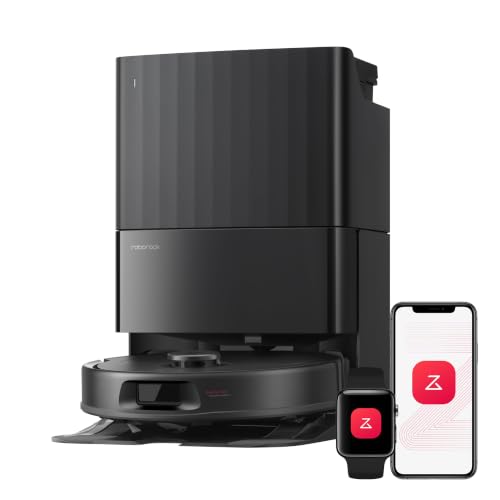
roborock Qrevo S Pro Robot Vacuum and Mop — Best Overall
The Qrevo S Pro is what the about-$400 tier looks like when it is spent on the dock: a multifunctional base that self-cleans the mops at a stated 167°F, liftable spinning mops for hard floors, and a stated 18,500Pa of suction for the vacuum side. Its listing-verified price at checking sat right in the heart of this guide’s band, which is why it leads the list.
The daily-life logic is strong. Robots fail in homes when their upkeep is annoying, and mop washing is the most-skipped chore in the category. Automate it, add smart obstacle avoidance and an anti-tangle brush, and the machine keeps working the way it did in week one.
A season of ownership is the right frame for the Qrevo S Pro. The mop self-cleaning dock removes the sour-mop problem that quietly ruins other mop robots by month two, and the liftable mops mean the transition between the kitchen tiles and the living-room rug happens without your involvement — the detail that determines whether mopping actually happens weekly. Budget attention for the dock’s own upkeep: its wash tray and filters need periodic rinsing, a five-minute monthly task that is the honest price of automating the daily ones.
Strengths
- The dock washes the mops for you, which is the maintenance task owners actually skip
- Liftable mops let it vacuum carpet without dragging wet pads across it
- Anti-tangle brush design suits homes with hair on the floor
Trade-offs
- A multifunctional dock is a big object; measure its home before ordering
- Dock consumables and mop pads are ongoing costs
- Suction figures are brand-reported and best used to compare within the line
| Spec | Detail (from the verified listing title) |
|---|---|
| Suction | 18,500Pa (stated in the listing title) |
| Dock | Multifunctional dock with 167°F mop self-cleaning (stated in the title) |
| Mopping | Liftable spinning mop |
| Brush | Anti-tangle brush; smart obstacle avoidance |
App depth is the S Pro’s hidden differentiator: multi-level mapping and room-level scheduling let a household clean the kitchen nightly, the bedrooms twice a week and the hallway after muddy days, all without touching the machine. That granularity is where dock robots repay their complexity — the first month is setup, the following years are absence. If your household will not open an app after week one, a simpler pick serves you better; if you will, this is the platform that rewards the habit most in this guide.
Best for: mixed-floor homes that want vacuuming and real mopping from one machine / Not suited for: small flats with nowhere sensible to park a large dock
Check on Amazon — check the current price on Amazon and confirm the variant before ordering.

iRobot Roomba Max 715 Robot Vacuum with AutoEmpty Dock — Best Vacuum-Focused Flagship
The Roomba Max 715 spends the budget on vacuuming alone: a stated 30,000 Pa of suction and an AutoEmpty dock that the title says self-empties for up to 90 days. Its listing-verified price at checking sat squarely in this guide’s band, which makes it the purist’s flagship — no mop compromises, just the deepest vacuum spec here and a dock you can nearly forget.
One transparency note: the listed its navigation wording truncated mid-phrase, so this guide names the system as stated and flags the detail in our sources rather than completing the sentence by guesswork. Check the listing page for the full navigation description if that spec decides it for you.
The Max 715’s ninety-day stated self-empty interval changes household rhythm in a way worth picturing: a robot that needs you roughly four times a year is infrastructure, like a boiler service, rather than a chore. That is the correct expectation to buy. Carpet homes should still plan a periodic deep clean with a conventional vacuum — robot vacuums maintain superbly and excavate modestly — but the daily crumb, hair and grit layer, the layer that makes a home feel untidy, is exactly what this machine exists to erase without being asked.
Strengths
- The longest stated self-empty interval here — up to 90 days
- Highest stated suction figure in the guide
- iRobot’s navigation and support ecosystem is the category’s most established
Trade-offs
- Vacuum only: no mopping, so hard floors still need a separate pass
- One navigation detail in the Amazon title was truncated; confirm full spec wording on the listing page
- AutoEmpty bags or consumables, where used, are an ongoing cost to check
| Spec | Detail (from the verified listing title) |
|---|---|
| Suction | 30,000 Pa (stated in the listing title) |
| Dock | AutoEmpty dock; self-empties for 90 days (stated in the title) |
| Navigation | PrecisionVision (stated in the title; full wording truncated in API return) |
| Focus | Vacuum-only model in this guide |
iRobot’s long category history shows in the details owners mention after a year: parts availability, a service network, and an app that has been refined across many generations. None of that appears in a suction figure, and all of it appears in year three. The Max 715 buyer is purchasing that maturity as much as the 90-day dock. For a household that keeps appliances a long time and dislikes re-learning ecosystems, that is a rational premium to pay inside this tier — and here, unusually, it does not even require leaving the tier to pay it.
Best for: carpet-heavy homes that want maximum vacuum performance and minimum emptying / Not suited for: homes wanting one machine to mop as well
Check on Amazon — check the current price on Amazon and confirm the variant before ordering.

roborock Qrevo 2 Pro Robot Vacuum and Mop — Best Edge Mopping
The Qrevo 2 Pro is included with its tier position stated plainly: at verification its API price sat modestly above the about-$400 centre, and it earns consideration anyway because its FlexiArm edge mopping solves the one failure every other mop robot shares — the dirty stripe along the skirting board. Add a stated 20,000Pa and high-temperature mop self-cleaning, and it is the most complete hard-floor package here.
Treat it as the stretch pick. If the live price on the day you shop has drifted back into the band, it becomes arguably the best buy in this guide. If it has not, the S Pro delivers most of the experience from inside the tier.
Edge cleaning deserves its reputation as the connoisseur’s spec. Most homes’ visible dirt line is not in the middle of the room — robots have always handled middles — but along skirting boards, under cabinet toe-kicks and around chair legs, where fixed mops bridge over the gap. FlexiArm’s extending mop is engineered at precisely that failure line. If your floors are pale, the edge stripe shows within a fortnight and annoys daily; that is the household for whom this model’s modest tier premium is not a luxury but the entire point of the purchase.
Strengths
- FlexiArm reaches edges and skirting lines that fixed mops miss
- Highest-spec mop self-cleaning in this pair of dock models
- Zero-tangle brush design for hair-heavy floors
Trade-offs
- Verified price sat above the band’s centre; buy it when the gap is small or the edge mopping matters
- Large dock footprint, like its sibling
- Feature depth means more settings to learn in the app
| Spec | Detail (from the verified listing title) |
|---|---|
| Suction | 20,000Pa (stated in the listing title) |
| Mopping | FlexiArm edge mopping; high-temperature mop self-cleaning |
| Brush | Zero-tangle design |
| Tier note | API price at verification sat modestly above the about-$400 band; see sources |
The Qrevo 2 Pro also suits a specific architecture: open-plan hard floors with defined edges — kitchen islands, long skirting runs, tiled entryways — where edge performance is visible from across the room. In a small, cluttered flat its talents are wasted and its dock is a burden. Measure your home’s edge metres honestly: the more uninterrupted skirting and cabinet line you have, the more this model’s signature feature earns its modest premium over the band, week after week, in a line of cleanliness you can actually see.
Best for: hard-floor homes where edges and corners are visibly dirty / Not suited for: strict budget-keepers who will not cross the band’s line
Check on Amazon — check the current price on Amazon and confirm the variant before ordering.

Shark PowerDetect Self-Empty Robot Vacuum (AV2820S) — Best for Pet Hair
The PowerDetect is this guide’s below-band value flag, verified under the tier at checking: Shark spends the money on sensing instead of dock theatre. DirtDetect finds debris and works it harder, NeverStuck technology is aimed at the thresholds and clutter that strand lesser robots, and the self-empty base carries HEPA filtration.
For pet homes, that priorities list is well judged. Hair and tracked litter are detection problems before they are suction problems. You give up mop automation entirely, so hard floors still need your attention — but as a vacuum, it punches at the band from below it.
Detection-driven cleaning has a second benefit owners report: trust. A robot that visibly slows and works harder over a spilled-cereal zone, and hurries across clean boards, behaves intelligibly — you can see it thinking. That legibility matters in pet homes, where the alternative is wondering whether the machine smeared or solved the mess it found while you were out. Pair that with the HEPA base for the emptying moment, when collected hair and dander would otherwise puff back into the room, and the PowerDetect’s priorities look well chosen for its household.
Strengths
- DirtDetect concentrates effort where the floor is actually dirty
- NeverStuck positioning suits cluttered, real-world floors
- HEPA in the base is a thoughtful touch for pet homes
Trade-offs
- Verified price sat below the band, so some flagship dock features are absent
- Vacuum-focused; mopping is not part of this model’s brief
- Shark’s app experience is more utilitarian than the leaders’
| Spec | Detail (from the verified listing title) |
|---|---|
| Filtration | HEPA self-empty base (stated in the listing title) |
| Navigation | Wi-Fi and LiDAR |
| Technologies | NeverStuck, DirtDetect debris detection (stated in the title) |
| Tier note | API price at verification sat below the about-$400 band; see sources |
Shark’s NeverStuck positioning will resonate with anyone who has rescued a stranded robot from under a sofa for the fourth time. Thresholds, rug edges and cable nests are where robot ownership goes to die, and a machine designed to extricate itself protects the entire value proposition — an autonomous cleaner that needs rescuing is just a chore with batteries. Pet homes generate exactly these obstacles at exactly floor level. If your floors are obstacle courses, weight this pick’s unglamorous talent above rivals’ glossier dock features.
Best for: pet homes that want detection-driven cleaning under the band’s price / Not suited for: buyers wanting a mop-washing dock
Check on Amazon — check the current price on Amazon and confirm the variant before ordering.

Shark AV2501AE AI Robot Vacuum with XL HEPA Self-Empty Base — Best Large-Capacity Self-Empty
The AV2501AE is the established self-empty design: an XL bagless base with a stated 60-day capacity and HEPA filtration, LiDAR navigation, and Alexa compatibility. Bagless matters more than it sounds — over years, proprietary bags are a quiet tax on several rival systems, and this base simply does not charge it.
Its tier honesty: at verification, the API price sat above the about-$400 centre, so it is presented as the upper-edge option rather than a band-perfect one. Prices in this category move constantly; if it is in the band on your shopping day, its combination of capacity and bagless running is hard to argue with.
The AV2501AE’s bagless base deserves a full ownership paragraph because it reverses the usual economics. Bagged systems are cleaner at the moment of emptying and cost money forever; this base asks you to tip a bin into the household rubbish a few times a year and costs nothing in between. Over a five-year life that difference can fund the robot’s brushes and filters entirely. The trade is a brief dust encounter at emptying time — do it outdoors or slowly, and it is a small price — plus a base large enough to earn its XL name in your utility space.
Strengths
- Bagless 60-day base means no bags to buy and a long emptying interval
- LiDAR mapping with row-based cleaning rather than random wandering
- A proven model with a deep base of owner experience behind it
Trade-offs
- Verified price sat above the band’s centre at checking; it is the stretch veteran, not the value play
- No mopping function
- XL base is bulky, as the name honestly warns
| Spec | Detail (from the verified listing title) |
|---|---|
| Dock | XL HEPA self-empty base, bagless, 60-day capacity (stated in the title) |
| Navigation | LiDAR navigation, Wi-Fi connected |
| Compatibility | Works with Alexa (stated in the title) |
| Tier note | API price at verification sat above the band’s centre; see sources |
The AV2501AE has one more veteran virtue: predictability. Its row-by-row LiDAR cleaning pattern, its base behaviour and its maintenance needs are all thoroughly understood quantities, documented by years of owners. For a buyer who distrusts novelty — who would rather have the known machine than the newest one — that depth of collective experience is a feature no launch-day specification can match. In a tier full of freshly announced models, there is real comfort in buying the design whose surprises have already all happened to somebody else.
Best for: larger homes that want bagless self-emptying with long intervals / Not suited for: mop seekers or the strictly budget-bound
Check on Amazon — check the current price on Amazon and confirm the variant before ordering.

iRobot Roomba 105 Combo Robot Vacuum and Mop with AutoEmpty Dock — Best Band Value Combo
The Roomba 105 Combo is the band’s value anchor, verified below the tier’s centre at checking: LiDAR navigation, an AutoEmpty dock with a stated 75-day interval, and mopping that avoids carpet, in one iRobot package. For a flat or a smaller house, that checklist covers the whole brief without flagship money.
Know its ceiling. A stated 7,000 Pa is the gentlest suction here, and its mopping is for maintenance, not rehabilitation. But a robot that runs daily because its dock handles the bin will keep a home cleaner than a stronger robot that sits full — and that is the arithmetic this pick wins.
Small homes are where the 105 Combo’s spec sheet stops looking modest. In a flat, raw suction beyond a point buys nothing — there is no deep-pile expanse to challenge it — while LiDAR mapping, carpet-aware mopping and a seventy-five-day dock cover the entire real brief. Its gentler cleaning also suits older hard floors and lightweight rugs that stronger machines can ruck up. Judge it against the home it will serve, not against flagship numbers: for the right floor plan it is not the budget compromise in this guide, it is simply the right-sized machine.
Strengths
- The only pick combining mopping, LiDAR and a long-interval auto-empty dock at this level
- Carpet-avoiding mopping prevents the classic wet-rug mistake
- 75-day stated emptying interval is generous for the band’s lower edge
Trade-offs
- Stated suction is the lowest here; deep carpet is not its stage
- Mopping is a maintenance mop, not a scrubbing system like the Qrevo docks
- Verified price sat below the band’s centre — a value flag, stated openly
| Spec | Detail (from the verified listing title) |
|---|---|
| Suction | 7,000 Pa (stated in the listing title) |
| Dock | AutoEmpty dock; self-empties for 75 days (stated in the title) |
| Navigation | LiDAR navigation |
| Mopping | Avoids mopping carpet (stated in the title) |
The 105 Combo is also the natural first robot for households upgrading from none: its brief is forgiving, its dock handles the chore that makes people abandon robots, and its carpet-aware mopping prevents the beginner’s classic disaster. If it teaches you that your home needs more — deeper carpet performance, serious scrubbing — it graduates gracefully to a second room or a relative’s flat when the flagship arrives. Few technology purchases have so civilised a succession path, and it strengthens the case for starting here rather than overspending on spec you may never use.
Best for: smaller mixed-floor homes wanting one machine that does a bit of everything / Not suited for: thick-carpet homes needing maximum suction
Check on Amazon — check the current price on Amazon and confirm the variant before ordering.
Comparison Table
| Pick | Badge | Key spec | Best for |
|---|---|---|---|
| Check on Amazon — roborock Qrevo S Pro Robot Vacuum and Mop | Best Overall | 18,500Pa (stated in the listing title) | mixed-floor homes that want vacuuming and real mopping from one machine |
| Check on Amazon — iRobot Roomba Max 715 Robot Vacuum with AutoEmpty Dock | Best Vacuum-Focused Flagship | 30,000 Pa (stated in the listing title) | carpet-heavy homes that want maximum vacuum performance and minimum emptying |
| Check on Amazon — roborock Qrevo 2 Pro Robot Vacuum and Mop | Best Edge Mopping | 20,000Pa (stated in the listing title) | hard-floor homes where edges and corners are visibly dirty |
| Check on Amazon — Shark PowerDetect Self-Empty Robot Vacuum (AV2820S) | Best for Pet Hair | HEPA self-empty base (stated in the listing title) | pet homes that want detection-driven cleaning under the band’s price |
| Check on Amazon — Shark AV2501AE AI Robot Vacuum with XL HEPA Self-Empty Base | Best Large-Capacity Self-Empty | XL HEPA self-empty base, bagless, 60-day capacity (stated in the title) | larger homes that want bagless self-emptying with long intervals |
| iRobot Roomba 105 Combo Robot Vacuum and Mop with AutoEmpty Dock | Best Band Value Combo | 7,000 Pa (stated in the listing title) | smaller mixed-floor homes wanting one machine that does a bit of everything |
How to Choose a Robot Vacuum Around This Tier
Decide the dock first, because the dock decides whether the robot gets used. At about $400 you can reasonably demand self-emptying; the step beyond, represented by the Qrevo models, is a dock that also washes and dries the mops. If your floors are mostly carpet, dock budget spent on mop washing is wasted — the Roomba Max 715’s vacuum-only focus exists for you. If your floors are mostly hard, the reverse is true.
Treat suction figures as within-brand comparisons. Pascals are measured differently across brands and a stated 20,000Pa does not clean twice as well as a stated 10,000Pa in a real room. Brush design — anti-tangle and zero-tangle systems are stated on several titles here — and navigation quality predict your daily experience far better than the biggest number on the box.
Finally, price the consumables: dock bags where the system uses them, mop pads, filters and brush replacements. A bagless base like the Shark AV2501AE’s removes one entire line of that budget. Over three years, consumables can cost more than the difference between the picks in this guide.
Mapping, Scheduling and the Habits of Happy Owners
Let the robot map before you judge it. The first runs build the map that everything else depends on; afterwards, name rooms properly, set no-go zones around cables and pet bowls, and schedule cleaning for when the floor is clearest — typically just after the morning rush, not during it.
Keep the dock’s home clear and permanent. Robots navigate back to a fixed point, and moving the dock forces re-learning. A dock tucked in a utility corner with clear approach space will serve better than one squeezed into a prettier spot it can barely reach.
Do the small maintenance on rhythm: empty or check the base on its stated interval, rinse or replace mop pads, and pull hair from brush ends monthly even on anti-tangle models. Five minutes a month is the difference between a robot that ages gracefully and one that mysteriously gives up in year two.
How to Set Up a Self-Empty Robot Vacuum Properly
Setup quality decides whether a robot vacuum feels like staff or like a pet. This sequence works for every pick in the guide.
- Place the dock against a wall on hard floor with clear space in front and to the sides, near a socket, and commit to leaving it there.
- Charge the robot fully before the first run, however impatient you are; mapping on a dying battery produces a bad map.
- Tidy the first-run floor properly: cables lifted, small objects up, doors to rooms you want mapped left open.
- Run a full mapping clean, then label rooms, merge or split spaces, and set no-go zones in the app while the layout is fresh in your mind.
- Schedule daily or near-daily runs at a time the floor is naturally clear, and set quieter hours if the model offers them.
- After the first week, check the bin, brush and mop system once, so you learn your home’s real maintenance rhythm early.
Common Buying Mistakes
Chasing the biggest suction number
Pascal figures are not standardised across brands. Navigation, brush design and dock behaviour decide how clean your home actually stays; use suction only to compare models within one brand’s line.
Buying a mop dock for a carpet home
If ninety percent of your floor is carpet, a mop-washing dock is expensive furniture. Match the dock to your floors: vacuum-focused for carpet, mop systems for hard floors.
Ignoring the tier on shopping day
Prices in this category move weekly. A model verified just above the band may be inside it when you shop, and vice versa. Check the current price on Amazon against the about-$400 brief before deciding.
Moving the dock around
The dock is the robot’s home port and navigation anchor. Moving it between rooms degrades maps and docking reliability. Choose its home once, well.
Skipping brush maintenance on anti-tangle models
Anti-tangle means slower tangling, not none. Hair still collects at brush ends and wheels. A monthly five-minute check keeps suction and navigation honest.
Self-Empty Intervals: What the Stated Days Really Mean
When a title states 60, 75 or 90 days of self-emptying, it describes the base’s capacity under the brand’s assumptions about how much dirt a typical home produces. Pet homes and renovation dust fill bases faster; a single person in a flat may exceed the stated interval. Treat the figure as a capacity class, not a calendar promise, and learn your own rhythm in the first month.
Bagged versus bagless is the other dock decision with long consequences. Bags seal dust away neatly and cost money forever; bagless bases like the Shark’s ask you to empty a bin occasionally and cost nothing. Neither is wrong — but at this tier, you are choosing a years-long relationship with one system or the other.
Mopping Robots: What the Docks Actually Do
The dock divide is the defining split at this tier, so it deserves plain language. A basic dock charges the robot. A self-empty dock also vacuums the robot’s bin into a larger reservoir. A multifunctional dock — the Qrevo pattern — goes further: it washes the mop pads with water, in the S Pro’s case at a stated high temperature, dries or drains them, and refills the robot’s clean-water supply. Each step removes a task that owners demonstrably skip, and skipped mop washing is why lesser mop robots develop the sour smell that gets them retired to a cupboard.
The costs move rather than vanish. Multifunctional docks consume water, cleaning solution where specified, mop pads and tray maintenance, and they occupy real floor space with plumbing-free but bulky hardware. The honest calculation is not dock versus no dock; it is your weekly ten minutes versus the machine’s consumables budget. Households that know they will not hand-wash mop pads should buy the dock without guilt — it is the difference between a mopping robot and a mopping ornament.
Battery, Mapping and the Multi-Room Reality
LiDAR navigation, stated across this guide, buys three concrete things: straight-line cleaning instead of random bouncing, a map you can edit into rooms and no-go zones, and reliable return to the dock. In a multi-room home those are not features, they are the product. When comparing models, look past the navigation label to the behaviours it enables in the app — room naming, scheduled room rotation, and zone cleaning for the post-dinner kitchen — because that is where the daily value accumulates.
Battery life hides inside the same conversation. A robot that cannot finish your floor in one charge must recharge and resume, which good models do automatically and lesser ones do badly. Larger homes should value stated self-empty intervals and dock sophistication partly because they correlate with the battery and software maturity that make resume-cleaning uneventful. Buy for your floor plan’s total area, not for the largest room in it.
The Three-Year Cost of a Robot Vacuum
Sticker prices in this tier cluster tightly; three-year costs do not. Add the consumables your finalist consumes: dock bags if its base uses them, mop pads and their replacements, side brushes, main brushes, filters, and cleaning solution for wash docks. A bagless base removes one recurring line entirely. A mop-washing dock adds pad and solution costs but removes your labour. Neither ledger is hidden — it is simply never printed on the box, and an hour with the accessory prices before ordering is the best-value research in this entire category.
Battery ageing belongs in the same ledger. A robot used daily will eventually need a battery, and models from established lines make that a purchasable part rather than a funeral. When two finalists are otherwise equal, choose the one whose maker demonstrably sells the wear parts — brushes, batteries, pads — because a robot vacuum is a small vehicle, and vehicles are kept, not just bought.
None of this argues for the cheapest machine. It argues for buying the tier’s quality with your eyes open about what the quality consumes. Do that, and the about-$400 robot is one of the best-value appliances in the modern home.
The First Month With a Dock Robot: What to Expect
Week one is cartography. The robot maps, you label, it cleans loudly and sometimes stupidly while it learns, and every household member forms an opinion. Resist judging in week one. The machine you own in week four — mapped, scheduled, its no-go zones set, its dock rhythm established — is a different and far better appliance than the one that bumped around on day one, and the difference is entirely the setup work this guide described. Owners who skip that work own the day-one machine forever, and their reviews read accordingly.
Weeks two and three are negotiation with your own home. The robot will find the cable nest, the tasselled rug, the chair whose legs form a trap, the pet bowl that needed a no-go zone. Each find is information, and each fix is permanent. This is also when the dock proves itself: the first time you realise the robot has cleaned nine times and asked you for nothing, the tier’s entire value proposition lands. Note the date of that realisation; it is usually the date the robot stops being a gadget and becomes staff.
By week four the relationship should be boring, and boring is the goal. Floors stay at a baseline that used to require a weekly effort; your conventional vacuum retreats to monthly deep cleans and the stairs; the robot’s consumables go on a calendar. If week four is not boring — if you are still rescuing, emptying and apologising for it — the fault is a mismatch this guide tried to prevent: wrong dock for your floors, wrong capacity for your home, or a setup left unfinished. Fix the mismatch rather than blaming the category, because at about $400, properly matched, this is among the most life-improving purchases a household can make.
Accessories and Spares: The Day-One Basket
A small day-one basket makes the first month smoother and costs little: a spare set of mop pads if your pick mops, so one set can wash while the other works; a spare side brush, because it is the first casualty of chair legs and rug tassels; and, for bagged docks, one spare bag beyond the starter, so the first full bag is a calendar event rather than an emergency. Store them beside the dock, not in a distant cupboard — maintenance that requires a search does not happen, and this entire tier’s value rests on maintenance happening.
Resist the larger accessory economy until month two. Dock cleaning solutions, premium pad variants and third-party bundles all promise improvements you cannot yet evaluate, because you do not yet know your machine’s baseline. Learn the baseline first — how the floors look, how the dock behaves, what your home consumes — and then every later accessory purchase is a measured upgrade instead of a guess. The robot will be with you for years; there is no prize for accessorising it in week one.
One last piece of honest buying advice for this category: time the purchase to the category’s rhythm if you can. Robot vacuum prices move with product launches and sale seasons more than almost any appliance in this programme, and a model verified just above the band in one month routinely sits inside it in another. If your floors can wait a few weeks, set the shortlist from this guide, watch the two or three finalists, and buy the week the right machine crosses into the tier. Patience, in this one category, is quite literally worth money — and the guide’s per-pick tier flags exist so you know exactly which crossing you are waiting for.
Final Recommendation
For most mixed-floor homes, the roborock Qrevo S Pro is the about-$400 answer: in-band at verification, with a dock that washes its own mops. Carpet-led homes should take the Roomba Max 715 and its 90-day vacuum focus. The Qrevo 2 Pro is the stretch for edge-mopping perfectionists; the Shark PowerDetect is the pet-home value below the band; the AV2501AE is the bagless, big-capacity veteran at the band’s upper edge; and the Roomba 105 Combo covers smaller homes completely for less.
Whichever you choose, confirm the live price against the tier on the day — this category’s prices move faster than any other in the home. The right robot at the right day’s price is the whole game at about $400.
Related reading on this site: Best Bagged Vacuums For Allergies; Best All Around Vacuums; Best Area Rug That Vacuums Easily; Best Battery Powered Vacuums; Best Carpet For Under Desk Chairs.
Final picks at a glance:
Related guides
Frequently Asked Questions
Is a self-empty dock worth it at this price?
Yes — it is the feature that changes behaviour. A robot whose bin you must empty after every run gets run less; a self-empty model can clean daily for weeks untouched. Every pick in this guide includes one for that reason.
Can these robots replace mopping by hand?
The dock models with spinning, self-washing mops handle maintenance mopping genuinely well. They will not rehabilitate a neglected floor in one pass, and edges need the FlexiArm-style reach or an occasional hand pass. Think weekly upkeep automated, deep cleans still yours.
Why do suction numbers vary so much between brands?
There is no single enforced measuring standard, so pascal figures are best used inside one brand’s range. In real homes, navigation coverage and brush design matter more than the headline number.
Bagged or bagless self-empty base?
Bagged bases seal dust away and suit allergy-conscious homes, at a perpetual bag cost. Bagless bases, like the Shark AV2501AE’s, cost nothing to run but need occasional bin emptying. Choose based on which ongoing task you mind less.
What if a pick’s price has moved out of the about-$400 band?
It happens constantly in this category, which is why this guide flags each pick’s verified tier position in its sources. Check the current price on Amazon; a neighbouring pick in the guide will usually be sitting in the band that week.
Do robot vacuums work on thick carpet?
They work, but suction and brush design matter more, and mopping features matter not at all. Carpet-heavy homes should weight the vacuum-focused picks — the Roomba Max 715 above all — and expect to keep a conventional vacuum for deep cleans.


