Disclosure: airfryerkitchensupply.com is reader-supported. When you buy through links on our site, we may earn an affiliate commission at no extra cost to you.
Where to buy
For the best house slippers for hardwood floor, begin here: all six pairs below were verified against the airfry site’s Amazon catalog data before this guide was written. Hardwood-safe slippers change colors and size runs often, so confirm your size on the product page, and check price on Amazon at checkout rather than trusting any number printed elsewhere.
- COCOMUSE Ultralight Soft Indoor Cotton Linen Slippers (Cloth Bottom): Check the current price on Amazon
- Odor-Resistant Japanese Bamboo House Slippers (Non-Slip Soft Sole): Check the current price on Amazon
- Japanese Style Quiet House Slippers (Beige): Check the current price on Amazon
- EitCaton Unisex Linen House Slippers (Navy): Check the current price on Amazon
- Fadezar Japanese Slippers (Machine Washable, Quiet): Check the current price on Amazon
- RockDove Men’s Original Two-Tone Memory Foam Slipper: Check the current price on Amazon
If you are shopping for the best house slippers for hardwood floor, start with one honest observation: the slipper that is best for your feet and the slipper that is best for your floor are not always the same shoe. Hardwood wants a soft, clean, quiet sole with nothing hard enough to trap grit or mark the finish. Feet that stand for hours want cushion and grip. This guide separates those priorities instead of pretending one pair wins everything — the cloth and linen picks protect delicate finishes best, the bamboo and quiet Japanese designs keep steps cool and silent, and one memory-foam pick serves the people who need real padding. Every pair here is a genuine house slipper, verified as a current product, and each review states plainly, in everyday language, what its sole will and will not do to a wood floor.
One more thing before the picks: measure your expectations by room. The slipper you want beside the bed at midnight — silent, soft, instantly on — is not the slipper you want for a Sunday of cooking, and neither is the one you hand a guest at the door. That is why this guide is organized by job rather than by brand. Read the badge on each pick as its job title, use the comparison table to see the trade-offs side by side, and let the buying-guide sections below settle the two questions that decide satisfaction months later: whether the sole suits your specific finish, and whether the pair can be washed before it starts to smell like it cannot.
In this guide
Quick Picks
- COCOMUSE Ultralight Soft Indoor Cotton Linen Slippers (Cloth Bottom) — Best Overall for Hardwood: a cloth-bottom slipper that treats hardwood the way hardwood wants to be treated — soft, quiet, and with nothing hard or gritty dragged across the finish. — Check the current price on Amazon
- Odor-Resistant Japanese Bamboo House Slippers (Non-Slip Soft Sole) — Best for Warm Weather: a bamboo summer slipper with a soft non-slip sole, built to keep feet dry and cool on hard floors without marking them. — Check the current price on Amazon
- Japanese Style Quiet House Slippers (Beige) — Best Quiet Pick for Apartments: a closed-toe, open-back slipper built around one idea — moving around your home without announcing every step to the people below or beside you. — Check the current price on Amazon
- EitCaton Unisex Linen House Slippers (Navy) — Best Washable Linen Pick: a breathable linen slipper with a memory-foam layer and a soft bottom — and it goes in the washing machine, which most hardwood-friendly slippers cannot. — Check the current price on Amazon
- Fadezar Japanese Slippers (Machine Washable, Quiet) — Best for Guest and Travel Use: a lightweight, washable, quiet slipper sold for home, hotel, and travel — the pair you can hand to a guest without thinking twice. — Check the current price on Amazon
- RockDove Men’s Original Two-Tone Memory Foam Slipper — Best Cushioned Pick with Grip: the padded option — a memory-foam slipper with a proper non-slip sole for men who stand a lot on hard floors and want grip as well as cushion. — Check the current price on Amazon
How These Picks Were Chosen
We started from the floor’s point of view. A hardwood finish is damaged by three things a slipper can carry: grit trapped under a hard sole, rigid heel edges that concentrate pressure, and dark rubber compounds that can leave transfer marks on pale boards. So the first filter removed anything with a hard, lugged, or outdoor-first sole, plus every sandal, slide, and flip-flop — those are not house slippers, and their exposed hard edges are exactly what finished floors do not need. Ballet, dance, and novelty slippers were excluded for the same reason: they are costume or studio footwear, not daily indoor shoes.
The second filter was verification. Each pick had to be confirmed as a real, current product through the site’s Amazon catalog check, with its material and sole claims taken from the manufacturer’s own listing — a slipper only gets called cloth-bottom, bamboo, or machine washable here if its listing says so. Where a listing makes a comfort claim, we report it as comfort positioning, not as a medical promise; nothing in this guide treats or cures any foot condition.
Finally, we balanced the list across the real ways people use slippers on hard floors: protecting a delicate finish, staying cool, staying quiet, staying clean, hosting guests, and standing comfortably. Six pairs survived, and no two of them win for the same reason.
The 6 Best House Slippers for Hardwood Floors

1. COCOMUSE Ultralight Soft Indoor Cotton Linen Slippers (Cloth Bottom) — Best Overall for Hardwood
Hardwood floors have one enemy inside the house, and it is not weight — it is grit trapped under a hard sole, dragged step after step until the finish dulls. The COCOMUSE cloth-bottom slipper removes that problem at the source. The sole is fabric, not rubber or plastic, so there is nothing rigid to trap sand against the boards and nothing to click, squeak, or scuff as you move from room to room. For anyone whose floors are the expensive part of the house, that single design choice matters more than any amount of cushioning.
The upper is a cotton-linen blend in an open-toe slip-on shape, which makes this a three-season slipper rather than a winter boot in disguise. It breathes in warm weather, absorbs a little moisture instead of feeling clammy, and slides on and off without a heel cup to crush down. The whole shoe is ultralight, so it feels closer to a thick sock with structure than to footwear — exactly the sensation most people actually want at home.
Strengths
- Cloth bottom cannot scuff, click, or grind grit into a hardwood finish
- Cotton-linen upper breathes and absorbs moisture in warm rooms
- Ultralight slip-on design is easy on feet and on floors alike
Trade-offs
- Cloth bottom offers little grip on polished or wet floors
- Minimal cushioning — not the pick for long standing sessions
- Open toe gives no warmth in cold houses
| Sole type | Soft cloth bottom |
| Upper | Cotton-linen blend |
| Style | Open-toe slip-on |
Choose this pair if your priority list starts with the floor itself: refinished oak, glossy engineered boards, or any surface where you wince at the sound of a hard sole. It is also the quietest option in this roundup, which makes it a genuine courtesy in apartments and in houses where someone sleeps while someone else makes tea. The honest limitation is support. A cloth bottom flexes completely, so your foot does the work; for short trips around the house that is fine and even pleasant, but it is not a standing-all-evening cooking slipper. Think of it as the hardwood specialist: unbeatable on surface care, deliberately simple everywhere else.
Best for: owners of glossy or refinished hardwood who want zero scuff risk and near-silent steps / Not suited for: anyone who needs arch support, thick cushioning, or grip on slick floors

2. Odor-Resistant Japanese Bamboo House Slippers (Non-Slip Soft Sole) — Best for Warm Weather
Bamboo is the traditional answer to a problem modern foams created: feet that overheat indoors. These Japanese-style house slippers use a bamboo upper that stays noticeably cooler against the skin than fleece or plush, and the material is positioned as odor-resistant, which matters in a slipper you wear barefoot every day through a warm season. On hardwood, the soft sole is the important half of the design — it flexes quietly, spreads your weight instead of concentrating it on a hard heel edge, and includes non-slip texture so a soft sole does not have to mean a skating sole.
The shape follows the Japanese indoor-shoe tradition: simple, flat, and easy to step into. That flatness is a feature on hardwood, because there is no raised heel to rock, catch on board edges, or concentrate pressure. It is also easy to clean, which separates it from most fabric slippers — a wipe or quick rinse deals with the dust that hard floors constantly generate, instead of the slipper becoming a dust mop you wear.
Strengths
- Bamboo upper keeps feet cooler and drier than plush or fleece
- Soft sole is quiet and gentle on hardwood finishes
- Easy-clean design suits dusty hard-floor homes
Trade-offs
- Flat profile offers little arch support
- Bamboo uppers feel firmer and less cozy than fabric
- Warm-weather design gives minimal insulation in winter
| Upper | Bamboo, odor-resistant positioning |
| Sole | Soft, non-slip |
| Care | Easy to clean |
This is the pair for houses where the floors are hard and the rooms run warm — sun-facing kitchens, top-floor flats, and anywhere slippers usually get kicked off by noon because feet overheat. The bamboo surface also suits people who dislike the sweaty feel of synthetic plush. Keep expectations calibrated on cushioning: like most traditional indoor shoes, it is a thin, ground-feel design. Your feet stay cool and your floors stay unmarked, but if you want a padded cloud to stand on while you cook, one of the memory-foam picks below will suit you better.
Best for: warm rooms, barefoot wearers, and anyone whose feet overheat in plush slippers / Not suited for: cold houses or buyers wanting thick padded cushioning

3. Japanese Style Quiet House Slippers (Beige) — Best Quiet Pick for Apartments
Noise is the hidden cost of hard floors. Every heel strike on hardwood telegraphs through the joists, and a hard-soled slipper turns a midnight glass of water into a percussion event. This Japanese-style pair is designed the opposite way: a soft, quiet sole that absorbs the step instead of broadcasting it, paired with a closed toe for a little protection and warmth and an open back so it slips on in one motion. If you share walls or floors with anyone, this is the considerate end of the slipper market.
The closed-toe, open-back mule shape is also the most practical daily compromise in this roundup. Toes are covered against furniture legs and door frames — the two things bare toes always find — while the open heel keeps the slipper breathable and effortless. On hardwood, the soft sole will not mark or scuff, and its quiet tread pattern suits polished boards where loud, lugged rubber soles are both noisy and unnecessary.
Strengths
- Soft sole is genuinely quiet on hardwood — ideal for apartments
- Closed toe protects against furniture while the open back stays breathable
- One-step slip-on shape with no heel to crush or adjust
Trade-offs
- Open back can feel loose on stairs — take care
- Modest cushioning compared with memory-foam models
- Soft sole wears faster than rubber if used outdoors
| Style | Closed toe, open back mule |
| Sole | Soft, quiet |
| Fit note | Easy slip-on indoor wear |
Apartment dwellers should shortlist this pair first, followed by anyone in a house with a light sleeper, a baby, or a home office on the other side of a wall. The design makes no attempt to be a support shoe, and that honesty is fine: its job is silent, gentle, everyday movement across hard floors, and it does that job with fewer compromises than any plush boot or rubber-soled clog. Treat it as indoor-only — soft quiet soles and wet pavement do not mix — and it should serve exactly as intended for a long time.
Best for: apartment living, night-time walkers, and shared houses where quiet steps matter / Not suited for: stair-heavy homes or anyone wanting a secure heel fit

4. EitCaton Unisex Linen House Slippers (Navy) — Best Washable Linen Pick
Washability is where soft-bottom slippers usually fail. The pairs that are kindest to hardwood are often spot-clean only, so they slowly become the dirtiest thing touching your clean floors. The EitCaton linen slipper breaks that trade-off: its listing confirms a machine-washable build, a soft bottom that is safe and quiet on boards, a non-slip surface, and a memory-foam layer that adds the cushioning pure cloth slippers lack. For a high-traffic household, being able to throw your slippers in with a normal wash is not a luxury feature — it is the difference between a slipper that stays pleasant and one that gets replaced.
The open-toe linen upper keeps the same breathable logic as the other Japanese-inspired picks here, wicking a little moisture and never overheating your feet. Unisex sizing makes it an easy household or guest pair, and the navy colorway hides the dust and scuffs of daily wear better than pale fabrics do. The memory foam is a comfort layer rather than a support system, so expect a soft step rather than structured arch help.
Strengths
- Machine washable — rare among soft-bottom hardwood-safe slippers
- Memory-foam layer adds real cushioning over hard floors
- Breathable linen upper suits barefoot, warm-weather wear
Trade-offs
- Open toe gives limited warmth and toe protection
- Foam softens over time, as all memory foam does
- Soft bottom is for indoor use only
| Upper | Cotton-linen fabric, open toe |
| Footbed | Memory foam |
| Care | Machine washable |
Pick this pair if your household actually lives in its slippers — cooking, cleaning, kids, pets, and the constant in-and-out of a normal day. The washable build means it survives that life gracefully, and the foam layer means your heels are not taking the full hardness of the floor while it happens. It is the best all-round compromise in this list between floor care, foot comfort, and hygiene. The only buyers it will not suit are those who want a fully closed, warm winter slipper or firm orthotic-style support; for everyone else, it is the sensible default.
Best for: busy households that want one washable, cushioned, floor-safe everyday slipper / Not suited for: winter warmth seekers or anyone needing firm arch support
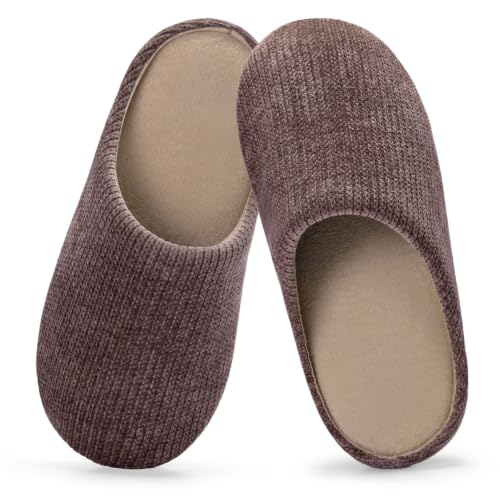
5. Fadezar Japanese Slippers (Machine Washable, Quiet) — Best for Guest and Travel Use
Every hardwood home needs a guest answer. Visitors arrive in shoes you would rather not have on your boards, and a washable spare pair solves the problem politely. The Fadezar Japanese slipper is built for exactly that rotation: machine washable so it resets between guests, quiet and non-slip so it behaves on polished floors, and light enough to live in a drawer or a suitcase. Its breathable lining keeps it comfortable for the barefoot wear most guests default to.
As a personal pair, it covers the same ground as the other soft Japanese designs in this roundup — gentle on finishes, silent in hallways, easy to step into — with the washable build as its distinguishing strength. The brown colorway is a practical choice for a utility slipper, hiding wear and wash-fading better than light colors. It is not a cushioned support shoe, and it does not pretend to be; it is a clean, quiet, floor-safe basic done properly.
Strengths
- Machine washable — ideal for guest rotation and travel
- Quiet, non-slip sole is safe and polite on hardwood
- Lightweight and packable for trips and spare-pair duty
Trade-offs
- Basic cushioning — comfort comes from softness, not support
- Utility styling rather than a premium look or feel
- Sizing spans ranges, so fit is forgiving rather than precise
| Care | Machine washable |
| Sole | Non-slip, quiet |
| Use | Home, hotel, travel |
Buy this pair as infrastructure rather than indulgence: one for the guest drawer, one for the travel bag, or a rotating spare while your main slippers are in the wash. Hardwood owners in particular benefit, because a washable guest slipper is the easiest way to keep outdoor shoes off finished boards without an awkward conversation. If it becomes your everyday pair, expect honest, basic comfort — soft, quiet, and clean — rather than the padded feel of the memory-foam options above.
Best for: guest pairs, travel, and anyone who values washable and quiet above cushioning / Not suited for: buyers wanting a plush, supportive, all-day standing slipper

6. RockDove Men’s Original Two-Tone Memory Foam Slipper — Best Cushioned Pick with Grip
Some hardwood shoppers need the opposite end of the spectrum from cloth soles: maximum cushion for long standing, with a sole grippy enough for kitchen tiles and the occasional step onto a porch. The RockDove Original Two-Tone is the long-running answer. Its memory-foam footbed takes the edge off hard floors in a way thin Japanese slippers cannot, and the rubber-style indoor/outdoor sole is non-slip, so the cushion does not come with a skating warning. It is also machine washable, which keeps a heavily used foam slipper from becoming a odor problem.
The trade-off to understand before buying is sole hardness. A durable non-slip outsole is firmer than cloth or soft foam bottoms, so while it will not damage hardwood in normal use, it can trap grit like any firm sole — shake or wipe the soles before walking a freshly finished floor, the same habit you would keep with any shoe. In exchange you get the most versatile pair here: cooking marathons, workshop trips, and quick outdoor steps are all within its brief, where the soft-bottom picks are strictly indoor shoes.
Strengths
- Thick memory-foam cushioning for long standing on hard floors
- Non-slip indoor/outdoor sole adds grip the soft picks lack
- Machine washable and lightweight for a foam slipper
Trade-offs
- Firmer sole can trap grit — wipe soles before crossing delicate finishes
- Warmer and bulkier than linen or bamboo designs
- Foam compresses gradually with heavy daily use
| Footbed | Memory foam |
| Sole | Non-slip, indoor/outdoor |
| Care | Machine washable |
Choose the RockDove if your feet, rather than your floors, are the priority — plantar discomfort after long kitchen sessions, hard tile adjoining the hardwood, or a household routine that mixes indoor standing with quick outdoor steps. It is the only pick here that behaves like a light shoe, and for many men that is precisely the point. Keep the grit habit in mind and it coexists with hardwood perfectly well; the floors that suffer are the ones walked on with dirty soles of any kind, and this one’s soles at least clean up easily.
Best for: long standing, mixed hard-floor homes, and men wanting cushion plus grip / Not suited for: freshly refinished glossy floors where a cloth sole is the safer choice
Comparison Table
| Pick | Badge | Sole / key spec | Best for |
|---|---|---|---|
| COCOMUSE Ultralight Soft Indoor Cotton Linen Slippers (Cloth Bottom) | Best Overall for Hardwood | Cloth bottom, cotton-linen upper, open toe | owners of glossy or refinished hardwood who want zero scuff risk and near-silent steps |
| Odor-Resistant Japanese Bamboo House Slippers (Non-Slip Soft Sole) | Best for Warm Weather | Bamboo upper, non-slip soft sole, easy to clean | warm rooms, barefoot wearers, and anyone whose feet overheat in plush slippers |
| Japanese Style Quiet House Slippers (Beige) | Best Quiet Pick for Apartments | Closed toe, open back, soft quiet sole | apartment living, night-time walkers, and shared houses where quiet steps matter |
| EitCaton Unisex Linen House Slippers (Navy) | Best Washable Linen Pick | Cotton-linen fabric, memory foam, soft bottom, machine washable | busy households that want one washable, cushioned, floor-safe everyday slipper |
| Fadezar Japanese Slippers (Machine Washable, Quiet) | Best for Guest and Travel Use | Machine washable, quiet, non-slip, lightweight | guest pairs, travel, and anyone who values washable and quiet above cushioning |
| RockDove Men’s Original Two-Tone Memory Foam Slipper | Best Cushioned Pick with Grip | Memory foam, non-slip indoor/outdoor sole, machine washable | long standing, mixed hard-floor homes, and men wanting cushion plus grip |
How to Choose House Slippers for Hardwood Floors
Start with the sole, not the upper. The upper decides comfort; the sole decides whether your floor forgives you. Cloth and soft fabric bottoms are the safest choice on glossy, freshly refinished, or pale floors because there is nothing rigid to trap grit and nothing to click or scuff. Soft rubber and foam soles sit one step firmer — still floor-friendly in normal use, but they ask for the wipe-the-soles habit. Hard plastic, lugged outdoor soles, and heeled slippers do not belong on finished wood at all.
Match grip to your actual floors. Non-slip texture matters most where hardwood meets tile, bathrooms, and kitchen spills. On dry, matte boards, a cloth sole’s gentle friction is enough for most people; on polished boards or in homes with older residents, prioritize the picks whose listings confirm a non-slip sole, and treat any soft slipper with extra care on stairs regardless of its tread claims.
What Makes a Slipper Quiet on Hard Floors?
Noise on hardwood comes from heel strike and sole hardness. A soft sole absorbs the strike; a hard sole broadcasts it through the joists. If you live above anyone, work nights, or share a house with light sleepers, quiet is a specification, not a luxury — choose cloth, bamboo, or the soft Japanese designs, and avoid anything with a rigid heel counter or a plastic shank. Weight matters too: ultralight slippers land softer simply because there is less shoe arriving at the floor.
Comfort Features That Matter on Hard Surfaces
Hard floors punish thin cushioning over time, so your standing habits should drive the comfort choice. Mostly walking and sitting? A thin, ground-feel slipper is pleasant and keeps your feet working naturally. Cooking, cleaning, or working from a standing desk for hours? Memory foam earns its place — it will not add arch support, but it spreads pressure and delays the ache that bare boards cause. For genuine support needs, look for slippers whose listings describe a structured footbed, wear them as comfort footwear, and treat any relief as a comfort experience rather than a medical outcome.
Breathability is the other half of comfort indoors. Linen, cotton, and bamboo uppers suit warm houses and barefoot wear; plush and fleece suit cold ones. Buying the warm pair for a warm house is the most common slipper mistake after buying the wrong size.
How to Care for Slippers and Hardwood at the Same Time
The routine that protects both is simple. First, keep soles clean: shake or wipe soft soles weekly, because the grit a slipper picks up in a kitchen is the grit it would otherwise carry across your boards. Second, wash what is washable — three picks in this guide are machine washable; use a gentle cycle, air-dry away from direct heat, and let foam soles dry fully before wearing. Third, rotate pairs if you wear slippers all day; foam recovers and fabrics air out, and both last noticeably longer. Finally, retire slippers whose soles have worn smooth or hardened — a worn-out sole is both a slipping risk and a floor risk, and no amount of upper comfort justifies either.
Matching Slippers to Your Hardwood Finish
Not all hardwood is equally delicate, and the right sole depends on what is actually under your feet. Site-finished and prefinished solid hardwood with a glossy or semi-gloss polyurethane coat is the most mark-sensitive surface in most homes: it shows scuffs in raking light and dulls where grit is ground in. For these floors, cloth and soft fabric bottoms — the COCOMUSE, the quiet Japanese mule, and the linen pairs — are the safest daily choice, and firm soles should be wiped before every crossing. Matte and wire-brushed finishes hide micro-scratches far better, so the full range of this guide, including the RockDove’s non-slip sole, works comfortably with ordinary sole hygiene.
Engineered hardwood has a thinner wear layer than solid boards, which changes the calculation: damage that a solid floor could be sanded past may be permanent on an engineered plank. Treat engineered floors like glossy ones — soft soles, clean soles, no exceptions for outdoor shoes. Laminate and luxury vinyl plank are tougher against scratches but louder underfoot and slippery when polished; there, the non-slip picks earn their keep, and quiet soles still matter in apartments. Bamboo and cork floors dent more readily than they scratch, so avoid any slipper with a hard heel edge and favor designs that spread weight across a soft, full-length sole.
One more surface deserves a mention: stairs. Hardwood stairs combine a hard finish with a fall risk, and they are where open-back, range-sized slippers are at their worst. If your home has hardwood stairs you use constantly, wear the most secure-fitting pair you own for stair trips, keep a hand on the rail, and never carry laundry baskets in loose mules — the floor will survive your slippers, but you should survive the stairs.
Sizing and Fit: Getting a Soft Slipper Right
Soft slippers fail differently from shoes. There is no rigid structure to hold your foot, so fit is about where your heel lands on the sole and how much the upper stretches in the first week. Your heel should sit fully on the footbed with a small margin behind it; a heel that overhangs the back edge concentrates pressure, wears the sole unevenly, and makes the slipper slap against the floor — the exact noise and wear pattern you bought a soft slipper to avoid. Toes should reach near the front without pressing the seam, because cotton, linen, and bamboo uppers relax with wear and a snug first day usually becomes a correct second week.
Range sizing is the norm in Japanese-style designs: one size covers two shoe sizes. If you fall at the bottom of a range, expect a roomy, relaxed fit that suits thick socks; at the top of a range, expect a precise fit that loosens slightly. Between sizes, most people are happier sizing up in open-toe designs and down in closed-back ones. Foam footbeds add one more variable — memory foam feels tall and firm for the first few wears, then molds and settles, so judge a foam slipper after several evenings, not in the first five minutes.
How to Test a New Pair on Your Floors in the First Week
You do not need to guess whether a slipper suits your floor. Run this simple first-week routine. Day one: walk a normal evening in the new pair, then inspect the soles — anything embedded in the fabric or tread is what would have crossed your boards, and it tells you how often that pair needs a sole wipe in your home. Day two: check a sunlit patch of floor you crossed repeatedly; on glossy finishes, new scuff patterns show up immediately in raking light, and catching them early lets you swap the pair to a less delicate room. Midweek: test the stairs and the kitchen tile transition deliberately, at walking pace, before you ever hurry in them. End of week: judge comfort honestly — heel ache after cooking, toes gripping to keep an open-back pair on, or feet overheating are all fit signals, not things you should push through. A slipper that passes all four checks is a keeper; one that fails any of them goes back while returning is still easy, and the notes you made tell you exactly which pick in this guide to try instead.
Slippers Through the Year: One Pair or a Rotation?
Hardwood homes tend to run warm in summer and cold at the floor line in winter, and a single slipper rarely serves both honestly. The breathable end of this guide — bamboo, linen, and open-toe cotton — is built for the warm half of the year, when the goal is a dry, cool foot and a sole that stays quiet on boards that expand slightly with humidity. In winter the same floors contract, gaps appear, and cold air pools at ankle height; that is when a closed toe and a cushioned footbed stop being luxuries. A two-pair rotation — one breathable, one cushioned and closed — costs less than one premium pair replaced early, because each pair dries and airs between wears and foam footbeds get recovery days. It also solves the washing problem: there is always a clean pair while the other is in the laundry.
If you would rather own exactly one pair, choose by your house, not the calendar. A well-insulated home with underfloor heating or warm rugs in the sitting areas favors the EitCaton linen pick year-round. A drafty house with bare boards favors the RockDove’s cushion, accepting its warmth in summer. The mistake is buying for the season you are standing in and discovering the opposite season six months later.
Hardwood and Slipper Myths Worth Dropping
Myth: any soft slipper is automatically floor-safe. Softness helps, but a soft sole that has picked up grit from a doorway or a pet’s feeding area carries that grit everywhere. Cleanliness of the sole matters as much as its material. Myth: rubber soles always mark floors. Modern non-marking compounds exist precisely for indoor use, and the verified non-slip picks here are sold for home floors; the marks people blame on rubber usually come from dirt, not the sole itself. Myth: thicker cushion means better for your feet. Very thick foam can feel unstable and makes some people grip with their toes; a moderate, well-shaped footbed is usually the better long-evening choice. Myth: slippers should fit like shoes. A house slipper is a relaxed garment — a little room is correct, and a shoe-tight fit in a fabric upper just accelerates wear at the seams. Myth: one pair can do indoors and outdoors. The moment a soft sole crosses a driveway, it stops being a floor-protection tool. Keep indoor pairs indoors, and keep a separate pair of shoes by the door for the bins, the post, and the garden.
Common Buying Mistakes
- Buying outdoor soles for indoor floors. A lugged, rigid sole is built for pavement. On hardwood it is noisy, can trap grit, and offers grip you do not need at the cost of finish safety you do.
- Choosing by plushness alone. The softest upper often hides the thinnest sole. On hard floors, what is under your foot matters more than what is around it.
- Ignoring washability. Slippers absorb more sweat and floor dust than any other footwear you own. A pair you cannot wash has a built-in expiry date.
- Wearing soft indoor soles outside. One trip across a gritty driveway loads a cloth sole with exactly the particles you bought it to keep off your floors.
- Guessing sizes in range-sized slippers. Many Japanese-style pairs size in spans. If you sit at the top of a span, size up — a heel hanging off the back changes how the sole meets the floor.
The Entryway Routine That Makes Any Pick Work Better
The best slipper in this guide still loses to a bad entryway. Hardwood damage starts at the door, where outdoor grit arrives on shoes and paws. A stiff coir or rubber-scraper mat outside, a washable runner inside, and a fixed habit — outdoor shoes off, house slippers on, every time — remove most of the grit before any sole meets a finished board. Keep the guest pair from this guide at that same door and visitors join the system without a lecture. Inside the house, a quick weekly rhythm keeps it working: shake the entry runner outside, wipe or brush the soles of the firm-soled pairs, and wash the washable pairs on rotation. None of this takes more than a few minutes, and it is worth more to your floors than the difference between any two picks in this roundup. Slippers are the last line of floor care, not the first — but with the entry handled, the soft soles above can do their quiet, gentle work exactly as designed.
Final Recommendation
For most hardwood homes, start with the EitCaton linen slipper: washable, cushioned, soft-bottomed, and easy to live with. It is the pair we would hand to a friend who asked for one recommendation and no homework — it protects the floor, forgives a busy household, and asks for nothing more than a regular turn through the washing machine. If your floors are glossy, pale, or freshly refinished, choose the COCOMUSE cloth bottom instead and accept its thinner cushion as the price of total finish safety. Warm house? The bamboo pair. Apartment or night owl? The quiet Japanese mule. Need a guest and travel workhorse? The Fadezar. Stand for hours and want grip? The RockDove, with a wipe of the soles before you cross your best boards.
Related guides in this series: Best Affordable House Slippers For Women, Best Arch Support Indoor Slippers, Best Asian House Slippers, Best Allday Comfort Slippers, and Best American Made Slippers.
Related guides
Frequently Asked Questions
Are rubber-soled slippers safe on hardwood floors?
Soft, non-marking rubber soles are generally fine on hardwood in normal use. The risk is not the rubber itself but grit trapped beneath a firm sole, plus dark compounds on very pale finishes. Wipe soles regularly, and choose cloth or soft fabric bottoms for freshly refinished or high-gloss floors.
What is the quietest type of slipper for wood floors?
Cloth-bottom and soft fabric-soled slippers are the quietest, because the sole absorbs heel strike instead of clicking against the boards. Japanese-style quiet slippers are designed around exactly this, and they are the best choice for apartments and shared houses.
Can I wear house slippers outside briefly?
Only the pairs with durable indoor/outdoor soles, like the RockDove in this guide. Soft cloth, linen, and bamboo soles should stay indoors: outdoor grit embeds in them and then travels across your floors, and moisture quickly ruins fabric bottoms.
How often should I wash house slippers?
For machine-washable pairs worn daily, every one to two weeks is a sensible rhythm, or sooner if they pick up kitchen spills. Air-dry them fully before wearing. Spot-clean non-washable pairs and air them out between wears.
Do memory-foam slippers help with hard floors?
They help with comfort: the foam spreads pressure and softens the feel of standing on a rigid surface. Memory foam is a cushion, not a support structure, so treat it as comfort positioning — buyers who need structured support should look for slippers whose listings describe a contoured footbed.
Why do my slippers slip on polished hardwood?
Polished boards offer little friction, and worn or dusty soles make it worse. Choose a pick whose listing confirms a non-slip sole, keep the soles clean, and take extra care on stairs, where a loose open-back fit adds its own risk.
Are slippers better than socks on hardwood?
For the floor, they are similar — both are soft and grit-free if clean. For the wearer, slippers win on safety and warmth: socks are notoriously slippery on polished boards and offer no cushioning or toe protection, while even a thin cloth-bottom slipper adds a layer of friction, padding, and structure. Households with stairs should treat socks-only as a genuine hazard and slippers as the default.
How long should a pair of house slippers last?
Worn daily, most fabric and foam slippers give a year or so of good service before soles smooth out, foam flattens, or uppers stretch beyond a secure fit. Rotating two pairs and washing the washable ones regularly stretches that noticeably. Replace a pair when the sole feels hard or slick, when your heel starts sliding sideways, or when the footbed no longer recovers overnight — those are the points where a worn slipper stops protecting both you and the floor.

