Disclosure: airfryerkitchensupply.com is reader-supported. When you buy through links on our site, we may earn an affiliate commission at no extra cost to you.
Where to Buy
The verified picks in this guide to best small air purifiers for bedroom are all sold through Amazon. Start with the shortlist below, then read the full review of any pick that fits your situation before you check price on Amazon and order.
- LEVOIT Core Mini-P Air Purifier — Best Overall. Check the current price on Amazon before you order, because stock and configurations change often.
- BLUEAIR Blue Pure 511i Max — Best for Quiet Sleep. Check the current price on Amazon before you order, because stock and configurations change often.
- LEVOIT Core 200S-P Smart Air Purifier — Best Smart Pick. Check the current price on Amazon before you order, because stock and configurations change often.
- COWAY Airmega 50 — Best Compact Design. Check the current price on Amazon before you order, because stock and configurations change often.
- GermGuardian AC4100 — Best Budget Tower. Check the current price on Amazon before you order, because stock and configurations change often.
- Medify MA-25 — Best for Dual Filters. Check the current price on Amazon before you order, because stock and configurations change often.
A bedroom purifier is a long-term purchase because filters are a recurring cost, so before you order, open the listing of your shortlisted model and confirm the replacement filter name and the room-size rating in the product title. Every model below was cross-checked against the manufacturer’s listing data during this review pass, and the coverage figures quoted are the ones printed in those listings rather than numbers copied from roundups.
Finding the best small air purifiers for bedroom use is mostly a noise problem disguised as an air problem. Almost any compact HEPA unit can clean a small room on its highest setting; the real question is whether it can keep cleaning the air at a volume you can actually sleep through, night after night, without a glowing display lighting up the room or a filter bill that makes you quietly stop replacing it.
The six picks below were chosen for bedrooms first and specifications second. Each one is compact enough for a nightstand, a dresser corner, or the floor beside a bed, each one has a sleep mode or a genuinely quiet low setting, and each one uses a sealed filter system rather than an ionizer-only design. Where a model adds smart controls or an air-quality sensor, we say so — and where a model is deliberately simple, we say that too, because plenty of sleepers prefer a knob and a dark room to an app.
One honest note before the picks: a small purifier is sized for a small room. If your bedroom door stays open to a hallway all night, or the room is a large primary suite, the effective space is bigger than the floor plan suggests, and you should size up within these same model families rather than expecting a desktop unit to do a whole floor’s work.
In this guide
Quick Picks
If you are short on time, these are the six best small air purifiers for bedroom we would shortlist first. Each one earned its place for a different reason, and the badge beside it stays the same in the full reviews further down, so you can jump straight to the pick that matches your situation.
Best Overall — LEVOIT Core Mini-P Air Purifier. The smallest serious purifier on this list: a genuine filter in a unit that fits on a nightstand, with a fragrance sponge for a drop of essential oil and a sleep-friendly low setting. Check the current price on Amazon once you have read the review.
Best for Quiet Sleep — BLUEAIR Blue Pure 511i Max. The quiet specialist: HEPASilent filtration with a 19 dB night mode in the listing, auto mode, and app control, sized for bedrooms up to a generous footprint on its higher settings. Check the current price on Amazon once you have read the review.
Best Smart Pick — LEVOIT Core 200S-P Smart Air Purifier. A compact smart purifier with app and voice control, an AHAM VERIFIDE rating in its listing, and a proper sleep mode — the connected option that still behaves at night. Check the current price on Amazon once you have read the review.
Best Compact Design — COWAY Airmega 50. A small, good-looking purifier rated in its listing for rooms up to 500 sq ft, with an air-quality monitor, auto mode, and a night light that can be switched to suit the room. Check the current price on Amazon once you have read the review.
Best Budget Tower — GermGuardian AC4100. A slim tower purifier with a HEPA filter and a UV-C light, rated in its listing for rooms up to 375 sq ft in an hour — the straightforward, no-app option. Check the current price on Amazon once you have read the review.
Best for Dual Filters — Medify MA-25. A compact unit with dual HEPA filters pulling air from both sides, an 825 sq ft per-hour coverage figure in its listing, and a sleep mode — strong cleaning headroom in a bedroom-sized box. Check the current price on Amazon once you have read the review.
How These Picks Were Chosen
We started from the compact ranges of the brands that publish verifiable performance data, then cross-checked every candidate model against Amazon listing data for this site so that the product names, model numbers, and coverage claims in this article match what is actually sold on Amazon right now. Models whose listings could not be confirmed were left out rather than guessed at.
Bedroom suitability was scored on four practical tests. First, sleep-mode noise: a purifier that is quiet in a showroom sense but drones at a pitch that carries through a quiet house fails here. Second, light discipline: displays that dim or switch off entirely scored higher than fixed bright LEDs. Third, filter economics: a cheap unit with an expensive, short-lived proprietary filter can cost more over three years than a better unit bought once. Fourth, footprint: every pick had to fit a real bedroom, not just a product photo.
We deliberately excluded ionizer-only gadgets with no real filter, because they move almost no air and their cleaning claims cannot be checked the way a HEPA filter’s can. We also excluded models that require the bedroom door to be closed and the unit on turbo to reach their headline coverage, since that is not how anyone sleeps.
- True sealed HEPA or HEPASilent-style filtration, confirmed in the listing — no ionizer-only designs
- A sleep mode or low setting quiet enough for light sleepers, with a display that dims or turns off
- Coverage honestly matched to small and medium bedrooms rather than open-plan living spaces
- Replacement filters that are easy to find and clearly named in the listing
- A footprint that works on a nightstand, dresser, or bedroom floor corner
The result is a shortlist that splits cleanly by priority: the quietest possible night, the smartest automatic cleaning, the simplest set-and-forget operation, and the lowest running cost. No single model wins all four, which is exactly why the badges below matter more than the order the picks appear in.
The 6 Best Small Air Purifiers for a Bedroom

LEVOIT Core Mini-P Air Purifier — Best Overall
The Core Mini-P suits the classic small-bedroom case: one sleeper or a couple in a room where the only free surface is the nightstand itself. It is the pick for renters, dorm rooms, and guest bedrooms where a floor-standing tower would be in the way, and for anyone whose main complaints are dust settling on furniture, pet dander from a cat that owns the bed, and the general staleness of a closed-up room overnight.
Strengths
- Genuinely nightstand-sized, so it can sit close to the bed where its clean air matters most
- Real replaceable filter rather than an ionizer, with a fragrance sponge for optional scent
- Simple controls that are easy to operate half-asleep in the dark
Trade-offs
- Small filter means a small room ceiling — it will not rescue a large primary suite
- No air-quality sensor or auto mode, so you choose the speed yourself
- Filter needs replacing more often than the bigger units here if run around the clock
| Model | Core Mini-P |
| Filtration | 3-stage filter with fragrance sponge |
| Placement | Nightstand / desktop |
| Source | Confirmed listing title |
What makes the Mini-P work as a bedroom unit is proximity. Air purifiers clean the air that passes through them, and a small unit beside the bed processes the air in your immediate sleeping zone far more effectively than its room rating suggests. Dust that would otherwise settle on the pillow and nightstand gets pulled through the filter first, which is why so many owners notice cleaner surfaces before they notice anything else.
Keep expectations calibrated, though. This is a maintenance cleaner for an already reasonably clean room, not a remediation tool for heavy smoke or a renovation project. Run it on its low setting through the night and give it a higher-speed hour after making the bed or vacuuming, when airborne dust peaks, and it will hold a small bedroom in noticeably better shape than no purifier at all.
Best for: small bedrooms, dorms, and nightstand placement / Not suited for: large suites or heavy smoke and odor problems
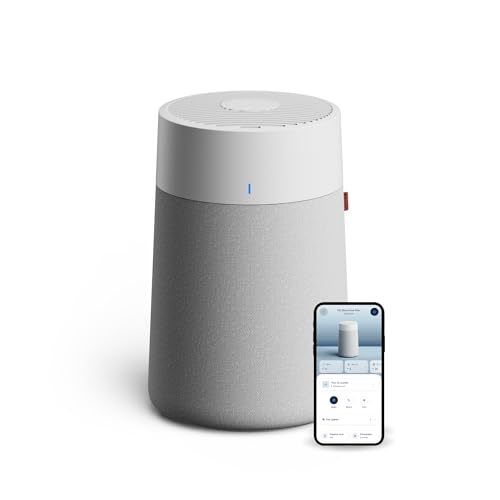
BLUEAIR Blue Pure 511i Max — Best for Quiet Sleep
The 511i Max is for the light sleeper who has already returned one purifier for being too loud. Its listing leads with a 19 dB night mode, which is the number that matters at 2 a.m., and the HEPASilent approach — part mechanical filtration, part electrostatic assistance — is specifically good at moving air quietly at low speeds. The washable fabric pre-filter also comes in colors, which sounds trivial until the unit has to live in a styled bedroom.
Strengths
- 19 dB night mode in the confirmed listing — the quietest sleep setting here
- Auto mode with a sensor, so it ramps up when air quality drops and settles back down
- Washable pre-filter catches pet hair and lint before they load the main filter
Trade-offs
- Replacement filters cost more than the LEVOIT equivalents
- App and WiFi features are wasted if you simply want a knob
- At sleep speed its cleaning rate is gentle, like every quiet purifier
| Model | Blue Pure 511i Max |
| Filtration | HEPASilent with washable pre-filter |
| Night mode | 19 dB (per listing) |
| Source | Confirmed listing title |
The honest physics of quiet purification is that low noise means low airflow, so the 511i Max’s real skill is balance: its auto mode spends the evening clearing the room at a moderate speed while you are awake and can tolerate it, then drops to a whisper for the night with the air already clean. That pattern — clean first, maintain quietly — is how a bedroom purifier should be used, and this model automates it better than any other pick here.
The fabric pre-filter deserves a mention for pet owners. Hair and dander are the main load in most bedrooms with animals, and a washable pre-filter that traps the coarse fraction extends the expensive main filter’s life considerably. Rinse or vacuum the fabric monthly and the unit keeps its quiet character instead of gradually straining against a clogged intake.
Best for: light sleepers and pet owners who want automatic, quiet cleaning / Not suited for: buyers who dislike apps or want the cheapest filters

LEVOIT Core 200S-P Smart Air Purifier — Best Smart Pick
The Core 200S-P suits the sleeper who wants the purifier to run itself: schedules set in the app, voice control from the bed, and a sleep mode that quiets the fan and darkens the display. It is a step up in size from the Mini-P, which buys it a larger filter and more headroom for medium bedrooms, while staying small enough for a dresser top or floor corner.
Strengths
- App scheduling means it can clean hard before bedtime and idle quietly overnight
- Voice control through common assistants — change settings without getting up
- AHAM VERIFIDE listing claim gives its room sizing an independent basis
Trade-offs
- Needs WiFi setup, which some buyers actively do not want in a bedroom
- Smart features add cost over the otherwise similar non-smart models
- Display and status lights need the sleep mode engaged to fully behave at night
| Model | Core 200S-P |
| Filtration | 3-in-1 filter, HEPA sleep mode |
| Controls | App + voice control |
| Source | Confirmed listing title |
Scheduling is the feature that changes how a purifier actually gets used. Most people run a manual unit at whatever speed they last set, forever. A scheduled 200S-P can run a genuine clean cycle in the early evening — higher speed, door closed, nobody trying to sleep — and then hold the room overnight at a murmur. Over weeks, that pattern delivers cleaner air than a stronger unit left permanently on its lowest, quietest setting.
The 200S-P also shares its filter ecosystem with a wide LEVOIT range, which matters more than it sounds: replacement filters for popular models stay in stock and stay competitively priced. When you check the listing, confirm the exact filter name shown for this model so the first replacement order, months from now, takes thirty seconds rather than a research session.
Best for: medium bedrooms and anyone who wants scheduling and voice control / Not suited for: buyers avoiding WiFi devices or wanting the smallest footprint

COWAY Airmega 50 — Best Compact Design
The Airmega 50 is the design-conscious pick: a compact unit that looks like an intentional object rather than an appliance, for bedrooms up to the 500 sq ft figure in its listing. Its air-quality indicator lets you see at a glance whether the room needs a boost, and auto mode handles the adjustment. It suits primary bedrooms in apartments and smaller houses where the purifier will be visible all day, every day.
Strengths
- Air-quality monitor with auto mode — set it and let it judge the room
- Compact, finished design that does not look like a piece of lab equipment
- Night light and indicator features can be managed for sleep rather than endured
Trade-offs
- Covers its rated area in an hour on high; overnight cleaning is at gentler speeds
- Filter ecosystem is smaller than LEVOIT’s, so check replacement availability
- Premium pricing for the size class
| Model | Airmega 50 |
| Coverage | Up to 500 sq ft (per listing) |
| Features | AQI monitor, auto mode, night light |
| Source | Confirmed listing title |
Coway’s strength is sensor-driven honesty. The Airmega 50’s monitor reacts visibly to real events — cooking drift from a kitchen, a window opened on a high-pollen day, a dog shaking off on the bed — and auto mode answers with fan speed, then settles again. In a bedroom that feedback loop is reassuring: instead of wondering whether the unit is doing anything, you watch it notice the same air you notice.
Place it with the intake unobstructed and a little clearance from the wall, as the manual directs, and avoid tucking it behind a curtain where it will happily purify the curtain. Like the Blueair, its best pattern is an awake-hours clean at moderate speed and a quiet maintenance night, which its auto mode approximates on its own once the room’s baseline is established.
Best for: style-conscious buyers with small-to-medium bedrooms / Not suited for: maximum-coverage shoppers or the tightest budgets
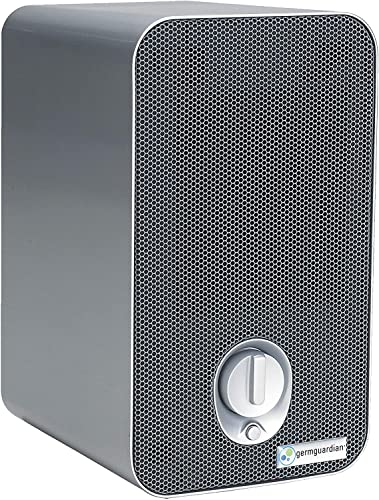
GermGuardian AC4100 — Best Budget Tower
The AC4100 suits the buyer who wants a purifier, not a gadget: a slim tower that stands in a corner, a dial-like simplicity of operation, and a HEPA filter doing the real work. Its listing rates it for rooms up to 375 sq ft in an hour, which covers most single bedrooms honestly. The UV-C light is a secondary feature aimed at germs near the filter; the HEPA stage is what cleans your air, and it is why this model is here.
Strengths
- Slim tower footprint fits corners where round units waste space
- Simple controls with no account, app, or WiFi required
- Long-running model line, so filters and support are easy to find
Trade-offs
- No auto mode or air-quality sensor — you pick the speed
- Tower shape is less stable around toddlers and large dogs than low units
- UV-C bulb is a consumable on top of the filter if you use that feature
| Model | AC4100 (AC4100CA) |
| Coverage | Up to 375 sq ft per hour (per listing) |
| Filtration | HEPA + UV-C light |
| Source | Confirmed listing title |
There is a durable appeal to a purifier with nothing to configure. The AC4100 goes in the corner, gets set to a speed, and is forgotten — and forgotten is precisely the state in which bedroom purifiers deliver their value, running thousands of quiet hours while nobody thinks about them. For a guest room, a teenager’s room, or a first purifier bought to test whether cleaner air helps your sleep, that simplicity is the feature.
Its limits are the flip side of the same coin. Without a sensor it cannot react to a bad-air event, and its tower form factor moves air less authoritatively than the bigger-filter designs. Run it a speed higher in the evening than you sleep at, keep the filter on schedule, and it performs its one job — steady background cleaning of a modest room — without demanding anything back.
Best for: first-time buyers and anyone who wants simple, app-free operation / Not suited for: buyers wanting auto mode or sensor feedback

Medify MA-25 — Best for Dual Filters
The MA-25 suits the bedroom that asks more of a small purifier: a larger double room, a sleeper with strong dust sensitivity, or a home where the bedroom doubles as an office by day. Its twin-filter design draws air through both sides, which is how its listing supports an 825 sq ft per-hour coverage figure — headroom that means, in a normal bedroom, genuinely effective cleaning at moderate, sleepable speeds instead of a strained maximum.
Strengths
- Dual filters give it the most cleaning headroom of any pick here
- Headroom translates to effective cleaning at lower, quieter speeds in real bedrooms
- Sleep mode keeps it bedroom-appropriate despite the stronger hardware
Trade-offs
- Two filters to replace means a higher consumable cost when the day comes
- Bigger and heavier than the nightstand-class picks
- Overkill for a tiny room, where the Mini-P does the same job for less
| Model | MA-25 |
| Coverage | 825 sq ft per hour (per listing) |
| Filtration | Dual HEPA filters |
| Source | Confirmed listing title |
Headroom is the underrated bedroom specification. A purifier that must run at full speed to hold your room will be turned down at night and effectively switched off as a cleaner; a purifier with capacity to spare can be turned down and still clean. The MA-25 is the pick that exploits that arithmetic most aggressively in this size class, which is why it suits bigger bedrooms and higher-need sleepers better than its box dimensions suggest.
Budget honestly for the twin filters. Medify’s replacement schedule and the listing’s filter name should be part of your purchase decision, not a surprise next year. Owners who set a calendar reminder at purchase time and keep a spare set in the closet report the highest long-term satisfaction with any purifier, and this model rewards that habit with years of strong, quiet service.
Best for: larger bedrooms and higher-need sleepers wanting headroom / Not suited for: tiny rooms or buyers minimizing filter costs
Comparison Table
| Pick | Badge | Key spec | Best for |
|---|---|---|---|
| LEVOIT Core Mini-P Air Purifier | Best Overall | Nightstand-size, 3-stage filter | small bedrooms, dorms, and nightstand placement |
| BLUEAIR Blue Pure 511i Max | Best for Quiet Sleep | HEPASilent, 19 dB night mode | light sleepers and pet owners who want automatic, quiet cleaning |
| LEVOIT Core 200S-P Smart Air Purifier | Best Smart Pick | Smart WiFi, AHAM VERIFIDE | medium bedrooms and anyone who wants scheduling and voice control |
| COWAY Airmega 50 | Best Compact Design | Up to 500 sq ft, AQI monitor | style-conscious buyers with small-to-medium bedrooms |
| GermGuardian AC4100 | Best Budget Tower | Tower, HEPA + UV-C, 375 sq ft/hr | first-time buyers and anyone who wants simple, app-free operation |
| Medify MA-25 | Best for Dual Filters | Dual HEPA, 825 sq ft/hr | larger bedrooms and higher-need sleepers wanting headroom |
Read the coverage column with the bedroom rule in mind: those figures are the listings’ per-hour claims at high speed. For overnight use, what matters is what each unit does at its quiet settings — which is why the badges weight night mode and auto behavior as heavily as raw coverage.
How to Choose a Small Air Purifier for a Bedroom
Bedroom purification has its own rules that living-room advice gets wrong. This guide works through the four decisions that determine whether a small purifier improves your sleep or becomes an expensive nightstand ornament: sizing, noise, light, and the filter bill.
Size the purifier to the room you sleep in, not the home you live in
Manufacturers rate coverage at maximum speed with the air changed several times per hour. For a bedroom, a sensible target is a unit whose rated coverage is roughly one and a half to two times your room’s floor area, because that margin is what lets it clean effectively at the lower speeds you will actually sleep with. A 150 sq ft bedroom is well served by units rated in the 300–500 sq ft class; the MA-25’s headroom suits double rooms and open-plan sleeping areas.
Measure honestly, including the spaces your bedroom air mixes with. An en-suite bathroom with the door open, a walk-in closet, or a permanently open door to a hallway all enlarge the effective room. If the total creeps past your unit’s comfortable range, two small units — one by the bed, one across the room — often beat one strained unit, and the 2-pack and multi-room guides in this series explore that pattern.
Noise is a spectrum, not a single number
Decibel figures are measured at a set distance and say nothing about tone. A purifier can measure quiet and still annoy if its fan produces a cycling whine or its housing rattles at one particular speed. Sleep modes help twice: they cap the fan at its calmest setting and usually steady the speed so your ear stops tracking changes. If you are a very light sleeper, place the unit across the room rather than on the nightstand — distance softens tone more than any specification.
Also plan the daily pattern, not just the night. The most effective bedroom routine is a moderate-speed clean while you are out of the room or awake in the evening, then sleep mode overnight. Smart models like the Core 200S-P and the sensor-driven Airmega 50 automate that pattern; with manual models like the AC4100, a simple outlet timer or the habit of switching speeds at bedtime achieves the same result.
Light discipline decides whether it stays switched on
A surprising number of bedroom purifiers are abandoned over light, not noise. Status LEDs, air-quality rings, and illuminated buttons that seem harmless in a lit kitchen become beacons at 3 a.m. Prefer models whose display turns fully off in sleep mode, and check the listing and manual for that specific behavior rather than assuming a dimmer exists. The Blue Pure 511i Max and Core 200S-P both manage their light output deliberately; with simpler units, placement behind a dresser edge can solve the problem for free.
Air-quality indicator lights deserve a special note: they change color with the air, which is informative by day and distracting by night. If the model you like lacks a full display-off mode, a small piece of removable light-dimming tape over the indicator — never over an intake or sensor opening — is the pragmatic fix owners have used for years.
The filter is the real purchase
Every purifier here is two purchases: the unit today and a filter every six to twelve months for as long as you own it. Before ordering, find the exact replacement filter name in the listing, check that it is a standard stocked item, and note the replacement interval the maker recommends for continuous use. Dual-filter designs like the MA-25 clean harder and cost more per change; single compact filters like the Mini-P’s are cheaper per change and needed a little sooner under 24-hour running.
Finally, treat ionizer-only and washable-filter claims with care. A sealed HEPA-type filter is the mechanism with testable results behind it, which is why every pick in this guide has one. Washable pre-filters, like the Blueair’s fabric sleeve, are a genuine bonus for pet hair — they protect the main filter — but they complement the HEPA stage rather than replacing it.
Budget in tiers: what each class actually buys
In the budget tier, represented here by the GermGuardian AC4100 and the running costs of the Core Mini-P, you buy honest filtration and simple controls, and you give up sensors and automation. That is a rational trade for a guest room or a first purifier. What you should never buy at any tier is a purifier whose filter is not a standard, stocked item — the unit is only ever as good as your ability to feed it filters.
The mid-range tier — the Blueair, the Core 200S-P, the Airmega 50, the MA-25 — buys the things that change daily life: quiet engineered sleep modes, sensors that react to real air, and filters sized generously enough to hold a bedroom at low speed. Above that sits the premium design tier, where money goes to appearance and refinement. For a bedroom, the mid-range is where value peaks, because its improvements are the ones you experience every single night.
How to Set Up a Bedroom Air Purifier for Better Sleep
Setup takes ten minutes and determines most of the benefit you will ever get. Follow these steps in order on the first evening, then leave the routine alone for two weeks before judging the results.
Step 1: Unbox, remove the filter bag, and refit the filter
Almost every purifier ships with its filter sealed in plastic inside the unit. Open the housing, remove the bag, refit the filter in the direction of the airflow arrows, and close up. Running a purifier with the bag on is the single most common setup mistake and produces a perfectly quiet machine that cleans nothing at all.
Step 2: Place it for airflow, not for hiding
Give the unit clear space around its intakes — a hand’s width minimum, more where the manual asks for it — and keep it out from behind curtains and under shelves. Beside the bed or across the room both work; inside a closed closet or tight between furniture does not. On carpet, make sure the base sits level so the housing does not buzz.
Step 3: Run a first-evening clean cycle
Close the bedroom door and run the unit at a moderate-to-high speed for an hour or two before bed on the first night, and after any dust-raising event like changing bedding. This establishes the clean baseline that the quiet overnight setting then maintains, which is the pattern every pick in this guide is designed around.
Step 4: Set the night routine
Engage sleep mode, confirm the display has dimmed or gone dark, and check from the pillow — not standing up — whether any light or tone reaches you. Adjust placement now rather than at midnight. On smart models, program the evening-clean and night-maintain schedule once and let it repeat.
Step 5: Start the filter calendar
Note the purchase date and the maker’s replacement interval in your phone calendar, with a reminder a month early. Filters load gradually and silently; by the time airflow audibly drops, the filter has been overdue for weeks. Vacuum or wash the pre-filter monthly if your model has one, especially with pets in the room.
Step 6: Judge it after two weeks, on evidence
The honest tests are dust: how quickly a visible film returns to the nightstand, whether you wake with the same stuffiness, and whether the room smells fresher at the door in the morning. Give any purifier a fortnight of correct use before concluding it does or does not help — one night proves nothing either way.
If sleep is still disturbed after correct setup, the culprit is usually placement or tone rather than cleaning power: move the unit farther from the bed, change the speed by one step to shift the fan’s pitch, and make sure nothing light or vibrating touches the housing.
Care, Filters, and Long-Term Ownership
A bedroom purifier’s maintenance calendar has three rhythms. Monthly: vacuum or wash the pre-filter where fitted, and wipe the intake grilles, because bedroom dust is mostly fabric fiber and it mats exactly where air enters. Every six to twelve months, per the maker’s schedule for your model and your hours of use: replace the main filter, resetting any indicator the unit provides. Yearly: wipe the sensor lens or window on sensor models with a dry cotton swab, because a dust-filmed sensor reads clean air that is not there and idles when it should be working.
Filter handling matters more than filter brand loyalty. Buy the filter the listing names for your exact model — LEVOIT, Blueair, Coway, GermGuardian, and Medify all use similar-looking cartridges that are not interchangeable — and be wary of ultra-cheap unbranded substitutes, whose seals and media are where the savings hide. A filter that leaks unfiltered air around its edge quietly converts your purifier into a fan with a hobby. The genuine article, on schedule, is the entire performance of the machine.
Placement drift is the silent ownership failure. Over months, purifiers migrate — pushed aside for vacuuming, nudged behind furniture, turned to face a wall. Once a season, restore the original setup: clearances open, intake unobstructed, sleep mode checked from the pillow in the dark. Owners who do this quarterly report a purifier that feels new for years; owners who do not conclude, wrongly, that the model ‘stopped working’ when all it stopped doing was breathing.
Finally, keep the purchase records together: model number, filter part name, and the date of each change, in one note on your phone. The second year of ownership is when purifiers are abandoned — not because they fail, but because the filter question becomes a research project at the exact moment life is busy. A thirty-second note written today removes that friction forever, and a purifier that stays fed stays in service, which is the only way any of the benefits in this guide compound.
Common Buying Mistakes
Buying by headline coverage alone
A unit rated for a huge area at turbo speed may clean a bedroom no better at sleep speed than a modest unit designed for quiet work. Coverage matters, but only as headroom above your room size — beyond that, night-mode behavior and filter quality decide your results.
Putting it in the corner and forgetting the clearances
Intakes pressed against walls, curtains, or bedding starve the unit and add noise as the fan strains. Every model here needs the clearance its manual specifies; a purifier that can breathe is quieter and cleans faster at the same setting.
Skipping filter changes because the air ‘seems fine’
Loaded filters do not announce themselves. Airflow falls, noise rises, and cleaning quietly collapses while the unit still runs and glows reassuringly. The filter calendar is not optional maintenance — it is the difference between owning a purifier and owning a fan.
Choosing an ionizer-only gadget to save money
Filterless ionic boxes move almost no air and cannot match the testable performance of a sealed HEPA filter. They are the one category we excluded outright. A budget HEPA unit like the AC4100 or Mini-P is the genuine economy choice.
Expecting a purifier to fix a source problem
A purifier treats air, not causes. Mold in a wall, a mattress long past its life, or smoking indoors will defeat any unit on this list. Use the purifier for dust, dander, pollen, and everyday staleness — and deal with sources directly when a source is the story.
Final Recommendation
If you buy one pick for a typical bedroom, make it the LEVOIT Core Mini-P for a small room or the BLUEAIR Blue Pure 511i Max where quiet is the whole point. The Mini-P’s nightstand footprint solves the placement problem that defeats bigger units, and the Blueair’s night mode is the one light sleepers describe as finally quiet enough.
Choose the LEVOIT Core 200S-P if you want scheduling and voice control, the COWAY Airmega 50 if you want sensor-driven auto cleaning in a good-looking box, the GermGuardian AC4100 if you want the simplest app-free tower, and the Medify MA-25 if your bedroom is large or your dust sensitivity is high enough to justify its dual-filter headroom. Every one of them will serve you better run consistently than a stronger unit run occasionally.
Related guides in this series: Best Air Purifiers For Small Areas Best And Cheapest Air Purifiers For Small Bedroom Best Air Purifiers For Baby Room Best 2 Pack Air Purifiers Best Air Purifiers Below 300
Frequently Asked Questions
How long should I run a bedroom air purifier each day?
Continuous running at a low or sleep setting, with a faster clean in the evening, gives the best results and is how these units are designed to be used. Air re-contaminates constantly — dust, dander, and outdoor air leak in around the clock — so a purifier that runs only occasionally never gets ahead of it. Power draw at sleep settings is small, comparable to a low-wattage bulb on most compact models.
Will a small purifier help with pet dander if my pet sleeps in the room?
Yes, within limits. HEPA filtration is effective on dander particles, and a unit near the bed processes the air in your sleeping zone directly. A washable pre-filter, like the Blueair’s, helps by catching hair before it loads the main filter. It will reduce airborne dander noticeably; it will not remove the dander already in bedding, which is why regular hot washing of bed linen remains part of the answer.
Is a UV-C light in a purifier worth paying for?
Treat it as a minor extra, not a reason to buy. The HEPA filter does the measurable cleaning in models like the GermGuardian AC4100; the UV-C stage acts on air and surfaces immediately around the bulb. If two models are otherwise equal, UV-C is a reasonable tiebreaker, but it should never substitute for filter quality or honest coverage.
Can one small purifier handle a bedroom with the door open?
An open door enlarges the space your bedroom air mixes with, so the unit effectively serves part of the hallway too. For a small unit, that can halve its real impact. Either close the door at night, size up to a headroom model like the Medify MA-25, or accept the purifier as a sleeping-zone cleaner placed close to the bed, where it still does useful work.
How do I know when the filter really needs changing?
Follow the maker’s interval for continuous use and your calendar reminder rather than the unit’s appearance. Some models have filter indicators, which help, but time-based replacement is the reliable rule. If noise rises or airflow feels weak at a familiar setting, check the pre-filter first — a clogged pre-filter is often the whole problem and costs nothing to clean.
Are air purifiers safe to run all night around children?
The filter-based models in this guide are designed for continuous household use. Keep cords out of reach, place the unit where it cannot be pulled over, and supervise curious toddlers around intakes as you would with any appliance. None of the picks relies on ionizer-only technology, which is the category parents most often ask about; sealed filtration is the conservative choice for a child’s room.

