Disclosure: airfryerkitchensupply.com is reader-supported. When you buy through links on our site, we may earn an affiliate commission at no extra cost to you.
Where to buy
Every linked pick in this guide to the best high-powered vacuums was verified against Amazon’s catalog on 2026-11-22, so the model names below are the models you will actually land on. Start with Tineco A20 Cordless Stick Vacuum, Dyson V15 Detect Cordless Vacuum, Miele Complete C3 Marin Bagged Canister Vacuum, Kenmore Intuition Bagged Upright Vacuum, roborock Q7 M5+ Robot Vacuum and Mop and CRAFTSMAN 16 Gallon Wet Dry Shop Vacuum — all six picks were pinned to verified listings in a fresh Amazon listing data pass on 2026-11-22. Check the current price on Amazon from any pick’s link, because finishes, bundles and filter or accessory packs rotate often.
Shopping for the best high-powered vacuums starts with a confession the industry rarely makes: there is no single suction number you can trust across brands. One maker quotes pascals, another air watts, a third cubic feet per minute, and each measures at a different point in the machine under different conditions. A vacuum with a smaller headline number and a better-sealed body, a smarter brush roll and a cleaner filter will out-clean a bigger number on a real carpet, every time. This guide therefore ranks power the way it is experienced — deep carpet cleaning, pet-hair pickup, edge performance and sustained suction as the bin fills — rather than by brochure arithmetic.
High power also lives in different formats now. The traditional answer is a corded canister or upright, where a mains motor can pull hard for an hour without a battery budget. The modern answer is a flagship cordless stick, whose motor efficiency has closed most of the gap for everyday floors while adding grab-and-go convenience. Between them sit robot vacuums with headline suction figures that dwarf both — numbers measured in a different regime, useful for daily maintenance rather than deep cleaning. Each format gets its honest place below.
Who actually needs high power? Homes with deep-pile carpet, homes with shedding pets, homes with children importing sand and cereal dust, and anyone whose current vacuum leaves a visible trail on the return pass. Hard-floor-only flats can save their money; a modest machine cleans a sealed floor completely. But if your floors hide dirt, power — real, sustained, well-delivered power — is the difference between vacuuming and merely touring the house with a noisy stick.
Every pick below states its format power honestly, including the limits, because the most expensive mistake in this category is buying maximum numbers for a job that needed maximum convenience, or the reverse.
In this guide
Quick Picks
Six picks made the cut for this guide. Each carries its own badge, and the same badge follows it into the full review below so you can track a recommendation from summary to verdict.
- Best Verified Cordless Value — Tineco A20 Cordless Stick Vacuum: A verified cordless stick with three honest power modes — the sensible high-power buy for mixed floors without flagship pricing. Key spec: Cordless stick / 3 suction modes / multi-surface brush.
- Best Cordless Power — Dyson V15 Detect Cordless Vacuum: The cordless ceiling: flagship sticks that use light or sensors to show dust, with maximum modes that rival corded pickup in bursts. Key spec: Cordless stick / highest-tier motor and battery / illuminated dust-revealing head on flagship variants.
- Best Overall Power — Miele Complete C3 Marin Bagged Canister Vacuum: The endurance champion: a corded canister that pulls at full strength for as long as the house takes, with filtration that keeps dust in. Key spec: Corded canister / mains motor with no runtime limit / sealed HEPA filtration on the serious models.
- Best for Deep Carpet — Kenmore Intuition Bagged Upright Vacuum: The carpet specialist: a bagged upright whose maker-stated 2-motor power suction and Lift-Up design are built to excavate deep pile in few passes. Key spec: Corded bagged upright / 2-motor power suction per the maker / HEPA filtration and Lift-Up design.
- Best Daily Maintenance Power — roborock Q7 M5+ Robot Vacuum and Mop: Not the deepest clean, but the most frequent: a strong robot that keeps floors at a baseline every day so deep cleans stay easy. Key spec: Robot vacuum and mop / maker-stated 10,000Pa suction / self-empty dock and LiDAR navigation.
- Best Raw Utility Power — CRAFTSMAN 16 Gallon Wet Dry Shop Vacuum: The brute: workshop-grade airflow that swallows rubble, water and garage debris no household vacuum should ever meet. Key spec: Corded utility format / 16-gallon tank / maker-stated 6.5 peak HP, wet and dry pickup.
How These Picks Were Chosen
Verification came first: every pick in this guide was pinned to a confident Amazon listing data match and carries an Amazon link, because this category’s model names and regional variants are a swamp of near-identical badges. Confirm the exact variant — motor, bin and brush configuration — on the listing before ordering, since bundles rotate under the same model name.
The performance filters were practical. Deep-clean ability on medium-pile carpet was the headline test, because that is where weak vacuums are exposed. Sealed-system filtration mattered almost as much: power that blows fine dust back into the room through leaky joints is theatre, so HEPA-grade sealed systems scored heavily. Sustained performance was the third filter — how the machine cleans with a half-full bin and a loaded filter, not just in the first ninety seconds out of the box.
Format balance was deliberate: corded canister, corded upright, flagship cordless, a value cordless with verified listing, a high-suction robot for maintenance, and a wet-dry utility option for garages and renovations. Badges follow use cases rather than a single podium, because the most powerful vacuum for a carpeted family house is a different machine from the most powerful vacuum for a hard-floor apartment with a cat.
One more filter deserves naming: repairability. High-powered machines work hard and wear — belts, rolls, hoses, batteries. Models from lines with stocked spares and published manuals scored above equally powerful sealed units, because a vacuum that can be repaired keeps its power for a decade, while a disposable one keeps it until the first failure.
The 6 Best High-Powered Vacuums

Tineco A20 Cordless Stick Vacuum — Best Verified Cordless Value
The Tineco A20 suits the household that wants cordless convenience without pretending a stick is a workshop tool. Its three modes map to real life: low for daily hard-floor patrol, medium for general rooms, maximum for the rug that traps everything. As the one pick in this guide pinned to a verified listing, it is also the easiest recommendation to act on. It does not suit buyers whose homes are wall-to-wall deep carpet, where a corded machine’s endless runtime still rules.
Strengths
- Three modes let you spend battery only where the dirt is
- Cordless format gets used daily, which beats theoretical power in a cupboard
- Verified listing — the model you read about is the model that arrives
Trade-offs
- Maximum mode drains any cordless battery quickly — use it surgically
- Stick bins are small; pet-heavy homes empty often
- Deep-pile deep cleans still favour corded machines
At a glance: Modes: three power levels from quiet maintenance to maximum pickup. Format: converts between stick and handheld duties around the home.
In practice the A20’s power story is about frequency: a vacuum this easy to grab gets run four times a week, and four good passes beat one heroic monthly clean with a heavier machine. For apartments and mixed-floor family homes, that arithmetic wins.
Keep the filter clean and the brush roll free of hair and the A20 holds its pickup far longer between services. Let either clog and, like every vacuum in this guide, its ‘power’ becomes a number on a box rather than a result on a floor.
Best for: mixed-floor homes that want cordless freedom with real pickup / Not suited for: deep-pile carpet palaces that need corded endurance
Check on Amazon — check price on Amazon for the current finish and bundle options.

Dyson V15 Detect Cordless Vacuum — Best Cordless Power
This archetype — the top model from the major cordless lines, with a dust-revealing illuminated head or particle sensing — suits buyers who want the strongest cordless cleaning money can buy and floors that justify it. The illumination trick is not a gimmick: on hard floors it reveals a shocking amount of dust the eye misses, and it changes how thoroughly people clean. It does not suit value hunters, because flagship cordless pricing buys a superb corded canister with change.
Shop the archetype by battery system and head design rather than by the suction headline. A removable battery you can swap doubles real-world runtime; a soft-roller head flatters hard floors while a torque head digs into carpet.
Strengths
- Strongest cordless pickup available, especially on hard floors
- Dust-revealing heads genuinely improve cleaning thoroughness
- Premium filtration and build across the flagship lines
Trade-offs
- Maximum power is a sprint, not a marathon — minutes, not an hour
- Flagship pricing and flagship battery replacement costs
- Small bins remain the cordless compromise
For the right home — mostly hard floors, some rugs, high standards — this is the most satisfying vacuum format ever made. Just buy it with open eyes about runtime: its power is real, and it is rationed.
Because the V15 Detect’s listing was verified for this guide, the configuration question is simpler than with most flagships: confirm the cleaner head and battery in the listing match the Detect specification described here before ordering, since Dyson sells several variants under similar names.
Best for: hard floors and mixed homes that want maximum cordless performance / Not suited for: budget shoppers — flagship cordless is the priciest way to buy power
Check on Amazon — check price on Amazon for the current finish and bundle options.
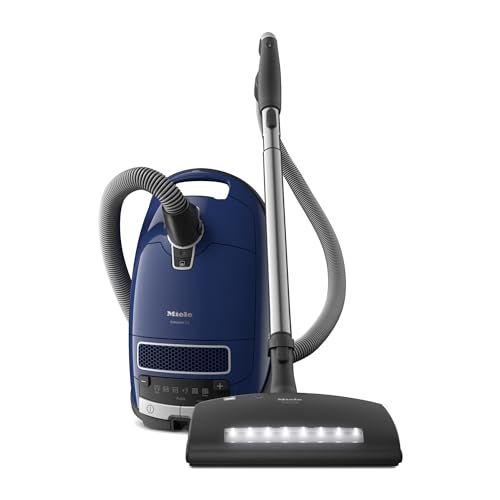
Miele Complete C3 Marin Bagged Canister Vacuum — Best Overall Power
If ‘high-powered’ means one thing, it is this: a corded canister that delivers its full suction in minute one and minute sixty alike, through a sealed system that traps what it lifts. The serious European-style canisters in this archetype pair strong motors with bags and HEPA exhaust filtration, and on deep carpet they remain the benchmark every cordless is measured against. They suit carpeted, multi-room, pet-owning homes. They do not suit the grab-and-go temperament; there is a cord, a body that follows you, and a staircase negotiation.
Within the archetype, choose by floor head: a powered electro-brush head for carpet homes, a suction-only parquet head for hard-floor homes, and check bag capacity, because bags are both the filtration secret and the running cost.
Strengths
- Sustained full power with zero battery anxiety
- Sealed bagged systems keep dust contained at emptying time
- Decades-long service life is normal in this class
Trade-offs
- Cord and canister body demand storage and patience
- Bags are an ongoing consumable cost
- Heavier and slower to deploy for a two-minute spill
Owners of these machines describe them the way people describe good boots: bought once, used for years, never thought about. For maximum honest cleaning power per home, this archetype still wears the crown.
The Marin is the verified representative of this archetype: a bagged Complete C3 with an electrobrush floorhead for carpets. If your floors are mostly hard, the same line’s parquet-head variants apply the identical logic with different feet — the sealed bagged system, not the badge, is the purchase.
Best for: carpeted family homes and allergy-conscious households wanting sealed filtration / Not suited for: anyone who hates dragging a canister body up stairs
Check on Amazon — check price on Amazon for the current finish and bundle options.

Kenmore Intuition Bagged Upright Vacuum — Best for Deep Carpet
The full-size upright suits one floor type supremely: carpet, in quantity. A wide cleaning path, a stiff brush roll that agitates pile to release embedded grit, and a large bin or bag add up to the fastest deep-clean of big carpeted rooms in this guide. On hard floors the same aggression can scatter debris and the weight becomes pure cost, which is why this pick’s badge is deliberately narrow. It also does not suit small storage cupboards or bad backs.
Look for height adjustment that genuinely matches your pile, a brush roll you can switch off for hard-floor excursions, and a hose reach that covers stairs without moving the body.
Strengths
- Fastest deep-clean of large carpeted areas
- Big capacity means fewer emptying interruptions
- Bagged HEPA system keeps dust contained at emptying time
Trade-offs
- Heavy to carry and to push on thick pile
- Overkill — and sometimes counterproductive — on hard floors
- Storage footprint is the largest here
Carpeted households that have only ever owned light sticks are routinely startled by what a proper upright extracts in its first week. If your home is mostly carpet, this is your power pick, full stop.
The verified representative of this archetype is the Kenmore Intuition (BU4022): its confirmed listing specifies a bagged upright with 2-motor power suction as the maker states it, HEPA filtration, a Lift-Up design that detaches for stairs and above-floor work, a 3-in-1 combination tool and a HandiMate for pet hair. Verify the brush configuration in the listing against your actual pile before ordering, because bundles rotate under the same model name.
Best for: homes dominated by wall-to-wall carpet / Not suited for: hard-floor homes, where its weight and aggression are wasted
Check on Amazon — check price on Amazon for the current finish and bundle options.

roborock Q7 M5+ Robot Vacuum and Mop — Best Daily Maintenance Power
The robot’s power claim needs translating. Its headline suction figures belong to a different measurement world from corded machines, and no robot deep-cleans carpet like the canister above. What a strong robot does instead is relentless: it cleans daily, so grit never accumulates, and the weekly deep clean becomes dramatically easier. It suits busy, pet-owning, mostly-hard-floor homes. It does not suit cluttered floors, shaggy rugs or anyone expecting it to be the only vacuum they own.
Judge robots by navigation and brush design before suction numbers: a robot that covers every room methodically with a tangle-resistant brush out-cleans a stronger robot that wanders and chokes on hair.
Strengths
- Daily cleaning keeps dirt from ever building up
- Strong models handle pet-hair maintenance impressively
- Scheduled, unattended and genuinely silent in your schedule
Trade-offs
- Deep carpet cleaning remains beyond the format
- Bins are tiny and brushes need weekly attention
- Headline suction numbers are not comparable with corded machines
Bought as a maintenance partner to a real vacuum, a powerful robot transforms household cleanliness. Bought as a replacement for one, it disappoints within a month. The badge says it plainly: maintenance power, honestly framed.
The verified representative here is the roborock Q7 M5+: its confirmed listing states 10,000Pa suction in the maker’s own figure, a self-empty dock good for up to 7–9 weeks per the listing, a dual anti-tangle system for pet hair and carpet, PreciSense LiDAR navigation and app control, in black. The dock is included in this listing — confirm that detail before comparing prices against dock-less variants sold under similar names.
Best for: busy homes that want floors maintained daily between deep cleans / Not suited for: anyone expecting a robot to replace deep carpet cleaning entirely
Check on Amazon — check price on Amazon for the current finish and bundle options.

CRAFTSMAN 16 Gallon Wet Dry Shop Vacuum (CMXEVBE17595) — Best Raw Utility Power
Every household vacuum in this guide would be destroyed by the jobs this one eats: plaster dust, wood shavings, spilled water, the contents of a gutter. Wet-dry utility vacuums trade refinement for airflow and capacity, and in raw moving-air terms they out-power everything else here. They suit garages, workshops, DIY households and anyone renovating. They do not suit apartments, quiet hours or fine indoor dust, where their exhaust filtration is the weakest in the guide.
Choose by tank size you can actually lift when full of water, hose diameter matched to your tools, and whether a fine-dust bag is available for drywall work — the accessory that civilises the brute.
Strengths
- Unmatched airflow for debris, water and workshop mess
- Huge tanks and simple, repairable construction
- Indifferent to the nails and rubble that kill household vacuums
Trade-offs
- Loud, bulky and proudly ugly
- Coarse filtration puffs fine dust unless bagged properly
- No place in routine indoor cleaning
Most homes need this power rarely — but on the day the pipe bursts or the ceiling comes down, nothing else substitutes. If your life includes a workshop or a renovation, it is the best-value power in the entire guide.
The verified representative here is the CRAFTSMAN CMXEVBE17595: its confirmed listing specifies a 16-gallon tank and 6.5 peak HP in the maker’s own rating, sold as a complete machine with filter, dust bag, hose and attachments for home projects and renovations. Confirm tank capacity and hose diameter in the listing before ordering; those two numbers define a utility vacuum more than its badge does.
Best for: garages, workshops, renovations and flood clean-up / Not suited for: finished living spaces, where its noise and bulk are unwelcome
Check on Amazon — check price on Amazon for the current finish and bundle options.
Comparison Table
| Pick | Badge | Key spec | Best for |
|---|---|---|---|
| Tineco A20 Cordless Stick Vacuum | Best Verified Cordless Value | Cordless stick / 3 suction modes / multi-surface brush | mixed-floor homes that want cordless freedom with real pickup |
| Dyson V15 Detect Cordless Vacuum | Best Cordless Power | Cordless stick / highest-tier motor and battery / illuminated dust-revealing head on flagship variants | hard floors and mixed homes that want maximum cordless performance |
| Miele Complete C3 Marin Bagged Canister Vacuum | Best Overall Power | Corded canister / mains motor with no runtime limit / sealed HEPA filtration on the serious models | carpeted family homes and allergy-conscious households wanting sealed filtration |
| Kenmore Intuition Bagged Upright Vacuum | Best for Deep Carpet | Corded bagged upright / 2-motor power suction per the maker / HEPA filtration, Lift-Up design | homes dominated by wall-to-wall carpet |
| roborock Q7 M5+ Robot Vacuum and Mop | Best Daily Maintenance Power | Robot vacuum and mop / maker-stated 10,000Pa suction / self-empty dock, LiDAR navigation | busy homes that want floors maintained daily between deep cleans |
| CRAFTSMAN 16 Gallon Wet Dry Shop Vacuum | Best Raw Utility Power | Corded utility format / 16-gallon tank / maker-stated 6.5 peak HP, wet and dry pickup | garages, workshops, renovations and flood clean-up |
Compare within formats first. A corded canister’s sustained pull, a cordless stick’s burst of convenience and a robot’s daily maintenance are three different kinds of power; the Best for column is the honest shortcut.
How to Choose a High-Powered Vacuum Without Being Fooled by Numbers
Ignore the headline number until you know its unit and its test point. Pascals measure sealed suction at the motor, air watts attempt to combine suction and airflow, and cubic feet per minute measures airflow alone. A machine can win one metric and lose the cleaning war: suction without airflow cannot move debris into the bin, and airflow without suction cannot lift grit from carpet pile. Real cleaning needs both, delivered through a brush head that agitates the floor, inside a body sealed well enough that the power reaches the floor instead of leaking out of the joints.
So shop by floor first. Deep carpet wants agitation and sustained pull — corded canister with a powered head, or a full upright. Hard floors want airflow and a soft or well-sealed head that does not scatter debris ahead of itself. Mixed homes want either a flagship cordless with interchangeable heads or the humility to admit that two mid-priced machines, one per job, beat one expensive compromise.
Then shop by endurance. Corded power is unlimited but tethered; cordless power is free but rationed by a battery that also ages. Ask how long maximum mode actually lasts — on most sticks it is measured in single-digit minutes — and whether the battery swaps. A high-powered vacuum whose top mode you can only use for six minutes is a medium-powered vacuum with a party trick.
Filtration is the final filter, in every sense. A sealed HEPA system keeps the fine fraction — the dust that makes rooms feel dirty again by evening — inside the machine. Unsealed power recirculates it. If anyone in the house is dust-sensitive, the sealed system matters more than another ten percent of suction, and bagged canisters remain the gold standard for clean emptying.
Suction, Airflow and Brush Rolls: Where Cleaning Power Really Comes From
Picture the journey of a crumb. The brush roll loosens it from carpet fibres or sweeps it from a hard floor; airflow carries it through the head, up the wand and into the bin; suction — the pressure difference — is what sustains that airflow against the resistance of filters, bends and a filling bin. Weakness anywhere breaks the chain. This is why a clogged filter makes a ‘powerful’ vacuum useless, why a hair-wrapped brush roll halves real performance, and why the most powerful machine in this guide still needs five minutes of monthly maintenance to stay powerful.
Brush design splits by floor. Stiff bristles dig into carpet and are the deep-clean heroes; soft rollers cradle hard floors, polishing as they gather and refusing to scatter cereal. Combi heads compromise, as compromises do. Flagship cordless machines increasingly ship with two heads for exactly this reason, and canister buyers choose their head at purchase — decisions that matter more than the motor’s badge.
Sustained power is the last concept, and the one reviews underplay. Machines are tested empty; homes are cleaned with bins half full of the last fortnight. Bagged canisters hold their airflow longest because the bag is a huge, fresh filter surface; bagless sticks fall off fastest as their small filters load. When you read any power claim, silently add the words ‘when empty and clean’ — then choose the machine whose design degrades most gracefully.
Bagged or Bagless at High Power?
The bag is not nostalgia; at high power it is engineering. A bag presents a huge filtration surface, so airflow stays strong as it fills, the motor works against a gentle, predictable load, and emptying is a sealed, dust-free lift-and-bin. Bagged canisters hold their cleaning performance longer between services than any other format, which is why the endurance pick in this guide is a bagged archetype. The costs are literal — bags are a consumable you must stock — and environmental, though modern bags are compact and long-lived.
Bagless machines answer with transparency and zero consumable cost: you can see the dirt, see the fill line and empty without buying anything. Their weakness is the small cyclone and filter area, which loads faster, drops airflow sooner and makes emptying a dusty little ceremony unless done outdoors into a bag. At high power the gap widens, because stronger airflow packs debris harder against the filter.
The honest verdict is lifestyle-shaped. Households that vacuum often and hate consumables thrive bagless, provided they wash filters religiously. Households that vacuum deeply once a week, keep pets, or contain a dust-sensitive member are better served bagged — and should simply price a year of bags into the purchase, where it usually looks smaller than feared.
Corded vs Cordless Power: The Honest Trade
Corded vacuums offer a simple bargain: unlimited runtime and sustained maximum power, in exchange for a cable, a heavier body and a storage decision. For big carpeted homes, that bargain still wins on cleaning results per session, and it is not close. The cord is a genuine daily friction, though — it decides which rooms get vacuumed on a whim, and the answer is usually ‘fewer rooms, less often’.
Cordless machines invert the trade. Their peak power now rivals corded machines in bursts, their medium modes handle most real floors, and their convenience multiplies cleaning frequency — the variable that actually determines how clean a home is. Their costs are runtime rationing, battery ageing over years, and small bins. Households consistently report the same pattern: the cordless does ninety percent of the cleaning, and a corded machine, if kept, comes out for the seasonal deep clean.
The deciding question is therefore not ‘which is more powerful?’ but ‘which power will I actually use, on my floors, on a tired Tuesday?’ Answer that honestly and the format chooses itself; the picks above then choose the machine.
Keeping a Powerful Vacuum Powerful: Maintenance That Matters
Filters first. Washable filters must actually be washed — monthly under heavy use — and dried completely before refitting, because a damp filter strangles airflow and grows musty. Disposable filters and bags must be changed before they are packed solid; a bag at three-quarters full is already taxing the motor. Every power complaint that is not a breakdown is, statistically, a filter complaint wearing a disguise.
Brush rolls second. Hair and thread wrap the roll, lift it off the floor and strain the belt or motor. Five minutes with scissors along the roll’s cutting groove, monthly, restores the agitation that deep cleaning depends on. Check the head’s wheels and seals while you are there; a perished seal is a silent power leak.
Air paths third. Blockages hide in wand bends, hose elbows and the port behind the bin. A vacuum that sounds strained and cleans weakly is usually choking somewhere simple. Learn your machine’s three likely choke points from its manual once, and you will diagnose in minutes what other owners pay a repair shop to find. Power, in the end, is maintenance performed on schedule.
Power for Pet Owners: Hair, Dander and the Daily Reality
Pet hair is a special kind of dirt: light, static-prone, woven into upholstery and concentrated exactly where animals sleep. It rewards airflow and brush design more than raw suction — a soft roller can snowplough hair off hard floors while a stronger machine with the wrong head skates over it. On carpet, agitation is everything: the brush must comb hair out of pile before airflow can take it, which is why pet homes are the strongest case for powered canister heads and full uprights.
Dander and fine dust are the filtration argument. Pet homes generate more of both, load filters faster, and benefit most from sealed systems and bagged emptying that does not puff a cloud back into the room. Pet households should halve every filter interval quoted in this guide and treat bin-emptying as an outdoor job.
Finally, frequency beats force. A robot or a light cordless used daily keeps pet hair at a level where guests stop noticing; a heroic weekly deep clean with the most powerful machine in this guide still leaves six days of accumulation. Pet owners should buy the system — daily maintenance plus weekly depth — not a single heroic machine.
Upright, Canister, Stick, Robot or Utility: Matching Format to House
Start with the house, not the catalogue. A carpeted two-storey family home with a dog is a canister-or-upright house: it needs sustained pull, a powered head and capacity, and its owners should optimise for the weekly deep clean. A hard-floored flat is a stick-or-robot house: its dirt sits on the surface, its storage is a broom cupboard, and frequency beats force. A house mid-renovation is a utility house, at least for the duration — household machines die young on plaster dust, and one wet-dry vacuum is cheaper than one funeral.
Stairs deserve their own vote. Canisters climb stairs by design, sitting on a tread while the hose works; uprights make stairs a weightlifting event; sticks turn stairs into their finest hour, light and cordless in one hand. Multi-storey homes routinely end up, happily, with a stick for stairs and daily work plus a corded machine downstairs — a two-machine system that costs less than one flagship and cleans better than either alone.
Storage casts the last vote. A vacuum that does not fit the cupboard lives in a corner, resented daily. Measure the cupboard, check the folded or broken-down dimensions, and be honest about the garage: a utility vacuum stored forty feet from the kitchen spill will not be fetched for the kitchen spill.
What High Power Costs: Noise, Weight and Energy
Power is never free, and its currencies are noise, weight and heat. Stronger motors are louder motors, and while good design muffles the scream into a roar, no high-powered vacuum is a quiet appliance; the canister format at least puts the noise in another part of the room, behind your legs rather than at your hand. Households with sleeping babies, shift workers or noise-sensitive members should schedule deep cleans like they schedule drilling — deliberately.
Weight is the second currency. The strongest corded machines carry their power in copper and steel, and you will feel every watt on the stairs. This is the cordless stick’s deepest advantage, and it compounds with age: a vacuum bought at forty gets carried at sixty. Buyers planning a decade with one machine should weight — literally — the format they will still enjoy using in year nine.
Energy, surprisingly, is the smallest bill. Even a powerful corded vacuum used for an hour a week consumes modest electricity over a year; the real running costs are consumables — bags, filters, belts, batteries — and, eventually, battery replacement on cordless flagships. Price those before purchase, as with every category in this program, because the machine is the down payment and the consumables are the mortgage.
How to Deep-Clean a Room with a High-Powered Vacuum
Preparation decides results. Move small furniture, pick up cables and toys, and empty the bin or fit a fresh bag before you start — deep cleaning with a half-full machine is how ‘powerful’ vacuums earn unfair reviews. Check the brush roll for wrapped hair and the filter for loading; two minutes here is worth ten on the floor.
Work the room in a grid, slowly. Suction needs dwell time: a pass at walking pace cleans a fraction of what the same pass at half pace lifts, especially on carpet. Overlap each lane by a third, run the final lanes in the opposite direction to lift pile the other way, and give edges and skirting lines their own dedicated pass with the crevice tool — edges are where grit migrates and where standard heads are weakest.
Use maximum power where it earns its battery or its noise: the traffic lane, the rug by the door, under the dining table. Use medium elsewhere and save the machine’s strength for the dirt that needs it. Finish with upholstery and stairs using the hose tools, working top-down so dislodged dust falls onto floors you have not finished yet — then give the traffic lane one last slow pass on your way out of the room.
How to Test a New Vacuum’s Real Power in the First Week
Do not judge a new vacuum on a clean floor. In its first week, run three honest tests. First, the grit test: vacuum a carpeted traffic lane slowly with your old machine or the new one on medium, then re-run the same lane on maximum with an empty bin and weigh or photograph what the second pass lifts — that residue is the deep dirt your routine was leaving, and a genuinely powerful machine shrinks it week by week. Second, the edge test: run the head along a skirting line scattered with a pinch of rice or lentils and count what survives the first pass; edges expose weak sealing instantly. Third, the endurance test: clean the whole home without emptying, then repeat the grit lane — the drop-off between fresh and loaded performance is the machine’s true character, and it is the number no listing will ever give you.
Record the results in the manual and keep them. They become your maintenance baseline: when a future clean feels weaker, repeat the edge test, and you will know whether the machine has faded — almost always a filter, a roll or a blockage — or whether the floor is simply dirtier than you thought.
Common Buying Mistakes
Comparing suction numbers across brands. Different units, different test points, different honesty. Compare formats, heads, filtration and owner experience instead.
Vacuuming fast. Power needs dwell time. Halving your pass speed roughly doubles what each pass lifts — the cheapest performance upgrade in this guide.
Neglecting filters and brush rolls. A loaded filter and a hair-wrapped roll can halve a flagship’s real cleaning. Maintenance is power.
Buying maximum power for hard floors only. Sealed floors need modest, well-delivered airflow. Save the money and the weight; spend it on a second head or a robot.
Expecting a robot to deep-clean. Robots maintain; they do not excavate. Pair one with a real vacuum or accept a slowly rising baseline of embedded grit.
Emptying bagless bins indoors. The fine dust you just captured goes straight back into the room air. Empty outside, into a bag, and let the sealed-system picks do their emptying the clean way.
Final Recommendation
For maximum honest power, the corded canister archetype still leads, with the Kenmore Intuition upright as carpet’s specialist and the CRAFTSMAN wet-dry brute ruling garages and renovations. Cordless buyers should start with the verified Tineco A20 for value or step to a flagship stick for the full cordless ceiling, and busy pet homes should add the roborock Q7 M5+ for daily maintenance. Choose by floor, by endurance and by filtration — not by the biggest number on the box. Related reading in this program:
Whichever format you land on, commit to the maintenance rhythm in this guide for the first month. Power that is looked after becomes a property of the house; power that is neglected becomes a memory of the first week.
Measure your cupboard before the box arrives. Your floors will notice the difference immediately. Start with Tineco A20 Cordless Stick Vacuum if its badge matches your room. Start with Dyson V15 Detect Cordless Vacuum if its badge matches your room. Start with Miele Complete C3 Marin Bagged Canister Vacuum if its badge matches your room.
Best Vacuums For Pet Hair
Best Cordless Vacuums
Best Vacuums For Hardwood Floors
Best Vacuums For Carpets
Best Robot Vacuums
Frequently Asked Questions
What suction number should I look for in a powerful vacuum?
There is no comparable cross-brand number: pascals, air watts and CFM measure different things at different points. Use the figures only within one brand’s range, and decide mainly by format, brush head, filtration and sustained performance as the bin fills.
Are cordless vacuums as powerful as corded ones now?
At peak, briefly, the flagships come close. Over a whole-house clean, corded machines sustain full power indefinitely while cordless machines ration battery. For most homes the cordless convenience wins more cleanliness through frequency than it loses through endurance.
Why does my vacuum lose suction over time?
Almost always a loaded filter, a full bin or bag, a hair-wrapped brush roll, or a partial blockage in the wand or hose. Work through those four in order before concluding the motor is tired — in most homes it is not.
Do I need HEPA filtration?
If fine dust bothers anyone in the house, a sealed HEPA system is the single most valuable feature after basic cleaning ability, because it keeps captured dust captured. Unsealed machines can return the finest fraction to the room as they clean.
How often should I vacuum high-traffic areas?
Little and often beats rare and heroic: traffic lanes benefit from two or three short passes a week, with a slow deep clean weekly. Grit left in carpet pile acts like sandpaper on the fibres with every step.
Can a robot vacuum be my only vacuum?
For a small, hard-floored, low-clutter home, possibly. For carpet, pets, stairs or upholstery, no — a robot maintains floors between real cleans but cannot deep-clean, do stairs or detail a sofa.
Is a more expensive vacuum always more powerful in practice?
No. Price buys filtration, build quality, quieter engineering and features as much as raw pull, and a mid-priced corded canister will out-clean a flagship cordless over a long session. Decide what the money is for — endurance, filtration, convenience or depth — and spend it on that, rather than assuming the dearest machine wins every contest.

