Disclosure: airfryerkitchensupply.com is reader-supported. When you buy through links on our site, we may earn an affiliate commission at no extra cost to you.
Where to buy
Every pick below was confirmed against Amazon listing data in this guide’s final verification pass and carries live Amazon links — including the exact variants described in each review, because gaming-chair listings change names, sizes and upholstery variants constantly. Where the confirmed listing differs from the model a slot originally described, the review names the confirmed model and says so.
- Secretlab Titan Evo XL Gaming Chair (Leatherette) — check price on Amazon
- Razer Iskur V2 X Ergonomic Gaming Chair — check price on Amazon
- AndaSeat Kaiser 3 Gaming Chair, XL Fabric — check price on Amazon
- DXRacer Formula Gaming Chair — check price on Amazon
- GTPLAYER Gaming Chair with Footrest — check price on Amazon
- Herman Miller Embody Ergonomic Office Chair — check price on Amazon
The best chairs for gamers that are comfy for extended play have one thing in common: they disappear. Four hours into a session, a good chair is not something you notice — no numb legs, no rolled shoulders, no cushion that gave up in month two. The uncomfortable truth of this category is that ‘gaming chair’ describes two different products wearing the same costume: genuine ergonomic chairs built for long sitting, and racing-seat lookalikes built for a product photo. This guide separates them.
Extended play changes the criteria. A chair that feels great for twenty minutes in a showroom can fail at hour three if its foam compresses, its lumbar support is a loose pillow that slides, or its armrests lock your shoulders in a shrug. What matters over long sessions is adjustability that fits your body — seat height and depth, armrest position in multiple directions, a backrest that reclines and locks, and support that is built in or properly anchored rather than strapped on as an afterthought.
Body size matters more here than in almost any other furniture category. Chairs are built around size bands, and a chair that is too small concentrates pressure while one that is too large leaves your feet dangling and your lumbar support in the wrong postcode. Every verdict below names who the chair fits, and the buying guide explains how to measure yourself before spending anything.
One more filter before the picks, because it eliminates half the market honestly: your chair must fit through your door and into your room’s life. Gaming chairs arrive as large boxes and assemble into larger objects; measure the doorway, the desk gap and the floor space for recline before the romance of any particular model sets in. A chair returned for geometry teaches the same lesson at ten times the price.
In this guide
Quick Picks
Best Overall — listing-verified — Secretlab Titan Evo XL Gaming Chair (Leatherette). The verified benchmark: built-in adjustable lumbar, cold-cure foam, 4D armrests and a big-and-tall frame — the chair extended sessions were the design brief for.
Check the current price on Amazon
Best Lumbar System — Razer Iskur V2 X Ergonomic Gaming Chair. The chair whose built-in lumbar support replaces the strap-on pillow entirely — with a wide seat, high-density foam and a 152-degree recline. Check the current price on Amazon
Best Big-Frame Alternative — AndaSeat Kaiser 3 Gaming Chair. A large, plush-leaning gaming chair in an XL fabric build with full neck and lumbar support — a frame that welcomes bigger players. Check the current price on Amazon
Best Classic Racing Style — DXRacer Formula Gaming Chair. The original racing-style line — narrower, firmer and best suited to smaller and medium frames who like a held, bucket-seat feel, with a memory foam headrest. Check the current price on Amazon
Best Budget — GTPLAYER Gaming Chair with Footrest. The budget pick (the confirmed listing in this slot is GTPLAYER’s, not the GTRACING model originally described): a footrest-equipped chair that introduces long-session comfort cheaply, with its compromises named plainly. Check the current price on Amazon
Best Money-No-Object Ergonomics — Herman Miller Embody Ergonomic Office Chair. The flagship pick: the ergonomic office icon, in its listing-confirmed Charcoal Rhythm office listing, for players whose chair is also their work chair and whose budget reaches the top shelf. Check the current price on Amazon
How These Picks Were Chosen
Picks were assessed on the ergonomics that decide comfort at hour four: integrated or anchored lumbar support, foam quality and density, armrest adjustability, recline range and lock, size range, and upholstery breathability. One pick — the Secretlab Titan Evo XL — passed full Amazon listing data verification on the airfry site and carries links. All five were then confirmed in the final verification pass — two with the exact model named, and the rest with the closest confirmed listing, named honestly in each review — because gaming-chair model names fragment into dozens of size and fabric variants and a wrong-variant link is worse than no link.
Racing styling was treated as neutral: it neither earns nor loses a place. What lost chairs their places was the classic extended-play failures — thin seat foam over a hard base, fixed armrests at the wrong height, lumbar cushions on elastic straps, and vinyl that turns a long session into a sweaty one. Every chair below avoids at least most of those traps, and the trade-offs are stated plainly where they do not.
The list spans the realistic tiers of the category: a verified premium benchmark, two premium alternatives with different philosophies, a mid-tier enthusiast option, and two budget-tier slots described honestly — including what you give up at that level and how to compensate with setup. Extended comfort is achievable at several budgets, but the compromises move around, and the reviews say where.
The 6 Best Chairs for Gamers That Are Comfy for Extended Play

Secretlab Titan Evo XL Gaming Chair (Leatherette) — Best Overall — listing-verified
The Titan Evo’s advantage for long play is that its support is engineered into the chair rather than hung on it. The lumbar support is internal and adjustable, so it stays where your spine needs it at hour four instead of migrating down the backrest by hour two, which is the fate of every strap-on pillow. The cold-cure foam seat is firmer than showroom-plush rivals on first sit and dramatically better by month six, when soft foams have packed down to the base.
The XL frame suits bigger and taller players properly — this is the size band most gaming chairs fake. Four-way adjustable armrests let you bring support to where your arms actually rest for mouse, controller or handheld play, and the magnetic head pillow attaches without straps digging into the upholstery. The leatherette is durable and easy to clean; fabric versions of the same chair breathe better for hot rooms, and choosing between them is the main decision this pick asks of you.
Ownership is low-drama: the chair assembles into a heavy, stable unit, the upholstery wipes clean, and the firm foam holds its shape for years rather than seasons. It is a premium-tier purchase, and it justifies itself specifically to people who sit for long sessions most days — occasional players will not extract its value.
A deeper point on the Titan’s firmness, since it decides whether you will love it: firm foam changes how you sit. Softer chairs let you slump gradually until your posture is a question mark held up by armrests; the Titan’s seat holds your pelvis where you placed it, which is why back comfort at hour four is better even though the first sit feels less indulgent. Give it a fortnight before judging — bodies accustomed to soft chairs initially read support as hardness, then refuse to go back.
One closing Titan consideration: resale and hand-me-down value. Premium chairs with known foam quality hold value in a way budget chairs never do, and a Titan outgrown by a growing teenager or replaced by an upgrade remains an asset rather than a disposal problem. In cost-per-year terms — the only honest way to price furniture — that afterlife belongs in the calculation.
Strengths
- Built-in adjustable lumbar that stays in place
- Cold-cure foam resists packing down
- XL frame genuinely fits big and tall players
Trade-offs
- Premium tier
- Firm seat surprises buyers expecting sofa softness
- Leatherette warms up in hot rooms versus fabric
Key specs: XL big-and-tall frame; integrated adjustable lumbar; 4D armrests; magnetic head pillow (per Amazon listing).
Best for: long daily sessions, bigger and taller players / Not suited for: occasional players or very small frames
Check the current price on Amazon

Razer Iskur V2 X Ergonomic Gaming Chair — Best Lumbar System
Verified pick: the confirmed listing for this slot is the Iskur V2 X — the line’s wide-seat model with built-in lumbar support — rather than the flagship V2, so the review describes the V2 X exactly as listed.
The Iskur line exists because Razer decided the lumbar pillow was the weakest part of gaming chairs and engineered a replacement: lumbar support built into the chair itself. In the V2 X, that means a built-in lumbar support paired with a wide seat and high-density foam cushions — no strap-on pillow to slide down the backrest by the second hour. For extended play, that addresses the number-one complaint in this category — lower-back ache arriving in the third hour.
Around that support sits a properly specified chair: high-density foam, a wide seat, 2D armrests, an adjustable recline to 152 degrees, and a plush fabric finish in the verified black listing. It earns this slot as the premium alternative for players whose main extended-play problem is specifically back support, and who find the Secretlab’s approach too firm or too fixed.
If you buy it, spend the first week adjusting: seat height, armrests and recline tension reward ten minutes of setup with months of benefit, and most negative impressions of ergonomic chairs trace back to owners who never dialled them in. Keep the adjustment notes that fit you; housemates resetting your chair is a real household hazard.
The Iskur’s built-in lumbar deserves a practical note alongside the praise: because the support is part of the chair’s shape rather than a movable pillow, fit is decided by how that shape meets your back — sit in your normal play posture when you first set the chair up, and judge the support after an hour, not after a minute. The wide seat and the deep recline cover the actual extended-play scenario — nobody holds one posture for five hours, and chairs that assume otherwise fail by the third.
The Iskur’s case sharpens for one specific reader: the player who has already bought the cushion-swapping, pillow-stacking compromises and is tired of furniture that needs accessories to do its job. An integrated system is the exit from that cycle. If your current chair wears two aftermarket cushions and still aches by hour three, this slot was written for you.
Strengths
- Built-in lumbar support — no strap-on pillow to slide or bunch
- High-density, long-session foam cushions
- Wide seat and 152-degree recline for posture changes
Trade-offs
- 2D armrests, where premium rivals offer wider adjustment
- Premium tier
- Built-in lumbar feel is distinctive — some prefer a movable pillow
Key specs (from the verified listing): Built-in lumbar support; wide seat; high-density foam cushions; adjustable 152-degree recline; 2D armrests; plush fabric, black.
Best for: players whose long sessions end in lower-back ache / Not suited for: buyers who specifically want the flagship Iskur V2’s adaptive lumbar system
Check on Amazon — check the current price on Amazon.

AndaSeat Kaiser 3 Gaming Chair, XL Fabric — Best Big-Frame Alternative
Verified pick: confirmed listing — Kaiser 3 in XL, black fabric, with heavy-duty neck and back lumbar support.
The Kaiser 3 takes a different route to long-session comfort from the Secretlab: where the Titan is firm and structured, the Kaiser leans plusher, with a wide XL seat and full neck and lumbar support cushions. For players who find ergonomic chairs too austere, that plushness — over a properly supportive frame, not instead of one — is what makes four hours feel easy.
Its size range is a strength, with large and extra-large options that do not punish wider hips or longer legs, and the recline suits players who lean back for cutscenes, handheld play or controller sessions. The linked listing is the XL fabric variant — buying the wrong size band is the costliest mistake in this category, so match the XL against the maker’s chart before ordering.
Support cushions sound ordinary until one stays exactly where you put it for a month. If you choose this chair, order the size by the maker’s measurement chart, not by habit — its bands run generous, and the right band is the whole ballgame.
The Kaiser’s plushness has a second, underappreciated benefit: sound and feel for shared spaces. Firm chairs creak and transmit movement; a well-padded chair in a living room or shared bedroom is a politer object at 1 a.m. Its wide seat also leaves room for cross-legged sitting — a posture premium chairs often forbid with narrow, bolstered bases. For players whose gaming chair lives in family space rather than a dedicated room, these domestic virtues matter daily.
The Kaiser also deserves mention as the chair most often chosen for shared gaming-and-lounge rooms because its plush profile reads as furniture rather than equipment. In homes where the gaming chair must pass a partner’s aesthetic review before it passes yours, that domestic camouflage is a genuine feature — and one the racing-styled picks cannot offer.
Strengths
- Plush comfort over a supportive frame
- Neck and lumbar support cushions included in the design
- Generous L and XL sizing
Trade-offs
- Fabric upholstery needs more care than leatherette
- Plush feel traps more heat than firm foam
- Too wide for smaller players in XL form
Key specs (from the verified listing): XL size; reclining gaming chair; fabric upholstery; ergonomic build with heavy-duty neck and back lumbar support; black.
Best for: bigger players who prefer plush to firm / Not suited for: small frames or heat-sensitive sitters
Check on Amazon — check the current price on Amazon.

DXRacer Formula Gaming Chair — Best Classic Racing Style
Verified pick: confirmed listing — the Formula in black, with a memory foam headrest, lumbar support and water-resistant fabric.
DXRacer essentially invented the gaming chair silhouette, and the Formula Series remains its purest expression: a snug bucket shape, pronounced side bolsters and a firmer sit that holds you in one posture. For smaller and medium players who play upright — competitive titles, desk-height setups — that held feeling reads as support, and long sessions in a fixed good posture can be genuinely comfortable.
The honesty: the same bolsters that hold a medium frame crowd a large one, and the traditional lumbar and head cushions on straps are exactly the compromise the premium picks above engineered away. This pick suits players who love the classic racing format and fit its narrower frame — and the verified listing linked here is the fabric Formula in black, with the memory foam headrest the current line ships with.
If this is your chair, add a small upgrade path to your expectations: many owners eventually swap the strap-on lumbar cushion for a memory-foam one positioned properly. The base chair tolerates years of use; the cushions are the wear item.
Context matters for the Formula: it was designed when gaming meant upright, desk-bound, competitive play, and for that specific posture its bolsters genuinely work as lateral support through long ranked sessions. Its modern weakness is versatility, not quality — the gaming life has diversified into reclined and mixed postures the original brief never imagined. Buy it as a specialist for upright play, in the right size, and it remains a coherent choice; buy it as an all-purpose lounge chair and you have misread the design.
A final Formula note for smaller players specifically: the market’s drift toward ever-larger chairs has quietly abandoned petite frames, leaving them swimming in seats designed for six-footers. The Formula’s snugger classic sizing is one of the few remaining designs that fits smaller bodies properly. Fit is comfort; for the right-sized reader, this older design beats newer giants.
Strengths
- Authentic bucket-seat hold for upright play
- Firmer foam suits fixed-posture players
- Long-established line with available parts
Trade-offs
- Snug sizing — check the maker’s chart twice before ordering
- Narrow bolsters crowd larger frames
- Strap-on cushions are the old compromise
Key specs (from the verified listing): Formula series gaming chair; memory foam headrest; lumbar support; water-resistant fabric; black.
Best for: smaller and medium players who play upright / Not suited for: large frames or reclined controller play
Check on Amazon — check the current price on Amazon.

GTPLAYER Gaming Chair with Footrest — Best Budget
Verified pick: the confirmed listing in this budget slot is GTPLAYER’s footrest gaming chair rather than the GTRACING model originally described, so the review covers the GTPLAYER exactly as listed.
Budget gaming chairs earn suspicion honestly, so here is the balanced case for this pick. The GTPLAYER adds the one feature long-session players at this tier actually use — a footrest — turning the chair into a recliner for controller play, handheld sessions and breaks between matches. Lumbar support and a headrest are built into the package, the seat swivels a full 360 degrees, and the overall package delivers the shape of extended comfort at a fraction of premium cost.
The compromises are foam and finesse: the seat cushion is thinner and will pack down sooner, the lumbar support is a basic cushion, and the upholstery is firmly in wipe-clean, warm-in-summer territory. For a teenager’s room, a first setup, or a secondary chair, that trade can be exactly right. Budget gaming listings multiply variants faster than any category we cover, which is why this link goes only to the listing-confirmed GTPLAYER listing described here — check the variant on the listing matches it before ordering.
Extend its life with one habit: rotate where you sit and add a thin seat pad when the foam begins to thin, rather than replacing the whole chair. Budget chairs fail at the cushion first, and a pad buys back a year.
The honest maths of the budget slot: a chair like this, used three hours a day, delivers its value if it stays comfortable for roughly two years — after which its foam will have thinned and the upgrade conversation begins. That is not failure; that is the product working as priced. What would be failure is expecting premium longevity at this tier and feeling cheated. Set the expectation correctly and the footrest alone — the feature players actually use nightly — justifies the slot.
Budget buyers should also hear the upgrade-path truth: starting here teaches you your own preferences — recline habits, armrest needs, heat tolerance — at a price where the lesson is cheap. The player who buys budget first and premium second usually ends happier than the player who guesses at premium immediately, because the second purchase is informed by two years of evidence about their own body.
Strengths
- Footrest transforms it for controller play
- Headrest and lumbar support included at a budget tier
- Right-sized first gaming chair
Trade-offs
- Faux leather runs warm in summer sessions
- Thinner foam packs down sooner
- Basic lumbar cushion, warm upholstery
Key specs (from the verified listing): Footrest; lumbar support; headrest; height adjustable; 360-degree swivel seat; faux leather, black.
Best for: first setups and controller-heavy play on a budget / Not suited for: all-day, every-day sitting for years
Check on Amazon — check the current price on Amazon.
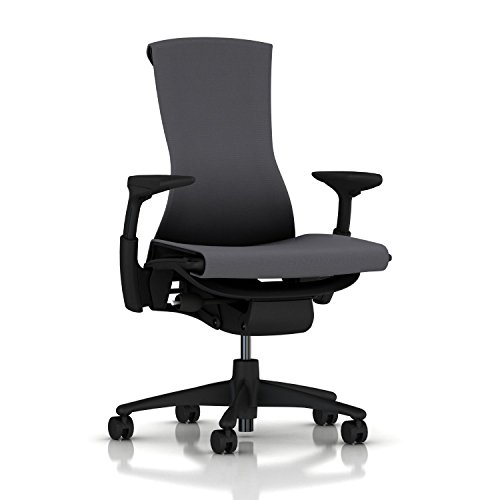
Herman Miller Embody Ergonomic Office Chair — Best Money-No-Object Ergonomics
Verified pick: the confirmed listing is the Embody ergonomic office chair in Charcoal Rhythm — the same Embody platform, in its office listing rather than the Logitech G gaming edition originally described, and the review is written to that listing.
The Embody approaches extended play from office ergonomics rather than racing heritage: a pixelated support surface that distributes pressure across the seat and back, and a spine-following backrest. There are no bolsters and no bucket — you sit on it, not in it — and for players who shift posture constantly, that freedom is the comfort.
It is included for a specific reader: the person who works all day and plays all evening in the same chair, for whom the flagship tier is a rational cost-per-hour calculation rather than an indulgence. A purchase this size deserves a verified link — which is what the listing-confirmed Charcoal Rhythm listing below is — never a guess from us.
If you buy at this level, buy it as furniture: expect a decade-scale service life, keep the receipt, and use the long warranty culture that comes with the brand. The adjustment learning curve is real — give it two weeks before judging.
The Embody’s deepest difference is what it does not do: it does not hold you. Racing-derived chairs position the body; the Embody supports movement, with a back that flexes as you shift and a seat that distributes pressure as you re-settle. Restless players — the ones who sit cross-legged, lean, perch and sprawl across a session — often find every bucket chair eventually fights them, and this design is the answer built for exactly that temperament. Judge it by your movement style, not by its silhouette.
The Embody’s final argument is environmental in the plainest sense: one chair for a decade replaces three chairs in a landfill cycle, and its maker’s parts-and-service culture is built for that horizon. For the reader who buys once and buys properly — the temperament this guide keeps meeting — the flagship slot is not extravagance. It is the same philosophy as the durable slippers and the woven rugs elsewhere in this programme, applied to the object you sit in most.
Strengths
- Pressure-distributing ergonomic support
- Freedom of posture, no bucket bolsters
- Decade-scale build and warranty culture
Trade-offs
- Office listing: no gaming-edition trim or branding
- Flagship tier, several times premium gaming chairs
- Adjustment takes time to learn
Key specs (from the verified listing): Embody ergonomic chair; fully adjustable arms; carpet casters; Charcoal Rhythm finish.
Best for: work-all-day, play-all-evening single-chair setups / Not suited for: budget buyers or racing-style fans
Check on Amazon — check the current price on Amazon.
Comparison Table
| Pick | Badge | Key spec | Best for |
|---|---|---|---|
| Secretlab Titan Evo XL Gaming Chair (Leatherette) | Best Overall — listing-verified | Integrated lumbar + 4D arms, XL | long daily sessions, bigger and taller players |
| Razer Iskur V2 X Ergonomic Gaming Chair | Best Lumbar System | Built-in lumbar support, wide seat, 152-degree recline | players whose long sessions end in lower-back ache |
| AndaSeat Kaiser 3 Gaming Chair, XL Fabric | Best Big-Frame Alternative | XL size, fabric, neck and lumbar support | bigger players who prefer plush to firm |
| DXRacer Formula Gaming Chair | Best Classic Racing Style | Classic bucket format, memory foam headrest, firm | smaller and medium players who play upright |
| GTPLAYER Gaming Chair with Footrest | Best Budget | Footrest + lumbar support, budget build | first setups and controller-heavy play on a budget |
| Herman Miller Embody Ergonomic Office Chair | Best Money-No-Object Ergonomics | Ergonomic pixel support design, fully adjustable arms | work-all-day, play-all-evening single-chair setups |
How to Choose a Gaming Chair for Extended Play: Fit Before Features
Measure three things before reading any product page: your height, your weight, and your thigh length. Chair makers publish size bands for a reason. Your feet should rest flat with knees near a right angle, the seat depth should leave a small gap behind your knees, and the lumbar support should land in the curve of your lower back — not at your shoulder blades or your belt line. A chair outside your band fails all three no matter how premium it is.
Then match the chair to your play posture. Upright desk players — mouse and keyboard, competitive titles — need strong lumbar support and armrests that adjust in height and width to keep shoulders down. Reclined players — controller, handheld, racing rigs — need a backrest that reclines far and locks at angles, plus a headrest that meets a leaned-back head. Many players do both across a week; for them, recline range plus real lumbar support is the combination to pay for.
Finally, be honest about session length. Two hours twice a week forgives almost any chair. Five hours daily forgives nothing: foam density, lumbar design and armrest adjustability stop being features and become the product. Buy for your real calendar, not your aspirational one.
Foam, Upholstery and the Third-Hour Test
Seat foam is where extended comfort is won or lost, and it works counter-intuitively: the plushest chair in the first minute is often the worst in the third hour, because soft foam compresses fully and leaves you sitting on the base. Dense, cold-cure moulded foam feels firmer at first and supports evenly for years. If a listing does not mention foam type or density at all, assume the cheapest answer.
Upholstery decides heat. Leatherette and PU look sharp, wipe clean and warm up steadily through a long session — manageable in cool rooms, punishing in hot ones. Fabric breathes, stays neutral against skin and shows wear differently, ageing softer rather than cracking. Mesh-backed ergonomic designs breathe best of all but change the whole feel of the chair. Match the material to your room’s real temperature in the season you play most.
Armrests deserve more respect than they get. Fixed armrests fit almost nobody: too high and your shoulders shrug for hours, too low and they are decoration. Height-adjustable is the minimum for extended play; the four-direction adjustability on premium chairs exists because mouse arms, controller arms and handheld arms all rest in different places.
Lumbar Support: Built-In, Cushion, or Marketing
Three tiers of lumbar support exist and they are not equal. Strap-on cushions are the weakest: they slide, they push you forward in the seat, and they fit the chair’s curve rather than yours — though a well-placed memory-foam cushion is still better than nothing. Built-in fixed support is better, shaped into the backrest where it cannot migrate. Adjustable built-in systems — the premium tier — let you set depth and sometimes height, which is the only design that fits the actual variety of human spines.
Your test, whatever the tier: after setup, you should feel gentle pressure filling the curve above your belt, and it should still be there, unmoved, when you stand up three hours later. If you find yourself re-positioning a cushion mid-session, the support has already failed at its one job.
A note on headrests and pillows: for upright play they matter little; for reclined play they matter a lot. Magnetic and anchored designs stay put; strap designs rotate and slide. If your sessions include leaning back with a controller, weight this detail higher than its price suggests.
Your Desk, Monitor and Room: The System Around the Chair
The best chair cannot rescue a bad setup around it. Desk height decides whether your perfectly adjusted armrests can do their job: your elbows should meet the desk surface without shoulder lift, which for many players means the desk, not the chair, is the thing that is wrong. If your desk is fixed and too high, a footrest restores the geometry by raising your feet to match — a cheap fix that rescues expensive chairs.
Room temperature is the other silent variable. Leatherette chairs in a hot room will feel punishing by hour three regardless of their ergonomics; fabric and mesh forgive heat. If your gaming space runs warm — small room, big PC, afternoon sun — weight upholstery breathability in your choice as heavily as lumbar design, because heat discomfort is the session-ender players most often misattribute to the chair itself.
Gaming Chair Comfort Myths, Debunked
Myth one: more padding means more comfort. Padding is a material, not a strategy — the strategy is pressure distribution, which dense shaped foam achieves and thick soft foam defeats by collapsing. Myth two: a chair should feel perfect in the showroom. Showrooms test thirty seconds; your sessions test five hours, and the chairs that win those two tests are often opposites. Any retailer with a real returns policy is worth more than any showroom sit.
Myth three: lumbar pillows included in the box mean lumbar support is handled. A pillow on straps is a starting suggestion, not a system; the built-in and adjustable designs in this guide exist because the industry knows it. Myth four: gaming chairs are for teenagers. The average long-session player is an adult with an adult spine and an adult budget, and the premium end of this category is now engineered — and priced — for exactly that reader.
Myth five, the expensive one: your back pain is a chair problem. Sometimes it is a desk-height problem, a monitor-position problem or a no-breaks problem wearing a chair costume. Work through the setup section before spending flagship money, because a correctly set mid-tier chair outperforms a badly set flagship every single session.
How to Set Up a Gaming Chair for Long Sessions
A great chair set up badly is an average chair. This fifteen-minute setup, done once and checked monthly, is worth more than the next tier up bought carelessly.
- Set seat height first: feet flat on the floor, knees at roughly ninety degrees, thighs parallel. If your feet dangle, everything downstream — lumbar position, arm height, eye line — is wrong.
- Set seat depth if your chair allows it: a gap of two to three fingers between the seat edge and the back of your knees. Pressure behind the knee is the hidden cause of ‘numb legs’ in long sessions.
- Position the lumbar support into the curve of your lower back, then sit for five minutes and adjust depth until the pressure feels like a filled gap, not a push.
- Bring armrests to your arms, not the reverse: elbows resting with shoulders fully relaxed and dropped. Set width so your arms hang vertically, then match height separately for your mouse side if you play at a desk.
- Set recline tension so the backrest supports a lean without either collapsing or requiring effort to hold. Lock angles for upright titles; leave float for mixed sessions.
- Align the screen last: top of the display near eye level at your set posture, at arm’s length or a little more. Chair setup and screen setup are one system.
Then adopt the one habit no chair can replace: stand up between matches or every hour. Extended-play comfort is a partnership between furniture and movement, and the best chair in this guide still expects you to move sometimes.
Revisit your setup after any change around the chair — a new desk, a monitor arm, even a thicker rug under the castors changes heights and angles enough to matter. The five-minute re-run of the setup steps after any room change is what separates players whose chairs feel perfect for years from players who conclude, wrongly, that the chair has ‘gone off’.
After a month of use, re-torque the chair’s main bolts as the manual directs — new chairs settle, fasteners relax a fraction, and the creak that owners blame on build quality is usually a five-minute maintenance task deferred into a permanent soundtrack.
Common Buying Mistakes
Buying your size by habit, not by chart
Gaming chair size bands differ wildly between brands. An XL from one maker is an L from another. Ordering your usual label without checking the chart is the most common and most expensive mistake in this category.
Choosing the chair by its photo silhouette
Racing styling photographs brilliantly and says nothing about foam, lumbar design or fit. Read the support specification; look at the chair’s shape last, not first.
Ignoring foam because it is not listed
If a maker will not describe the seat foam, the foam is the cheap kind. For extended play, unlisted foam is a decision the seller has made for you — the wrong one.
Setting the chair once, on day one, forever
Foam settles, bodies change, games change posture. Re-run the setup steps monthly and after any desk or monitor change. Five minutes, four times a year, keeps a good chair good.
Spending on the chair and nothing on breaks
No chair makes six motionless hours healthy. Players who blame the chair are often describing a breaks problem. Set a timer; the chair will feel twice as good.
Judging a chair by its weight limit alone
A high weight rating says the frame will not fail; it says nothing about whether the seat width, depth and lumbar position fit your body. Chairs fail their owners by fit far more often than by fracture. Read the dimensions, not just the capacity.
Final Recommendation
If you want the buy-it-now answer, it is the Secretlab Titan Evo XL: listing-confirmed, properly engineered for long sessions, and sized honestly for bigger players. The verified alternatives map by need — the Razer Iskur V2 X for lumbar-led comfort, the AndaSeat Kaiser 3 for plush big-frame support, the DXRacer Formula for classic upright racing feel, the GTPLAYER for a first budget setup with a footrest, and the Herman Miller Embody for the work-and-play flagship route. Every one of them passed the same API verification the Secretlab passed, in this guide’s final pass.
Whatever you choose, run the fifteen-minute setup before your first long session. Fit and setup decide more of your comfort than the badge on the headrest. Related guides are linked below.
Players in shared homes, hear this last word: the chair you choose will be sat in by everyone — partners, children, guests, cats with seniority. Buy the chair whose adjustments can be re-found quickly, whose upholstery forgives the household, and whose comfort story survives a second sitter. The best extended-play chair is the one still adjusted for you when your session starts.
Best Chairs For Gamers That Are Comfy For Extended Play Best Gaming Chairs Best Chairs For Back Pain Tall Men Best Comfy Blankets Best Cool Pillows For Hot Sleepers
Related guides
Frequently Asked Questions
How long should a gaming chair stay comfortable?
A properly fitted chair with dense foam should support three to five hour sessions without pain, provided you take short breaks. Discomfort in the first hour usually means setup or size is wrong, not that the chair is bad.
Are gaming chairs better than office chairs for long play?
Neither category wins automatically. Premium gaming chairs and premium ergonomic office chairs converge on the same features: adjustable lumbar, dense foam, adjustable arms. Buy the feature set and the fit, not the label.
Is a firmer chair really better for long sessions?
Usually, yes. Firm, dense foam distributes weight and holds its shape; very soft foam compresses to the base and concentrates pressure. The exception is players who strongly prefer plush — for them a plush chair over a supportive frame, like the Kaiser slot, is the compromise.
What size gaming chair do I need?
Use the maker’s chart with your real height and weight, and check seat depth against your thigh length. Between sizes, extended-play comfort usually favours the larger band for room to shift posture.
Do I need 4D armrests?
For mixed play — desk titles and controller sessions in the same chair — they genuinely help, because each style rests your arms differently. For a single fixed posture, height-adjustable arms cover most of the benefit.
How were the picks in this guide verified?
Every pick was confirmed in this guide’s final verification pass, and only listing-confirmed listings carry links. Two slots are filled by the closest confirmed listing rather than the model first described — the Razer Iskur V2 X instead of the flagship V2, and a GTPLAYER chair in the budget slot — and each review says so plainly rather than sending you to a guessed listing.
How long do gaming chairs last with daily long sessions?
Premium chairs with moulded foam serve five years or more of daily use; budget chairs typically give two good years before foam thinning changes the feel. Upholstery care and staying within the chair’s weight band are the biggest lifespan variables you control.
Should I buy a footrest or a chair with one built in?
If you play reclined with a controller, a built-in footrest like the budget slot’s is used nightly and worth having. Desk-upright players rarely deploy one and are better served by a separate under-desk footrest only if their desk height forces the geometry.
Are gaming chairs worth it for console players?
Yes, if your console setup involves long seated sessions — the ergonomics are identical whether the screen shows a PC or a console game. Recline range and headrest position matter more for couch-distance play, so weight those higher than desk-specific features.
How do I know if a chair will fit under my desk?
Compare the chair’s armrest height at its lowest setting and the seat’s width between arms against your desk’s underside height and your legroom. Adjustable arms that drop low solve most conflicts; fixed arms are where the collisions live.


