Disclosure: airfryerkitchensupply.com is reader-supported. When you buy through links on our site, we may earn an affiliate commission at no extra cost to you.
Where to buy
Every pick in this guide was confirmed against Amazon’s own catalog data before it earned a link, and each one is sold through Amazon with the usual delivery and returns options. Start with the WINIX 5510 if you want one machine that handles a main living space, the Coway Airmega 400 for a genuinely large room, or the LEVOIT Core 300S-P if the purifier has to live in a bedroom. Check the current price on Amazon for the model you are considering, because filter bundles and seasonal promotions change what the same machine costs from week to week.
Introduction
Shopping for the best home air purifiers for smoke is different from shopping for a dust or pollen machine, and most buying guides blur that distinction. Smoke is two problems at once. The visible part is a cloud of very fine particles, small enough to drift from room to room and settle into upholstery. The invisible part is a mix of gases that carry the smell — the stale, lingering odor that clings to curtains and cushions long after the air looks clear. A basic particle filter handles the first problem well. Only a meaningful bed of activated carbon handles the second, and the amount of carbon in a purifier varies enormously, from a thin carbon-dusted sheet that gives up within weeks to deep, heavy carbon filters built specifically for odor-heavy air.
That is why this guide ranks smoke purifiers by carbon capacity and verified clean-air delivery for smoke-sized particles, not by headline room size alone. Whether your smoke problem is wildfire season drifting in from outside, a household member who smokes, a wood stove or fireplace that back-puffs on windy nights, or a kitchen that regularly produces seared, smoky cooking air, the right machine is the one with enough carbon to keep odors from saturating and enough airflow to turn over the room’s air several times an hour. We also want to be straightforward about scope: this guide is about comfort and everyday air quality — fresher-smelling rooms, less visible haze, less fine dust settling on surfaces. An air purifier is a household appliance, not a medical device, and nothing in this guide should be read as a health claim. What a good smoke purifier genuinely delivers is a home that smells clean again and stays that way, and that is a worthwhile, measurable thing.
Below you will find six machines that take smoke seriously, a plain explanation of how we chose them, a comparison table, a buying guide that explains CADR, carbon weight, and placement in practical terms, a setup and maintenance walkthrough, the mistakes that waste the most money in this category, and answers to the questions smoke-focused buyers ask most.
In this guide
Quick Picks
- Best Overall: WINIX 5510 — True HEPA filtration paired with a high-deodorization carbon filter and app support, sized for large rooms. It is the most balanced smoke package in this guide. Check the current price on Amazon.
- Best for Large Rooms: Coway Airmega 400 — A big, confident machine with a washable pre-filter, HEPA filtration, and coverage rated for very large spaces. Check the current price on Amazon.
- Best Smart Features: BLUEAIR Blue 211i Max — WiFi, auto mode, and HEPASilent filtration for large rooms up to 3,235 square feet, in a design that does not look like lab equipment. Check the current price on Amazon.
- Best for Bedrooms: LEVOIT Core 300S-P — AHAM Verifide, a quiet sleep mode, smart WiFi control, and a footprint that fits a nightstand-side corner. Check the current price on Amazon.
- Best Compact: WINIX A230 — True HEPA plus a carbon filter and auto mode in a tower that suits bedrooms and home offices up to 1,110 square feet. Check the current price on Amazon.
- Best Proven Design: Coway Mighty AP-1512HH — A long-running, widely owned design with an air quality monitor, auto and eco modes, and a filter indicator that takes the guesswork out of maintenance. Check the current price on Amazon.
How These Picks Were Chosen
We started with the smoke itself. Fine smoke particles sit in the size range where true HEPA media performs well, so every pick here uses either true HEPA filtration or, in the Blueair’s case, a HEPASilent system that combines electrostatic and mechanical filtration. Machines with vague “HEPA-type” or “HEPA-style” filters were cut, because that wording usually signals a filter that has not been tested to the HEPA standard.
Next we weighted activated carbon heavily. Odor is the complaint that lingers after the haze clears, and odor control lives or dies on carbon quantity and quality. The WINIX 5510’s high-deodorization carbon filter and the Coway models’ dedicated deodorization filtration earned their places for exactly this reason. We also looked for published, third-party-verifiable performance: AHAM Verifide ratings where available, manufacturer-stated coverage tested at meaningful air-change rates, and air quality sensors that let the machine respond to a smoke event automatically rather than running blind. Finally, every product was cross-checked against Amazon’s catalog data before receiving a link, so the model names and listings in this guide are the ones you will actually find when you click through. Running costs and filter availability mattered too — a smoke purifier with hard-to-find replacement filters becomes an expensive ornament within a year.
We also screened for the ownership details that lab numbers hide. Fan noise at the lowest setting determined whether a model could honestly be recommended for a bedroom, because a purifier that gets switched off at night delivers nothing. Display lights that can be dimmed or extinguished, handles or wheels on the larger machines, and the physical size of the unit against typical room corners all counted. And we excluded entire categories on principle: ozone generators, which add a pollutant to solve a pollution problem, and novelty desktop units whose CADR is too small to change the air in a real room, however appealing their price or styling. What survived that screening is the six machines above — different in size, approach, and budget tier, but each genuinely engineered for the particle-plus-odor reality of smoke rather than adapted from a dust-only design with a smoke keyword added to the box.
The 6 Best Home Air Purifiers for Smoke

WINIX 5510 — Best Overall
The WINIX 5510 is the current generation of a design lineage that has been popular with smoke-conscious buyers for years, and this version adds app support to an already strong formula. It is built for large rooms — rated for up to 1,881 square feet in one hour — and pairs a true HEPA filter with what Winix calls a high-deodorization carbon filter, which is the detail that matters most for smoke. Where thin carbon sheets surrender to tobacco or wood-smoke odor quickly, a deeper deodorizing filter keeps working through a long wildfire season or a winter of nightly fires in the stove.
Strengths
- True HEPA filtration combined with a high-deodorization carbon filter — the right pairing for both smoke particles and smoke smell.
- Auto mode reacts to changing air conditions, so a sudden smoke event gets a response without you touching a control.
- App support on this generation makes it easy to check status and adjust settings from another room.
Trade-offs
- It is a full-size floor unit; small apartments need to plan a permanent spot for it.
- Replacement filter sets are a real ongoing cost, as with every machine in this class.
- On its highest setting it is audible, like every purifier moving this much air — plan to run turbo when you are out and auto when you are in.
In daily use, the 5510 is the machine we would put in the room where the smoke problem actually lives: the living room with the fireplace, the den where someone smokes, the open-plan space that catches kitchen smoke. Its sensor-driven auto mode is the feature owners end up valuing most, because smoke is episodic — a purifier that idles quietly and then ramps up on its own matches how smoke actually behaves in a home. The washable pre-filter catches the coarse dust and hair that would otherwise shorten the life of the expensive filters behind it, which keeps running costs sane. Check the current price on Amazon if you want the single most balanced smoke purifier in this guide.
Best for: most households with a persistent smoke or odor problem in a main living space / Not suited for: tiny bedrooms where a compact tower fits better
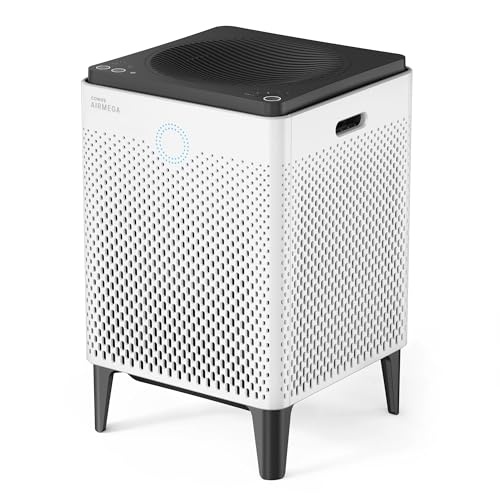
Coway Airmega 400 — Best for Large Rooms
Some smoke problems are simply big: a great room with vaulted ceilings, a finished basement with a wood stove, a workshop-adjacent living space. The Coway Airmega 400 is built for that scale, with coverage rated up to 3,120 square feet and a filtration stack that combines a washable pre-filter with HEPA filtration and dedicated odor control. Its air quality indicator, auto and sleep modes, and timer make it easy to live with despite its size.
Strengths
- Coverage for very large spaces, so one machine can serve an open-plan floor instead of two smaller ones competing.
- Washable pre-filter reduces how fast the main filters load up with household dust.
- A long warranty period for the category, which signals confidence in the hardware.
Trade-offs
- It is one of the largest and heaviest designs here — measure your intended spot before ordering.
- The premium positioning means premium replacement filter pricing as well.
- Its styling is appliance-like; it will not disappear into a carefully decorated room.
The honest way to think about the Airmega 400 is as infrastructure. If wildfire smoke settles over your region for weeks each year, or a stove heats your main space all winter, undersizing the purifier is the classic false economy: a small machine on turbo all day cleans less air, makes more noise, and eats filters faster than a big machine cruising on a medium setting. The 400’s eco and auto modes keep it from wasting energy when the air is already clean. For genuinely large rooms, this is the pick. Check the current price on Amazon.
Best for: large open-plan homes, stove-heated spaces, and serious seasonal wildfire smoke / Not suited for: small apartments or anyone who moves the purifier between rooms daily

BLUEAIR Blue 211i Max — Best Smart Features
Blueair takes a different filtration route with its HEPASilent technology, which combines electrostatic charging with mechanical filtration to move a lot of air at notably low noise levels. The Blue 211i Max is rated for large rooms up to 3,235 square feet, adds WiFi and auto mode, and runs as quietly as 23 decibels on its lowest setting — figures that come from the manufacturer’s verified listing data. For smoke, the practical benefit is a machine you can leave running in a living room or bedroom without it intruding on conversation or sleep.
Strengths
- Very quiet operation for its coverage class, which makes round-the-clock use realistic.
- WiFi and auto mode with a washable pre-filter, so day-to-day operation is close to set-and-forget.
- Clean, fabric-forward Scandinavian styling that suits living spaces better than most purifiers.
Trade-offs
- HEPASilent is a proprietary approach; buyers who specifically want a traditional true HEPA element should look at the Winix or Coway picks.
- Carbon capacity for heavy, continuous tobacco smoke is not its headline strength — it excels at mixed household air, episodic smoke, and odor maintenance.
- Replacement filters are brand-specific, so factor the genuine filter cost into ownership.
Where the 211i Max shines is the home where smoke is a recurring visitor rather than a permanent resident: wildfire weeks, a neighbor’s fire pit, holiday cooking marathons, the occasional cigar on the porch drifting in. Its sensor and auto mode handle those episodes, and the rest of the time it quietly keeps the room’s air feeling fresh. If your household is sensitive to appliance noise — light sleepers, open-plan living, a home office on calls all day — this balance of coverage and calm is hard to beat. Check the current price on Amazon.
Best for: noise-sensitive homes with large rooms and episodic smoke / Not suited for: heavy continuous indoor smoking, where maximum carbon capacity should be the priority
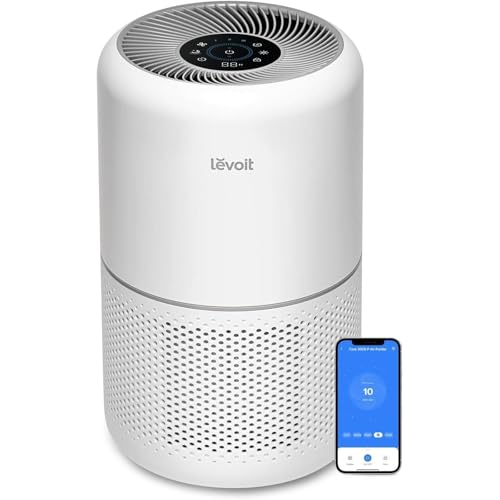
LEVOIT Core 300S-P — Best for Bedrooms
The bedroom is where smoke does its quiet damage to comfort: you spend a third of your life there, soft furnishings hold odor, and a purifier has to be quiet enough to sleep beside. The LEVOIT Core 300S-P is AHAM Verifide, offers a dedicated HEPA sleep mode rated as low as 24 decibels, and adds smart WiFi and Alexa control in a compact cylinder that fits where floor space is tight. Its coverage suits bedrooms and medium rooms, and the 3-in-1 filter format keeps replacement simple.
Strengths
- Sleep mode is genuinely quiet, with the display able to go dark — the two features bedroom use actually depends on.
- AHAM Verifide performance gives its room ratings third-party credibility.
- Smart control means you can run it hard before bed and drop it to sleep mode without getting up.
Trade-offs
- Its carbon stage is sized for bedroom-scale odor control, not a whole home’s tobacco smoke load.
- Coverage is for one room; open-plan spaces need a larger pick from this list.
- The cylindrical design draws air around its base, so it needs a little clearance on all sides.
Used as intended — door closed, machine running through the evening and night — the Core 300S-P makes a bedroom feel noticeably fresher by morning, particularly during wildfire season when outdoor smoke seeps in around windows. It is also the most approachable pick here for a first-time purifier owner: setup is minutes, the app is straightforward, and replacement filters are widely stocked. Check the current price on Amazon if the bedroom is your priority room.
Best for: bedrooms, nurseries used as guest rooms, and first-time purifier owners / Not suited for: whole-floor smoke control
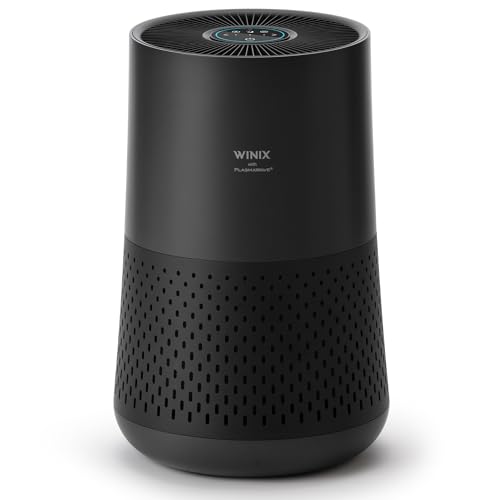
WINIX A230 — Best Compact
The WINIX A230 takes the same filtration philosophy as its bigger sibling — true HEPA, a carbon filter for odor, an air quality monitor, and auto mode — and packages it in a slim tower rated for rooms up to 1,110 square feet. That makes it the natural answer for a home office that catches kitchen smoke, a smaller apartment living room, or a bedroom in a smoking household where the main machine lives elsewhere.
Strengths
- True HEPA plus carbon in a footprint that fits corners and narrow gaps.
- Air quality monitor with auto mode, so it responds to a smoke drift on its own.
- Part of a mature product family with readily available replacement filters.
Trade-offs
- Smaller filters mean more frequent changes under heavy smoke loads than the 5510.
- Not the right tool as the sole purifier for a large, smoky open-plan space.
- Tower styling is functional rather than decorative.
Think of the A230 as the second purifier in a two-machine strategy, or the only purifier in a modest home. In a smoking household, pairing an A230 in the bedroom with a 5510 in the living room covers the two rooms that matter most, each sized appropriately, rather than one oversized machine trying to push air through walls and doorways — which purifiers cannot do. On its own in a studio or one-bedroom flat, it is entirely adequate. Check the current price on Amazon.
Best for: apartments, home offices, and as the bedroom half of a two-purifier setup / Not suited for: large great rooms as the only machine

Coway Mighty AP-1512HH — Best Proven Design
The Coway Mighty has been a default recommendation in this category for years, and longevity like that is itself evidence: filters stay available, the design’s quirks are well understood, and the machine keeps selling because it keeps working. It covers rooms up to 1,748 square feet, combines HEPA filtration with odor control, and includes an air quality monitor, auto and eco modes, a timer, and a filter indicator.
Strengths
- A mature, widely owned design with a long track record and easy filter availability.
- Eco mode shuts the fan down when the air stays clean, saving energy and filter life.
- Filter indicator removes the guesswork from maintenance timing.
Trade-offs
- No app or WiFi control — everything happens on the unit itself.
- The design has been around a long time and looks it next to newer models.
- Like all picks here, heavy smoke loads shorten the odor filter’s effective life.
The Mighty is the pick for buyers who distrust novelty. Its pollution sensor visibly reacts when cooking smoke or a back-drafting fireplace loads the air, the fan ramps up, and then eco mode settles it back down when the episode passes. If you want a purifier that simply does its job for years with minimal fuss and no account sign-ups, this is the one. Check the current price on Amazon.
Best for: buyers who value a proven design and simple, on-unit controls / Not suited for: anyone who wants app control and smart-home integration
Particles vs Gases: The Two Halves of Every Smoke Problem
It is worth slowing down on the physics, because it explains nearly every disappointment people have with purifiers bought for smoke. When something burns — tobacco, wood, cooking oil, incense — it releases a mixture. Part of that mixture is particulate: solid and liquid droplets spanning a wide size range, with the most persistent fraction well under a micron across. These are the particles that stay suspended for hours, drift through doorways, and give smoky air its haze. Mechanical filtration is extremely good at capturing them. A true HEPA element traps particles across this range with high efficiency, and electrostatic-mechanical hybrids like Blueair’s HEPASilent approach the same job with lower air resistance, which is why those machines run so quietly.
The other part of the mixture is gaseous: volatile organic compounds and other odor-bearing molecules that are far too small for any fibrous filter to strain out. They pass straight through a HEPA element as if it were not there. The only practical household technology for them is adsorption onto activated carbon, whose internal surface area is enormous and whose pores trap odor molecules on contact. Two consequences follow. First, a purifier can be superb at clearing visible smoke and nearly useless against smell, if its carbon stage is token. Second, carbon is consumable in a way HEPA media is not: once its pores fill, odor removal stops, and under heavy load a saturated bed can even re-release what it captured. This is why this guide keeps returning to carbon capacity and filter replacement — for smoke, those are not fine print, they are the product.
A third, smaller factor is the pre-filter. Smoke rarely travels alone; it arrives with dust, ash, pet dander, and cooking grease aerosols that coat the front of a filter stack. A washable or vacuumable pre-filter, fitted on the Coway and Winix picks here, intercepts that coarse load and keeps the expensive HEPA and carbon stages working on the fine fraction they were designed for. In a smoky home, pre-filter maintenance is the cheapest performance you can buy.
Matching a Purifier to Your Smoke Source
Wildfire smoke is a whole-home, whole-season problem with moderate odor and relentless fine particles. Prioritize CADR and continuous operation: a larger machine like the Airmega 400 or Blue 211i Max in the main space, a quiet unit in the bedroom, windows sealed, and filters inspected after the season ends. Because the source is outdoors, your purifiers are defending a perimeter — every open window resets their work.
Tobacco smoke in the home is the opposite profile: concentrated, daily, and odor-dominant. Carbon capacity decides success. The WINIX 5510’s deodorizing filter is the strongest fit in this guide, placed in the room where smoking occurs, with a second compact unit for the bedroom. Set expectations honestly, too: a purifier greatly reduces lingering odor and clears each episode faster, but upholstery and walls in a long-term smoking room hold their own reservoir of smell that no appliance fully erases.
Fireplace and wood-stove smoke arrives in puffs — when the door opens, when a downdraft hits, when a new log catches. Sensor-driven auto mode earns its keep here, because the machine idles most of the day and surges exactly when a puff escapes. The Coway Mighty’s visible air-quality feedback is satisfying in this role, and placement in the stove room, away from the direct heat and draft, works best.
Cooking smoke — searing, wok cooking, a broiler that smokes out the kitchen — is episodic and grease-laden. Your range hood is the first line of defense; the purifier is the second, catching what escapes into the living space. Protect its pre-filter, because grease aerosols load it quickly, and expect the carbon stage to work on the lingering fried-food smell that otherwise greets you the next morning.
Incense, candles, and occasional cigar or pipe smoke are light-duty versions of the same physics. Any pick in this guide handles them comfortably; the compact A230 or the Core 300S-P is usually sufficient, and the main discipline is simply leaving the machine running for an hour after the source is done rather than switching it off with the candle.
Comparison Table
| Pick | Badge | Key spec | Best for |
|---|---|---|---|
| WINIX 5510 | Best Overall | True HEPA + high-deodorization carbon, up to 1,881 sq ft/hr | Main living spaces with persistent smoke |
| Coway Airmega 400 | Best for Large Rooms | Washable pre-filter + HEPA, up to 3,120 sq ft | Great rooms and stove-heated spaces |
| BLUEAIR Blue 211i Max | Best Smart Features | HEPASilent, WiFi, up to 3,235 sq ft, from 23 dB | Noise-sensitive large rooms |
| LEVOIT Core 300S-P | Best for Bedrooms | AHAM Verifide, HEPA sleep mode at 24 dB, WiFi | Bedrooms and quiet overnight use |
| WINIX A230 | Best Compact | True HEPA + carbon tower, up to 1,110 sq ft | Apartments and home offices |
| Coway Mighty AP-1512HH | Best Proven Design | HEPA + odor filter, up to 1,748 sq ft, eco mode | Simple, long-term, no-app ownership |
How to Choose a Home Air Purifier for Smoke
Start with CADR, and specifically smoke CADR. Clean Air Delivery Rate is measured separately for tobacco smoke, dust, and pollen, because particle sizes differ. Smoke CADR is the conservative number — the one based on the finest particles — so it is the figure to compare when smoke is your problem. A useful rule of thumb from AHAM is to choose a smoke CADR at least two-thirds of your room’s square footage for a standard ceiling height, which gives you roughly two air changes per hour; for active smoke problems, sizing up toward a full match or beyond buys you four to five air changes and visibly faster clearing after a smoke event.
Then weigh the carbon, literally. Odor removal depends on how much activated carbon the air passes through and how slowly. Thin carbon-impregnated pads are fine for a whiff of cooking smell and little else. Pelletized or deep-bed carbon filters, and filters explicitly marketed for deodorization like the one in the WINIX 5510, keep adsorbing odor compounds far longer. If someone smokes indoors daily, carbon is your main battleground and should drive the decision more than any smart feature. If your smoke is seasonal wildfire smoke, particle filtration and CADR matter relatively more, because wildfire odor outdoors is less concentrated than a room where cigarettes are smoked.
Match the machine to one room, not the whole house. Purifiers clean the air in the room they occupy; walls and closed doors defeat them. Budget honestly for the rooms that matter — usually the main living space and the primary bedroom — rather than buying one oversized unit and expecting it to serve a floor through doorways. Two right-sized machines, like a 5510 in the living room and an A230 or Core 300S-P in the bedroom, outperform one giant machine placed between them.
Check the sensor and auto mode. Smoke arrives in episodes. A purifier with a responsive air quality sensor and a trustworthy auto mode spends those episodes at high speed and the rest of the day idling quietly and cheaply. Every pick in this guide offers some version of this, and it is the feature that most improves real-world results, because a purifier left off or on its lowest setting for fear of noise cleans almost nothing.
Price the filters before the machine. In smoke service, plan on the carbon stage giving up first — odor breakthrough, where the smell returns while particle filtration still works, is the signal. Look at replacement filter cost and availability for any model you are considering, and treat a year of filters as part of the purchase price. Brand-name filters for all six picks here are widely stocked, which is one reason these models made the list.
How to Set Up and Maintain a Smoke Air Purifier
Setup begins with placement. Put the purifier in the room where smoke is generated or where it bothers you most, at least a foot from walls and furniture so intake and exhaust can breathe, and not tucked behind a sofa where its airflow short-circuits. For fireplace or stove smoke, place it in the same room but not directly in the draft path of the stove door; for wildfire smoke, the bedroom is often the highest-value placement because clean overnight air is what you notice most.
When you first unbox the machine, open it and remove the plastic wrapping from the internal filters — every manufacturer ships filters bagged, and running a purifier with the bag on is the single most common setup mistake in this category. Register the purchase, note the filter model number somewhere durable, and set a calendar reminder based on the machine’s indicator or the manufacturer’s interval, shortened if your smoke load is heavy.
Run the purifier continuously during smoke season rather than switching it on when the room already smells. Air cleaners work cumulatively: steady operation keeps particle levels low so episodes start from a clean baseline. Vacuum or wash the pre-filter monthly — in smoky homes it loads faster than the manual assumes — and vacuum the intake grilles at the same time. When the exhaust air starts carrying a stale note on startup, or the room’s odor lingers noticeably longer after an episode than it used to, the carbon stage is saturated; replace the filter set rather than pushing through, because a saturated carbon filter can begin releasing trapped odor back into the room. Finally, keep windows closed while the purifier works during outdoor smoke events; asking it to clean the entire outdoors through an open window is the fastest route to disappointment.
A Simple Maintenance Schedule for Smoke Service
Purifiers in smoke service age faster than the same machines in a dust-only home, so a schedule beats guesswork. Weekly, glance at the air quality indicator’s behavior — a machine that suddenly lives in its “poor air” state may be telling you its sensor lens needs a gentle wipe or its pre-filter is blinded. Monthly, vacuum the pre-filter and intake grilles; wash the pre-filter instead if the manufacturer allows it and it looks greasy, and let it dry fully before refitting. Every few months, open the unit and inspect the main filter: a HEPA element that has gone uniformly dark grey is still working, but a carbon stage whose exhaust smells stale on startup is finished regardless of the calendar. Keep one spare filter set in the house during smoke season if your region has one — the worst time to discover your model is back-ordered is the week the sky turns orange. And once a year, vacuum the sensor cavity and check that the machine still ramps up when you introduce a puff of smoke near it; a purifier that no longer reacts is a purifier running blind, and its auto mode — the feature doing most of the real work — depends on that sensor.
Common Buying Mistakes
Buying by room-size headline alone. A claim of coverage for a huge room often assumes a single air change per hour, which is far too slow for active smoke. Compare smoke CADR and the air-change assumption behind the number, not the biggest square footage on the box.
Ignoring carbon until the smell wins. Buyers fixate on HEPA — which handles particles — and discover a month later that the odor they actually hate is untouched because the carbon stage was a token sheet. Decide which half of the smoke problem bothers you more and buy accordingly.
Expecting one purifier to serve a whole home. It cannot push clean air through walls. Undersized coverage across many rooms delivers clean air in none of them.
Turning it off because of noise, then blaming the machine. If noise is your concern, buy a model whose low settings are genuinely quiet and whose auto mode you trust, and run turbo when the room is empty. A purifier’s best setting is the one that stays on.
Forgetting the filters in the budget. The purchase price is the smaller half of ownership in smoke service. Saturated filters left in place turn a good machine into a fan.
What Living With a Smoke Purifier Is Actually Like
Set realistic expectations and a good purifier will exceed them; expect magic and the same machine will disappoint you. In the first days, the change is mostly about episodes: the room clears visibly faster after cooking or a fireplace puff, and the morning-after smell that used to hang in the living room fades to a trace. Over the first weeks, the improvement becomes background — dusting reveals less fine grey film on shelves near the stove room, and guests stop noticing a smell that residents had stopped noticing too. That gradual quality is the real product. A purifier does not scrub walls, and in a home where smoking has happened indoors for years, fabrics and paint hold a deep reservoir of odor that air filtration can only dilute, not extract. Laundering curtains, wiping hard surfaces, and cleaning upholstery once — while the purifier holds the air clean afterward — produces a dramatically better result than the machine alone.
Noise becomes part of the household soundscape, which is why the quiet-at-low-speed designs in this guide matter. Most owners settle into a rhythm: auto mode all day, a deliberate turbo run while cooking or while the room is empty, and a low or sleep setting overnight. Electricity use on those low settings is modest — comparable to a small fan or a couple of LED bulbs on the efficient models — while turbo is hungrier but rarely runs for long. The habit that separates satisfied owners from frustrated ones is simply leaving the machine on. A purifier’s work is cumulative and invisible, and the homes that benefit most treat it like a refrigerator: always running, occasionally maintained, noticed only when it stops.
Final Recommendation
For most homes, buy the WINIX 5510: it pairs true HEPA with the strongest odor-focused carbon stage in this guide at a sensible size, and its auto mode handles smoke episodes without supervision. Scale up to the Coway Airmega 400 if your main space is genuinely large, choose the BLUEAIR Blue 211i Max if quiet matters as much as cleaning, and cover the bedroom with the LEVOIT Core 300S-P or the WINIX A230. If you simply want the design with the longest track record, the Coway Mighty remains easy to recommend. Whichever you choose, size it by smoke CADR, respect the carbon, keep the pre-filter clean, replace the filter set when odor starts lingering again, and let the machine run continuously through smoke season rather than only after the room already smells.
Related guides in this series: Best Home Air Purifiers For Allergies · Best Air Purifiers For Smokers · Best Air Purifiers For Pet Hair · Best Air Purifiers For Dust · Best Quiet Air Purifiers For Bedrooms
Frequently Asked Questions
Can an air purifier remove the smell of cigarette smoke from a room?
Yes, with the right filtration. The particles are handled by HEPA filtration, but the smell is carried by gases, and gases require activated carbon. A purifier with a substantial carbon filter — the WINIX 5510’s deodorizing filter is a good example — will steadily reduce lingering tobacco odor in the room it runs in. Soft furnishings that have absorbed years of smoke will still hold odor of their own; the purifier stops the air from re-depositing it and clears each new episode.
Will a purifier help during wildfire smoke season?
It is one of the most practical steps you can take indoors. Keep windows and doors closed, run the purifier continuously in the rooms you occupy most, and size it generously — during heavy smoke events, a higher CADR machine on a medium setting keeps up better than a small machine straining on turbo. Replace or check filters after a severe season, because a long smoke event loads them faster than normal use.
How long should I run a purifier after a smoke episode in the room?
Let auto mode decide if your machine has a sensor; otherwise, run the highest tolerable setting for at least an hour after the source stops, then drop to a medium or low continuous setting. Visible haze clears first; the odor compounds take longer, which is why the carbon stage benefits from the extra runtime.
Where is the best place to put a purifier in a smoking household?
In the room where smoking happens, positioned so air can circulate freely around it, and a second, smaller unit in the primary bedroom if budget allows. Purifiers do not clean through walls, so placement by room matters more than raw machine size.
How often do filters need replacing when the purifier is used for smoke?
Follow the machine’s indicator and the manufacturer’s interval as a baseline, but expect the carbon stage to exhaust sooner under daily smoke exposure. The practical test is odor: when smells start lingering noticeably longer after episodes, the carbon is saturated and the filter set is due, even if the HEPA element still looks clean.
Do air purifiers help with smoke that drifts in from a neighbor?
Yes — this is one of the most common real-world uses. Whether the source is a neighbor’s fire pit, a nearby smoker whose smoke crosses a shared balcony, or traffic and wood smoke on your street, the purifier treats the air inside your room the same way regardless of where the smoke began. Keep windows closed while the drift is happening, run the machine in the room that catches it, and let auto mode respond as conditions change. A compact model like the WINIX A230 is often enough for a single affected bedroom.
Should I choose an ozone-generating or ionizing purifier for smoke?
We deliberately left ozone generators and stand-alone ionizers off this list. Ozone is itself an air pollutant you do not want to add to a living space, and small ionizers tend to deposit particles onto nearby walls and furniture rather than truly removing them. The filtration approaches used by every pick here — HEPA, deep activated carbon, and the Blueair’s hybrid HEPASilent system — clean smoke without adding anything to the air, which is the safer and more predictable route for a home appliance that runs all day.
Is a bigger purifier always better for smoke?
Up to a point. Oversizing within the same room is genuinely useful — more CADR at lower, quieter fan speeds — which is why the Airmega 400 suits great rooms so well. But no size of purifier compensates for being in the wrong room, and an oversized machine in a small bedroom wastes money and floor space. Match the machine to the room, then buy the strongest carbon stage your budget allows for that room.

