Disclosure: airfryerkitchensupply.com is reader-supported. When you buy through links on our site, we may earn an affiliate commission at no extra cost to you.
Where to buy
Every pick in this guide to the best 6ft soaking bathtubs is sold through Amazon, so you can compare sizes, colors and current availability in one place. Use the links below to jump straight to a pick, or read the full reviews further down before you decide. Prices move around with sales and stock, so each link simply lets you check the current price on Amazon rather than us printing a number that could be out of date tomorrow.
- WOODBRIDGE 72″ Acrylic Freestanding Bathtub (B0059) — Best Overall: Check on Amazon
- Empava 71″ Freestanding Soaking Tub — Best Value: Check on Amazon
- Garvee 71″ Freestanding Acrylic Soaking Tub with Whirlpool & Air Massage — Best Jetted: Check on Amazon
- WOODBRIDGE 72″ Double Slipper Whirlpool & Air Heated Soaking Bathtub — Best Luxury Jetted: Check on Amazon
- Signature Hardware Lena 72″ Cast Iron Soaking Clawfoot Tub — Best Classic Clawfoot: Check on Amazon
- Kingston Brass Aqua Eden 72″ Cast Iron Double Slipper Pedestal Tub — Best Pedestal Design: Check on Amazon
Six feet is 72 inches, and that number is where the best 6ft soaking bathtubs separate from the marketing. The bath industry calls many things ‘large’ — 60-inch alcove tubs, 67-inch freestanding ovals — but a bather who is themselves six feet tall knows the truth in their knees: only a tub at or near a true 72 inches lets a tall body lie back with shoulders submerged and legs extended. Every pick in this guide is 71 or 72 inches, because for this search, length is not a feature. It is the assignment.
Within that honest length class, the real choices begin: modern acrylic or heirloom cast iron, still water or a full jetted spa system, a freestanding oval that suits a contemporary renovation or a double slipper on a pedestal that anchors a traditional one. Each pick below was verified against Amazon’s catalog data before earning a link, and each badge names its buyer — because at this size and commitment level, the right tub is the one that fits your floor, your plumbing and your bathing style, not the one with the longest feature list.
A practical promise before the picks: this guide treats installation as part of the product. A 72-inch tub concentrates weight, dictates faucet placement and will outlive most of the room around it. The buying guide and measuring sections below are not filler — they are where six-foot tub purchases succeed or fail.
Finally, a word about who this guide is not for: if your bathroom cannot fit 71 inches with clearance, the honest answer is a deep 67-inch tub rather than a cramped six-footer wedged wall to wall — and if your bathing is a five-minute functional shower-adjacent event, no tub in this guide will convert you. These are instruments for people who soak. For those people, sized and installed correctly, they are among the most satisfying objects a home can contain.
In this guide
Quick Picks
Short on time? These are the six best 6ft soaking bathtubs we would point a friend to first, each chosen for a different priority. The full reviews below explain the trade-offs behind every badge.
- WOODBRIDGE 72″ Acrylic Freestanding Bathtub (B0059) — Best Overall. The benchmark six-footer: a full 72 inches of contemporary acrylic soaking tub with chrome overflow and drain included — the length tall bathers actually need, in the shape modern bathrooms are built around. — Check on Amazon
- Empava 71″ Freestanding Soaking Tub — Best Value. Nearly the full six feet at a friendlier tier: a 71-inch acrylic soaking tub with center drain, integrated overflow, a non-slip flat bottom and cUPC certification. — Check on Amazon
- Garvee 71″ Freestanding Acrylic Soaking Tub with Whirlpool & Air Massage — Best Jetted. The spa conversion: a 71-inch soaking tub with whirlpool jets, air bubble massage, built-in heating and LED lighting — the six-foot soak, upgraded to a hydrotherapy session. — Check on Amazon
- WOODBRIDGE 72″ Double Slipper Whirlpool & Air Heated Soaking Bathtub — Best Luxury Jetted. The flagship spa: a full 72-inch double-slipper silhouette with 16 whirlpool and air jets, adjustable blower speed, heating, an LED control panel and chromotherapy light. — Check on Amazon
- Signature Hardware Lena 72″ Cast Iron Soaking Clawfoot Tub — Best Classic Clawfoot. The heirloom: 72 inches of cast iron under enamel, on claw feet, with a pre-drilled overflow — the Victorian silhouette at true six-foot length, built to outlive the house’s next three renovations. — Check on Amazon
- Kingston Brass Aqua Eden 72″ Cast Iron Double Slipper Pedestal Tub — Best Pedestal Design. Sculpture you can bathe in: a 72-inch cast iron double slipper raised on a pedestal base instead of feet, with 7-inch center faucet drillings — the statement tub for a grand bathroom. — Check on Amazon
How These Picks Were Chosen
Length came first and was non-negotiable: candidates under 71 inches were excluded regardless of quality, because a ‘6ft’ guide recommending a 67-inch tub would be a betrayal in the title itself. Within the class, we then verified interior soaking dimensions where listings provided them — exterior length flatters, but well depth and backrest angle decide whether the water covers your shoulders.
Materials were weighed honestly. Acrylic offers warmth to the touch, lower weight and easier installation; cast iron offers unmatched heat retention and generational durability at the cost of serious floor loading. Jetted models were required to include heating to qualify — an unheated whirlpool at this size is a novelty that cools its own bath. Every ASIN was cross-checked integration so dimensions, materials and features match the real listings.
Finally, we favored tubs whose ownership story is complete: drains and overflows included or clearly specified, certifications where they matter, and installation requirements a competent renovator can actually meet. Six tubs survived, spanning the realistic range of what a six-foot soak can be.
We should also name the tubs that did not survive and why, because at this size the exclusions teach as much as the picks: several handsome 72-inch designs were cut for publishing no interior dimensions at all, two jetted models lacked heating, and one much-photographed import had a drain position incompatible with standard North American rough-ins. A six-foot tub is too large to buy on photography, and this guide refused to.
The 6 Best 6ft Soaking Bathtubs

WOODBRIDGE 72″ Acrylic Freestanding Bathtub (B0059) — Best Overall
Most ‘large’ tubs are 67 inches wearing a confident adjective. The WOODBRIDGE B0059 is a genuine 72-inch tub — a true six feet — and that extra length is the entire point: a 6-foot bather can finally submerge shoulders and knees at the same time instead of choosing. The contemporary oval form, glossy white acrylic and included chrome overflow and drain make it the complete, no-asterisks version of the modern freestanding soak.
Strengths
- True 72-inch length — genuine six-foot soaking for tall bathers
- Acrylic construction keeps weight manageable for standard floors and two-person installation
- Overflow and drain included in chrome, so the headline purchase is the whole tub
Trade-offs
- Freestanding format needs a floor-mounted or wall-mounted filler — budget for the faucet separately
- Acrylic can scratch; it polishes out, but it asks for non-abrasive cleaning
- At 72 inches it will dominate a small bathroom; measure with the door swing in mind
| Length | 72 in |
| Material | Acrylic |
| Style | Freestanding, contemporary oval |
| Included | Chrome overflow and drain |
This is the tub we would specify for the classic brief — ‘a big modern soaking tub, no drama’. Acrylic at this size is the pragmatic material: warm to the touch, light enough to get up stairs and onto a standard joisted floor, and repairable in ways cast iron is not. The B0059’s lines suit the bathrooms most people are actually renovating, and its drain-and-overflow inclusion removes the classic freestanding gotcha of discovering the hardware is a second purchase. If your bathroom fits 72 inches and your taste runs modern, the search can reasonably end here.
Best for: tall bathers renovating a modern bathroom who want a true six-foot soak / Not suited for: small bathrooms, traditional styling, or anyone wanting jets
Check the current price on Amazon

Empava 71″ Freestanding Soaking Tub — Best Value
Empava’s 71-inch tub concedes a single inch to our top pick and saves a meaningful amount of money doing it. For bathers up to about six feet, that inch rarely matters in the water — the interior well is deep and the backrest angle is well judged — while the center drain layout suits more bathroom floor plans, and the cUPC certification reassures anyone whose renovation will meet an inspector.
Strengths
- 71 inches of soaking length at a distinctly friendlier tier than the flagship brands
- Center drain and integrated overflow simplify placement and plumbing
- Non-slip flat bottom and cUPC certification — practical details, properly done
Trade-offs
- One inch shorter and a touch less sculptural than the premium picks
- Glossy acrylic finish shows water spots in hard-water areas without a wipe-down habit
- Filler is a separate purchase, as with every freestanding tub here
| Length | 71 in |
| Material | Acrylic |
| Drain | Center drain, integrated overflow |
| Certification | cUPC |
Value picks earn their badge by cutting the right things. Empava cut brand premium and one inch of length, and kept depth, certification and a sensible drain position. In the water, most bathers will never identify the compromise; on the invoice, everyone will. If the renovation budget is being fought over by tiles, glass and brassware — as it always is — this is the tub that lets the bathroom win everywhere else while still delivering a genuine six-foot-class soak.
Best for: budget-aware renovations wanting near-six-foot soaking and certified plumbing / Not suited for: buyers over about 6’2″ who will feel the missing inch, or design-led statement bathrooms
Check the current price on Amazon
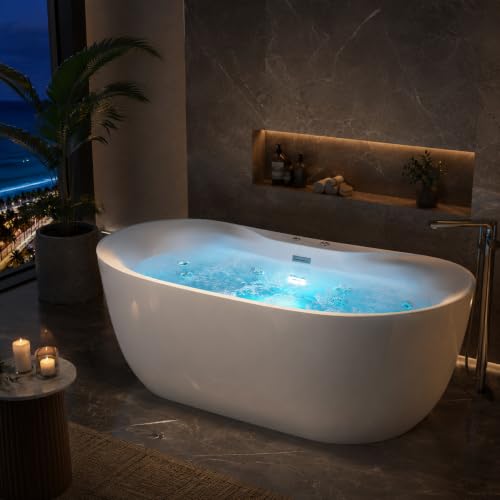
Garvee 71″ Freestanding Acrylic Soaking Tub with Whirlpool & Air Massage — Best Jetted
Some bathers want stillness; others want the water to work. The Garvee takes the 71-inch freestanding form and adds the full spa stack — whirlpool jets for directed pressure, air bubbles for the gentler all-over massage, a built-in heater so a long soak does not go tepid, and LED lighting for the full evening ritual. It is a lot of machinery in a tub, and for the right owner it replaces a hot tub conversation entirely.
Strengths
- Whirlpool plus air massage: two distinct hydrotherapy textures in one tub
- Built-in heating maintains soak temperature — the feature long bathers actually use
- 71-inch length keeps genuine six-foot-class room inside the spa format
Trade-offs
- Jetted tubs need power supply, access for servicing, and a jet-cleaning routine
- More components means more to maintain over a decade than a plain soaking tub
- The spa aesthetic and controls will not suit a minimalist bathroom design
| Length | 71 in |
| Material | Acrylic |
| Features | Whirlpool jets, air massage, heater, LED lighting |
Judge a jetted tub by its second year, not its first night: jets need periodic cleaning cycles, pumps need access panels planned at installation, and the heater is the difference between a twenty-minute novelty and an hour-long habit. The Garvee includes the heater — the detail cheaper jetted tubs omit and owners miss most. Choose it if your soak is an activity rather than a rest, and plan the installation like the appliance it is. Pure soaking purists should save the money and the maintenance with the still-water picks.
Best for: spa-at-home bathers who want jets, bubbles and heated long soaks / Not suited for: minimalists, low-maintenance households, or anyone without a power plan near the tub
Check the current price on Amazon

WOODBRIDGE 72″ Double Slipper Whirlpool & Air Heated Soaking Bathtub — Best Luxury Jetted
The double slipper is the most romantic shape in bathing — both ends rise, so two bathers, or one bather changing ends, are equally cradled. WOODBRIDGE’s 72-inch version fills that silhouette with a complete hydrotherapy system: 16 jets split between whirlpool pressure and air bubbles, an adjustable-speed blower, in-line heating, chromotherapy lighting and an LED control panel. It is the maximalist answer to the six-foot question.
Strengths
- True 72-inch double-slipper form: raised, supportive backrests at both ends
- 16 jets with adjustable air blower speed — massage intensity is genuinely tunable
- Heated system plus chromotherapy and an LED panel: the full flagship feature stack
Trade-offs
- Flagship tier in price, installation complexity and maintenance commitment
- At 72 by 35 inches it needs a genuinely large bathroom and careful delivery planning
- Double-ended design centers the drain and filler, constraining some layouts
| Length | 72 in (x 35-3/8 in wide) |
| Style | Double slipper, freestanding |
| Features | 16 whirlpool/air jets, heater, LED panel, chromotherapy |
This is the tub for the bathroom that is being built around the bath. Couples who soak together, athletes who treat hydrotherapy as training infrastructure, and anyone designing a primary suite as a private spa will find the specification complete and the shape beautiful. Everyone else should admire it and buy a still-water tub. The ownership contract is real — power, access, jet hygiene, and a room big enough to let the silhouette breathe — but for the household that signs it happily, there is nothing else in this guide, or most showrooms, quite like it.
Best for: couples’ spa bathrooms and serious hydrotherapy users with a large primary suite / Not suited for: compact bathrooms, simple renovations, or low-maintenance preferences


Signature Hardware Lena 72″ Cast Iron Soaking Clawfoot Tub — Best Classic Clawfoot
Cast iron clawfoot tubs are the oldest design in this guide and, in the ways that matter to a soaker, still arguably the best: iron holds heat like no other material, so the water stays hot through a long chapter, and the enamel-over-iron build can be refinished decades from now rather than replaced. The Lena stretches that tradition to a full 72 inches, with the rolled rim and raised feet that make the style unmistakable.
Strengths
- Cast iron retains heat superbly — the longest hot soaks in this guide
- Enamel surface is durable, repairable and refinishable across generations
- Authentic 72-inch clawfoot silhouette for period and traditional bathrooms
Trade-offs
- Very heavy: floors need structural confidence and installation needs a crew, not a couple
- Exterior and feet add visual and physical bulk; cleaning underneath is a chore
- Premium tier, and rim/floor filler hardware is a separate, style-matched purchase
| Length | 72 in |
| Material | Cast iron with enamel |
| Style | Clawfoot, rolled rim |
| Notes | Pre-drilled overflow hole |
Buy the Lena for the soak physics and the century view. No acrylic tub holds a bath’s temperature like iron, and no freestanding silhouette carries a traditional bathroom like a clawfoot. The costs are front-loaded and logistical: verify the floor can carry a filled iron tub plus bather (it concentrates serious weight on four small feet), plan the delivery route like a piano move, and hire installers who have done it before. Households that clear those hurdles tend to keep these tubs for life — and their houses thank them at resale, because a real clawfoot is an asset, not an appliance.
Best for: traditional bathrooms, long hot soaks, and forever-home renovations / Not suited for: upper floors with doubtful joists, tight budgets, or anyone moving house soon
Check the current price on Amazon

Kingston Brass Aqua Eden 72″ Cast Iron Double Slipper Pedestal Tub — Best Pedestal Design
The Aqua Eden takes the double-slipper form and mounts it on a pedestal, which changes everything about how the tub sits in a room: no feet, no gap underneath, just a continuous sculptural rise from floor to rim. At 72 inches in cast iron, with faucet drillings on 7-inch centers for a deck-mounted filler, it is the most architecturally deliberate object in this guide — a tub that a bathroom is designed around, not fitted into.
Strengths
- Pedestal base gives a grounded, sculptural presence and no under-tub cleaning gap
- Double-slipper ends at full 72-inch cast iron scale, with iron’s heat retention
- 7-inch center drillings accept classic deck-mounted faucet sets in period styles
Trade-offs
- The heaviest commitment here: cast iron on a pedestal needs a floor and a crew to match
- Deck-mounted filler limits faucet choice to compatible, style-appropriate sets
- A design statement this strong will fight any bathroom that was not planned for it
| Length | 72 in |
| Material | Cast iron |
| Style | Double slipper on pedestal |
| Faucet | 7-inch center drillings |
Choose the Aqua Eden when the bathroom brief contains the word ‘grand’. The pedestal solves the clawfoot’s one domestic annoyance — the unreachable dust zone beneath — while keeping iron’s heat and the double slipper’s two-ended comfort. It demands the most of any pick here: structurally, logistically and aesthetically. In return it delivers the rarest thing in bathroom design, a fixture with genuine presence. If your renovation is a once-in-decades primary suite, this is the tub that justifies the word ‘centerpiece’.
Best for: grand traditional primary suites and design-led renovations / Not suited for: rentals, small bathrooms, or floors that cannot take concentrated iron weight
Check the current price on Amazon
Comparison Table
| Pick | Badge | Key spec | Best for |
|---|---|---|---|
| WOODBRIDGE 72″ Acrylic Freestanding Bathtub (B0059) | Best Overall | 72 in acrylic freestanding, drain included | tall bathers renovating a modern bathroom who want a true six-foot soak |
| Empava 71″ Freestanding Soaking Tub | Best Value | 71 in acrylic, center drain, cUPC certified | budget-aware renovations wanting near-six-foot soaking and certified plumbing |
| Garvee 71″ Freestanding Acrylic Soaking Tub with Whirlpool & Air Massage | Best Jetted | 71 in, whirlpool + air jets, built-in heater | spa-at-home bathers who want jets, bubbles and heated long soaks |
| WOODBRIDGE 72″ Double Slipper Whirlpool & Air Heated Soaking Bathtub | Best Luxury Jetted | 72 in double slipper, 16 jets, heated, chromotherapy | couples’ spa bathrooms and serious hydrotherapy users with a large primary suite |
| Signature Hardware Lena 72″ Cast Iron Soaking Clawfoot Tub | Best Classic Clawfoot | 72 in cast iron clawfoot, enamel, heat-retaining | traditional bathrooms, long hot soaks, and forever-home renovations |
| Kingston Brass Aqua Eden 72″ Cast Iron Double Slipper Pedestal Tub | Best Pedestal Design | 72 in cast iron double slipper, pedestal base | grand traditional primary suites and design-led renovations |
How to Choose a 6ft Soaking Bathtub: Length, Depth and Material
Exterior length is the headline, but the soak is decided inside. Two numbers matter after the 72: soaking depth — the distance from the tub floor to the overflow — and the interior well length at the base, which is always shorter than the rim-to-rim figure. A deep 71-inch tub with a reclined backrest can submerge a tall bather better than a shallow 72. When a listing publishes interior dimensions, trust those; when it does not, treat the omission as information.
Acrylic versus cast iron, honestly
Acrylic is warm the moment you step in, light enough for most floors and two installers, and forgiving of the occasional dropped bottle. Its enemies are abrasion and time at the surface — it scratches (and polishes back) and will not be refinished in fifty years because it will not need to be anyone’s problem then. Cast iron is the opposite covenant: brutally heavy, demanding of floors and delivery routes, but it holds bath heat like a storage heater and its enamel can be renewed indefinitely. Choose acrylic for practicality and modern forms; choose iron for heat, tradition and permanence.
Shape is ergonomics, not just style
A single-ended oval gives one perfect backrest and a foot-end for the filler. A double slipper raises both ends — two bathers, or one bather who likes to change ends, with the drain and filler pushed to the center. Clawfoot and pedestal bases are about the room as much as the bath: feet lift the tub into a period silhouette and create a cleaning gap; a pedestal grounds it into sculpture and removes the gap. Decide with your back, your bathroom and your mop all in the room.
One more measurement that separates happy owners from the rest: rim height. Deep soaking tubs run tall, and the step-over height decides daily ease more than length decides luxury. If the household includes shorter bathers or anyone with a stiff hip, put rim height on the shortlist criteria alongside depth — the two numbers together describe the climb your body will make thousands of times.
The Weight Question: Floors, Fillers and the Maths Nobody Does
Water weighs about 8.3 pounds per gallon. A 72-inch soaking tub holding 60–80 gallons therefore carries 500–660 pounds of water, plus the tub (roughly 100 pounds in acrylic, several hundred in cast iron), plus the bather. Spread across a freestanding footprint that is usually fine on a ground floor and worth a joist check upstairs — and cast iron on four claw feet concentrates its share onto four small points, which is why the iron picks in this guide come with a structural conversation, not just a style one.
Fillers are the second hidden budget line. Freestanding tubs need a floor-mounted filler (a plumbing project in itself) or a wall-mounted spout with enough reach; pedestal and rim-drilled tubs accept deck-mounted sets. Price the filler, the drain assembly if it is not included, and any floor reinforcement together with the tub — the honest cost of a six-foot soak is the installed number, and planning it that way is what separates a smooth renovation from a stalled one.
Freestanding, Alcove or Drop-In at Six Feet?
This guide’s picks are freestanding because that is where the six-foot soaking market lives, but the alternatives deserve a hearing. A 72-inch alcove tub — installed between three walls with an apron front — is cheaper to buy and simpler to plumb, doubles as a shower base, and suits bathrooms where the tub must multitask; its soaking wells, however, are usually narrower and shallower than a freestanding design of the same length, and it will never look like the centerpiece of anything.
Drop-in tubs, set into a tiled deck, split the difference: a deck gives you somewhere for candles, books and a deck-mounted filler, at the cost of the deck itself and a harder climb over its edge. Freestanding wins on soak geometry, presence and installation flexibility — you can place it under a window or at an angle — and loses on cost and on the small daily friction of cleaning around it. At six feet, where the tub is a commitment either way, most renovators who can fit freestanding choose it, and the six picks above assume that choice while respecting the households that cannot.
How to Measure and Plan a 6ft Tub Installation
A 72-inch tub is a one-way door purchase: returns range from painful to impossible. These checks, done in order, make the delivery day boring — which is the goal.
Step 1: Measure the room, then measure the route
Confirm the bathroom fits 72 inches plus working clearance at both ends and room to clean around a freestanding form. Then walk the delivery route with a tape: door widths, hallway turns, stair landings. Cast iron picks especially must be able to physically reach the room — more big-tub projects die at a 30-inch doorway than at any other point.
Step 2: Verify the floor before you fall in love
For upstairs bathrooms and any cast iron tub, have a contractor confirm joist capacity and consider reinforcement while the floor is open anyway. Check the subfloor is level — a freestanding tub on a slope will rock, drain oddly and stress its seals. This is the cheapest moment in the entire project to fix the foundation.
Step 3: Fix the plumbing positions on paper
Decide drain location (end, center or the tub’s specified position), filler type (floor-mounted, wall-mounted or deck-mounted on the tub’s drillings) and, for jetted models, the electrical supply and an access panel location for the pump. Every one of these is easy before tiling and expensive after it.
Step 4: Dry-fit everything before final fixing
Set the tub in place, connect the drain loosely, and fill it with water before sealing anything permanently. A filled tub settles differently than an empty one; check for rocking, drain alignment and overflow function under real weight. Only then make the final connections and seal the base if the design calls for it.
Step 5: Run the first soak like a test, not a celebration
Fill, soak, drain — then inspect every joint and the ceiling below if there is one. For jetted models, run a cleaning cycle per the manual before first use to flush the lines. Note the water-heater reality too: a 70-gallon soak may want a larger or faster-recovery water heater, and discovering that mid-renovation is far better than mid-bath.
Soaking as a Ritual: Getting the Most from Six Feet of Water
A tub this size changes bathing from hygiene to practice. Depth and length let you float the spine neutral and keep shoulders under — the posture that makes a soak feel restorative rather than like sitting in a warm chair. Temperature discipline matters more at this volume: fill hotter than your target by a few degrees to allow for the tub body’s initial draw (cast iron asks the most here on a cold day, then repays it by holding the heat), and top up rather than reheating the whole bath.
Time is the other ingredient the size buys you. A 60-inch tub exiles knees to the cold air and ends the soak early; six feet removes the curfew. Owners of these tubs consistently describe the same discovery — the bath becomes the day’s bookend rather than its intermission, which is the entire return on the renovation’s investment.
Jetted or Still Water: The Decade Test
The jetted question deserves a ten-year frame. In year one, jets are thrilling. In year five, the owners still thrilled are the ones who run the cleaning cycles, planned pump access at installation, and actually use the system weekly — for them, hydrotherapy is infrastructure. The owners who soured are those who used the jets monthly, skipped the line cleaning, and inherited the maintenance without the habit.
Neither answer is wrong; they are different households. The still-water picks in this guide — the WOODBRIDGE B0059, the Empava, the two cast iron designs — ask almost nothing of you for decades. The Garvee and the WOODBRIDGE double slipper ask a little, regularly, and pay it back nightly. Buy the contract you will actually keep.
Acrylic Care and Iron Care: Two Different Relationships
Acrylic asks for gentleness: non-abrasive cleaners, a soft cloth, and no scouring powders — in exchange it forgives small scratches with a polish and never rusts, chips to a different color, or needs refinishing. Treat a dropped metal bottle as a polishing job, not a disaster. Iron asks for almost nothing day to day — enamel is glass-hard and shrugs off ordinary cleaners — but chips from a truly hard impact go to a repair kit or, eventually, a refinisher, and the exterior paint on a clawfoot wants the same respect as any painted surface.
Water quality writes itself on both. Hard water spots glossy acrylic visibly (a squeegee or wipe-down habit solves it) and dulls enamel more slowly. In genuinely hard-water homes, the matte and textured finishes hide the evidence best — one more case of the right tub being the one that suits the house it will actually live in.
Resale, Rentals and the Long View of a Big Tub
A six-foot soaking tub is one of the few bathroom choices that reads as an asset beyond its owners. Buyers touring a primary suite register a genuine soaking tub — especially cast iron — as a signal that the renovation was done properly and permanently. The reverse is also true: a cramped plastic-feeling tub in an otherwise finished bathroom quietly discounts the whole room.
For rental properties the calculus flips toward the Empava pattern: certified, durable, replaceable without tears, and sized to impress without endangering floors or budgets. Landlords and forever-home owners are solving different equations, and this guide’s badges are deliberately split along that line.
Your Water Heater Has Opinions About This Purchase
A 70-gallon soak drawn mostly from the hot side can empty a standard 40–50 gallon tank heater before the tub is full — the classic big-tub disappointment, discovered at the worst possible moment. The fixes, in order of invasiveness: fill more slowly and let the heater recover mid-fill; raise the tank’s set point within safe limits and use a mixing valve; or, during a renovation that already has the walls open, upgrade to a larger tank or a tankless unit sized for the flow. Plumbers raise this in the first conversation for a reason.
There is an energy footnote worth honesty: a long, deep soak uses real water and real heat, roughly comparable to a long shower’s worth and often less than the daily multi-shower total of a household. The tub is not the villain of the utility bill; it is simply a purchase whose supporting systems should be sized with the same care as the porcelain it feeds.
Trying Before You Tile: The Showroom Test That Actually Works
Tubs are the rare purchase you can genuinely test dry. In a showroom, take your shoes off and get in — every reputable dealer expects it. Lie back: your shoulders should meet the backrest without your knees breaching the surface, your feet should reach the end without jamming, and the rim should meet your arms at a height that would hold a book. Sit up: the well should let you sit upright without sliding, which is the backrest angle and floor texture doing their work.
Then perform the exit. A deep soaking tub with high walls is a pleasure at thirty and a negotiation at seventy; if anyone in the household has mobility considerations, test the climb with the actual body that will make it, and consider that a slightly shallower pick used confidently beats a deeper one used anxiously. Six feet of tub is a decade-long relationship — twenty undignified minutes in a showroom is the cheapest diligence you will ever do.
Common Buying Mistakes
Shopping by exterior length alone
A 72-inch rim with a short, shallow well soaks like a smaller tub. Interior well length and soaking depth are the numbers your shoulders will judge — demand them.
Forgetting the filler in the budget
Freestanding tubs do not include a way to fill themselves. Floor-mounted fillers and their plumbing can rival a budget tub’s price; plan the installed total from the start.
Skipping the floor check for cast iron
Iron tubs plus water plus bather is the heaviest load a bathroom floor ever carries, concentrated on feet or a pedestal ring. Verify structure first; admire silhouettes second.
Choosing jets without planning access and power
A pump you cannot reach is a repair that requires demolition. Jetted tubs need an access panel and a proper electrical supply designed into the installation, not improvised after.
Measuring the bathroom but not the doorway
The tub must travel: street, door, hall, stairs, bathroom door. Walk the whole route with a tape measure before ordering a 72-inch anything.
Falling for a tub you cannot get into the house
It happens every season: a 72-inch cast iron tub, a 29-inch bathroom door, and a very educational afternoon. The route measurement in step one of our installation section exists because returns on tubs this size range from expensive to theoretical.
Sealing a freestanding tub down before the first filled test
An empty tub hides its sins. Fill it, soak the joints with real weight and real water, and inspect — then seal. Reversing that order converts a ten-minute check into a plumber’s invoice.
Final Recommendation
For most renovations, the WOODBRIDGE B0059 is the best 6ft soaking bathtub: a true 72 inches, a clean modern form, manageable acrylic weight and the drain hardware in the box. The Empava 71-inch delivers nearly the same soak for less money, and it is the value answer we would defend in any budget meeting.
Spa households should choose between the Garvee’s heated jets at 71 inches and WOODBRIDGE’s flagship 72-inch double slipper with the full hydrotherapy stack. Traditionalists face the happiest dilemma in the guide: the Lena clawfoot for period purity and heat, or the Aqua Eden pedestal for sculptural presence. Measure honestly, check the floor, plan the filler — then soak like you mean it.
If it helps to hear the whole guide compressed into one sentence: buy the longest, deepest well your room and floor honestly allow, in the material whose maintenance personality matches yours, and spend as much care on the filler, the floor and the water heater as on the tub itself. Do that, and a six-foot soak stops being a renovation gamble and becomes what it should be — the best seat in the house.
- Best Overall: the WOODBRIDGE 72″ Acrylic Freestanding Bathtub (B0059) — Check on Amazon
- Best Value: the Empava 71″ Freestanding Soaking Tub — Check on Amazon
- Best Jetted: the Garvee 71″ Freestanding Acrylic Soaking Tub with Whirlpool & Air Massage — Check on Amazon
- Best Luxury Jetted: the WOODBRIDGE 72″ Double Slipper Whirlpool & Air Heated Soaking Bathtub — Check on Amazon
- Best Classic Clawfoot: the Signature Hardware Lena 72″ Cast Iron Soaking Clawfoot Tub — Check on Amazon
- Best Pedestal Design: the Kingston Brass Aqua Eden 72″ Cast Iron Double Slipper Pedestal Tub — Check on Amazon
Keep exploring the same cluster: Best Foot Tubs For Soaking Best Freestanding Bathtubs For Small Bathrooms Best Bathtubs For Tall People Best Alcove Soaking Tubs Best Whirlpool Tubs For Home Best Bathroom Faucets For Freestanding Tubs
Frequently Asked Questions
Is a 72-inch tub really necessary, or will 67 inches do?
It depends on the bather. Under about 5’10”, a deep 67-inch tub with a good backrest soaks beautifully. At six feet and above, the extra inches are the difference between submerging shoulders and knees together or rotating between them — which is why this guide holds the line at 71–72 inches.
How much water does a 6ft soaking tub use?
Deep soaking models typically hold 60–90 gallons to the overflow, and a real soak uses most of it. Check your water heater’s capacity and recovery — a household that falls in love with long soaks sometimes upgrades the heater, and it is better to know that during the renovation.
Can a 72-inch cast iron tub go on an upper floor?
Often yes, but never assume. The combined weight of tub, water and bather is substantial and concentrated; a contractor should verify joists and may add reinforcement, ideally while the floor is open for the renovation anyway. Acrylic picks avoid most of this concern.
Do jetted soaking tubs need special maintenance?
Yes, a modest amount: periodic jet-line cleaning cycles, keeping the pump accessible for service, and a proper electrical supply installed to code. Owners who use the jets weekly and clean the lines on schedule report years of trouble-free service; neglected lines are the main failure story.
What faucet works with a freestanding tub?
Three options: a floor-mounted tub filler (the classic freestanding look, and a plumbing project), a wall-mounted spout with sufficient reach, or a deck-mounted set if the tub has faucet drillings, like the Aqua Eden’s 7-inch centers. Choose before tiling — the filler decision drives rough-in plumbing positions.
How deep should a soaking tub be?
Look for a soaking depth — floor to overflow — around 14 inches or more for genuine immersion, with deeper models reaching further. Depth plus length is the real specification; a long, shallow tub is a paddling pool with good marketing.
How long does it take to fill a 6ft tub?
With a high-flow floor filler, typically ten to fifteen minutes; with a standard wall spout, noticeably longer. Filler flow rate is the hidden specification of the whole installation — if leisurely fills annoy you, spend on the filler’s flow before spending anywhere else.

