Disclosure: airfryerkitchensupply.com is reader-supported. When you buy through links on our site, we may earn an affiliate commission at no extra cost to you.
Where to buy
Every tub below is a 60-inch model sold on Amazon, and each one was matched against the manufacturer listing before it earned a link here. If you are shopping for the best deep 60 tubs, start with the two true 22-inch-deep models at the top of the list, because depth — not length — is what this entire category is really about.
- PeacefulHues 60×32 Alcove Soaking Bathtub, 22 Inch Deep, Left Drain — check price on Amazon
- Takywep 60×32 Acrylic Alcove Soaking Bathtub, 22 Inch Deep, Left Drain — check price on Amazon
- American Standard Evolution Deep Soaking Tub, 60 x 32, Reversible Drain — check price on Amazon
- WOODBRIDGE 60 Inch Alcove Soaking Bathtub BA6030L, Left Drain — check price on Amazon
- WOODBRIDGE 60 Inch Alcove Soaking Bathtub BA6030R, Right Drain — check price on Amazon
- DeerValley 60×30 Alcove Acrylic Bathtub, Deep Soak, Left Drain — check price on Amazon
If you are hunting for the best deep 60 tubs, you have probably already discovered the category’s central trick: almost every 60-inch tub on the market calls itself a “soaking tub,” yet most standard alcove models hold water only 14 to 16 inches deep, which leaves an average adult’s shoulders and knees well above the waterline. A genuinely deep 60-inch tub pushes the soaking depth toward 19, 20, or even 22 inches inside the same five-foot footprint your bathroom already has, and that difference is the whole ballgame for anyone who actually wants to submerge rather than splash.
The good news is that the deep end of the 60-inch market has quietly improved. A new generation of single-skirt acrylic alcove tubs now advertises a full 22 inches of depth, and established names such as American Standard have sold deep-soaking 60-inch designs for years. The bad news is that depth claims are measured inconsistently — some brands quote the exterior wall height, others quote the depth to the overflow, and only the second number tells you how much of you ends up underwater. This guide separates those claims carefully, explains what the overflow height really means for your soak, and flags the installation realities — floor loading, drain position, and filler flow rate — that catch deep-tub buyers by surprise.
All six picks below are exactly 60 inches long, because that is the alcove nearly every North American bathroom was built around. Within that fixed length, they split into clear camps: maximum-depth acrylic skirts, a mainstream deep soaker from a legacy plumbing brand, and straightforward WOODBRIDGE alcove models in left- and right-drain versions for buyers who want depth with a familiar name and included drain hardware.
Key Takeaways
- Depth to the overflow — not the headline depth — is the number that decides your soak.
- The two 22-inch models (PeacefulHues and Takywep) are the deepest honest options in a standard 60-inch alcove.
- Confirm drain side before ordering; alcove tubs cannot be flipped, and only the American Standard here is reversible.
- Budget for the system, not just the tub: a high-flow filler and enough hot water are what make depth usable.
In this guide
Quick Picks
PeacefulHues 60×32 Alcove Soaking Bathtub, 22 Inch Deep, Left Drain — Best Overall. The headline act of this category: a full 22 inches of depth in a standard 60 x 32 alcove, with a single-skirt apron that looks built-in and clean from day one.
Check the current price on Amazon
Takywep 60×32 Acrylic Alcove Soaking Bathtub, 22 Inch Deep, Left Drain — Best Deep Soak Alternative. A second genuine 22-inch-deep option at 60 x 32, with an integral apron and glossy finish — the natural cross-shop against the PeacefulHues if one sells out or your drain layout differs by trim.
Check the current price on Amazon
American Standard Evolution Deep Soaking Tub, 60 x 32, Reversible Drain — Best from a Legacy Brand. The Evolution line was designed around depth years before it was fashionable: a 60 x 32 deep soaker holding 60 or more gallons, with a reversible drain that removes the left-versus-right guessing game.
Check the current price on Amazon
WOODBRIDGE 60 Inch Alcove Soaking Bathtub BA6030L, Left Drain — Best with Drain Included. A rectangular, modern-lined 60-inch alcove soaker that includes the chrome pop-up drain in the box — one less compatibility puzzle between tub, drain, and overflow.
Check the current price on Amazon
WOODBRIDGE 60 Inch Alcove Soaking Bathtub BA6030R, Right Drain — Best Right-Drain Option. The mirror image of the BA6030L for right-drain alcoves, finished with a matte black pop-up drain for bathrooms going the dark-hardware route.
Check the current price on Amazon
DeerValley 60×30 Alcove Acrylic Bathtub, Deep Soak, Left Drain — Best Narrow-Alcove Fit. For the classic 60 x 30 alcove: an ergonomic deep-soak basin with integrated apron, pop-up drain, and an integrated overflow system, sized for the narrower footprint older bathrooms actually have.
Check the current price on Amazon
How These Picks Were Chosen
We started by filtering the 60-inch alcove market down to models whose listings state a soaking depth meaningfully above the standard 14-to-16-inch norm, then verified each surviving candidate on this site so that every linked pick is a real, currently listed product with the exact model identity shown here. Any tub whose depth figure could not be tied to a specific listed model was dropped rather than guessed at.
Depth was judged on the number that matters — the interior depth and, where stated, the height to the overflow — because a tall exterior skirt can hide a shallow basin. We also weighed basin width at the floor, since a deep but narrow tub forces your knees together; drain handedness, because a left-drain tub cannot be flipped into a right-drain alcove; and what hardware is included, since a bundled pop-up drain saves a separate purchase and a compatibility headache.
Finally, we considered the practical physics of a deeper tub: it holds more water, which means a heavier filled load on the floor structure, a longer fill time from a standard tub filler, and more demand on your water heater. Picks that acknowledge those realities in their design — reinforced acrylic, sensible overflow placement, included drain assemblies — ranked above models that chase a headline depth number and leave the rest to you.
The 6 Best Deep 60 Tubs

PeacefulHues 60×32 Alcove Soaking Bathtub, 22 Inch Deep, Left Drain — Best Overall
This is the tub for the buyer who read the brief literally — deepest possible soak, standard five-foot alcove, no games. At 60 x 32 inches it drops into the most common alcove size in North America, and the stated 22-inch depth is the deepest figure in this entire roundup, several inches beyond what a conventional alcove tub offers. The single-skirt design means the apron front is part of the tub rather than a separate panel, which gives a tidy, furniture-like face once it is set.
Strengths
- Stated 22-inch depth is the deepest in this roundup, so water can genuinely reach chest level for many adults
- 32-inch width gives more hip and shoulder room than the narrower 30-inch deep tubs
- Single-skirt apron presents a clean, finished front without a separate apron panel to align
Trade-offs
- Left drain only in this configuration, so right-drain alcoves need the mirror model instead
- A 22-inch-deep fill demands a lot of hot water; smaller water heaters may run cool before the tub is full
- Acrylic needs a properly level, supported setting bed to feel rock-solid under a full load
| Length | 60 in |
| Width | 32 in |
| Stated depth | 22 in |
| Configuration | Alcove, single skirt, left drain |
| Material | Acrylic |
What separates this tub is arithmetic. In a standard tub with roughly 14 inches of usable depth, a seated adult’s waterline lands around the waist. Add the extra inches this basin offers and the same bather sits with water at the ribs or chest, which changes a soak from a warm sit into actual immersion — the reason deep tubs exist. The 32-inch width matters more than it looks on paper, too: deep tubs with 30-inch widths can feel like a trench, while the extra two inches here let your arms rest inside the basin instead of perched on the rim.
Installation follows normal alcove practice — level the tub, support the basin, connect the included-style drain and overflow arrangement — but plan the fill before you plan the first bath. A high-flow tub filler is close to mandatory; a low-flow wall spout can take so long to fill 22 inches of depth that the first water in is noticeably cooling by the time you climb in. Pair it with a filler rated for tubs, not a repurposed shower valve, and the experience matches the promise.
Best for: soakers who want maximum depth in a standard 60 x 32 alcove / Not suited for: right-drain alcoves or homes with a small, slow-recovery water heater

Takywep 60×32 Acrylic Alcove Soaking Bathtub, 22 Inch Deep, Left Drain — Best Deep Soak Alternative
Takywep’s entry mirrors the winning formula — 60 x 32 footprint, a stated 22 inches of depth, integral apron — from a value-oriented brand that sells heavily through Amazon. It suits the remodeler who wants the deep-soak geometry without paying a legacy-brand premium, and who is comfortable buying a fixture from a newer name in exchange for the depth figure the big brands mostly reserve for pricier lines.
Strengths
- Same headline 22-inch depth and 32-inch width as the top pick
- Integral apron gives a smooth, one-piece front face
- Glossy white acrylic finish matches standard bathroom fixtures easily
Trade-offs
- Newer brand, so long-term parts and warranty support are less proven than legacy names
- Listing is written partly for trade buyers, so confirm every dimension against your alcove before ordering
- Deep fill carries the same hot-water and floor-load demands as any 22-inch tub
| Length | 60 in |
| Width | 32 in |
| Stated depth | 22 in |
| Configuration | Alcove, integral apron, left drain |
| Material | Acrylic |
Functionally this tub makes the same promise as our top pick, and the honest way to choose between them is logistics: which one is in stock, which drain and overflow trim you prefer, and which listing’s dimension diagram matches your rough-in. The soaking experience — deep water, roomy width, reclined back — is determined by the geometry the two models share, not by the badge on the box.
One caution that applies to every value-brand fixture: photograph the tub on delivery before your installer touches it, and dry-fit it in the alcove. Acrylic tubs travel well but a deep, tall-walled model is awkward to maneuver, and rim chips happen in transit. Catching a flaw before the tile goes up is the difference between a quick replacement and a torn-out remodel.
Best for: budget-conscious remodelers who still want a true 22-inch-deep soak / Not suited for: buyers who prioritize a long-established brand name and dealer network
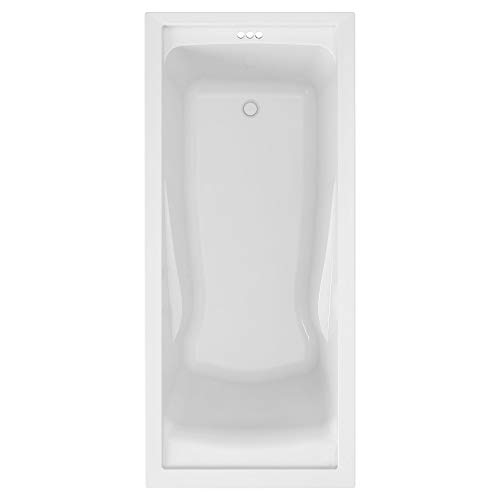
American Standard Evolution Deep Soaking Tub, 60 x 32, Reversible Drain — Best from a Legacy Brand
Buyers who want depth from a name their plumber already trusts will land here. American Standard’s Evolution tub is a fiberglass-reinforced acrylic deep soaker in the standard 60 x 32 footprint, and its reversible drain design means the same tub works in either alcove orientation — a genuinely useful trait when you are ordering before the old tub comes out and the drain side is still a guess.
Strengths
- Reversible drain removes left/right ordering risk entirely
- Deep-soaking design with a stated capacity of 60 or more gallons
- Backed by one of the most established plumbing brands and dealer networks in North America
Trade-offs
- Depth is generous for a legacy model but the newest skirt tubs claim still deeper figures
- Sold as the tub alone in most listings, so budget separately for drain and overflow hardware
- Design is functional rather than sculptural; it looks like a well-made alcove tub, not a spa centerpiece
| Length | 60 in (5 ft) |
| Width | 32 in |
| Capacity | 60 or more gal (per listing) |
| Configuration | Alcove deep soaking, reversible drain |
| Model | 2422V002.020 |
The Evolution earns its place on trust and flexibility rather than a record depth number. Its basin was shaped for soaking — a deeper well and a backrest angle meant for lingering — and the reversible drain quietly solves the most common ordering mistake in this category. For a rental property, a flip, or a family bathroom where the remodel must go right the first time, those are worth more than the last inch of depth.
Because the brand is a legacy one, matching trim, drains, and repair parts are easy to source years later, which matters for a fixture you will own for decades. If your project timeline is tight and your installer prefers familiar rough-in dimensions, this is the lowest-drama deep 60 on the list.
Best for: buyers who want proven-brand depth with zero drain-side risk / Not suited for: soakers chasing the absolute deepest 22-inch basin

WOODBRIDGE 60 Inch Alcove Soaking Bathtub BA6030L, Left Drain — Best with Drain Included
WOODBRIDGE built its Amazon reputation on freestanding tubs, and the BA6030L brings the same squared, contemporary styling to a standard alcove. The included chrome pop-up drain is the practical headline: drain assemblies are the most commonly mismatched part of a tub install, and getting one engineered for the tub removes that friction entirely.
Strengths
- Chrome pop-up drain included, matched to the tub from the factory
- Rectangular contemporary profile suits modern alcove remodels
- From a brand with deep experience in acrylic soaking tubs
Trade-offs
- Left-drain configuration only in this model number
- Depth is comfortable rather than class-leading next to the 22-inch models
- Rectangular corners read modern, which may clash with traditional bathroom styling
| Length | 60 in |
| Configuration | Alcove, left drain |
| Included | Chrome pop-up drain |
| Material | Acrylic |
Think of this as the deep-60 pick for people who value a coordinated package. The rectangular basin gives flat, predictable interior space — good for bathers who sit upright to read or use a bath tray — and the included drain means your installer is not making a second trip. In a one-bathroom home where the remodel window is a single weekend, that completeness has real value.
Pair it with a filler that matches the included chrome trim and the whole alcove reads as one designed unit. If your alcove is right-drain, do not force this model — its right-drain sibling is the next pick for exactly that reason.
Best for: modern remodels that want included, matched drain hardware / Not suited for: right-drain alcoves (see the BA6030R below)

WOODBRIDGE 60 Inch Alcove Soaking Bathtub BA6030R, Right Drain — Best Right-Drain Option
Roughly half of alcoves drain on the right, and those homeowners are usually offered a thinner catalog. The BA6030R exists for them: the same rectangular WOODBRIDGE alcove soaker, mirrored, with a matte black pop-up drain included for the many remodels standardizing on black fixtures.
Strengths
- Proper right-drain configuration rather than a workaround
- Matte black pop-up drain included, matching black-hardware remodels
- Same rectangular, easy-clean basin as the left-drain model
Trade-offs
- Right drain only — left-drain alcoves need the BA6030L
- Matte black trim commits you to black or mixed-metal hardware elsewhere
- Depth is a comfortable soak, not the 22-inch maximum
| Length | 60 in |
| Configuration | Alcove, right drain |
| Included | Matte black pop-up drain |
| Material | Acrylic |
Drain handedness sounds trivial until you learn it wrong — usually after the old tub is out and the new one is sitting in the hallway. This model’s entire reason for inclusion is that it makes the right-drain version a first-class choice with the same included hardware, rather than an afterthought. Confirm your drain side by standing in front of the existing tub as if facing it: the drain side you see is the side you order.
The matte black drain also future-proofs the look: black finishes hide water spots better than polished chrome in hard-water homes, a small daily-life win that adds up over years of use.
Best for: right-drain alcoves with black or mixed-metal hardware plans / Not suited for: left-drain alcoves or chrome-only bathrooms

DeerValley 60×30 Alcove Acrylic Bathtub, Deep Soak, Left Drain — Best Narrow-Alcove Fit
Not every five-foot alcove is 32 inches wide. Millions of older bathrooms were framed at 30 inches, and forcing a 32-inch tub into that opening is not an option. DeerValley’s DV-1T0195L is the deep pick for those rooms: an ergonomic deep-soak basin, integrated apron, pop-up drain, and an integrated overflow, all inside the honest 60 x 30 footprint.
Strengths
- True 60 x 30 sizing fits the narrower alcoves common in older homes
- Integrated overflow system and pop-up drain included
- Ergonomic basin shaping supports a reclined soaking posture
Trade-offs
- The 30-inch width is noticeably snugger for broad-shouldered bathers
- Left drain only in this configuration
- Value brand, so verify dimensions and finish carefully on delivery
| Length | 60 in |
| Width | 30 in |
| Configuration | Alcove, integrated apron, left drain |
| Included | Pop-up drain, integrated overflow |
| Model | DV-1T0195L |
Depth in a 30-inch tub is a trade: the water comes up around you readily because the basin is compact, which many soakers actually prefer — less water to heat, faster fills, and a cocooned feel. The ergonomic shaping matters here more than in a wide tub, because the backrest angle is doing the comfort work that raw width does in the 32-inch models.
Measure your alcove’s finished width before ordering any tub, but especially in older homes where plaster and tile build-up can steal half an inch. This model rewards the tape measure: if your opening is genuinely 30 inches, it is not a compromise pick, it is the correct one.
Best for: older bathrooms with a true 60 x 30 alcove / Not suited for: bathers who found 30-inch tubs cramped in the past
Comparison Table
All six are 60-inch alcove tubs; they differ in width, stated depth, drain side, and what hardware rides in the box. Match the drain column to your rough-in first, then chase depth.
| Pick | Badge | Key spec | Best for |
|---|---|---|---|
| PeacefulHues 60×32 Alcove Soaking Bathtub, 22 Inch Deep, Left Drain | Best Overall | 60 x 32 in, 22 in deep, left drain | soakers who want maximum depth in a standard 60 x 32 alcove |
| Takywep 60×32 Acrylic Alcove Soaking Bathtub, 22 Inch Deep, Left Drain | Best Deep Soak Alternative | 60 x 32 in, 22 in deep, integral apron | budget-conscious remodelers who still want a true 22-inch-deep soak |
| American Standard Evolution Deep Soaking Tub, 60 x 32, Reversible Drain | Best from a Legacy Brand | 60 x 32 in, deep soaking design, reversible drain | buyers who want proven-brand depth with zero drain-side risk |
| WOODBRIDGE 60 Inch Alcove Soaking Bathtub BA6030L, Left Drain | Best with Drain Included | 60 in alcove, chrome pop-up drain included | modern remodels that want included, matched drain hardware |
| WOODBRIDGE 60 Inch Alcove Soaking Bathtub BA6030R, Right Drain | Best Right-Drain Option | 60 in alcove, right drain, matte black drain included | right-drain alcoves with black or mixed-metal hardware plans |
| DeerValley 60×30 Alcove Acrylic Bathtub, Deep Soak, Left Drain | Best Narrow-Alcove Fit | 60 x 30 in, integrated apron and overflow | older bathrooms with a true 60 x 30 alcove |
How to Choose a Deep 60 Tub
Start with the overflow, not the headline depth
Manufacturers measure “depth” at least three ways: exterior wall height, interior basin depth, and depth to the overflow. Only the last one describes your bath. The overflow drain caps the water level a few inches below the rim, so a tub advertised at 22 inches deep typically lets you fill to roughly 17 to 19 inches before water starts escaping down the overflow — still dramatically deeper than a standard tub, but not the number on the box. When a listing gives both figures, trust the overflow figure; when it gives only one, assume it is the most flattering one and read the dimension diagram accordingly.
Width decides whether deep feels luxurious or narrow
A deep 60 comes in two common widths. The 32-inch models give your arms and shoulders room to settle inside the basin, which is what most adults picture when they imagine a soak. The 30-inch models fit older alcoves and use less water, but the walls are closer, and tall or broad bathers may feel slotted in. Neither is wrong; the mistake is ordering the width your alcove cannot take, or discovering at delivery that your shoulders and a 30-inch basin disagree.
Drain handedness is a one-way door
Alcove tubs are built left-drain or right-drain, and unlike a freestanding tub you cannot rotate them. Stand facing your current tub: if the drain is on your left, order left. Reversible-drain designs like the American Standard Evolution exist precisely because this mistake is so common, and they are worth a premium when the existing plumbing is hidden and unverified. Moving a drain during a remodel is possible but adds plumbing labor that dwarfs any savings from a cheaper tub.
The Hidden Costs of a Deeper Fill
A deep 60 holds substantially more water than the tub it replaces, and three systems in your house feel that difference. First, the water heater: a long, deep fill can exhaust a smaller tank, leaving the last inches lukewarm — tankless heaters and larger tanks handle deep tubs far better. Second, the floor: water weighs about eight pounds per gallon, so a deep fill plus a bather can add several hundred pounds over a standard bath; in older homes, confirm the joists and subfloor are sound before choosing the deepest model. Third, the filler: a deep tub fed by a low-flow spout takes long enough to fill that the water cools as it runs, so a high-flow tub filler is close to a required companion purchase.
None of these are reasons to avoid a deep tub. They are reasons to budget the whole project — tub, filler, drain hardware, and possibly a heater upgrade — instead of being surprised by it one system at a time.
What 22 Inches of Depth Actually Feels Like
Numbers become clear the first time you sit in both tubs. In a standard alcove tub, the waterline crosses most adults at the waist or just above; your shoulders, chest, and knees stay in the air, and the bath becomes a warm seat with wet legs. In a genuinely deep basin filled to its overflow, the same seated adult is covered to the ribs or chest, arms floating instead of braced, and the knees of all but the tallest bathers go under. That coverage changes the physiology of the soak: buoyancy unloads your spine and hips, the warmth reaches the large muscles of the back and shoulders, and the bath stops being a hygiene event and becomes the recovery ritual people buy deep tubs for.
It also changes the room’s physics in ways worth respecting. A deep fill is slower to reach temperature equilibrium, so the water stays hot longer once it is there — a large, deep body of water holds heat better than a shallow one. The trade is the fill itself: more gallons, more minutes, more demand on the heater. Owners who adapt — starting the fill before they gather towels and a book — describe the routine as no burden at all. Owners who expected a standard tub’s five-minute fill describe the same tub as slow. The tub did not change; the routine did.
One more sensation surprises first-time deep soakers: getting out. A taller water column means more buoyancy assistance on the stand-up, which many bathers find easier, but the rim is also higher to swing a leg over. If mobility is a consideration in your household, test the entry and exit dry in a showroom when possible, and consider a strategically placed grab bar as part of the project rather than an afterthought.
Alcove Realities: Framing, Tile, and the Apron Line
A deep 60 installs like any alcove tub in sequence — the alcove is framed and plumbed, the tub is set level and supported, the walls are waterproofed and tiled down to the rim — but the extra height sharpens two details. First, the tile layout: a taller apron front changes where your tile courses land, and a few minutes with the dimension diagram before tiling prevents an awkward sliver of tile at the floor line. Second, the surround height: deeper tubs splash less in use, but shower-over-tub households should confirm the shower valve and head heights still make sense above a taller rim, because every fixture in the alcove was probably positioned for the old tub.
Support deserves its own paragraph because deep tubs punish shortcuts. The basin floor must be fully supported — a mortar bed or the manufacturer’s specified support — so that several hundred pounds of water and bather do not flex the acrylic. Flex is not merely a feel issue; over years it stresses the material around the drain and can telegraph as hairline cracking. A tub that feels like stone on day one, because it was bedded like stone, still feels that way in year ten.
Finally, plan the drain and overflow trim as part of the design, not the plumbing afterthought. Two picks in this roundup include matched pop-up drains for exactly this reason: the visible trim is the only part of the system you will look at daily, and a drain that matches your filler and fixtures makes a value tub look deliberate and an expensive tub look finished.
Deep 60 vs. Freestanding: Which Way Should a Remodel Go?
The honest rival to a deep alcove tub is a freestanding soaker, and many remodelers stall between them. The freestanding wins on sculpture and on placement freedom in a large room. The deep alcove wins almost everywhere else in a standard bathroom: it uses the exact footprint the room already has, keeps water contained against three walls, allows a shower-over-tub combination that most households genuinely need, and costs less in total once the freestanding tub’s filler and floor-drain work are priced honestly.
Depth tilts the comparison further. Freestanding tubs at 60 inches exist — the companion guide in this cluster covers the short ones — but the deepest soaking geometry at this length is currently in these alcove skirts, because the alcove’s walls let manufacturers build tall without the tub looking like a silo in the middle of the room. If your bathroom is a standard five-by-eight with one wet wall, the deep 60 is not the compromise choice; it is the optimized one.
Choose freestanding when the room is large, the tub is the design’s centerpiece, and a separate shower exists. Choose the deep alcove when the room is standard, the tub must also be the shower, and the soak itself — depth, warmth, immersion — outranks the silhouette. Most households, described honestly, are the second case.
Water Temperature Strategy for Deep Soaks
Deep tubs reward a deliberate temperature strategy, because a large volume of water is both the pleasure and the management problem. Start the fill a degree or two hotter than your target soak temperature: the tub body, the room air, and the later stages of the fill all draw heat, and a deep fill that starts at temperature ends slightly cool. A simple bath thermometer removes the guesswork for the first month, after which your routine becomes instinct — most owners settle on a starting temperature, a fill order, and a soak length that repeat without thought.
During the soak itself, a deep tub holds its temperature better than a shallow one — more water, more thermal mass, slower cooling — which is another unmarketed dividend of depth. If you are a long soaker, the top-up habit matters: a brief hot addition at the twenty-minute mark restores the bath entirely, something a shallow tub cannot benefit from because it has no depth headroom left under the overflow. Plan the filler’s reach so that top-up can happen without leaving the water, and the deep soak becomes a genuinely long ritual rather than a race against cooling.
A Note on Resale, Rentals, and the Deep Tub as an Asset
A deep soaking tub is one of the few bathroom upgrades that photographs like a luxury and functions like one, which makes it unusually resale-friendly for its cost. Buyers touring a home remember the bathroom with the deep tub; listing photos of a tall, clean alcove soaker read as “spa bathroom” in a way a standard tub never has. If you are renovating a property you may sell, the deep 60 is a rare case where the indulgent choice and the strategic choice are the same fixture — particularly the mainstream-footprint models here, which ask nothing unusual of the next owner.
For landlords, the calculus adds durability: acrylic alcove tubs are repairable, their drains are standard, and a deep tub is a differentiating amenity in listings that otherwise compete on sameness. The caution is only to choose the mainstream configurations — standard widths, common drain sides, brands with parts everywhere — so that any future repair is a plumber’s ordinary Tuesday rather than a research project. On every axis that matters to an owner who will not personally soak in it, the deep 60 in this guide behaves like the standard tub it replaces, while renting and selling like the upgrade it is.
How to Set Up a Deep Alcove Tub for Its First Soak
A deep tub rewards a deliberate first week. The install itself belongs to your plumber or your own careful DIY work, but the checks below are the ones that decide whether the first bath is the deep, quiet soak you paid for.
- Before tiling, fill the installed tub to the overflow and let it sit. Watch every drain and overflow joint below for weeping, and confirm the water actually reaches near the overflow before draining — this verifies both the plumbing and the real fill depth you bought.
- Run the hot water alone and time how long the heater sustains full heat. If the temperature fades before the tub is full, note the fill level where it fades; that is your practical depth until the heater situation changes.
- Set your filler routine: start the fill, add any bath salts or oils only once several inches of water are in (concentrated products can mark acrylic), and keep a bath thermometer handy for the first few soaks while you learn your heater’s rhythm.
- Check the rim and apron with a level after the first few uses. A deep, heavy fill can settle a new install slightly; catching a developing slope early prevents a permanent puddle line at one end.
- Wipe the basin down after soaking with a soft cloth and mild cleaner only. Acrylic rewards gentle care — no abrasive powders, no scouring pads — and a deep tub’s tall walls show scratches more than a shallow one.
Do this once, properly, and the tub settles into being the most-used fixture in the house. Most deep-tub disappointment traces back to skipping the fill test or under-sizing the filler, not to the tub itself.
Common Buying Mistakes
Trusting the headline depth number
The single most common disappointment in this category is a “deep” tub whose overflow sits inches below the advertised depth. Always hunt for the depth-to-overflow figure or the dimension diagram, and set your expectations by that number.
Ordering the wrong drain side
Left and right are determined facing the tub, and alcove tubs cannot be flipped. Verify against the existing tub or the exposed rough-in before ordering, or choose a reversible-drain model and remove the risk.
Ignoring the water heater
A deep fill can empty a modest tank. If your household already runs short of hot water on laundry day, a 22-inch-deep tub will find that limit on its first fill.
Feeding it with a low-flow filler
Deep tubs filled slowly lose heat while they fill. A proper high-flow tub filler is not an upsell; it is what makes the depth usable.
Skipping the setting support
Acrylic basins must be fully supported underneath. A deep tub carries more water weight, and a flexing floor under the basin leads to squeaks, stress cracks, and a tub that feels cheap despite its price.
Final Recommendation
For most bathrooms, the PeacefulHues 60×32 is the pick: the deepest stated soak in the standard footprint, with room to actually relax in it. The Takywep matches that geometry for value-focused remodels, and the American Standard Evolution is the choice when brand trust and a reversible drain matter more than the last inch of depth. WOODBRIDGE covers modern remodels in both drain directions with included hardware, and the DeerValley is the correct answer for honest 60 x 30 alcoves.
Whichever you choose, measure the alcove, confirm the drain side, and think about your water heater before the crate arrives. A deep 60 is a twenty-year fixture; an afternoon of verification is the cheapest part of owning one.
Start your shortlist here: PeacefulHues 60×32 Alcove Soaking Bathtub, 22 Inch Deep, Left Drain · Takywep 60×32 Acrylic Alcove Soaking Bathtub, 22 Inch Deep, Left Drain · American Standard Evolution Deep Soaking Tub, 60 x 32, Reversible Drain
Keep exploring the same cluster: Best Short Freestanding Bathtubs Best Freestanding Bathtubs Best Alcove Bathtubs Best Soaking Tubs Best Bathtub Faucets
Frequently Asked Questions
How deep is the water in a deep 60 tub, really?
Less than the headline number and more than a standard tub. The overflow caps the fill a few inches below the rim, so a tub listed at 22 inches deep typically soaks at roughly 17 to 19 inches of water — still enough to cover most adults to the chest when seated, versus waist-deep in a standard 14-inch tub.
Will a deep 60 tub fit my existing alcove?
If your current tub is a standard five-foot alcove model, the length matches. The variables are width — 30 versus 32 inches — and drain side. Measure the finished opening and note the drain position before ordering.
Do I need a bigger water heater for a deep tub?
Not always, but deep fills expose weak heaters. If a long shower already ends lukewarm, a deep tub will too. Larger tanks, faster-recovery models, and tankless heaters all handle deep fills comfortably.
Can a deep tub go on a second floor?
Usually yes, but verify the structure. A deep fill plus bather adds several hundred pounds over a standard bath. Sound joists and a properly supported install are fine; a floor that already flexes or sags deserves a professional look first.
What filler should I pair with a deep 60 tub?
A high-flow tub filler, wall-mounted or deck-mounted depending on your alcove. Slow fillers let the water cool while the tub fills, which quietly defeats the purpose of the extra depth.
Is acrylic a good material for a deep tub?
Yes — it is warm to the touch, light for its size, and repairable if scratched. It does need full underside support and non-abrasive cleaning. Cast iron holds heat longer but weighs far more, which compounds the floor-loading question in a deep format.
How much more water does a deep 60 tub use than a standard tub?
Meaningfully more per fill — a deep basin filled to its overflow can hold roughly a third to a half more water than a standard alcove tub filled to its. In practice, most owners fill to their own comfort depth rather than the maximum, and the difference narrows. If water cost or heater capacity is a concern, the deep tub still works; you simply choose your fill line deliberately instead of by default.
Can I put a shower over a deep 60 tub?
Yes — alcove deep tubs are designed for exactly that combination, which is one of their advantages over freestanding models. Confirm the rim profile accepts a shower curtain or door cleanly, and check that valve and shower-head heights still suit your household above the taller rim.
Are deep 60 tubs safe for kids?
Depth demands the same rule as any tub, applied more strictly: young children are never left unattended in water, and a deep tub’s extra inches make that rule non-negotiable rather than merely wise. For supervised family bathing, the depth is a delight; the supervision is the constant.


