Disclosure: airfryerkitchensupply.com is reader-supported. When you buy through links on our site, we may earn an affiliate commission at no extra cost to you.
Where to buy
Every linked slipper below is sold on Amazon, and the listing is where you confirm the two details that decide satisfaction in this category: your size against the maker’s own chart — several of these are Japanese-style slippers whose sizing runs differently from US department-store habits — and whether the sole is a soft indoor sole or a harder anti-skid sole, because that decides where the slipper can honestly be worn. Check price on Amazon at purchase time, and note that several picks are unisex designs sized for women in the listing title; order by the foot measurement, not the label.
- Japanese Style Linen House Slippers, Open Toe Breathable — check price on Amazon
- Odor-Resistant Japanese Bamboo House Slippers — check price on Amazon
- COCOMUSE Ultralight Open-Toe Cotton Linen Women’s Slippers — check price on Amazon
- EitCaton Unisex Linen House Slippers, Memory Foam — check price on Amazon
- Fadezar Japanese Slippers, Machine Washable, Breathable Lining — check price on Amazon
- Dearfoams Women’s Leslie Washable Memory Foam Terry Clog — check price on Amazon
The best breathable slippers for women solve a problem the slipper market mostly ignores: most slippers are designed for winter. The shelves groan with fleece, faux fur, sherpa, and memory foam engineered to trap heat — wonderful in January, and a swamp by June. Warm feet sweat, sweat makes slippers smell, and smelly slippers get thrown away by people who conclude that house shoes are simply gross. They are not; they were just wearing the wrong season. A breathable slipper — open-toed, linen or cotton or bamboo on the foot, built to let air move — keeps feet dry and comfortable through warm months, warm houses, and the permanently warm-footed, and it does so without asking you to go barefoot on cold tile or dirty floors.
The designs that dominate this category honestly are Japanese in origin, and that is no accident: Japanese house-shoe culture treats indoor footwear as a year-round, washable, breathable utility rather than a winter novelty, and its signatures run through this guide — open toes, natural-fiber uppers, flat flexible soles, and an expectation that the slipper will be washed like clothing. Alongside them sits one Western classic, a washable terry clog, included because terry cotton solves the sweat problem by absorption rather than ventilation, and some feet prefer it.
The six picks below were verified on Amazon before earning links. They divide by mechanism — linen ventilation, bamboo’s odor resistance, cotton-linen lightness, memory-foam comfort in an open design, machine-washable quietness, and terry absorption — because ‘breathable’ is achieved several ways and the right one depends on whether your enemy is heat, sweat volume, odor, or simply the feeling of an enclosed shoe. Every pick is a house slipper in the true sense: no sandals, no slides dressed up as slippers, nothing making medical claims — just indoor footwear that lets a foot breathe.
In this guide
Quick Picks
Best Overall: Japanese Style Linen House Slippers, Open Toe Breathable — The archetype: open-toe linen slippers, lightweight and anti-skid, for women and men — the summer house shoe in its purest form.
Best for Odor Control: Odor-Resistant Japanese Bamboo House Slippers — Bamboo-fiber Japanese house slippers pitched at keeping feet dry and cool through summer, with a non-slip soft sole for tatami and indoor floors.
Best Ultralight: COCOMUSE Ultralight Open-Toe Cotton Linen Women’s Slippers — An ultralight open-toe slipper in cotton linen with a sweat-absorbing cloth bottom — the closest thing to wearing nothing, with a sole.
Best Cushioned Breathable: EitCaton Unisex Linen House Slippers, Memory Foam — Linen and cotton breathability with a memory foam footbed inside — the compromise for women who want airflow and cushion in the same slipper.
Best Machine Washable: Fadezar Japanese Slippers, Machine Washable, Breathable Lining — Japanese-style house slippers with a breathable lining, a non-slip lightweight build, and full machine washability — the hygiene-first pick.
Best Terry Clog: Dearfoams Women’s Leslie Washable Memory Foam Terry Clog — The Western answer: a washable memory foam clog in terry cloth, with wide widths available — absorption-based breathability with real structure.
How These Picks Were Chosen
Airflow was the first filter, and it was structural, not verbal. A pick had to be open-toed or genuinely open in design, in a natural, breathable upper — linen, cotton, bamboo, or terry — because a closed synthetic slipper with the word ‘breathable’ in its marketing is still a closed synthetic slipper. That single filter removed most of the market, including several famous memory-foam names whose summer versions are merely thinner ovens.
The second filter was washability, because breathability and odor are a system: a ventilated slipper that cannot be washed will still eventually smell, while a washable one resets indefinitely. Most picks here are machine washable or easily hand-washed, and the reviews note the exceptions. A slipper you can launder like a shirt is a slipper you will still own in three summers, which is the real sustainability story of this category.
Soles were the third filter, judged for indoor truthfulness. Soft cloth soles are silent and floor-kind but indoor-only and quicker to wear; molded anti-skid soles handle kitchen tile, bathroom dashes, and the occasional step onto the porch. We kept both kinds, labeled clearly, because households differ — a carpeted flat and a tile-and-stone house are different planets for a slipper sole. Sizing honesty runs through every review: Japanese-style slippers frequently size by foot length and can run small against US expectations, and the reviews repeat the guidance to order by measurement because it is the category’s number-one return reason.
The 6 Best Breathable Slippers for Women

Japanese Style Linen House Slippers, Open Toe Breathable — Best Overall
This is the slipper the whole category is measured against: a Japanese-style open-toe house slipper with a linen upper, a lightweight build, and an anti-skid sole, sized for women and men. Linen is the original breathable fabric — it absorbs moisture, dries fast, and feels cool against the skin in a way cotton takes longer to match — and the open toe completes the ventilation, letting heat escape from the part of the foot that generates the most complaint. It is a simple object, and its simplicity is the engineering.
Strengths
- Linen upper plus open toe is the strongest ventilation combination here
- Lightweight enough to forget on the foot — the summer slipper ideal
- Anti-skid sole handles kitchen and bathroom tile honestly
Trade-offs
- Open toe means no warmth and no protection from dropped objects or stubbed furniture
- Linen wrinkles and softens with washing — it ages like a shirt, not like a shoe
- Japanese-style sizing can run small; order by foot length from the chart
Key specs: Open toe; linen upper; lightweight; anti-skid sole; unisex sizing
Live with this slipper for a summer and its virtues compound quietly. Feet stay dry through a day of housework because the linen is wicking and re-drying continuously, not storing the morning’s sweat until evening. The slipper goes in the wash with the household linens and comes back neutral, which breaks the odor cycle that kills closed slippers. And the flat, flexible sole keeps your foot working naturally — no raised heel, no marshmallow platform — which many women find is the difference between house shoes they wear all day and house shoes they kick off by ten.
The honest boundaries are weather and warfare: this is a warm-season, indoor slipper. It will not warm a January floor, protect a toe from a falling can, or survive being worn to the mailbox through wet grass more than a few times before the linen shows it. Buy it as what it is — the summer uniform for feet at home — in the size your foot measures rather than the size you usually claim, and it will be the most-worn footwear you own for half the year.
Check on Amazon — check the current price on Amazon before you buy, and confirm the size and colorway on the listing.
Best for: warm months, warm houses, and women whose feet run hot year-round / Not suited for: winter warmth or outdoor errands

Odor-Resistant Japanese Bamboo House Slippers — Best for Odor Control
The bamboo pick attacks the breathable-slipper problem at its least glamorous and most decisive point: smell. Bamboo fiber is naturally resistant to the odor buildup that colonizes warm footwear, and these Japanese-style house slippers build on it with a summer brief stated in their own listing — keep feet dry and cool — on a non-slip soft sole designed for tatami and smooth indoor floors. For women whose closed slippers have historically been retired by odor long before they wore out, this is the mechanism that changes the ending.
Strengths
- Bamboo fiber resists odor buildup — the category’s most common cause of death
- Soft non-slip sole is kind to wood, tatami, and quiet households
- Summer-specific design keeps feet dry and cool rather than merely less hot
Trade-offs
- Soft sole is indoor-only and will wear fastest of the soles here on hard floors
- Bamboo blends vary — check the listing’s fiber content rather than assuming pure bamboo
- Like all Japanese styles here, verify size by measurement
Key specs: Bamboo fiber upper; soft non-slip sole; indoor/tatami use; summer design
Odor in slippers is a moisture story before it is a bacteria story: feet sweat, closed footwear stores the sweat, and the stored warmth and damp do the rest. Bamboo fiber intervenes twice — it manages moisture well, and the fiber itself resists becoming a hospitable home for the smell — which is why bamboo house shoes hold their freshness through a summer that defeats cotton pairs washed on the same schedule. Pair that with an open, airy Japanese pattern and the system is coherent: ventilate, wick, and resist, all at once.
Choose this pick for the right floors. The soft sole that makes it silent and lovely on wood and tatami is not the sole for a stone-floored house or a household that steps outside twenty times a day; it will wear, and it is meant for the indoor life. Households with smooth floors and a summer odor grievance will find it the most precisely aimed slipper in the guide — the one that solves the problem they actually have rather than the generic problem of warm feet.
Check on Amazon — check the current price on Amazon before you buy, and confirm the size and colorway on the listing.
Best for: odor-prone feet and smooth indoor floors in summer / Not suited for: rough hard floors or indoor-outdoor wear

COCOMUSE Ultralight Open-Toe Cotton Linen Women’s Slippers — Best Ultralight
The COCOMUSE slipper is the minimalist entry: an ultralight open-toe design in cotton linen, with a cloth bottom that absorbs sweat — the slipper for women who dislike slippers. Its whole argument is subtraction. No foam platform, no molded sole unit, no structure beyond a breathable upper and a soft cloth base, so the foot stays cool, the step stays silent, and the slipper packs flat enough to live in a suitcase, a gym bag, or a guest-room drawer as the house pair.
Strengths
- Ultralight build is the least shoe-like, coolest wear in this guide
- Cotton-linen upper with sweat-absorbing cloth bottom handles moisture simply
- Packs flat — the travel and guest-pair champion
Trade-offs
- Cloth bottom offers minimal protection and the least durability on hard floors
- No cushioning to speak of — hard-floor households standing for hours should look at the foam pick
- Indoor-only in the strictest sense of any pick here
Key specs: Open toe; cotton linen upper; cloth bottom; ultralight; women’s
There is a real constituency for this slipper: women who go barefoot at home by preference and want only a clean, breathable layer between foot and floor — protection from cold tile in the morning, from kitchen splashes, from the general fact of floors — without the sensation of wearing footwear. The cloth bottom is the honest trade at the center of the design: it absorbs sweat and keeps the interface dry, it is utterly silent, and it asks in return to be kept indoors and replaced when it wears, as cloth soles do. Judged as a washable foot covering rather than a shoe, it is excellent and inexpensive to keep in rotation.
It is also the traveler’s pick in a way the molded-sole slippers cannot match: two pairs pack flatter than one pair of trainers, hotel floors become a solved problem, and the guest pair you offer visitors stops being an apologetic afterthought. Buy it by measurement as with all the Japanese-style picks, keep it off wet floors — a soaked cloth bottom is a squelch, not a slipper — and it will do its quiet job for seasons.
Check on Amazon — check the current price on Amazon before you buy, and confirm the size and colorway on the listing.
Best for: barefoot-preferring women, travel, and guest pairs / Not suited for: long hours standing on hard floors

EitCaton Unisex Linen House Slippers, Memory Foam — Best Cushioned Breathable
The EitCaton is the reconciliation pick: a unisex linen house slipper in cotton fabric — breathable, open-toed, non-slip — that smuggles in the one comfort feature the purist Japanese designs omit, a memory foam footbed. It exists for the woman who tried flat slippers, loved the coolness, and missed the cushion by evening, particularly on hard floors. The navy colorway listed (sized 9-10 women / 7-8 men in the verified listing) also makes it the easiest pick here for couples who share a slipper style across two sizes.
Strengths
- Memory foam footbed adds real cushion without closing the toe or sealing the upper
- Cotton-linen breathability keeps the foam from becoming a heat trap in most conditions
- Non-slip sole extends it beyond the bedroom to kitchen and tile
Trade-offs
- Any foam holds more warmth than a flat cloth footbed — the warmest wear of the linen picks
- Memory foam compresses over time; its best cushioning is its first year
- Unisex sizing demands care: order by the women’s size range in the listing, by measurement
Key specs: Open toe; linen/cotton fabric; memory foam footbed; non-slip sole; unisex
The engineering question this slipper answers is whether cushion and breathability can coexist, and its answer is a qualified yes. The qualification is placement: the foam lives under the foot, where its warmth matters least, while the upper stays open linen, where ventilation matters most — so the foot is cushioned without being enclosed, and most wearers experience the combination as cool enough through a summer evening, if not quite as airy as the flat COCOMUSE at noon in a heat wave. For women who stand — cooking, crafting, working from a standing desk at home — that cushion is not indulgence; it is the difference between slippers worn and slippers abandoned.
Set the foam expectation honestly: memory foam in a washable house slipper is a consumable comfort, softening across its first year into a thinner kindness, and households that fall for this design tend to replace it on a rhythm rather than mourn it. Wash it gently and air-dry it — foam and dryer heat are poor companions — and size it by the listing’s women’s range and your foot measurement, since unisex lasts run generous against women’s expectations.
Check on Amazon — check the current price on Amazon before you buy, and confirm the size and colorway on the listing.
Best for: hard floors, standing hours, and cushion lovers who run warm / Not suited for: maximum-airflow purists in heat waves
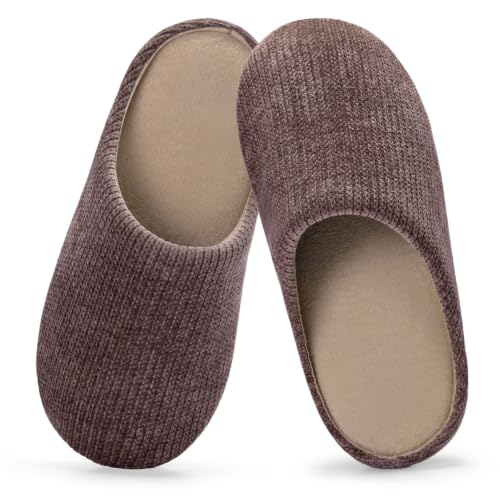
Fadezar Japanese Slippers, Machine Washable, Breathable Lining — Best Machine Washable
The Fadezar slipper leads with the feature that decides long-term freshness: it is machine washable, genuinely and by design, with a breathable lining and a lightweight, non-slip build in the Japanese house-shoe pattern. Many slippers tolerate a wash; this one is built around it, which matters because the wash is where breathable slippers win their war — ventilation slows the odor problem, and laundering ends it, on a weekly rhythm that keeps the slipper permanently new-smelling.
Strengths
- Machine washable by design — the strongest freshness story over a full season
- Breathable lining plus lightweight build suits all-day home wear
- Non-slip sole keeps it honest on smooth floors
Trade-offs
- Frequent machine washing ages any slipper faster than hand washing — rotate two pairs if you wash weekly
- Japanese-style fit and sizing; measure before ordering
- A functional design — style seekers have prettier options elsewhere in the guide
Key specs: Japanese style; breathable lining; machine washable; non-slip; lightweight
Think of this slipper as the household-system pick. Homes that run a tight laundry ship — kids, pets, a general policy that soft things get washed — will find it the only slipper that fits the system without special pleading: into the machine with the week’s towels, out again fresh, no hand-washing ceremony at the sink. The breathable lining handles the hours between washes, and the lightweight build means the slipper dries fast, which is the unglamorous detail that decides whether a washable slipper is actually washed often or merely washable in theory.
The rotation advice in its trade-offs deserves emphasis rather than embarrassment: two pairs of an affordable washable slipper, alternating weekly, outlast and out-smell one premium pair washed to death, and they guarantee a dry pair on laundry day. That is how Japanese households, whose slipper culture this design borrows, actually run the system — the slipper as laundered clothing, not as footwear expected to survive unworn-out. For hygiene-led households, this is the most sensible purchase in the guide.
Check on Amazon — check the current price on Amazon before you buy, and confirm the size and colorway on the listing.
Best for: households that wash everything, and freshness-first buyers / Not suited for: buy-one-pair-for-years shoppers

Dearfoams Women’s Leslie Washable Memory Foam Terry Clog — Best Terry Clog
The Dearfoams Leslie is the guide’s one structured clog, included because terry cloth solves summer feet by a different mechanism: absorption. The terry upper drinks moisture the way a towel does — because it is one — while the clog’s open back ventilates the heel, and a memory foam footbed gives it the cushioned, substantial feel the Japanese flats deliberately avoid. It is washable, it comes in wide widths (a genuine rarity in this category), and it suits women who want a slipper that feels like a shoe they trust rather than a whisper of cloth.
Strengths
- Terry cloth absorbs sweat actively — a different, effective dryness mechanism
- Washable memory foam clog with real structure and support underfoot
- Wide widths available — the inclusive-fit pick of the guide
Trade-offs
- Warmer than the open-toe linen picks — a shoulder-season and air-conditioned-house summer slipper
- Clog weight and structure are the opposite of the ultralight philosophy
- Terry holds water after washing and dries slowest here
Key specs: Clog; terry cloth upper; memory foam; washable; wide widths available; women’s
The Leslie earns its place on constituency grounds: a meaningful share of women dislike open-toe slippers entirely — they want the toe covered, the foot held, and a sole with intentions — and for them the breathable category has historically offered nothing. Terry is the answer that was hiding in the bathroom all along: a looped cotton surface that absorbs perspiration on contact, in a backless clog that never seals the foot in. In an air-conditioned house, or in the cooler half of summer, it is the most comfortable dry-foot solution in this guide, and its wide-width availability serves feet the Japanese unisex lasts simply do not.
Its limits are thermal and honest: on a July afternoon in an un-air-conditioned house, terry plus foam is a warm combination, and the linen picks will serve better. Rotate it as the spring, autumn, and cool-evening slipper alongside a linen pair for high summer, wash it as the maker directs, and let it dry fully — terry rewards patience with a long, fresh life. For the covered-toe loyalist, this is not a compromise pick; it is the category finally including her.
Check on Amazon — check the current price on Amazon before you buy, and confirm the size and colorway on the listing.
Best for: covered-toe loyalists, wide feet, and air-conditioned summers / Not suited for: peak-heat, un-air-conditioned wear
Comparison Table
| Pick | Badge | Key spec | Best for |
|---|---|---|---|
| Japanese Style Linen House Slippers, Open Toe Breathable | Best Overall | Linen open-toe, anti-skid | warm months, warm houses, and women whose feet run hot year-round |
| Odor-Resistant Japanese Bamboo House Slippers | Best for Odor Control | Bamboo, odor-resistant, soft sole | odor-prone feet and smooth indoor floors in summer |
| COCOMUSE Ultralight Open-Toe Cotton Linen Women’s Slippers | Best Ultralight | Cotton-linen ultralight, cloth sole | barefoot-preferring women, travel, and guest pairs |
| EitCaton Unisex Linen House Slippers, Memory Foam | Best Cushioned Breathable | Linen + memory foam, unisex | hard floors, standing hours, and cushion lovers who run warm |
| Fadezar Japanese Slippers, Machine Washable, Breathable Lining | Best Machine Washable | Machine washable, breathable lining | households that wash everything, and freshness-first buyers |
| Dearfoams Women’s Leslie Washable Memory Foam Terry Clog | Best Terry Clog | Terry clog, washable, wide widths | covered-toe loyalists, wide feet, and air-conditioned summers |
How to Choose Breathable Slippers
Start with your enemy, because ‘breathable’ fights three different ones. If the enemy is heat — feet that feel cooked in any enclosed shoe — the answer is ventilation: open toes and linen uppers, the Japanese pattern that leads this guide. If the enemy is odor — slippers that smell by midsummer however airy they seem — the answer is fiber and laundering: bamboo’s resistance or a machine-washable design, because odor is defeated in the wash, not the breeze. If the enemy is sweat volume — feet that simply perspire — terry’s absorption joins the contest. Most women have a primary enemy; name it, and the shortlist makes itself.
Then match the sole to your floors with the same honesty. Soft cloth soles are silent, kind, and short-lived on hard floors; molded anti-skid soles survive tile, stone, and the occasional doorstep at the cost of some flexibility. A carpeted home and a hard-floored home should not buy the same slipper, and the picks above are labeled by sole precisely so you do not have to guess. While you are at it, check the doorstep question: if your slippers will step outside daily — porch, mailbox, bin — you need the molded sole and a covered style, and you should accept a warmer slipper as the price of that range.
Finally, size by measurement, not by habit. Japanese-style slippers — most of this category — are patterned on lasts that run differently from US women’s sizing, and the single largest cause of returns and disappointment is ordering ‘my usual size’ against a chart that was printed for exactly this moment. Measure your foot in centimeters, match it to the listing’s chart, and when between sizes in an open-toe design, the larger size is the safer error. A breathable slipper that fits is a joy; one that pinches is a fan you cannot switch on.
Linen, Bamboo, Cotton, and Terry: The Breathable Fibers Compared
Linen is the connoisseur’s summer fiber: it absorbs moisture quickly, releases it quickly, and feels cool on contact, which is why it leads this guide. Its manners are rustic — it wrinkles, softens, and looks lived-in — and women who want their slippers crisp-looking should know that linen’s charm is precisely its refusal to stay crisp. Cotton is linen’s milder sibling: softer from day one, slower to dry, and often blended with linen to split the difference, as in the cotton-linen picks above.
Bamboo fiber’s headline is odor resistance, earned through the fiber’s natural resistance to the conditions odor needs, and it pairs that with a smooth, cool hand. Terry — looped cotton — works by capacity rather than ventilation: it can absorb a great deal of moisture before it feels damp, which is why it suits the covered clog format. None of these fibers is ‘best’ outside its mechanism; the guide’s structure — one pick per mechanism — is the honest map of a category that marketing insists on flattening into a single word.
Keeping Breathable Slippers Fresh All Summer
The freshness system has three parts, and the slippers in this guide are chosen to make all three easy. First, rotation: two pairs alternating days dry fully between wears, and a fully dried slipper is a slipper bacteria cannot colonize — this single habit outperforms every spray and powder sold for the purpose. Second, laundering on rhythm: machine-washable pairs go in weekly with household linens; hand-wash-only pairs get a sink wash and a full air-dry, ideally in moving air, before they return to feet. Third, storage in the open: breathable slippers stored in a closed box or gym bag undo their own design, so keep them on an open rack or by the door where air reaches them.
Sunlight deserves a mention as the free technology in this system: an hour of sun on a wash day dries and freshens natural fibers in a way no indoor method matches, and linen and cotton take it happily. What not to do matters equally — do not wear breathable slippers on wet ground and then store them damp, do not share them between household members (a house pair per person is the entire Japanese point), and do not mourn a cloth sole that wears through in its second summer. These are laundered goods with a service life, and a fresh pair at a fair price is the system working, not failing.
Sizing and Fit: The Measurement That Prevents Returns
Breathable slippers fail more often in the size field than in any other, because the category mixes three sizing cultures on one page: US women’s sizing, unisex sizing, and Japanese foot-length sizing expressed in centimeters. The defense is a thirty-second ritual. Stand on a sheet of paper in the evening — feet are at their largest then — trace or mark heel and longest toe, and measure the distance in centimeters. That number, matched against the chart in the specific listing you are buying, is your size in this category regardless of what your shoe wardrobe claims.
Fit in an open-toe slipper should look deliberate: the toes near the front edge without hanging over it, the heel seated within the sole’s back edge, and the upper snug enough that the slipper does not slap or slide on tile. A breathable slipper worn too large is a trip hazard with good ventilation; worn too small, the toes grip the edge and the foot tires — the opposite of the category’s purpose. When your measurement falls between sizes, open-toe designs forgive the larger size and punish the smaller, so size up and let the first wash’s slight relaxation finish the fit.
Households buying for guests or for a partner should apply the same discipline rather than guessing from shoe sizes at the checkout. A guest pair in a measured, middle size with an open toe accommodates the widest range of feet gracefully — one more reason the open Japanese pattern, sized honestly, is the hospitality standard this category keeps returning to.
How to Break In and Care for Linen House Slippers
Natural-fiber slippers reward a small amount of deliberate care in their first week and repay it for seasons:
- Wash before the first full day of wear. A gentle first wash removes sizing and starts the softening that makes linen conform to your foot; wear them around the house for an evening first if you are unsure of size, since washed slippers cannot be exchanged.
- Expect the linen to mold, not stretch. Across the first week the upper relaxes into your foot’s shape — this is the break-in, and a slipper that feels merely fine on day one usually feels made-for-you by day seven.
- Wash cool and air-dry. Machine wash on a gentle cycle where the maker allows it, then air-dry in moving air; tumble heat shortens the life of linen, foam, and cloth soles alike.
- Rotate from day one. If you love the pair, buy the second pair now, in the same size, and alternate — the rotation doubles the life of both and guarantees a dry pair every morning.
- Retire cloth soles honestly. When a soft sole wears smooth or thin, the slipper has given its service; replace it rather than risking a slide, and promote the old pair to garden-door duty for its remaining days.
None of this is precious — it is the ordinary laundry logic of natural fibers, applied to footwear that was always meant to be treated as clothing. Treat breathable slippers as clothing and they behave like your favorite summer shirt: better every wash, and missed when they are gone. If a pair survives to a second summer in good shape, that is the system and the fiber both doing their jobs — and the cue to buy the same design again while it is still made, because good simple slippers have a way of being discontinued precisely when a household has standardized on them.
Common Buying Mistakes
Buying closed memory-foam slippers for summer because the listing says ‘breathable’. A closed synthetic upper over a foam footbed is a heat system with a marketing adjective. Breathability is structure — open toes, natural fibers, air paths — and if the photograph shows an enclosed plush slipper, the word in the title cannot save your July.
Ordering your usual US size against a Japanese size chart. The category’s most common disappointment is self-inflicted: Japanese-style slippers size by foot length and run differently from US habits. Measure, consult the chart in the listing, and size up when between sizes in open-toe designs.
Wearing cloth soles outdoors. Soft cloth and bamboo soles are indoor instruments. Wet pavement, gravel, and garden paths destroy them in weeks and can soak through to the foot in minutes. If your slippers must step outside daily, buy the molded anti-skid sole and accept the trade.
Owning exactly one pair, washed rarely. A single pair worn daily and washed monthly will smell by midsummer however breathable its fibers — the system needs rotation and rhythm. Two affordable pairs, alternated and washed weekly, stay fresher than one premium pair ever can.
Expecting winter warmth from a summer slipper. Open-toe linen is a warm-season tool; wearing it into January and declaring it inadequate is a category error. Most households need two slipper seasons — the breathable pair and the warm pair — and this guide exists because the warm pair is the only one most shops stock.
Storing them damp in a closed space. A breathable slipper put away damp in a closed box or bag will undo a month of good habits in a weekend — mildew does not care how natural the fibers are. Always dry fully before storing, store in open air, and if a pair must travel in a suitcase, unpack it on arrival rather than letting it sit in its own humidity for the length of a holiday.
Sharing house slippers between people. House slippers are personal footwear — fit, hygiene, and the entire freshness system assume one owner. Keep a spare guest pair (the ultralight COCOMUSE pattern is made for this) rather than lending your own.
Final Recommendation
For most women, the Japanese linen open-toe slipper is the summer answer: maximum ventilation, honest anti-skid sole, and a wash-and-wear life that stays fresh. If odor is your specific enemy, choose the bamboo pick; if you dislike wearing anything at all, the COCOMUSE ultralight is a breath of cloth and nothing more. Hard floors and standing hours point to the EitCaton’s cushioned linen compromise, hygiene-led households to the machine-washable Fadezar, and covered-toe loyalists — especially in wide widths — to the terry Dearfoams clog.
Whichever mechanism you choose, measure your foot, match the sole to your floors, and run the rotation-and-laundry system from the first week. Breathable slippers are not a product so much as a summer practice — and practiced properly, they end the season of swampy, smelly house shoes for good — and they do it with the oldest technology in this entire guide: air, natural fiber, and a washing machine, applied with a little consistency.
Keep exploring the same cluster: Best Affordable House Slippers For Women Best Asian House Slippers Best Allday Comfort Slippers Best Arch Support Womens Slippers Best American Made Slippers
Related guides
- Best Women's Slippers Thick Sole
- Best Women's Summer Fuzzy Slippers
- Best Slippers With Rubber Soles For Women
- Best Breathable Men's Slippers
Frequently Asked Questions
What makes a slipper breathable?
Structure, not adjectives: an open toe or open back that lets air move, a natural-fiber upper — linen, cotton, bamboo, or terry — that absorbs and releases moisture instead of trapping it, and the absence of sealed synthetic linings and thick foam enclosures. A closed plush slipper cannot be breathable whatever its listing claims, because there is no path for air or moisture to leave.
Are open-toe slippers safe around the house?
For ordinary indoor life, yes — they are the standard house shoe in Japan. The honest exceptions: open toes offer no protection from dropped cans, stubbed furniture legs, or hot splashes, so cooks during heavy cooking and anyone with a household of tumbling toddlers may prefer the covered terry clog in this guide for those hours, and the linen pair for the rest of the day.
How do I stop my slippers from smelling?
Run the system: rotate two pairs so each dries fully between wears, wash weekly (machine-washable designs make this effortless), store them in open air rather than a closed box, and choose odor-resistant fibers like bamboo if the problem is stubborn. Sprays and powders treat the symptom for a day; drying and laundering treat the cause permanently.
Do Japanese slippers run small?
They size differently, which shoppers experience as small. The listings provide size charts keyed to foot length — measure your foot, match the chart, and when between sizes in an open-toe style, choose the larger. This single step prevents the majority of returns in this category.
Can I wear breathable slippers outside?
The molded anti-skid soles — the linen picks and the EitCaton — tolerate a dry doorstep, a porch, or a mailbox dash. The soft cloth and bamboo soles are indoor-only and will wear and soak through quickly outdoors. If stepping outside is a daily habit rather than an occasional dash, choose the molded sole and accept a slightly warmer slipper.
How long do linen slippers last?
Treated as laundered goods — washed gently, air-dried, rotated — a linen pair serves one to two summers of daily wear before the sole or upper thins, and molded-sole versions run longer than cloth soles. That lifespan at this category’s prices is the intended economics: fresh, washable, replaceable, rather than a decade-old slipper nobody can stand to smell.
Are breathable slippers a good choice for guest houses and rentals?
They are the ideal choice, for the same reasons Japanese hospitality settled on them: they are inexpensive enough to provide per guest, washable enough to launder completely between stays, open enough to fit a wide range of feet gracefully, and flat enough to store by the dozen in a drawer. A short-term rental or a guest room that offers a fresh, measured pair of linen slippers communicates care more eloquently than almost any other small amenity — and unlike most amenities, the pair costs less than the coffee beside it. Hosts should stock two middle sizes, launder on the guest-turnover rhythm the Fadezar pick is built for, and retire pairs at the first sign of sole wear.
Memory foam or flat footbed for summer?
Flat footbeds are cooler and keep the foot working naturally; memory foam is kinder to hard floors and long standing hours at a small warmth cost, as in the EitCaton pick. Choose by your floors and your day: carpeted homes and mobile wearers suit flat designs, while tile-floored homes and standing cooks are happier cushioned.

