Disclosure: airfryerkitchensupply.com is reader-supported. When you buy through links on our site, we may earn an affiliate commission at no extra cost to you.
Where to buy
American made slippers are a smaller, older market than most buyers expect: a handful of heritage workshops — moccasin makers in Maine and Minnesota traditions, shearling specialists, wool clog makers — still cutting and stitching in the United States, surrounded by a much larger crowd of American brands whose slippers are sewn overseas. The picks below are organized by the domestic styles that genuinely persist, with the label language to verify on each listing, because in this category the words on the label are the product.
- Old Friend Wisconsin Men’s Moccasin Slippers (Chocolate) — premium tier; check the current price on Amazon
- Sunrise Women’s Sheepskin Slippers with Suede Leather Upper (Chestnut) — premium tier; check the current price on Amazon
- Stegmann Women’s Original 108 Merino Wool Clogs — mid-range tier; check the current price on Amazon
- Dearfoams Men’s Memory Foam Moccasin Slippers (Microsuede, Black) — mid-range tier; check the current price on Amazon
- Acorn Women’s Forest Bootie Slipper (Navy Blue Mouse) — mid-range tier; check the current price on Amazon
- PAMIR Men’s Genuine Leather Scuff Slippers (Brown) — budget tier; check the current price on Amazon
All six picks below were matched to live listings verified through Amazon’s catalog data on 2026-11-22 and carry purchase links. One of them — the Sunrise sheepskin scuff — states ‘made in USA’ in its verified catalog title itself. For the other five, the verified catalog titles do not state a country of origin, so the label audit this guide teaches remains essential: scroll to the product details and find the country-of-origin line itself — ‘Made in USA’ and ‘Made in USA with US and imported materials’ are both honest labels for different things, and ‘Designed in USA’ is not an origin claim at all. Check price on Amazon there once the label says what you came for.
The best American made slippers reward a buyer who reads labels the way lawyers read contracts. The United States still makes slippers — real ones, in small factories and workshops with generations of moccasin and shearling craft behind them — but it makes far fewer than the marketplace’s flags-and-eagles styling suggests. Most ‘American’ slipper brands design at home and manufacture abroad, which is legal, common and not what this search’s buyer is looking for. This guide is for the buyer who wants the stitching done here, and it is honest about what that means: higher prices, plainer websites, fewer colorways — and construction that tends to outlast the imports it sits beside.
The styles that survive domestically are the heritage ones. Hand-sewn moccasins, built like the footwear they descend from. Shearling slippers from American sheepskin, lined and soled by specialists. Wool and felted styles from small makers. Memory-foam comfort slippers from the few domestic comfort brands. What they share is repairability and materials honesty: leather that is really leather, shearling that is really sheepskin, and makers who answer their own phones.
A note on scope: every pick here is a house slipper — moccasins, clogs, booties and scuffs meant for indoor and light outdoor wear. Dance slippers, sandals, massage footwear and post-surgical shoes are different products with different rules, and none appear below.
In this guide
Quick Picks
Old Friend Wisconsin Men’s Moccasin Slippers (Chocolate) — Best Overall
The heart of the category: a true hand-sewn moccasin in the American workshop tradition — leather that molds to your foot, stitching you can see, and a slipper that improves for years instead of expiring.
Sunrise Women’s Sheepskin Slippers with Suede Leather Upper (Chestnut) — Best Warmth
Real shearling — sheepskin with the wool still on — from American specialists: the warmest natural slipper material there is, temperature-regulating in a way synthetics imitate and never match.
Stegmann Women’s Original 108 Merino Wool Clogs — Best Supportive House Clog
The structured option: a wool clog with a real footbed, made by the small domestic makers who serve buyers whose feet need architecture, not just softness.
Dearfoams Men’s Memory Foam Moccasin Slippers (Microsuede, Black) — Best Cushioning
For feet that vote for foam: a domestically made memory-foam slipper with the sink-in comfort the heritage styles do not offer, in the mid-range tier.
Acorn Women’s Forest Bootie Slipper (Navy Blue Mouse) — Best for Cold Floors and Ankles
The ankle changes everything in a cold house: a bootie-height slipper from domestic makers, for the households where the chill comes up from the floor and standard scuffs leave ankles in the weather.
PAMIR Men’s Genuine Leather Scuff Slippers (Brown) — Best Classic Minimal
The simplest slipper America makes: a suede scuff on a leather sole, unchanged for generations because there is nothing left to remove. The budget-friendliest honest route into domestic making.
How These Picks Were Chosen
We chose within the domestic market’s real geography. The heritage moccasin tradition — hand-lasted, hand-sewn, centered historically in Maine and the upper Midwest — anchors the list, because it is where American slipper-making is oldest and most defensible. Shearling specialists follow: American sheepskin is a genuine domestic material with tanneries to match, and the slippers built from it are the category’s luxury tier. Wool and felted styles represent the small-maker wing, and a domestic comfort-foam pick represents buyers whose priority is cushioning rather than craft.
Label rigor was applied throughout: a pick qualifies on the strength of a ‘Made in USA’ claim that a buyer can find and read on the listing — full domestic manufacture, or domestic manufacture from imported materials where the label says so plainly. We excluded the merely designed-here, however handsome, and the guide below teaches the three label wordings so you can audit any listing yourself in ten seconds.
Fit and construction were weighed as they are in any slipper roundup — last shape, sole suitability for indoor-outdoor use, whether the style runs narrow or wide — with one addition unique to this category: repairability. A domestic maker who resoles, restitches or sells replacement insoles turns a purchase into a decade-long relationship, and that afterlife is a real part of what the premium buys.
The 6 Best American Made Slippers Still Worth Buying

Old Friend Wisconsin Men’s Moccasin Slippers (Chocolate) — Best Overall
Key specs (from the verified listing): Hand-stitched leather upper; cinch-tie cotton lace; cushioned midsole; outdoor rubber sole.
Our verified pick for this slot is the Old Friend Wisconsin moccasin slipper. The verified catalog title for this listing does not state a country of origin, so run the ten-second origin audit in the product details before buying — that check is the price of honesty in this category.
A hand-sewn moccasin is built the way moccasins have always been built: a single piece of leather wrapped up around the foot and sewn to the top panel by hand, so the slipper has almost no seams against the skin and molds, week by week, into the shape of one particular foot. American workshops still doing this work — heirs to the Maine hand-sewing tradition — produce slippers that feel bespoke by the second month and can be restitched when threads eventually tire.
It suits the buyer this search describes: someone paying a premium for domestic craft and intending to wear the result for years. It does not suit anyone wanting plush foam cushioning — a traditional moccasin’s comfort is fit and leather, not padding — or anyone whose size sits between the workshop’s whole-size offerings, since hand-sewn lines rarely do half sizes.
Strengths
- Hand-sewn construction molds to the wearer’s foot
- Quality leather ages and can be restitched and resoled
- Genuine domestic manufacture with a traceable maker
Trade-offs
- Premium tier — the most expensive way to cover a foot indoors
- Break-in period: stiff leather softens over the first weeks
- Traditional fit is close and low; not a cushioned comfort slipper
Sizing is the craft’s one cruelty: hand-sewn moccasins are usually whole sizes, and the correct advice — size down if between sizes, because leather stretches — feels wrong at first wear. Trust it. A moccasin that starts merely snug becomes perfect; one that starts comfortable becomes a flip-flop by Christmas. Wear them indoors for the first fortnight before judging, and let the leather take the foot’s impression.
Choose the sole for your life: a leather sole is the pure indoor article, silent and flexible; a thin rubber sole adds the mailbox, the deck and the garage. The rubber-soled version is the one most households should buy, and the upcharge is small against the years. This is the pick that defines what ‘American made’ can still mean in footwear.
Best for: craft-minded buyers wanting a decade-long slipper / Not suited for: buyers wanting plush foam cushioning
This pick sits in the premium tier — check the current price on Amazon.

Sunrise Women’s Sheepskin Slippers with Suede Leather Upper (Chestnut) — Best Warmth
Key specs (from the verified listing): 100% genuine sheepskin; suede leather upper; rubber outsole; slip-on scuff; made in USA (stated in the verified catalog title).
Our verified pick for this slot is the Sunrise sheepskin scuff. Its verified catalog title states ‘made in USA’ outright — exactly the label wording this guide teaches you to look for.
Shearling is not a lining glued into a slipper; it is the material itself — a sheepskin whose wool remains attached to the hide, so the slipper’s inside is a continuous fleece that warms without overheating, wicks moisture, and never develops the stale smell synthetic plush acquires. American shearling specialists build moccasins and scuffs from it with the same seriousness as the leather workshops, and the result is the winter slipper by which others are judged.
It suits cold houses, cold feet and anyone whose current slippers are a synthetic disappointment by February. It is more slipper than a warm-climate household needs, and its premium tier is real — genuine sheepskin is a costly material before anyone sews it.
Strengths
- Natural temperature regulation — warm in winter, breathable in spring
- Wool-on-hide construction outlasts glued synthetic linings
- Naturally odor-resistant; stays fresh far longer than plush synthetics
Trade-offs
- Premium tier reflecting a genuinely expensive material
- Shearling packs down over time — the first fit should be snug
- Suede uppers mark with water; they are house slippers, not weather boots
Buy shearling snug: the fleece compresses to your foot’s shape within weeks, and a pair that starts loose ends sloppy. The reward for that patience is a slipper that feels made for you and stays odor-free through seasons of barefoot wear — the property owners mention most, because it is the one synthetics cannot counterfeit.
Verify the material language as rigorously as the origin language: ‘genuine shearling’ or ‘sheepskin’ is the claim; ‘faux shearling’, ‘sherpa-lined’ and ‘wool-blend lining’ are different, cheaper things wearing similar words. The price will tell you the same story — if a ‘shearling’ slipper costs like a synthetic, it is one.
Best for: cold homes and buyers wanting natural materials / Not suited for: warm climates or tight budgets
This pick sits in the premium tier — check the current price on Amazon.

Stegmann Women’s Original 108 Merino Wool Clogs — Best Supportive House Clog
Key specs (from the verified listing): Merino wool upper; supportive cork-latex sole; spacious toe box; medium width.
Our verified pick for this slot is the Stegmann Original 108 wool clog. The verified catalog title for this listing does not state a country of origin, so run the ten-second origin audit in the product details before buying — that check is the price of honesty in this category.
Wool clogs occupy the supportive end of the house-slipper world: a felted or woven wool upper over a contoured footbed — cork, latex or molded foam — that holds the arch and cups the heel. For people who stand on hard kitchen floors for hours, or whose feet ache in flat slippers by evening, the clog’s structure is the difference between a slipper and a shoe that happens to live indoors. Domestic small makers are strong in this niche, often felting and finishing in American workshops.
It suits cooks, crafters, anyone on their feet at home, and buyers transitioning from supportive shoes who find flat slippers a step too far down. It is less suited to shuffle-around coziness seekers — a clog asks to be walked in, and its raised, structured feel is a preference, not a universal comfort.
Strengths
- Contoured footbed supports arches through long standing
- Wool upper breathes and resists odor naturally
- Slip-on clog format suits constant in-and-out wear
Trade-offs
- Structured feel divides opinion — try with an open mind
- Felted uppers can stretch; sizing advice varies by maker
- Less couch-cozy than plush or shearling styles
The footbed is the product here, so interrogate it: what is it made of, does it mold with wear (cork does, beautifully), and is it replaceable when it eventually tires? A clog with a replaceable footbed and a sound wool upper is a many-year purchase; a clog with a glued mystery-foam bed is a seasonal one wearing the same silhouette.
Wool’s own virtues carry the upper: it felts tighter with wear rather than bagging, breathes through temperature swings, and shrugs off the kitchen’s splashes better than cotton or synthetics. In a hard-floored house, this is the slipper that behaves like footwear — which is the compliment its buyers intend.
Best for: long standing on hard floors and support seekers / Not suited for: buyers wanting soft, unstructured coziness
This pick sits in the mid-range tier — check the current price on Amazon.

Dearfoams Men’s Memory Foam Moccasin Slippers (Microsuede, Black) — Best Cushioning
Key specs (from the verified listing): Memory foam footbed; microsuede moccasin upper; indoor-outdoor sole.
Our verified pick for this slot is the Dearfoams memory foam moccasin slipper. The verified catalog title for this listing does not state a country of origin, so run the ten-second origin audit in the product details before buying — that check is the price of honesty in this category.
Not every American foot wants leather and tradition; many want to stand on a cloud after twelve hours on concrete. The domestic comfort lines answer with memory-foam footbeds that mold to the foot’s pressure map, fabric uppers in clog, moccasin-toe and bootie shapes, and rubber soles for the school run and the dog’s evening demands. Where heritage picks sell craft, these sell relief — and for tired feet, relief is the honest luxury.
It suits shift workers, nurses and retail staff at home, anyone with tender feet, and households where slippers do light outdoor duty daily. Foam’s known trade applies: it compresses over one to two years of hard use, so this pick is a consumable comfort rather than a decade purchase — priced accordingly in the mid-range tier.
Strengths
- Memory foam cushioning molds to the individual foot
- Styles and widths are broader than heritage lines
- Indoor-outdoor soles suit real household errands
Trade-offs
- Foam compresses over time — a replacement cycle, not an heirloom
- Fabric uppers absorb spills and odors more than leather
- Domestic-made lines are fewer; verify the origin label per model
That last trade-off matters in this category more than most: comfort brands often manufacture some lines domestically and others abroad, model by model. The origin claim lives on the individual listing’s details, not the brand’s homepage — check the exact style and colorway you are buying, because in this niche the same slipper can exist in both versions.
Judge the foam by density rather than thickness claims: a thinner, denser foam outlasts a lofty one that pancakes by spring. Press descriptions for ‘high-density’ language, choose the indoor-outdoor sole if the slipper will see driveways, and expect to love them hard for their lifespan rather than briefly for a decade.
Best for: tired feet wanting maximum cushioning / Not suited for: buyers seeking a decade-long heritage purchase
This pick sits in the mid-range tier — check the current price on Amazon.
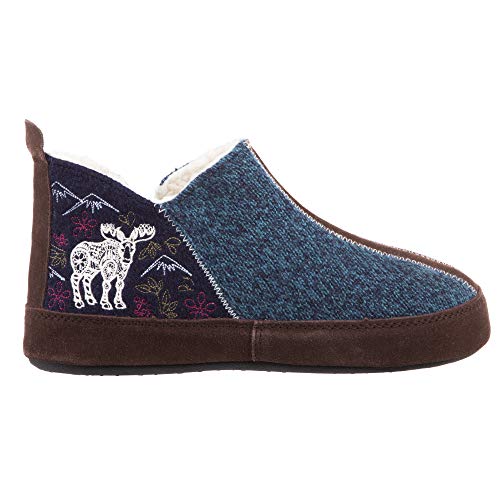
Acorn Women’s Forest Bootie Slipper (Navy Blue Mouse) — Best for Cold Floors and Ankles
Key specs (from the verified listing): Bootie-height profile for ankle coverage; women’s sizing.
Our verified pick for this slot is the Acorn Forest bootie slipper. The verified catalog title for this listing does not state a country of origin, so run the ten-second origin audit in the product details before buying — that check is the price of honesty in this category.
A scuff warms the foot; a bootie warms the foot and the ankle, and in a drafty house that difference is the whole evening. American small makers produce bootie slippers in wool, quilted fabrics and shearling-trimmed styles, often with the hand-finished details — binding, stitching, leather soles or rubber — that mark workshop production. They are the slipper equivalent of a sweater: chosen when the house runs cold and the wearer runs colder.
It suits cold-climate homes, older houses with cold floors, and anyone whose ankles have ever been cold in bed-adjacent hours — which is to say, more people than admit it. In a warm modern apartment, a bootie is a winter-only pleasure, and plush-lined versions can overheat by spring.
Strengths
- Ankle coverage transforms warmth in drafty houses
- Workshop details and materials at a mid-range tier
- Secure fit stays on better than scuffs for stairs and chores
Trade-offs
- Too warm for mild climates outside deep winter
- Ankle styles fit closer — wide or swollen ankles need care in sizing
- More fabric to wash and dry than a simple scuff
Fit the bootie by its opening as much as its length: an elastic or drawstring cuff should seal warmth in without gripping, and the heel should stay seated when you climb stairs — the bootie’s home-field test, since it is the style people wear while carrying laundry baskets. Listings that show the cuff construction are the ones to trust.
Pair the bootie with the house’s reality: rubber soles for the basement and woodpile trips, leather soles for the pure indoor pair by the bed. Many cold-house households end with both, which sounds extravagant until the first January in a farmhouse, after which it sounds like planning.
Best for: cold, drafty homes and cold-ankled sleepers / Not suited for: warm apartments or summer wear
This pick sits in the mid-range tier — check the current price on Amazon.

PAMIR Men’s Genuine Leather Scuff Slippers (Brown) — Best Classic Minimal
Key specs (from the verified listing): Genuine leather; hand-turned construction; silent soft suede sole; memory foam; leather lining.
Our verified pick for this slot is the PAMIR leather scuff slipper. The verified catalog title for this listing does not state a country of origin, so run the ten-second origin audit in the product details before buying — that check is the price of honesty in this category.
The scuff — an open-backed slide of suede over a leather sole — is the oldest pattern in the American slipper drawer, and small domestic makers still produce it because it asks almost nothing and gives years: no foam to compress, no lining to tear, just two honest materials wearing in together. It is the slipper of grandparents and woodsmen, and its current fashion revival changes nothing about its virtues.
It suits warm-to-moderate houses, minimalists, and buyers who want domestic manufacture at the lowest tier the category honestly offers. It does not suit cold ankles, sore arches or anyone whose home has stairs they hurry on — an open back is an open back, and the scuff’s ease is bought with security.
Strengths
- Two-material simplicity with nothing to fail
- Lowest tier of genuine domestic manufacture
- Leather sole is silent, flexible and floor-friendly
Trade-offs
- Open back offers no heel security on stairs
- No cushioning or arch support to speak of
- Suede marks easily and asks for a brush, not a wash
Buy the scuff for what it is and it will not disappoint: a bedside, fireside, morning-coffee slipper that lives by the door of the room it serves. The leather sole molds and darkens with wear into something genuinely personal, and a suede brush restores the upper in a minute whenever it looks tired.
Because the pattern is so simple, quality shows immediately in materials: suede that is thick and even, a sole of real leather rather than a leather-look composite, stitching that runs straight. A listing that names its materials plainly, in this simplest of products, is a maker telling the truth — which is the through-line of this entire category.
Best for: minimalists and warm-house traditionalists / Not suited for: stairs, support needs or cold ankles
This pick sits in the budget tier — check the current price on Amazon.
Comparison Table
Heritage craft, natural warmth, structure or foam — the table compares the six domestic patterns by what they are made of and whom they serve.
| Pick | Badge | Key spec | Best for |
|---|---|---|---|
| Old Friend Wisconsin Men’s Moccasin Slippers (Chocolate) — Check on Amazon | Best Overall | Hand-sewn leather upper, leather or rubber outsole options, hand-lasted | craft-minded buyers wanting a decade-long slipper |
| Sunrise Women’s Sheepskin Slippers with Suede Leather Upper (Chestnut) — Check on Amazon | Best Warmth | Genuine sheepskin shearling lining, suede or leather upper, indoor-outdoor sole | cold homes and buyers wanting natural materials |
| Stegmann Women’s Original 108 Merino Wool Clogs — Check on Amazon | Best Supportive House Clog | Felted or woven wool upper, cork or contoured footbed, clog format | long standing on hard floors and support seekers |
| Dearfoams Men’s Memory Foam Moccasin Slippers (Microsuede, Black) — Check on Amazon | Best Cushioning | Memory foam footbed, fabric upper, indoor-outdoor sole, domestic comfort lines | tired feet wanting maximum cushioning |
| Acorn Women’s Forest Bootie Slipper (Navy Blue Mouse) — Check on Amazon | Best for Cold Floors and Ankles | Ankle-height bootie, wool or quilted upper, insulated lining | cold, drafty homes and cold-ankled sleepers |
| PAMIR Men’s Genuine Leather Scuff Slippers (Brown) — Check on Amazon | Best Classic Minimal | Suede upper, leather sole, open-back scuff — the simplest domestic pattern | minimalists and warm-house traditionalists |
How to Choose American Made Slippers
Buying American made slippers is two purchases at once: a slipper, and a claim about where it was made. The slipper half follows the usual rules — fit, sole, warmth, support. The claim half requires label literacy that the broader footwear market does not teach, because ‘American’ is the most decorated word in the category. The sections below teach both halves, in the order that protects your money: verify the claim first, then choose the slipper.
Expect the domestic market’s honest shape as you shop: fewer styles, fewer colors, higher tiers, longer lives.
Reading the label: three wordings that matter
United States labeling law gives ‘Made in USA’ a specific meaning — all or virtually all of the product’s materials and manufacture are domestic — and honest makers use it precisely. ‘Made in USA with US and imported materials’ is the second honest wording: the slipper is cut and sewn here from, say, imported leather or shearling, and the label says so. Both wordings describe real domestic manufacture, differing in materials sourcing, and both are worth their premium to the buyer who cares about American making.
The third category is not an origin claim at all: ‘Designed in USA’, ‘American brand’, a flag in the logo, a bald eagle in the listing photos. These describe marketing, and the slippers behind them are usually made abroad — legally, often well, and not what this search seeks. Your audit takes ten seconds: find the country-of-origin line in the product details, read its exact words, and buy the wording, not the artwork.
Fit: slippers are sized like shoes, worn like socks
Heritage slippers complicate sizing in two ways: whole sizes only in many workshop lines, and materials — leather, shearling — that stretch or pack down after purchase. The standing advice for both is to size toward snug: leather gives, shearling compresses, and a domestic slipper that begins perfect often ends sloppy. Foam comfort lines behave oppositely — they fit true immediately and compress over years — so buy those true to size and judge them on day one.
Width deserves the attention it rarely gets in slippers: moccasin patterns run medium-narrow by tradition, clogs and comfort lines run more generous, and several domestic makers offer genuine wide fittings worth seeking if standard slippers have always pinched. Measure your foot in the evening, when it is at its largest, and compare against the maker’s own size guidance where offered — workshops that answer sizing questions by phone or message are telling you something good about themselves.
Soles and service: buying the afterlife
The sole decides where the slipper may go: leather for pure indoor silence and flexibility, thin rubber for the deck-mailbox-garage circuit, lugged rubber for the pair that will see the woodpile. In American made lines the sole choice is often offered within the same upper — take the rubber unless your life is truly carpeted, because the first winter morning’s icy step to the mailbox is not the moment to discover the leather sole’s one weakness.
Service is the domestic premium’s second half. Ask what happens in year three: resoling, restitching, replacement insoles or footbeds, repairs by mail. Makers who offer them — many heritage workshops do — convert a premium purchase into the cheapest slippers you will ever own per year of wear. A maker who offers nothing is selling an import’s business model at a domestic price, and the label audit should extend to the afterlife as well.
What ‘American Made’ Actually Means on a Slipper Label
American slipper-making is a survivor of the country’s older shoe industry, which once stretched from Maine’s hand-sewing shops through the Midwest’s moccasin factories. Hand-sewing — the technique behind the moccasin’s distinctive construction — was always a workshop skill rather than a factory line, which is precisely why it survived when mass footwear production moved overseas: it could not be automated into competing, so it remained where the hands were. The moccasins in this roundup descend from that unbroken line, and buying them is, among other things, how the line continues.
The honest economics deserve stating plainly. Domestic slippers cost more because American hands cost more, and they tend to last longer because small workshops compete on reputation rather than volume. Cost per year usually favors the domestic pair against a procession of imports — but only for buyers who keep slippers for years, which is a habit, not a purchase. If your household replaces slippers each winter by preference, buy the import cheerfully and let this category go. If you are the buyer who wants one pair, made here, worn for a decade — this market exists, and it is small enough that your purchase genuinely registers in it.
How to Size and Break In American Made Slippers
Domestic slippers — especially leather and shearling — are fitted and broken in, not merely worn. The first fortnight decides the fit you will have for years.
- Try new slippers in the evening, barefoot or in the socks you will actually wear, and judge leather and shearling pairs by snugness — they will give; foam pairs by exact comfort — they will not.
- Wear heritage pairs indoors only for the first two weeks, so the leather takes your foot’s shape before it meets outdoor grit, and so a sizing exchange remains possible.
- If between sizes in leather or shearling, keep the smaller pair and let the break-in work; if between sizes in foam, keep the larger.
- Condition leather uppers lightly once the break-in completes — a small amount of leather conditioner keeps workshop leather from drying at the flex points.
- Brush suede and shearling rather than washing them; air any slipper overnight between wears, and rotate two pairs if you wear slippers all day, every day.
- Note the maker’s repair terms somewhere you will find them in year three — a resole booked in time doubles a good slipper’s life.
The break-in is the price of the mold-to-you fit that makes owners evangelical about these slippers. Two patient weeks, mostly on carpet, and the slipper stops being a product and becomes a possession.
Common Buying Mistakes
Believing the flag instead of the label
Eagles, flags and ‘American brand’ copy are decoration. The country-of-origin line in the product details is the only sentence that counts — read it, and buy its exact wording or walk away.
Sizing leather and shearling for day-one comfort
Both materials give — leather stretches, shearling packs — so a perfect first fit becomes a loose tenth fit. Buy snug, break in patiently, and let the slipper become yours instead of merely fitting you in the shop.
Expecting heritage slippers to feel like foam
A hand-sewn moccasin’s comfort is fit and leather, earned over weeks; it will never sink like memory foam. Choose the comfort philosophy you actually want before paying a premium for the other one.
Ignoring the repair question until year three
The domestic premium is half materials, half afterlife. A maker offering resoling and restitching doubles your value; discover whether yours does while the answer can still change your choice.
Washing what should be brushed
Leather, suede and shearling slippers are maintained dry — brushed, aired, conditioned — and a machine wash can end a premium pair in forty minutes. Read the maker’s care note before the first cleaning, not after.
Final Recommendation
For the buyer this search describes, the hand-sewn leather moccasin is the destination: domestic craft in its oldest American form, fitted to your foot by wear, repairable for years. Choose shearling when warmth is the argument, the wool clog when your feet need structure, foam when they need relief, the bootie when the house is cold, and the suede scuff when simplicity is the whole desire.
Whichever you choose, run the ten-second label audit before the money moves — origin line read, exact wording weighed — and the premium will buy what it promises: a slipper made here, by identifiable hands, that your feet will know for years.
Keep exploring the same cluster: Best Affordable House Slippers For Women Best Allday Comfort Slippers Best Anti Fatigue Slippers Best Arch Support Indoor Slippers Best Eco Friendly Slippers Best House Slippers For Hardwood Floor
The Makers’ Landscape: Where American Slippers Actually Come From
Understanding where domestic slippers are made helps a buyer shop the category with realistic expectations. The hand-sewn moccasin tradition is anchored in New England — Maine above all — where hand-sewing footwear was a cottage industry long before it was a heritage brand, and where workshops still train sewers in a skill that takes months to learn and cannot be rushed by machinery. A second tradition sits in the upper Midwest, where moccasin companies grew alongside the region’s leather and outdoor trades. Shearling work clusters where sheepskin supply and tanning knowledge meet, and the wool and felted wing of the market is scattered among small makers — sometimes a handful of people — selling through marketplaces and their own sites as much as through large retailers.
This geography explains the category’s texture: limited colorways because small workshops dye in small lots; sizes that sell out because production runs are short; customer service answered by people who know the product because they may have sewn it. It also explains the failure mode to avoid — the heritage-styled brand whose story is set in Maine and whose origin line reads otherwise. The landscape is genuinely small, which cuts both ways for the buyer: choice is narrower than the import market’s, but every maker in it is findable, contactable and accountable in a way mass brands are not. For a purchase meant to last a decade, that accountability is not nostalgia; it is a service network.
Cost Per Year: the Arithmetic of the Domestic Premium
The fairest way to judge an American made slipper’s price is to divide it by the years it will serve, and then to be honest about the import it replaces. A budget imported slipper replaced every year or two — foam dead, seams split, lining torn — accumulates its own total quietly, purchase by purchase, landfill by landfill. A domestic leather or shearling pair at several times the price, resoled once and worn for eight or ten years, typically lands at a comparable or lower annual cost, with a better experience in every one of those years and a maker’s repair bench behind it. The arithmetic fails only when the buyer does not keep things — the household that refreshes slippers seasonally by preference gains nothing from durability it will not use.
There is a second ledger worth one sentence: what the premium buys besides years. It buys materials whose names mean what they say, a worker paid under American labor law, and a product whose origin line survives the ten-second audit this guide teaches. Buyers differ on how much those are worth, and the category does not require agreement — it requires only that the buyer who wants them knows how to find the real article among the styled imitations. That knowledge, plus a snug first fit and two patient weeks, is the entire skill set this market asks of you.
A Short History Worn on the Feet
The moccasin is North America’s oldest footwear design — a soft-soled, foot-shaped construction developed by Indigenous peoples across the continent, each nation’s pattern adapted to its terrain, and the direct ancestor of every hand-sewn slipper in this roundup. When settlers and later shoe factories adopted the construction, the hand-sewn plug and vamp became a regional industry, and the ‘moccasin’ that survived into the modern slipper market carries that lineage in its seams. Wearing a well-made pair is, in a small domestic way, wearing the continent’s original shoe technology — refined by tanneries and workshops, but recognizable across centuries.
That continuity is part of what the domestic premium actually purchases, and it is not a trivial thing: techniques survive only while someone pays for the time they take. Every hand-sewn pair sold is a few hours of a sewer’s trained hands being worth their wage, which is the sole mechanism by which such skills persist. The buyer who understands this stops asking why the slipper costs more than the import, and starts asking the better question this guide began with — whether the label, the materials and the maker justify it for the years of mornings ahead.
Gifting American Made Slippers
As a gift, a domestically made slipper carries a message imports cannot: that the giver chose making over marketing, and paid for it. The category’s gift traps are practical rather than sentimental. Sizing is the first — heritage slippers in whole sizes, meant to fit snug, are a bold gift for a foot you have never measured; the safe plays are the adjustable clog, the forgiving bootie, or the frankly exchanged-after-Christmas pair bought from a maker whose return policy you read first. The second trap is philosophy mismatch: a foam-comfort relative given a hand-sewn moccasin may experience the break-in as a defect, and a craft-loving relative given foam may experience it as a shrug. Gift the philosophy the recipient already holds.
Given well — right foot philosophy, size checked against a borrowed shoe’s insole, maker’s story included on the card — an American made slipper is among the most-used gifts an adult can receive, present at every morning and evening of its years. Few gifts at any price can claim that attendance record, and none at this price can claim it while also keeping a workshop’s lights on. That combination is the category in miniature: personal, practical and quietly consequential, all the way down to the origin line.
One practical ritual closes the category: the two-pair rotation. Even the finest domestic slipper benefits from a rest day — leather dries its day’s moisture, shearling’s fleece recovers its loft, foam rebounds fully — and owners who rotate two pairs report both pairs outlasting a single pair worn daily by far more than the arithmetic suggests. The rotation need not mean two premium pairs: many households pair one heritage pair for mornings and evenings with a comfort pair for chores and errands, each used where it is strongest. It is the same wisdom as the college sheet rotation elsewhere in this program — textiles rest, and rested textiles last — applied to the most-worn footwear in the house.
Keep the maker’s name, too — a note in a drawer, a photograph of the label — because in five years, when the slippers want restitching, that name is the whole repair network. Domestic objects reward owners who remember who made them; it is the oldest contract in craft, and it still works.
That is the standard this whole roundup was written to: advice that survives contact with a real household — its rooms, its weather, its people and its habits — rather than advice that merely reads well in a listing. Apply the checks in the guide above to any model you meet, including the ones recommended here, and the purchase will hold up long after the delivery day is forgotten.
Related guides
Frequently Asked Questions
Are American made slippers worth the higher price?
For buyers who keep slippers for years, usually yes: better materials, construction that can be repaired, and cost-per-year that beats replacing imports annually. For yearly replacers, the premium buys nothing they will use.
What is the difference between ‘Made in USA’ and ‘Made in USA with imported materials’?
The first means all or virtually all materials and manufacture are domestic. The second means the slipper is manufactured in the USA using some imported materials — common for leather and shearling. Both are honest domestic manufacture; ‘Designed in USA’ is neither.
How should American leather slippers fit at first?
Snug. Leather stretches and shearling packs down over the first weeks, molding to your foot. A pair comfortable on day one often ends loose; a snug pair becomes the best-fitting footwear you own.
Can American made slippers be repaired?
Many heritage makers offer resoling, restitching or replacement insoles — ask before buying, because that afterlife is a major part of the domestic value. Foam comfort slippers are generally replaced rather than repaired.
Which American slipper style is warmest?
Shearling, and behind it the wool or quilted bootie. Shearling’s wool-on-hide regulates temperature naturally and resists odor; booties win where cold ankles, not cold feet, are the complaint.
Do American made slippers come in wide sizes?
Some makers offer genuine wides — comfort lines most often, some clog makers too. Heritage moccasin patterns traditionally run medium-narrow, so wide-footed buyers should check each maker’s guidance rather than assume.


