Disclosure: airfryerkitchensupply.com is reader-supported. When you buy through links on our site, we may earn an affiliate commission at no extra cost to you.
Where to buy
The best affordable high quality sheet sets prove a point the bedding industry would rather you not learn: past a modest threshold, sheets stop improving with price and start improving with honesty — honest fabric content, honest pocket depth, honest construction. Every pick in this guide was verified against Amazon catalog data connection, with ASINs taken only from API responses. We never print fixed product prices, because sheet pricing swings constantly with sales; check the current price on Amazon for each pick before deciding.
- Mellanni Iconic 4-Piece Bed Sheet Set, Queen (Best Overall): available on Amazon. Check the current price on Amazon.
- Bedsure Queen Sheet Set, 4 Pieces (Best Budget): available on Amazon. Check the current price on Amazon.
- Mellanni 400TC Cotton Sateen Sheet Set, Queen (Best Cotton): available on Amazon. Check the current price on Amazon.
- Bedsure PureWoven Bamboo-Derived Sheet Set, Queen (Best for Hot Sleepers): available on Amazon. Check the current price on Amazon.
- Bedsure Deep Pocket Queen Sheet Set (Best for Thick Mattresses): available on Amazon. Check the current price on Amazon.
- Mellanni Cotton Flannel Sheet Set, Queen (Best for Winter): available on Amazon. Check the current price on Amazon.
“Affordable” and “high quality” sound like a contradiction in bedding because the industry’s marketing depends on it sounding like one. Thread counts are inflated with multi-ply yarns, “hotel luxury” is printed on everything, and Egyptian cotton labels appear on sheets that contain very little of it. Strip the marketing away and sheet quality reduces to things you can verify: what the fabric actually is, how deep the fitted pocket really runs, whether the elastic goes all the way around, whether the weave suits how you sleep, and whether the set survives its fiftieth wash still fitting and still smooth. Judged on those terms, the affordable tier contains genuinely good sheets — the six sets below, spanning microfiber, cotton sateen, bamboo-derived rayon, and flannel — and the premium tier contains a great deal of expensive labeling.
This guide is organized around the fabrics, because at this price level fabric choice matters more than brand. Two of the picks are microfiber workhorses from Bedsure and Mellanni, the two names that dominate honest budget bedding. One is a true cotton sateen set for sleepers who distrust synthetics. One is bamboo-derived rayon for people who sleep hot. One solves the specific, maddening problem of sheets popping off thick modern mattresses. And one is flannel, because the best sheet set in January is not the best sheet set in July. Every set is listed in its queen configuration, the most common size; all are sold across the standard size range.
In this guide
Quick Picks
- Best Overall — Mellanni Iconic 4-Piece Bed Sheet Set: the budget sheet set against which others are measured. A 16-inch deep pocket, lab-tested fabric claims per the verified listing, and a long track record as a bedding-award winner. If you buy one set from this guide, buy this one. Check the current price on Amazon.
- Best Budget — Bedsure Queen Sheet Set, 4 Pieces: soft, breathable microfiber with an embossed design, OEKO-TEX certified fabric, deep pockets, and fade and shrink resistance — the full checklist at the floor of the category. Check the current price on Amazon.
- Best Cotton — Mellanni 400TC Cotton Sateen Sheets: a genuine 100% cotton weave at 400 thread count, smooth sateen finish, 15-inch fitted pocket. For sleepers who want natural fiber without paying boutique prices. Check the current price on Amazon.
- Best for Hot Sleepers — Bedsure PureWoven Bamboo-Derived Sheets: 100% rayon derived from bamboo, silky and breathable, with a 16-inch deep pocket and a Good Housekeeping Seal noted in the verified listing. The coolest hand-feel in this guide. Check the current price on Amazon.
- Best for Thick Mattresses — Bedsure Deep Pocket Queen Sheets: fitted sheets built for mattresses up to 21 inches thick, with moisture-wicking GentleSoft fabric and a secure fit that ends the 3 a.m. corner-pop. Check the current price on Amazon.
- Best for Winter — Mellanni Cotton Flannel Sheet Set: double-brushed cotton flannel with a deep pocket up to 16 inches — the set that makes a cold bed feel pre-warmed. Check the current price on Amazon.
How These Picks Were Chosen
We chose these sets by applying the quality tests that actually predict satisfaction, and by refusing the tests that marketing wants us to apply. Thread count, standing alone, was not one of our criteria: beyond a genuine 300–400, higher numbers at budget prices usually signal multi-ply yarn tricks rather than better cloth. Instead, every candidate had to pass four checks.
Second, fabric honesty: each set had to declare what it is — microfiber as microfiber, rayon-from-bamboo as rayon-from-bamboo (the legally accurate name for “bamboo sheets”), cotton as cotton with a stated thread count. Third, fit engineering: a stated pocket depth of at least 15 inches, because modern mattresses with toppers routinely defeat shallower sheets, and fit failure is the number-one reason affordable sheets get returned. Fourth, care realism: every set here is machine washable without special handling, because a sheet set that needs coddling is not affordable in any sense that matters — the cost just moves from the price tag to your laundry routine.
We also deliberately spread the picks across four fabrics rather than crowning six near-identical microfiber sets. “High quality” means different things to a hot sleeper, a cotton purist, and a household in a cold climate, and a guide that ignores that is a catalog, not advice.
The 6 Best Affordable High Quality Sheet Sets

Mellanni Iconic 4-Piece Bed Sheet Set, Queen — Best Overall
The Mellanni Iconic is the rare budget product that became the default recommendation by accumulation rather than advertising: years of consistent manufacture, a pocket depth that fits real mattresses, and fabric that stays smooth through repeated washing. The verified listing notes lab testing for breathability and color and smoothness retention, plus a multi-year run as a Good Housekeeping bedding pick — external validation that is unusual at this tier and worth weighting.
Strengths
- 16-inch deep pocket fits most modern mattresses, including many with slim toppers.
- Microfiber that stays bright and smooth per lab testing cited in the verified listing.
- The safest single recommendation here for gift-buying and guest rooms — inoffensive to nearly every sleeper.
Trade-offs
- It is microfiber: sleepers who run very hot or who simply dislike synthetic hand-feel should look at the cotton or bamboo-derived picks.
- The flat sheet and cases are generously cut, which smaller mattresses may find excessive.
- White shows everything; the wide color range exists for a reason.
What makes the Iconic the overall pick is the absence of a failure mode. It does not pop off corners, it does not pill into sandpaper after a season, it does not demand special washing, and it does not feel like a compromise while you are lying on it. In a category where “affordable” often means “acceptable,” a set with no asterisks earns the top slot.
Best for: almost anyone buying one dependable set / Not suited for: committed natural-fiber-only sleepers. Check the current price on Amazon.

Bedsure Queen Sheet Set, 4 Pieces — Best Budget
Bedsure’s standard queen set is the floor of this guide — the least you can spend while still checking every box that matters. The verified listing describes soft, breathable, cooling sheets with an embossed design, OEKO-TEX certification, deep pockets, and resistance to fading and shrinking, which reads like a summary of what budget buyers actually ask for.
Strengths
- OEKO-TEX certified fabric — the textile-safety check we wish every budget set carried.
- Embossed microfiber resists the flat, slippery look that gives cheap microfiber its reputation.
- Fade and shrink resistance claims speak directly to the two ways budget sheets usually die.
Trade-offs
- Microfiber warmth: fine for most, too much for very hot sleepers in summer.
- The embossed texture is subtle, not a luxury finish — set expectations at “very good for the tier.”
- Light colors in this fabric can show body-oil shadowing sooner than cotton does.
This is the set for furnishing a first apartment, a rental, a dorm-adjacent bedroom, or a household that needs several sets at once and refuses to buy junk to do it. It also makes a sensible rotation partner for a pricier primary set: laundry day stops being a deadline when the spare set is genuinely pleasant to sleep on.
Best for: furnishing multiple beds well on a budget / Not suited for: hot sleepers wanting a cool-touch fabric. Check the current price on Amazon.
Mellanni 400TC Cotton Sateen Sheet Set, Queen — Best Cotton
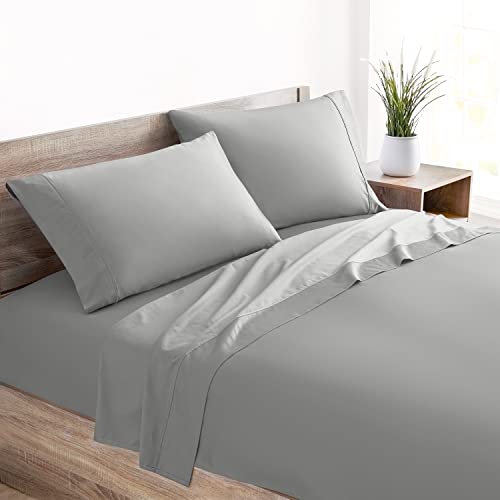
Plenty of sleepers simply want cotton, and at affordable prices they are usually offered cotton blends or inflated thread counts. Mellanni’s sateen set is the honest version: a 100% cotton weave at a stated 400 thread count with a smooth sateen finish, a 15-inch fitted pocket, and standard generous flat-sheet dimensions per the verified listing.
Strengths
- Genuine 100% cotton — no polyester blend hiding behind the word “cotton-rich.”
- Sateen weave gives the smooth, slightly lustrous surface that feels like classic hotel bedding.
- Breathes the way only cotton breathes; the natural choice for sleepers wary of synthetics.
Trade-offs
- Cotton wrinkles more than microfiber and asks for prompt removal from the dryer.
- Sateen’s smooth face can pill sooner than percale under heavy friction — rotate sets.
- 15-inch pocket is the shallowest here; very thick topper stacks should choose the Bedsure Deep Pocket set.
Cotton’s virtues are tactile and thermal rather than technical: it absorbs moisture instead of repelling it, feels familiar from the first night, and improves in softness across its first several washes. If your instinct says sheets should be cotton, this set satisfies that instinct without the boutique markup — and its honest 400 count will out-sleep many “1000 thread count” budget impostors.
Best for: cotton loyalists and warm-but-not-hot sleepers / Not suited for: wrinkle-averse buyers or very deep mattress stacks. Check the current price on Amazon.
Bedsure PureWoven Bamboo-Derived Sheet Set, Queen — Best for Hot Sleepers
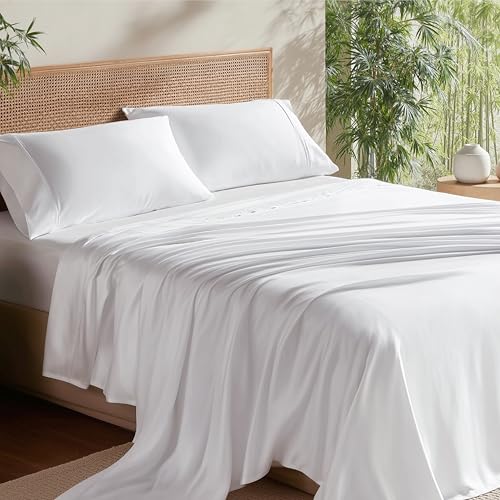
“Bamboo sheets” are, accurately, rayon made from bamboo pulp — and Bedsure’s PureWoven listing says exactly that, which is the kind of honesty this guide rewards. The fabric’s virtues are real: a silky, cool-to-the-touch surface, strong breathability, and moisture handling that hot sleepers notice on the first night. The verified listing notes a Good Housekeeping Seal and OEKO-TEX certification, with a 16-inch deep pocket.
Strengths
- The coolest, silkiest hand-feel in this guide — the hot sleeper’s pick.
- 100% rayon derived from bamboo, accurately labeled, with OEKO-TEX certification.
- 16-inch pocket keeps the slippery fabric anchored through the night.
Trade-offs
- Rayon is the most delicate fabric here: wash cool and gentle, and expect a shorter peak-softness lifespan than cotton.
- The drapey, fluid feel is love-it-or-hate-it; percale fans find it unstructured.
- White is the headline configuration; check color availability in your size.
Hot sleepers are the most underserved buyers in budget bedding, because microfiber — the default cheap fabric — sleeps warm. This set is the correction: genuinely cooling fabric, certified, properly pocketed, at an affordable-tier price. Treat it a little gently in the wash and it will repay you every summer night.
Best for: hot sleepers and warm climates / Not suited for: buyers who wash everything hot and rough. Check the current price on Amazon.

Bedsure Deep Pocket Queen Sheet Set — Best for Thick Mattresses
Modern mattresses have outgrown standard sheets. Hybrid stacks, pillow tops, and added toppers push total depth past what a 14-inch pocket can grip, and the result — a fitted sheet that releases a corner at 3 a.m. — ruins more sleep than any fabric question. Bedsure’s Deep Pocket set is built for mattresses up to 21 inches thick per the verified listing, in the brand’s moisture-wicking GentleSoft fabric, with a fit designed to stay secure.
Strengths
- Fits mattresses up to 21 inches — the deepest accommodation in this guide.
- Moisture-wicking fabric adds hot-sleeper friendliness to the fit solution.
- Ends corner-pop for pillow-top and topper stacks without sheet suspenders or clips.
Trade-offs
- On a slim mattress, the extra fabric bunches — this set is a specialist, not a universal fit.
- Microfiber-family warmth applies, as with the other Bedsure sets.
- Fewer color options than the flagship Bedsure set, typically.
Buy this set by measurement, not by hope: measure your mattress plus topper at the corner, and if the total is beyond a standard pocket’s reach, this is your pick. It also serves adjustable-bed owners well, since deep, secure pockets tolerate the flexing that works shallow sheets loose.
Best for: pillow-tops, topper stacks, and adjustable bases / Not suited for: slim mattresses under about 12 inches. Check the current price on Amazon.
Mellanni Cotton Flannel Sheet Set, Queen — Best for Winter
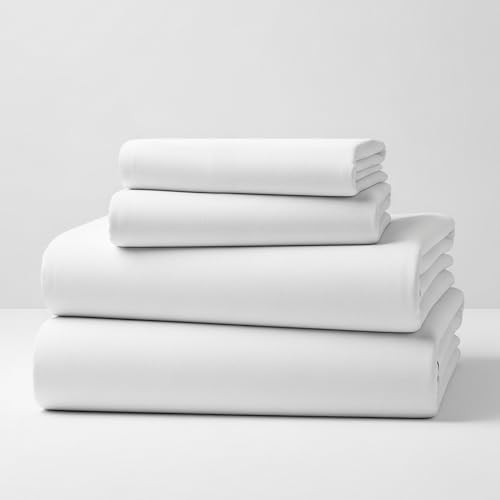
Flannel is the seasonal specialist: cotton brushed on both sides per the verified listing, raising a soft nap that traps warmth and eliminates the cold-sheet shock of winter bedtimes. Mellanni’s version keeps the modern fit standard — a deep pocket up to 16 inches — so it works on contemporary mattresses rather than only on grandma’s spare bed.
Strengths
- Double-brushed cotton flannel: warm on contact, cozier as the night cools.
- Real cotton underneath the nap — breathable warmth, not synthetic stuffiness.
- Deep pocket up to 16 inches fits modern mattresses, unlike many novelty flannels.
Trade-offs
- A winter tool only; it will overwhelm warm sleepers and warm months.
- Flannel sheds lint in its first washes and its nap flattens gradually over seasons.
- Heavier to launder and slower to dry than any other pick here.
Households in genuinely cold bedrooms — old houses, mountain towns, anyone who keeps the thermostat low at night — will find this set changes the experience of getting into bed more than any other purchase in the guide. Buy it as the winter half of a two-set rotation with any of the cooler picks above.
Best for: cold bedrooms and cold sleepers, October through March / Not suited for: warm climates or year-round single-set buyers. Check the current price on Amazon.
Comparison Table
| Pick | Badge | Key spec | Best for |
|---|---|---|---|
| Mellanni Iconic Sheet Set | Best Overall | Microfiber, 16 in pocket | One dependable set for anyone |
| Bedsure Queen Sheet Set | Best Budget | Microfiber, OEKO-TEX, deep pocket | Furnishing several beds |
| Mellanni 400TC Cotton Sateen | Best Cotton | 100% cotton sateen, 15 in pocket | Natural-fiber sleepers |
| Bedsure PureWoven Bamboo-Derived | Best for Hot Sleepers | 100% rayon from bamboo, 16 in pocket | Hot sleepers |
| Bedsure Deep Pocket Set | Best for Thick Mattresses | Fits up to 21 in mattresses | Pillow-tops and toppers |
| Mellanni Cotton Flannel | Best for Winter | Double-brushed cotton, up to 16 in pocket | Cold bedrooms |
Re-check any pick directly: Mellanni Iconic, Bedsure Queen Set, Mellanni Cotton Sateen, Bedsure PureWoven, Bedsure Deep Pocket, Mellanni Flannel — check price on Amazon for each, as bedding promotions change frequently.
How to Choose Affordable Sheets That Are Actually High Quality
The skill in this category is ignoring the numbers on the front of the package and checking the five things that determine whether a set still pleases you in month six. Here is how to run that check on any set, including ours.
Start with fabric, because fabric is destiny
Microfiber — finely woven polyester, as in the Mellanni Iconic and Bedsure Queen Set — is smooth, durable, wrinkle-resistant, and inexpensive to make well, which is why it dominates honest budget bedding. Its weakness is thermal: it breathes less than natural fibers and can feel warm and slightly static-prone. Cotton, as in the Mellanni Sateen and the Flannel set, breathes and absorbs naturally, wrinkles honestly, and softens with washing; percale weaves feel crisp and cool, sateen weaves feel smooth and warmer. Rayon from bamboo, as in the Bedsure PureWoven, is the coolest and silkiest, and the most delicate in the wash. There is no best fabric — there is a best fabric for your temperature, your texture preference, and your laundry habits, in that order.
Measure your mattress before you fall in love
Fit failure masquerades as quality failure. A wonderful sheet that pops off your corners is a bad sheet for your bed. Measure the mattress at its deepest corner including any topper, then require a stated pocket at least two inches deeper: a 12-inch mattress wants a 14–16-inch pocket, and stacks approaching 18–20 inches need a specialist like the Bedsure Deep Pocket. Also confirm the elastic style when listings state it — full-perimeter elastic grips adjustable bases and restless sleepers far better than corner-only elastic.
Read thread count like a skeptic
Thread count counts threads per square inch, and honest cotton tops out in a range that budget “1000TC” labels exceed only by counting multi-ply yarns as multiple threads. A genuine 300–400 count in long-staple cotton, like the sateen pick here, is excellent cloth. For microfiber, thread count is not even the right metric — fineness and weave density are, which reputable brands describe in words rather than inflated numbers. When a listing leads with a huge count and hides the fabric content, you have learned everything you need to know about that listing.
Certifications are the budget buyer’s shortcut
OEKO-TEX Standard 100 certification, carried by both Bedsure picks flagged above, means the finished textile was tested for harmful substances — a meaningful, third-party floor under a category with plenty of anonymous manufacturing. Seals from established testing publications, noted in the Mellanni Iconic and Bedsure PureWoven listings, add a second layer of scrutiny. Neither guarantees luxury; both filter out the worst of the no-name tier, which is exactly the filtering an affordable purchase needs.
Elastic is a specification, not a detail
The humble elastic band decides more sheet satisfaction than any weave. Full-perimeter elastic — a band sewn around the entire fitted sheet — grips evenly, tolerates adjustable bases, and survives restless sleepers; corner-only elastic saves the manufacturer pennies and costs the sleeper nightly re-tucking. Elastic also ages on its own schedule, relaxing with heat exposure, which is why the care section of this guide insists on medium dryer temperatures: you are not protecting the fabric so much as protecting the band that makes the fabric usable. When a listing states its elastic style, weight it heavily; when it hides the detail, assume the cheaper construction.
Buy the rotation, not the set
Two affordable sets rotated weekly will outlast and out-feel one set at twice the price washed twice as often, because rest between washes is what preserves elastic and surface. The economics of this entire category favor the pair: pick your primary fabric, add the seasonal or spare partner — the flannel for winter, the bamboo-derived set for summer — and the “high quality” in the search becomes a property of your linen closet rather than of any single purchase.
How to Fit, Wash, and Store Sheet Sets So They Stay High Quality
- Fit the fitted sheet in the right order. Start at the two hardest corners — usually the head corners against the wall — pulling the pocket fully under the mattress, then finish the foot corners. For deep-pocket sets on thinner mattresses, tuck the excess smoothly toward the center rather than leaving it bunched at a corner.
- Wash before the first night. Every new set carries finishing residues from manufacture. A first wash in cool-to-warm water with a small amount of detergent removes them and reveals the fabric’s true hand-feel — judge your purchase after that wash, not out of the packet.
- Wash sheets as their own load. Towels shed lint onto smooth fabrics, zippers and hooks snag fine weaves, and overloaded drums twist fitted sheets into ropes that dry unevenly. A sheets-only load, not overfilled, is the single easiest quality-preservation habit.
- Go easy on heat and additives. Warm water and medium dryer heat suit every pick in this guide; high heat bakes elastic, dulls microfiber, and is rayon-from-bamboo’s particular enemy. Skip fabric softener on microfiber and bamboo-derived sets — it coats the fibers and dulls exactly the smoothness and moisture handling you bought — and skip bleach except on plain whites that genuinely need rescue.
- Remove and fold promptly, or embrace the wrinkle. Cotton sateen smooths itself if folded or put back on the bed still warm from the dryer; left in a heap, it sets wrinkles that survive until the next wash. Microfiber forgives either way, which is part of its budget charm.
- Store dry, dark, and together. Fold each set into one of its own pillowcases: the whole set stays together, shelf stacks stay tidy, and the case protects the set from dust and light. Never store sheets even slightly damp — mildew odor in stored bedding is nearly impossible to wash out completely.
How Each Fabric Ages: The Hundred-Wash View
Sheet reviews are written on night one, but sheet ownership happens across years of laundry. Each fabric in this guide ages in a characteristic way, and choosing well means choosing an aging pattern you can live with.
Microfiber ages by holding its shape and losing a little of its bloom. The Mellanni Iconic and Bedsure Queen Set will fit identically in year two as on day one — synthetics do not shrink — and their color holds up well, which is why fade resistance is a headline claim for the Bedsure set. The gradual changes are subtler: a slight loss of the original silky finish if the sets are repeatedly overdried, and a tendency to hold onto body oils in a way that eventually dulls light colors unless they are washed with enough detergent and water to actually rinse clean. Pilling, the classic microfiber fear, is mostly a bottom-tier phenomenon; decent fabric, washed as its own load, resists it for a long service life.
Cotton ages by softening and thinning, in that order, and the first phase is a pleasure. The Mellanni Sateen will feel better at wash ten than at wash one, as the sateen surface relaxes into the cloth. The second phase arrives years later as a general thinning, most visible held up to light, and eventually at stress points like the fitted corners. This is not a defect; it is the natural biography of a natural fiber, and households that love cotton accept the arc because the middle years are the best-sleeping years. Flannel, the Mellanni winter set, ages fastest of all: its brushed nap gradually flattens, lint diminishes after the early washes, and the set slowly becomes a soft plain cotton sheet — still useful, less magical. Planning on roughly a few strong winters from flannel is realistic expectation-setting.
Rayon from bamboo ages by demanding gentleness and repaying it. The Bedsure PureWoven kept on cool, gentle cycles stays silky for a long time; the same set washed hot and tumbled hard will roughen and weaken noticeably sooner, because rayon fibers are at their most fragile when wet and hot. Its aging is therefore the most owner-dependent in the guide — which is precisely why we badge it for hot sleepers, the buyers with the strongest reason to give it the care it asks.
The practical synthesis: choose microfiber for the guest room and the rental, where laundry is rough and infrequent replacement is unwelcome; cotton for your own bed if you value the way it improves before it declines; bamboo-derived rayon if your sleep temperature justifies a little laundry discipline; flannel as a seasonal instrument you expect to renew. That is what “high quality” means at affordable prices — not permanence, but a known, acceptable aging curve bought with open eyes.
What a Four-Piece Set Really Contains — and the Sizes Question
Every pick in this guide is listed in queen, as a four-piece set: one flat sheet, one fitted sheet, and two pillowcases. That configuration is the industry standard for full, queen, and king sizes; twin sets typically carry one pillowcase, and split-king arrangements need two twin-XL fitted sheets, which budget lines handle unevenly — if you own an adjustable split king, verify the exact configuration before ordering rather than assuming a king set will solve it.
Two details separate thoughtful sets from careless ones at the same price. The first is flat-sheet generosity: a flat sheet that barely tucks at the foot will escape nightly, and the cotton pick here lists its flat dimensions in the verified title data — a small transparency we would like to see everywhere. The second is pillowcase closure: envelope closures keep the pillow from migrating out during the night, while standard open-end cases rely on extra length. Neither is a luxury feature; both are pattern-making decisions that cost the manufacturer almost nothing and the sleeper a little comfort every night. When you compare sets beyond this guide, these are the specifications to hunt for in the fine print, alongside pocket depth and elastic style.
Color deserves one honest paragraph, because it is where affordable sets are most often misjudged in photographs. Screen images of bedding are lit like advertisements; the set that arrives will live under your bedroom’s warmer, dimmer light. Light neutrals are the forgiving choice for a first purchase — they hide lint, tolerate occasional hot washes, and layer with any quilt or duvet you add later. Deep saturated colors show fading earliest and should be bought with cool-wash discipline in mind. White, the classic, asks for the most laundry honesty: it will tell you the truth about your washing habits within a month.
How to Judge a New Sheet Set in Its First Two Weeks
Because affordable sets are easy to return or replace early and annoying to resent for years, give any new set a structured trial instead of a vague first impression. Fourteen nights is enough to learn almost everything that matters.
In the first three nights, judge fit and only fit. Does the fitted sheet stay seated through your normal movement — not just lying still, but your real sleep, including the morning stretch that tests every corner? Does the flat sheet stay tucked or at least present? Does the pillowcase keep its pillow? Fit failures do not improve with time; elastic does not tighten with use. A set that fails the fit test in week one should be exchanged for a deeper pocket or a different size immediately, while the decision is still free.
Across the first two washes, judge the fabric’s trajectory. Cotton should be getting softer — if the sateen set feels harsher at wash three than at wash one, something in the wash routine (heat, hard water, excess detergent residue) is fighting it, and the fix is in the laundry, not the linen closet. Microfiber should emerge unchanged in size and surface; any early pilling at this stage is a genuine quality signal and a reason to choose a different set for the second-bed purchase. Rayon from bamboo should still feel silky if it has been washed cool and gentle — treat roughness as a handling report card.
By night fourteen, judge temperature honestly. Every sleeper has a night in two weeks where the room runs warm or cold; note whether the set forgave it. This is the test that decides the rotation partner: a primary set that runs warm earns the PureWoven as its summer alternate, and a set that runs cool earns the flannel for winter. The goal is a closet where every night of the year has a correct answer, assembled from affordable parts.
Finally, record the boring facts somewhere you will find them: brand, fabric, pocket depth, and the date put into service. When a set eventually thins or its elastic tires, that note turns replacement from a fresh research project into a five-minute reorder — or a confident switch, if the aging disappointed you. Linen closets reward record-keepers exactly as much as kitchens and workshops do.
Common Buying Mistakes
- Chasing thread count. The most reliable way to overpay for worse sheets. Fabric content and weave type predict your sleep; inflated counts predict marketing.
- Buying the fabric for someone else’s temperature. Hot sleepers in microfiber and cold sleepers in percale both conclude the sheets were “low quality” when the real error was matching. Choose by how you sleep, not by what is popular.
- Guessing pocket depth. Measure the mattress and topper, then buy the pocket with margin. Corner-pop has ended more sheet sets’ useful lives than pilling ever will.
- Judging a set before its first wash — or after only its first wash. Cotton improves across early washes; microfiber reveals pilling tendencies across the first dozen. Give a set a fair trial before stocking the whole house with it.
- Buying exactly one set. A single set gets washed to death on a deadline schedule. The rotation is the quality strategy; two affordable sets beat one premium set in both feel and lifespan.
- Ignoring the pillowcases. Envelope-closure cases keep pillows inside; standard open cases in budget sets can run short on plump pillows. Check case dimensions if you use thick pillows — your face spends the night on the case, not the flat sheet.
Affordable vs Premium Sheets: Where the Extra Money Actually Goes
Readers reasonably ask what a set costing several times more would give them that these six do not. The honest answer is: some real things, and a great deal of theater. Knowing which is which is the whole skill of buying in this category.
The real things first. Premium cotton is made from longer staple fibers, which produce smoother, stronger yarn that pills less and thins more slowly — a genuine longevity and feel advantage that shows up across years, not nights. Premium finishing includes better dye work (deeper, more even color that resists fading longer), tighter quality control on stitching and elastic, and more generous cutting. Premium brands also tend to offer the configurations budget lines skip: extra-deep pockets beyond standard, split sizes, separate fitted-sheet-only purchases for replacements. If you keep sheets for many years, wash them weekly, and notice fine differences in cloth, the premium tier’s advantages are real and you will collect them.
The theater is equally real. Thread counts beyond the genuine range are arithmetic, not cloth. “Egyptian” and “hotel” as unadorned adjectives certify nothing. Brand storytelling — heritage, thread-whisperers, proprietary weaves with trademarked names for standard constructions — is priced into the tag without entering the bed. And the largest premium of all attaches to retail channel rather than product: the same classes of fabric in this guide, sold through department-store bedding departments with their overheads and markdown theater, routinely carry multiples of the price for differences a sleeper cannot detect blindfolded.
The synthesis this guide is built on: the quality curve of sheet sets rises steeply from the anonymous bottom to the honest affordable tier — where fabric is declared, pockets are deep, elastic is real, and certifications appear — and then flattens dramatically. Past that knee of the curve, each additional increment of money buys smaller increments of sleep. The six sets above sit at or just past that knee, which is the precise meaning of the keyword: affordable, and high quality, in that order and both at once. Buyers who later choose to climb into true premium cotton for their primary bed will do so knowingly, for longevity and finish — and many of them keep sets from this guide in rotation for years anyway, because the difference at 2 a.m. is smaller than the difference at the register.
Final Recommendation
If you want one set and no further thought, buy the Mellanni Iconic: it is the most validated, most forgiving set in this guide. If the budget is the point, the Bedsure Queen Set delivers the full checklist for less, and buying two for rotation is the smartest money in the article. Cotton loyalists should go straight to the Mellanni 400TC Sateen, hot sleepers to the Bedsure PureWoven, thick-mattress owners to the Bedsure Deep Pocket, and cold-bedroom households should add the Mellanni Flannel before the first frost. Every one of them is an affordable set that earns the second half of the keyword — check price on Amazon for the configuration in your size before ordering.
Building out the whole bed? Pair these sheets with the rest of the cluster: Best 100 Down Pillows, Best Amish Quilts, Bed Sheet Set Buying Guide, and Best Bed Sheet Sets 1000 Thread Count.
Related guides
- Best Quality All Cotton Percale Sheet Sets
- Best Baking Sheet Sets
- Best Italian Sheet Sets
- Best Online Sheet Sets
Frequently Asked Questions
Are microfiber sheets actually high quality, or just cheap?
Both things can be true of different sets. Well-made microfiber from a reputable brand — tightly woven, properly finished, accurately pocketed — is durable, smooth, and easy-care bedding that many sleepers prefer. The cheap reputation comes from the anonymous tier: thin fabric, corner-only elastic, and shallow pockets. The picks here are the first kind.
What thread count should I look for in cotton sheets?
A genuine 300–400 thread count in a sateen or percale weave is the sweet spot, as with the Mellanni cotton pick in this guide. Counts far above that at affordable prices are achieved by counting multi-ply yarns multiple times and do not indicate better cloth.
How deep a pocket do I need?
Measure your mattress plus topper at the corner and add about two inches. Most modern beds are served by 15–16-inch pockets; pillow-top and topper stacks beyond that need a deep-pocket specialist rated for up to 21 inches, like the Bedsure Deep Pocket set.
Do bamboo sheets keep you cooler?
Rayon derived from bamboo — the accurate name for the fabric — has a cool initial touch, breathes well, and handles moisture effectively, which is why hot sleepers favor it. It is also the most wash-sensitive fabric in this guide: cool, gentle cycles keep it silky longest.
How many sheet sets should one bed have?
Two is the functional minimum — one on the bed, one ready — and three is comfortable. Rotation extends each set’s life by resting the elastic and fibers between washes, which is why this guide repeatedly recommends two affordable sets over one expensive one.
Can I mix pieces from different sets?
Yes, and many experienced households do: a fitted sheet chosen for pocket depth, a flat sheet chosen for fabric, cases chosen for closure style. The only cautions are practical — sizes must match your mattress, and dye lots differ enough that whites and colors from different brands will rarely match exactly. Under a quilt or duvet, nobody will ever know, and your sleep will be better tailored than any single box could make it.
Are these sets suitable for a guest room?
They are arguably ideal for one. Guests sleep a few nights a year in that bed, so the set ages slowly; what guests actually notice is fit (no popped corners), a smooth surface, and a fabric that does not feel plasticky — all strengths of the Mellanni Iconic and Bedsure picks here. A dedicated guest set also spares your primary sets the emergency-wash cycle when visitors arrive unannounced.
How often should sheet sets be replaced?
Replace a set when its function declines rather than by calendar: elastic that no longer grips, fabric thinned enough to feel fragile, or a surface gone rough despite correct washing. With rotation between two sets and the care routine in this guide, the picks here should reach that point only after years of weekly service. Flannel is the exception by design — expect its brushed nap to tire first, after a few hard winters, while the cotton beneath remains serviceable as a plain set.
Why do my sheets pill, and can I prevent it?
Pilling is fiber ends working loose and tangling, accelerated by friction, hot washing, and mixed loads with rough items like towels. Wash sheets separately in cool-to-warm water, avoid overdrying, and rotate sets; quality fabric delays pilling substantially but no fabric is immune to rough laundering.